




Walk
The Peninsula That’s a Breath of Fresh Air
Quiberon, France
Walk
The Peninsula That’s a Breath of Fresh Air
Quiberon, France
2.2 km
Distance
1h00
Durée
12
Audios
Through route
Parcours
Shutterstock
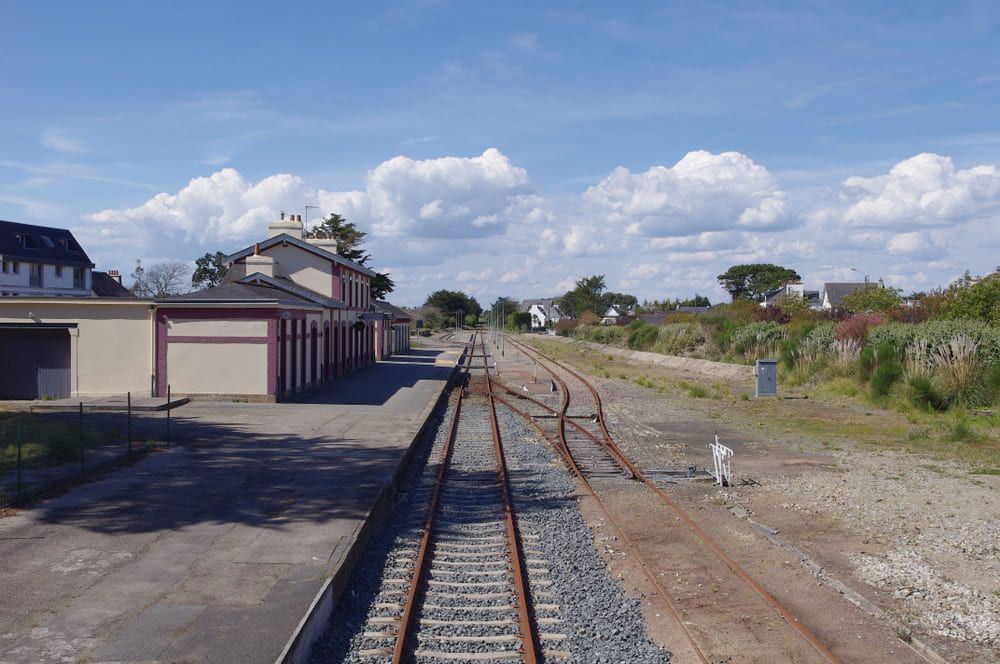
Welcome to Quiberon train station! It may not be the grandest or most spectacular station you’ve ever seen, but don’t let its modest appearance fool you. When the railroad arrived here in July 1882, it caused quite a stir.
And despite Quiberon’s reputation as a seaside resort today, the line wasn’t built to bring vacationers to the beach. Its original purpose was far more strategic. Quiberon occupied a vulnerable military position, so the government needed a way to move troops and artillery quickly onto the peninsula.
At the same time, the railroad would serve one of France’s most important fishing ports. Port-Maria was then one of the country’s leading centers for sardine fishing, and the new rail connection made it possible to send fresh fish and canned goods all the way to Paris. Building the line was no small feat.
Workers had to cross marshy ground and construct an embankment over the Isthmus of Penthièvre, the narrow, windswept strip of land connecting the peninsula to the mainland. Even the inauguration in 1882 came with its share of drama. Tensions between local Republican officials and the bishop were so intense that the traditional blessing of the locomotive nearly didn’t happen at all.
According to legend, the officials’ wives finally threatened to lock themselves inside Fort Penthièvre unless their husbands agreed to invite the bishop. But the railroad’s story soon took a very different turn. A line built to carry sardines and cannons quickly became a fashionable way for high society to reach the coast.
On the very platform where you’re standing, women from the canneries in traditional dress would have crossed paths with well-heeled visitors arriving for a seaside vacation. The Friday express even earned a rather cheeky local nickname: “the cuckolds’ train.” It brought husbands who worked in the city back to Quiberon for the weekend, where their wives had already been enjoying the resort without them. The line later carried heavy artillery during both world wars, but as cars became increasingly popular, rail traffic declined and service ended in 1972.
Then came one final twist: the automobile, which had initially helped push the railroad aside, eventually helped to bring it back. Traffic jams on the peninsula’s single access road became so severe that the line reopened in 1985 under the playful name Tire-Bouchon. Literally, the name means “corkscrew”—but here, the joke is that the train pulls you right out of the bouchons, or traffic jams.
Aucun avis pour le moment
