





Walk
Short tour - The City of two hills
Lyon, France
Walk
Short tour - The City of two hills
Lyon, France
3.8 km
Distance
1h30
Durée
18
Audios
Loop
Parcours
Shutterstock
By now, one thing should be clear: to truly understand the soul of Lyon, you cannot simply look at its buildings. You also need to breathe in the aromas from its kitchens. A famous local saying, borrowed from the writer Léon Daudet, sums it up perfectly: “Lyon is watered by three great rivers: the Rhône, the Saône…
and Beaujolais.” Here, gastronomy is not a luxury, it’s part of the city’s identity. In 1935, the renowned food critic Curnonsky officially proclaimed Lyon the “world capital of gastronomy." So buckle up — or rather, loosen your belt by a notch — because this next part is for food lovers! You may think that French haute cuisine has always been the domain of men in tall white hats.
Lyon is about to change your mind. In the early twentieth century, and especially between the two World Wars, women ruled the city’s kitchens. They became known as the Mères Lyonnaises — the Mothers of Lyon.
Many had worked as cooks in wealthy households before losing their jobs. Undeterred, they opened restaurants of their own and created a unique style of cooking: based on simple, everyday ingredients, yet prepared with extraordinary refinement. Mère Fillioux became a legend thanks to her poularde en demi-deuil — literally, “half-mourning chicken” — with thin slices of black truffle tucked beneath the bird’s skin.
She was also famous for her quenelles baked in rich crayfish butter. Mère Bizolon holds a more emotional place in the city’s memory. Widowed and grieving after the First World War, she set up a table near Perrache railway station and fed passing soldiers free of charge.
Nicknamed the “Mother of the Poilus” — the French soldiers of the Great War — she was awarded the Legion of Honour in 1925. Then came Mère Brazier. In 1933, she became the first woman to earn three Michelin stars at both of her restaurants.
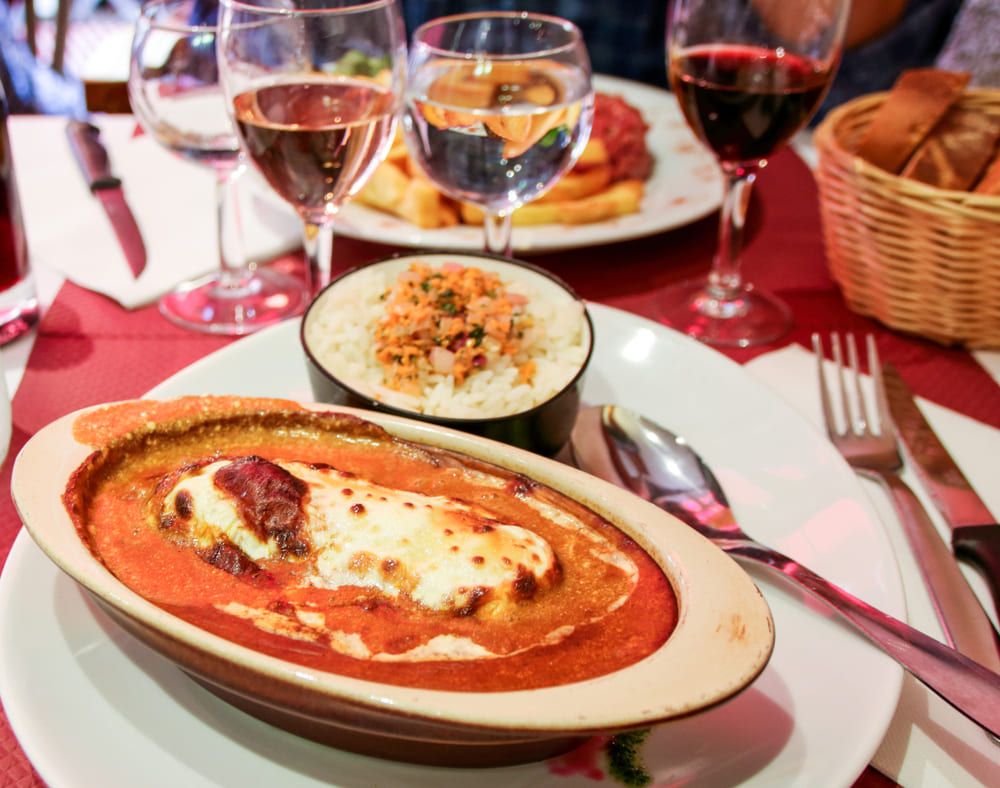
She would later train a promising young chef by the name of… Paul Bocuse. In Lyon, stepping into a traditional bouchon is a little like entering a theatre.
Picture red-and-white checked tablecloths, a zinc-topped bar and a warm, lively atmosphere. The food is generous and completely unpretentious. That playful spirit even appears on the menu, especially when you first come across the words cervelle de canut — literally, “silk worker’s brains”.
Do not worry: there is no offal involved. This is a fresh cheese dip, whipped with garlic, chives and parsley, then seasoned with a splash of oil and vinegar. So, where does the name come from?
It was originally a joke at the expense of the canuts, Lyon’s silk workers, who were said to be too poor to afford real lamb’s brains. A dish born out of poverty eventually became a symbol of Lyonnais resourcefulness. For the ultimate local experience, however, you need to get up early for a mâchon.
At dawn, after a gruelling night’s work, the canuts — the silk weavers of the Croix-Rousse hill — would gather around the counters of local eating houses. There were no croissants for them! A mâchon is a morning ritual built around shared plates of cured meats, andouillettes and grattons — crisp pieces of rendered pork — all washed down with red wine from the surrounding region.
There is something here for every appetite, whether you are an early bird or a late riser. Bon appétit!
Aucun avis pour le moment
