



Walk
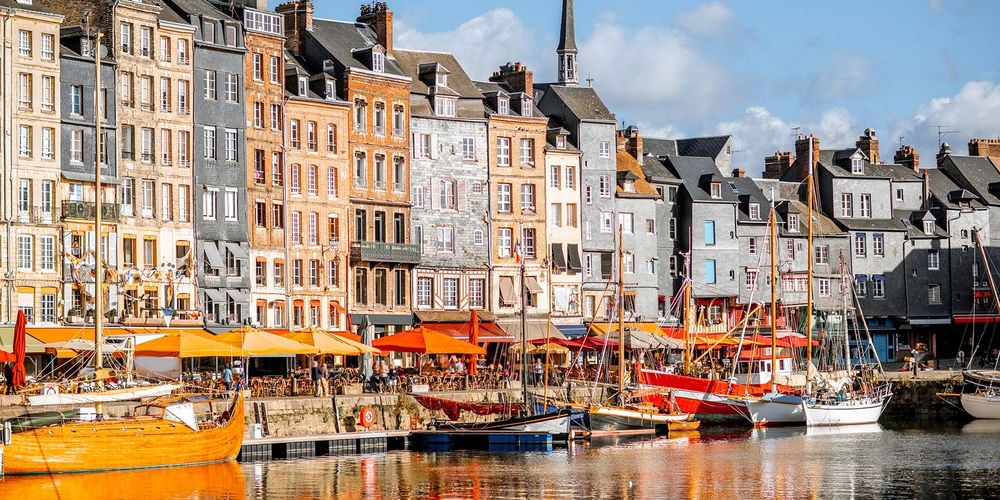
Between Sea and Light
Honfleur, France
Walk
Between Sea and Light
Honfleur, France
2.6 km
Distance
1h00
Durée
20
Audios
Loop
Parcours
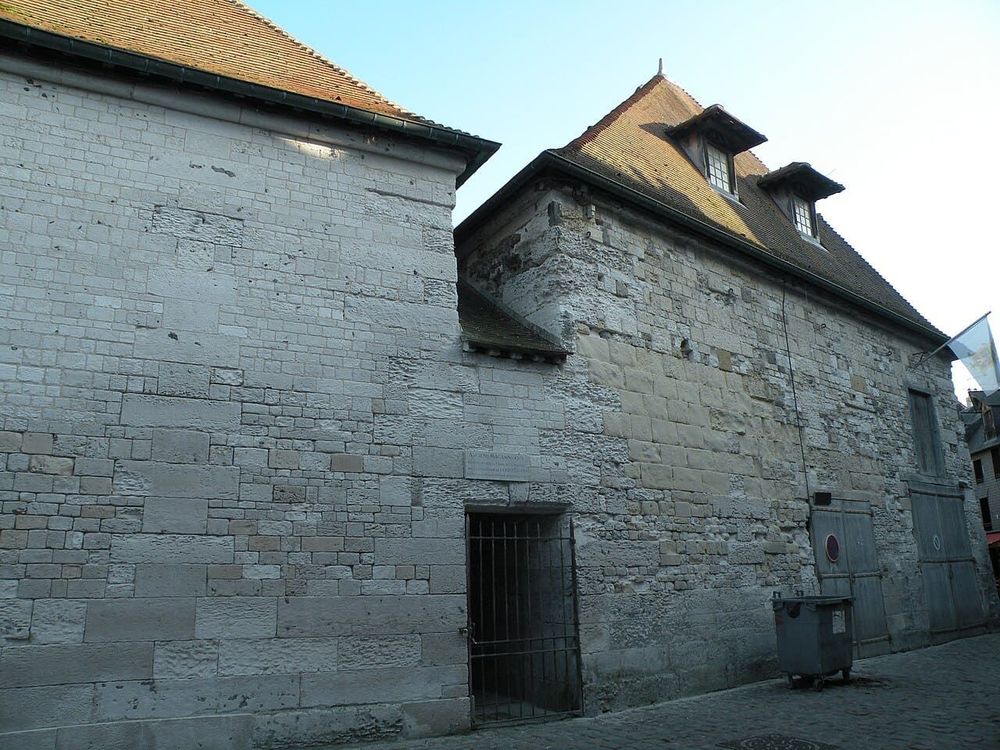
©Pymouss CC BY-SA 3.0. <https://creativecommons.org/licenses/by-sa/3.0/deed.fr>via Wikipedia Commons
The Honfleur audio-guided tour presents you with the Salt Stores, two immense buildings with steep roofs that tell an essential facet of the city's history: that of salt.
It is Colbert, principal minister of Louis XIV, who ordered their construction in 1670. These stores served to warehouse thousands of tonnes of salt, indispensable for the conservation of fish, in particular the herring and the cod fished as far as Newfoundland. Salt was then heavily taxed by the gabelle, an unpopular tax whose storage the State controlled here. Built with reused stones from the old fortifications and framed in chestnut by ship's craftsmen, these warehouses impress by their size: forty metres long for the largest. Originally three in number, there are now only two since a fire in 1892. Listed as historic monuments, they today host exhibitions, concerts and festivals.
The Salt Stores impress with their vast volumes, their stone walls and their chestnut framework, witnesses of the know-how of the ship's carpenters. What was a dreaded fiscal symbol has become a high place of culture, where exhibitions and concerts are held. It is a fascinating stage to understand the importance of salt and fishing in the history of Honfleur.
The Salt Stores are in the old fortified district of Honfleur. Their façades can be contemplated freely; the interior spaces open according to the exhibitions, concerts and festivals, whose hours are to be checked on site.
To store the salt destined to preserve fish, such as herring and cod; their construction was ordered by Colbert in 1670.
Two, of the three original ones; the third disappeared in a fire in 1892.
Aucun avis pour le moment