

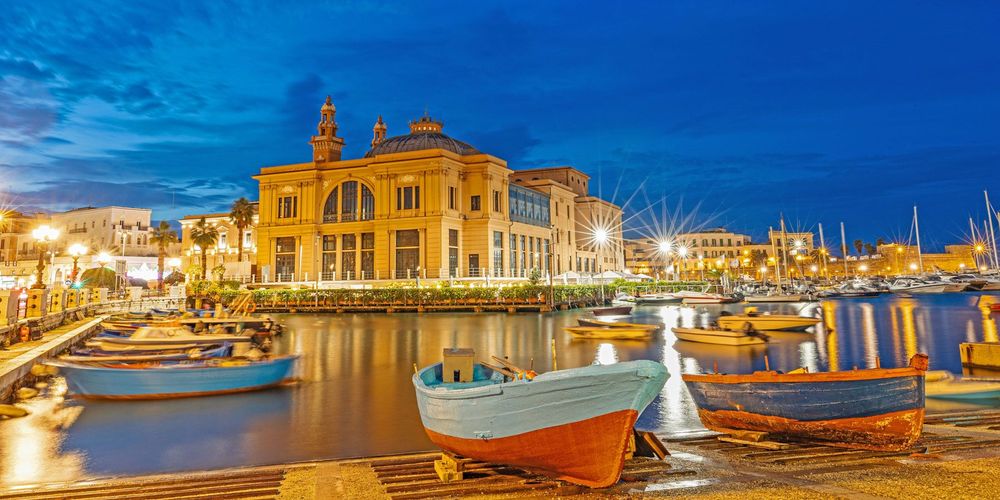

Castello Svevo di Bari
Shutterstock
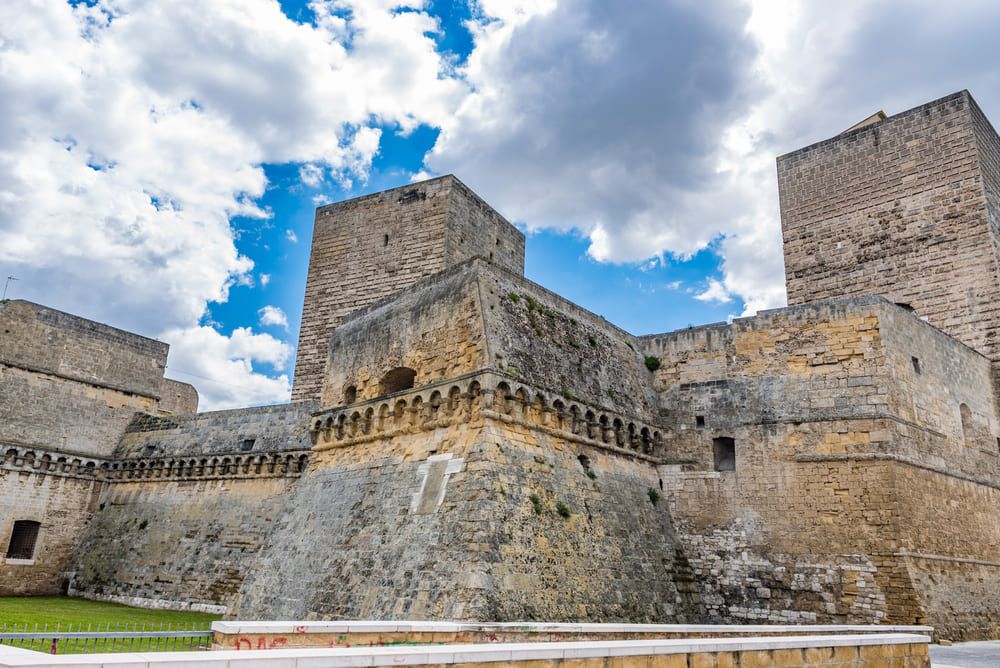
While Bari is full of churches and palaces on every corner, there’s only one castle: the Castello Svevo di Bari. And what a castle it is! Bari was once an important Byzantine city, even the capital of the Byzantine province of Italy. But in 1071, it was taken by the Normans, led by Robert Guiscard, marking the end of centuries of Byzantine rule in the region. Yes, the Normans! Originally from Normandy in France but long settled in southern Italy, they established a powerful state there. In 1130, Roger II unified their territories, creating the Kingdom of Sicily, which included Bari. It was in this context that the Normans built fortresses like this castle to control strategic cities. But the people of Bari had a strong tradition of autonomy and a culture shaped by their Byzantine past. In the mid-12th century, when Norman King William I of Sicily faced political instability, several forces sought to overthrow him: some discontented Norman barons, Pope Adrian IV, and Byzantine Emperor Manuel I Comnenus. Bari, once the Byzantine capital, saw this as their chance to rebel. In 1155, when Byzantine troops arrived in Apulia, the locals opened the city’s gates and destroyed the Norman fortress built by Roger II as a symbol of resistance. Furious, William I marched on Bari the next year and defeated the Byzantines. The defenseless population came out to meet him unarmed, pleading for mercy. His response earned him the nickname “William the Bad.” "Since you refused to spare my house, I will certainly not spare yours," he said. He ordered the entire city to be punished: the inhabitants had two days to leave their homes, after which much of the city, including its walls and noble residences, was demolished. This destruction wasn’t just revenge, it was a political move to break Bari’s autonomy and power. The people were dispersed for several years, and it wasn’t until 1166, after the king’s death, that they were allowed to return and rebuild the city. But the story doesn’t end there. In 1233, Emperor Frederick II decided to rebuild the castle on a grand scale and even test the holiness of Saint Francis of Assisi. When Saint Francis stopped in Bari, the skeptical Frederick invited him to the castle and decided to test him by sending a courtesan to his room at night. According to legend, when she approached, she saw the bed surrounded by flames and fled in terror. Frederick, who had been spying through a peephole, was so impressed he never again doubted Francis’s holiness. The two men spent the night talking, and that’s how the Saint Francis Tower got its name. In the 16th century, the castle reached its peak, as two extraordinary women transformed it into a Renaissance court, worthy of the grandest palaces in northern Italy. Today, the castle houses a museum, an exceptional collection of Apulian Romanesque plaster art, and a room dedicated to Bona Sforza, complete with immersive digital projections. In short, behind these walls, you’ll find nine centuries of history, betrayals, legends, and architecture waiting to be discovered.