





Walk
La Superba of Italy
Genoa, Italy
Walk
La Superba of Italy
Genoa, Italy
4.6 km
Distance
1h50
Durée
22
Audios
Loop
Parcours

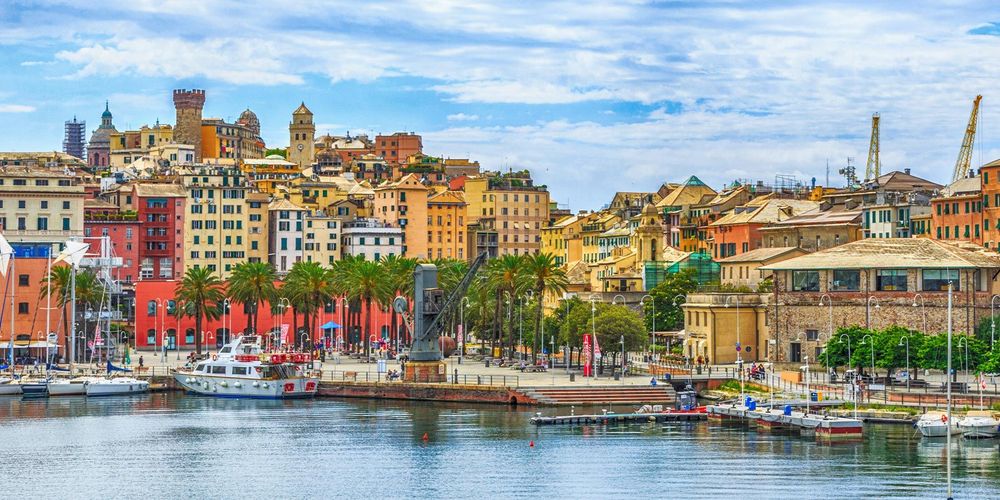
When you think of Italy, Genoa probably isn’t the first city that comes to mind. Yet its discreet, underrated charm is precisely what’s drawing more and more travellers to look past the clichés of an “industrial” or “grimy” town. Genoa is full of character, Mediterranean flair, and unexpected gems.
If you’re still not convinced, here are three quick facts about “La Superba” that might just change your mind. First up, pesto. That vibrant green sauce made with basil, pine nuts, garlic, Parmesan, olive oil, and salt…
all gently crushed in a mortar. Everyone knows it’s a symbol of Italian cuisine, but fewer people know that pesto comes from Genoa. It first appeared here in the 16th century and has since become a source of local pride.
Just like Bologna gave us Bolognese sauce, and Milan the famous cotoletta, Genoa has its own signature classic, pesto alla Genovese, generously slathered on everything by locals. Now for fashion. Jeans are a wardrobe staple, but before they were championed by the American way of life, jeans had Genoese roots.
In the 16th century, the city exported a tough blue fabric used for sails, tarpaulins, and work clothes for sailors. It was known as blu di Genova, or Genoa blue, which eventually morphed into “blue jeans” through a clumsy American pronunciation of “Genova.” The rest is fashion history. In 1853, Bavarian-Jewish immigrant Levi Strauss arrived in the U.S.
and started producing his now-legendary Levi’s jeans, first using that heavy fabric, and later switching to denim, which was softer and more wearable. Finally, the lottery, known here as lotto, referring to the game of chance where the goal is to match numbers on a card. When Benedetto Gentile was the 55th Doge of the Republic of Genoa, he used a lottery-style draw to choose the members of his municipal council.
The practice quickly caught on, first in Italy, then in France, and eventually across the rest of Europe. What a legacy!
Aucun avis pour le moment
