





Walk
The town that watches over Saint Nicholas
Bari, Italy
Walk
The town that watches over Saint Nicholas
Bari, Italy
3.5 km
Distance
1h30
Durée
20
Audios
Loop
Parcours
Shutterstock
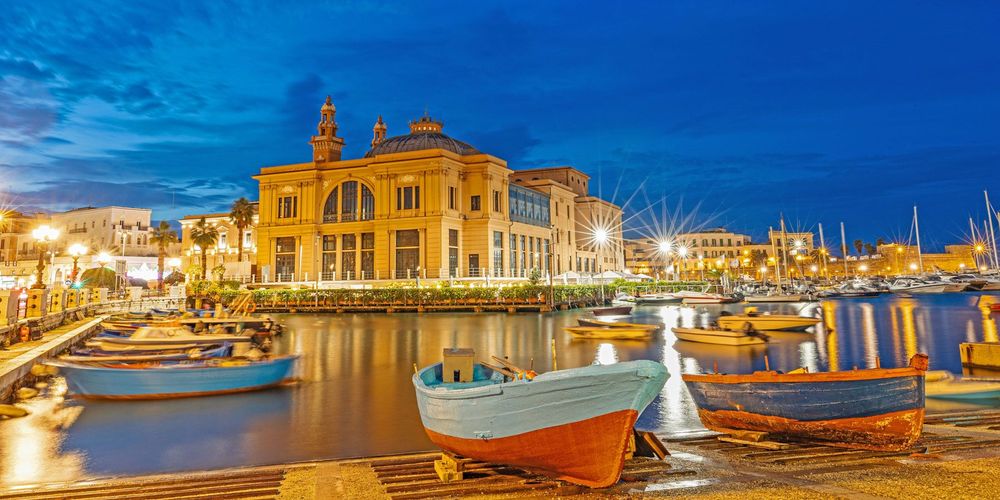
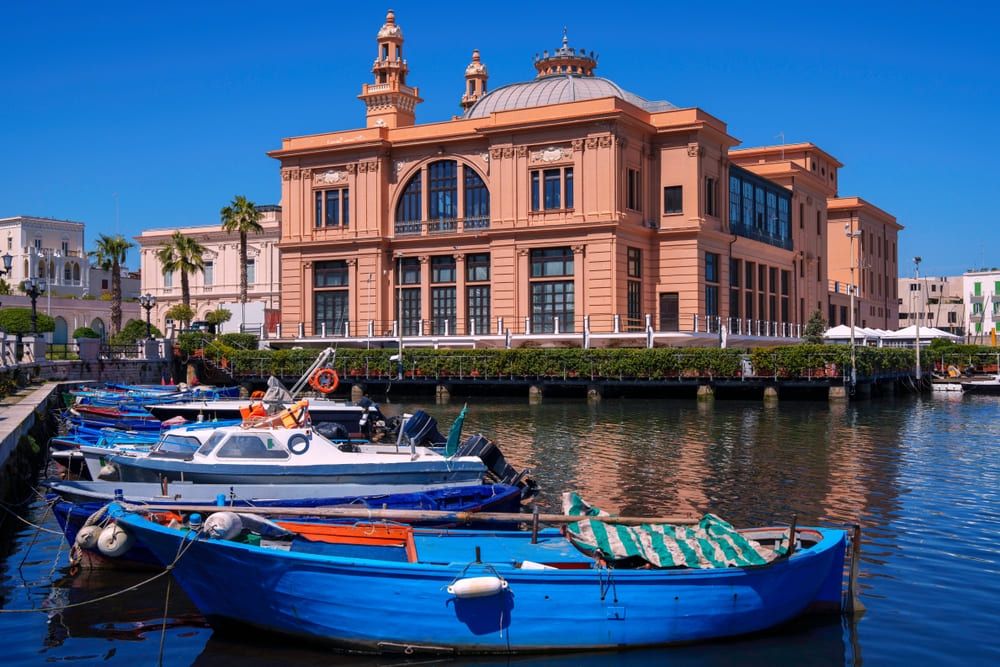
The Margherita Theatre is one of the historic theatres of Bari, an Art Nouveau building standing by the sea. The Bari audio-guided tour stops here to evoke this singular building, today dedicated to contemporary art.
Erected between 1912 and 1914, the Margherita Theatre is a building in the Liberty style, the Italian version of Art Nouveau, built on stilts above the water, on the edge of the seafront. This unusual situation and its elegant architecture make it a singular monument of Bari. After a long restoration, it has regained a cultural vocation and today hosts contemporary art exhibitions.
You admire the Liberty architecture of the theatre, built on the water at the edge of the seafront, and you discover the contemporary art exhibitions it houses. The Margherita Theatre illustrates the elegance of the early twentieth century in Bari. It is a stop for lovers of architecture and art, facing the Adriatic.
The Margherita Theatre lies on the seafront of Bari, near Bari Vecchia, reachable on foot. The visit of the exhibitions generally has a fee and follows its own hours, which vary with the programme and the season. It is best to check the arrangements before coming.
Because it is built on stilts above the water, on the edge of the seafront, in a Liberty style; it today houses contemporary art exhibitions.
On the seafront of Bari, near Bari Vecchia.
Aucun avis pour le moment
