





Walk
Tuscany’s hidden surprise
Pistoia, Italy
Walk
Tuscany’s hidden surprise
Pistoia, Italy
3 km
Distance
1h20
Durée
23
Audios
Loop
Parcours
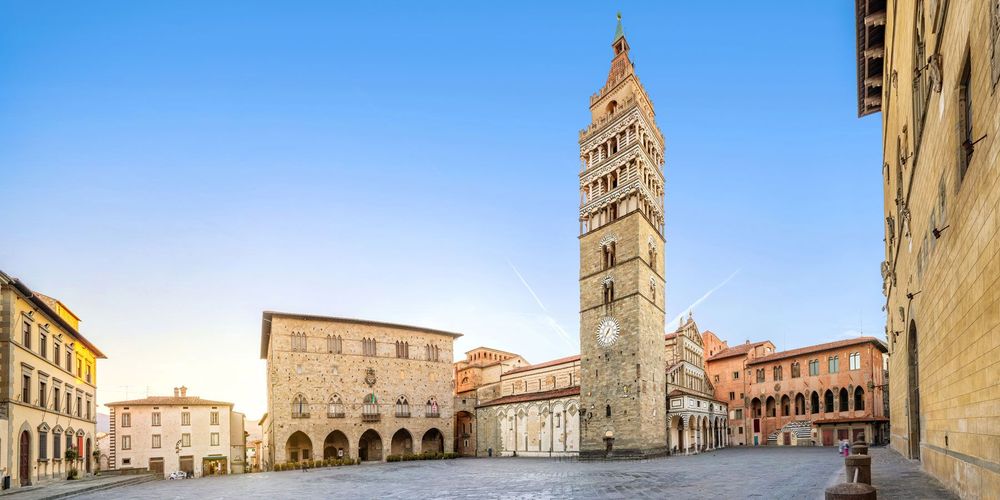
©Tommaso Fedeli, CC BY-SA 3.0 <https://creativecommons.org/licenses/by-sa/3.0/deed.fr>via Wikipedia Commons
You’re now passing by the Oratorio di San Desiderio, a small and discreet building that might seem almost anonymous at first glance. From the outside, nothing really hints at what lies within, and yet you’re standing in front of one of Pistoia’s hidden treasures. The history of this place goes back more than nine centuries.
As early as 1084, it was home to a convent of Benedictine nuns. Over time, it changed roles several times, becoming a monastery, then a hospital for pilgrims, and later a convent again. By the end of the 18th century, it had been turned into a private building, even used as a simple storage space.
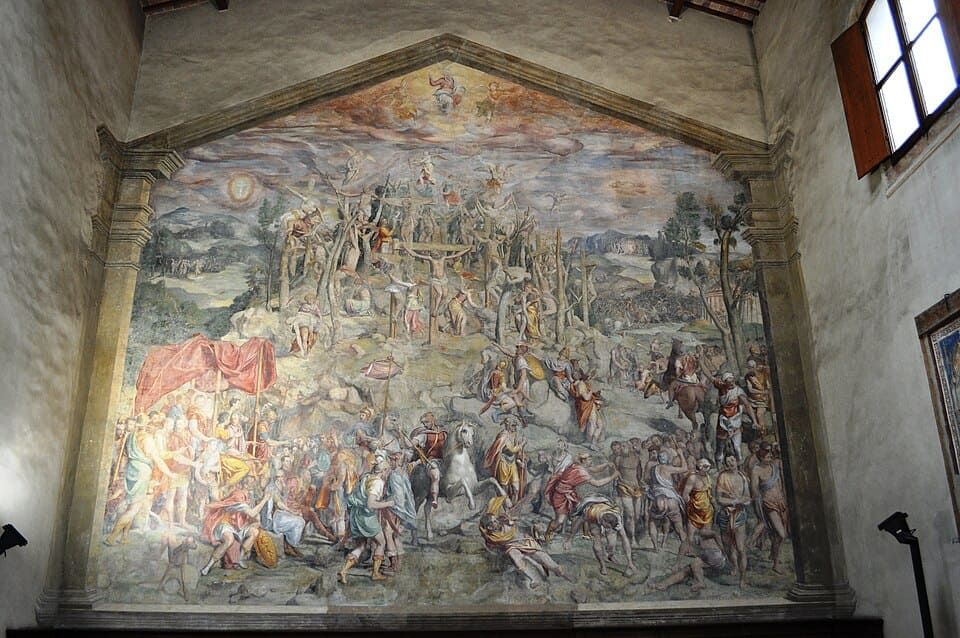
It wasn’t until the 20th century that its importance was rediscovered, leading to its restoration and opening to the public. What really makes this oratory special is what you’ll find inside. Covering the entire back wall is a large fresco painted in the 16th century by Sebastiano Vini, an artist based in Pistoia but trained in the Venetian tradition.
The scene is utterly captivating, it shows the martyrdom of ten thousand Christian soldiers on Mount Ararat, an ancient and almost legendary story in which these soldiers refuse to renounce their faith and are condemned to die. Take a moment to imagine the composition: dozens of bodies, crosses everywhere, scenes of violence, but also powerful gestures of faith. The fresco unfolds like a wide panorama, where several moments are shown at once.
The colors are vivid, almost unexpected for such a tragic subject, reflecting the influence of Venetian painting, which brings intensity and movement to the scene. It’s an easy place to walk past… but one that hides a remarkable discovery.
Aucun avis pour le moment
