





Walk
The town that watches over Saint Nicholas
Bari, Italy
Walk
The town that watches over Saint Nicholas
Bari, Italy
3.5 km
Distance
1h30
Durée
20
Audios
Loop
Parcours
Shutterstock
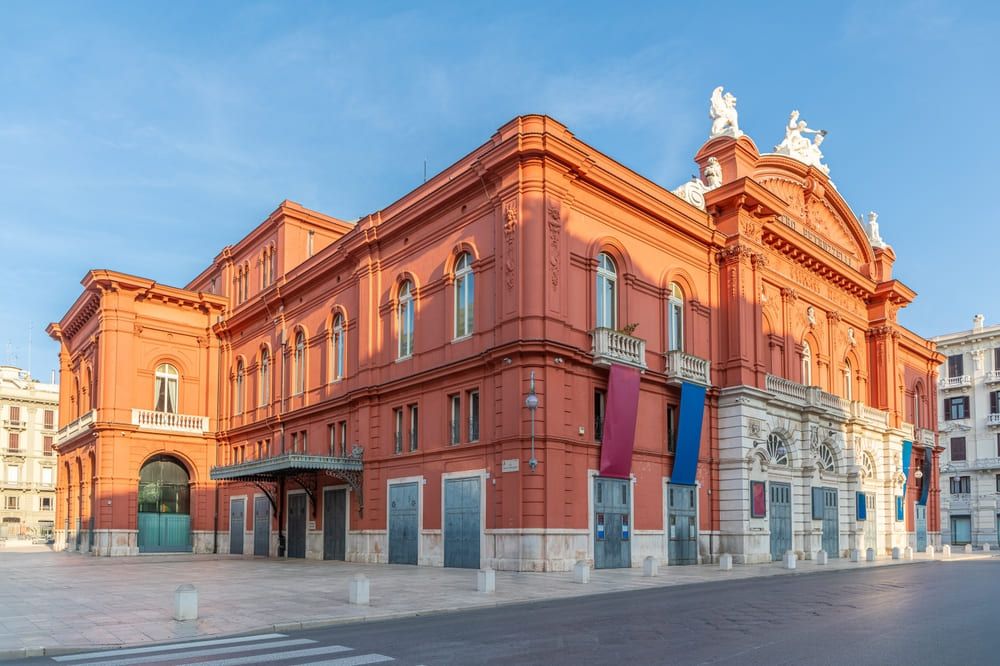
The Petruzzelli Theatre is the great opera house of Bari, one of the largest in Italy. The Bari audio-guided tour stops here to evoke this prestigious stage, reborn after the fire that struck it at the end of the twentieth century.
The Petruzzelli Theatre is an opera house with a great capacity, one of the most important in Italy. Inaugurated at the end of the nineteenth century, it was ravaged by a fire in 1991, then patiently rebuilt to recover its splendour. A high place of the cultural life of Bari, it hosts operas, concerts and great shows, and remains one of the symbols of the city.
You admire the façade and the great hall of the theatre, rebuilt after the fire of 1991, in all its recovered splendour. Attending an opera or a concert remains the best way to experience the place. It is a major stop for lovers of music and heritage, in the heart of Bari.
The Petruzzelli Theatre lies in the heart of Bari, reachable on foot. The façade can be freely admired from the outside; the tours and the shows follow their own programme and access conditions, which vary with the season. It is best to check the agenda and the arrangements before coming.
It was ravaged by a fire, then patiently rebuilt to recover its splendour; it is one of the largest opera houses in Italy.
In the heart of Bari, in the modern city.
Aucun avis pour le moment
