





Walk
Short tour -The Eternal City
Roma, Italy
Walk
Short tour -The Eternal City
Roma, Italy
4.4 km
Distance
1h45
Durée
19
Audios
Loop
Parcours
@Shutterstock
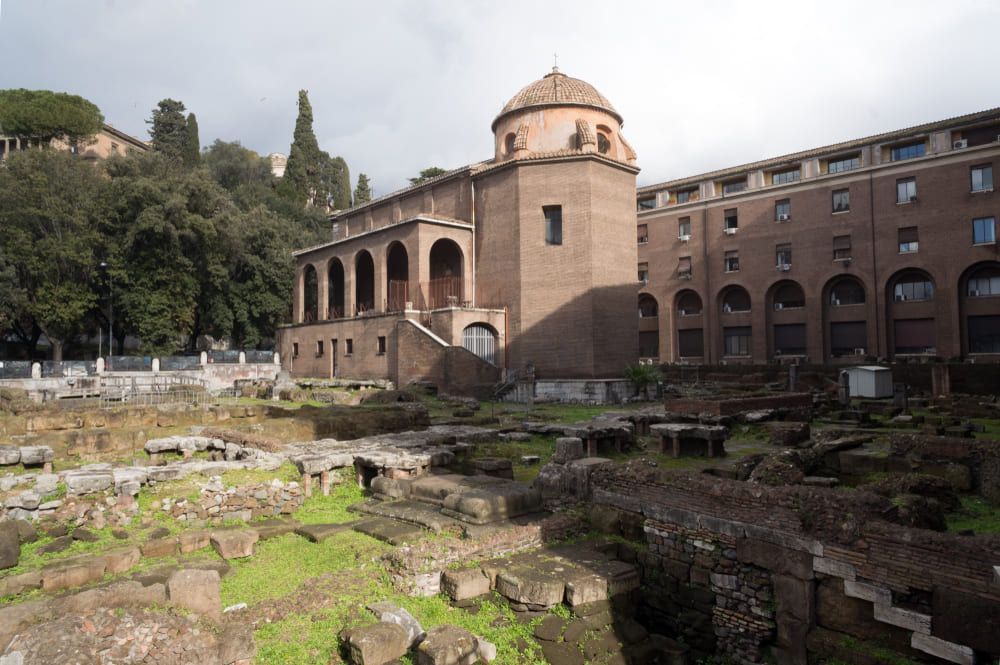
At first glance, these few foundations may seem less impressive than the monuments around them. And yet, you are standing before one of the most important sites for understanding the earliest days of Rome: the Sacred Area of Sant’Omobono. It was discovered by chance in 1937, during construction work.
As archaeologists dug down, they uncovered layer after layer of history, including the remains of a hut dating from the eighth century BC and traces of a very early place of worship. They even found a fragment of pottery bearing an Etruscan inscription — possibly the oldest ever discovered in Rome. From these remains, archaeologists concluded that the first monumental temple was built here around 580 BC.
Made from timber and brick, it was decorated with large terracotta figures, including representations of Hercules and Athena. These sculptures are now housed in the Capitoline Museums. Later, the ground level was raised by almost four metres to make room for two twin temples.
One was dedicated to Fortuna, the goddess of fate, and the other to Mater Matuta, goddess of the dawn and protector of women in childbirth. With the arrival of Christianity, one of the temples was converted into a church. Rebuilt several times over the centuries, it was eventually dedicated to Sant’Omobono, the patron saint of tailors and cloth merchants.
And that is why this ancient pagan site now bears the name of a Christian saint — yet another wonderful example of how Rome loves to layer one period of history on top of another!
Aucun avis pour le moment
