





Walk
La Superba of Italy
Genoa, Italy
Walk
La Superba of Italy
Genoa, Italy
4.6 km
Distance
1h50
Durée
22
Audios
Loop
Parcours
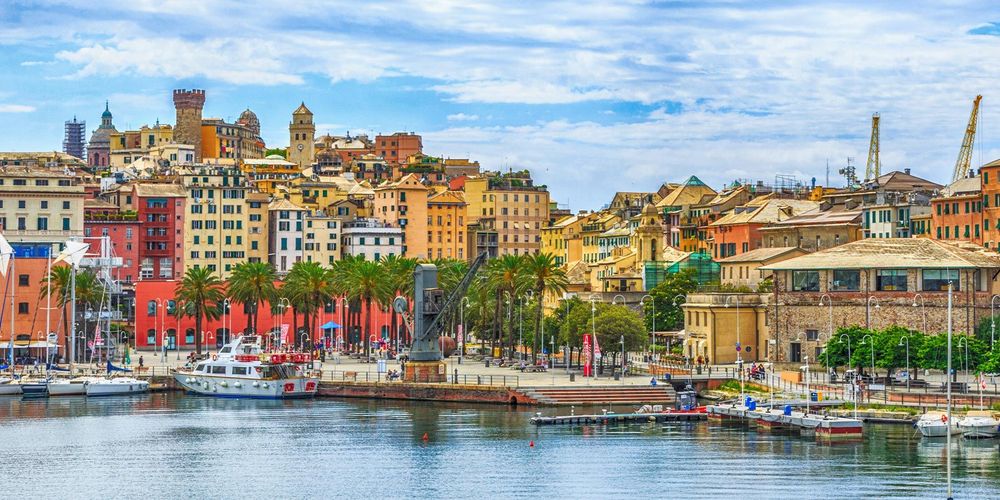
Genoa is like a living history book, and much of its character comes from its long life as a port city. Let’s flip through some of the key chapters of the place locals call “La Superba.” Likely founded in the 5th century BCE as a small port, Genoa was occupied by various peoples. Tired of being conquered again and again, the city began to strike back, building a fleet that was already a force to be reckoned with by the 11th century.
Then came the golden age of the Crusades. Genoa outpaced its rival Pisa, and took full control over the western Mediterranean while expanding its colonies in the Middle East. In 1099, the city came under the authority of consuls, then a magistrate, and finally a people’s captain.
Between the 14th and 16th centuries, Genoa followed in the footsteps of Venice, and entered the era of the Doges. This system wasn’t perfect, but it lasted for three hundred years. During that time, Genoa rose to fame thanks to legendary explorers like Columbus.
But it also faced tensions with Milan and external conflicts, notably with France. As competition grew fiercer, Genoa’s influence in the West began to fade. Still, the city held on as a major commercial and banking hub, and even created the world’s first modern bank.
In the 16th century, Europe was torn between Francis I of France and Charles V of Spain. Genoa had to choose a side. Andrea Doria, a brilliant political strategist and naval commander, negotiated the city’s military, economic, and political alliance with the Spanish Empire, in exchange for independence.
A wise move, as it would prove crucial to Genoa’s future. The Republic of Genoa was declared, and the city’s economic fortunes soared. Local merchants became master financiers, conducting complex credit operations with Europe’s greatest powers.
What followed was “the century of the Genoese”, a period of prosperity that left a lasting mark on the city’s history. However, from 1684 to 1814, Genoa began to suffer the economic consequences of Spain’s decline. The Savoy States of Piedmont, Louis XIV’s navy, and Austrian troops took advantage of Genoa’s weakened state to grab territory.
But it was ultimately the French Empire that brought Genoa to its knees. After Napoleon’s fall, the city was annexed to the Kingdom of Piedmont-Sardinia, ruled by the House of Savoy. After Italian unification, spearheaded by General Garibaldi, the world wars hit Genoa hard, but the city recovered during the post-war economic boom of the 1960s.
Forty years later, the port’s role was in the spotlight once again, and Genoa was named European Capital of Culture in 2004, which recognised La Superab’s historical and cultural importance.
Aucun avis pour le moment
