






Walk
The Echo of the Temples in the Ancient Capital
Kyoto, Japan
Walk
The Echo of the Temples in the Ancient Capital
Kyoto, Japan
5.4 km
Distance
2h15
Durée
25
Audios
Loop
Parcours
Shutterstock
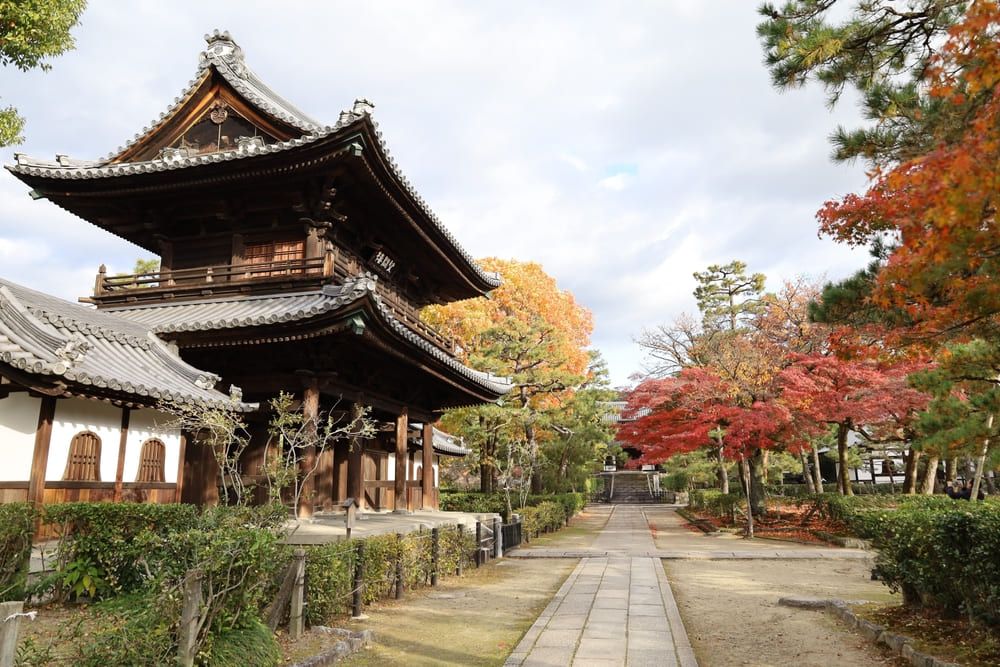
At the end of the Hanami-koji lane, in Gion, Kennin-ji is the oldest Zen temple in Kyoto. Founded by the monk Eisai, it is linked to the introduction of Zen and tea to Japan. The Kyoto audio-guided tour stops here to evoke Zen spirituality and the serenity of its gardens, in the heart of an otherwise very lively district.
Kennin-ji was founded in 1202 by the monk Eisai, credited with introducing Zen Buddhism and tea culture to Japan. It is the head temple of the Rinzai branch of Zen and the oldest of this current in the country. Zen, a form of Buddhism turned towards meditation, finds here one of its cradles, in a setting devoted to contemplation and simplicity.
The temple appeals through its Zen gardens, its plain buildings and its artworks, including famous paintings on folding screens and ceilings. The serenity of the place contrasts with the bustle of nearby Gion. It is an essential stop to discover Zen Buddhism and the Japanese aesthetic of austerity, in the oldest Zen temple in the city.
Kennin-ji lies at the end of Hanami-koji Street, in the Gion district, in Kyoto, reachable on foot. A working Zen temple, it can be visited, generally with an admission fee to access the buildings and gardens; hours vary with the season and ceremonies. The visit is made with respect for contemplation and the rules specific to the place.
It was founded in 1202 by the monk Eisai, credited with introducing Zen Buddhism and tea culture to Japan.
It is the oldest Zen temple in Kyoto and the head temple of the Rinzai branch, linked to the introduction of Zen and tea to Japan.
Aucun avis pour le moment
