



Walk
The Echo of the Temples in the Ancient Capital
Kyoto, Japan
Walk
The Echo of the Temples in the Ancient Capital
Kyoto, Japan
5.4 km
Distance
2h15
Durée
25
Audios
Loop
Parcours
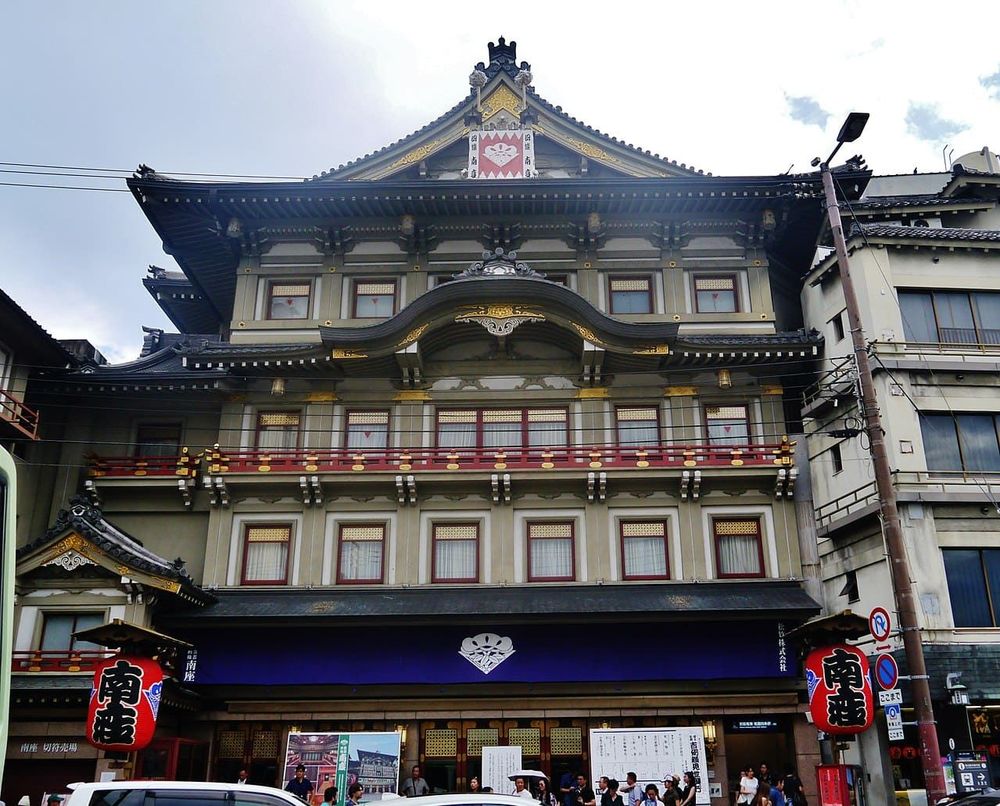
©Zairon BY-SA 4.0. <https://creativecommons.org/licenses/by-sa/4.0/deed.fr>via Wikipedia Commons
Near the Shijo bridge, the Minami-za theatre is one of the oldest kabuki theatres in Japan. Founded at the beginning of the Edo period, it perpetuates this spectacular art in a historic setting. The Kyoto audio-guided tour stops here to evoke the birth of kabuki and Kyoto's place in the history of the performing arts.
Founded in the 1610s, at the beginning of the Edo period, the Minami-za is among the very first theatres officially licensed by the shogunate to host kabuki. It is considered the first kabuki theatre in Japan and has perpetuated for centuries this tradition born in Kyoto. Its location, near the Shijo bridge, links it directly to the origins of this art, in the district where Izumo-no-Okuni invented it.
The building, of traditional architecture, is a landmark of the Gion district, near the Shijo bridge. The theatre programmes kabuki performances and, for visitors, sometimes offers presentations explaining this art in several languages. Attending a show or discovering its behind-the-scenes is a rare experience, in the heart of the history of Japanese theatre.
The Minami-za theatre lies near the Shijo bridge, at the entrance of the Gion district, in the centre of Kyoto, reachable on foot and by public transport. The façade can be freely admired; access to performances depends on the programme, which varies through the year. To find out about shows and visiting conditions, it is best to enquire with the theatre.
Founded in the 1610s, it is considered the first kabuki theatre in Japan, in the heart of the district where this art was born.
Yes, the theatre programmes kabuki performances and sometimes offers presentations for visitors; the programme varies by year, to be checked with the theatre.
Aucun avis pour le moment