





Walk
The rebellious city on the water
Valladolid, Mexico
Walk
The rebellious city on the water
Valladolid, Mexico
4.6 km
Distance
2h00
Durée
17
Audios
Loop
Parcours
Shutterstock
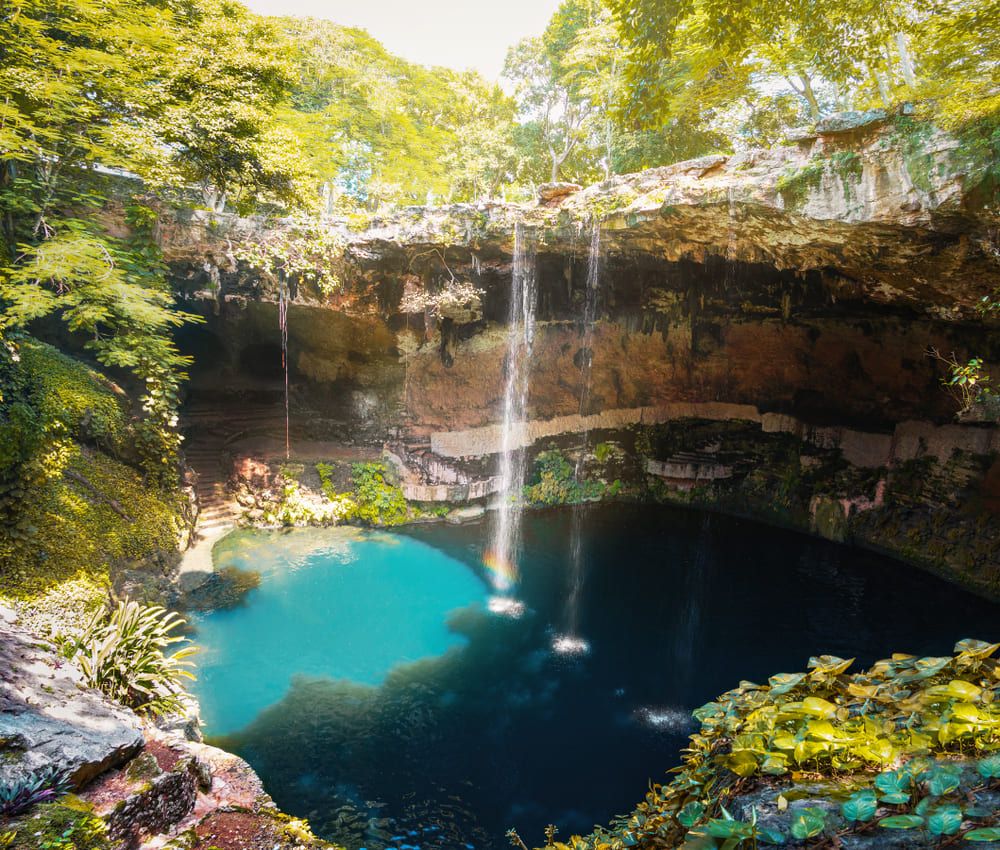
In the heart of Valladolid, just five minutes from the main square, Cenote Zací is the city’s only urban cenote and one of the easiest to reach. Semi-open, it reveals a turquoise pool surrounded by rocky walls and topped by a partially collapsed vault that allows natural light to filter in. Its water, cool all year round at about 23°C, shelters a surprising ecosystem: swallows nesting in the cracks, bats that become active at dusk, dragonflies, and blind catfish adapted to the darkness of the depths.
Beyond its natural beauty, the cenote also carries a long history. It once formed the sacred heart of the Maya city of Zací, territory of the Cupules and Cocomes clans, serving both as a vital source of drinking water and as a place for ritual ceremonies. The Maya considered it a gateway to the underworld, Xibalbá, and a sanctuary dedicated to Chaac, the god of rain.
Offerings were thrown into its waters to ensure the fertility of the fields and the prosperity of the city. Some archaeologists also suggest that more solemn rituals, possibly even symbolic sacrifices, may have taken place here, highlighting the spiritual importance of the site. Among the many stories connected to the cenote, the legend of Hul-Kin and Sac-Nicté is the most famous.
At the time of the city of Zací, two rival clans struggled for power: the Cupules and the Cocomes. Sac-Nicté, a young woman of great beauty raised by her sorceress grandmother, lived above the cenote’s vault. Hul-Kin, the son of the rival chief, and Sac-Nicté fell in love despite the hostility between their families and secretly met here.
When Hul-Kin’s father discovered their relationship, he sent his son far away to marry a woman from an allied clan. Desperate, Sac-Nicté revealed her secret to her grandmother: she was pregnant. Hoping to bring her beloved back, she performed nighttime rituals, bathing in the cenote under the full moon while burning copal and praying to the gods.
But despite her prayers, Hul-Kin seemed to have forgotten her. In despair, she tied a stone to her long hair and threw herself into the waters of the cenote. Sensing that something was wrong, Hul-Kin rushed back to Zací.
When he learned what had happened, he threw himself into the cenote as well, choosing to die with her. The grandmother, witnessing the tragedy, cast a white flower into the water and spoke words of blessing, symbolically sealing their eternal union. Since then, the legend says that each year, when the water turns darker, the cenote demands a sacrifice for this forbidden love, and that the drops falling from the stalactites resemble the tears of the lovers, slowly falling among the blind fish swimming together in the turquoise water, like the two lovers reunited for eternity.
Aucun avis pour le moment
