





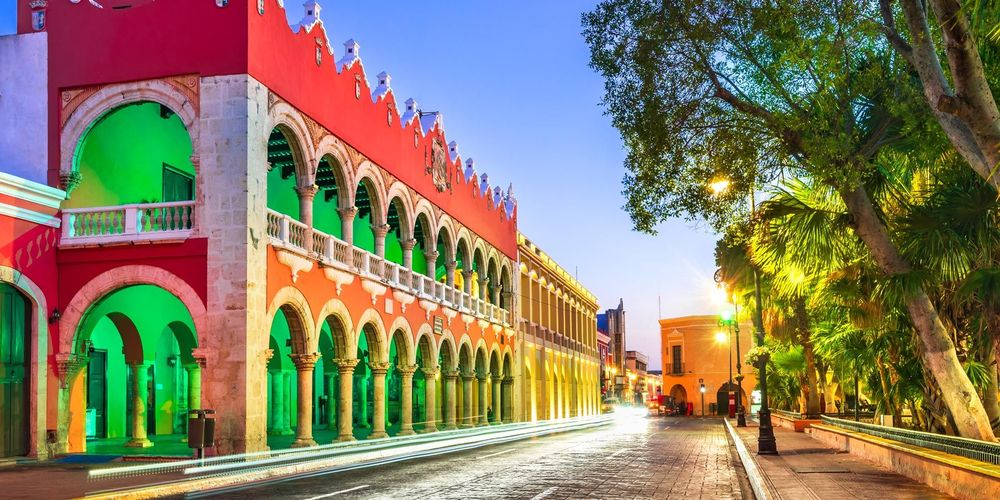
Walk
From Mayan heritage to colonial elegance
Mérida, Mexico
Walk
From Mayan heritage to colonial elegance
Mérida, Mexico
5.6 km
Distance
2h30
Durée
28
Audios
Loop
Parcours
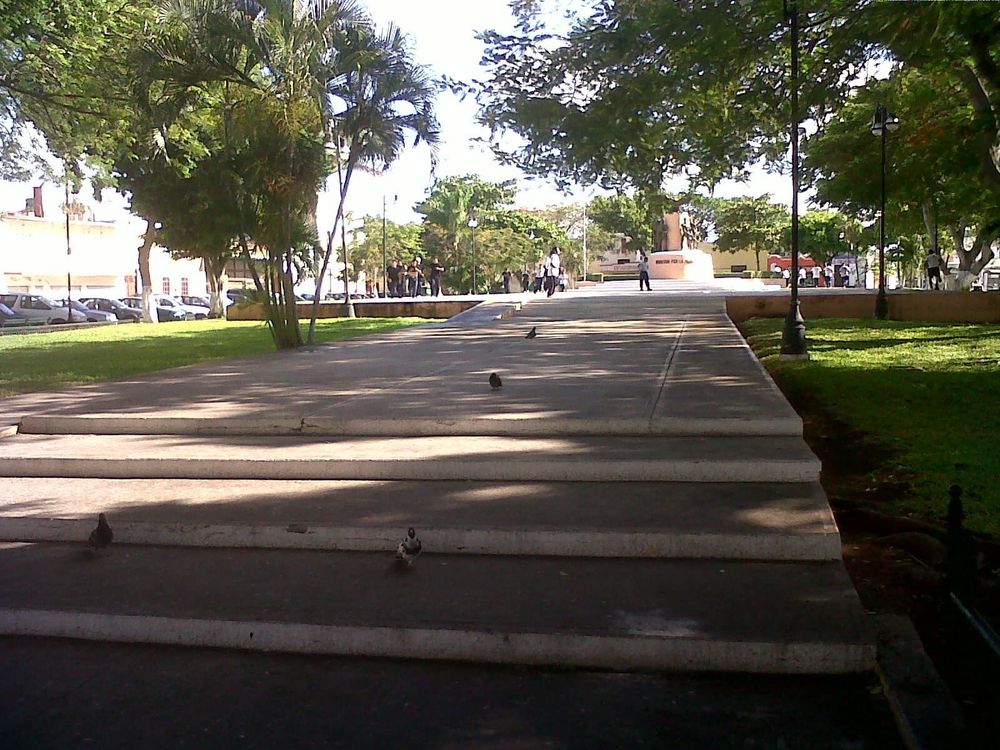
©Ricardo Pool - CC BY-SA 3.0 <https://creativecommons.org/licenses/by-sa/3.0/deed.fr>via Wikipedia Commons
Parque de la Mejorada is one of those places where Mérida tells itself in several layers, quietly, in the shade of great laurels. In the heart of the Mejorada barrio, it invites you to stroll. The Mérida audio-guided tour stops here to evoke this peaceful place, full of history, away from the bustle of the centre.
Parque de la Mejorada is in the heart of the barrio of the same name, one of the historic districts of Mérida. Bordered by old buildings, including a former convent, and very close to the Arco de Dragones, it superimposes several eras of the city's history. Its great laurels offer welcome shade and make it a relaxation spot prized by residents and visitors alike.
Here you enjoy the shade of the great laurels, the historic buildings around and the peaceful atmosphere of the district. The park is very close to the Arco de Dragones and the Museum of Yucatecan Song. It is a pleasant stop, revealing a calmer and more intimate face of Mérida, conducive to strolling and rest.
Parque de la Mejorada lies in the Mejorada barrio, east of the historic centre of Mérida, reachable on foot. It is a public space open at all times, freely accessible and on the level. The buildings and museums around have their own hours; the park lends itself to a shaded break during the visit.
In the Mejorada barrio, east of the historic centre of Mérida, near the Arco de Dragones and the Museum of Yucatecan Song.
Rest in the shade of the great laurels, admire the historic buildings around and enjoy the peaceful atmosphere of this district of Mérida.
Aucun avis pour le moment
