





Walk
From Mayan heritage to colonial elegance
Mérida, Mexico
Walk
From Mayan heritage to colonial elegance
Mérida, Mexico
5.6 km
Distance
2h30
Durée
28
Audios
Loop
Parcours
Shutterstock
The San Juan barrio is one of the oldest districts of Mérida, born in the sixteenth century when the city stopped here, at the southern gates. Around its park and its church, it has kept a peaceful and authentic atmosphere. The Mérida audio-guided tour stops here to evoke this historic district, full of memory.
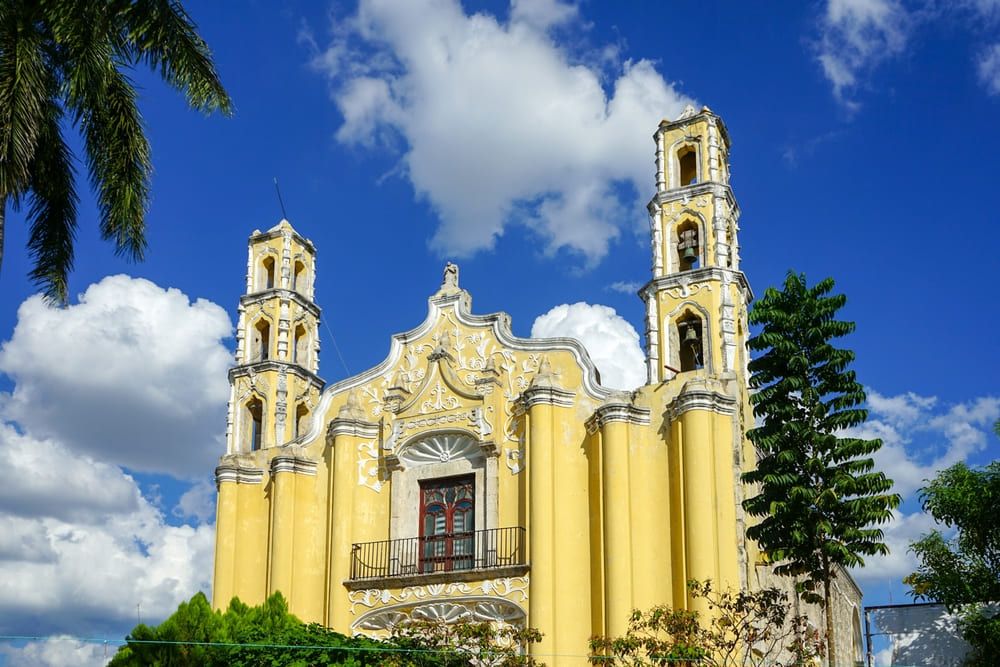
The San Juan barrio was born in the sixteenth century, at the time when Mérida stopped there, marking the southern limit of the city. Its baroque church, which gave its name to the district and the park, is its heart. Around the square and the arch of San Juan, one of the old colonial arches of the city, the district keeps the charm and authenticity of old Mérida.
Here you discover the baroque church of San Juan, the shaded park and the neighbouring colonial arch, in a peaceful and authentic district. Away from the bustle of the centre, San Juan offers a glimpse of the Mérida of the past and its neighbourhood life. It is a stop for lovers of history and local atmospheres, south of the historic centre.
The park and church of San Juan lie in the San Juan barrio, south of the historic centre of Mérida, reachable on foot. The park is a freely accessible public space; the church, a working place of worship, can be visited with respect for services, according to variable hours. The square and the arch can be freely admired during the walk.
It is one of the oldest districts of Mérida, born in the sixteenth century at the southern gates of the city, around its baroque church and its colonial arch.
The baroque church of San Juan, the shaded park and the neighbouring colonial arch, in one of the most authentic and historic districts of Mérida.
Aucun avis pour le moment
