





Walk
The rebellious city on the water
Valladolid, Mexico
Walk
The rebellious city on the water
Valladolid, Mexico
4.6 km
Distance
2h00
Durée
17
Audios
Loop
Parcours
Shutterstock
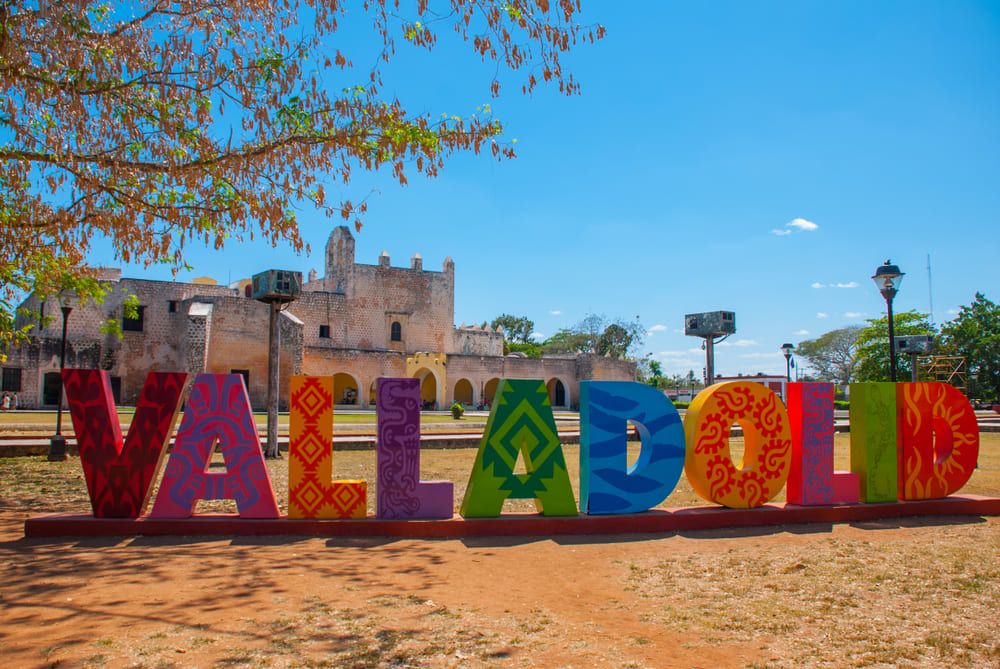
The Sisal neighborhood is one of the oldest parts of Valladolid. Its name comes from the Maya Ziiz-Ha, meaning “cold water,” a reference to the underground cenote located beneath the convent, known long before the arrival of the Spanish. When the colonial city was founded in 1543, the authorities imposed strict segregation: the center was reserved for the Spanish, while the Maya population was grouped to the west, in the Sisal district.
The separation was so strict that a census from 1805 recorded not a single white resident living in the entire neighborhood. Yet long before the conquest, Valladolid was the Maya city of Zací, meaning “white hawk,” a major political and religious center in eastern Yucatán belonging to the province of the Cupules. The region was not a unified empire but rather a network of independent chiefdoms, and the Cupules were known as a fiercely independent and warlike Maya people who strongly resisted any outside domination.
The conquest of Yucatán was one of the longest and most difficult in the Americas. It began in 1527 under Francisco de Montejo and continued for nearly twenty years through three campaigns led by three generations of the same Montejo family. In 1543, Zací was captured and integrated into the colonial system under the name Valladolid.
Lands were redistributed and the Maya population was subjected to the encomienda system, a form of forced labor close to semi-slavery. Economic oppression, military violence, cultural destruction, and religious profanation quickly led to a general uprising of the Cupules in November 1546. Nearly 20,000 Maya warriors went to war with the goal of eliminating all Spanish presence.
But within four months, the Montejo family regained control of the territory and launched a large-scale program of forced evangelization. Beginning in 1552, the Franciscans settled here in the indigenous district of Sisal to convert the Maya population. Christianization involved mass baptisms, the prohibition of traditional rites, and the destruction of older religious practices.
Yet Maya culture was deeply rooted, and resistance gradually became quieter rather than openly confrontational. Behind an apparent conversion, many Maya continued their traditions in secret and emptied certain Catholic elements of their original meaning in order to incorporate their own ancestral beliefs. From this emerged a form of religious syncretism, a gradual blending of the two spiritual worlds: saints became associated with local deities, Christian rituals were interpreted through Maya cosmology, and ancient practices survived in adapted forms.
The Hanal Pixán celebration, held around November 1st, is a living example. Officially integrated into the Catholic festivities of All Saints’ Day and the Day of the Dead, it still reflects a deeply Maya vision of death: each year, the souls return to spend time with the living, in a world where the dead, the living, and the divine remain closely connected.
Aucun avis pour le moment
