





Walk
The Volcanic City
Arequipa, Pérou
Walk
The Volcanic City
Arequipa, Pérou
3.9 km
Distance
1h45
Durée
15
Audios
Loop
Parcours
Shutterstock
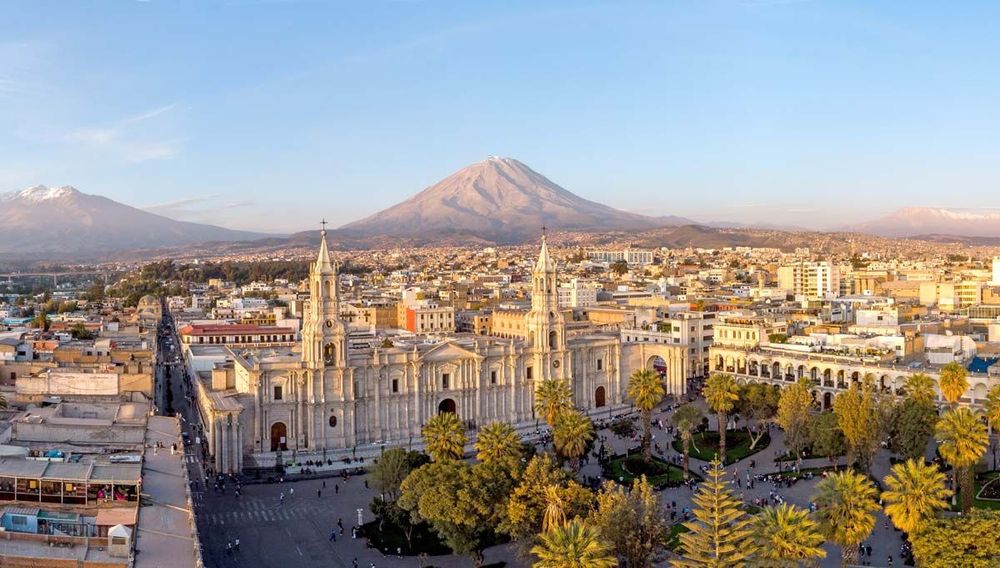
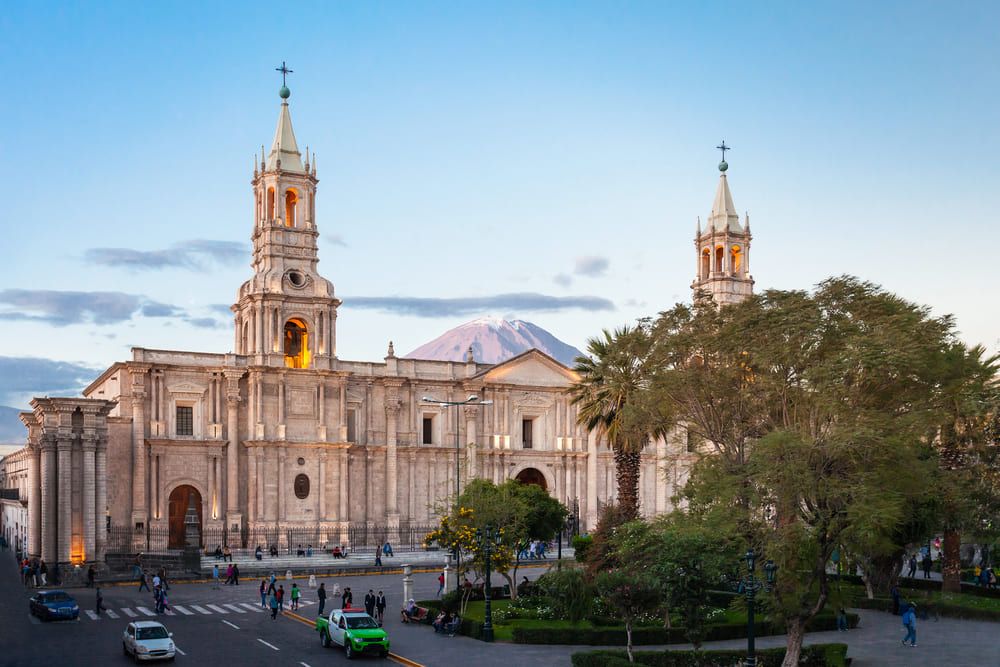
Because the rest of Arequipa’s historic center is surprisingly low-rise, the cathedral and its colossal 107-meter-long (351-foot) façade immediately become your ultimate point of reference. Getting lost is almost impossible—if you can’t see it, you probably have your eyes closed. This cathedral is practically the ultimate survivor of South American history.
It was founded on August 15, 1540, the very day the city itself was established—because apparently, priorities mattered—and since then it has been destroyed and rebuilt around ten times. Between repeated earthquakes, showers of volcanic ash, and a devastating fire in 1844, it has had more comebacks than a cat with nine lives. Local architect Lucas Poblete practically spent his life rebuilding it.
Before you head inside, take a quick detour to the bell tower to see its London-made clock from 1854. Its maker chose to write the number four using four strokes rather than the traditional Roman numeral, so it wouldn’t be confused with six. And if you look near the 9, you’ll spot a genuine bullet hole—a souvenir from a revolution in 1950.
Apparently, even taking a bullet wasn’t enough to stop this clock from keeping time. Inside, the cathedral becomes a showcase of European-style luxury. The altar is made from Carrara marble and was commissioned directly from the jeweler to the Queen of Spain.
The oak pulpit was carved in Lille and depicts the devil crushed beneath the power of the divine word. Unlike the cathedral, he didn’t get nine lives. You’ll also find a Belgian organ standing 12 meters (39 feet) high, with more than 1,000 pipes.
To keep it from seizing up, there’s no dusty repair routine—instead, it gets a regular musical workout during maintenance concerts held on Tuesdays, Thursdays, and Saturdays. And one last surprise lies beneath your feet: catacombs reserved for bishops and the city’s wealthiest residents, connected to secret galleries running beneath the square. Entry to the cathedral itself is free, but it’s worth paying for the museum visit so you can climb to the top of the bell tower.
From there, you’ll get a sweeping view over Arequipa’s low rooftops, with the imposing Misti and Chachani volcanoes standing watch nearby.
Aucun avis pour le moment
