





Walk
The Volcanic City
Arequipa, Pérou
Walk
The Volcanic City
Arequipa, Pérou
3.9 km
Distance
1h45
Durée
15
Audios
Loop
Parcours
Shutterstock
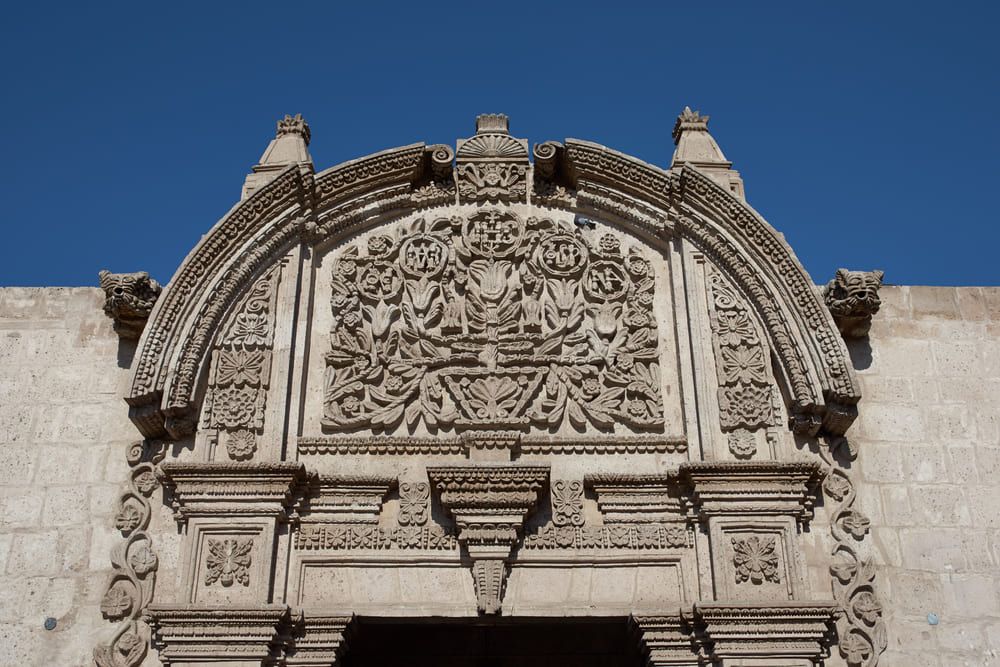
Take a good look at the imposing façade on your left. Yes, you’re seeing that correctly—you’re standing in front of a BBVA bank branch. This may be the first time in your life you’ve had the chance to withdraw cash in the middle of a UNESCO World Heritage-listed monument.
Not bad for a trip to the ATM! Behind those cash machines stands the Casa Tristán del Pozo, a true gem of Arequipa’s local Baroque architecture. It was built in 1738 for General Tristán del Pozo and his wife, before passing through the hands of bishops, military officers, and wealthy merchants, until the bank purchased the private mansion in 1974.
This is also the perfect place to take a closer look at one of Arequipa’s most important building materials. The entire house is made from sillar, the white volcanic stone quarried from the nearby volcanoes. It’s this stone that gives Arequipa so much of its character—and earned it the nickname “the White City.” Easy to carve yet remarkably resistant to earthquakes, sillar is the true star of local architecture.
Take a moment to admire the façade. Just above the main entrance, look for a five-branched tree covered in cantuta flowers, Peru’s national flower. Step through the gateway into the first paved courtyard, then look above the doors and windows.
You’ll see Latin inscriptions calling for divine protection—a kind of 18th-century all-inclusive insurance policy, long before modern banking contracts came along. Today, the building also houses a free art gallery run by the BBVA Foundation, displaying paintings and watercolors by some of the region’s most celebrated artists, including Carlos Baca Flor and Teodoro Núñez Ureta. Apparently, bankers can have good taste too.
Aucun avis pour le moment
