





Walk
The Navel of the World
Cusco, Pérou
Walk
The Navel of the World
Cusco, Pérou
5.1 km
Distance
2h20
Durée
23
Audios
Loop
Parcours
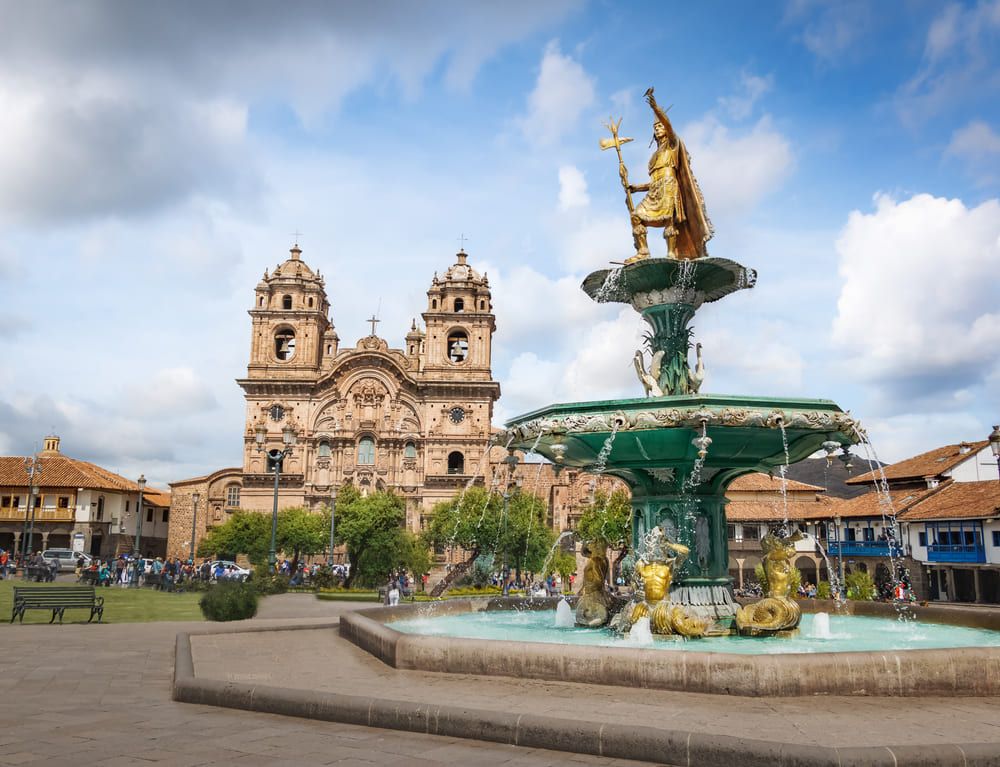
Shutterstock
Like almost every central square in Peru, this one is called the Plaza de Armas—but don’t let the familiar name fool you. This is arguably one of the most important squares in the country, if not in all of South America. During the Inca Empire, it was known as Huacaypata.
It was twice the size it is today, and it looked completely different. Forget the colonial arcades and imposing churches you see around you now: this was once the political and religious nerve center of the entire empire. Here, all roads didn’t lead to Rome—they led to Cusco.
More precisely, the great Andean roads of the famous Qhapaq Ñan network converged right here, at the foot of the golden statue that now presides over the center of the square. And “presides” is especially fitting, because this is Pachacútec, one of the greatest Inca emperors. His name literally means “the one who changes the world”—and he certainly lived up to it.
In the 15th century, Pachacútec transformed the small local kingdom of Cusco into a vast empire: the Tahuantinsuyo. According to tradition, he rose to power after an entirely unexpected military victory over the Chancas, Cusco’s great enemies, a triumph that established him as a respected leader. Many of the region’s greatest building projects are attributed to him.
Pachacútec redesigned Cusco, reorganized the empire, expanded the Andean road network, and, most famously of all, is believed to have ordered the construction of the legendary Machu Picchu. In short, he was an extraordinary builder—and today, his statue still keeps watch over the square he helped shape.
Aucun avis pour le moment
