





Walk
The Volcanic City
Arequipa, Pérou
Walk
The Volcanic City
Arequipa, Pérou
3.9 km
Distance
1h45
Durée
15
Audios
Loop
Parcours
Shutterstock
Get ready to step into the wonderfully soft world of Mundo Alpaca, just across the street. Best of all? It’s free, so there’s really no reason not to stop in.
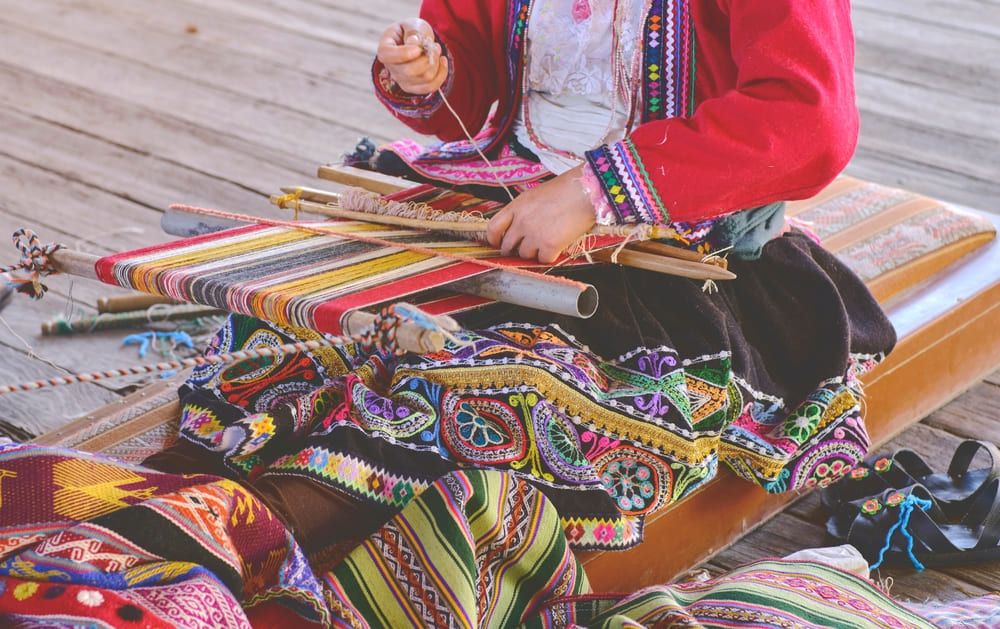
You can watch artisans sort fiber by hand with incredible precision, see demonstrations of traditional weaving on a backstrap loom, and explore the Amano-Michell Museum, which preserves pre-Columbian textiles that are centuries old. But the real highlight is the animal enclosures. This is the perfect moment to settle an age-old question: how do you tell a llama from an alpaca without getting spat on?
It’s actually pretty simple. The llama is the heavyweight of the family, weighing up to 150 kilograms (330 pounds), with curved, banana-shaped ears and a long muzzle. The alpaca, on the other hand, is the luxury-sweater specialist.
Smaller, weighing around 60 kilograms (132 pounds) and with an irresistibly round face, it comes in two varieties: the huacaya, fluffy like a stuffed animal, and the suri, with long, silky locks worthy of its rock star reputation here in Arequipa. The family also includes two wild cousins: the elusive guanaco and the legendary vicuña. The vicuña is the true diva of the Andes.
Its ultra-fine fiber, once known as the “wool of the gods,” was strictly reserved for Inca emperors. After coming close to extinction, the species is now protected and shorn only every 3 to 4 years during the chaccu, a large traditional roundup, before being released back into the mountains. But these animals are about much more than beautiful fiber.
For thousands of years, they have been essential to life in Peru. Long before the Spanish introduced horses and cattle, camelids were the real workhorses of the Andes. Thanks to its strength and extraordinary endurance, the llama served as the Inca Empire’s official pack animal, carrying goods across the region’s steep terrain.
And if you’re wondering why llamas have such a reputation for spitting, don’t worry—they’re not doing it just to be mean to tourists. Spitting is mainly a way of communicating with other llamas, establishing dominance, or warning off a threat.
Aucun avis pour le moment