


Walk
The Navel of the World
Cusco, Pérou
Walk
The Navel of the World
Cusco, Pérou
5.1 km
Distance
2h20
Durée
23
Audios
Loop
Parcours
Shutterstock
You’ve just entered Siete Borreguitos Street—literally, “Seven Little Lambs.” With its spotless white walls, picturesque stairways, and cascades of flowerpots, it’s easily one of the most photogenic spots in Cusco. But the charming name isn’t just for show. This was once a pastoral route used by local residents leading their flocks of sheep or donkeys toward nearby watering places.
Keep your eyes open, because even today it’s not unusual to see a local woman in traditional dress proudly walking her llama or alpaca along the street. Venture off to the right and you’ll arrive at the foot of the colonial Sapantiana Aqueduct. Its stone arches span the Pucro stream, and in the 17th century, the structure was used to supply drinking water and irrigate the city.
But, as so often in Cusco, the Spanish weren’t starting from scratch—they were reusing what was already here. Before their arrival, the site was known as Waca Sapantiana, an important Inca sanctuary devoted to the worship of water. Priests channeled natural springs here for healing rituals, to ease the fatigue of nobles, and to pray for the emperor’s health.
Basically, the Andes’ very first luxury spa! And speaking of taking it easy, this is a good moment to catch your breath, because the next stretch is going to put your calves to work. Continue to the right along Pumacurco Street and you’ll be heading toward one of the most monumental sites in the Americas: the Sacsayhuamán complex.
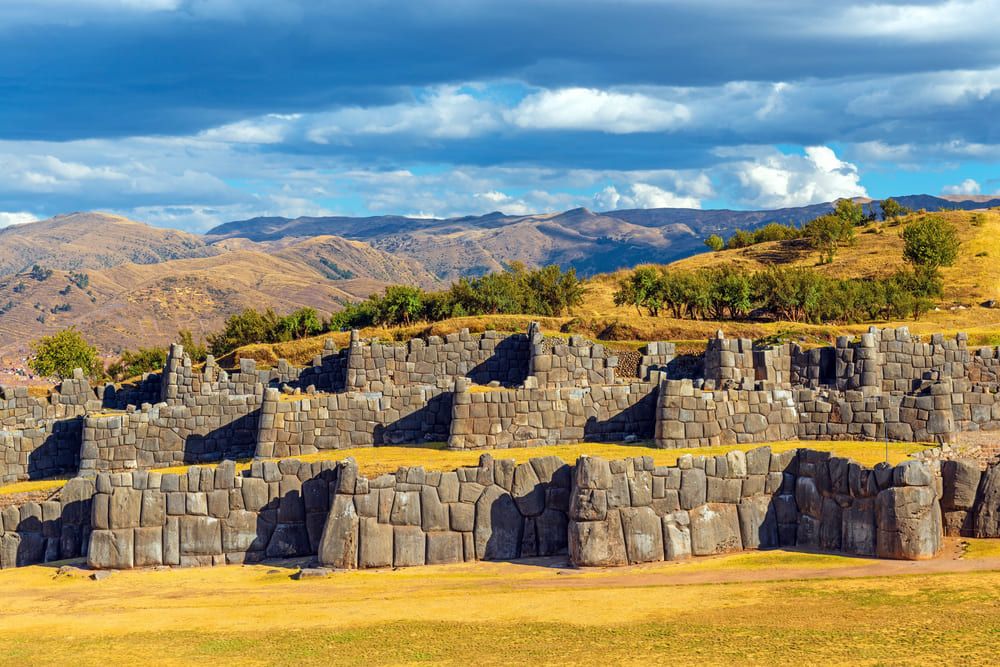
This is the perfect moment for a short detour to explore one of Cusco’s essential landmarks. Often described as a “fortress,” this 15th-century site—commissioned, once again, by Pachacútec—was much more than a military stronghold. Alongside its defensive walls, it was an important political center and a sanctuary dedicated to Illapa, the god of Thunder.
And if the altitude hasn’t already taken your breath away, Inca engineering probably will. The builders assembled colossal stone blocks, some weighing more than 100 metric tons (110 US tons) and rising more than 9 meters (30 feet) high, fitting them together like pieces of an enormous puzzle. Unfortunately, what survives today represents only around 20 to 40% of the original complex.
After suffering a memorable military defeat here at the hands of Inca warriors in 1536, the conquistadors turned Sacsayhuamán into a vast stone quarry, stripping away blocks to build churches and houses in the city center below. Finally, at the foot of the site, your hardworking legs have one more option: turn right and climb the sacred hill of Pukamoqo to reach the Cristo Blanco. This 8-meter-high (26-foot) statue of Christ, standing with arms outstretched, was sculpted by local artist Francisco Olazo Allende with the help of artisans from San Blas.
Its foundation stone was laid on June 24, 1944—the very day of the first modern edition of Inti Raymi—once again bringing Catholic faith and Andean identity together. And at the top, your reward is a breathtaking panorama across the entire Cusco basin, a fitting place to take in the scale of this legendary capital.
Aucun avis pour le moment