





Walk
The Navel of the World
Cusco, Pérou
Walk
The Navel of the World
Cusco, Pérou
5.1 km
Distance
2h20
Durée
23
Audios
Loop
Parcours
Shutterstock
Welcome to the Mercado Central de San Pedro, where you’re looking at the pantry of one of the world’s most celebrated cuisines. Peru has been named the world’s leading culinary destination more than ten times, and its restaurants have been sitting near the top of international rankings for years. The country is also the birthplace of the potato, first domesticated high in the Andes thousands of years ago.
Forget the two or three varieties you might find at your local supermarket—Peru has more than 3,500 of them, in every imaginable color and shape, with textures ranging from firm to wonderfully creamy. Today, the market is divided into entire sections devoted to meat, fruit, cheese, clothing, and even Andean shamanism, where medicinal plants, llama fetuses, and amulets line the stalls. If you want to experience the market at its most authentic, make your way to the prepared-food section.
Cusco locals start arriving as early as 06:30 (6:30 a.m.) for a surtido, a large glass of freshly blended fruit juice, or a caldo de gallina, a hearty chicken broth meant to restore your strength. At lunchtime, look for the stall with the biggest local crowd—it’s about as good a guarantee as you can get that the ingredients are extremely fresh. And when it comes to food, Peru offers an extraordinary range.
There’s ceviche, made with raw fish “cooked” in lime juice and seasoned with red onion and chili pepper, a dish recognized as part of UNESCO’s Intangible Cultural Heritage. It’s Peru’s national dish par excellence, and its tangy marinade, known as leche de tigre, is also said to be the country’s ultimate hangover cure. Useful information, perhaps, if you overdid the famous Pisco Sour last night—the national cocktail made with grape brandy, lime juice, syrup, and a frothy egg-white emulsion.
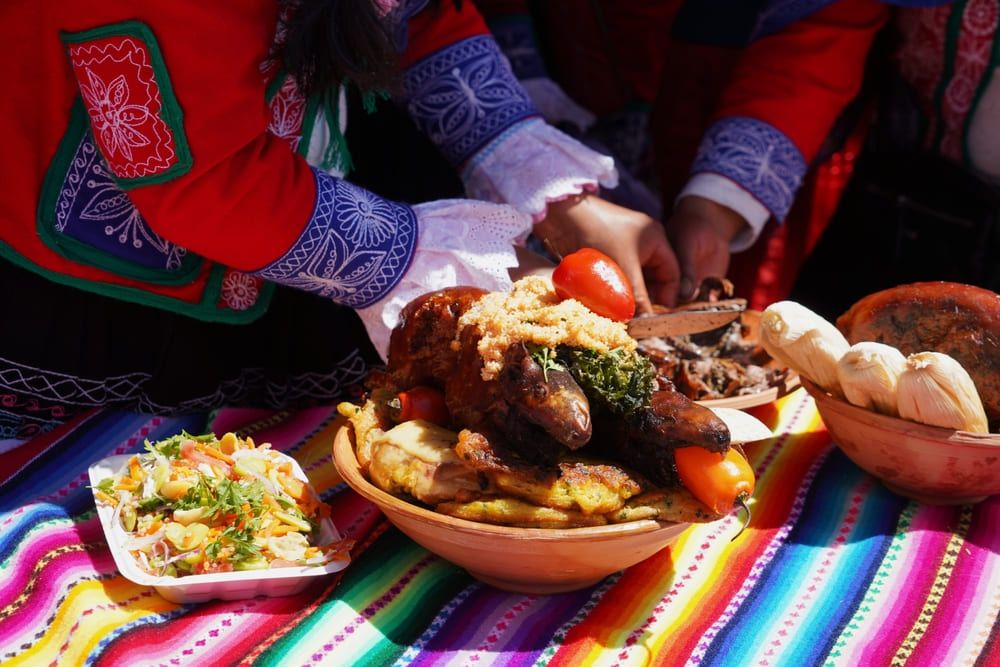
You’ll also come across chiri uchu, a specialty that is entirely Cusqueñan. Served cold, it brings together an astonishing range of Peruvian ingredients on a single plate: cuy, or roasted guinea pig, chicken, cheese, cured meats, seaweed, and toasted corn. Then there’s papa a la huancaína: simple slices of potato covered in a creamy, spicy sauce made with fresh cheese and yellow chili pepper.
And don’t leave without something local to drink with it all. Chicha de jora is the Incas’ lightly alcoholic fermented corn beer, traditionally served in chicherías. Its nonalcoholic cousin, chicha morada, is a refreshing drink made from purple corn boiled with pineapple peel, cloves, and cinnamon.
Out on the streets, you’ll also find emoliente, a piping-hot herbal infusion made with roasted barley, flaxseed, and medicinal plants—and traditionally claimed to cure just about anything. So whether you’re grabbing a quick snack or sitting down to a full meal, Peru isn’t a country you simply visit. It’s one you have to taste.
Aucun avis pour le moment
