





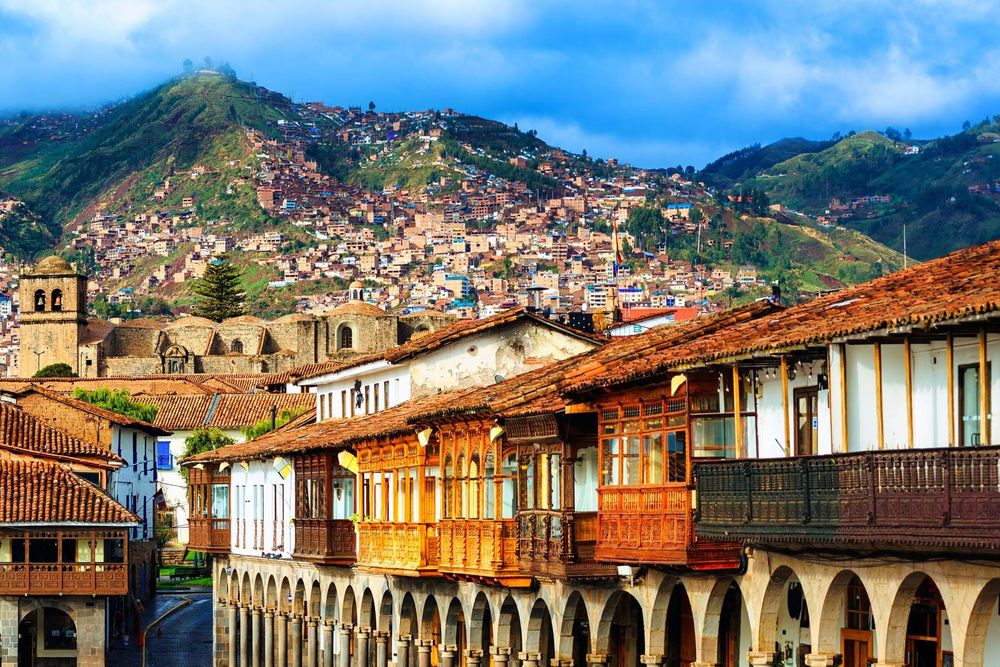
Walk
The Navel of the World
Cusco, Pérou
Walk
The Navel of the World
Cusco, Pérou
5.1 km
Distance
2h20
Durée
23
Audios
Loop
Parcours
Shutterstock
To understand Cusco—and Peru—you have to set aside some of our modern assumptions. The Inca Empire functioned without money: its real currency was labor and reciprocity. In everyday life, that took the form of ayni—“today for you, tomorrow for me”—and the mita, a temporary state labor obligation in which people contributed their time to building roads or cultivating fields in exchange for food and protection.
It was a redistributive system built around reciprocity… until the Spanish later transformed it into a deadly form of forced labor, particularly in the silver mines of Potosí. But how could such a powerful empire fall to just 168 conquistadors?
One reason was the bitter civil war between the princes Huáscar and Atahualpa, which left the empire exhausted just as Francisco Pizarro arrived in 1532. But an even greater factor was disease. With no immunity to European illnesses such as smallpox, more than 85% of the Indigenous population was wiped out within a century.
The microbes had already begun devastating the country before the Spanish soldiers themselves arrived. Today, Cusco is far more than a historic backdrop. Mass tourism provides a living for much of the region, but it has also revived debates over how wealth is distributed between the capital and the rest of the country.
Inca culture, meanwhile, is still very much alive: Quechua can still be heard throughout San Pedro Market, and a strong sense of cultural pride continues to shape the city.
Aucun avis pour le moment
