





Walk
The City of Dragons
Ljubljana, Slovenia
Walk
The City of Dragons
Ljubljana, Slovenia
3.7 km
Distance
1h30
Durée
27
Audios
Loop
Parcours
Shutterstock
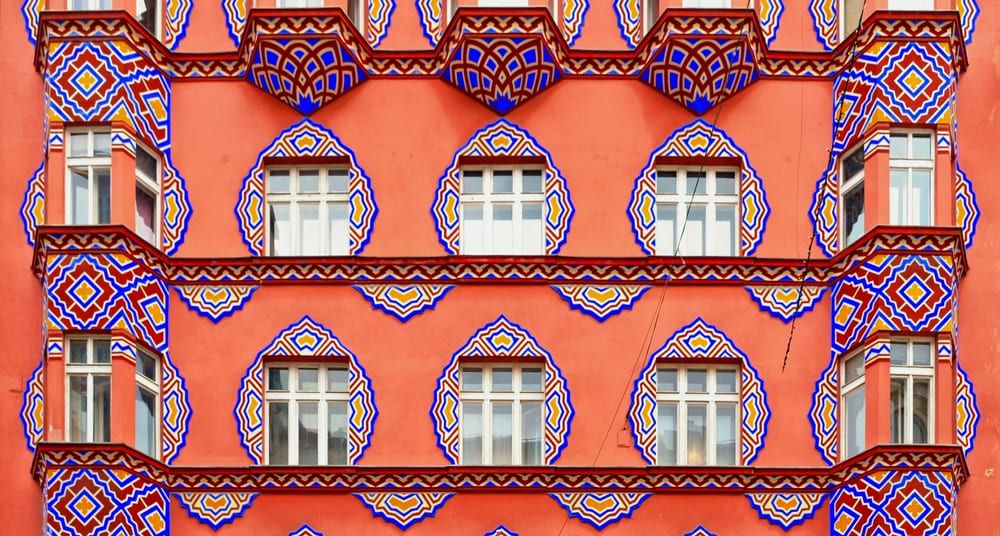
The Ljubljana audio-guided tour has you discover Miklošičeva street, one of the finest showcases of early twentieth-century architecture. After the great earthquake of 1895, the city rebuilt itself with ambition, and this street bears the most striking testimony to it.
Impossible to miss the Grand Hotel Union, whose immense façade occupies almost the whole block. At its inauguration in 1905, it was the most modern building in the city. Its Vienna Secession style, with its garlands, its elegant curves and its corner dome, gave it a very cosmopolitan air. All around, other buildings of the same period testify to the surge of modernity that transformed Ljubljana after the disaster.
Miklošičeva street lines up its Art Nouveau and Secession façades, adorned with curves, mosaics and sculpted details, up to the square of the same name designed by Plečnik. It is an architectural walk ideal for understanding how Ljubljana was able to turn a disaster into an opportunity for renewal, giving itself a modern and elegant face at the turn of the twentieth century.
Miklošičeva street links Prešeren Square to the station, in the heart of Ljubljana. It can be walked freely on foot at all hours and on the level. The façades can be contemplated from the street; the Grand Hotel Union, in operation, follows its own access conditions.
Because of the great earthquake of 1895, which devastated the city; it was then rebuilt in a modern style, Art Nouveau and Vienna Secession.
In 1905; it was then the most modern building in Ljubljana, in the Vienna Secession style.
Aucun avis pour le moment
