





Walk
Short tour - The beautiful Catalan capital
Barcelona, Spain
Walk
Short tour - The beautiful Catalan capital
Barcelona, Spain
3.3 km
Distance
1h20
Durée
18
Audios
Loop
Parcours
Shutterstock
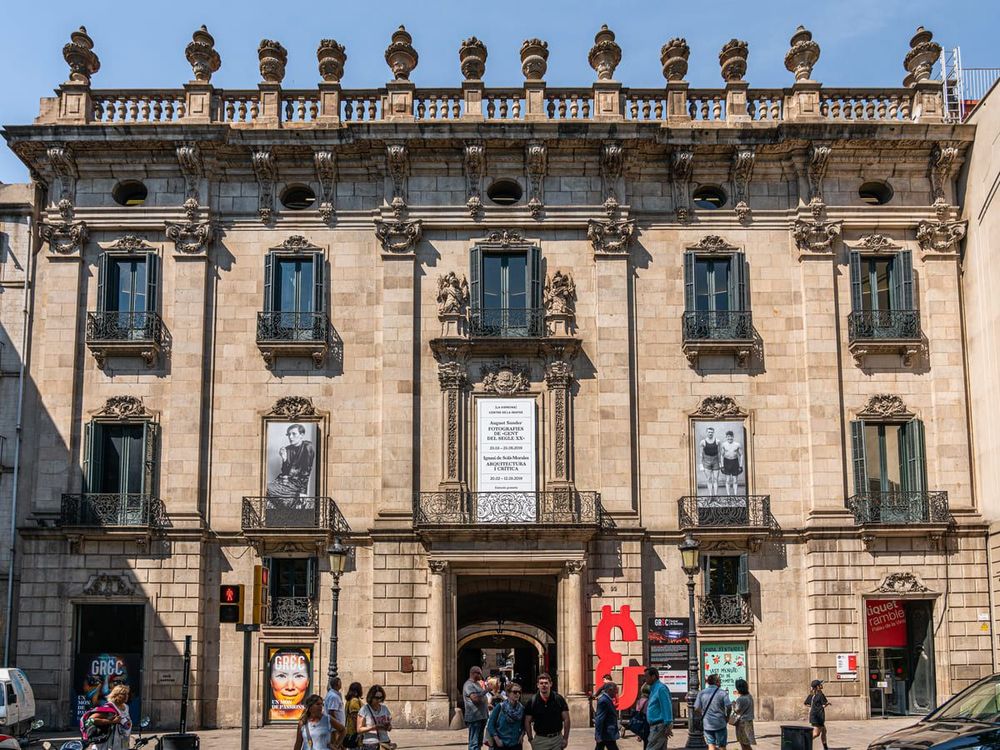
The Barcelona audio-guided tour points out to you, on La Rambla, the entrance to the Palau de la Virreina, the palace of the vicereine. This sumptuous little baroque palace is among the finest examples of Catalan civil architecture of the second half of the eighteenth century.
The palace was built in 1778 at the request of Manuel Amat, former viceroy of Peru, that is the official representative of the crown in the colonies of New Spain. He entrusted its construction to the architect Josep Ribes. Listed as a property of national interest in 1941, the palace was then acquired by the municipality, which renovated it and successively installed there the museum of decorative arts and then the textile museum.
The baroque façade, richly ornamented, testifies to the refinement of eighteenth-century Catalan civil architecture. Today, the Palau de la Virreina houses a centre dedicated to image and culture, which offers temporary exhibitions. It is an elegant stop along the walk on La Rambla, between heritage and contemporary creation.
The Palau de la Virreina is on La Rambla, in the heart of Barcelona. It houses a cultural centre offering exhibitions; access follows its own schedule, whose opening times may vary. The façade can be contemplated freely from the avenue.
Manuel Amat, former viceroy of Peru, in 1778, who entrusted its construction to the architect Josep Ribes.
A cultural centre dedicated to image, which offers temporary exhibitions, in the heart of La Rambla.
Aucun avis pour le moment
