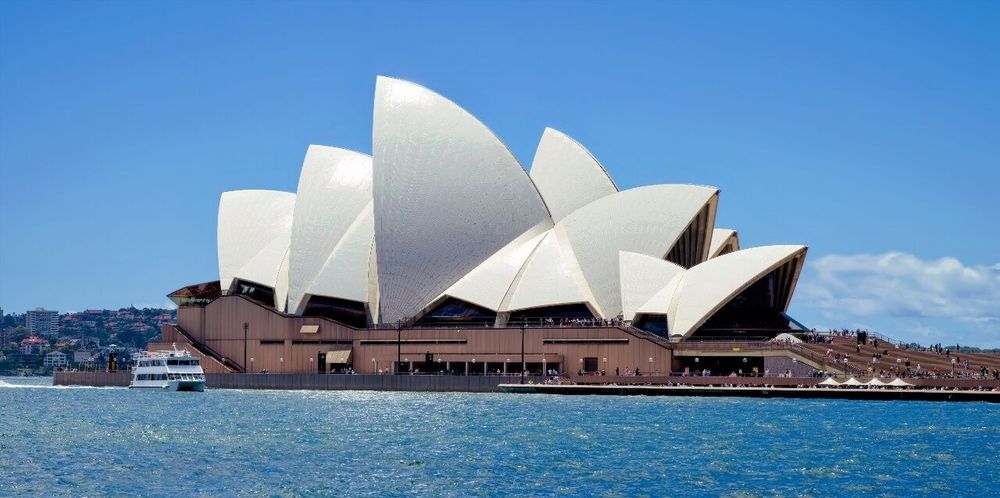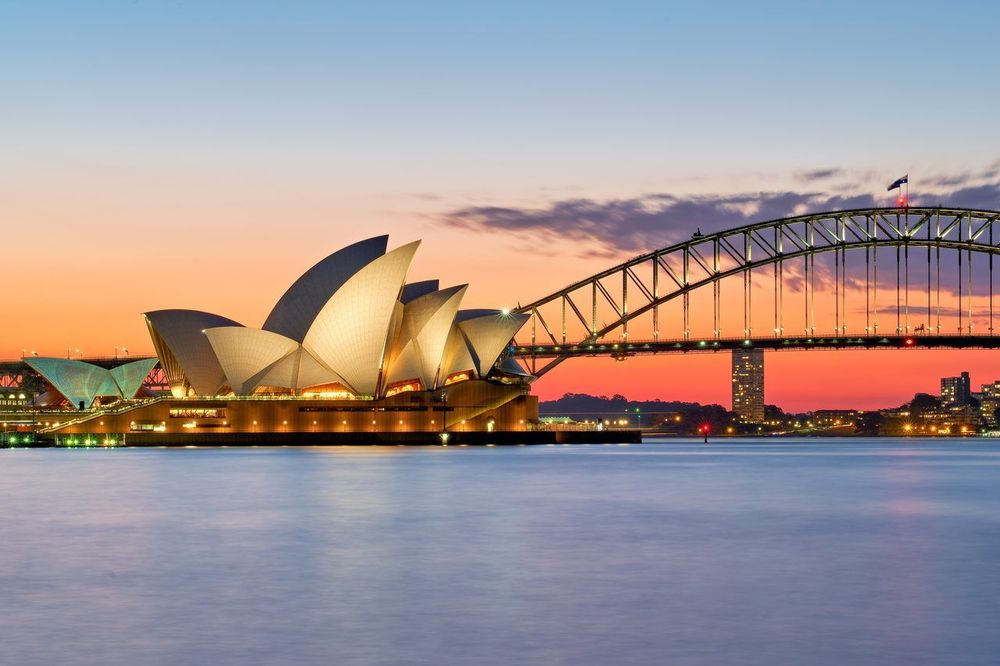
© Shutterstock
 Votre guide Ryo
Things to Do in Sydney in 2026: 15 Experiences Between Beaches, Harbor, and Day Trips
In Sydney, a ferry crossing the harbor at sunrise costs barely more than a bus ticket and offers practically the same view as a helicopter flight sold for AUD 250 further along the wharves. This kind of contrast defines the city: the country's most photographed symbols, the Opera House and the Harbour Bridge, stand alongside almost secret coves where locals swim before heading to work. To grasp this duality from the moment you arrive, the Ryo Sydney audio guide traces a first thread between the harbor and the historic neighborhoods — a good foundation before you head out to explore on your own.
What is there to do in Sydney when the city spreads across more than 12,000 km² of coastline and surrounding bush? There's the Harbour Bridge climb 134 meters above the water, an aquarium where you come face to face with bull sharks just centimeters from the glass, a beach that's packed in the morning and almost deserted in the afternoon (Clovelly), and vineyards two hours away by road for those who want to extend their stay beyond the shoreline. From unmissable landmarks and a cascade of beaches to the south and north, to day trips into the Blue Mountains or the Hunter Valley, plus practical tips for planning a stay of 1 to 7 days — here's everything you need to build an itinerary without ever going in circles, whether you're staying three days or a full week.
1. Admire the Sydney Opera House from Every Angle
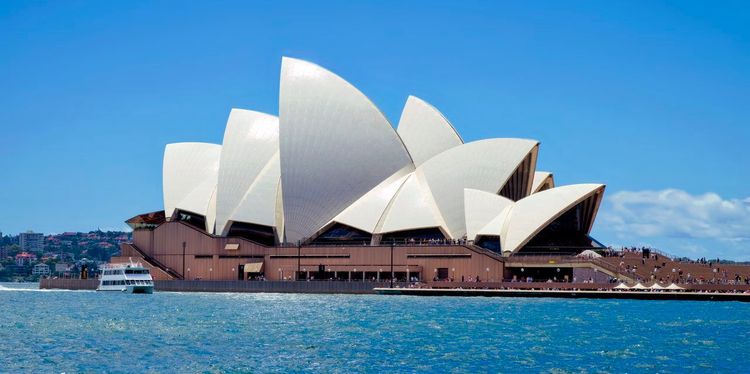
It's impossible to miss the white sails of the Sydney Opera House (Bennelong Point, Sydney NSW 2000, rated 4.8/5 on Google based on 92,609 reviews) upon arriving at Circular Quay, yet most visitors settle for a photo from a distance before moving on. Built between 1959 and 1973 to designs by Danish architect Jørn Utzon, the building is clad in more than one million Swedish tiles that shift in color with the light — matte white in the morning, almost golden at sunset.
Bennelong Point, the promontory on which the Opera House stands, is named after Woollarawarre Bennelong, a man of the Eora nation who served as an intermediary between British colonists and Aboriginal people from 1789 onwards. Before becoming an architectural landmark, the site housed a fort and then a tram depot — a history that few rushed visitors take time to discover. The construction itself remains a local legend: the initial budget of AUD 7 million ballooned to AUD 102 million, and Jørn Utzon left the project in 1966 without ever returning to see his finished work.
To see it from a different angle, walk to Mrs Macquarie's Chair, a rock-carved promontory at the tip of the Royal Botanic Garden: this is where most postcards are shot that frame the Opera House and the Harbour Bridge in the same shot. Circular Quay, just below, remains the most convenient vantage point for a coffee on a terrace facing the building.
You can also go inside. One-hour guided tours (around AUD 50, with several daily departures) take you through the Concert Hall and the Joan Sutherland Theatre, recounting the twenty chaotic years of construction that followed the 1957 architectural competition. Book online at least a week in advance during peak season: morning slots sell out first. At night, the Vivid Sydney festival illuminates the sails with projections each year in May and June, transforming the landmark into a giant canvas for three weeks.
2. Cross the Harbour Bridge on Foot or by BridgeClimb
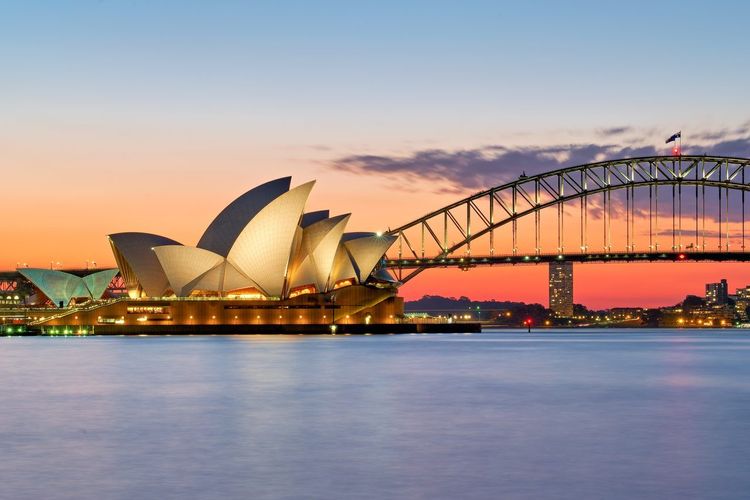
The Harbour Bridge (Cumberland St, The Rocks NSW 2000) has connected the city center to North Sydney since 1932, when 6,000 workers laid more than 52,000 tonnes of steel across the harbor. Two ways to cross it present themselves, and they have little in common.
The first is free: a pedestrian walkway runs along the eastern side of the deck, accessible from the stairs on Cumberland Street, allowing you to cross on foot in about twenty minutes with views of the Opera House sails below. The second, the BridgeClimb, takes you up the outer arch to the summit at 134 meters, harnessed and accompanied by a guide, at a price ranging from around AUD 200 (shortest option, on a weekday) to over AUD 350 for the full sunset climb. Allow three hours for the complete experience, including the provided jumpsuit.
Locals affectionately nickname the bridge the Coathanger because of its arched silhouette — a nickname even official tourist maps now use. Before becoming an actor in Crocodile Dundee, Paul Hogan spent several years working as a painter on the bridge's structure, a biographical detail that local guides love to share with visitors walking the pedestrian path.
If the budget doesn't stretch, the Pylon Lookout, housed in the bridge's southeast pylon and now rebranded as the Sydney Harbour Bridge Museum, offers an almost equally spectacular view for around AUD 30 and 200 steps to climb, with a bonus exhibition on the bridge's construction. A good compromise for those who want to gain some height without booking weeks in advance.
3. Wander Through The Rocks and Take the Ferry from Circular Quay
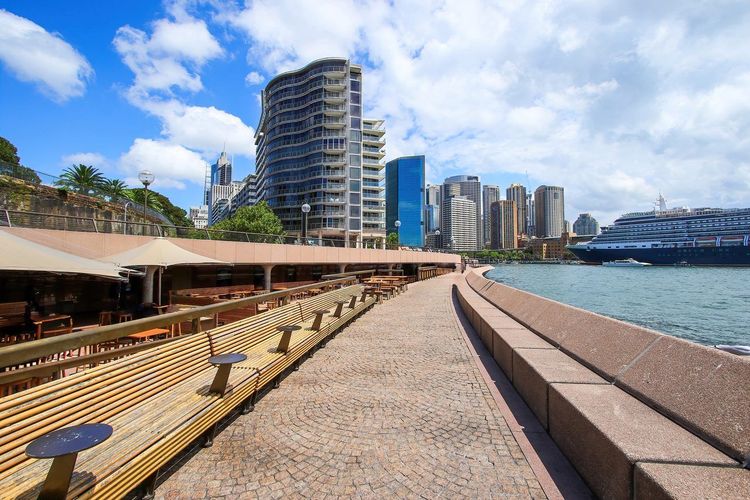
Between the Opera House and the bridge, an entire neighborhood deserves an unplanned wander before heading down to the wharves that form the beating maritime heart of the city.
The Rocks, the Historic Quarter and Its Markets
The Rocks is Sydney's oldest neighborhood, founded by the first British convicts who arrived in 1788. Its cobblestone lanes, such as Susannah Place and Nurses Walk, have retained their sandstone facades and gas lanterns — a striking contrast with the CBD skyscrapers just two streets away.
On weekends, the Rocks Markets sets up about a hundred stalls selling crafts, jewelry, and local produce along George Street, Saturday and Sunday from 10am to 5pm. The Ryo Sydney neighborhood audio guide dedicates an entire route to this historic maze, with stories about convicts and early settlers that few printed guides go into. In the evening, century-old pubs like the Lord Nelson Brewery Hotel, continuously licensed since 1841, serve their own beer brewed on-site in a microbrewery installed in the basement in the 1980s. Allow an hour and a half to walk through the neighborhood, longer if you stop at Cadmans Cottage, Sydney's oldest surviving house, dating from 1816.
Circular Quay, Gateway to Ferries and Cruises
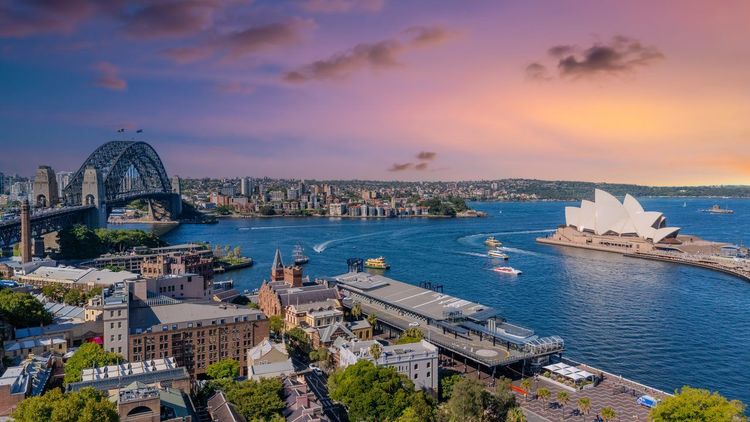
Just past The Rocks, Circular Quay brings together five numbered wharves serving Sydney's entire ferry network, from Manly to Watson Bay via Taronga Zoo. It is also the departure point for narrated harbor cruises, some combining an on-board dinner with views of the illuminated Opera House.
Public ferries, operated by Transport for NSW, cost barely more than a bus ticket with the Opal card and remain the most economical way to see the harbor from all angles. Plan to arrive fifteen minutes before departure during peak hours: wharves 3 and 4, serving Manly and Taronga Zoo, are often the busiest. The esplanade also draws street musicians and circus performers in the late afternoon, when the low-angled light gives the Opera House sails a particularly photogenic copper tint.
4. Stroll Through the Royal Botanic Garden and Barangaroo Reserve
The Royal Botanic Garden and Its Views of the Opera House
The Royal Botanic Garden covers 30 hectares between the city center and the harbor, founded in 1816 as Australia's oldest botanical garden. Its fig trees long sheltered a colony of flying foxes — giant bats hanging by the thousands from the branches — which was evicted in 2012 after years of damage to century-old trees, driven away by sounds broadcast at dawn. The gardeners will gladly show you the specimens that recovered, and those that didn't survive.
Entry is free and the gates open every day from 7am until sunset. Take time to reach the Palm Grove or the rose garden before ending at Mrs Macquarie's Point, where the Opera House and the Harbour Bridge align in a single frame. During World War II, part of the garden was dug with anti-aircraft trenches, traces of which can still be found tucked among certain flowerbeds. You can also spot the Tropical Centre, two glasshouses opened in 1990, which house collections of carnivorous plants and orchids less well known than the rest of the park. A picnic on the lawn overlooking the harbor costs only what you spend at the shops — no entry ticket required.
Barangaroo Reserve and the View from McMahons Point
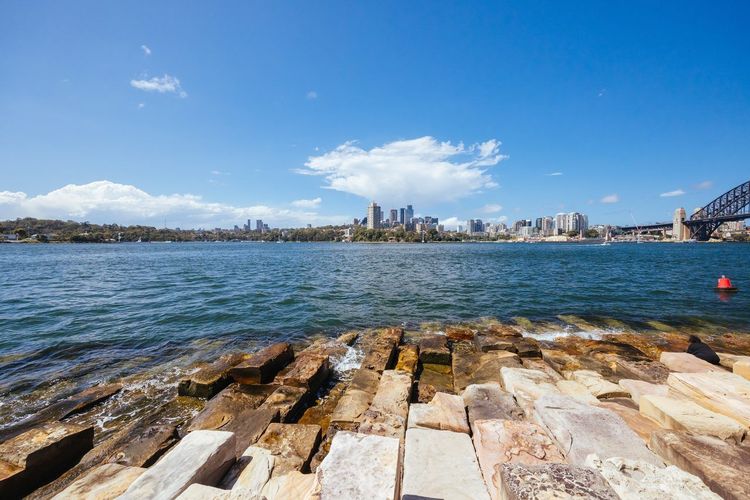
On the other side of the quay, Barangaroo Reserve (Hickson Rd, Barangaroo NSW 2000, rated 4.7/5 on Google based on 4,841 reviews) has transformed a former container terminal into a landscaped headland planted with 75,000 native trees and shrubs, restoring the shoreline to how it looked before colonization. Sandstone paths lead to rocky coves where locals come to swim at sunrise, far from the crowds of Bondi.
For the most spectacular skyline view without spending a dollar, cross the harbor to McMahons Point, a residential neighborhood on the north shore. The small park at Blues Point Reserve frames the Opera House, the bridge, and the CBD skyscrapers in a single panorama — particularly sought after by local photographers at sunset. Allow a good half-day to link both sites on foot from Circular Quay, or split the walk across two different days if you're staying on the north side of the harbor. Barangaroo also features a row of restaurants and bars perched on stilts, popular at aperitif hour for their unobstructed view of the sunset behind the bridge. Reserve a table on the water side if you plan to dine there on a Friday evening — the best spots go quickly. Our audio-guided tour, The Emerald City, connects the Botanical Garden to the Harbour Bridge along the way.
5. Go Up the Sydney Tower Eye for a 360° View
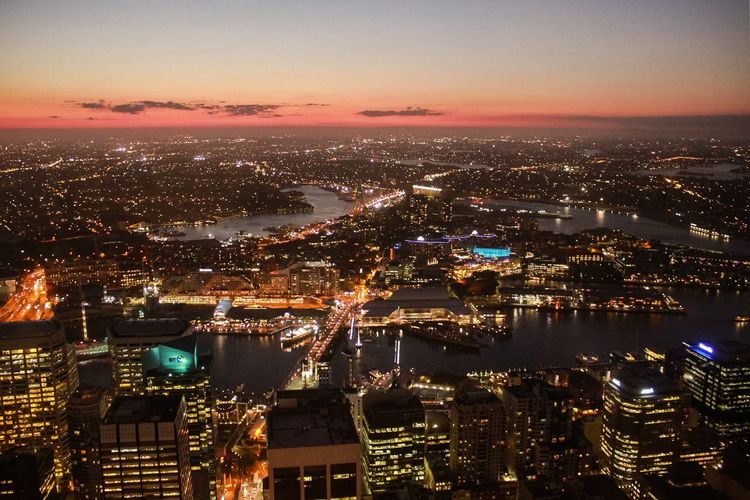
The Sydney Tower Eye (100 Market St, Sydney NSW 2000, rated 4.4/5 on Google based on 16,318 reviews) rises 309 meters above the CBD, with an observation deck at 250 meters — the highest point accessible to the public in the city, well ahead of the Harbour Bridge deck.
The elevator climbs to the panoramic platform in 40 seconds, where a 360° view takes in the harbor, the Blue Mountains on a clear day to the west, and the eastern beaches. Expect around AUD 35 for a standard entry booked online, or opt for the 4D Cinema package, which adds an immersive projection on the history of the city.
Unlike the BridgeClimb, no advance booking is required and there are no particular physical constraints — making it the fastest option to gain some height in bad weather or on a tight budget. Aim for late afternoon to watch the city transition from golden light to the first lights of night without leaving the floor. One detail no one will mention at the ticket desk: the platform is entirely glass-walled and reflections ruin flash photos — better to press your lens against the glass. Thrill-seekers can also try the Skywalk, an open-air outdoor walkway that circles the tower, with a harness required and a surcharge to budget for.
6. Explore Darling Harbour, Chinatown, and the Queen Victoria Building
Darling Harbour and Its Family Attractions
Darling Harbour brings together on a single wharf the SEA LIFE Sydney Aquarium, the Australian National Maritime Museum, and a restaurant-lined promenade that comes alive especially on Friday evenings, when fireworks light up the basin.
The area works well in the late afternoon: children run around the water fountains while adults enjoy a beer on a terrace overlooking the water. The Chinese Garden of Friendship, tucked discreetly behind a surrounding wall, offers a green pause just steps from the wharf's bustle. Families can easily spend half a day here between the aquarium, the museum, and the play areas set up along the wharf.
Chinatown and Paddy's Market
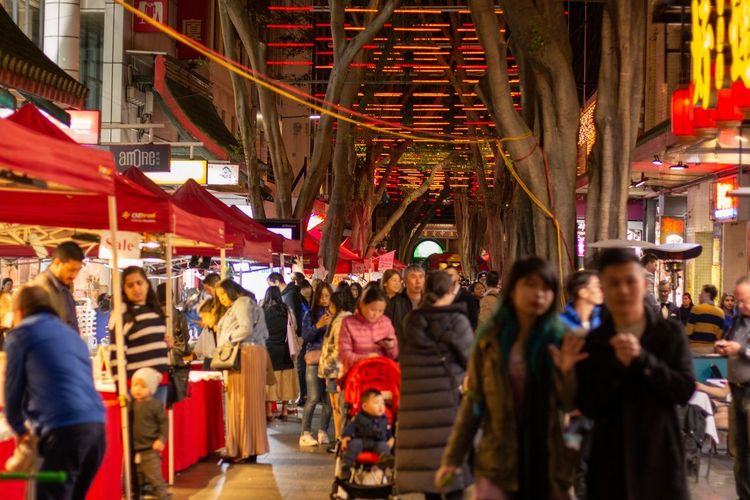
A ten-minute walk away, Chinatown (Dixon St, Haymarket NSW 2000) packs in Cantonese restaurants, Asian grocery stores, and the Dixon Street night market on Friday, Saturday, and Sunday evenings, where street food stalls spill right onto the pavement.
Just next door, Paddy's Market has been selling fruit, souvenirs, and affordable clothing under a vast hall since 1834, one of the oldest covered markets in the country still in operation.
Food lovers can find both dumplings for under AUD 5 and fine-dining restaurants here — a rare price gap on a single street. To avoid the crowds, visit Chinatown outside the weekday lunch rush (noon to 2pm), when queues in front of the best noodle restaurants lengthen noticeably. The Dixon Street night market, on the other hand, largely avoids this congestion since it only opens on weekend evenings.
The Queen Victoria Building, a Historic Shopping Landmark
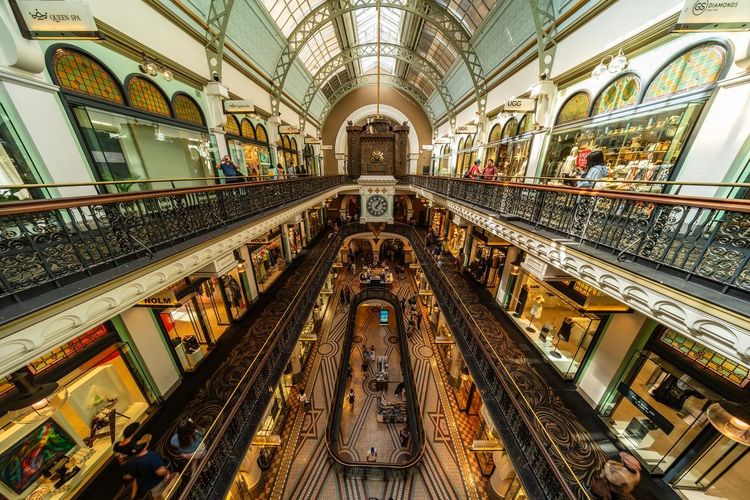
Heading back north, the Queen Victoria Building occupies a Romanesque Byzantine-style edifice built in 1898, with a central glass ceiling and a royal clock that chimes every hour. More than 180 shops, from luxury to local brands, spread across four levels.
Before becoming a prestigious shopping gallery, the building first served as a fruit and vegetable market, then narrowly escaped demolition in the 1950s before being saved and restored. Even without any intention to shop, entry is free and the architecture is worth a visit: the stained glass windows and floor mosaics were restored in the 1980s after decades of neglect. For more extensive shopping, the pedestrian streets of Pitt Street Mall and George Street round out the offer with major Australian and international retailers, just a few minutes' walk away. Our audio-guided tour of Sydney, Through the Neighbourhoods, weaves through here too, from the Queen Victoria Building to Chinatown.
7. Relax on Sydney's Beaches, from Bondi to Manly
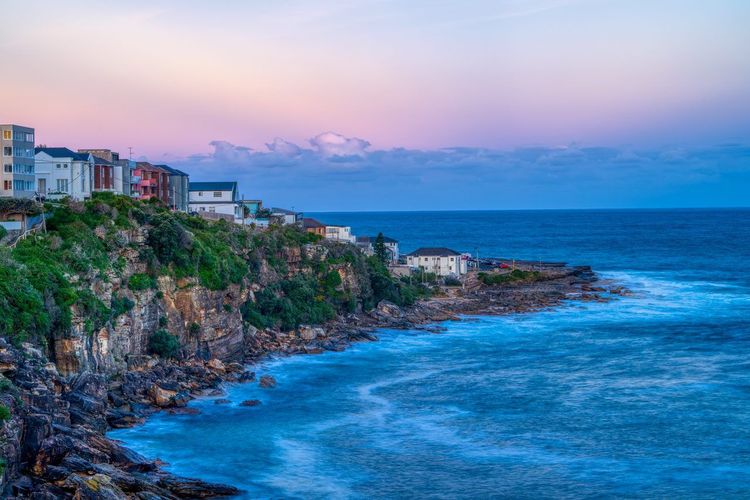
Sydney has more than thirty usable beaches within the urban area alone, and grouping them by geographic zone helps build a coherent itinerary rather than jumping from one end of the coast to the other.
Bondi Beach and the Coastal Walk to Coogee
Bondi Beach remains the most photographed beach in the country, with its one-kilometer crescent of sand bordered by the Bondi Icebergs public pool, whose basin literally hangs over the ocean.
You can follow up with the Bondi to Coogee Coastal Walk, a 6 km cliff-top trail that winds down to Coogee Beach past the historic Waverley Cemetery, perched directly above the waves. Allow two hours of easy walking, with plenty of stopping points to swim along the way.
Coogee Beach, at the end of the trail, offers more sheltered water than Bondi and a noticeably less touristy residential neighborhood, with several good beachside cafés to recover in.
Bronte, Tamarama, and Clovelly, the Secret Southern Beaches
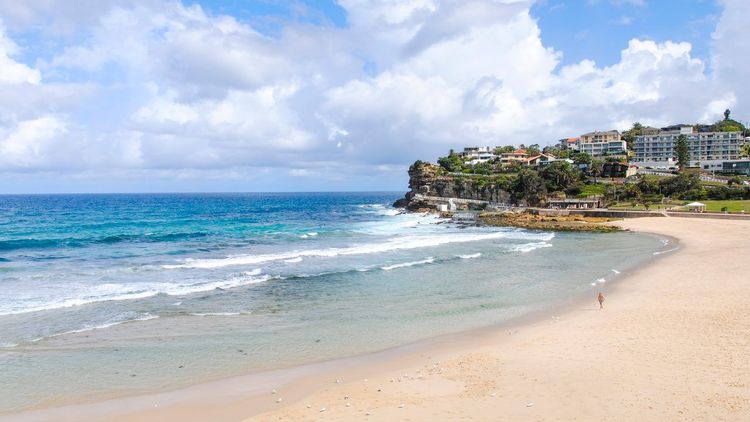
Between Bondi and Coogee, three smaller beaches are worth a detour. Bronte Beach draws families with its shaded park and rock-carved natural pool, while Tamarama Beach (Tamarama Marine Dr, Tamarama NSW 2026), locally nicknamed Glamarama, appeals with its compact size and more intimate atmosphere despite its proximity to Bondi.
Clovelly Beach, shaped like a narrow concrete-lined cove, offers some of the best snorkeling conditions in the city: the rocks cut the swell and leave the water almost always calm, with fish visible just meters from the shore.
These three beaches remain packed in the morning on weekends and noticeably quieter in the late afternoon — a detail few visitors anticipate.
Manly Beach and the Northern Beaches (Palm Beach)
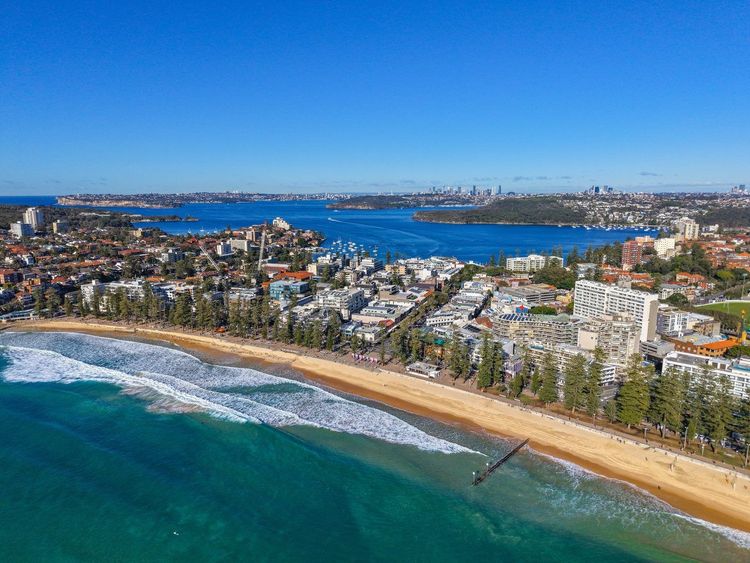
North of the harbor, Manly Beach is reached by a 30-minute ferry ride from Circular Quay and combines surfing, a shopping promenade, and a family-friendly beach along nearly 2 km of sand. The Corso, the pedestrian street linking the wharf to the ocean, is lined with ice cream shops and swimwear boutiques.
Further along, about an hour by road or bus, Palm Beach (Palm Beach NSW 2108, rated 4.7/5 on Google based on 4K reviews) marks the tip of the northern beaches, known for the Barrenjoey Lighthouse accessible via a 45-minute trail, and for having served as the filming location for the TV series Home and Away since 1988.
Surfing is available on almost all of these beaches, with schools offering beginner lessons from AUD 90 at Bondi and Manly alike, board and wetsuit included. Between May and November, whale watching from the cliffs at Bondi or Bronte sometimes allows you to spot humpback whales migrating northward — without even stepping on a boat.
Lifeguard patrols on Australian beaches date back to 1906, when the first volunteer surf lifesaving club was established at Bondi itself, now recognized as the global birthplace of volunteer lifesaving. On every patrolled beach, red and yellow flags mark the safe swimming zone: step outside it and the currents, sometimes strong, can catch even confident swimmers off guard. From September to April, anti-shark nets protect most southern beaches, offering no absolute guarantee but significantly reducing the incidents recorded over recent decades.
You'll also notice that Sydney's beaches each have their own personality: Bondi draws an international crowd and a festive atmosphere, Bronte stays more family-oriented, and Clovelly retains a residential neighborhood feel — quieter even on a sunny Saturday. For an itinerary already mapped out between these spots, the Ryo article on things to do in Sydney and surroundings also details the least-crowded time slots beach by beach.
8. Sail the Harbor by Ferry or Cruise
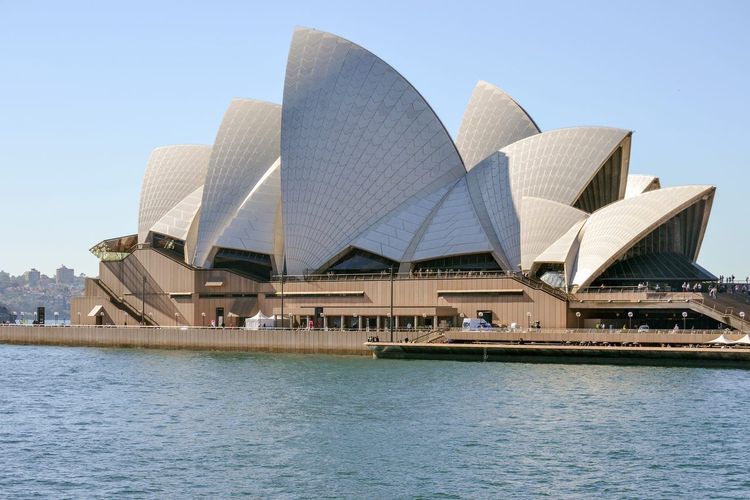
The Manly–Circular Quay Ferry, the Most Scenic Crossing
The F1 line between Circular Quay and Manly remains, for the price of an Opal ticket (under AUD 10), one of the most spectacular boat crossings in the world according to several international guides: 30 minutes skirting the Opera House, the coves of the north shore, and the harbor entrance before docking at Manly Wharf.
The Manly ferry service is among the oldest continuously operating in the world, inaugurated as early as 1854 with small paddle steamers, long before the Harbour Bridge was built. Sit on the rear outdoor deck rather than at the front: that's where the view of the Opera House receding into the distance stays unobstructed the longest after leaving Circular Quay. On windy days, some crossings to Manly can get choppy — calm midweek days are the most comfortable for sensitive stomachs.
The Watson Bay Ferry and Whale Watching
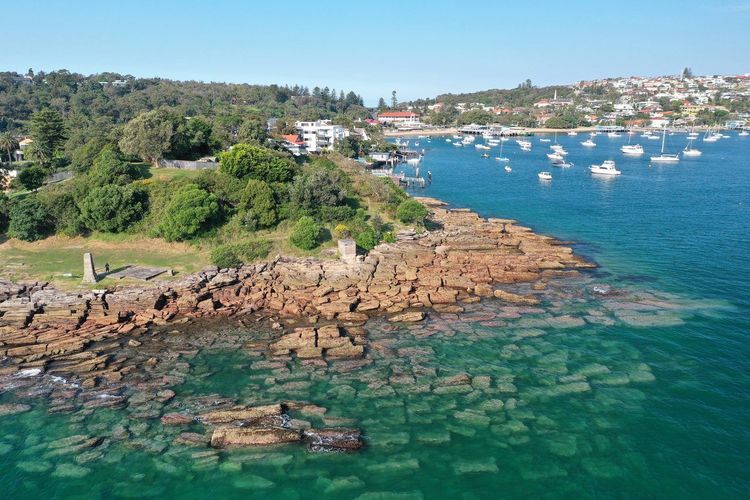
Less well known to visitors, the line to Watson Bay runs along the eastern shore of the harbor all the way to The Gap, a dramatic cliff overlooking the Pacific Ocean, with an optional stop at Rose Bay along the way.
Between May and November, several companies run whale watching boat trips from Circular Quay or Darling Harbour, with a humpback whale sighting rate advertised at around 90% during peak season. For a more unusual and pricier option, a seaplane flight over the bay departs from Rose Bay and reaches destinations like the Hawkesbury River or the Blue Mountains in 15 minutes.
These boat excursions remain, along with a simple ferry ticket, the cheapest way to see Sydney from the water — hard to find a better view-to-price ratio anywhere in the world. For a more dressed-up evening, two-to-three-hour dinner cruises depart from Circular Quay with views of the illuminated Opera House and bridge, a three-course menu included in the price from AUD 90.
9. Taste Sydney at the Fish Market and Its Food Markets
The Sydney Fish Market, an Iconic Seafood Market
The Sydney Fish Market (Bank St, Pyrmont NSW 2009, rated 4.3/5 on Google based on 17K reviews) is the largest fish market in the Southern Hemisphere by daily sales volume, with professional auctions starting at dawn and public access from 7am to 10pm every day.
Stalls sell oysters, sashimi, and fish and chips to take away, to be enjoyed at outdoor tables facing the moored fishing boats. A new building, opened on Blackwattle Bay a few hundred meters from the original site, has modernized the facilities under a vast timber roof while preserving the popular market atmosphere that has defined it since 1945. With nearly 15 million seafood meals sold each year, the market supplies a large share of the city's restaurants and remains a must-visit for anyone wanting to understand Sydney's harbor culinary identity, historically shaped by postwar Greek and Italian immigration. Arrive before 9am on weekends to avoid queues at the most popular stalls, especially those selling freshly shucked oysters.
Best Neighborhoods and Dining Spots by Budget
For tight budgets, the food courts in Chinatown and the cafés in Newtown offer full meals for under AUD 15, often better than the tourist spots along the waterfront. For mid-range budgets, Surry Hills and Darlinghurst are home to an independent restaurant scene renowned across the country, with menus around AUD 30–40.
For higher budgets, the fine-dining tables of Barangaroo and Circular Quay serve contemporary Australian cuisine — local fish and indigenous ingredients included — with bills that easily exceed AUD 100 per person. Between visits, cafés in Newtown or Bondi are worth a stop for a flat white, the signature Australian coffee drink born in the 1980s in either Australia or New Zealand depending on which version of the story you believe — a debate both countries continue to argue.
The Ryo guide to Sydney's culinary specialties goes into more detail on these spots by neighborhood, useful for planning a dining itinerary that ties in with your sightseeing for the day. One simple tip before choosing a restaurant: the best places in Sydney rarely have a flashy frontage — the local food scene puts the product before the décor.
10. Have Fun as a Family: Zoo, Aquarium, and Theme Parks
Taronga Zoo and Its Panoramic View of the Bay
Taronga Zoo is home to more than 4,000 animals, from koalas to Tasmanian devils and western lowland gorillas, on a hillside site with a direct view of the Opera House and the bridge from the giraffe enclosure.
The name Taronga comes from an Aboriginal word meaning roughly "beautiful view" — a choice that makes perfect sense once you reach the top of the zoo. The most spectacular way to arrive is by ferry from Circular Quay (12 minutes) followed by the Sky Safari cable car, which climbs to the upper entrance with harbor views before you've even spotted an animal. Plan to arrive at opening time if you want to see the animals active before the midday heat, particularly the big cats and koalas, which sleep up to twenty hours a day. Allow a full half-day to explore the site, more if you add the seal presentation late in the morning.
Luna Park, the SEA LIFE Aquarium, and the Art Gallery of NSW
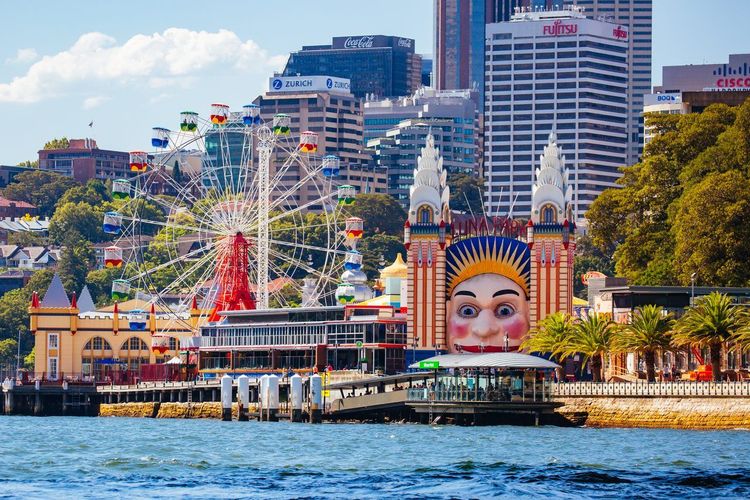
Beneath the Harbour Bridge on the north side, Luna Park (1 Olympic Dr, Milsons Point NSW 2061) has been running its rides since 1935 behind a giant clown facade that has become one of Sydney's visual landmarks. The giant face serving as the park entrance has been rebuilt several times since the original, most notably after a deadly fire in 1979 that long overshadowed the park's reputation before its full reopening in the 1990s. Entry to the park is free; only the rides are charged individually or by a day pass.
At Darling Harbour, the SEA LIFE Sydney Aquarium features sharks, dugongs, and a replica of the Great Barrier Reef — particularly well suited to rainy days.
For a more cultural break, the Art Gallery of New South Wales is free for permanent collections and blends contemporary Aboriginal art with European paintings in a building expanded in 2022.
Two more options round out the list depending on your interests: St Mary's Cathedral (St Marys Rd, Sydney NSW 2000), a neo-Gothic church that's free to visit, and Cockatoo Island (Sydney NSW 2000), a former prison and shipyard accessible by ferry where camping overnight on the island itself is a rare enough experience to be worth mentioning. SEA LIFE and Luna Park can easily be combined in a single day thanks to their immediate proximity to Darling Harbour and the bridge. Our audio-guided tour, The Emerald City, links this cathedral stop to the Harbour Bridge and Circular Quay along its route.
11. Discover Different Neighborhoods: CBD, Darlinghurst, and the Inner West
The Central Business District and Its Skyscrapers
The Central Business District concentrates office towers, the major department stores of George Street, and the colonial remnants of Macquarie Street, where courthouses and the State Library have stood side by side since the 19th century. It makes a good base for staying centrally, within walking distance of both Circular Quay and Darling Harbour.
In the late afternoon, the neighborhood's rooftops — often perched on the 20th floor or higher — offer a glimpse of the harbor without paying an observation tower entry fee.
Darlinghurst and the Inner West, Sydney's Alternative Side
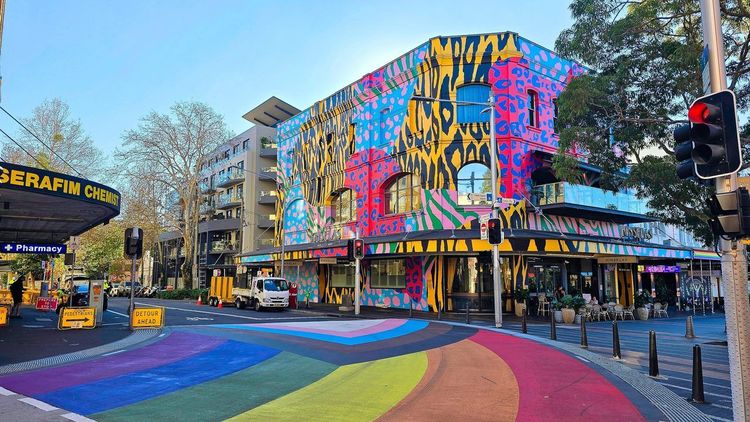
East of the center, Darlinghurst is home to historic queer bars, galleries, and one of the city's most creative brunch scenes — a legacy of its status as a gay neighborhood since the 1970s. Oxford Street, its main artery, hosts the Sydney Gay and Lesbian Mardi Gras every year in late February or early March, one of the largest parades of its kind in the world. Darlinghurst's streets retain much of their Victorian terrace housing, with narrow facades and wrought-iron balconies inherited from the late 19th century, now among the most sought-after addresses in the city.
Further west, the Inner West (Newtown, Marrickville, Enmore) draws visitors with its vintage shops, murals, and multicultural restaurants, far from the standard tourist circuits. Historic venues like the Enmore Theatre have been hosting a more alternative music program than the big city-center halls for decades. This is where much of Sydney's music and student scene gathers — a less postcard-perfect but equally representative side of the city. The Ryo Sydney neighborhood audio guide is precisely designed to connect these less obvious neighborhoods with audio commentary for each one.
12. Take a Day Trip Around Sydney
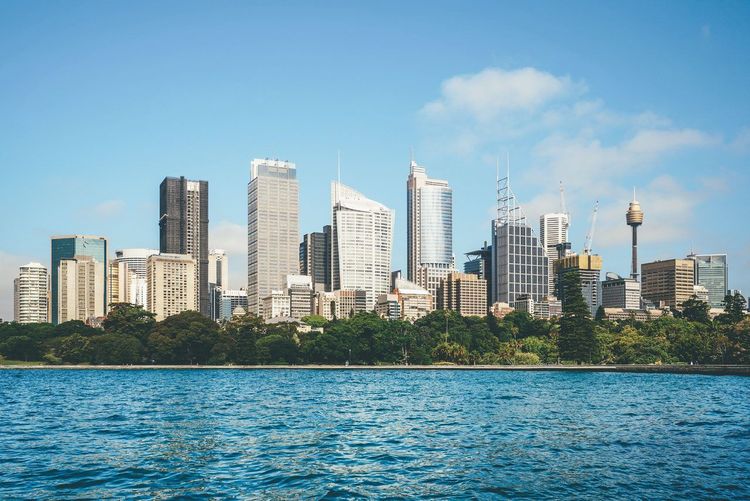
What is there to do in Sydney and its surroundings when your stay extends beyond three or four days? The region offers several day trips, accessible by train, organized coach, or rental car.
The Blue Mountains, the Essential Nature Day Trip
About two hours west by road, the Blue Mountains owe their name to the bluish haze released by the eucalyptus trees, visible from the famous lookout at Echo Point in Katoomba, which overlooks the Three Sisters, three rock formations sculpted by erosion.
Scenic World offers a cable car, a funicular at a 52-degree incline (one of the steepest in the world), and a walkway suspended above the rainforest, all accessible with a single combined ticket for around AUD 55. The direct train from Central Station takes about two hours and allows a return trip in a day without a car — a practical option if you're not planning to rent a vehicle. More experienced hikers venture onto the Grand Canyon Track, a 6 km loop through tree ferns and waterfalls, far less crowded than the main lookouts. Bring water and a jacket even in summer: the altitude drops the temperature several degrees compared to the coast.
Hunter Valley and Its Wine Route
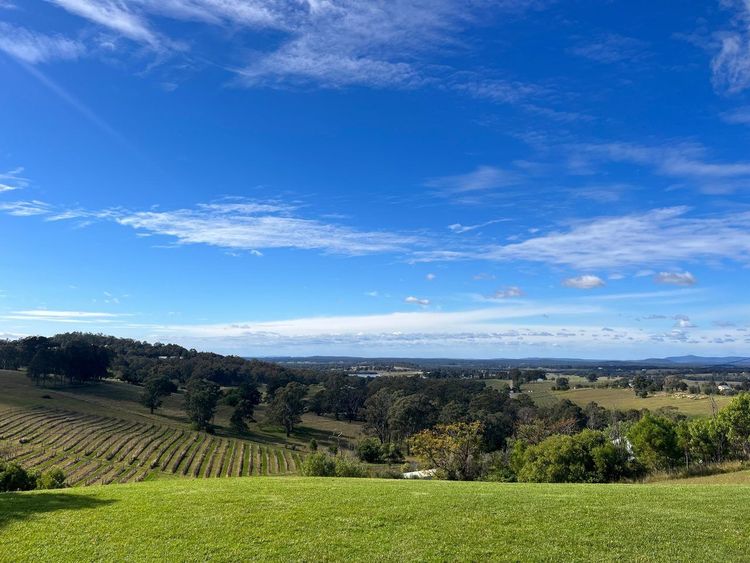
About two and a half hours north, the Hunter Valley (Pokolbin NSW 2320) groups more than 150 wine estates across an area easily covered in a day, renowned for its Semillon and Shiraz since the mid-19th century.
Most organized tours include four to five tastings, a lunch at a winery, and sometimes a stop at a chocolate shop or farmers' market. Some estates like Tyrrell's or Audrey Wilkinson also offer tours of historic cellars dating from the 1850s, with complimentary tastings for those who take time to ask the winemaker questions. Without a car, it's better to book an organized tour from Sydney (allow a full day including transport) rather than attempting public transport, which is virtually nonexistent between the estates spread across dozens of kilometers.
Royal National Park, Port Stephens, and Jervis Bay, the Wild Coast
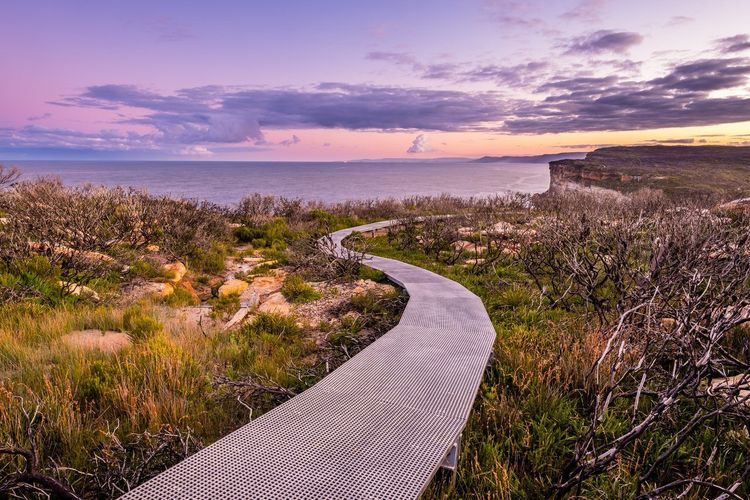
South of Sydney, the Royal National Park, founded in 1879, claims the title of the world's second oldest national park after Yellowstone. The park is reachable by train in an hour from the city center (alight at Otford or Loftus), but don't underestimate its Figure Eight Pools — natural figure-eight-shaped rockpools carved into the stone: it's a two-hour return walk from the Garrawarra Farm car park, and you absolutely need a low tide with calm seas, otherwise the site is simply closed by the rangers.
Further afield, three hours by road, Port Stephens (Nelson Bay NSW 2315) combines giant sand dunes ideal for sandboarding with dolphin-watching cruises, as the bay is home to dolphins year-round. Several operators also offer swimming with wild sea lions off Broughton Island — an experience as rare as the local sandboarding.
Jervis Bay (Jervis Bay NSW 2540), two and a half hours south, claims the whitest sand in the world according to the Guinness World Records, measured at Hyams Beach, with turquoise water worthy of the Caribbean despite the Australian latitude. From Jervis Bay, kayaking excursions allow you to spot dolphins and sometimes sea turtles in surprisingly clear water for Australia's east coast.
Each of these three destinations warrants a full day, or even an overnight stay for Port Stephens or Jervis Bay if you want to avoid long evening drives back. For all three trips, expect to pay between AUD 120 and 180 per person for a small-group organized tour including transport and a guide, versus the cost of just a train or bus ticket if you prefer independence and have time to spare. The Blue Mountains remain the only one of the three destinations easily accessible by public transport without advance booking. The Ryo activities around Sydney list combined day trip options for those with a full week to spend on location.
13. Go Out at Night: Bars, Rooftops, and Nightlife
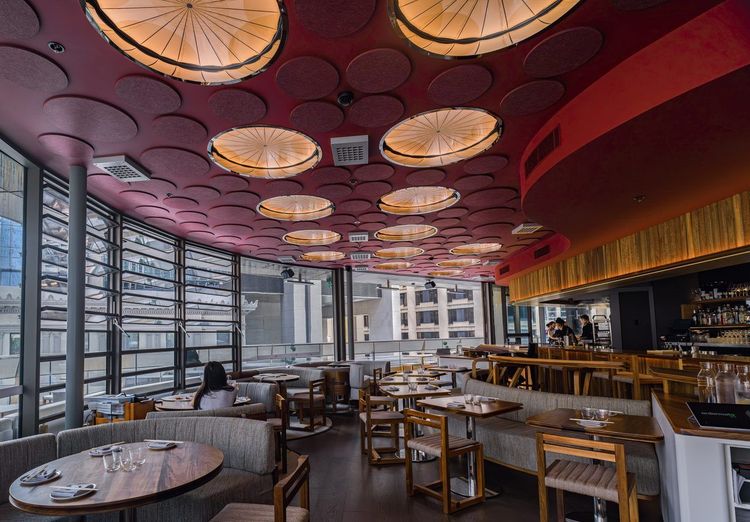
Sydney no longer has the reputation of an early-closing city it had ten years ago. The rooftops of the CBD and Kings Cross, often perched above a hotel, serve cocktails and skyline views until midnight on weekdays, later on weekends.
For a more local evening, the bars of Surry Hills and Newtown focus on creative cocktail menus and a neighborhood atmosphere, far from the tourist bustle of Darling Harbour. Some, hidden behind an unmarked door or a laundromat, embrace a speakeasy spirit borrowed from 1920s American Prohibition — more of a nod than an actual local historical constraint.
On the nightclub front, Oxford Street in Darlinghurst remains the epicenter of the city's LGBTQ+ nightlife, while the Kings Cross neighborhood, long notorious, has largely gentrified since the 2014 reforms limiting alcohol trading hours. The so-called lockout laws, in force from 2014 to 2021 in certain areas, long restricted entry to bars after 1:30am; their recent relaxation has brought some life back to streets that were previously deserted after midnight. A practical tip: most bars stop letting in new arrivals after 1am or 2am — better not to dawdle when choosing your last drink. And if you're after live music rather than cocktails, head to the Enmore Theatre or Newtown's pubs, where the program runs almost every night of the week for a modest entry fee.
14. How Many Days to Plan and What Itinerary to Choose
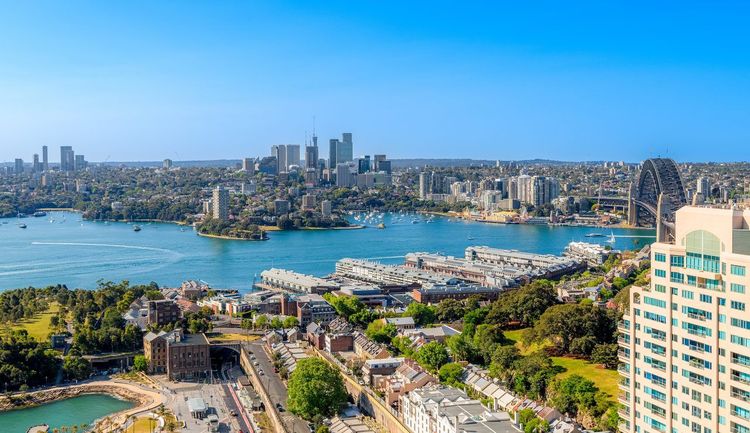
How many days does it take to visit Sydney? The answer depends mainly on your appetite for out-of-town excursions, but here are some benchmarks built on the most common itineraries.
1 to 2 Days: the City-Center Essentials
With just one day, focus on the Opera House, the Harbour Bridge, and Circular Quay in the morning, then Darling Harbour or a ferry to Manly in the afternoon — a tight but realistic format if you're on a stopover or in transit to another country. Over two days, add a half-day at Bondi and the coastal walk, plus an evening in an out-of-center neighborhood like Surry Hills. Families with young children benefit from spreading this program over two days rather than one packed day, to leave room for naps and meal breaks.
3 to 4 Days: City and Beaches in Full Immersion
Three days allow you to take in the main city-center sites, a full beach day (Bondi to Coogee, or Manly depending on your preference), and a short day trip — to the Blue Mountains for example. This is the most recommended duration for discovering Sydney without constantly rushing — a pace confirmed by most visitors who return from a trip that was too condensed.
With a fourth day, add Taronga Zoo or a morning in the Inner West — two options that each need a dedicated half-day to be enjoyed without rushing. Remember to book your Opera House interior tickets or BridgeClimb before you leave if these activities are on the agenda: weekend slots fill up quickly during peak season, between December and February. A sample four-day itinerary could look like this: day 1 in the historic center (Opera House, Harbour Bridge, The Rocks); day 2 dedicated to the southern beaches from Bondi to Coogee; day 3 on a full-day Blue Mountains excursion; day 4 split between Taronga Zoo in the morning and an alternative neighborhood like Newtown in the afternoon. This framework remains flexible depending on the weather, with outdoor excursions easier to reschedule than indoor bookings like the BridgeClimb or the Opera House guided tour.
5 to 7 Days: Sydney and Its Day Trips
From five days onward, you can add a second day trip (Hunter Valley, Port Stephens, or Jervis Bay) without sacrificing time spent in the city. Visiting Sydney over a week also allows you to slow the pace, return to a beach you enjoyed, or explore a neighborhood without a set itinerary — often the best way to understand the rhythm of the city.
Over a full week, deliberately alternate busy days (day trips, sightseeing) with slower ones (beach, residential neighborhood): that balance is what distinguishes a successful stay from an exhausting one. Don't forget the time difference either: most European visitors arrive after more than twenty hours of flying, jet lag included. Allowing for a quieter first day on arrival — even if it means pushing the packed schedule back by a day — avoids spoiling your first impressions of the city. One last practical tip: don't try to plan everything in advance. Ferries and walking are so straightforward in Sydney that improvisation works better here than in most destinations, as long as you keep an eye on the weather for outdoor excursions.
15. Practical Info: When to Go, How to Get There, and Where to Stay
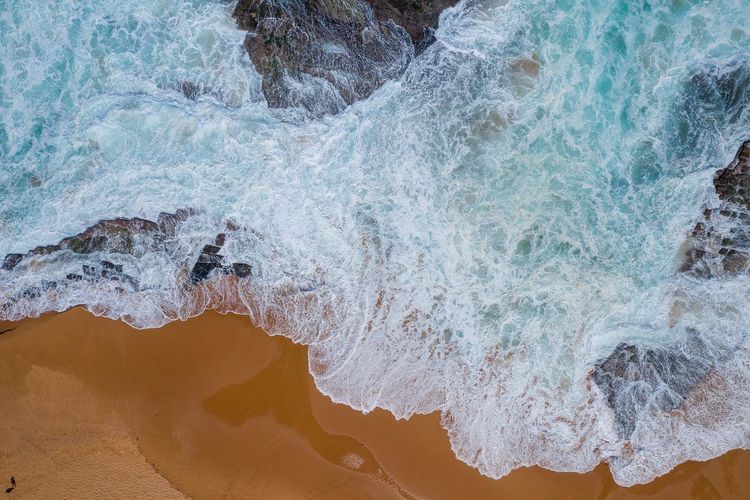
When to Go: Climate and Best Season
Located in the Southern Hemisphere, Sydney experiences seasons in reverse compared to Europe: the austral summer runs from December to February, with temperatures around 26°C and pleasant sea water for swimming, while winter (June to August) stays mild, around 17°C during the day, with no snow in the city.
The best time to visit Sydney is often between March and May (austral autumn) or September and November (austral spring): mild temperatures, fewer crowds than in the height of summer, and ideal light for harbor photos. Avoid the Australian school Christmas holidays if possible, when hotels and attractions are fully booked. Between June and August, occasional cold snaps can push nighttime temperatures below 10°C — a minor inconvenience but worth anticipating if you're traveling light.
How to Get There and Get Around Sydney
From abroad, Kingsford Smith Airport is about fifteen minutes from Central Station by train, with an Airport Link surcharge added to the Opal ticket. There are no direct flights from France, so expect a stopover — most often in Singapore, Dubai, or Doha — for a total journey of around 22 to 24 hours.
Once there, getting around Sydney relies on the Opal card, valid on buses, trains, ferries, and light rail, with a daily spending cap that makes multiple journeys cost-effective. Ferries remain the most enjoyable way to reach Manly or Taronga Zoo, while the light rail efficiently serves Darling Harbour, Chinatown, and the new Barangaroo precinct. Taxis and rideshares are expensive compared to the Opal network: reserve them mainly for late-night trips after the ferries stop running, usually around midnight.
Where to Stay by Budget and Neighborhood
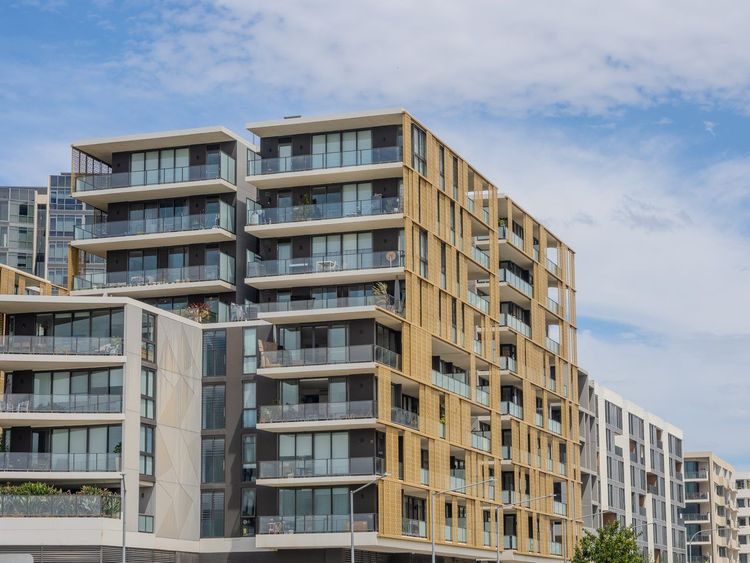
To stay within walking distance of the main attractions, the CBD or The Rocks suit higher budgets, with hotels from AUD 150 per night outside peak season. Budget travelers tend to opt for hostels in Kings Cross or Bondi, two well-connected neighborhoods despite being a bit further from the historic center.
Staying in Manly or the northern beaches suits those who prioritize a beach atmosphere over immediate proximity to the city's monuments: allow 30 to 45 minutes by ferry or bus to reach Circular Quay each day. French travelers need an Electronic Travel Authority (ETA), to be applied for online before departure and valid for short tourist stays. The Australian dollar is the only currency accepted locally: it's worth withdrawing cash on arrival for markets and small shops, even though contactless card payment is widely accepted everywhere else, including on buses and ferries.
Tipping is not an obligation in Australia, unlike in the United States: in restaurants, rounding up the bill or leaving 10% for particularly attentive service is more than enough, and no one will take offense if you leave nothing at all. One last practical tip: book your accommodation at least two months in advance for a stay between December and February, the busiest time of year. If you're unsure about neighborhoods, keep in mind that staying on the harbor side minimizes travel time to most of the sites listed in this article, even if it costs a little more per night.

FAQ
How many days do you need to visit Sydney?
Three to four days are enough to cover the city-center highlights, a beach day, and a short day trip. Allow a full week if you want to add the Blue Mountains, the Hunter Valley, and a coastal destination like Port Stephens or Jervis Bay without rushing. If you add a second day trip, plan for eight to nine days so you don't have to hurry anything.
What can you do in Sydney for free?
Walking across the Harbour Bridge, entering the Royal Botanic Garden, Barangaroo Reserve, and the Art Gallery of New South Wales, as well as swimming on most beaches, cost nothing. Public ferries, although not free, remain the cheapest way to see the harbor from the water. Markets like Chinatown on weekends and parks like Barangaroo can also be enjoyed without spending a cent, aside from an optional coffee or meal on site.
What is the best time to visit Sydney?
March to May and September to November offer the best conditions: mild temperatures, fewer crowds than during the peak summer season (December to February), and ideal light for photos of the harbor and beaches.
How do you get around Sydney without a car?
The Opal card gives access to the entire network — buses, trains, ferries, and light rail — with a daily spending cap that makes multiple trips worthwhile. Ferries are sufficient to reach Manly, Taronga Zoo, or Watson Bay; the light rail serves Darling Harbour and Chinatown well. Expect around AUD 5 to 8 for most short trips, with a weekly cap that makes high-mobility days particularly cost-effective.
What can you do in Sydney in 3 days?
Split your time between the major city-center sites (Opera House, Harbour Bridge, The Rocks) on day one, the southern beaches (Bondi to Coogee) on day two, and a day trip to the Blue Mountains or a day in an alternative neighborhood like the Inner West on day three.
Do you need to book the Harbour Bridge climb (BridgeClimb) in advance?
Yes, especially between December and February: morning and sunset slots fill up several weeks in advance during peak season. Book online at least two to three weeks before your stay to secure your preferred time. Expect to pay AUD 200 to 400 depending on the option and time slot — dawn and sunset slots are both the most expensive and the first to sell out.
Where should you stay in Sydney to be well located?
The CBD and The Rocks are best for staying within walking distance of the main attractions, though at a higher price. Bondi or Manly are a good alternative for those who prefer a beach atmosphere, with 20 to 40 minutes of travel to reach the center. If you're traveling with family, serviced apartments in the CBD or Darling Harbour often offer more space than a standard hotel room for a comparable budget.
Between the sails of the Opera House, the beaches stretching south and north, and day trips extending to the Blue Mountains, Sydney lends itself equally well to a short stay or a week-long visit with no downtime. The city rewards most those who are willing to venture beyond the Opera-bridge-Darling Harbour triangle to push as far as Barangaroo, Clovelly, or the Inner West.
To plan your visit without over-scheduling everything in advance, the Ryo Sydney audio guide narrates the harbor's historic neighborhoods as you walk — a solid foundation to build on with the beaches and day trips detailed above.