© Shutterstock
 Votre guide Ryo
Antwerp in 2026: 15 Must-Sees and Flemish Hidden Gems to Discover
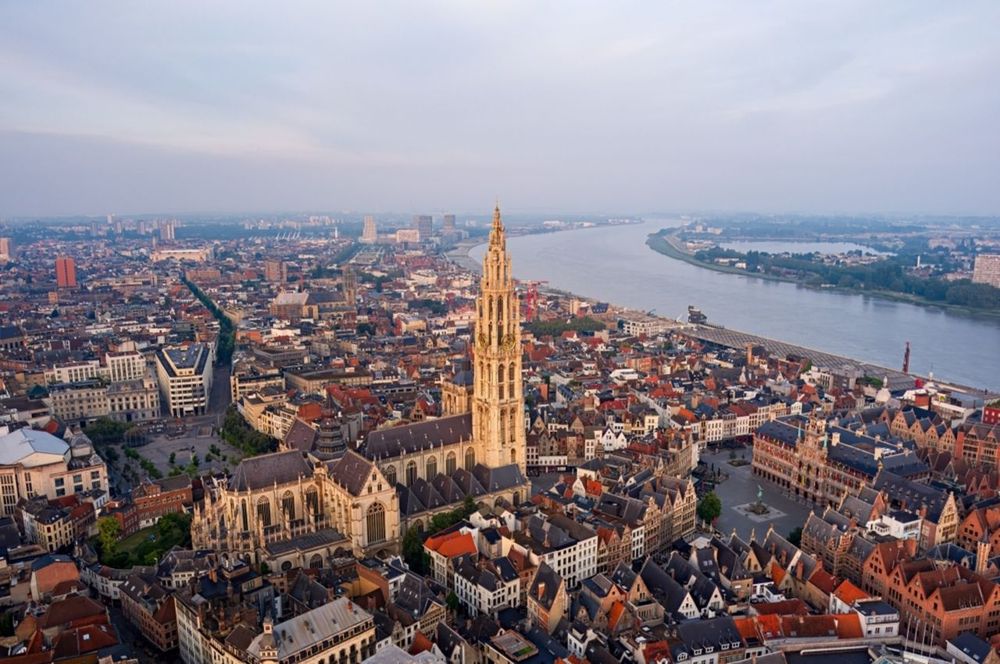
Wondering what to do in Antwerp in 2026 means discovering a city that surprises anyone who imagines it as a frozen museum town: on the Grote Markt, tourists photograph 16th-century façades while a hundred metres away, the shop windows of the Meir display collections by the designers who built the worldwide reputation of Belgian fashion. The second-largest port in Europe after Rotterdam, the historic capital of diamonds, and the artistic birthplace of Peter Paul Rubens, Antwerp has a city centre you can cross on foot in forty minutes flat. The Ryo audio-guided tour of Antwerp connects the highlights of these places, which changes the way you organise a stay without relying on tourist buses or a human guide with fixed schedules.
Fifteen experiences structure this guide, from Antwerp-Central station, nicknamed the 'cathedral of rail' for its 44-metre-high glass roof, to a chocolate museum that recreates a tropical plantation under a heated greenhouse. Along the way, you will also find an artificial valley where gorillas live five minutes' walk from the central station, a free panoramic rooftop open year-round 60 metres above the Scheldt, and a printing workshop-museum open to the public since 1877, listed as a UNESCO World Heritage Site. Between Flemish heritage, gastronomy and a contemporary fashion scene, there is enough here to fill an entire weekend without ever retracing your steps. Several of these experiences also appear on the Ryo audio-guided tour, between Grote Markt and Antwerp Central Station.
1. The Grote Markt in Antwerp, the Historic Heart of the City
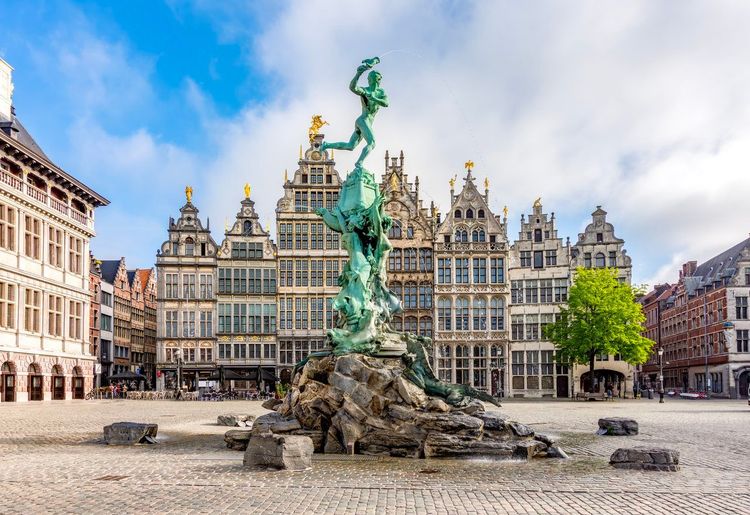
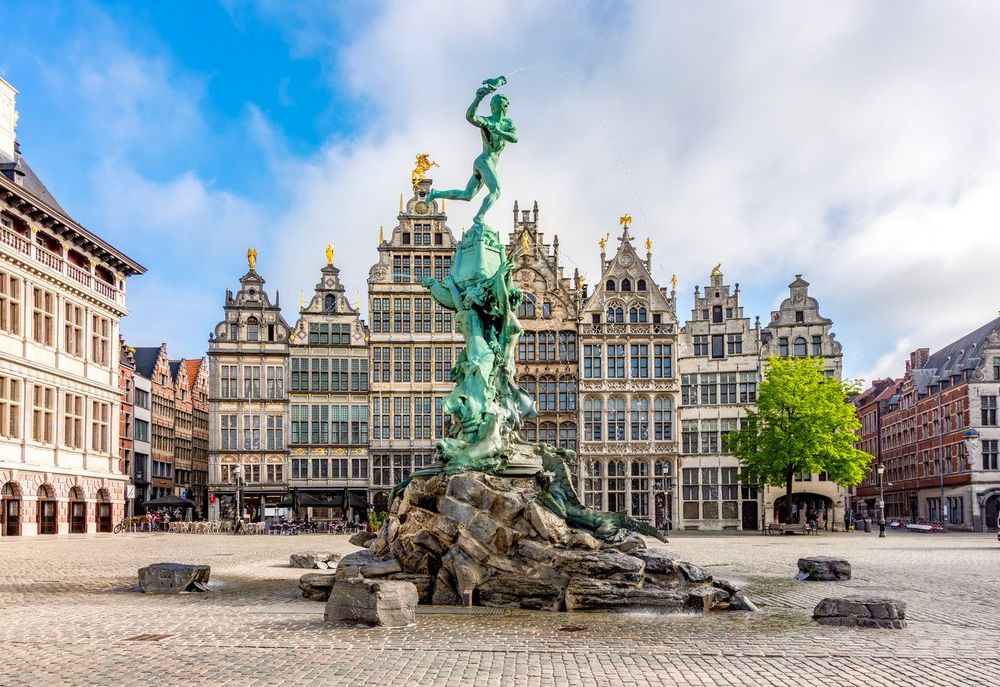
The Grote Markt in Antwerp (Grote Markt, 2000 Antwerpen, rated 4.7/5 on Google with 45K reviews) strikes you first with its scale: a cobbled rectangle lined on three sides by 16th-century guild houses, topped with gilded gables representing the corporations that once occupied them — tanners, brewers, crossbowmen. On the fourth side stands the City Hall (Stadhuis), completed in 1565 by architect Cornelis Floris de Vriendt: its façade blends Italian columns with Flemish gables, a synthesis then unprecedented in the Spanish Netherlands that served as a model for dozens of town halls throughout the region.
This architectural unity is no accident. In 1576, mutinous Spanish troops sacked the city in an episode historians call the 'Spanish Fury', destroying part of the built environment around the square, including the newly completed town hall. The reconstruction that followed, financed by the merchant guilds at the height of their prosperity, imposed a homogeneous Renaissance style found nowhere else in Belgium with such consistency.
At the centre of the square, the Brabo Fountain (1887) tells the founding legend of the city: the Roman soldier Silvius Brabo is said to have defeated the giant Antigoon, who demanded a toll from every bargeman travelling up the Scheldt, by cutting off his hand and throwing it into the river. 'Hand werpen', to throw the hand: the popular etymology of Antwerpen, even if linguists contest it today. The bronze statue, the work of sculptor Jef Lambeaux, still adorns the centre of the square.
Antwerp is today the most populous municipality in Belgium, with more than 540,000 inhabitants, the capital of the province of the same name and the economic engine of Flanders. Dutch is spoken here, with the distinctive singing accent of the Antwerp region, and the local identity proudly claims to be Flemish, distinct from that of Brussels or French-speaking Wallonia. This identity is written into the very architecture of the Grote Markt, designed to assert the commercial power of a city that was, in the 16th century, the leading financial centre in Europe before Amsterdam.
The terraces lining the Grote Markt make a good reference point for the rest of your visit: most of the places that follow can be reached on foot in ten to twenty minutes. The Antwerp audio-guided tour actually starts from this very point, making it an excellent starting point for those who prefer to follow a thread rather than zigzag without a plan. Sit down on a terrace late in the morning: the square fills noticeably after 1pm when tour groups arrive.
2. Antwerp-Central Station, One of the Most Beautiful Train Stations in the World
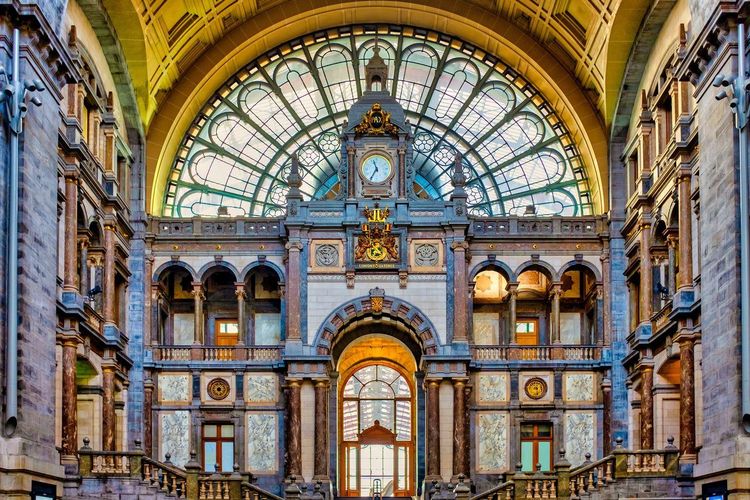
Ten minutes' walk from the Grote Markt, the perspective changes dramatically: Antwerp-Central station (Antwerpen-Centraal) appears like a cathedral of stone and glass. Built between 1895 and 1905 to the designs of architect Louis Delacenserie, it blends neo-Baroque and neo-Renaissance styles in an extravagance of marble, gilding and allegorical sculptures that regularly earns it a place in international rankings of the world's most beautiful railway stations, alongside Grand Central in New York or Kanazawa Station in Japan.
The train hall, covered by a steel and glass roof 44 metres high, earned the building its nickname of 'cathedral of rail', while the stone dome crowning the main hall rises to around 75 metres. Beneath this roof, the station is now organised over four stacked levels, connected by escalators visible from the main hall: a system inaugurated in 2007 to allow high-speed trains to pass through the city without reversing, a constraint that the 19th-century engineers obviously never anticipated.
The station came through both world wars with no major damage, which explains why its original décor is almost entirely intact, unlike many European stations rebuilt after 1945. A complete restoration carried out in the 2000s restored the marbles and gilding to their original brilliance, sandblasted and refinished piece by piece.
The neighbourhood surrounding the station is worth a few minutes' exploration before moving on: this is where the Diamond Quarter is concentrated, where a large share of the rough diamonds traded worldwide still pass through today. The shopfronts of Pelikaanstraat and Hoveniersstraat, with their understated fronts and discreet security systems, contrast sharply with the grandeur of the nearby station. The Antwerp Zoo, which will be discussed later in this article, actually shares the same city block.
Plan to arrive early in the morning if you want to photograph the hall without the commuter crowds: between 8am and 9am, the concourses fill with hurrying travellers who make photography more difficult. The short version of the Ryo audio-guided tour conveniently links Grote Markt to Antwerp Central Station.
3. The Cathedral of Our Lady in Antwerp and Its Works by Rubens
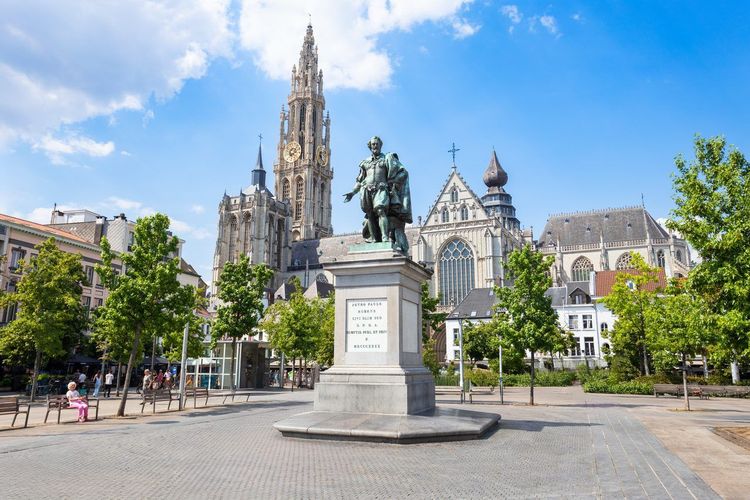
Five minutes' walk to the west, the silhouette of the Cathedral of Our Lady (Groenplaats 21, 2000 Antwerpen, rated 4.6/5 on Google with 13,271 reviews) (Onze-Lieve-Vrouwekathedraal) dominates the rooftops of the historic centre with its 123-metre spire, the tallest in Belgium. Construction began in 1352 and stretched over nearly 170 years: several generations of architects and stonemasons succeeded one another, which explains the nuances in Gothic style visible from one bay to the next for those who take the time to look up.
The interior houses four major paintings by Peter Paul Rubens, including The Raising of the Cross and The Descent from the Cross, painted between 1610 and 1614. These two triptychs, mounted on a panel system still operated by hand by the wardens, rank among the pinnacles of Flemish Baroque: the interplay of light and shadow on the figures, the diagonal that structures the composition, all foreshadow the painter Rubens would become in the following decades.
The cathedral also owes part of its international fame to a 19th-century novel, 'A Dog of Flanders' by the British author Ouida, whose young hero Nello dreams all his life of seeing these paintings before dying in front of them, unable to afford the entrance fee. The story, largely forgotten in Europe, remains a classic in Japan, which explains the regular influx of Japanese visitors who come to pay tribute to this ending.
The tower's carillon, one of the most extensive in the country with its dozens of bells, still rings out several traditional tunes throughout the day, a ritual that has remained intact despite the modernisation of the city centre all around. A discreet inscription near the portal even recalls the donations of 15th-century merchants who helped finance part of the construction, proof that the cathedral owes as much to commerce as to piety.
Allow about 45 minutes for the visit, a little longer if you linger over the carved Baroque pulpit or the choir's stained-glass windows. The logical continuation is to head to the house where Rubens painted these works, about ten minutes' walk away.
4. The Rubens House and Its Baroque Garden
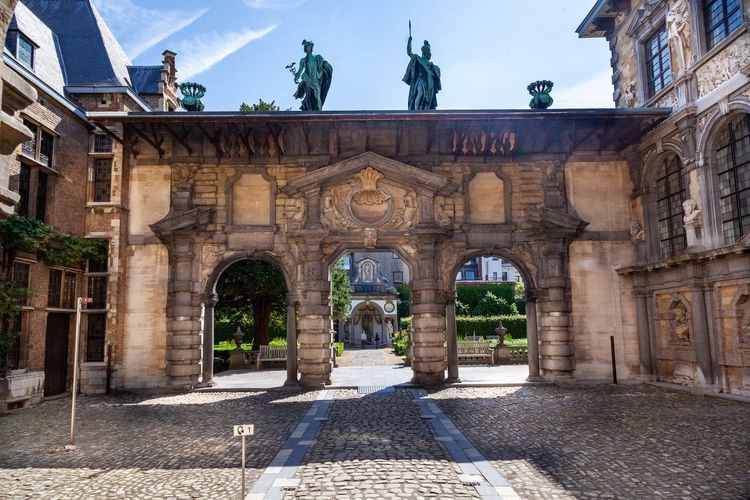
The Rubens House (Rubenshuis) occupies the site where the painter lived and worked from 1610 until his death in 1640. Rubens himself designed and enlarged it as his fortune grew, combining a traditional Flemish residence with an Italianate wing inspired by the palaces he had admired during his eight-year stay in Italy. The result, unique in Antwerp at the time, reflects the social status that painting could then confer on a commercially astute artist.
A word of caution before you visit: the house-museum is undergoing an extensive renovation and extension project, and access varies depending on the phase of works. The new entrance pavilion designed by Robbrecht en Daem and the garden reopened first, with the historic residence following. Check the official website for the current opening status before planning your visit, and have a backup plan such as the KMSKA or Mayer Van den Bergh if the main house is closed during your stay.
The studio, restored with careful historical fidelity, gives a concrete idea of how a 17th-century workshop was organised: Rubens employed a team of assistants and pupils, among them the young Anthony van Dyck, tasked with executing the backgrounds and secondary details of commissions that the master would then finish himself. This division of labour explains the considerable output of the workshop — several hundred paintings over thirty years — a pace impossible for a single person.
The baroque garden, reconstructed from period plans and paintings, deserves a pause in its own right. Rubens designed it drawing on Italian gardens, with a sculpted portico separating the forecourt from the private area, adorned with antique busts and motifs borrowed from mythology. It was in this garden that he painted several scenes from his own domestic life, with his second wife Helena Fourment regularly appearing as a model.
Rubens is not merely a painter on display in Antwerp — he continues to shape the city's tourist and cultural image four centuries later. Born in Siegen in Germany due to his family's exile, he chose Antwerp as his home base upon returning from Italy in 1608 and never left for any extended period again, despite diplomatic missions throughout Europe. The city owes him a large part of its 17th-century artistic prestige, a period when Antwerp's art market, fuelled by port trade, supported hundreds of painters, engravers and picture dealers.
Allow an hour for the house and garden, longer if the current temporary exhibition holds your attention. Online ticketing avoids queues at weekends, as the site is among the most visited in the city centre.
5. Het Steen and the Immersive Experience The Antwerp Story
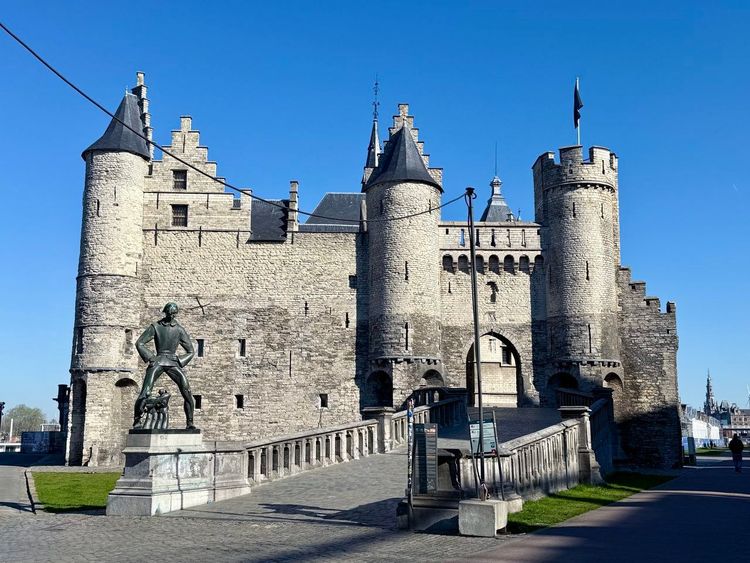
On the bank of the Scheldt, just below the cathedral, stands Het Steen, the oldest surviving building in Antwerp. Its foundations date back to the early 13th century, when a stone fortress protected the entrance to the port from incursions up the river, at a time when Antwerp was still a modest trading post compared to Bruges or Ghent.
The fortress later served as a prison for several centuries, a use that left its mark on local folklore: the statue of Lange Wapper, a mischievous giant capable of changing size at will according to legend, still watches over the entrance to the building, a reminder of the stories shared by prisoners and passing sailors alike.
Since reopening after a lengthy renovation, the interior now houses The Antwerp Story, an immersive trail that condenses eight centuries of the city's history into just under an hour, through projections, soundscaped scale models and reconstructed port atmospheres. The experience is particularly well suited to families and to anyone who wants to quickly lay the chronological groundwork before tackling the more specialised museums later in this article. The building also houses the city's tourist welcome point, handy for picking up a map or advice on arrival.
Expect to pay around ten euros for The Antwerp Story, with reductions for young visitors and free entry for the youngest children. The elevated terrace on Het Steen already offers a first viewpoint over the Scheldt, less spectacular than the one from the MAS but free and accessible without a reservation.
On summer evenings, the quays around Het Steen become an informal meeting point for locals, with joggers and impromptu picnics facing the sunset over the river. Het Steen opens directly onto the quays running along the Scheldt, nearly 500 metres wide at this point: you can watch the ships heading upstream towards the port, the second largest in Europe by tonnage, before walking to the MAS a quarter of an hour along the redeveloped quays of the Eilandje.
6. The MAS (Museum aan de Stroom) and Its Free Panoramic Rooftop
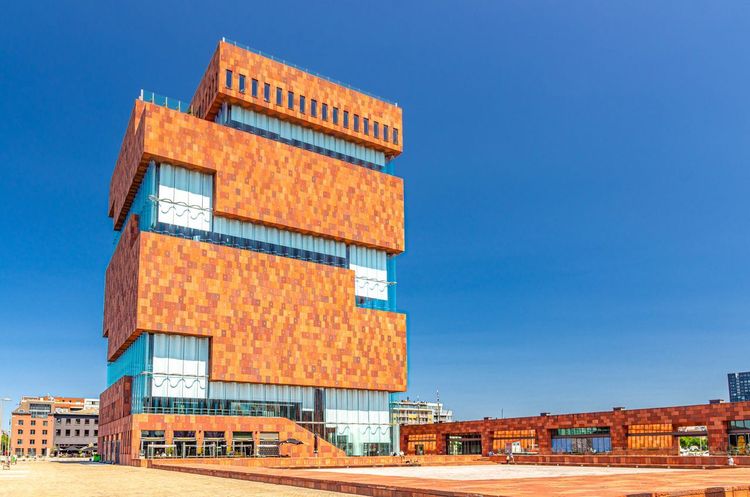
The MAS (Museum aan de Stroom) asserts its spiralling tower silhouette as soon as you approach the Eilandje neighbourhood, a former port basin transformed into one of Antwerp's most dynamic districts. Inaugurated in 2011 to designs by the Neutelings Riedijk studio, the building stacks ten floors of Indian red sandstone and curved glass, connected by a spiral escalator visible from outside, tracing a kind of vertical canal through the entire structure.
The permanent collections, spread across several thematic levels, tell the story of the port and the commercial exchanges that shaped Antwerp since the Middle Ages: ritual masks brought back by navigators, ship models, religious objects from every continent. The museography favours broad questions — power, or life and death — rather than a strictly local chronology, making the visit accessible even without prior knowledge of Belgian history.
What truly sets the MAS apart from most of the city's museums is its panoramic rooftop, accessible free of charge, with no ticket or reservation required, every day of the year from morning to evening. From the terrace, at around 60 metres above the ground, the view sweeps across the entire historic centre on one side and the port with its container cranes on the other, with the Scheldt winding between them. Few European cities offer a viewpoint of this quality at no cost.
The Eilandje neighbourhood surrounding the MAS is worth a stroll in its own right: former warehouses converted into lofts, cocktail bars in old hangars, and the Havenhuis, headquarters of the port authority, a futuristic extension set directly atop a 19th-century fire station. The Antwerp audio walking tour offers a dedicated route through this area — a prestige at the highest level — that follows the thread of the neighbourhood's transformation, between industrial heritage and contemporary architecture, a good option for those who want to understand the city's recent evolution beyond the historic centre alone.
The ground floor and the top of the building each have a spot for a drink or a bite to eat, handy if the climb has worked up your appetite. Head up in the late afternoon, between 5pm and 7pm in summer: the raking light over the Scheldt and the first lights of the city coming on offer the best moment to photograph the panorama. Still, be prepared for a little patience at weekends, as the free terrace naturally draws a crowd at sunset.
7. The Red Star Line Museum, Tracing the Journey of European Emigrants
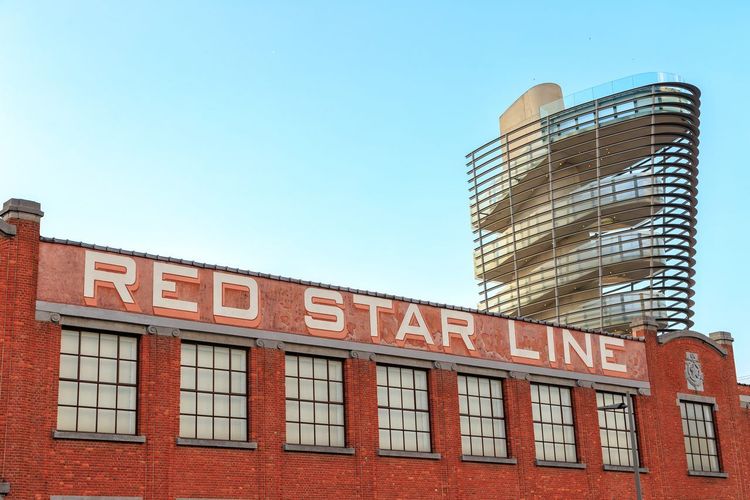
Housed in the former warehouses of the Red Star Line shipping company (Montevideostraat 3, 2000 Antwerpen, rated 4.5/5 on Google with 3,819 reviews), this museum retraces a lesser-known chapter of European history: between 1873 and 1934, nearly two million emigrants, fleeing poverty or persecution in Central and Eastern Europe, set sail from these Antwerp quays to New York, in hope of a new life in America.
The trail reconstructs each stage of this journey through personal objects, letters and filmed testimonies: the mandatory medical examination before boarding, the disinfection of clothing and luggage, the wait — sometimes lasting several days — in communal dormitories before departure. Among the company's notable passengers was Albert Einstein, who crossed the Atlantic in the early 1930s aboard the Belgenland, one of the Red Star Line's ocean liners.
The museum's emotional approach sets it apart from the city's other heritage sites: no old masters or gilded façades here, but the stories of ordinary families, often told in the first person through audio devices that restore voices to the archives. The deliberately understated scenography gives space to the documents rather than to spectacular effects. The museum is also one of the rare places in the city where the entire trail is bilingual in Dutch and English from the very start, a choice that makes the visit easier for international travellers who have come in search of their own ancestors.
The adjacent observation tower, added during the renovation that preceded the museum's opening in 2013, offers a clear view over the docks in the north of the city, a concrete reminder that the maritime activity that enabled these departures still shapes the local economy today. Allow 1 hour 30 minutes for a full visit, longer if you consult the genealogical resources made available for visitors tracing ancestors who emigrated through this port. Book your time slot online at weekends, as capacity is limited in certain rooms.
8. The Plantin-Moretus Museum, a UNESCO Gem of the Printing World
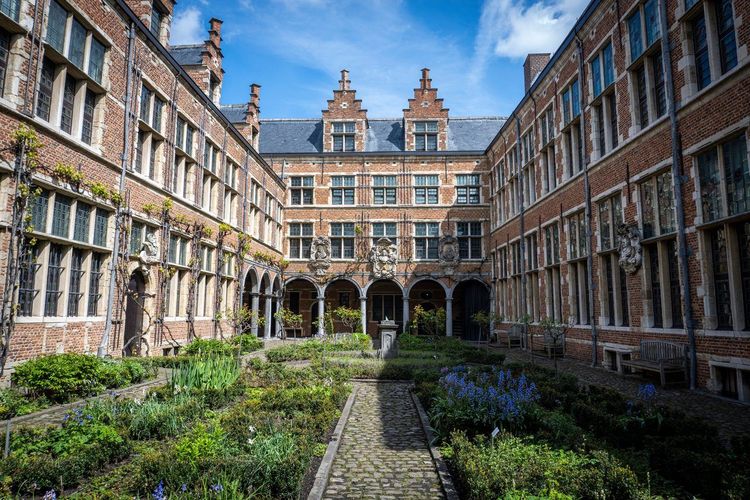
The Plantin-Moretus Museum (Vrijdagmarkt 22, 2000 Antwerpen, rated 4.6/5 on Google with 4,651 reviews) occupies the former home and workshop of printer Christophe Plantin, who settled in Antwerp in 1549. It is the only museum in the world devoted entirely to printing to appear on the UNESCO World Heritage List, a status granted in 2005 in recognition of the exceptional preservation of the entire complex — buildings, archives and equipment included.
Two printing presses among the oldest still in working order anywhere in the world are demonstrated there regularly. The museum also holds a collection of lead type and hand-engraved punches, original matrices and a library of several thousand early printed books, including a polyglot Bible in multiple languages printed in eight volumes between 1568 and 1573, one of the most ambitious publishing projects of the Renaissance.
The interior, barely changed since the 17th century, blends bourgeois drawing rooms panelled in gilded leather with production workshops, a rare juxtaposition that gives a concrete sense of what a prosperous family business looked like at the time: the Plantin and later Moretus family ran the workshop for nearly three centuries, from father to son, until the printing house closed in 1867.
The inner courtyard garden, planted according to 16th-century practice, rounds off the visit and offers an unexpectedly peaceful moment just steps from the lively Vrijdagmarkt square, where a flea market is still held on several mornings a week. Allow a good hour for the visit, more if you have an interest in the history of the book: the museum is less crowded than the Rubens House or the MAS, making it a pleasant pause in the middle of the afternoon.
9. Chocolate Nation, the World's Largest Museum of Belgian Chocolate
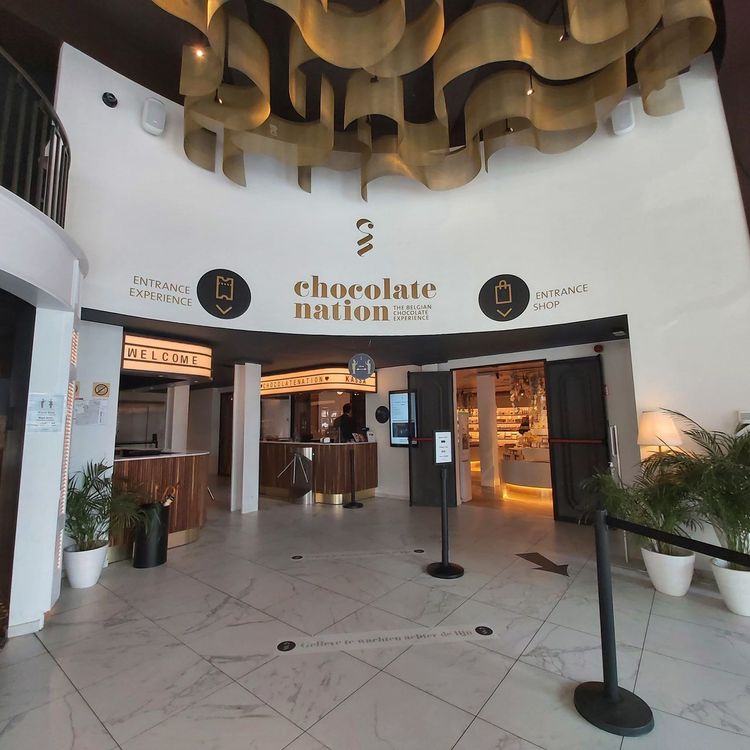
A stone's throw from the central station, Chocolate Nation (Bijenkorfstraat 2, 2000 Antwerpen, rated 4.5/5 on Google with 7,501 reviews) has claimed the title of the world's largest museum dedicated to Belgian chocolate since its opening in late 2018 in a former malt warehouse adjoining the station. The trail, conceived as a sensory experience rather than a straightforward exhibition, begins in a heated tropical greenhouse recreating a cocoa plantation, before following each stage of the transformation from bean to bar.
Belgium produces several hundred thousand tonnes of chocolate a year and counts some two thousand chocolate shops and artisan outlets, an economic and cultural weight that the museum stages through interactive installations, immersive projections and, unsurprisingly, several tasting stations spread throughout the trail. The ticket includes a series of different samples, from intensely dark chocolate to classic filled pralines.
The venue appeals equally to families with children — who appreciate the hands-on activities offered throughout the trail — and to more demanding enthusiasts curious to understand the differences between Belgian chocolate and the industrial chocolate produced elsewhere in Europe. The final room, a generously stocked shop, rounds off the visit in logical fashion, though prices there are in line with those of the big houses in the city centre.
The experience deliberately contrasts with the heritage solemnity of the preceding museums: no distant display cases here, but a trail designed to be touched, smelled and tasted from start to finish. It is also one of the few sites on this list where children lead the visit rather than endure it, an angle that classical historical itineraries in the city centre often lack.
Allow 1 hour 30 minutes to 2 hours for a full visit including tastings. Visitor numbers rise sharply during Belgian and Dutch school holidays, so it is best to book a time slot online several days in advance during those periods.
10. The Meir and the Sint-Andries Fashion District, Shopping in Antwerp
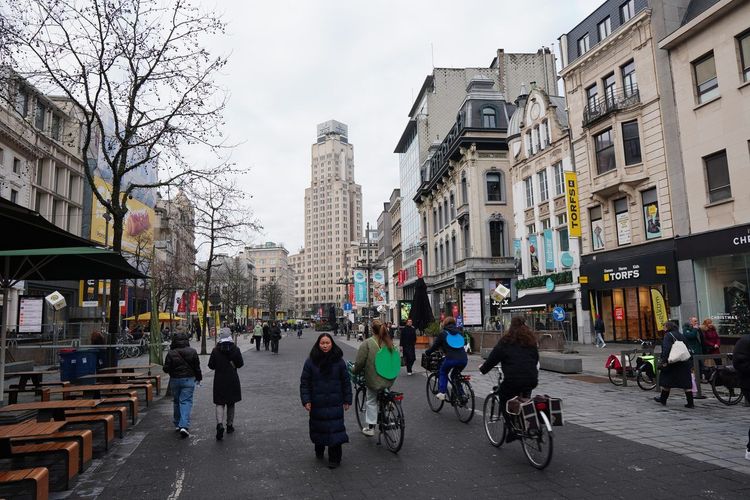
The Meir is Antwerp's main commercial artery, a pedestrian street that runs in an almost straight line from the station area to the historic centre. Major international brands stand alongside architecturally refined older buildings, including the Meir Palace (Meir 50, 2000 Antwerpen, rated 4.3/5 on Google with 658 reviews) (Paleis op de Meir), a former residence where Napoleon Bonaparte stayed in 1811, when Antwerp was part of the French Empire, now open to the public and converted into a cultural and commercial space.
Away from this busy thoroughfare, the Sint-Andries neighbourhood offers a radically different face of Antwerp's shopping scene. It was here, in the 1980s, that the international reputation of Belgian fashion was forged, driven by a group of six graduates of the Royal Academy of Fine Arts in Antwerp known as the 'Antwerp Six', among whom Dries Van Noten and Ann Demeulemeester have since achieved worldwide renown.
The streets of the neighbourhood, particularly around Nationalestraat and Kammenstraat, now concentrate independent designer boutiques, curated vintage shops and concept stores, a mix that attracts a markedly younger and more alternative clientele than the Meir. The Fashion Museum (MoMu), housed in the ModeNatie building on Nationalestraat, completes the visit with temporary exhibitions devoted to Belgian pioneers as well as invited international designers.
This fashion scene is no mere tourist accessory: it continues to feed the local economy, with the Royal Academy of Fine Arts still training a new generation of designers and several dozen young brands having set up in the neighbourhood in recent years. Antwerp thus claims the status of fashion capital at the Benelux level, a reputation that Paris or Milan do not directly contest, so distinct is the Antwerp identity — more experimental and less tied to classic luxury.
You can take in both neighbourhoods in a single afternoon: allow around 20 minutes' walk between the Meir and the heart of Sint-Andries, or ten minutes by tram if tiredness is setting in. Shops generally close in the early evening on weekdays, a little later on Saturdays, and many remain closed on Sundays except for the major chains on the Meir. Some boutiques in Sint-Andries hold informal sales outside the official sale periods, a useful thing to know if shopping is part of your travel budget.
11. Antwerp Zoo and Its Great Apes Valley
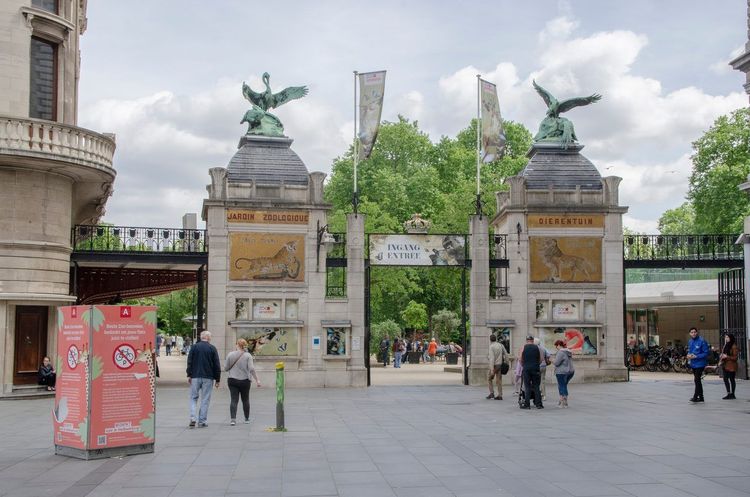
Directly adjoining the central station, Antwerp Zoo (Zoo Antwerpen, Koningin Astridplein 20-26, 2018 Antwerpen, rated 4.4/5 on Google with 25,579 reviews) is one of the oldest zoos still in operation in the world: it opened in 1843, almost two centuries before the major renovations that have transformed it in recent decades. Its location in the heart of the city, covering around ten hectares, makes it one of the densest urban zoos in Europe, a constraint that landscape architects have managed to turn into a scenographic asset.
The most spectacular attraction, the Great Apes Valley, covers nearly a hectare dedicated to gorillas, bonobos and other primates, in a setting that recreates the forests of Central Africa with unusual precision for a site so constrained in space. Visitors observe the family groups from elevated walkways and glass panels that almost eliminate any visual distance from the animals, a layout designed for conservation awareness as much as spectacle.
The zoo also houses giraffes, Asian elephants, an aquarium and a tropical vivarium housed in a listed historic building, a remnant of the zoo's original 19th-century architecture. Several of the older structures have been preserved and listed as Belgian architectural heritage, including an Egyptian-style temple built in the mid-19th century to shelter large herbivores, a typical aesthetic choice reflecting the European fascination with Orientalism at the time. The coexistence of heritage buildings and contemporary enclosures gives the tour a visual rhythm that few European zoos offer, alternating between exotic glasshouses and period neo-Egyptian façades.
Allow a full half-day for an unhurried visit, longer with young children who will want to linger at the scheduled feeding times displayed at the entrance. The ticket, higher than average for the attractions listed here, remains one of the main expenditure items for a family visit to Antwerp, but the immediate proximity to the station makes it easy to include at the start or end of a stay, luggage and all, thanks to the left-luggage facility available on site.
12. Taking a Breath of Fresh Air: Spoor Noord Park and the Rivierenhof
Antwerp is not just an accumulation of museums and historic façades. Spoor Noord Park, developed in the late 2000s on former railway wasteland north of the city centre, covers more than 20 hectares and is now one of the city's largest urban green spaces, free and open at all times.
Sports courts, a skatepark, open lawns and shallow water features for children in summer make Spoor Noord a living space rather than a simple through-park, frequented mainly by residents of the working-class neighbourhoods that surround it. It is a good option for those who want to see a less touristy side of the city.
Further afield, the Rivierenhof (Turnhoutsebaan 232, 2100 Deurne, rated 4.3/5 on Google with 735 reviews), in the Deurne neighbourhood, belongs to a different category altogether with its vast lawns, its very active open-air theatre in summer and its rose garden. The park surrounds a château whose origins date back to the 16th century, now used for cultural activities, and can be reached in around twenty minutes by tram from the central station.
These two parks directly address the question of what to do in Antwerp for free outside the museums: no ticket booth, no reservation, just a picnic and a few hours spent at the pace of the locals rather than the visitors.
13. Antwerp's Hidden Museums: Mayer Van den Bergh, Maagdenhuis and the Royal Museum of Fine Arts
Three addresses, often overlooked on express visits, usefully round out Antwerp's cultural picture for those with an extra day to spare. The Mayer Van den Bergh Museum (Lange Gasthuisstraat 19, 2000 Antwerpen, rated 4.6/5 on Google with 1,431 reviews), housed in a neo-Gothic townhouse built especially to hold the collection assembled by this 19th-century collector, preserves one of the strangest paintings in the history of Flemish art: 'Dulle Griet' (Mad Meg) by Pieter Bruegel the Elder, painted around 1563, a nightmarish scene populated with hybrid creatures that continues to fascinate art historians.
A few metres away, the Maagdenhuis occupies a former orphanage for girls that was active from the 16th to the 19th century. Its collection, less well known and accessible on a more discreet basis, blends portraits of children taken in, everyday objects from the institution and religious artworks, offering a rare glimpse into the social history of Antwerp far removed from the grand mercantile or artistic narratives that dominate the city's other museums. Check opening days and conditions before visiting, as the programming is more irregular than that of the major museums.
The Royal Museum of Fine Arts (KMSKA), reopened in September 2022 after eleven years of work, houses the world's most important collection of works by James Ensor, alongside a major ensemble of paintings by Rubens, Van Dyck and Jordaens. The building itself is worth the visit: a contemporary all-white extension has been inserted inside the courtyards of the former neoclassical palace, an architectural gesture widely praised at the time of reopening.
These three addresses can be visited in a half-day if you visit them consecutively, with the KMSKA alone deserving close to two hours given the extent of the permanent collections. They are particularly well suited to travellers returning to Antwerp for a second stay, after already ticking off the must-sees presented earlier in this article. If you plan to visit several museums, the Antwerp City Card introduced at the end of this article will recoup its cost far more quickly than buying separate tickets.
14. Local Bars and Tables: Belgian Beers and Flemish Gastronomy
No list of things to do in Antwerp would be complete without mentioning beer, a pillar of Belgian culture that the city claims with particular pride. Café Den Engel (Grote Markt 3, 2000 Antwerpen, rated 4.4/5 on Google with 2,684 reviews), on the Grote Markt, remains the most iconic address for sampling an abbey beer or a De Koninck, the local amber ale brewed in Antwerp since 1833, traditionally served in a small rounded glass known as a 'bolleke'.
Beyond this historic café, Antwerp's brewing scene has diversified considerably over the past decade: artisan microbreweries, specialist beer bars offering several hundred Belgian and international references, and organised tasting evenings that let you discover in a single night the gap between a spontaneously fermented lambic and a 9% abbey tripel.
On the food side, Flemish gastronomy deserves attention beyond the clichés of moules-frites, even if excellent versions can be found in the city centre. Antwerp today boasts several starred restaurants and a particularly active bistronomy scene, driven by a generation of chefs revisiting regional recipes — waterzooi, eels in green herb sauce, grey shrimp croquettes from the North Sea — with contemporary techniques.
Among the restaurants that most frequently appear in local recommendations is Graanmarkt 13, a restaurant in a townhouse just steps from the Meir, offering a short menu renewed according to what is fresh at the market. For a quick local lunch, the open-air markets in the centre — including the one at Theaterplein on Saturdays — let you sample Belgian produce without sitting down, a practical option between two museum visits.
For a more affordable yet equally representative dinner, Belgian fries served with a house-made sauce remain an institution it would be a shame to pass up: look for independent frietkots rather than chain outlets, particularly around the Zuid neighbourhood, which is calmer and more residential than the historic centre. Our Ryo article Top 5 Things to Do in Antwerp also lists several complementary addresses, useful for rounding out this selection according to your mood.
The Zuid neighbourhood, as it happens, concentrates some of the city's best restaurants around the Fine Arts Museum, in a more relaxed setting than the tourist bustle of the Grote Markt. Book ahead if possible during the week for the most popular addresses, as weekends fill up several days in advance at the best-rated establishments. Whatever address you choose, bear in mind that Belgians dine early, between 7pm and 8pm, and kitchens often close before 10pm outside the large brasseries in the centre.
15. Where to Stay and Practical Information for Visiting Antwerp
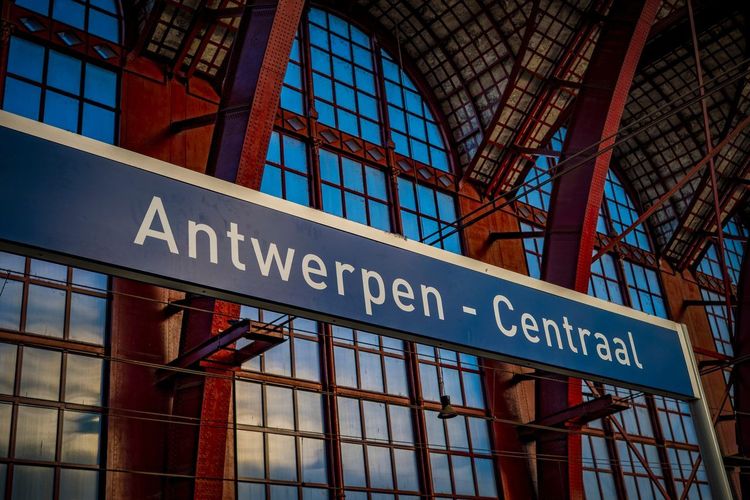
How do you get to Antwerp from Paris? The direct Eurostar train, the former Thalys, connects Paris-Nord to Antwerp-Central in just over two hours, with no changes, several times a day. It is by far the simplest and most eco-friendly option, with the arrival station right in the city centre, just a few minutes' walk from half the places featured in this article. A cheaper alternative is to take the train to Brussels and then a domestic connection to Antwerp, an additional journey of around 45 minutes. Antwerp also has a small regional airport, served mainly by flights from the United Kingdom and a few European destinations, a marginal option from France compared to the direct train.
How much time should you allow? Two full days are enough to cover the essentials on this list at a comfortable pace, without rushing. A third day allows you to add the more unusual museums mentioned above or a day trip to Bruges or Ghent, both reachable in under an hour by train. For a brief taste, a well-organised day on foot around the historic centre is possible but requires choices to be made.
The Antwerp City Card simplifies planning for stays of two days or more: it provides access to most of the museums on this list as well as urban public transport for its duration, available in 24-, 48- or 72-hour formats. The calculation works in your favour from three or four paid admissions combined, which corresponds to the natural rhythm of a fairly full weekend.
Where to stay in Antwerp? The historic centre, around the Grote Markt and the cathedral, offers maximum proximity to the main sights but also concentrates the highest prices and the heaviest tourist footfall. The Eilandje neighbourhood, booming around the MAS, has newer addresses at often more reasonable rates, with the advantage of quick access to the quays and the area's bars. For a more relaxed stay, the Zuid neighbourhood to the south of the centre combines a residential atmosphere, good restaurants and proximity to the Fine Arts Museum, at the cost of a slightly longer walk to the Grote Markt. Travellers on a tight budget will find several well-rated hostels around the central station, a lively area in the evenings but a little noisier than the rest of the centre.
A free tour with Civitatis is a worthwhile option for an initial orientation on arrival: these guided walking tours, free in principle and tip-based, generally cover the historic centre in two hours, with slots in English depending on the season. They complement, without replacing, the Ryo audio-guided tour of Antwerp, which then lets you explore at your own pace and without the constraints of a group timetable the places detailed earlier in this article, from the Grote Markt to the MAS by way of Sint-Andries.
What is the best time of year to visit Antwerp? Spring, from April to June, and early autumn in September offer the best compromise between mild weather and manageable crowds. Summer remains pleasant but attracts more groups, particularly in July and August on the Grote Markt and at the zoo. Winter, quieter and often rainy, suits those who prefer museums and want to avoid the crowds, with the added bonus of the December illuminations around the Meir and the Grote Markt.
A few practical notes to finish: the currency is the euro, bank cards are accepted almost everywhere including at small frietkots, and while Dutch remains the official language, English and often French are understood without difficulty in tourist-facing businesses in the centre. Antwerp lends itself well to structured improvisation: set two or three must-sees per half-day by picking from this list, and leave a margin for wandering without a fixed itinerary between visits.



FAQ
How much time should you plan to visit Antwerp?
Two full days allow you to cover the majority of the must-sees presented in this article without rushing. A third day leaves room for the more unusual museums or a day trip to Bruges or Ghent, each reachable in under an hour by train from the central station.
How do you get to Antwerp from Paris?
The direct Eurostar train, formerly Thalys, connects Paris-Nord to Antwerp-Central in just over two hours, several times a day, with no changes. It is the fastest and most convenient option, with the station located right in the city centre.
What can you do in Antwerp in 1 day?
Focus on a logical walking route: the Grote Markt and City Hall, the Cathedral of Our Lady, the Rubens House, then Het Steen and the MAS at the end of the day to enjoy the free panoramic rooftop at sunset. Allow around six to seven hours of walking and sightseeing.
What can you do in Antwerp for free?
The MAS panoramic rooftop, open every day without a ticket, remains the most spectacular free option. Add the Grote Markt and City Hall seen from outside, Spoor Noord park, the Rivierenhof, the Scheldt quays and a stroll through the Sint-Andries neighbourhood: enough to fill an entire day without spending a cent.
What can you do in Antwerp as a couple?
The baroque garden of the Rubens House, the Scheldt quays at sunset from Het Steen, the MAS panorama at the end of the day and a dinner in the Zuid neighbourhood make up a romantic itinerary far from the crowds of the historic centre.
What is the best time of year to visit Antwerp?
Spring and early autumn offer the best balance between pleasant weather and moderate crowds. Summer remains enjoyable but busier, while winter, quieter, suits museum lovers and benefits from the December illuminations.
Is Antwerp worth a visit compared to Brussels or Bruges?
Yes, without hesitation: Antwerp has its own architectural and cultural identity, less institutional than Brussels and less museified than Bruges, with a fashion and contemporary gastronomy scene that neither of the other two cities matches to the same degree.
Antwerp is not reducible to Rubens or diamonds, even if both still feed a good part of its tourist identity. It is a city built on deliberate contrasts: a monumental railway station and a chocolate museum designed for children, 16th-century guild houses and a fashion district that continues to export its designers worldwide, a free rooftop terrace and a printing workshop-museum frozen in the 19th century. This density, rare for a city of this size, allows you to tailor a stay to your own needs, whether you have two days or only an afternoon between trains.
To plan this itinerary concretely without juggling paper maps, the Ryo audio-guided tour of Antwerp remains the most practical tool: our Ryo app guides you step by step from one place to the next, with the anecdotes and historical context needed to understand what you are looking at, at your own pace and without depending on the schedule of a human guide. From the Grote Markt to the Eilandje neighbourhood, all that remains is to choose where to begin.