© Shutterstock
 Votre guide Ryo
Visiting Bruges in 2 Days: The Complete Itinerary for 2026
Bruges can be crossed on foot in about forty minutes end to end, yet some visitors return a third time without having seen everything. Past the first glimpse of the stepped gables on the main square, the city reveals cobbled lanes, stone bridges and enclosed gardens that take time to understand rather than simply pass through. To visit Bruges in 2 days without rushing, the Ryo audio-guided tour of Bruges starts right on the square that concentrates everything you came for: the 13th-century Belfry, its 83 metres and 366 steps, keeping watch over a 47-bell carillon that chimes its melodies above the rooftops.
In two days, you have time to drift along the canals in a flat-bottomed boat, compare a Trappist ale with a gueuze in a café whose bar hasn't changed in a century, push open the gate of a béguinage where Benedictine sisters still live, and scout out, neighbourhood by neighbourhood, where to stay on a future trip. This guide details both days hour by hour, with possible extensions for a third day cycling toward Damme and the practical information — budget, timing, accessibility — that helps you avoid unpleasant surprises.
How Much Time Do You Need to Visit Bruges?
Two days in Bruges is the format that appears in most travel journals about Belgium, and for good reason: the historic centre, listed as a UNESCO World Heritage Site, can be explored entirely on foot from any point in the city, but its dozen or so municipal museums, roughly eighty bridges and canal network deserve more than a quick dash between the train station and the main square.
One day lets you tick off the classics: Markt, Belfry, Burg, canals, Béguinage. That's enough if you're combining Bruges with another stop on your trip, but you'll miss the museums, a stroll through the Sint-Anna neighbourhood, and the good restaurants away from the tourist terraces. Over two days the pace changes entirely: you wander, you linger in front of a chocolatier's window without guilt, you keep an evening free to see the city lit up after dark.
Bruges owes its current shape to its golden age in the 14th century, when it ranked among the largest trading cities in Europe thanks to the wool and cloth trade. The silting up of the Zwin in the 16th century cut off its access to the sea, and it is paradoxically that economic decline that preserved its medieval centre intact to this day.
Useful landmark: the historic centre fits within an oval of roughly 430 hectares enclosed by canals, with the Markt as its central point. Almost everything you'll want to see lies within a 20-minute walk of this square, which greatly simplifies the logistics of your Bruges plan.
How to Get to and Around Bruges
Getting to Bruges by Train, Car or Plane
Bruges is easy to reach from France as well as from the rest of Belgium, and the choice of transport depends mainly on your starting point.
By train, it's the most comfortable option for reaching the city centre directly: from Brussels-Midi, allow about 1 hour to 1 hour 10 minutes on a direct service, with frequent departures throughout the day. From Paris, you generally need to change in Brussels (Eurostar, then a Belgian IC train), for a total journey of 2h30 to 3 hours. Bruges station is 15–20 minutes on foot from the historic centre, or 5 minutes by bus.
By car, the E40 motorway links Brussels to Bruges in just over an hour. The difficulty starts on arrival: the historic centre is largely pedestrianised or has restricted traffic, and finding a parking spot on the cobbled streets is a real challenge. It's better to head straight for a car park on the immediate outskirts.
By plane, the closest airport is Brussels-Zaventem, about 1h15 by road or 1h30 by train (a few direct services, otherwise a change in Brussels). Brussels-South Charleroi Airport, further out, easily adds another 30 to 45 minutes to your journey.
Getting Around: on Foot, by Bike or by Boat
Once you arrive, the question of transport becomes straightforward: the centre of Bruges can be explored entirely on foot, and that's actually the best way to discover it. Allow 25 to 30 minutes to walk across the city from east to west at a leisurely pace, photo stops included.
Cycling is a popular choice among residents themselves, with bike lanes running alongside most of the canals. Several rental shops offer day hire near the station and around the Markt — a practical option if you're planning to ride out to Damme on a third day.
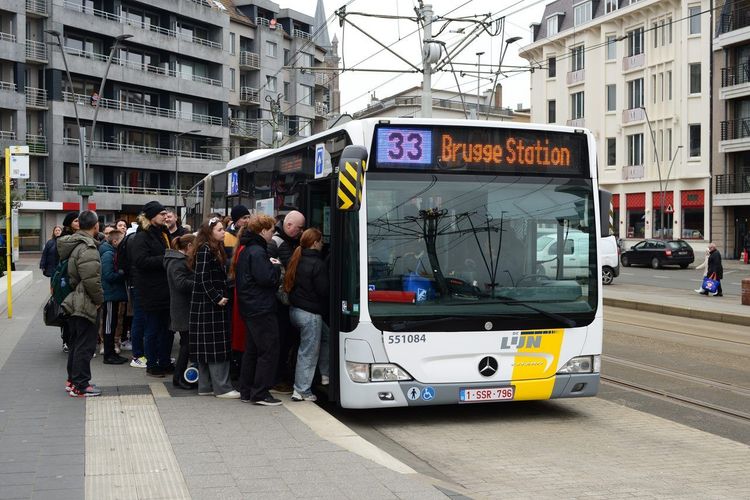
To park without losing your afternoon, the Centrum-Station car park, right next to the station, is the reliable choice: 1,690 spaces, €1.40 per hour or €7.10 for the day, and most importantly a free return bus trip on De Lijn into the centre for you and up to three passengers, valid on the day of your arrival (prior registration on the De Lijn website required). On foot, the first canals are only about ten minutes away. If you're looking for free parking, you'll need to move further from the intra-muros neighbourhoods and check the zone signage carefully. Avoid driving into the historic centre itself — traffic is restricted to residents on many stretches.
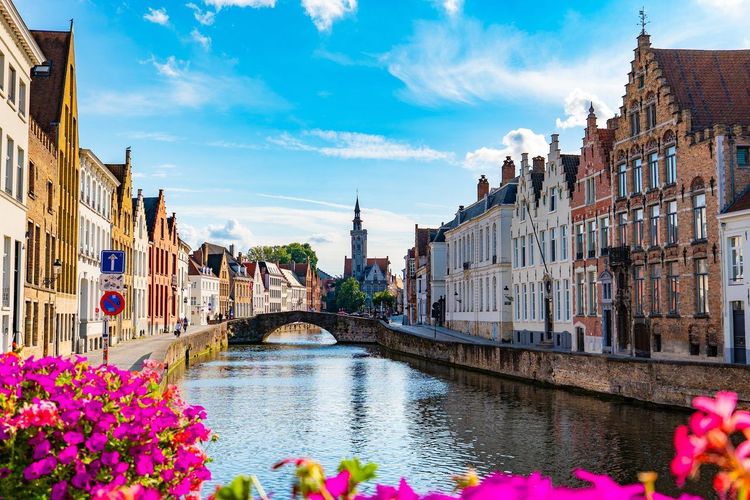
Finally, the canal boat trip is not just a tourist attraction: it's a genuine way to understand the city's geography, its bridges and the façades you can only see from the water.
Day 1 Morning: Markt, Belfry and Burg Square
The first day focuses on the historic heart, the one that appears on most Bruges postcards.
The Markt and the Belfry, Historic Heart of Bruges
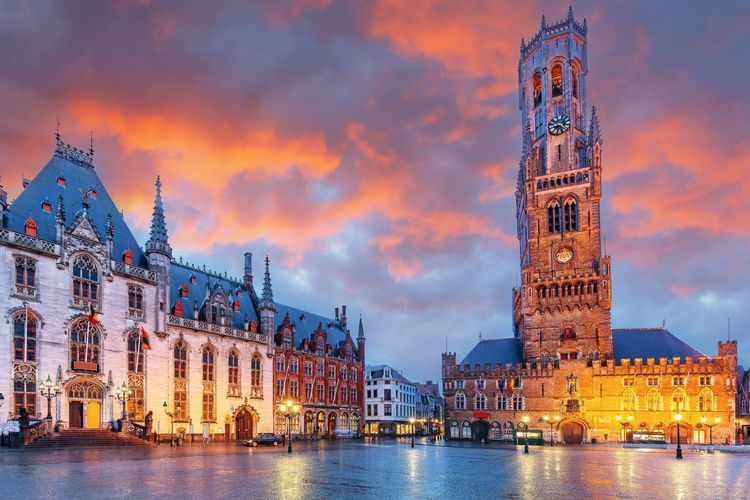
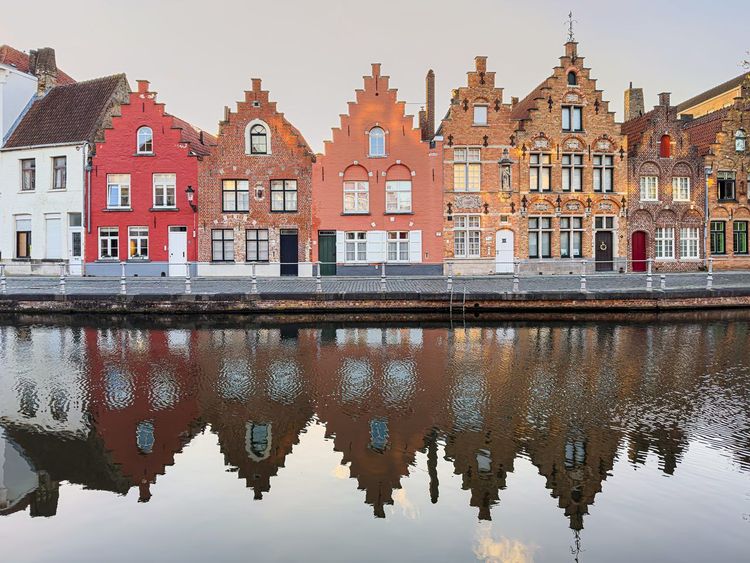
It all begins logically on the Markt, lined with guild houses whose stepped gables are painted in shades of ochre and red. The market is still held here on Wednesday mornings, a tradition stretching back several centuries.
On the south side of the square stands the Belfry, an 83-metre tower built from the 13th century to watch over the storerooms of the cloth hall. Climbing its 366 stone steps — increasingly narrow as you near the top — rewards you with a 360° view over the red rooftops and canals. The 47-bell carillon marks every quarter hour with a short tune, a detail most visitors only connect after the fact to the melody they heard while crossing the square.
Booking a time slot online is mandatory to climb the Belfry: tickets cost €15 at full price (€13 for ages 7–17, free with the Musea Brugge Card), with opening hours from 9am to 8pm from April to early November. In July and August, morning slots sell out several days in advance: secure yours as soon as your dates are confirmed, and aim for opening time to enjoy the view before the crowds arrive.
This same Markt is also where our Ryo audio tour of Bruges begins: 22 audio stops spread over 1h45 and 4.4 km, designed to take you from the Belfry to the Burg and the canals without retracing your steps or missing an architectural detail along the way.
Burg Square and Its Gothic Monuments
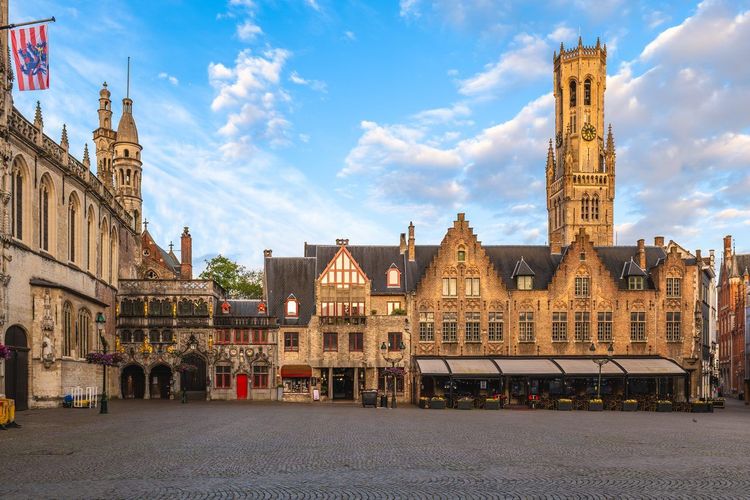
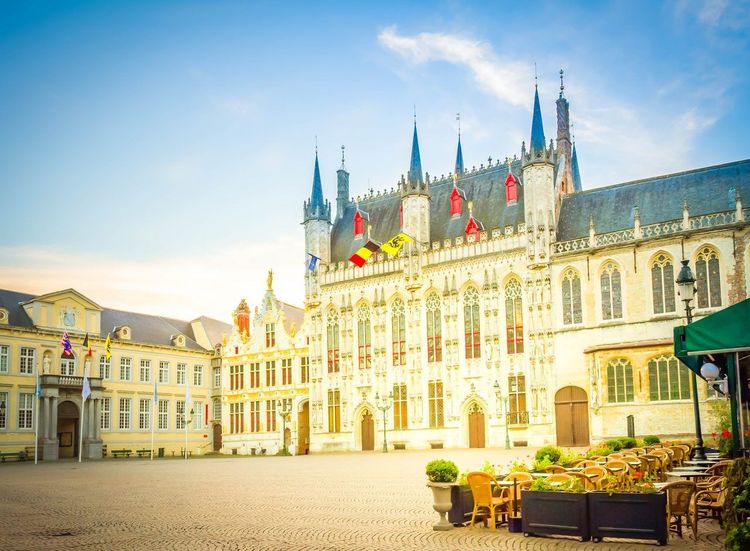
Two minutes on foot away, Burg Square strikes a completely different note. The former seat of the city's political and religious power, it brings together on a single façade the 14th-century Gothic town hall, the Renaissance former civil registry and the Baroque provostry — three styles in conversation without resembling each other.
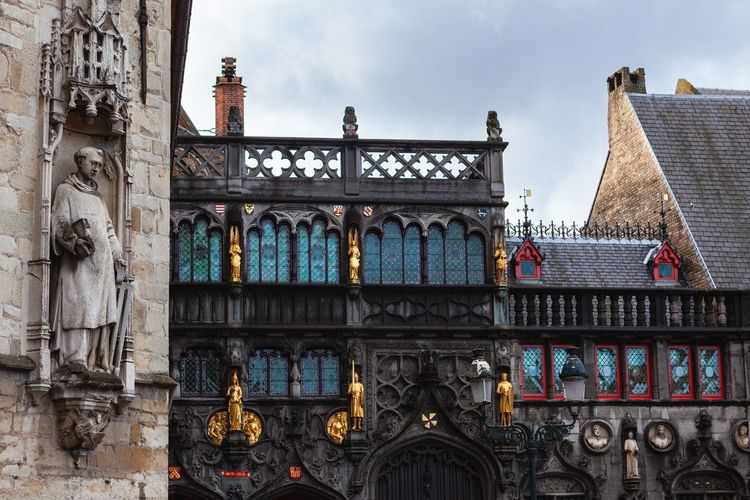
This square is also home to the Basilica of the Holy Blood (Burg 13, 8000 Bruges, rated 4.6/5 on Google from 6,089 reviews), unassuming from the outside but housing in its upper chapel a relic which tradition holds was brought back from the Second Crusade by Count Thierry of Alsace in the 12th century: a few drops of blood attributed to Christ. The Procession of the Holy Blood, held each year on Ascension Day, remains one of the most widely attended religious events in Belgium and winds through the city in period costume.
You can visit the Basilica at this point, but it's worth saving the lower Romanesque chapel for the start of the afternoon: darker and more austere, it takes just a few minutes and pairs naturally with the beginning of the canal walk.
Day 1 Afternoon: Canals, Rozenhoedkaai and the Basilica of the Holy Blood
The afternoon shifts to the water, quite literally.
Boat Trip Along the Canals and Rozenhoedkaai
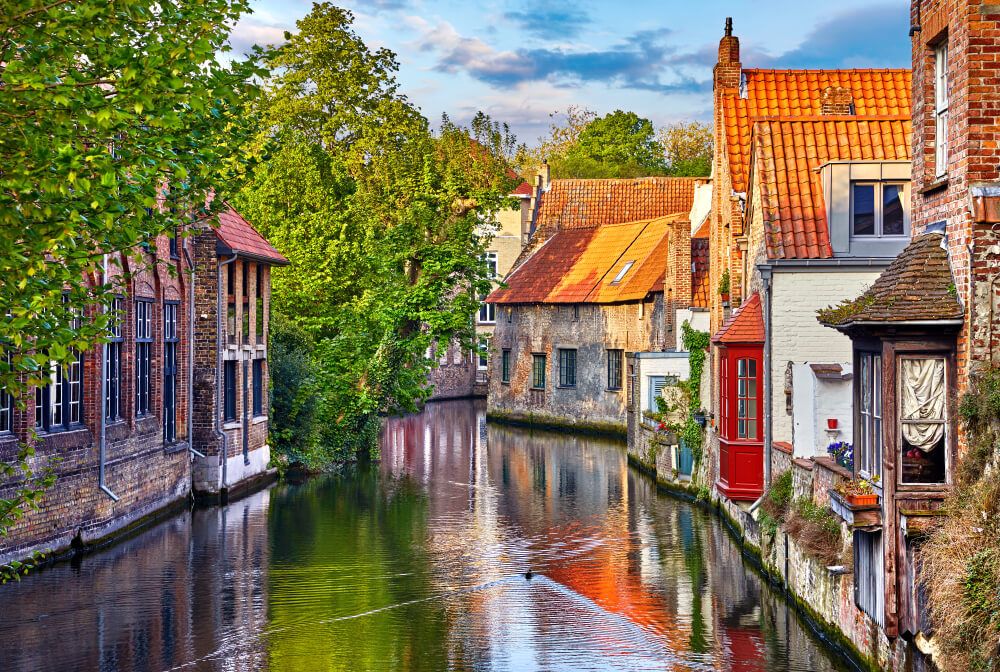
The canals of Bruges are not merely a backdrop: they long served as a commercial artery before becoming the attraction they are today. The boat trip — about 30 minutes non-stop at €15 per adult (€9 for ages 4 to 11, running from early March to mid-November) — departs from several boarding points along the Dijver and lets you see the city from an angle that walking never provides, in particular the undersides of the bridges and the private gardens that slope down to the water.
Should you book ahead? In low season, no: the boarding points run continuously and the wait rarely exceeds 15 minutes. In July and August, however, it's better to go late morning or book a slot online, as some departures sell out by 11am.
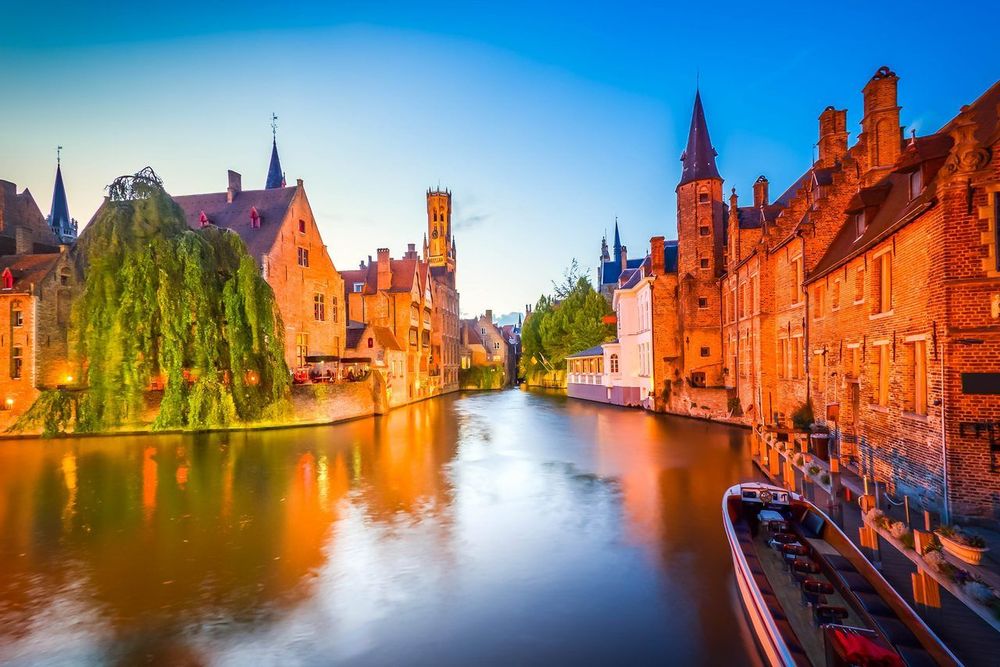
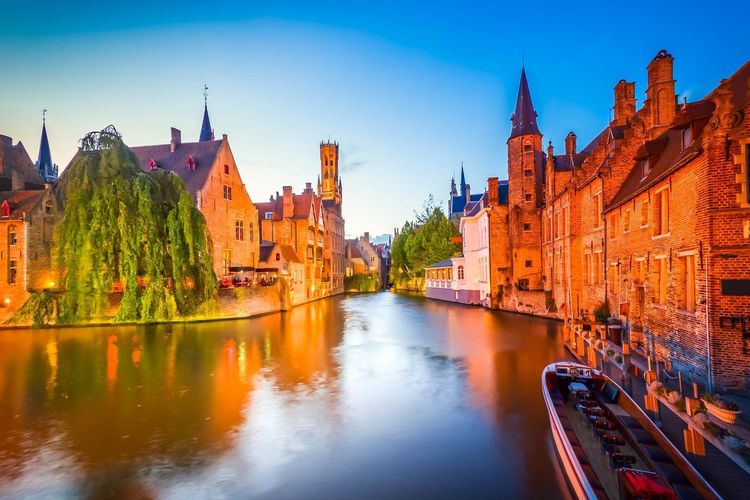
The most photographed viewpoint of the trip, and arguably of the entire city, is Rozenhoedkaai (Rozenhoedkaai, 8000 Bruges, rated 4.8/5 on Google from 3,130 reviews), where the Belfry appears in the background behind façades reflected in the water. You'll likely encounter more cameras than locals, but the view is worth the stop, especially in the late afternoon when the light skims the brickwork at a low angle.
The Ryo audio-guided route follows the canals precisely as far as Rozenhoedkaai, with local anecdotes to listen to while walking rather than looking up from a map.
Basilica of the Holy Blood and Artisan Chocolatiers
Heading back toward the Burg, stop at the Basilica of the Holy Blood if you didn't visit it in the morning: ten minutes are enough for the lower Romanesque chapel, a little more for the upper Gothic chapel where the relic is displayed for veneration on certain days.
The afternoon ends naturally with a food break. Bruges has more than fifty artisan chocolatiers within a territory you can cross in 30 minutes on foot, from classic pralines to more experimental creations featuring local beer or spices. Many offer free tastings at the counter — a simple way to compare before you buy.
Sampling local specialities doesn't stop at chocolate: a warm waffle from a street stand — light and rectangular in the Brussels style, or dense and caramelised in the Liège style — or a first white beer on a terrace rounds off this interlude between visits perfectly.
Day 1 Evening: Bruges After Dark and a Gourmet Break
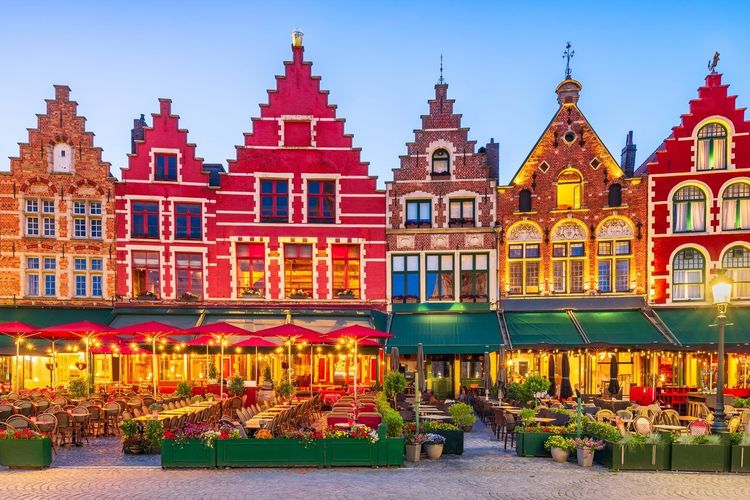
Most visitors leave Bruges after dinner, which is probably the most common mistake of the weekend. After 9pm, the tourist coaches have gone, the lanes empty out, and the city takes on a completely different face.
The medieval monuments are lit up well into the evening: the Belfry stands out against the sky, the Markt façades take on a golden hue, and Rozenhoedkaai, packed with tourists during the day, becomes almost silent. It's the moment when the canals offer their finest reflections, undisturbed by the crowd.
It's also often at this quiet hour that you get the best view of Bruges's famous swans, which nest particularly around the Minnewater and along the Dijver. A local legend holds that their presence dates back to a punishment inflicted on the city by Maximilian of Austria in the 15th century — a story local guides enjoy telling while walking, early in the morning or late at night, when the quaysides are almost entirely their own.
End the evening in a typical beer café, wooden bar and a menu running to several pages: that's the nocturnal side of Bruges too, quieter than the daytime version you encounter on the Markt.
Day 2 Morning: Groeningemuseum, Gruuthuse Museum and Sint-Janshospitaal
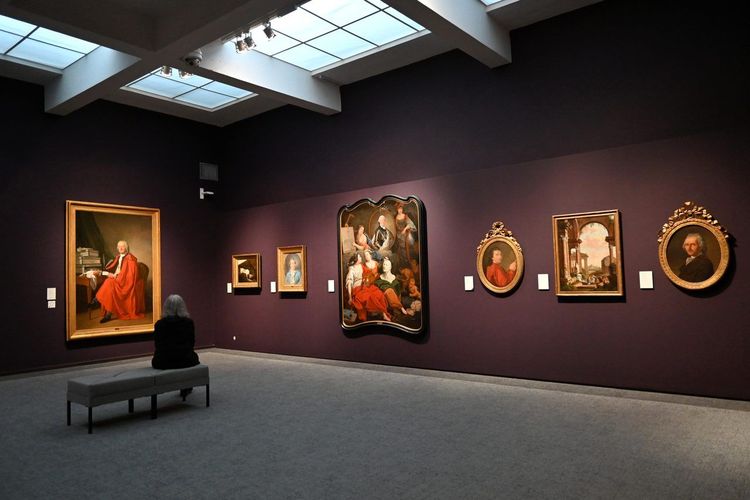
The second day shifts to the museums — less visually dramatic at first glance, but just as rich.
Groeningemuseum and Flemish Painting
The Groeningemuseum holds one of the finest collections of Flemish Primitives in the world, from Jan van Eyck to Hans Memling, along a route that takes only an hour to an hour and a half. The level of detail in these 15th-century paintings — before the invention of the magnifying glass — consistently surprises visitors who get close enough to look.
A short walk away, the Gruuthuse Museum, housed in a 15th-century patrician palace, rounds out the visit from a different angle: decorative arts, tapestries, period furniture and a direct view into the interior of the Church of Our Lady from the private chapel of the Lords of Gruuthuse. Allow 45 minutes to an hour to explore it at a relaxed pace.
If you had to choose just one museum across the two days, the Groeningemuseum would be the reference, but the pair works particularly well visited back to back since the two buildings are almost adjacent.
Sint-Janshospitaal and the Memling Museum
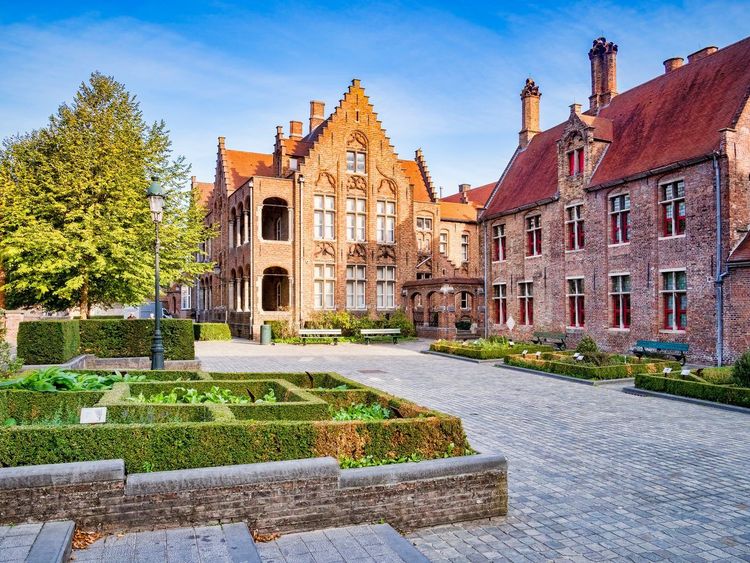
Continue to Sint-Janshospitaal (Mariastraat 38, 8000 Bruges, rated 4.3/5 on Google from 2,528 reviews), one of the oldest preserved hospitals in Europe, founded in the mid-12th century and in use until 1977. The building now houses a museum displaying seven works by Hans Memling, a German-born painter who settled in Bruges, including four commissioned by the brothers and sisters of the hospital — among them the famous Shrine of Saint Ursula.
The hospital's former pharmacy, preserved with its faience jars and period instruments, adds an almost intimate dimension to the visit: it feels less like a conventional museum and more like the remains of a place of care that was genuinely in use for over eight centuries.
The Ryo audio-guided route points out the Groeningemuseum and the Gruuthuse Museum along the way — handy for locating the main museums without pulling out a map in the middle of the street.
Good to know: if you plan to visit several museums over the two days, the Musea Brugge Card covers access to twelve municipal sites, including the Groeningemuseum and the Gruuthuse Museum, at a tiered rate that pays off from the third visit onward.
Day 2 Afternoon: Béguinage, Minnewater and the Sint-Anna Neighbourhood
After a full morning, the afternoon programme deliberately slows the pace.
The Béguinage and the Minnewater, a Peaceful Interlude
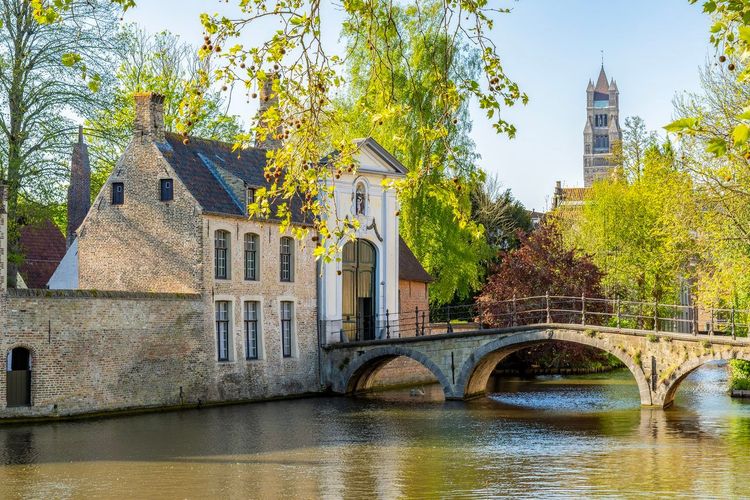
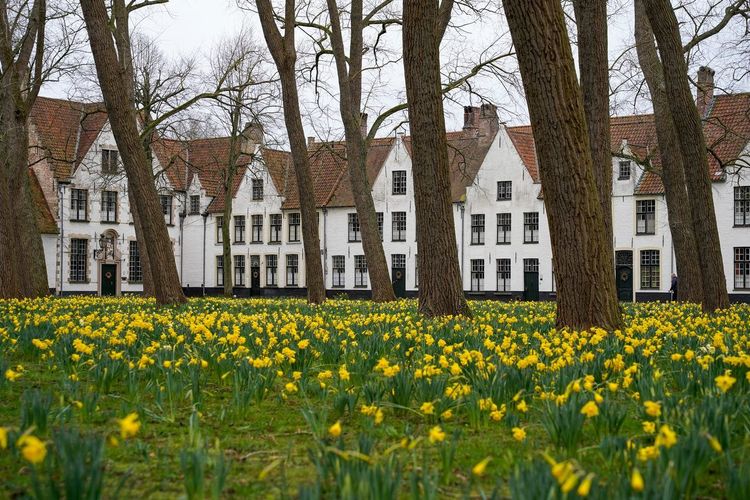
The Béguinage offers a complete contrast to the morning. Founded in the 13th century to house béguines — women living in religious community without taking permanent vows — it is today inhabited by Benedictine sisters. The white houses lined up around a poplar-shaded lawn create a pocket of silence just five minutes from the Markt.
Entry is free; only the visit to the béguine house museum is paid. Many visitors just breeze through — take your time instead and sit on a bench. It's one of the rare spots in the centre where silence is the norm, not the exception.
Just behind it, Minnewaterpark, nicknamed the 'Lake of Love', extends the stroll naturally. Weeping willows, swans gliding across still water and an old stone bridge compose a scene that has inspired its share of romantic legends — some genuine, others invented for the benefit of tourism.
Good news if you're following the Ryo audio guide: its final stops pass through the Béguinage and the Minnewater, letting you close the second day with the history of both places in your ears.
The Sint-Anna Neighbourhood and Its Windmills
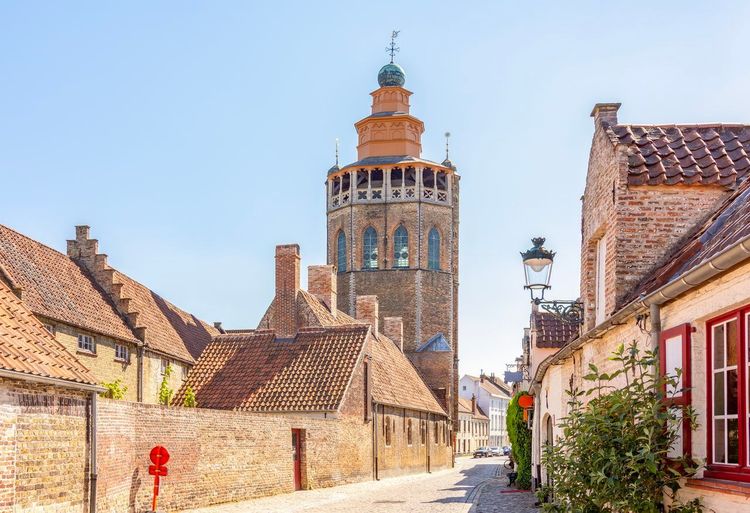
To extend the afternoon away from the groups, head up to the Sint-Anna neighbourhood, one of the least visited residential areas of the centre. Cobbled lanes, small shaded squares and the understated Jeruzalemkerk — a private church built in the 15th century by a merchant family who dreamed of Jerusalem — make up a more intimate Bruges, frequented almost exclusively by locals.
Walking as far as the old ramparts, four windmills still standing line the Kruisvest embankment, including the Sint-Janshuismolen (Kruisvest, 8000 Bruges, rated 4.5/5 on Google from 550 reviews), a baker's mill from 1770 that remains on its original site. It's the only one you can visit (April to October, Tuesday to Sunday), and it still grinds grain when the wind obliges. The view from the embankment overlooking the canals, with the city spread out below, closes the day on a note more rural than the rest of the stay.
It's also these less touristy neighbourhoods of Bruges — Sint-Anna above all — that give you the feeling of having seen a living city rather than just a frozen postcard.
Going Further: What to Do With a 3rd Day or More Time
If your schedule allows for a third day, or if you prefer to spread the programme over a more relaxed pace, two options naturally extend the stay.
Cycling to Damme Along the Canal
The village of Damme (Damme, 8340 Damme), about 7 km from Bruges, is reached by a bike path that follows the Damme Canal the entire way — flat and shaded by a double row of poplars. Allow 25 to 30 minutes by bike each way, with the option of returning by tourist boat between April and September.
Damme, the former outer port of Bruges before the Zwin silted up, has retained a Gothic town hall and the atmosphere of a Flemish village no longer found in the denser centre of Bruges. A GPX track for the Bruges–Damme–Sluis loop — extending into the Netherlands if you have a full day — is available on several cycling route websites, useful for loading the itinerary onto your phone before you set off.
De Halve Maan Brewery and Food Workshops
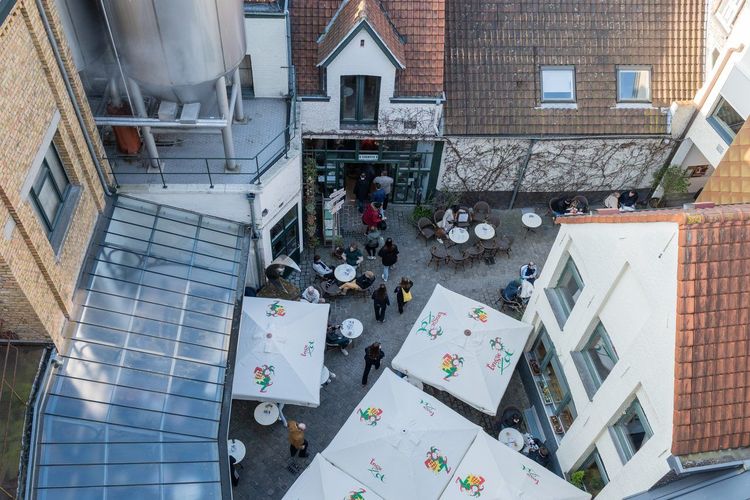
Back in Bruges for the second option, more urban in nature: the De Halve Maan brewery, in operation since 1856 in the heart of the historic centre, offers a guided tour ending with a tasting. Its distinctive feature is a 3 km underground pipeline that carries beer directly to its bottling plant on the outskirts, avoiding lorries on the cobbled lanes of the centre.
Two workshops pair well with a more experiential third day: a Belgian chocolate-making class where you leave with your own pralines, and a waffle workshop that explains the difference between a Brussels waffle and a Liège waffle — a debate Belgians take remarkably seriously.
To explore the surroundings further, our article on what to do in Bruges and the surrounding area details other day trips from the city, if the idea of visiting Bruges over 3 days takes hold.
What to Do in Bruges Based on Your Profile: Couples, Families, Rainy Days
The two-day programme remains a common framework, but a few adjustments make all the difference depending on who you're travelling with.
Bruges for Couples: Romantic Spots and Addresses
For a romantic weekend in Bruges, the Minnewater and its surroundings offer the most obvious setting, but a few tweaks make a real difference: booking a boat trip late in the afternoon when the light skims the façades at a low angle, or choosing a dinner venue with a canal view rather than on the Markt, which is livelier.
A night-time stroll through the small streets around the Basilica of the Holy Blood, deserted after dinner, rounds out the picture nicely. Many couples also choose to stay near Sint-Anna or the Béguinage rather than in the heart of the centre, for a quiet atmosphere that carries through from the day's walks to breakfast.
Bruges With Kids and Activities for Rainy Days
With children, Bruges remains surprisingly well suited to a short format: short walking distances, a boat trip that works as an attraction in itself, chocolatiers who readily offer free tastings, and a Béguinage large enough to run around in without bothering anyone.
On rainy days, head to the museums: the Groeningemuseum and the Gruuthuse Museum are fully indoors, as is the Historium on the Markt, which recreates 15th-century Bruges in an immersive way that tends to delight children and adults equally. A waffle or chocolate-making workshop also works very well as a wet-weather activity, rain or not.
For those travelling on a tight budget, several activities are free: entry to the Béguinage, a stroll through Minnewaterpark, a walk through Sint-Anna or simply taking in the view at Rozenhoedkaai cost nothing.
The Ryo audio-guided tour, for that matter, can be followed at anyone's pace — as a couple or as a family — with the option to pause at each monument without losing track of the visit.
Where to Stay in Bruges
The Best Neighbourhoods to Stay In
The choice of neighbourhood noticeably changes the experience of the two days. Staying in the very centre, around the Markt or the Burg, puts everything within walking distance but also exposes you to the noise of the terraces late into summer evenings.
The Béguinage and Sint-Anna area, quieter, suits a couple's stay or anyone who prioritises sleep over short distances. Finally, the streets around the station, slightly further out, often offer better value for money, with a 15 to 20-minute walk to the historic centre — a pleasant one, as it partly follows the canals.
Our Hotel Selection by Budget
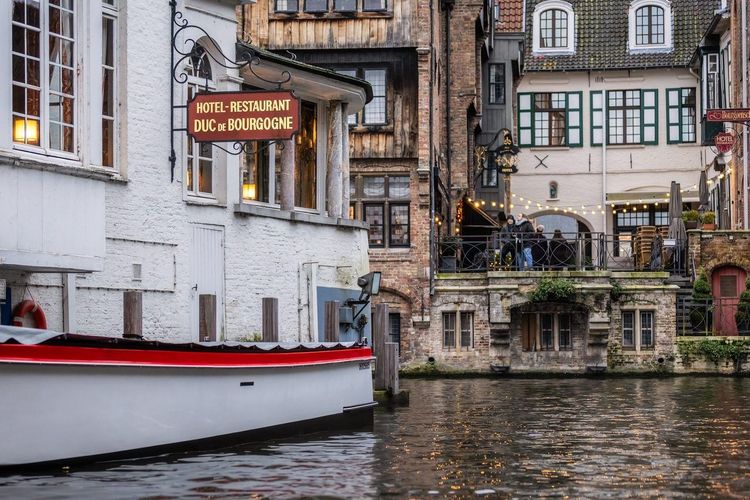
For a two-day format, proximity is worth prioritising over luxury: a central address, even a modest one, often saves more time than a highly rated hotel on the outskirts.
At the budget end, several B&Bs run by locals — often in a typical townhouse — offer excellent value at around €90 to €120 per night for a double room. In the mid-range, expect €130 to €200 for a charming hotel in a historic building in the centre. The top end, above €250, concentrates properties with canal views or spa facilities, particularly around the Dijver.
Scout out the neighbourhoods first via the Ryo audio-guided tour of Bruges before you book: virtually walking the streets helps you visualise the real distance between a potential hotel and the main points of interest on your itinerary.
Where to Eat and What to Try in Bruges
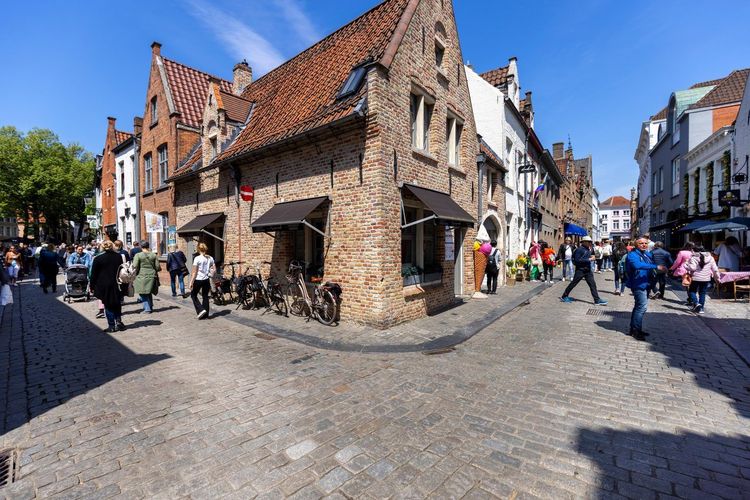
Good Addresses for Lunch and Dinner
Bruges has options for every budget, as long as you avoid the restaurants with laminated menus displayed in five languages around the Markt — often overpriced for inconsistent quality.
For a quick and filling lunch, traditional frituren remain a safe bet, with double-cooked chips served with a choice from around thirty sauces. In the evening, the small streets around Sint-Jakobsstraat and Langestraat concentrate more local addresses, well away from the tourist flow of the historic centre.
Booking a table for dinner in high season, especially at weekends, avoids queuing outside the most popular restaurants. Several booking platforms like TheFork also offer interesting discounts on weekday bookings — a simple tip for eating well without blowing the trip budget.
Local Specialities: Waffles, Chocolate and Beer

Three specialities define the local food scene. The waffle comes in two schools you'll encounter both of: the Brussels style, rectangular and airy, topped with whipped cream and red berries, and the Liège style, denser, studded with caramelised pearl sugar, eaten by hand while walking. Fancy brunching before a morning of museums? Several tea rooms and cafés in the centre serve weekend brunch menus where the waffle sits alongside eggs, country bread and Flemish cheeses — book ahead if you're aiming for a Sunday morning.
Chocolate, offered in the dozens of artisan chocolatiers you'll have passed the day before, remains the most common souvenir purchase — and the easiest to taste in the shop before buying.
On the beer side, Belgium in general and Bruges in particular offer an enormous range: a light white beer on a terrace in the afternoon, a fuller-bodied Trappist in the evening, or a local dark beer brewed right at De Halve Maan. A beer menu in a typical café can easily run to a hundred references — more than enough to fill an entire evening just choosing.
For a complete guide to addresses and specialities, our dedicated article on Bruges's culinary specialities covers a broader selection than this guide can include.
Practical Information: Budget, Best Time to Go and Useful Tips
Budget and Best Time to Visit
Bruges has a reputation for being expensive, and it's not entirely unfounded: accommodation and restaurant prices in the city centre are above the Belgian average, pushed up by the volume of tourism. For a two-day weekend, budget a total of €150 to €250 per person (accommodation, meals, museums and local transport) depending on your desired comfort level, not counting the return journey from your starting point.
For visiting Bruges over 2 days in good conditions, spring (April–May) and early autumn (September) remain the most balanced periods: mild weather, long days and more manageable crowds than midsummer. July and August see the highest footfall, particularly around the Markt and Rozenhoedkaai, while winter, quieter overall, offers a special atmosphere around the Christmas market on the Markt, generally from late November to early January.
Brugge City Card, Museum Pass and Accessibility
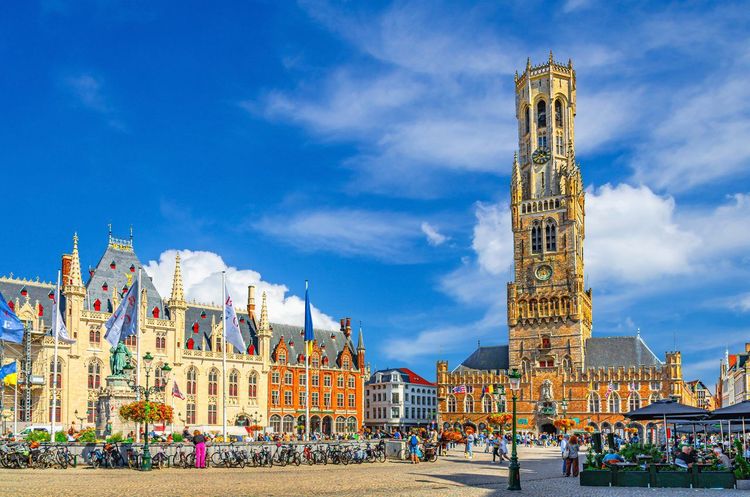
On the pass side, the one to remember is the Musea Brugge Card: around €35, valid for three days from your first visit, it grants one entry to each of the twelve municipal sites, including the Belfry, the Groeningemuseum, the Gruuthuse, Sint-Janshospitaal and the Sint-Janshuismolen windmill. With the Belfry alone costing €15, it pays off from the third entry onward. The name 'Brugge City Card' still circulates among some online resellers: it most often refers to this same museum pass, and the boat trip (€15) remains separate. Check the exact contents before purchasing.
On accessibility, Bruges is a cobblestoned city with many hump-backed bridges, which makes getting around in a wheelchair or with a pushchair challenging on some stretches of the historic centre. Most major museums — the Groeningemuseum and Sint-Janshospitaal in particular — are nonetheless accessible, and the local tourist office publishes a map of the most manageable routes.
Finally, the official language is Dutch (Flemish), but English is widely spoken in shops and restaurants in the centre, and French to a lesser extent — enough to get by without difficulty throughout your stay.
FAQ
Is 1 Day in Bruges Really Enough?
One day lets you see the essentials of the historic centre (Markt, Belfry, Burg, canals, Béguinage), but leaves out the museums and quieter neighbourhoods like Sint-Anna. Two days completely change the pace and let you enjoy the city without rushing.
Do You Need to Book the Canal Boat Trip in Advance?
In low season, no — the wait at the boarding points rarely exceeds a quarter of an hour. In July and August, however, it's better to book online or head there late in the morning, as some time slots sell out by 11am.
Where Can You See Bruges's Famous Swans?
The swans gather mainly around the Minnewater and along the Dijver, and are most visible early in the morning or at the end of the day, when the quaysides are less crowded.
Is Bruges an Expensive City? What Budget Should You Plan for a Weekend?
Bruges has higher prices than the Belgian average in the city centre, driven by tourism. Budget between €150 and €250 per person for two days, including accommodation, meals and museums, not counting the return journey.
Is Bruges Suitable for a Family Trip With Young Children?
Yes: the short walking distances, the boat trip that works as an attraction in itself, and several indoor museums make it a comfortable destination for a family stay, even on rainy days.
How Do You Get Around Bruges Without a Car?
The centre can be crossed entirely on foot in 25 to 30 minutes, and a bicycle is a great complement for longer excursions, particularly toward Damme. A car offers no advantage in a historic centre that is largely pedestrianised.
What Is the Best Time to Visit Bruges and Avoid the Crowds?
Spring (April–May) and early autumn (September) offer the best weather-to-crowd ratio. July and August remain the busiest period, while winter, quieter overall, takes on a special atmosphere around the Christmas market.
Bruges in 2 Days: Our Final Piece of Advice
Two days in Bruges are enough to understand why the city remains one of the most sought-after destinations in the Low Countries, without exhausting it: leave yourself a reason to come back, whether it's the cycle ride to Damme you skipped or a museum visited too quickly between two rain showers.
If you want to organise the first day without having to think about it, the Ryo audio-guided tour of Bruges is the simplest way to get started: 22 audio stops, 1h45 and 4.4 km covering the Markt, the Belfry and the canals in a logical order — download it before you leave and follow it at your own pace, no paper guide or map needed.