© Shutterstock
 Votre guide Ryo
Visit Bruges in 3 Days: Complete Itinerary, Must-Sees, and Best Spots (2026)
Visiting Bruges in 3 days is the format that comes up most often among travelers planning a city trip to Belgium, and it is no accident: two days barely cover the UNESCO-listed historic center, but you need a third to catch your breath, cycle off to the city's windmills, and push on to the village of Damme. Bruges is best explored slowly, at the pace of the swans gliding along its canals, and that is precisely the tempo followed by the Ryo audio-guided tour of Bruges: twenty-two narrated stops through the historic center.
Over these three days, you will climb the 366 steps of the Belfry for a panorama over the red-brick rooftops, discover a basilica said to hold a relic brought back from Jerusalem in the 12th century, and learn why a brewery in the center sends its beer beneath the cobblestones through an underground pipeline more than 3 kilometers long. Between two museums, there will even be time for a waffle-making workshop and, if you feel like extending your stay, a side trip to Ghent or Brussels. Transport, parking, accommodation, and budget are detailed below.
Day 1 in Bruges: Grand-Place, Belfry, and the Historic Heart
The first day focuses on the historic triangle every traveler comes looking for: two squares, a basilica, and the unavoidable boat tour. Plan on a full day, without rushing.
Grand-Place and the Belfry, the Medieval Star
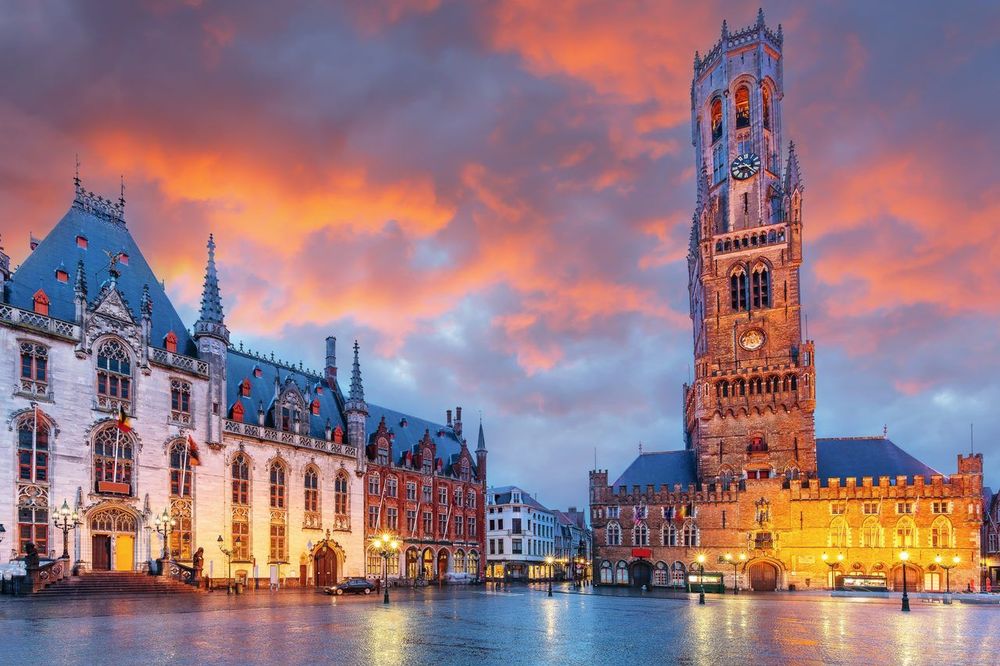
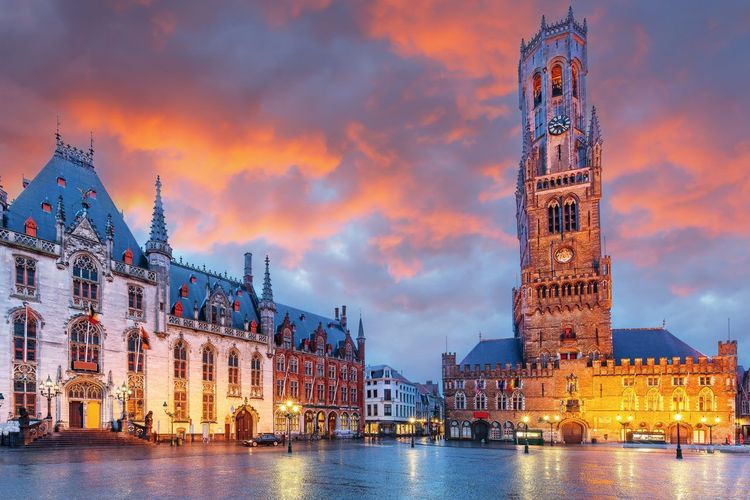
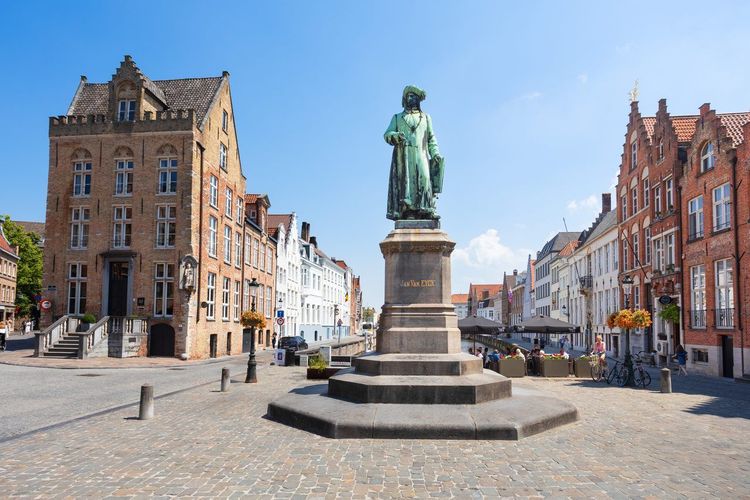
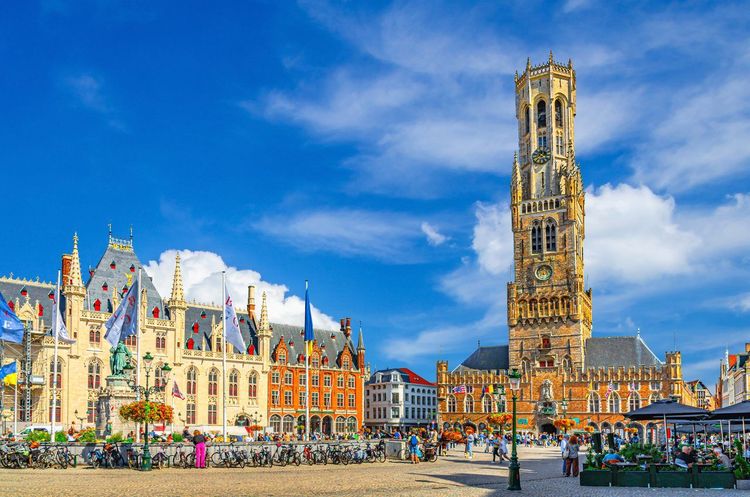
The Grand-Place (Markt) is the logical starting point for any stay in Bruges. Lined with gabled houses with ochre and red facades, it holds at its center the statue of Jan Breydel and Pieter de Coninck, heroes of the 1302 revolt against the French occupiers.
On the south side of the square stands the Belfry, an 83-meter tower built from the 13th century to watch over the city and house its archives. The most courageous will climb the 366 steps of a rather narrow spiral staircase; the reward is a 360-degree panorama over the tiled rooftops and, if the timing is right, a concert from the 47-bell carillon. One tip: book your time slot online a few days ahead, as the number of simultaneous visitors is limited and same-day slots are often sold out in high season.
It is at the foot of the Belfry that many visitors start the Ryo audio-guided tour of Bruges: 22 audios over a 1h45 walk of 4.4 km, linking squares, bridges, and quays of the center with commentary at each stop.
Burg Square and the Basilica of the Holy Blood
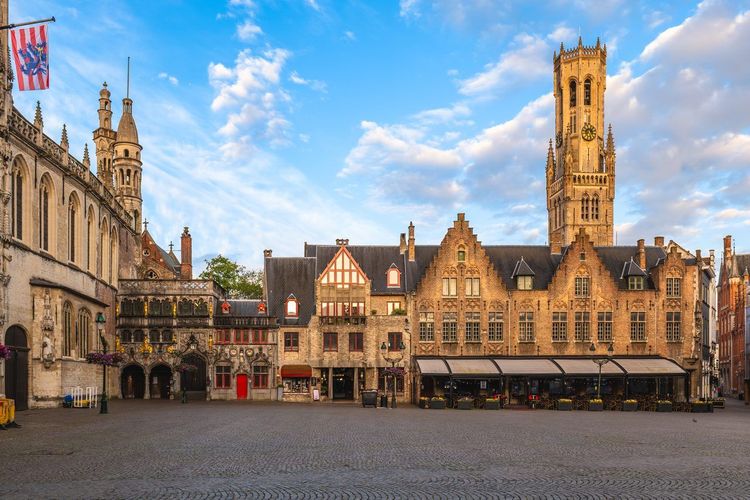
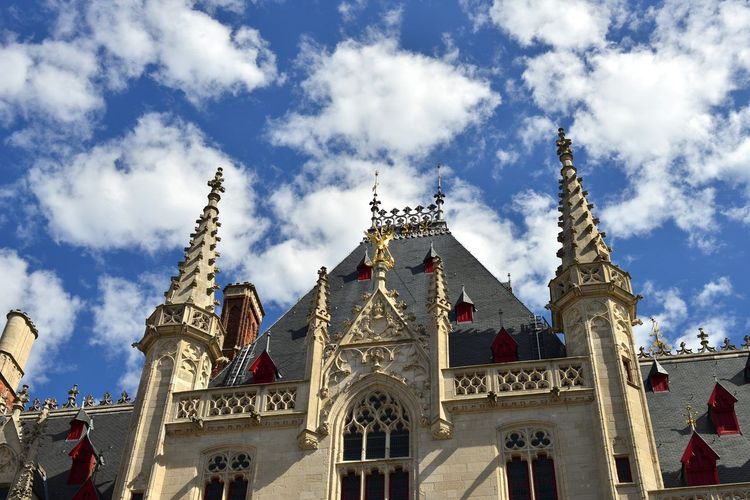
Just steps from the Markt, Burg Square impresses with the contrast of its architectural styles: the Gothic town hall from the late 14th century, the Renaissance former civil registry, and the Palace of the Liberty of Bruges stand side by side on a square more intimate than its neighbor.
In one corner of the square, the Basilica of the Holy Blood hides behind a discreet facade one of the most venerated relics in Belgium: a vial said to contain a few drops of the blood of Christ, brought back from Jerusalem by Thierry of Alsace on his return from the Second Crusade, around 1150. The lower chapel, Romanesque and austere, contrasts with the richly decorated upper chapel. Every year on Ascension Day, the Procession of the Holy Blood carries the relic through the streets: it is one of the oldest religious processions in Europe, and if your dates fall on that day, expect a crowded city center.
Canal Boat Ride and the Rozenhoedkaai
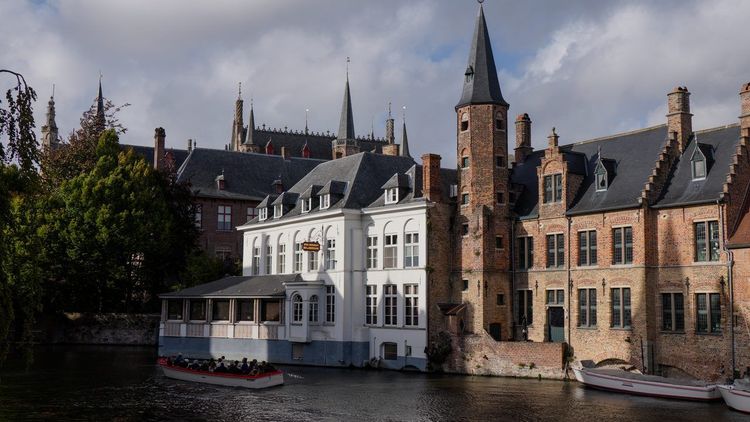
It is impossible to visit Bruges without boarding a boat on its canals. Five docks are spread across the center, with a half-hour tour that passes under about ten stone bridges and runs alongside private gardens not visible from any street. Tickets cannot be booked online: you have to go directly to the dock, which can mean a queue in the height of summer. Come early in the morning or late in the day to wait less.
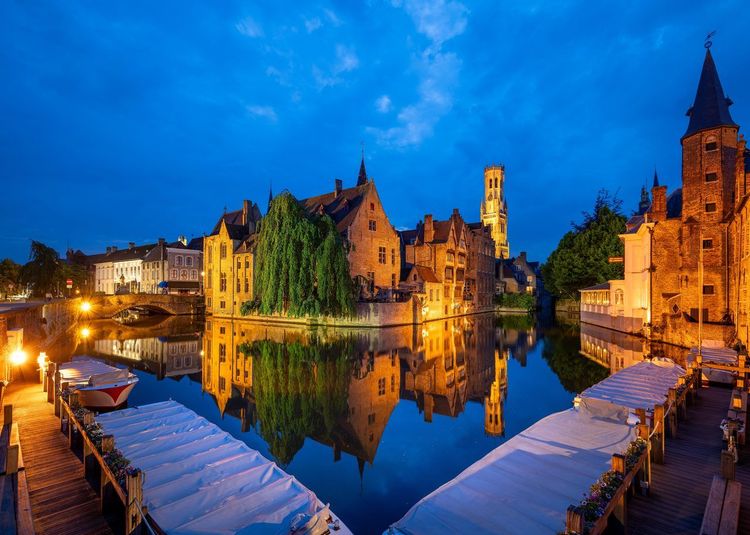
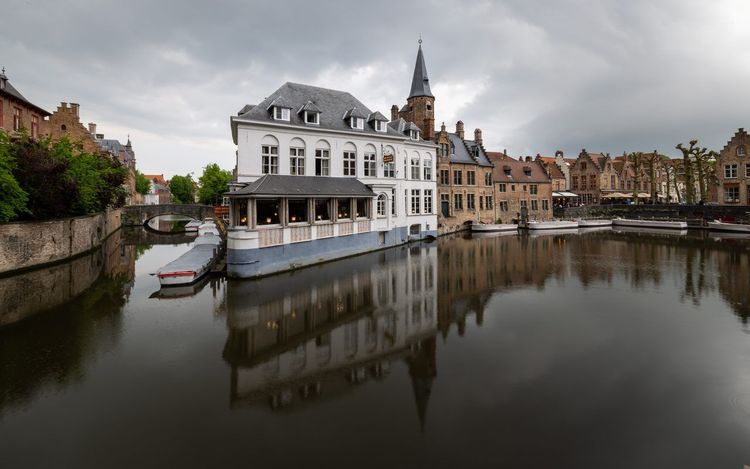
On your way back toward the Dijver, stop at the Rozenhoedkaai (Rozenhoedkaai, 8000 Bruges, Belgium, rated 4.8/5 on Google from 6K reviews), the most photographed viewpoint in the city: the Belfry is reflected in the water between two brick houses, an image that adorns half the postcards sold in the center. The best time for a photo is late afternoon, when the low light turns the facades golden.
Day 2 in Bruges: Beguinage, Museums, and the Lake of Love
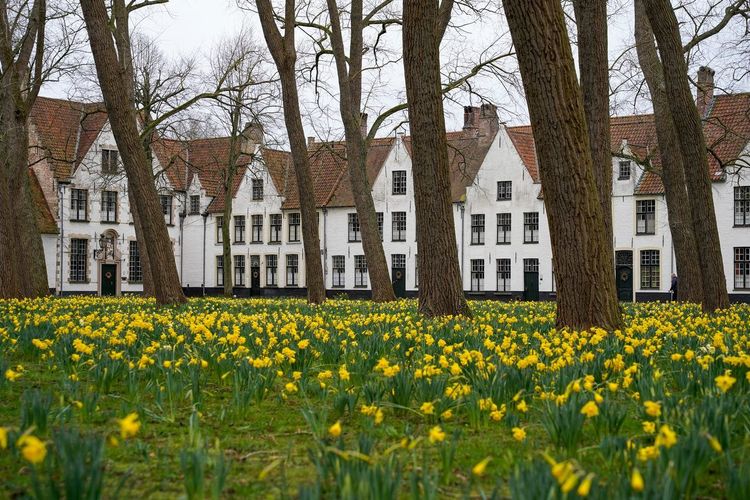
The second day slows the pace: head to the south of the historic center for a mix of spirituality, Flemish painting, and strolling along the water.
Beguinage and Minnewater, the Lake of Love
Cross the bridge leading to the Beguinage (Begijnhof) and the noise of the city disappears almost instantly. Founded in 1245 to house beguines, pious women living in community without taking final vows, it preserves its little white houses arranged around a lawn planted with poplars. Benedictine sisters still live there today, and silence is an unspoken rule that most visitors respect naturally. Entry to the enclosure is free; only the beguine house museum charges admission.
Just to the south lies the Minnewater, nicknamed the Lake of Love. The origin of the name is debated: some see it as a corruption of the Flemish "minne" (love), others a reference to the trade that once took place there. Whatever the exact etymology, the romantic legend has won out and the lake remains a favorite walking spot for couples. The Minnewaterpark that borders it offers a shaded lawn ideal for a break, with views of the lock and the swans that nest there almost year-round.
If you would rather listen to the history of the neighborhood than read signs, the stops on the Ryo audio-guided tour tell the story of this Bruges of beguines and swans, phone in your pocket and earphones in your ears.
Must-See Museums: Groeninge, Gruuthuse, and Memling
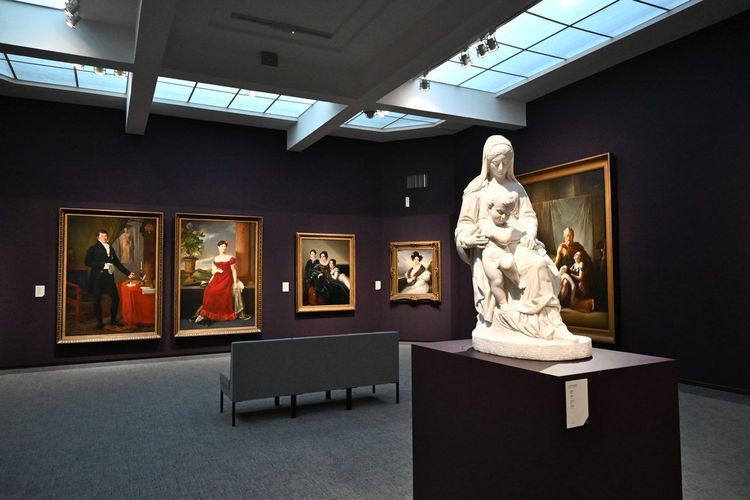
Bruges has three major museums within ten minutes' walk of one another. All are included in the Bruges Museum Pass (Musea Brugge Card), sold for 49 euros in 2026 and valid for 72 hours: it also gives access to the Belfry, the town hall, the Church of Our Lady, and the Sint-Janshuis windmill, around ten sites in all. Over three days, it pays for itself as soon as you combine the Belfry and two museums. Still, remember to book your time slot, pass in hand, for the most popular sites.
The Groeninge Museum brings together one of the finest collections of Flemish Primitives in the world, headlined by Jan van Eyck's Madonna with Canon van der Paele, a 1436 painting of astonishing precision for its time. Allow an hour and a half so you do not miss the following rooms, which extend all the way to modern Belgian art.
Nearby, the Gruuthuse Museum occupies a 15th-century palace that reopened in 2019 after a long restoration. You wander through the home of the lords of Gruuthuse, who had a private oratory opening directly onto the choir of the neighboring church so they could follow services without leaving the house.
Finally, St. John's Hospital (Mariastraat 38, 8000 Bruges, Belgium, rated 4.3/5 on Google from 2,529 reviews), one of the oldest hospitals in Europe still standing, founded in the 12th century, houses the Memling Museum: six works by the German-born painter who settled in Bruges, including the famous Shrine of Saint Ursula, a reliquary painted with miniature scenes of rare delicacy.
Church of Our Lady and the Almshouses
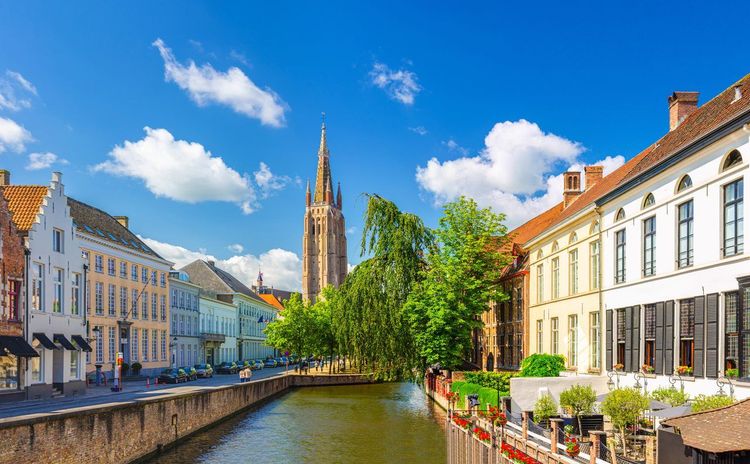
The tower of the Church of Our Lady rises to 115.5 meters, making it the tallest brick tower in Belgium. Inside, the main attraction is Michelangelo's Madonna and Child, the only sculpture by the artist to have left Italy during his lifetime: purchased by the Mouscron family of Bruges merchants in the early 16th century, it was taken to Paris by revolutionary troops in 1794, then stolen by the Nazis in 1944, each time finding its way back. The tombs of Mary of Burgundy and Charles the Bold complete the visit.
On the way, take the time to push open a discreet door to one of the city's almshouses (Godshuizen). These small hospices, founded between the 14th and 19th centuries by guilds or individuals to house widows and the poor, now form flower-filled inner courtyards, free and silent, where almost no tourist ventures. There are still 46 in the center, often marked by a simple door left ajar onto a cobbled lane; the houses are still inhabited, so be discreet.
Day 3 in Bruges: Local Flavors and a Bike Ride to Damme
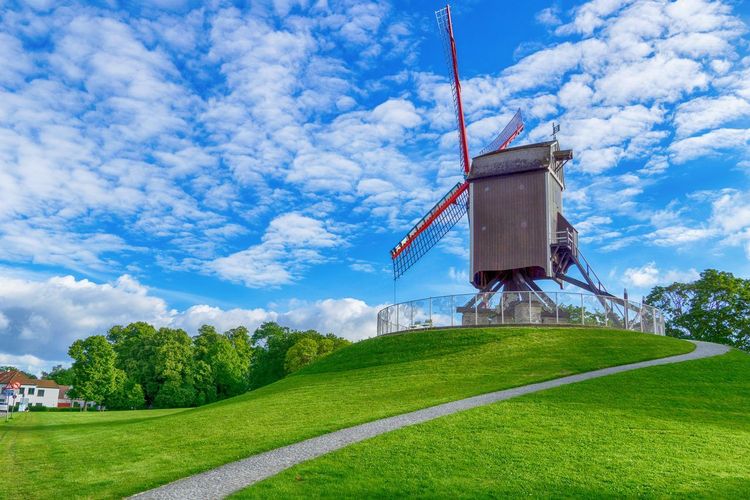
The third day changes pace: taste buds in the morning, then fresh air by bike in the afternoon.
Chocolate, Waffles, and Beer: Foodie Workshops
Bruges is said to have around fifty artisan chocolate shops in its historic center alone, a density explained by a Belgian chocolate-making tradition dating back to the 19th century and maintained today by houses such as Dumon or Sukerbuyc. Several offer a workshop of about an hour, where you learn to temper chocolate and shape your own pralines to take home, an activity that appeals to children and adults alike.
Right next door, a Belgian waffle-making workshop helps you understand the difference between the Brussels waffle, rectangular and light, and the Liège waffle, denser and caramelized thanks to the pearl sugar worked into the batter: in Bruges, it is mostly this second version, sold hot in the street, that you will come across everywhere.
For the liquid part of the program, head to the De Halve Maan Brewery, the last family-run brewery still active in the heart of the city, where Brugse Zot is brewed. Its name ("the fool of Bruges") refers to a legend: when asked to fund an asylum, Emperor Maximilian of Austria supposedly replied that it would be enough to close the city gates, Bruges already being full of fools. The guided tour goes through the brewing rooms up to the roof, with views of the surrounding bell towers, and naturally ends with a tasting. Since 2016, the brewery has even sent its beer to its bottling site through a 3.2-kilometer underground pipeline, to keep tanker trucks out of the narrow streets of the medieval center.
Potato lovers will continue on to the Frietmuseum), housed in the Saaihalle, one of the most beautiful old buildings in the city. It traces the history of the potato and the fry, Belgian, the curators insist, up to its worldwide fame, before a final tasty stop in the basement to sample the result. Open every day from 10 a.m. to 5 p.m., admission 12 euros for an adult.
Cycling Along the Canal to Damme and Its Windmills
The afternoon lends itself to renting a bike, a practice so ingrained in Bruges that rental shops number in the dozens around the station and the center, with prices around 15 euros a day. Head to the old ramparts, along the Kruisvest, where four windmills of Bruges still stand, the last witnesses of some twenty mills that once turned on the ramparts. The Sint-Janshuismolen, still in working order, can be visited in season and lets you see the milling mechanism up close.
From there, the path follows the Damse Vaart canal straight ahead, with no elevation, to the village of Damme (Jacob van Maerlantplein, 8340 Damme, Belgium), about 7 kilometers and 45 minutes of easy pedaling between two rows of poplars. A former outer port of Bruges in the Middle Ages before the Zwin silted up, Damme has kept its Gothic town hall and an end-of-the-world atmosphere, light-years from the bustle of the Markt. It is associated with the legend of Till Eulenspiegel (Tijl Uilenspiegel), a popular Flemish prankster whose statue adorns the village, as well as the tower of the Church of Our Lady, which you can climb in summer for a view over the flat countryside. For the return, you have two options: get back on your bike or board the Lamme Goedzak, the paddle boat that links Damme to Bruges in the warmer months.
Back in the late afternoon with a bit of energy left? It is a good time to finish the Ryo audio-guided tour and its 22 stops in the center, to revisit in the evening light the squares you discovered on the first day, with extra anecdotes.
What to Do Around Bruges: 5 Day Trips
If your stay lasts more than three days, or if you simply want to vary the pleasures, several destinations are easy to reach by train or car from Bruges.
Ghent and Brussels, Cultural Getaways
Ghent is only about thirty minutes away by train and has all the appeal of a more authentic city, less saturated with tourists than its neighbor. The Castle of the Counts of Flanders (Sint-Veerleplein 11, 9000 Ghent, Belgium, rated 4.6/5 on Google from 36,477 reviews), a medieval fortress surrounded by a moat in the middle of the city, is a short walk from the Graslei quay, lined with guild facades just as photogenic as those in Bruges, but with far fewer people to admire them.
Brussels, an hour away by train, naturally rounds out a Belgian city trip: the UNESCO-listed Grand-Place, the Atomium inherited from the 1958 World's Fair, and the famous Manneken-Pis can be seen in one well-filled day. It is also a common combination among travelers looking to visit Brussels and Bruges in 3 days, sleeping one night in each city rather than making multiple round trips.
Less well known, Courtrai (Kortrijk) is worth the detour for its two twin medieval towers, the Broeltorens, which frame the Lys, and for its museum devoted to flax, a reminder of the city's historic role in the Flemish textile industry. See also this Ryo article on things to do around Bruges for more day-trip ideas.
The Belgian Coast and the Dunkirk Region
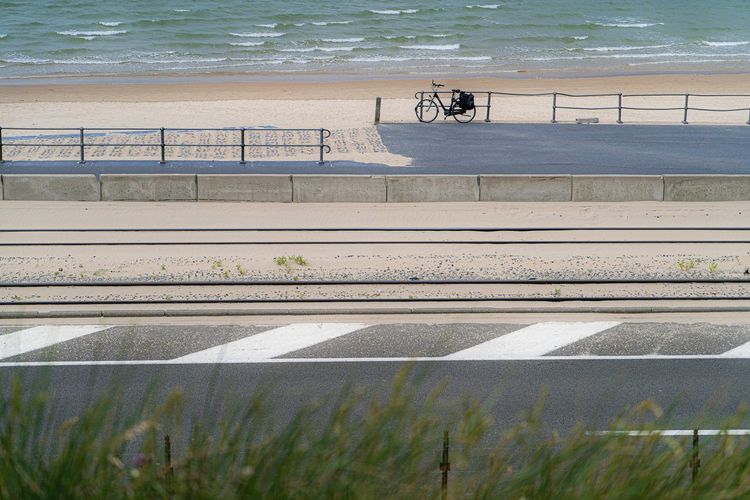
Just a quarter of an hour by train, Ostend and Blankenberge open the doors to the Belgian coast and a big breath of sea air. From there, the Kusttram, the longest coastal tramway in the world at 68 kilometers, serves the whole coast from De Panne to Knokke, where fine sand beaches and lively seafront promenades offer a radical change from Bruges' historic center.
On the French side, Dunkirk and its surroundings are reachable in an hour by road. Bergues, a town fortified by Vauban, owes its recent fame to the filming of "Welcome to the Sticks" (Bienvenue chez les Ch'tis): its belfry, ramparts, and canals deserve a morning all to themselves.
Closer to the border, Furnes (Veurne) looks like a mini-Bruges: its Grand-Place lined with Renaissance and Baroque facades and its Procession of Penitents, held every last Sunday of July, mainly attract travelers eager to escape the crowds.
How to Get to Bruges: Train, Car, Plane, and Bus
Bruges is easy to reach from the major neighboring capitals, which explains its popularity for weekend trips.
By train, it is the most direct option: Brussels-Midi is about an hour away by InterCity train, with frequent departures throughout the day. From Paris, first reach Brussels by Eurostar (formerly Thalys) or TGV before changing trains, for about 2h30 door to door; from Lille, the route goes through Courtrai. London, via the Eurostar to Brussels, reaches Bruges in a little over three hours in total.
By car, the E40 motorway links Brussels directly to Bruges in about an hour; allow roughly 1h15 from Lille and 1h30 from Calais. Since the historic center is largely pedestrianized, it is best to plan parking before you arrive.
By plane, Brussels-Zaventem airport, about an hour and a half away by train, remains the best served. The low-cost airport of Brussels-Charleroi, more remote, requires a shuttle bus to Charleroi station and then a train. There is also a small regional airport at Ostend-Bruges, with a more limited choice of flights.
By bus, long-distance companies serve Bruges from Paris, Lille, or London at low prices, at the cost of a longer journey. Finally, for those combining a visit to Brussels and Bruges in 3 days, landing in Brussels and continuing straight to Bruges by train remains the simplest option, with no need for a rental car.
Getting Around Bruges: On Foot, by Bike, by Boat, or by Bus
Visiting Bruges on foot is by far the best option: the historic center, about 410 hectares, can be covered entirely without a car, as most streets are closed or heavily restricted to car traffic.
Visiting Bruges by bike is perfect for farther excursions, such as the one to Damme mentioned above: rental shops are plentiful and the bike paths are well signposted, including outside the center.
Visiting Bruges by boat, via the canal tours already mentioned, complements the walking experience without really serving as a means of transport: it is above all a tourist activity.
The bus (De Lijn network) is mainly useful for linking the station to the center when carrying heavy luggage or on rainy days, or for reaching coastal excursions. For everything else, our Ryo audio tour of Bruges is followed entirely on foot: you do not have to consult a map or calculate distances between places, as the app indicates the next stop as you walk.
First thing on arrival: stop by the Bruges tourist office, located on the ground floor of the Concertgebouw on 't Zand square, with a second information point on the Markt. There you will find maps, the Musea Brugge Card, accessibility information, and the program of current events.
Where to Park in Bruges: Car Parks and Tips
Since Bruges' historic center is largely closed to traffic, it is best to park your car on the outskirts and finish on foot or by bus.
The best-known tip remains the Centrum-Station car park, next to the train station: its 1,690 spaces have a moderate daily rate, and parking there entitles you to a free P+Bus ticket for a round trip to the center, for the driver and up to three passengers, on the day of arrival. The ticket can be obtained by SMS, on the De Lijn website, or at the De Lijn shop in the station. On foot, the Markt is about fifteen minutes away.
In the center itself, spaces are rare and expensive, reserved first for residents and hotels with their own parking. If your accommodation does not offer any, it is almost always simpler and cheaper to leave the car at the station for the whole stay.
Where to Stay in Bruges: Recommended Neighborhoods and Hotels
Where to stay in Bruges depends mostly on your budget and whether or not you want the Markt five minutes away on foot. Staying in the historic center, between the Markt and the Beguinage, guarantees immediate access to the main sites, at the cost of often higher rates and a more touristy atmosphere, especially on weekends.
For a calmer stay without going far, the less touristy neighborhoods of Bruges such as Sint-Anna, Sint-Gillis, or Sint-Jozef offer residential lanes, equally charming facades, and noticeably gentler prices, ten or fifteen minutes on foot from the Markt. Sint-Anna, to the east, is particularly appealing for its village-in-the-city atmosphere, with its windmills close by.
As for hotel selection, three profiles come up often: canal houses converted into boutique hotels, with water views and refined decor; family-run guesthouses set in historic townhouses, often the best value for money; and hostels or budget hotels, concentrated mainly around the station, handy for an early train departure.
Book early if your stay falls during the Christmas market, from late November to early January, or on a spring weekend: availability shrinks quickly in a city whose historic center has a limited number of buildings that can be converted into accommodation.
Where to Eat in Bruges: Specialties and Good Addresses

Where to eat in Bruges starts with a question of local specialties: mussels and fries, often cited as the Belgian dish par excellence, come in a dozen preparations in most brasseries in the center. Flemish carbonade (Vlaamse stoverij), a beef stew simmered in dark beer and sweetened with brown sugar, is especially warming on chilly days. Cheese or grey shrimp croquettes often accompany an aperitif.
To eat well and more cheaply in Bruges, avoid the terraces that border the Markt directly, where prices climb with the view: a few streets further on, around Sint-Jakobsstraat or the Sint-Anna district, places frequented by locals charge far more reasonable prices for comparable, even better, quality. At lunchtime, a paper cone of fries bought from the Markt kiosks remains the most typical, and the most economical, snack.
Gourmet shopping also deserves a morning of its own. To buy Belgian chocolates, favor the independent artisan chocolatiers of the center over the big chains set up on the busiest streets, where production is more industrial. As for souvenirs, bobbin lace remains the other specialty of Bruges, best bought in shops that guarantee local manufacture. For a complete overview of the dishes and sweets not to miss, this Ryo article on the culinary specialties of Bruges reviews ten essentials.
How Long, What Budget, and When to Go to Visit Bruges
How long to visit Bruges depends on what you want to see. A single day is enough for the great classics (Markt, Belfry, boat tour), provided you accept a brisk pace. Two days allow you to cover the historic center and its museums comfortably. Three days, as in this itinerary, add the breathing room needed to head out by bike and push on to Damme. Beyond that, Bruges in 4 days or Bruges in 5 days leaves room for an excursion to Ghent or Brussels, while Bruges in a week allows you to string together several getaways to the coast or to neighboring France.
As for budget, plan on average between 90 and 150 euros per day per person for a comfortable stay (mid-range hotel accommodation, two meals, a museum, and an activity). The 49-euro museum pass, the brewery visit, or a chocolate workshop quickly push up the bill, as do charming hotels right in the center.
When to go to Bruges? Spring (April to June) and early autumn (September) offer the best compromise between mild weather and manageable crowds, even for a simple weekend. Summer remains pleasant but is clearly busier, especially in July and August. Winter, quieter, has the Christmas market and the atmosphere of illuminated lanes in its favor, at the cost of shorter, colder days.
Why go to Bruges? The city owes its current appearance to a historical accident: a major trading port from the 12th to the 15th century, tied to the Hanseatic League, it saw its access to the North Sea via the Zwin gradually silt up, causing a sharp economic decline that paradoxically froze its medieval architecture for several centuries. This urban slumber, popularized in 1892 by Georges Rodenbach's novel Bruges-la-Morte, eventually attracted travelers in search of authenticity, up to the UNESCO listing of the historic center in 2000.
Bruges with Family, as a Couple, or in the Rain
With children, the boat ride remains the surest way to captivate the youngest, as does a horse-drawn carriage tour from the Markt. The chocolate workshop, where they shape their own pralines, also works very well, as do the large lawns of the Minnewaterpark for a break between visits. For a weekend in Bruges with family, save the Belfry for children over six: the 366 steps and the narrow staircase quickly discourage little legs.
As a couple, opt for dinner by a canal at nightfall, when the facades light up and the tour groups thin out, followed by a stroll with no set route toward the Beguinage. It is often after 7 p.m. that the city shows its best side in the evening: the illuminated Markt, the beer bars of the center, and a last walk along the water make for a simple but effective evening.
When it rains, the three museums of day 2 (Groeninge, Gruuthuse, St. John's Hospital) are enough to fill an entire day indoors, complemented by the chocolate museum (Choco-Story) or the fries museum. The Beguinage, partly sheltered by trees, remains walkable in light rain.
Good news for small budgets: free activities are plentiful. Wandering the streets of the center, entering the Beguinage or the almshouses, admiring the facades of the Markt, or picnicking in the Minnewaterpark costs nothing; only museum admission and the climb up the Belfry require payment.
The Ryo audio-guided tour can be downloaded to your smartphone and shared as easily with family as with a partner, one earphone each: 1h45 of walking that you can split up depending on the weather or the children's fatigue.
Finally, for visiting Bruges with a disability, accessibility remains partial: the cobblestones of the historic center make it hard to get around in a wheelchair or with a stroller, and some museums housed in historic buildings have no elevator. Boat rides, with their boarding steps, also remain difficult to access. It is best to contact the tourist office in advance, as it lists adapted routes and establishments.

FAQ
How many days do you need to visit Bruges?
Two days cover the historic center and its main museums, but three days let you add a bike ride to Damme without rushing through the rest of the program.
What budget should you plan for a 3-day stay in Bruges?
Plan on roughly 90 to 150 euros per day per person for mid-range accommodation, meals, a museum, and an activity, not including transport to Belgium. Add 49 euros if you choose the Musea Brugge Card.
What is the best time of year to visit Bruges?
Spring and early autumn offer the best balance between pleasant weather and moderate crowds, while summer is livelier but also busier.
Do you need to book the canal boat ride in advance?
No, tickets cannot be booked online: you simply go to one of the departure docks in the center, sometimes with a wait in high season.
Where can you see the famous swans of Bruges?
On the Minnewater and along most of the canals in the center. According to legend, Maximilian of Austria forced the city to keep swans in perpetuity after the execution of his adviser Pieter Lanchals in 1488, whose coat of arms featured a swan.
What language is spoken in Bruges?
Dutch, or Flemish, is the official language, but French and English are widely understood in the shops, restaurants, and tourist sites of the center.
Is Bruges accessible to people with reduced mobility?
Partially: the cobblestones of the historic center and the lack of elevators in some buildings make getting around harder, so it is best to check with the tourist office before you go.
Three days are enough to understand Bruges without exhausting yourself: time to climb the Belfry, wander through the Beguinage, taste a hot waffle, and cycle off to the windmills of Damme, without feeling like you are chasing a checklist. Those who leave wanting to dig deeper can always add Ghent, Brussels, or the Belgian coast to their next visit.
To enjoy these three days without juggling a paper map and online searches, the Ryo audio guide to Bruges accompanies you through the historic center, one audio at a time: 22 stops, 4.4 km, at your own pace.