© Shutterstock
 Votre guide Ryo
Vancouver in 3 Days: The Complete 2026 Itinerary
Fog rolls off Burrard Inlet on most September mornings, burns off by nine, and by ten you're standing on a beach with the North Shore mountains still capped in cloud while the harbour glitters like it's July. That contradiction, ocean city and mountain town within the same afternoon, is exactly why Vancouver in 3 days never feels like it's going to be enough, and exactly why it turns out to be plenty if you sequence the neighborhoods the right way instead of zig-zagging across the map. This itinerary splits the city into three walkable zones rather than one long checklist: a downtown loop through Stanley Park and Gastown on Day 1, a North Shore day chasing suspension bridges and a mountain gondola on Day 2, and a slower Day 3 that drifts from Granville Island's public market to the cafes and bars of Main Street. Along the way you'll cross a footbridge swaying 50 meters above a canyon without paying a cent, ride a gondola up to a summit plateau roughly 1,100 meters above sea level, and watch seaplanes land a few steps from downtown office towers. Expect a transit pass instead of a rental car, rain shells packed regardless of the month, and a rough sense of what three days here actually costs to run, all covered below. If you'd like the stories behind each stop narrated as you walk, Ryo's audio-guided tour of Vancouver follows much of the same ground.
3-Day Vancouver Itinerary at a Glance
Think of the trip as three loops that never really overlap. Day 1 stays central: the Stanley Park seawall in the morning, the downtown waterfront around Canada Place at midday, then Gastown, Chinatown and Yaletown before ending at English Bay for sunset. Day 2 crosses the water entirely, trading city blocks for the North Shore's suspension bridges, canyon trails and the Grouse Mountain gondola, with Lonsdale Quay as the reset point before heading back downtown. Day 3 slows down: Granville Island's market stalls, a ferry ride across False Creek, a beach afternoon in Kitsilano, and a dinner crawl down Main Street. None of the three days requires a car, and each one is built to be walked more or less in the order it's listed here.
A quick rule of thumb if the forecast looks mixed: swap Day 2 and Day 3 around so the mountain day lands on the clearest morning. Grouse Mountain's views disappear completely in low cloud, while Granville Island and the Museum of Anthropology work just as well in the rain. Rather than juggling a paper plan while you walk, you can let the audio route string the highlights of all three days into one continuous story.
Getting to Vancouver
Most visitors land at Vancouver International Airport (YVR), which sits on Sea Island about 12 kilometers south of downtown. The easiest way in is the Canada Line, part of Vancouver's SkyTrain network: trains run every few minutes from the airport terminal directly into downtown, and the ride to Waterfront Station takes roughly 25 minutes. A one-way fare from YVR carries a small airport add-on fee on top of the standard zone fare, but it still comes out well below any taxi or rideshare from the terminal.
Driving in works too, particularly if you're arriving from the US. The border crossing from Seattle via I-5 and Highway 99 typically takes two and a half to three hours without heavy delays, though weekend and holiday traffic at the Peace Arch or Pacific Highway crossings can stretch that considerably. Bring a passport (not just an ID) for the crossing, and check current wait times before you leave, since they swing widely by time of day.
If you're coming from elsewhere in Canada or from Seattle by train, VIA Rail and Amtrak Cascades both pull into Pacific Central Station, right next to Main Street-Science World SkyTrain station, and several intercity bus operators use the same terminal. That avoids the airport transfer altogether. Whichever way you arrive, downtown Vancouver's compact core means you generally won't need a car once you're there, which keeps parking and gas out of the three-day budget entirely.
Getting Around Vancouver Without a Car
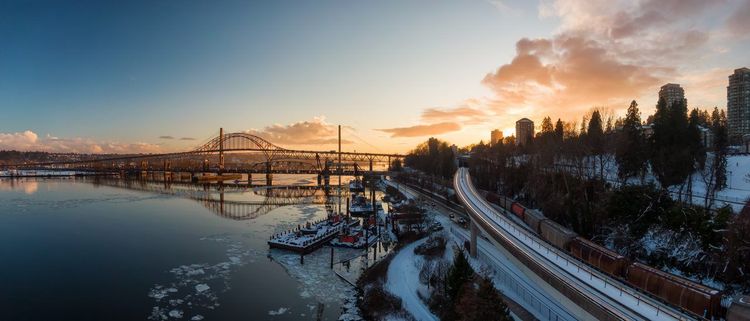
Vancouver is one of the easier North American cities to cover on foot and transit, which matters because 3 days in Vancouver with no car is genuinely realistic here, not just a marketing line. The SkyTrain (Canada Line, Expo Line and Millennium Line) covers the airport, downtown, and the eastern suburbs, while TransLink's bus network fills in everywhere the trains don't reach, including the routes up to the North Shore mountains. A stored-value Compass Card, or simply tapping a contactless credit card or phone at the fare gate, covers buses, SkyTrain and SeaBus alike. Trains and SeaBus charge by the number of zones you cross on weekdays, while buses charge a flat one-zone fare anywhere, and transfers are free for 90 minutes.
Downtown itself rewards walking. Stanley Park, Gastown, Yaletown, Coal Harbour and the West End are all connected by flat, well-marked sidewalks and a dedicated seawall path, so a good pair of shoes covers most of Day 1 without a single transit tap. Where transit becomes essential is the North Shore crossing on Day 2, since walking across Lions Gate Bridge isn't realistic for most travelers with a full day of sightseeing ahead.
For that North Shore day, you have three car-free options. The SeaBus crosses Burrard Inlet from Waterfront Station to Lonsdale Quay in about 12 minutes, and from the Quay the 236 bus climbs past Capilano to the base of Grouse Mountain. Capilano Suspension Bridge Park also runs a free shuttle from downtown hotels and Canada Place, and Grouse Mountain operates its own free shuttle from Canada Place in the warmer months. Lynn Canyon is reached by bus from Lonsdale Quay with one transfer, which takes longer but costs nothing beyond a regular fare.
One more detail worth planning around: the Aquabus and False Creek Ferries, small passenger boats that shuttle across False Creek between Granville Island, Yaletown, and Science World. They're not part of the TransLink fare system, run on their own separate tickets, and become genuinely useful on Day 3 when you're moving between the market and the beach neighborhoods.
Where to Stay in Vancouver for a 3-Day Trip
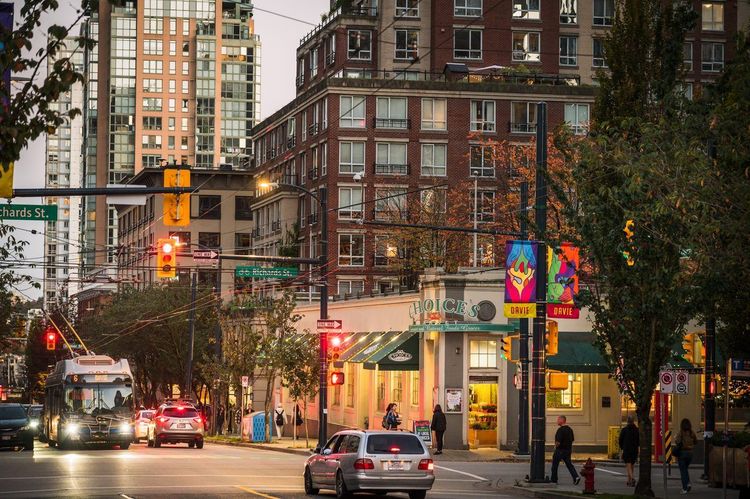
Where you sleep should follow whichever version of the three days matters most to you, since Vancouver's neighborhoods each pull the itinerary in a slightly different direction.
Downtown & Yaletown for First-Timers
Downtown and Yaletown put you inside walking distance of nearly everything in this itinerary's Day 1: Stanley Park's entrance, Canada Place, and the Gastown/Chinatown historic core all sit within 20 to 30 minutes on foot. Yaletown specifically trades some of the high-rise density for converted warehouse buildings, quieter side streets, and a stronger restaurant scene, while staying just as close to the seawall and the Canada Line. For a first visit, this is the pick that removes the most guesswork: you can walk out the hotel door in the morning without checking a transit map, and the airport train drops you a few blocks away.
Gastown & Chinatown for Character and Nightlife
Staying inside Gastown or on its edge trades some polish for cobblestone streets, exposed brick, and a livelier late-evening scene, particularly around the restaurants and bars clustered near Water Street. It's a smaller hotel market than downtown proper, so book earlier if this is the neighborhood you want, and expect a slightly grittier stretch of blocks between Gastown and Chinatown after dark. The upside is proximity: you're inside the Day 1 route already, and Waterfront Station puts the SeaBus and the rest of the city within easy reach.
Kitsilano & the West Side for Beach Access
Kitsilano suits travelers who'd rather wake up near a beach than near a landmark. It's a short bus ride or an Aquabus-and-walk combination from downtown, but it puts Kitsilano Beach, the UBC museums, and the West Side's quieter cafe streets right outside the door, which lines up neatly with this itinerary's Day 3. It's a better fit for a longer stay than a strict three-day trip, but if the beach neighborhoods are the main draw, the trade-off in commute time is a fair one.
Day 1: Stanley Park, Downtown & Gastown
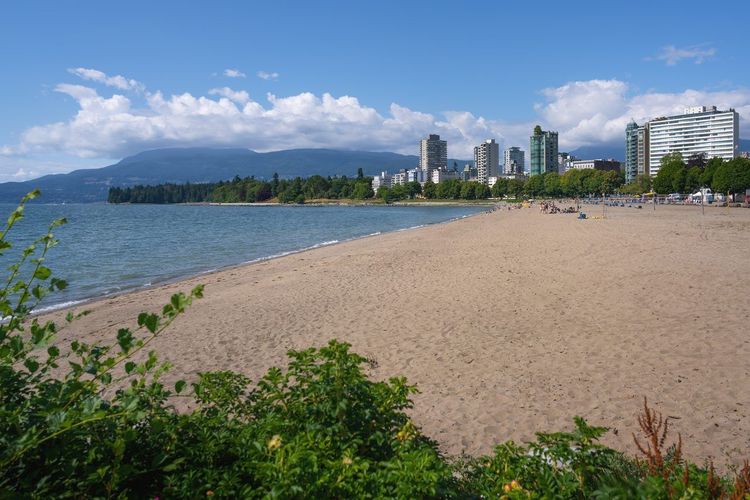
Day 1 stays almost entirely within a 30-minute walking radius, moving from a forest-and-shoreline park in the morning to the city's oldest streets by evening.
Stanley Park Seawall, Totem Poles & Prospect Point
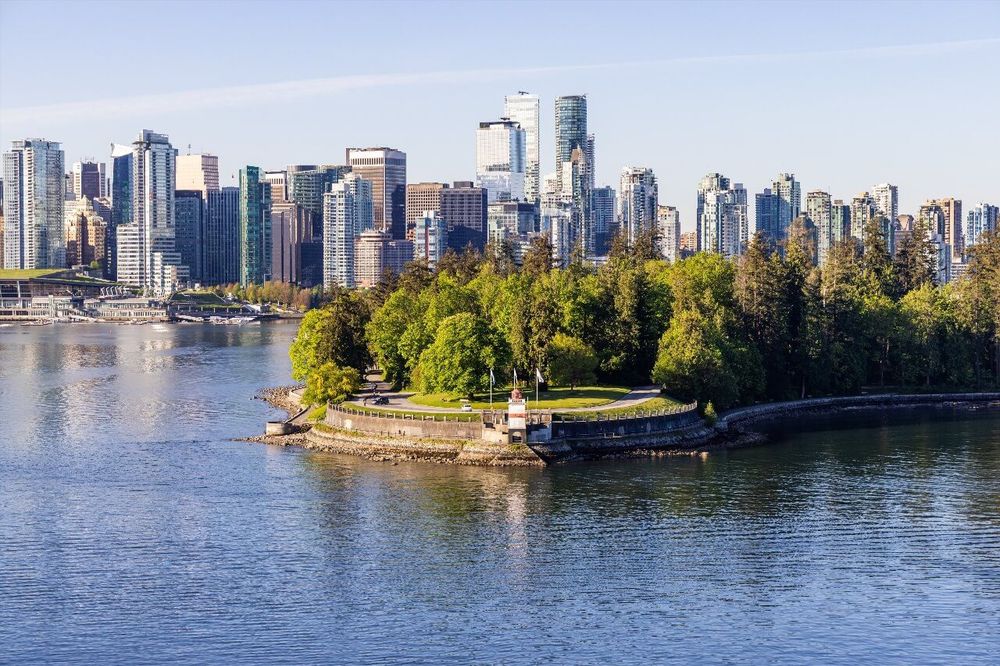
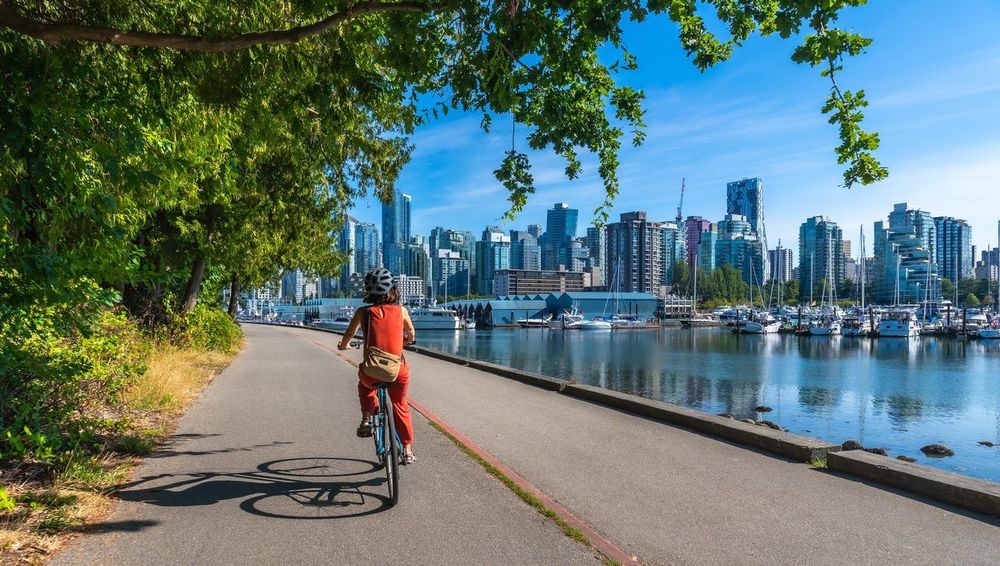
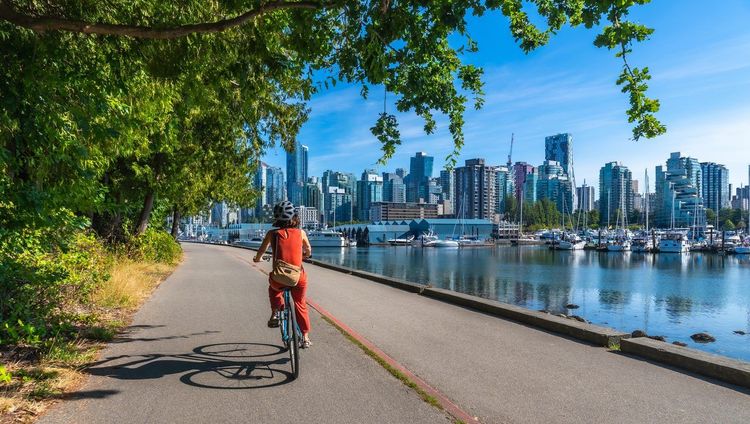
Start early at the Stanley Park Seawall), a paved path that wraps roughly 10 kilometers around the park's entire shoreline. You don't need to walk all of it; the stretch from the park's entrance near Coal Harbour to Prospect Point) covers the highlights in about 90 minutes on foot, or half that on a bike rented on Denman Street. Cyclists ride counter-clockwise only, so plan your route accordingly.
Along the way, the park's collection of carved Totem Poles at Brockton Point is one of the most-photographed stops in the city, and it's worth five minutes of actually reading the interpretive panels rather than just snapping a photo, since each pole represents a specific First Nations family or story rather than a generic display. Keep walking toward Prospect Point, a cliffside lookout with views across the water to the Lions Gate Bridge and the North Shore mountains you'll be climbing tomorrow.
If you only have an hour in the park, skip the full loop and head straight for the totem poles and Prospect Point instead of trying to circle the whole seawall.
Canada Place, Coal Harbour & FlyOver Canada
From the park, it's a flat 20-minute walk along the Coal Harbour waterfront back toward downtown. Coal Harbour itself is worth slowing down for, a marina lined with seaplanes taking off and landing every few minutes, which is a strange and pleasant thing to watch with a coffee in hand.
The walk ends at Canada Place, the sail-shaped convention center and cruise terminal that anchors the downtown waterfront. Inside, FlyOver Canada) runs a flight-simulator ride over Canadian landscapes that's more convincing than it sounds, using motion seats, wind effects, and a giant curved screen; the flight itself lasts only a few minutes and works well as a rainy-day filler if the weather turns.
Robson Street, Alberni Street & the Bill Reid Gallery
If you have an hour to spare before heading east, cut inland from Canada Place to Robson Street, downtown's main shopping spine, where international chains, Japanese snack shops and souvenir stores line the blocks between Burrard and Jervis. One block north, Alberni Street holds the luxury boutiques, a quieter and more polished stretch that locals sometimes nickname the city's designer row. The two streets together make a quick loop you can shorten or stretch depending on how much you actually want to shop.
Tucked a few steps away on Hornby Street, the Bill Reid Gallery of Northwest Coast Art is a small, easily overlooked museum dedicated to the Haida artist whose work also anchors the Museum of Anthropology you'll see on Day 3. It takes under an hour, and seeing the gold jewelry and bronze pieces here first makes the monumental cedar carvings at UBC land much harder.
Gastown, Chinatown & Yaletown: Vancouver's Historic Core
A 10-minute walk east from Canada Place drops you into Gastown, Vancouver's original townsite, all cobblestones, converted warehouses, and the Gastown Steam Clock) on Water Street, a steam-powered clock that whistles on the quarter hour and draws a small crowd of phones every time it does.
Keep heading southeast and Gastown folds into Chinatown, one of the oldest in North America, worth a slow walk through for the herbal shops, the ornate Millennium Gate, and the Dr. Sun Yat-Sen Classical Chinese Garden if you have an extra half hour. Double back toward Yaletown in the late afternoon for a contrast: converted brick warehouses now filled with boutiques and patios, a good spot to sit down before the evening's last stop.
English Bay Beach at Sunset
End Day 1 at English Bay Beach (1700 Beach Avenue, Vancouver, BC V6G 1Z5, rated 4.7/5 on Google (19 897 avis)), a 15-minute walk or a short bus ride from Yaletown. This stretch of sand along the West End faces almost due west across the water, which makes it one of the more reliable sunset-watching spots in the city, especially in summer when the whole beach fills with people sitting on driftwood logs waiting for the sky to turn orange.
This sequence, park loop, waterfront, historic core, sunset beach, is more or less what Ryo's main Vancouver audio route follows stop by stop, with narration triggered at each landmark so you're not pausing every ten minutes to look something up on your phone.
Day 2: North Vancouver's Mountains, Bridges & Trails
Day 2 leaves downtown behind entirely and crosses Lions Gate Bridge (or Burrard Inlet by SeaBus) into North Vancouver, where the city gives way to mountains within a few kilometers.
Capilano Suspension Bridge Park & Lynn Canyon Park
The Capilano Suspension Bridge Park) is the North Shore's best-known attraction, a 137-meter suspension bridge strung 70 meters above the Capilano River canyon, plus a network of treetop platforms and a cliffside walkway added in later years.
It's genuinely impressive, but it's also the North Shore's most expensive single stop, and it gets crowded fast once tour buses arrive mid-morning. If you'd rather skip the admission fee, Lynn Canyon Park) further east has its own suspension bridge, about 50 meters above the canyon floor and free to cross since the District of North Vancouver took it over, plus swimming holes at Twin Falls and the 30 Foot Pool that locals use all summer. Treat those pools with respect: the current is stronger than it looks and the cliff-jumping spots have a long accident record.
Most visitors pick one or the other rather than both, since they cover similar ground; Capilano if you want the polish and the added attractions, Lynn Canyon if you'd rather keep the morning free.
Grouse Mountain: the Skyride Gondola & the Grouse Grind Trail
A few minutes further up Capilano Road sits Grouse Mountain), reached either by the Skyride gondola, an aerial tram that carries you up to the summit area roughly 1,100 meters above sea level in under ten minutes, or by hiking the Grouse Grind trail, a punishing 2.9-kilometer staircase of a route that gains 853 meters and takes most fit hikers between one and two hours.
Most people ride up and ride back down, since the Grind is uphill-only (it's closed to descending hikers for safety reasons, and hikers buy a one-way download ticket at the top). At the summit, the views stretch across the entire city, the Strait of Georgia, and on a clear day, south into Washington State. Wildlife displays, a lumberjack show in summer, and a refuge habitat for orphaned grizzly bears round out the summit, which makes this a reasonable half-day on its own if you're traveling with kids.
Lonsdale Quay Market & Lions Gate Bridge
Coming back down toward the water, Lonsdale Quay Market (123 Carrie Cates Court, North Vancouver, BC V7M 3K7, rated 4.4/5 on Google (7 824 avis)) makes a good lunch stop, a two-level public market with produce stalls, a food court, and views back across the harbour to downtown. The Shipyards district next door adds a waterfront plaza and, in summer, a Friday night food-truck market.
If you have an extra 20 minutes and enjoy gardens, Tilford Gardens, a small, less-visited landscaped garden in North Vancouver, is worth the detour for anyone doing Day 2 at a slower pace. From Lonsdale Quay, the SeaBus ferries back to downtown in about 12 minutes, or you can retrace the drive across the Lions Gate Bridge itself, a 1930s suspension bridge over the First Narrows that's worth pausing to notice even if you've already crossed it once today.
A dedicated audio-guided route from Ryo covers exactly this stretch, where the mountains meet the ocean, from the bridge crossing to the suspension bridges and mountain lookouts, which takes the guesswork out of deciding which viewpoint is worth the stop and which one to skip.
Day 3: Granville Island, Kitsilano & Main Street
The final day trades mountains for water and markets, moving at a noticeably slower pace than the first two.
Granville Island Public Market & the Aquabus Across False Creek
Start at the Granville Island Public Market), set in a converted industrial building under the Granville Street Bridge. The island itself was a factory and sawmill zone for decades before the market opened in 1979, and the corrugated metal sheds and cement plant still standing next door are leftovers from that era.
Go early, before 10am if you can manage it, since the stalls and the narrow walkways between them fill up fast on weekends. From the market's dock, the tiny Aquabus ferries cross False Creek every few minutes to Yaletown or Science World, a short ride that's oddly one of the more memorable parts of the whole trip simply because the boats are so small you can watch the water from a few feet away.
If the weather holds, walk part of the False Creek waterfront instead of taking the boat back. The seawall continues around the whole inlet, past Olympic Village, the former athletes' housing from the 2010 Winter Games, and on to Science World's geodesic dome, a flat hour of walking with the downtown skyline reflected in the water the whole way.
Kitsilano Beach & the UBC Museum of Anthropology
Across the water (or a short bus ride from the market), Kitsilano Beach) anchors the West Side's beach neighborhoods, with a seasonal outdoor saltwater pool alongside the sand for anyone who'd rather skip the ocean's actual temperature.
Further west, the University of British Columbia Museum of Anthropology houses one of the country's best collections of Northwest Coast First Nations art, including Bill Reid's monumental carved cedar sculpture The Raven and the First Men, inside a building whose glass walls frame the mountains and ocean behind it. Budget at least two hours; the visible storage galleries alone could fill one.
Queen Elizabeth Park & VanDusen Botanical Garden
Back toward the center of the city, Queen Elizabeth Park) sits on a former quarry, now landscaped with sunken gardens, the domed Bloedel Conservatory, and one of the highest natural viewpoints in Vancouver.
A short bus ride away, the VanDusen Botanical Garden) covers 22 hectares of themed plant collections and a hedge maze that's genuinely easy to get lost in for a few minutes, best visited if you have an extra hour and enjoy gardens more than viewpoints.
Main Street's Shops, Ramen Danbo & Anh and Chi
End the day on Main Street, a stretch of independent shops, vintage stores, and one of the city's densest concentrations of good restaurants. Anh and Chi) serves Vietnamese food in a bright, plant-filled dining room that's become a Main Street institution in its own right, and it doesn't take many reservations, so arrive early or expect to wait.
If you'd rather finish back downtown, Ramen Danbo (1104 Robson Street, Vancouver, BC V6E 1B5, rated 4.6/5 on Google (5 832 avis)) on Robson Street is the other classic end-of-day bowl, with a tonkotsu broth you can customize down to the noodle firmness and the oil level. The line can run 30 minutes on weekend evenings, but it moves faster than it looks.
Before leaving Granville Island in the morning, it's worth pressing play on the audio stop there: the Ryo narration tells the island's industrial backstory, the part most visitors walk straight past on their way to the pastry counters.
Where to Eat and Drink in Vancouver
Beyond the Day 3 picks, Vancouver's food scene rewards a bit of extra planning, especially since kitchens here lean heavily on the coastline and the city's large Asian communities.
Casual Eats: Food Trucks, Ramen & Vietnamese Kitchens
Downtown's food truck scene clusters around the Vancouver Art Gallery and along Burrard Street at lunchtime, with rotating vendors serving everything from Filipino skewers to Mexican tortas. Richmond, a short Canada Line ride south of downtown, is worth the detour for some of the best Chinese food in North America, and in summer its night market adds dozens of street-food stalls. Beyond Ramen Danbo and Anh and Chi, Robson Street carries a whole cluster of ramen and izakaya spots that stay open later than most downtown restaurants. And don't leave without trying salmon in some form, whether smoked from a Granville Island stall or grilled at a waterfront restaurant.
Coffee, Brunch & Cute Cafes
Gastown and Yaletown both carry a strong specialty coffee scene, with small roasters tucked between the bigger chains. Brunch lines form early on weekends around Denman Street near Stanley Park's entrance and around Main Street, so a weekday visit or an 8am start saves the wait. Several of the cuter cafes double as bakeries, which makes them a natural stop between Day 1's park loop and the afternoon's downtown walking.
Craft Breweries & Rooftop Bars
Vancouver's craft beer scene is concentrated in a few pockets: Yaletown's converted warehouses, a strip of Main Street breweries a short walk from the restaurants covered above, and the cluster of taprooms locals call Yeast Vancouver, just east of Main. Several run tasting flights that make it easy to sample four or five styles without committing to a full pint. For something with a view, a handful of downtown hotel rooftop bars look out over Coal Harbour and the North Shore mountains, a good way to end a Day 1 that already ran late. Nightlife in Vancouver leans toward these lower-key options, plus the bars along Granville Street's entertainment district, and dessert spots (doughnut shops, soft-serve counters, bubble tea chains) are scattered across Gastown, Main Street, and Kitsilano rather than clustered in one place.
If You Have More Time: Whistler and the Sea to Sky Highway
If three days leaves you wanting more, or if you're already planning a Vancouver itinerary 4 days or longer, the most common add-on is a day trip up the Sea to Sky Highway to Whistler. The drive itself takes around two hours each way and counts as one of the more scenic highway routes in the country, hugging the cliffs above Howe Sound before climbing into the coastal mountains.
Along the way, Shannon Falls and the Sea to Sky Gondola near Squamish both make worthwhile stops if you're driving rather than taking one of the coach services that run several times daily from downtown Vancouver to Whistler Village. Whistler itself, which hosted the alpine events of the 2010 Winter Olympics, has a walkable pedestrian village, the Peak 2 Peak gondola connecting its two mountains, and enough hiking and biking trails in summer to fill several extra days on their own.
For travelers building out a longer trip through 3 days in British Columbia and beyond, Whistler pairs naturally with a loop further north toward Squamish's rock-climbing scene or south toward the Fraser Valley's farms and waterfalls. None of this requires giving up the three-day Vancouver core described above; it simply tacks an extra day or two onto either end. If you'd rather stay in the city, our list of things to do in Vancouver has plenty to fill a fourth day.
Practical Tips: Weather, Safety & Budget for Vancouver
Vancouver's weather is the single biggest variable in how this itinerary actually plays out, so a few adjustments by season are worth planning for. A vancouver 3 day itinerary summer visit means long daylight hours (sunset well past 9pm in June and July), dry conditions most days, and crowds at the outdoor attractions like Capilano and Granville Island. A vancouver 3 day itinerary winter trip flips most of that: shorter daylight, frequent rain, and considerably thinner crowds, though Grouse Mountain adds a skating pond and snowshoe trails that only run in the colder months, and Capilano's Canyon Lights festival turns the bridge into a light show from late November.
Be prepared for rain whatever the month. Pack a proper hooded rain shell and shoes that can handle wet pavement; locals rarely bother with umbrellas in the wind that usually comes with coastal rain. Keep a short list of indoor fallbacks ready (the Museum of Anthropology, the Vancouver Art Gallery, Science World, the Bloedel Conservatory, FlyOver Canada) so a wet afternoon reshuffles the plan rather than wiping it out.
On safety, Vancouver is a low-risk city by international standards, though the Downtown Eastside (the blocks just east of Gastown, around Main and Hastings) has a visible and long-standing homelessness and addiction crisis. It's safe to walk through during the day with normal awareness, but it's worth knowing before you wander east of Gastown after dark expecting the same atmosphere as the historic core. Car break-ins are the more common issue for visitors, so if you do rent a car, leave nothing visible inside.
Budget-wise, a rough daily range per person runs from around 100 to 150 Canadian dollars for a mid-range trip covering transit, casual meals, and one or two paid attractions, climbing well past that if Grouse Mountain, Capilano, and FlyOver Canada's admission fees all make the itinerary. Free alternatives exist at nearly every turn (Lynn Canyon instead of Capilano, the seawall instead of a paid tour), which makes it easy to trim the budget without cutting the highlights.
Families should find 3 days in Vancouver with kids comfortably manageable: Stanley Park's seawall is flat and stroller-friendly, Grouse Mountain's wildlife area and Science World both skew toward younger visitors, and nearly every neighborhood in this itinerary is walkable without long stretches between rest stops. Kids also tend to love the Aquabus crossing and the Granville Island Kids Market, a whole building of toy shops next to the public market.



FAQ
What is the number one thing to do in Vancouver?
Most first-time visitors rank the Stanley Park Seawall as the single best thing to do, since it combines forest, shoreline, and mountain views within a single walk a few minutes from downtown, and it's free.
How many days should I spend in Vancouver?
Three days covers the city's core neighborhoods, the North Shore mountains, and the Granville Island/Kitsilano side comfortably. Four or five days lets you add Whistler or the Fraser Valley without rushing the city itself.
Is 3 days enough time to see Vancouver?
Yes, for the main downtown neighborhoods, Stanley Park, and one North Shore day. It won't leave time for Whistler or the Gulf Islands, which are better treated as separate add-on trips.
Can you do a 3-day Vancouver itinerary without a car?
Yes. The SkyTrain, TransLink buses, the SeaBus, the Aquabus and the free Capilano shuttle cover every stop in this itinerary, including the North Shore mountains on Day 2, and downtown itself is compact enough to walk.
How does a 3-day Vancouver itinerary change between winter and summer?
Summer brings longer days, dry weather, and bigger crowds at outdoor attractions; winter brings rain, shorter daylight, and thinner crowds, plus seasonal extras like Grouse Mountain's skating pond and Capilano's Canyon Lights that only run in the colder months.
Is Vancouver in 3 days a good itinerary for families with kids?
Yes. Stanley Park, Science World, Grouse Mountain's wildlife area, and the beach neighborhoods all skew family-friendly, and the flat, walkable layout of downtown keeps daily distances manageable for younger kids.
Should I extend a Vancouver trip to see more of British Columbia?
If your schedule allows it, yes. Whistler is roughly a two-hour drive up the Sea to Sky Highway, and it's the most common extension for travelers who want more of British Columbia without leaving the coast.
Making the Most of Your Three Days
Three days in Vancouver won't cover everything the city has to offer, nobody does the Gulf Islands or a proper Whistler stay on a Tuesday-to-Thursday trip, but it's enough to walk a rainforest seawall, cross a canyon on a suspension bridge, and eat your way through a waterfront market, all without renting a car.
If you want the whole route built into a single walk, Ryo's audio-guided tour of Vancouver follows this same Stanley Park-to-Granville Island arc stop by stop, which makes for a good backup plan on the one day that ends up rainy no matter which season you picked.