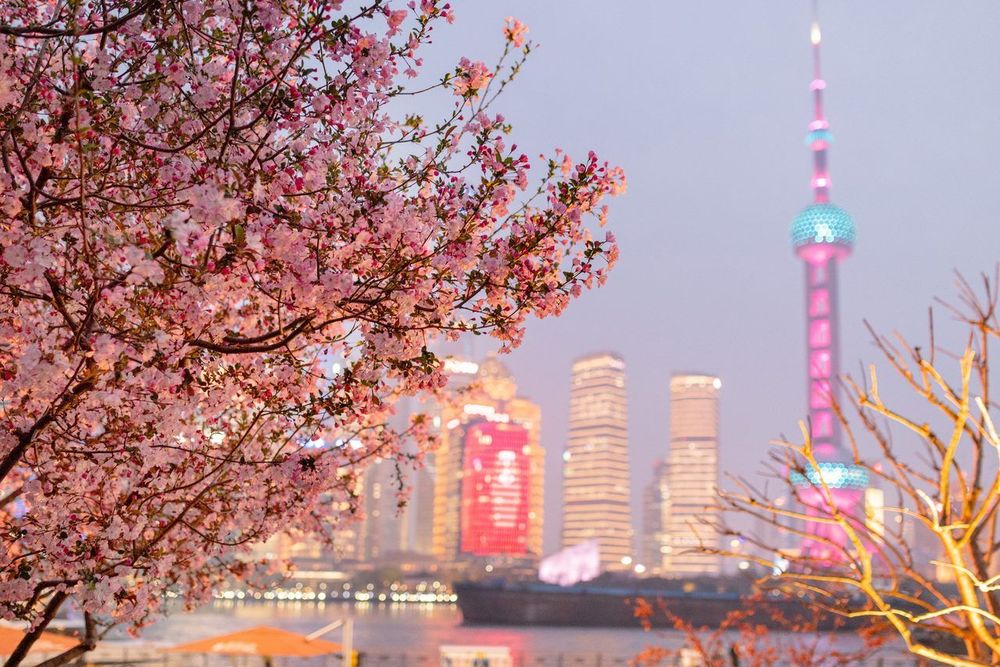
© Shutterstock
 Votre guide Ryo
12 Romantic Things to Do in Shanghai for Couples in 2026
If you're looking for romantic things to do in Shanghai, start with the river that splits the city in two. On one side, colonial stone buildings from the 1920s catch the evening light along the water. On the other, glass towers over 600 meters tall blink through the haze as night falls. A ferry crosses between the two worlds for the price of a coin, and most visitors never notice the boat exists. Ryo's Shanghai audio-guided tour follows this exact contrast, tracing the Bund's granite facades before turning toward Pudong's skyline, with stories timed to the light as it shifts from gold to neon.
Beyond the postcard shot, the city holds quieter romantic details: a teahouse reached by a zigzag bridge built so evil spirits, which supposedly only travel in straight lines, can't follow you across it; a 1936 villa a Swedish shipping magnate reportedly modeled on his daughter's dream of a fairy-tale castle; a water town forty minutes from the skyscrapers where canals replace roads and wooden boats replace taxis. This guide walks through the classic river views, the Old City's gardens and teahouses, the French Concession's tree-lined lanes, where to eat and drink as a pair, where to sleep, a handful of proposal spots, and a ready-made three-day itinerary that ties the whole trip together.
What Makes Shanghai Romantic for Couples
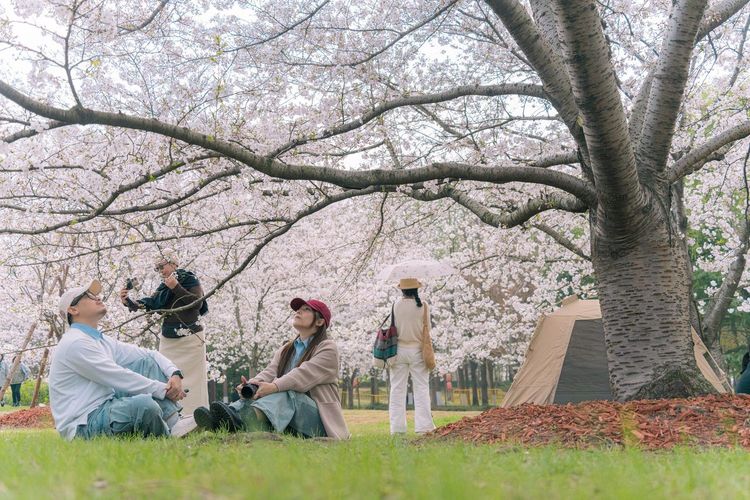
Shanghai's romance doesn't come from grand gestures written into the architecture, the way Paris or Venice wear it. It comes from contrast, and from how easy the city makes it to move between two very different moods in the same afternoon. Cross a bridge and you go from Art Deco banking halls to a garden with a nine-turn bridge inside; cross another and you go from a garden to a 632-meter tower with a glass floor. Shanghai travel guides tend to flatten this into a checklist of skyline photos, but the pairs who enjoy the city most treat it as two cities stitched together: the low, ornamented waterfront built by foreign banks in the 1920s and 30s, and the vertical, self-invented skyline that Pudong built from rice paddies after 1990. Walking between them, hand in hand, is arguably the single most romantic thing to do in Shanghai, because the city does the storytelling for you.
Is Shanghai romantic for couples who don't speak Mandarin or aren't traveling on a five-star budget? Yes, more than its reputation as a business hub suggests. The metro is bilingual and cheap, taxis are inexpensive by international standards, and huge stretches of the old city center, the Bund, the Old City, the French Concession, are genuinely walkable, which matters more for a couples trip than any single attraction. Spring (March to May) and autumn (September to November) bring mild air and clear skylines; summer brings heat and haze that dulls the view from every rooftop bar in town. None of that requires advance planning beyond booking a hotel room with a river view and clearing an evening for a slow walk along the water. The sections below break the city into its romantic pieces, starting with the view that gives Shanghai its reputation in the first place.
1. Iconic Bund & Skyline Views
No list of romantic things to do in Shanghai skips the Bund), and for good reason: nowhere else in the city do you get two centuries of architecture staring at each other across open water. The four experiences below work as a single evening if timed right, walk the promenade at golden hour, cross by ferry, watch the skyline from a boat or a tower, and end with dinner or drinks somewhere with a view. Ryo's audio-guided tour of Shanghai's city of contrasts covers this exact stretch, with a stop built around the ferry crossing that most tour groups walk straight past.
The Bund promenade and the Lujiazui skyline at dusk
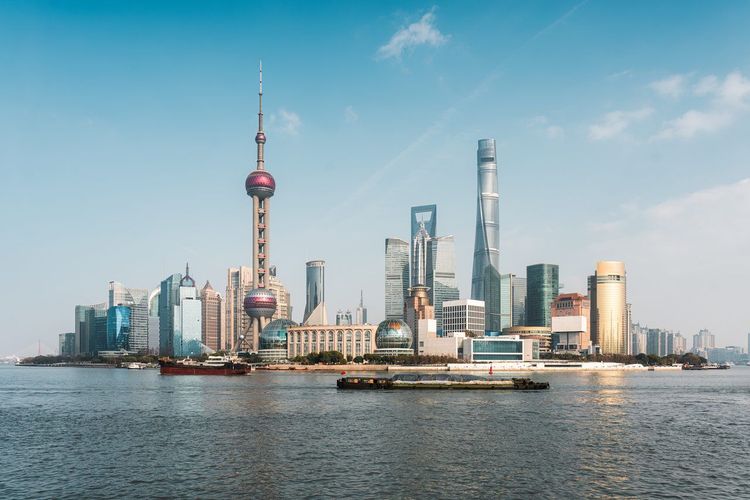
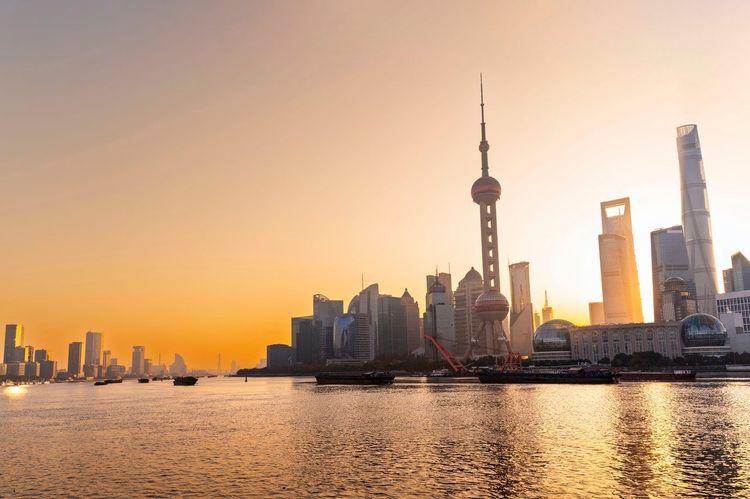
The Bund runs for about 1.5 kilometers along the western bank of the Huangpu River, lined with 52 buildings put up between the 1860s and 1930s by British, French, and American banks and trading houses. Locals still describe this stretch of Art Deco and neoclassical stone as an open-air museum of buildings, and at dusk it earns the description: the facades light up gold just as the Lujiazui skyline across the water switches on its neon.
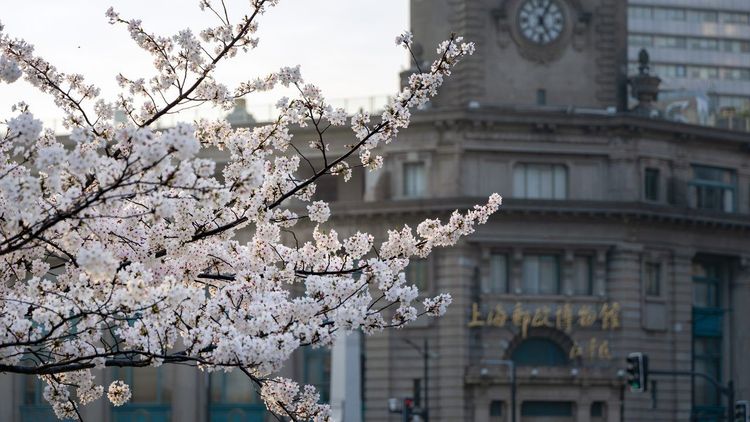
Arrive around 30 minutes before sunset and claim a spot on the elevated promenade rather than the lower riverside path, where the crowd thins out and the sightlines open up. The best photos of Lujiazui, with the Oriental Pearl Tower (1 Century Avenue, Pudong, 200120 Shanghai, rated 4.6/5 on Google (7 581 avis))'s pink spheres in front of the taller, newer towers behind it, come from directly across the water near the old Customs House, whose clock tower has watched over the river since 1927, even if its original Westminster chimes have long since fallen silent.
Crossing the Huangpu on the ¥2 Jinling Road ferry
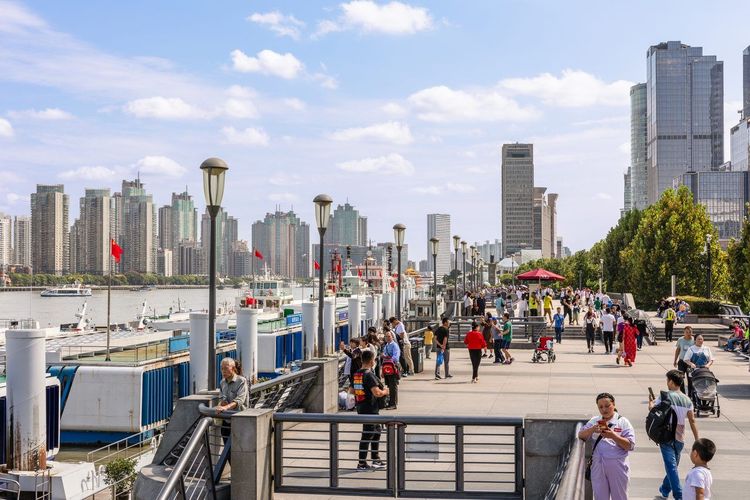
For a view that costs almost nothing, walk to the Jinling Road ferry pier near the southern end of the Bund and cross the river for two yuan, less than the price of a subway ride. The ferry runs every ten to fifteen minutes and takes about five minutes to cross, but that brief window puts you on open water between both skylines with no glass, no ticket line, and no crowd of tour groups, since almost none of them know the boat exists. Couples who want the classic river-between-two-cities photo without paying for a cruise ticket tend to prefer this crossing precisely because it's unglamorous: commuters ride it home from work, bicycles get wheeled on board, and nobody is performing for a camera.
Huangpu River cruises and dinner cruises
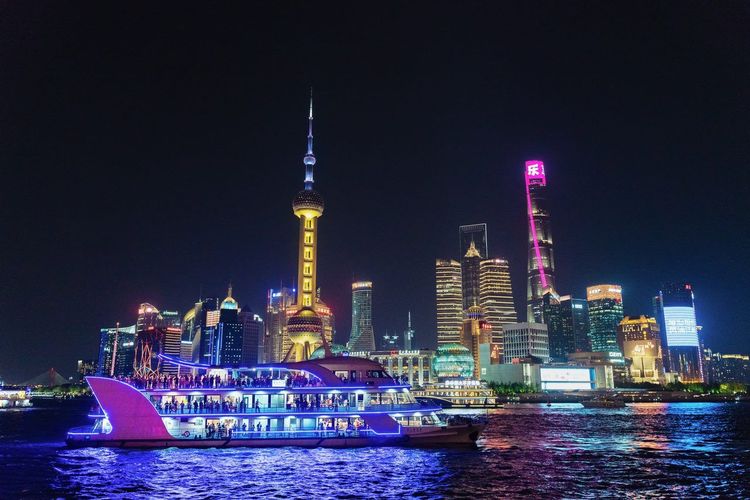
If you'd rather sit than stand, a Huangpu River cruise covers a longer stretch of the skyline, typically from the Bund north past the Garden Bridge and south toward the newer riverfront parks, in 40 minutes to an hour. Daytime cruises run cheaply and frequently from several Bund-area piers; evening departures cost more but time the return leg to catch the skyline lit up, which is really the point of doing this at all.
For a slower version, a Huangpu River dinner cruise pairs the same route with a multi-course meal and, on the better-reviewed boats, a window table booked in advance. These run longer, close to two hours, and suit a couple who wants the view to be the backdrop to an evening rather than the whole activity. Book a window seat specifically when reserving; interior tables on the lower decks miss the skyline almost entirely.
Shanghai Tower and Oriental Pearl Tower observation decks
Two towers compete for the couples' photo op, and they serve slightly different purposes. Shanghai Tower), at 632 meters the third-tallest building in the world, holds its main observation deck on the 118th floor, reached by one of the fastest elevators ever installed, climbing at around 18 meters per second, fast enough that your ears pop twice.
Buy a combined ticket that bundles the observation deck with a river cruise if the schedule allows; the two sold separately end up costing more and eating an extra hour in ticket lines.
The Oriental Pearl Tower, with its two pink spheres, is older, shorter, and cheaper, and its main romantic advantage is that it appears in the skyline photos taken from the Bund, so climbing it puts you inside the view you were admiring the night before. A revolving restaurant buffet on one of the middle levels turns the visit into a full meal with the city slowly rotating past the window, useful on a day when the itinerary doesn't have room for a separate dinner stop.
2. Yu Garden, the Nine Turn Bridge and Old City Charm
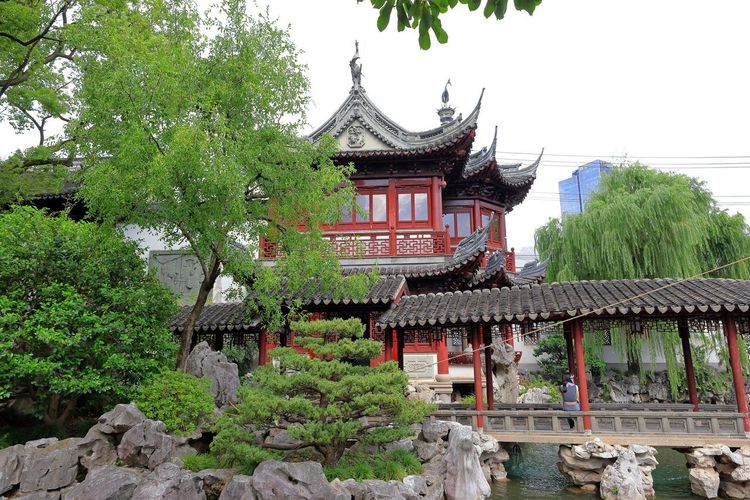
A fifteen-minute walk inland from the Bund, the Old City trades riverfront grandeur for something more intimate: a Ming-dynasty garden, a teahouse older than the country's current borders, and alleys where lanterns replace streetlights after dark. This cluster rewards a slow afternoon rather than a checklist visit, since half the appeal is simply getting lost between the three stops below.
Yu Garden and the Nine Turn Bridge
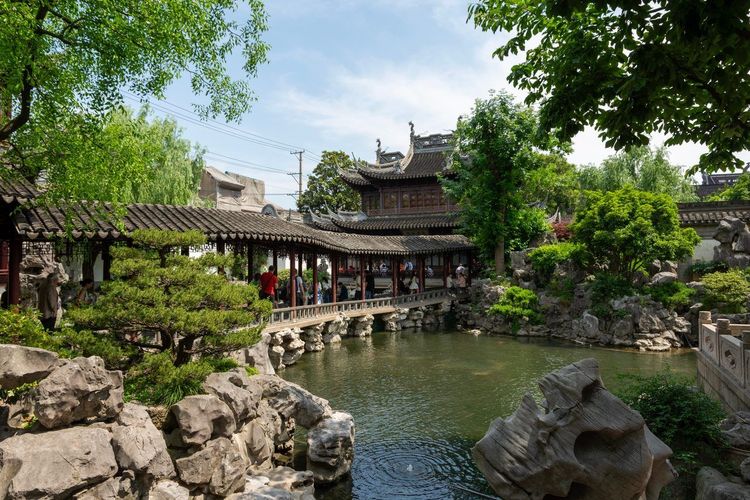
Yu Garden) was built starting in 1559 by a Ming dynasty official named Pan Yunduan for his father, and took nearly two decades to finish across roughly two hectares of rockeries, ponds, and pavilions. Before you even reach the gate, you cross the Nine Turn Bridge, a zigzagging stone walkway over the pond just outside the garden walls, built with nine deliberate turns because local legend holds that evil spirits can only travel in straight lines and lose the trail at each corner.
The garden gets crowded fast once tour buses arrive around mid-morning, so visit at opening time, generally 8:30 or 9am, when the ponds are still and the rockery gardens are nearly empty. Budget at least an hour inside; the garden is smaller than it looks on a map, but the winding paths and covered corridors are built to slow you down, not move you through quickly. Photos taken from the bridge's outer corners, rather than its center, tend to capture both the water and the surrounding pavilion roofline in one frame. Combined tickets covering the garden and the nearby bazaar shops save a small amount over buying separately, worth asking about at the ticket window rather than assuming a single option.
Tea for two at Huxinting Teahouse
Standing on an island in the middle of that same pond, right on the Nine Turn Bridge, the Huxinting Teahouse) has served tea from this exact spot since 1855, making it one of the oldest continuously operating teahouses in China. The second floor holds the better tables, with windows on three sides looking out over the pond and the bazaar's curved rooflines.
Order a pot of Longjing or jasmine tea rather than a single cup; refills are included and a pot easily stretches across half an hour, long enough for the crowds outside to shift and thin before you head back into the garden or the bazaar streets around it.
Wandering the Old City Wall and lantern-lit bazaar alleys
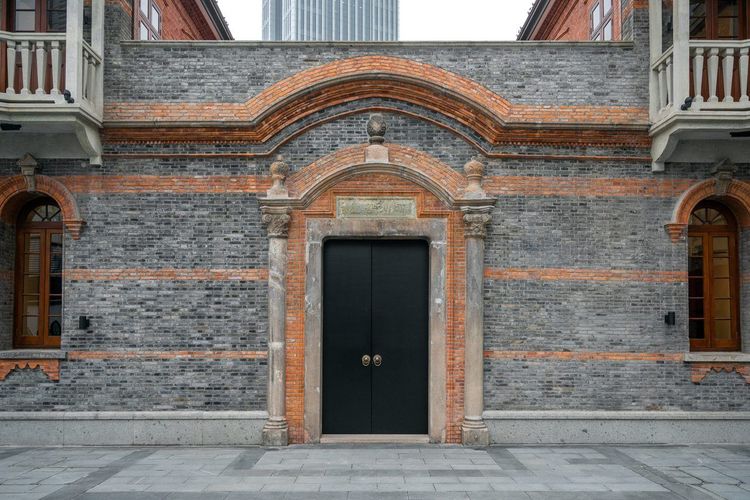
A short walk south of the garden, a restored stretch of the Shanghai Ancient City Wall (Dajing Road, Huangpu, 200010 Shanghai, rated 4/5 on Google (66 avis)) marks where the old walled city once stood before it was demolished in the early 1900s to make way for roads. Climb the small watchtower for a rare street-level view over the bazaar's curved roofs.
The surrounding lanes, officially the Yuyuan Bazaar, turn genuinely pretty after dark, when red lanterns replace the daytime souvenir-stall glare and the crowds thin to locals buying dumplings rather than tour groups buying trinkets. Come back in the evening even if you've already visited during the day; it's close enough to feel like a different neighborhood.
For couples who'd rather listen than read plaques, Ryo's audio guide for this stretch of the Old City spends a full stop on the Nine Turn Bridge's superstition and times a suggested tea break at Huxinting into the walking route, rather than leaving it as an afterthought.
3. Romantic Walks Through the French Concession
West of the Old City, the former French Concession swaps temple roofs for plane trees and Art Deco villas, laid out by French administrators between 1849 and 1943. It's the neighborhood locals themselves rank as most romantic, not because of a single monument, but because entire blocks look the same as they did a century ago, and walking them slowly is the point.
Tree-lined avenues and hidden lane houses
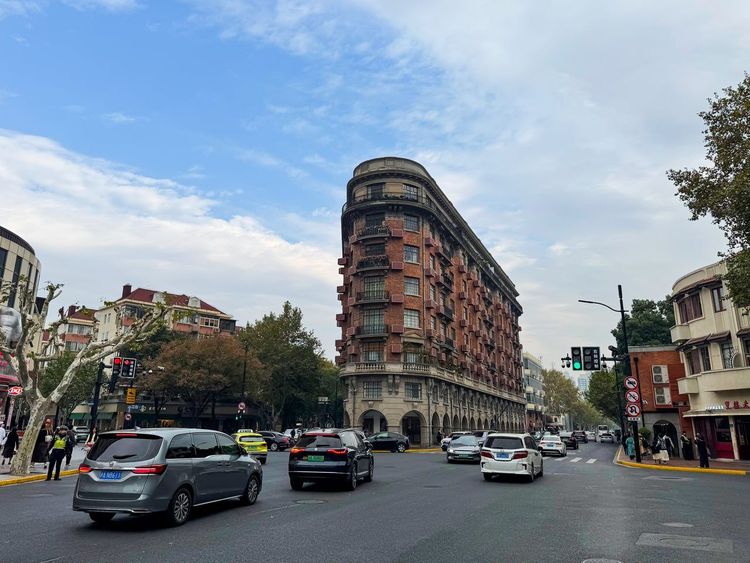
The Concession's plane trees, planted mostly by French administrators in the early 1900s, arch over streets like Wukang Road, Anfu Road, and Xiangyang Road, forming a green tunnel that keeps the area several degrees cooler than the rest of the city in summer. Behind the main avenues, look for lane houses, low brick residential compounds accessed through narrow gated alleys called longtang, where laundry still hangs between buildings and neighbors sit outside on stools in the evening.
These lanes aren't sightseeing attractions with entry gates; they're lived-in residential streets, so keep voices down and cameras discreet. Wukang Road's curved Normandie Apartments, built in 1924, mark a good starting point, from which most of the neighborhood's best walking routes fan out in a loop that takes 90 minutes to two hours at an unhurried pace.
Hengshan Road's bar-lined streets and historic villas
Hengshan Road cuts through the southern end of the Concession, lined with 1920s and 30s villas that once belonged to foreign businessmen and now house bars, wine cellars, and restaurants behind their original facades. By night the street shifts from residential quiet to a low-key bar crawl, without the density or noise of the nightlife strips closer to the Bund.
One villa worth a detour even without a reservation is Moller Villa), a 1936 fairy-tale mansion with turrets and gables that Swedish shipping magnate Eric Moller reportedly based on a sketch his daughter drew from a dream. Today it operates as the Hengshan Moller Villa Hotel, so you can wander the gardens or book a drink inside.
Garden Bridge and the Suzhou Creek waterfront
Where the Concession's lanes eventually meet the river, the Garden Bridge (Suzhou Creek, Huangpu, 200080 Shanghai, rated 4.6/5 on Google (337 avis)), Shanghai's oldest surviving steel bridge, dates to 1907 and marks the point where Suzhou Creek empties into the Huangpu, right at the northern tip of the Bund.
The riverside path just north of the bridge, recently redeveloped into a continuous waterfront park, makes a quieter alternative to the crowded Bund promenade for an evening walk, with nearly the same skyline view and a fraction of the foot traffic. It's an easy final stop before heading back into the Bund proper for dinner.
Ryo's audio guide for Shanghai threads these three stretches, the plane-tree avenues, Hengshan Road's villas, and the Suzhou Creek waterfront, into one continuous walking route, with each story timed to the block you're actually standing on rather than a fixed schedule.
4. Fine Dining and Bund-Facing Restaurants for Two
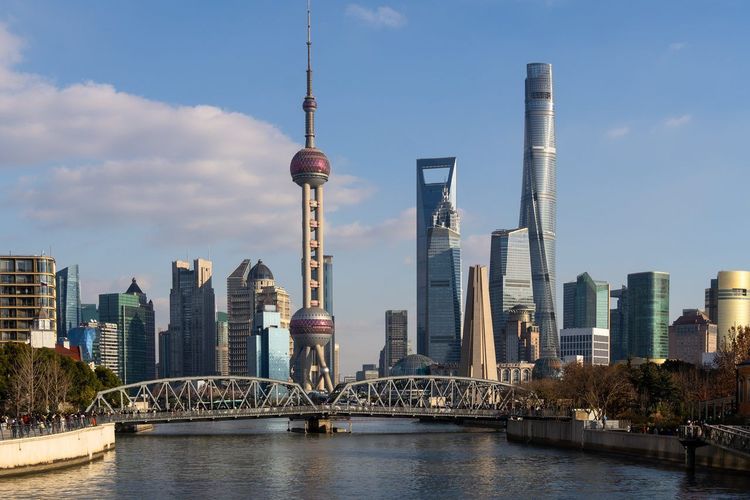
Shanghai's romantic dinner scene splits cleanly into two categories: restaurants that sell a view, priced accordingly, and restaurants that sell a room, priced for what's on the plate. Both belong on a couples' itinerary, ideally on different nights. The first category clusters along the Bund itself, in restored 1920s buildings with river-facing dining rooms; the second scatters through the French Concession's converted villas and shopfronts, where the draw is an open kitchen or a wine list rather than a skyline.
Mercato (3 Zhongshan East 1st Road, Huangpu, 200002 Shanghai, rated 4.5/5 on Google (108 avis)), inside the historic Bund 3 building, pairs an open-kitchen Italian menu with floor-to-ceiling windows looking straight across at Pudong. Request a window table when booking; the restaurant seats well beyond its window row, and a table without the view loses most of the reason to eat here.
You may still see M on the Bund recommended in older guides: the pioneering 1999 rooftop restaurant served its last dinner in February 2022, so don't plan an anniversary around it. Upstairs in the same Three on the Bund building as Mercato, Jean-Georges now fills that role for a formal French tasting menu with the river below, while the building's POP terrace offers a more relaxed rooftop table. Couples planning a proposal dinner often ask for a window or terrace seat specifically at booking.
Book window and terrace tables at least two to three weeks ahead for a Friday or Saturday night, longer around Chinese holidays; Bund-facing restaurants sell their view seats first and everything else fills in behind them. Calling or booking through the restaurant's own site tends to hold seats better than third-party reservation apps, which sometimes release only a fraction of the inventory. If a specific window table matters for a proposal or anniversary, say so explicitly when booking and again at check-in; most of these rooms will genuinely try to accommodate it, but only if asked directly rather than assumed.
Couples who'd rather skip the view premium entirely can eat just as well, arguably better, a few blocks inland in the French Concession, where converted lane houses hold small, chef-driven dining rooms without a river in sight. These rooms tend to book up less aggressively than the Bund's window seats, and the savings from skipping the view markup often cover a second dinner out later in the trip. A rotation of one Bund-facing splurge and one Concession neighborhood dinner, rather than two nights spent chasing the same skyline, tends to leave couples with a fuller sense of the city by the time they fly home.
Expect a three-course dinner with wine at any of the Bund-facing rooms to run well past what a similar meal costs a few blocks inland; the markup is the view, not the ingredients, and most couples decide it's worth paying once per trip rather than nightly.
5. Rooftop Cocktail Bars and Nightlife for Couples
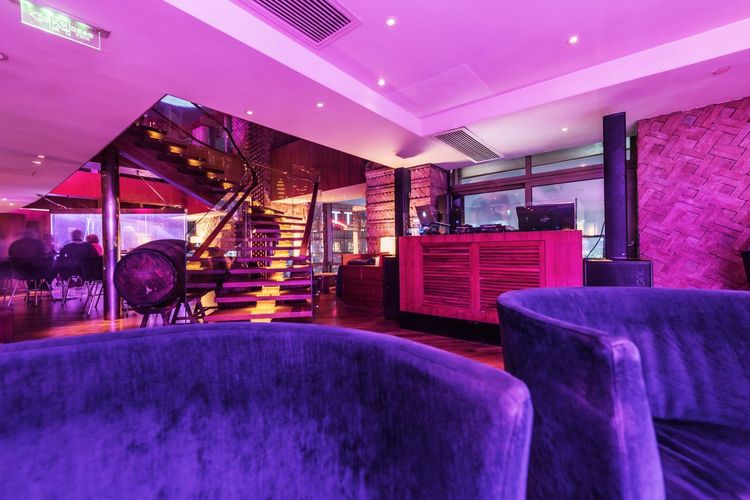
The Bund's rooftops turn into the city's most reliable date-night backdrop once the sun goes down, and unlike the fine-dining rooms below them, most don't require a reservation, just patience for the door. A short crawl across two or three bars within walking distance of each other beats committing to one spot for the whole night, since the skyline reads differently from each building's angle.
Bar Rouge (18 Zhongshan East 1st Road, Huangpu, 200002 Shanghai, rated 4/5 on Google (371 avis)), on the roof of the Bund 18 building, is one of the longest-running names in Shanghai's rooftop scene, though it now skews later and louder than its early reputation as a quiet skyline lounge. Arrive before 9pm for a drink with the view still intact and the crowd still conversational; after 11pm on weekends it shifts firmly into club territory, which suits some couples and not others.
For a quieter alternative on the same stretch, several hotel rooftop bars set inside the Bund's historic buildings keep table service and lower volume past midnight, worth asking your hotel concierge about directly, since the best of these rarely advertise and fill mostly by word of mouth.
6. Luxury Spa Days and Wellness for Two
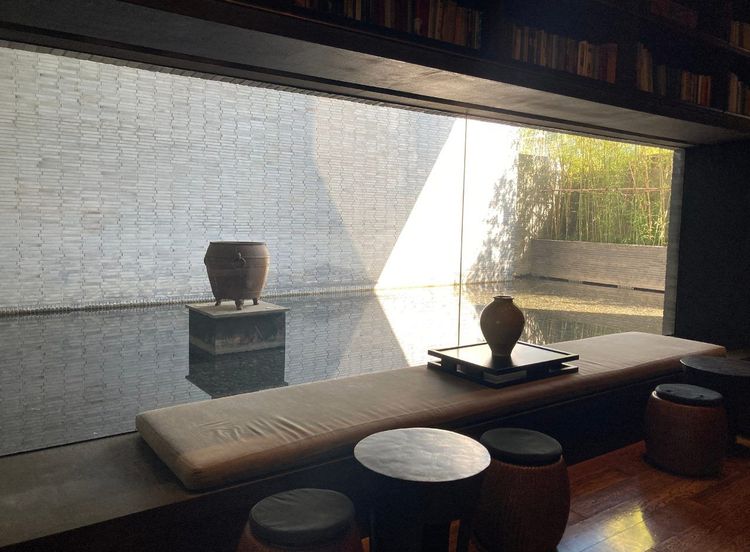
A slower, indoor counterpart to all that walking, Shanghai's five-star hotels run some of the best couples spa programs in China, largely because so many of them were built with river views and unlimited construction budgets during the 2000s hotel boom. Treatments typically run 90 minutes to half a day and combine a massage with a soak, a scrub, and, in the better setups, side-by-side treatment rooms rather than separate ones.
A genuine luxury couples spa day in Shanghai means booking directly through a hotel spa rather than an independent parlor; the hotel spas hold both the space for true side-by-side couples suites and the standards of hygiene and training that independent options vary wildly on. Expect to pay a premium equivalent to a nice dinner for two, and book at least a few days ahead for weekend slots, since these rooms are limited to one or two couples suites per property. Late afternoon slots, timed to finish right before sunset, let you follow the treatment straight into a rooftop drink without a wasted gap in the schedule.
For a different, less Western-styled option, traditional Chinese foot massage parlors, found throughout the city and considerably cheaper than hotel spas, offer a lighter, more casual version of the same idea: side-by-side reclining chairs, an hour or two of reflexology, and green tea between sessions. It's a good fit for an evening that doesn't call for a full half-day commitment, and several well-reviewed chains near the French Concession keep late hours that suit a post-dinner stop.
7. The Most Romantic Hotels in Shanghai
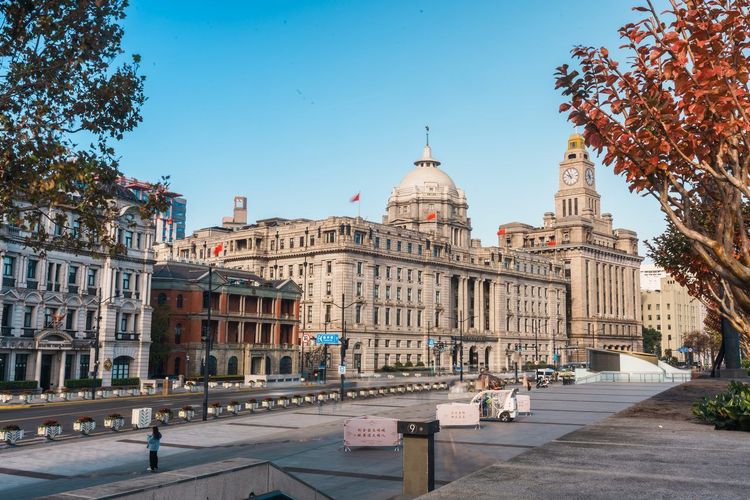
Where should couples stay in Shanghai comes down to a single choice: river view or neighborhood charm. The Bund and Pudong sides put the skyline outside your window at the cost of a quieter street life; the French Concession trades that view for tree-lined mornings and better walking. Budget permitting, splitting a trip between both areas, a couple of nights each, beats picking only one.
The Peninsula Shanghai) sits directly on the Bund in a 2009 building deliberately designed to match its 1920s neighbors, and its river-facing suites remain some of the most requested rooms in the city for anniversaries and proposals. The hotel's rooftop bar and ground-floor afternoon tea room both face the water, so a request for a river-view table applies to more than just the guest room.
On the opposite bank, Mandarin Oriental Pudong, Shanghai looks back across the water at the Bund itself, which some couples prefer, waking up to the historic skyline rather than the futuristic one. Its spa is a natural fit for the side-by-side treatments described above; ask for a couples suite when you book.
For history over glass, the Shanghai Peace Hotel (20 Nanjing Road East, Huangpu, 200002 Shanghai, rated 4.7/5 on Google (965 avis)), a Fairmont property since 2010, opened in 1929 as the Cathay Hotel and still keeps its original Art Deco lobby, green pyramid roof, and a jazz bar with a house band that's played there since the 1980s.
Couples who'd rather sleep inside a single, self-contained fairy tale than a hotel chain sometimes book a room at Moller Villa, covered above in the French Concession walks, whose handful of guest rooms sit inside the same turreted 1936 mansion.
Room rates at all four hotels swing significantly with season, dropping by close to half outside peak spring and autumn months, which makes shoulder-season travel worth considering for a splurge stay that would otherwise strain a typical trip budget. For couples booking a Bund-side room specifically to be near the river views covered earlier in this guide, that same stretch of promenade is exactly where Ryo's Shanghai audio tour begins each evening walk.
8. Romantic Day Trips from Shanghai
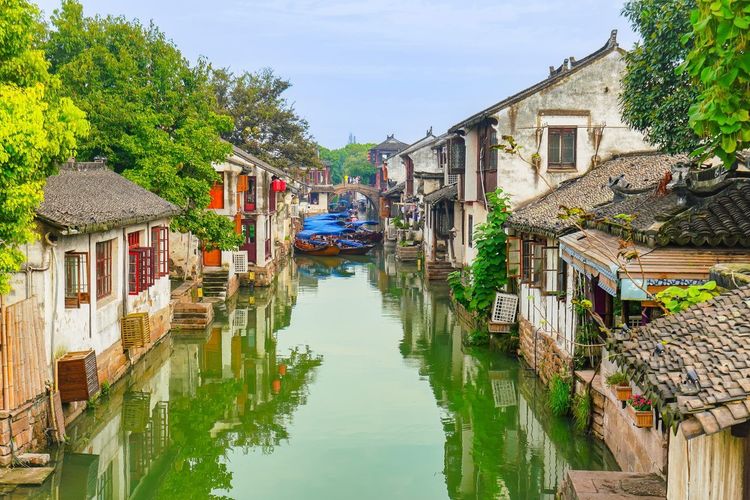
Shanghai's skyline can start to feel repetitive by day three, and the fastest cure sits less than an hour outside the city: water towns with canals instead of roads, and, less expectedly, a film studio built to look like 1930s Shanghai itself. Any one of the three below works as a half-day or full-day escape; combining two in a single day is possible but rushed.
Zhujiajiao water town
Zhujiajiao, about 40 minutes by car or an hour by bus from the city center, is the closest and most-visited of Shanghai's water towns, built along canals that date back over 1,700 years, with its current stone bridges and waterside houses mostly dating from the Ming and Qing dynasties.
The Fangsheng Bridge, a five-arch stone bridge built in 1571, is the town's most photographed spot and the best vantage point for watching the wooden gondolas drift beneath it. Boat rides along the canals, run by local rowers rather than a fixed operator, cost a modest flat rate per boat and make a nice midday break between the bridge photos and lunch at one of the waterside noodle stalls. Because Zhujiajiao sits closest to the city, it also draws the heaviest weekend crowds; visiting on a weekday morning, or staying past 5pm once day-trip buses clear out, gets you something closer to an actual water town rather than a pedestrian queue.
Fengjing ancient water town
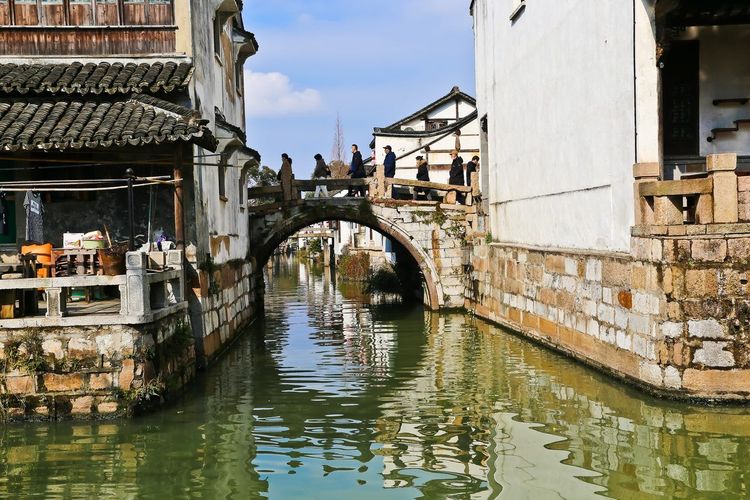
Further out at roughly an hour and a half from central Shanghai, Fengjing sees a fraction of Zhujiajiao's visitors despite a similarly well-preserved canal-side old town dating back over a thousand years.
The trade-off for the longer drive is space: covered wooden bridges, quiet stone lanes, and canal-side teahouses without the crowd density that can make Zhujiajiao feel more like a market than a getaway on weekends. Local specialties like Fengjing rice wine and zongzi, sold from small family-run shops along the main canal, make an easy, inexpensive lunch stop between bridges. Couples with a rental car or a private driver, rather than public transit, get the most out of Fengjing specifically because of that distance.
Shanghai Film Park for a vintage-movie date
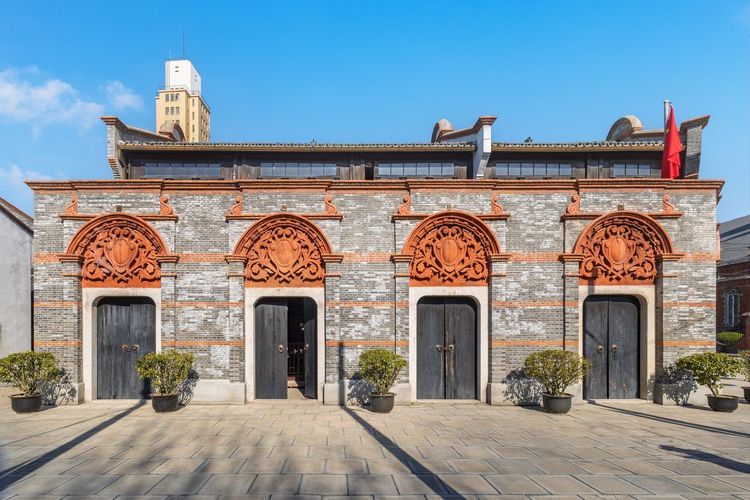
An unexpected romantic detour, Shanghai Film Park (4915 Chenhua Road, Songjiang District, 201612 Shanghai, rated 4.1/5 on Google (190 avis)) is a working film studio built as a full-scale replica of 1930s Shanghai streets, complete with period tram tracks, shopfronts, and a recreated stretch of the Bund itself, used for decades in Chinese period dramas.
Costume rental stalls near the entrance let couples dress in 1930s-style outfits for photos, a popular add-on that costs little beyond the entrance ticket. For couples who enjoyed the real Bund earlier in the trip, walking its 1930s stand-in here, sometimes mid-shoot with extras in period costume, makes an odd but genuinely fun contrast, essentially a set tour and a photo backdrop in one. It suits a shorter half-day visit better than a full one, and pairs naturally with Zhujiajiao if arranged as a single day's loop, since both sit on the same side of the city.
Pairing a morning on Ryo's Shanghai audio walk with an afternoon departure for one of these towns is a common way returning couples structure their last full day in the city.
9. Proposal Spots and Special Moments
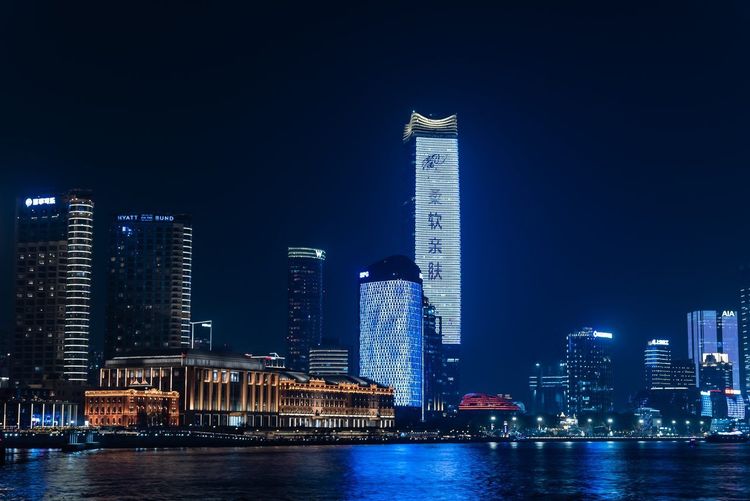
Can I propose in Shanghai without a permit or a hidden bureaucratic snag? Yes, public proposals need no permission in the city's parks, gardens, or streets, which makes planning one mostly a question of timing and privacy rather than paperwork. The Bund at sunrise, before the promenade crowds arrive around 8am, offers the same skyline as the evening rush with almost nobody in frame. Yu Garden's quieter side courtyards, away from the Nine Turn Bridge's main crossing point, work well for couples who'd rather not propose in front of a queue of photographers waiting for their own bridge shot.
For an indoor option regardless of weather, a window table at Jean-Georges or a terrace slot at The Peninsula, both covered earlier in this guide, can be booked specifically for the occasion if you mention it when reserving. Hiring a local photographer to capture the moment discreetly from a distance, rather than asking a stranger, costs relatively little in Shanghai and is common enough that most photography studios near the Bund offer a dedicated proposal package without needing much explanation. Whatever the spot, build in a backup indoors; Shanghai's weather shifts fast, and a rained-out rooftop plan is easier to recover from with a reservation already in hand somewhere covered.
Ring shopping beforehand is straightforward too: several established jewelers operate along Nanjing Road and inside the Bund's luxury retail strip, and same-day resizing is commonly available if you're buying just before the trip rather than months ahead.
10. When Shanghai Is at Its Most Romantic
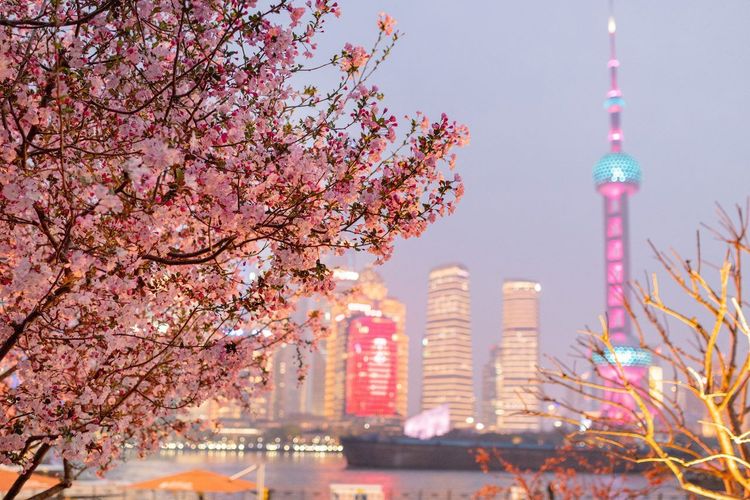
What is the best time of year for a couples trip to Shanghai comes down almost entirely to sky clarity, since the city's romantic reputation rides on its skyline views. Spring, March through May, and autumn, September through November, bring the clearest air and mildest temperatures, generally 15 to 24 degrees Celsius, and are when the Bund's evening crowds and the water towns' weekend crowds both peak, a fair trade for the views. Summer runs hot and humid, often above 33 degrees Celsius with frequent rain, and haze regularly dulls the Pudong skyline enough to flatten the classic photo; it also brings the lowest hotel rates of the year for couples less fussed about photography.
Winter turns cold and gray, rarely dropping below freezing but rarely feeling pleasant outdoors either, which pushes the trip's balance toward indoor spa days and dinner reservations over walking tours. One under-discussed window sits in late October and early November, just after National Day's crowds clear out and before winter arrives, combining the year's clearest skies with hotel rates still below peak spring pricing. Avoid the first week of October and the week around Chinese New Year entirely if possible; both bring domestic travel volumes that overwhelm hotels, restaurants, and the water towns alike, regardless of how good the weather looks on paper.
Whatever month you land in, plan skyline-facing activities for the hour before sunset specifically; Shanghai's air quality and temperature both tend to be at their most forgiving in that window, no matter the season.
11. Shanghai for Couples on a Real Budget
How much does a romantic weekend in Shanghai cost genuinely depends on how many of the splurges above you stack together. A mid-range couple's weekend, a comfortable four-star hotel, two or three sit-down dinners, one Bund-facing splurge meal, a river cruise, and metro or taxi transport throughout, runs in the range of a modest but real budget, well below equivalent weekends in Paris, London, or New York. Skipping the splurge dinner and staying slightly outside the Bund core cuts that figure noticeably without losing much of the experience, since the free and near-free options, the Bund promenade, the ¥2 ferry, the Old City's alleys, the French Concession's walking routes, are also the highlights most guides point to first.
A handful of practical habits stretch the budget further: download a translation app before arrival, since English signage thins out fast beyond the main tourist stretches; carry cash alongside a mobile payment setup, since some smaller vendors and water-town stalls don't take foreign cards at all; and book Bund-facing restaurant tables directly rather than through third-party apps, which sometimes mark up the same seating. The metro is genuinely the fastest and cheapest way to move between neighborhoods and beats taxis during evening rush hour along the river, when traffic on the Bund's access roads slows to a crawl.
Tipping isn't expected at restaurants or bars, which surprises visitors used to adding 15 to 20 percent automatically elsewhere, and hotel staff generally decline small cash tips as a matter of course rather than custom. That alone shaves a noticeable amount off a typical couples' dinner budget compared to cities where tipping is built into the math. Save that margin for the one splurge dinner or spa session that actually matters to your trip, rather than spreading it thin across every meal.
The most common mistake couples make here is over-scheduling the first day straight off a long flight, then arriving at the Bund at dusk too jet-lagged to enjoy it. A close second is booking every dinner on the Bund itself; spreading meals between the river and the French Concession keeps the trip from feeling like a single repeated view. A third is skipping the ¥2 ferry entirely in favor of a paid cruise, missing the cheapest and, for many returning visitors, most memorable five minutes of the whole trip.
12. A Sample 3-Day Romantic Itinerary for Couples
For couples short on planning time, here's how the experiences above fit into three days, front-loading the highest-energy stops early and leaving the last day light for departure logistics. Adjust freely; the order below groups activities by neighborhood rather than by importance, to minimize backtracking across a city where distances between highlights run longer than they look on a map.
Day 1: Arrival and the Classic Bund
Check into your hotel and, jet lag allowing, head straight to the Bund for a late-afternoon walk along the promenade, timing your arrival about 45 minutes before sunset to watch both the historic facades and the Lujiazui skyline change light together. Cross the river on the ¥2 Jinling Road ferry while the skyline is still lit, then loop back for a Bund-facing dinner, at Mercato or, for a special first night, Jean-Georges, booked in advance as covered above.
After dinner, walk north toward Bar Rouge or a quieter hotel rooftop for a nightcap with the towers still visible across the water. If the flight in was long, skip the ferry crossing and save it for the following morning instead, when the light is softer and the crowds haven't arrived yet; the Bund rewards patience over ticking every box on the first exhausted evening.
Day 2: Old City, Spa and the Bar Crawl
Start early at Yu Garden, ideally at opening time before the tour groups, and spend the morning working through the garden, the Nine Turn Bridge, and a tea break at Huxinting Teahouse. Walk the lantern-lit bazaar alleys around the Shanghai Ancient City Wall before lunch, then head back to the hotel for an afternoon couples spa session, timed to finish an hour or so before sunset.
From there, transition straight into the evening's rooftop bar crawl, starting somewhere quieter around 7pm and moving toward Bar Rouge or a similar Bund-area spot by 9 or 10pm if a later night appeals. Couples proposing during the trip often choose this day's morning at Yu Garden specifically, since the courtyards empty out fastest right after opening and before the tour buses arrive. This day deliberately mixes a slow cultural morning with an indulgent, low-effort afternoon and evening, useful pacing for a trip that would otherwise run couples ragged by day three.
Day 3: French Concession and Departure
Spend the morning walking the French Concession, Wukang Road's lane houses, Hengshan Road's villas, and a stop at Moller Villa, before the day's heat sets in and depending on flight timing. If there's room in the schedule, a detour to Zhujiajiao water town works well as a half-day add-on for a later evening departure, though it's worth skipping entirely on a tight morning-flight schedule rather than rushing it.
Close the trip with lunch somewhere in the Concession rather than back on the Bund; it's a gentler, less touristy final meal, and puts you closer to the metro line running out to the airport. For an evening flight, one last walk along the Suzhou Creek waterfront near the Garden Bridge makes a quiet bookend to a trip that opened on the same stretch of river three days earlier.
The Ryo app's Shanghai audio guide maps closely onto this exact three-day structure: each stop above corresponds to a numbered audio in the app, timed so a full day's route runs a little over two hours of actual listening, works offline once downloaded, and folds in the kind of local detail, the ferry's real fare, the bridge's real legend, that a guidebook page usually cuts for space.



FAQ
Is Shanghai romantic for couples?
Yes. Its romance comes less from monuments built for the purpose and more from contrast: walk from 1920s Bund architecture to a glass skyline in fifteen minutes, or from a Ming-dynasty garden to a rooftop bar in twenty. Add a walkable historic quarter, a genuinely cheap river crossing by ferry, and five-star spa and dining options, and it holds up well against any of Asia's more obviously romantic cities.
What is the most romantic thing to do in Shanghai?
Most couples who've done both agree it's the Bund at dusk, crossed by the ¥2 Jinling Road ferry rather than a paid cruise. Watching both skylines change light from open water, for the price of a subway fare, beats every paid alternative covered in this guide, including the towers and dinner cruises that cost considerably more for a similar view, and it takes barely twenty minutes start to finish.
Where should couples stay in Shanghai?
The Bund or Pudong for a river view, the French Concession for tree-lined streets and better walking. The Peninsula and Shanghai Peace Hotel sit directly on the Bund; Mandarin Oriental Pudong faces back across at it. Budget allowing, splitting a trip between both areas over several nights covers both moods without compromising on either.
How much does a romantic weekend in Shanghai cost?
A comfortable mid-range weekend, four-star hotel, several sit-down dinners including one Bund-facing splurge, a river cruise, and local transport, runs well below equivalent weekends in most major Western cities. Skipping the splurge dinner and staying just outside the Bund's most expensive core trims the cost further without losing the neighborhood's best free experiences, since tipping is not expected anywhere in the city.
What is the best time of year for a couples trip to Shanghai?
Spring (March to May) and autumn (September to November) bring the clearest skies and mildest temperatures, which matters most for a city whose romance leans heavily on skyline views. Late October into early November is a lesser-known sweet spot: post-holiday crowds have cleared, but winter hasn't set in yet.
Can I propose in Shanghai?
Yes, no permit is required for a public proposal in the city's parks, gardens, or streets. The Bund at sunrise, before the promenade crowds arrive, and Yu Garden's quieter courtyards both work well. Several Bund-facing restaurants will also hold a specific table for the occasion if you mention it at booking.
Shanghai rewards couples who let the contrast do the work: a slow walk along the Bund at dusk, a two-yuan ferry ride across water that costs less than a coffee, a garden built to confuse ghosts, a villa built for a dream. None of it requires elaborate planning, mostly a loosely timed evening and a willingness to wander past the postcard spots into the lanes and teahouses just behind them.
If you'd rather have the history and the logistics handled for you, Ryo's full Shanghai audio walk covers the Bund, the Old City, and the French Concession stops in this guide with stories timed to wherever you're standing, downloadable for offline use before you land. Start with the river, end wherever the evening takes you; Shanghai's romance was never really about any single stop.