© Shutterstock
 Votre guide Ryo
San Diego Without a Car: The Complete 2026 Transit & Neighborhood Guide
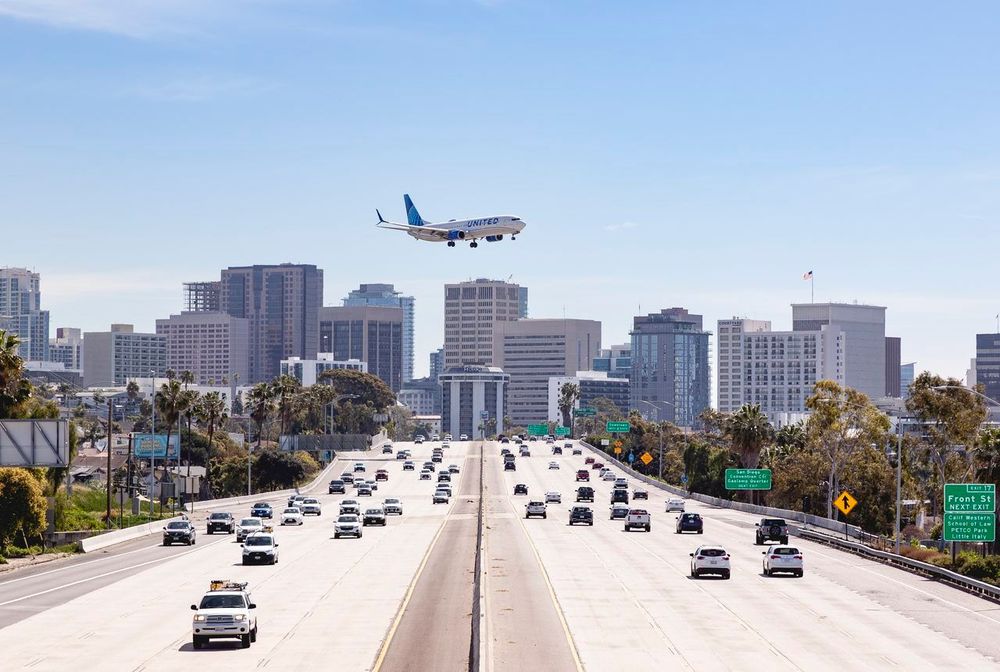
Visiting San Diego without a car sounds like a stretch in a city of more than 100 neighborhoods stitched together by freeways, from the surf breaks of Ocean Beach to the canyons of Mission Valley. It isn't. Thousands of visitors manage it every year by chaining trolley rides, a bay ferry crossing and a bus route that hugs the coast past La Jolla's cliffs. The trick is knowing which line reaches where: the Blue Line stops a short walk from the Gaslamp Quarter, Route 30 threads the coast where no track exists, and a fifteen-minute ferry gets you to Coronado without crossing the bridge. Fares also changed on October 1, 2026, so the numbers below reflect the new prices. You'll find every trolley line, bus route, ferry and rideshare option worth knowing, matched to the neighborhoods, beaches and day trips you can actually reach, plus the honest list of trips where a one-day rental still wins.
The San Diego Trolley: Your Main Way to Get Around Without a Car
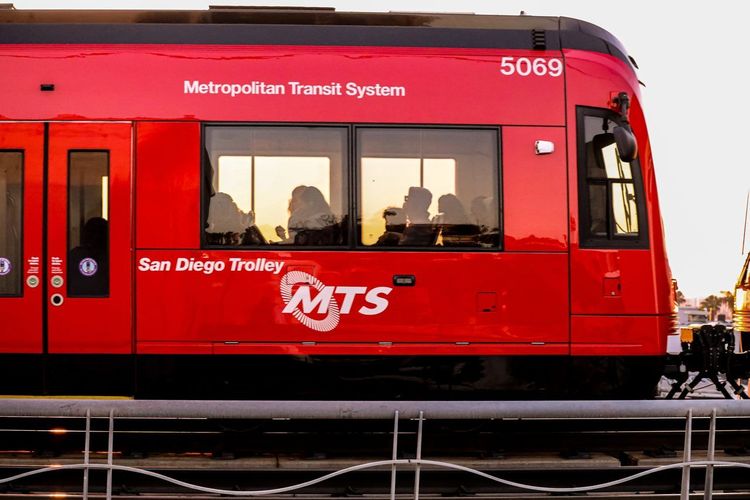
The San Diego Trolley is the backbone of any car-free trip, and the system that shows up first when you search for how to get around. Three main lines fan out from downtown. The Blue Line runs from San Ysidro at the Mexican border through downtown and Old Town, then north along the Mid-Coast extension to University City and UTC. The Orange Line heads east from downtown through Lemon Grove to El Cajon. The Green Line follows the bayfront downtown, then loops through Old Town, Mission Valley and SDSU out to Santee. End to end, the Blue Line takes roughly 90 minutes, with downtown near its midpoint. Trains come every 15 minutes most of the day, more often at peak hours, and run from early morning until around midnight.
Since October 1, 2026, an adult one-way ride costs $3 and the Day Pass $7, so the pass pays for itself on the third ride. Load either onto a PRONTO card or the PRONTO app and tap the platform validator before boarding: there are no turnstiles, and fare inspectors do check.
Want to plan before you land? The official trolley map is posted on every platform and built into the PRONTO app with live arrivals. You'll also see Route 30 mentioned alongside the trolley constantly, even though it's a bus: it picks up where the rails stop, running from Old Town through Pacific Beach to La Jolla and UTC, a coastal corridor no trolley touches.
First trip? Don't overthink which line to board. Locals treat the trolley less like a tourist shuttle and more like a bus on rails: cheap, frequent and judged purely on whether it gets you to the next stop on time. For a weekend, that's all you need it to do.
Buses, Rapid Routes & Downtown Shuttles
Where the trolley stops short, the bus network usually fills in, and Rapid 215 is the one to bookmark. This limited-stop line runs from downtown up Park Boulevard past Balboa Park and the Zoo, then along El Cajon Boulevard through North Park, Normal Heights and City Heights to SDSU, with dedicated bus lanes on part of Park Boulevard. Together with local Route 7, it gets you from downtown to Balboa Park in about 15 minutes, every 15 minutes or better.
Hillcrest sits just west of that corridor and is best reached on local routes such as the 3 or 10, both a short ride from downtown. Either way, you skip the street parking hunt that fills every space near the park by mid-morning on weekends.
One thing older guides still get wrong: the FRED shuttle (Free Ride Everywhere Downtown) no longer exists. The city ended the service on July 1, 2025, as part of budget cuts, so don't wait for an electric cart that won't come. Downtown is compact enough to walk, and for the last few blocks after a long lunch, a scooter or a short rideshare does the job.
Buses accept the same PRONTO fare as the trolley ($3, or covered by the Day Pass), so switching between bus and rail costs nothing extra within the pass window.
San Diego Bay Ferry, E-Bikes, Rideshare & Scooters
The San Diego Bay Ferry is the most scenic way to reach Coronado, and the most underused by visitors who assume the island means a bridge and a rental. Flagship's boats leave Broadway Pier every hour on the hour, with a second route from the Convention Center area, and the crossing takes about 15 minutes for $9 each way. Buy a ticket at the machine on the landing.
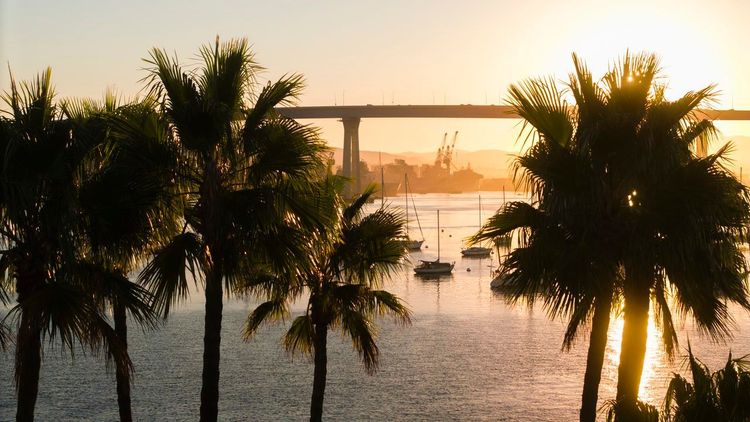
Take the ferry in the late afternoon if you can. The light off the bay hits the Coronado Bridge from an angle you never get standing on it, and that view alone justifies the ticket.
E-bikes are a great way to cover the flat stretches the trolley skips: the Mission Bay paths, the Bayshore Bikeway toward Coronado and the Silver Strand, the Embarcadero path from Seaport Village to Liberty Station. Dockless fleets unlock through an app, with per-minute pricing after an unlock fee, so check rates in the app before a long ride.
For the gaps nothing else covers (a late dinner in La Jolla, the ride home from a brewery after dark), Uber and Lyft are dense enough that waits downtown rarely exceed ten minutes. Scooters handle shorter hops, but the city enforces slow and no-ride zones along the beach boardwalks, so glance at the app map before you unlock one.
Arriving by Air: Getting From the Airport Into San Diego
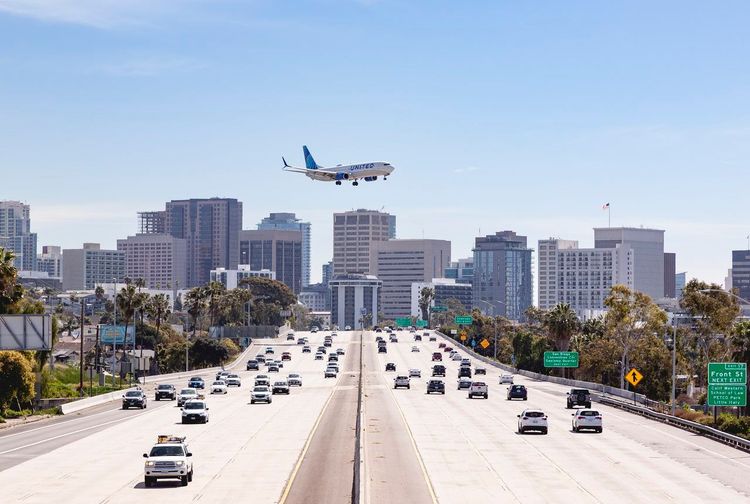
Landing is, if anything, the easiest part of a car-free trip. San Diego International Airport (SAN) sits about three miles from downtown, so close that you'll see the skyline on approach.
The free, all-electric San Diego Flyer runs from both terminals to the Old Town Transit Center every 20 to 30 minutes, from early morning until after midnight. There you can connect to the Blue and Green Lines, the COASTER and Amtrak's Pacific Surfliner. Heading downtown instead? Route 992 runs every 15 minutes from the terminal curb to downtown for the standard $3 fare.
Uber and Lyft pickups happen at dedicated rideshare zones outside each terminal (follow the signs, not the taxi line), and a ride downtown usually runs $15 to $22 depending on the hour.
There's still no trolley station at the airport itself, so budget an extra 15 to 20 minutes for the Flyer transfer on an early arrival. If your first night is really about dropping bags and finding dinner, hotels in Little Italy and the Gaslamp Quarter are a flat 10 to 15 minute rideshare away.
Little Italy, Downtown & the Embarcadero Waterfront
Little Italy and downtown sit close enough that most visitors cover both on foot. Little Italy (India St, San Diego, CA 92101) runs along India Street, a dense strip of trattorias, a Saturday farmers market and espresso bars that make it tempting to stay put, yet the Embarcadero waterfront is barely a 15-minute walk away.
Walk south along the water and the USS Midway Museum) appears first, a decommissioned aircraft carrier that served for nearly five decades (1945 to 1992). You can walk the flight deck and climb into the cockpits of the jets parked on it.
Just north, the Maritime Museum keeps another kind of history afloat: the Star of India, launched in 1863 and often cited as the oldest active sailing ship in the world, sits moored near a Cold War Soviet submarine you can actually walk through.
Further south along the harbor, Seaport Village) is a low-key cluster of shops and restaurants with open views across the bay to Coronado.
This stretch, from Little Italy's cafes to the museum ships, is where Ryo's audio-guided tour spends a good part of its route. The waterfront sub-tour flags architectural details on the old pier buildings and a few Midway anecdotes that never made it onto the museum placards. Ryo's start the waterfront audio tour from Little Italy and the same few blocks come with a very different story in your ear.
Energy left? The Gaslamp Quarter (614 5th Ave, San Diego, CA 92101, rated 4.5/5 on Google (2 374 avis)) is a ten-minute walk inland: Victorian-era brick buildings packed with restaurants and rooftop bars, and the closest thing downtown has to a nightlife district.
Balboa Park, Old Town, North Park & Hillcrest
Balboa Park) is the one place where going car-free costs you nothing. Rapid 215 or Route 7 drop you at its edge in about 15 minutes from downtown, and once inside, the botanical building and a long row of museums line a single pedestrian promenade, El Prado.
The park packs 17 museums into roughly 1,200 acres, along with more Spanish Colonial Revival architecture than almost anywhere in the country, most of it built for the 1915 and 1935 expositions and never torn down.
Ryo's audio guide narrates that backstory as you cross the central plaza, so you're listening to why the domes and arcades look the way they do instead of reading placards between bus stops.
Old Town San Diego State Historic Park (4002 Wallace St, San Diego, CA 92110, rated 4.7/5 on Google (31 936 avis)), a bus ride away or a direct stop on the Blue and Green Lines, preserves the original Mexican and early American townsite from the 1820s to the 1870s: adobe buildings, a working blacksmith shop and enough taco stands to make it an unofficial lunch stop for half the trolley's riders.
Two neighborhoods north of the park reward the detour. North Park, along 30th Street and University Avenue, is all craft breweries and murals, right on the Rapid 215 line. Hillcrest, the city's LGBTQ+ hub, is recognizable by the lit sign arching over University Avenue and sits a short local bus ride away.
La Jolla is the one area here that truly stretches the definition of car-free. Route 30 gets you there along the coast in about 50 minutes from Old Town; a rideshare cuts that to 20. Treat it as a half-day add-on, not a walkable extension of downtown.
Coronado Island, Coronado Beach & the Hotel del Coronado
Reaching Coronado without a car is arguably easier than driving, since the alternative is a bridge with scarce parking at the other end. The ferry from Broadway Pier takes 15 minutes; if you'd rather stay on land, MTS Route 901 crosses the bridge from the 12th & Imperial trolley hub.
Once you're on Coronado Island, the Ferry Landing sits at the start of Orange Avenue, and most of the island's sights line up along that same walkable spine down to the ocean.
Coronado Beach) regularly ranks among the best in the country, and its sand sparkles thanks to the mica flecks mixed into it. It's wide enough that even a holiday weekend rarely feels crowded.
No building gets more attention than the Hotel del Coronado (1500 Orange Ave, Coronado, CA 92118, rated 4.5/5 on Google (21 146 avis)), the sprawling white wood-frame resort opened in 1888 and still one of the largest wooden structures in the United States. It has hosted presidents and royalty, and L. Frank Baum returned often between 1904 and 1917, writing several Oz books nearby; the hotel's turrets are widely believed to have inspired the Emerald City, and Baum even designed the crown-shaped chandeliers in its Crown Room. Marilyn Monroe filmed Some Like It Hot here in 1958, and the beachfront bars still trade on that legend without feeling like a theme park.
Ryo's city tour pairs the ferry crossing with a walk past the hotel, so you hear the Baum and Monroe stories standing in front of the building where they happened rather than reading them on a plaque afterward. Ryo's download the audio tour before the ferry leaves the dock, while you still have good signal.
Beach Hopping & Nature Adventures Beyond the Trolley Lines
Not every beach sits near a trolley stop, so read this before you build a beach-hopping day around transit alone.
Pacific Beach and Mission Beach share one long boardwalk, reachable on Route 8 from the Old Town Transit Center or by a 15-minute rideshare, and Belmont Park)'s wooden roller coaster marks the line between the two.
Further south, Ocean Beach keeps a scrappier feel. Its pier stretches nearly 2,000 feet over the water, and the dog beach at its northern end is a daily ritual for locals.
Sunset Cliffs Natural Park (Sunset Cliffs Blvd, San Diego, CA 92107, rated 4.8/5 on Google (9 004 avis)), just south of Ocean Beach, needs a bus-plus-walk or a rideshare (no trolley comes close), but the sandstone bluffs and tide pools are worth planning a sunset around.
La Jolla Cove is the honest stretch: without a car, count 45 to 60 minutes of bus and walking each way. Fine for a dedicated half-day, not something to squeeze between two other stops.
When You Might Actually Need a Rental Car
No point pretending transit covers everything. A handful of day trips justify a one-day rental, and knowing which ones saves you an expensive rideshare receipt.
The clearest case is the San Diego Zoo Safari Park (15500 San Pasqual Valley Rd, Escondido, CA 92027, rated 4.7/5 on Google (29 299 avis)) near Escondido, about 30 miles north-east of downtown with no practical transit link. Compare that with the main San Diego Zoo in Balboa Park, right on the Rapid 215 corridor and easy without wheels.
Temecula wine country and the mountain town of Julian, famous for its apple pie, both sit 60 to 90 minutes away with no useful bus connection. They're day trips, not add-ons, and most car rental agencies in town price single days with exactly this kind of outing in mind.
If you do rent a car, pick it up the morning you need it and return it that evening. Paying for a week of parking and insurance to drive twice rarely beats a few extra rideshares.
Where to Stay in San Diego Without a Car
The best base is the one closest to a trolley or Rapid stop, more than to any single attraction.
Little Italy is the pick for food-focused trips: walkable to the Embarcadero, a few minutes from the County Center/Little Italy station (Blue and Green Lines), and so dense with restaurants that dinner is never more than a few blocks away.
The Gaslamp Quarter suits a short stay built around nightlife and the waterfront, with several downtown trolley stops and Route 992 to the airport a few blocks from most hotel entrances.
Hillcrest is the quieter, more residential option, a short bus ride from Balboa Park and North Park, often at a lower nightly rate than downtown.
Whichever you choose, check that your hotel sits within a five-minute walk of a named station before booking. A few blocks on a map can mean a 20-minute uphill walk in practice, which matters more in July than in January.
Food, Breweries, Weekend Itinerary & Day Trips
The city's best-known craft breweries cluster in two places you already have reasons to visit: North Park, where a half-dozen taprooms sit within a few blocks along 30th Street, and Liberty Station), a former naval training center turned dining and brewery complex a short bus ride from Little Italy.
For restaurants, Little Italy's trattorias draw the weekday lunch crowd and the Saturday market shoppers alike, while the Gaslamp Quarter and Hillcrest cover most other cuisines within a block or two of a stop. The places you'll end up returning to are usually the ones you can reach without planning a special trip.
A three-day weekend can follow a simple shape.
Days 1-2: start downtown and cover Little Italy and the Embarcadero on foot (museum ships, Seaport Village, dinner on India Street). The next morning, take the ferry to Coronado for the beach and the Hotel del Coronado, then ride back for an evening in the Gaslamp Quarter.
Day 3: take Rapid 215 to Balboa Park for the museums and the San Diego Zoo (2920 Zoo Dr, San Diego, CA 92101, rated 4.7/5 on Google (67 604 avis)), continue to North Park for lunch and a brewery stop, then choose between an afternoon at Pacific Beach or a last loop through Old Town on your way to the airport via the Flyer.
Prefer not to build Day 1 yourself? Ryo's audio-guided tour follows almost the same downtown and waterfront loop, so it works as a ready-made car-free route rather than a checklist you improvise on the spot. Check the events calendar before you lock in dates, too: Little Italy's Festa in October and North Park's spring Festival of Arts close several blocks to traffic, so you'll be walking those streets anyway.



FAQ
Can you live in San Diego without a car?
Yes, though it depends on the neighborhood. Residents of Little Italy, downtown, North Park or anywhere along the trolley corridors manage daily life with transit, e-bikes and the occasional rideshare. Suburbs far from the rails, like most of North County, are much harder, since bus frequency drops sharply outside the urban core. Reddit threads on the topic mostly reach the same verdict: rent within walking distance of a trolley stop and a car becomes optional.
Is the San Diego Trolley safe and reliable for tourists?
Generally, yes. Trains run on a fixed schedule with real-time boards at most stations, and daytime ridership mixes tourists and commuters. After dark, apply standard city sense: stick to well-lit platforms and keep valuables close, as on any big-city transit system.
How much does a day of public transit cost in San Diego?
Since October 1, 2026, an adult one-way trolley or bus ride costs $3 and the Day Pass $7, valid on both. If you plan three or more rides, the Day Pass is the better deal.
Do you need a car to visit Coronado Island?
No. The ferry from Broadway Pier takes about 15 minutes ($9 each way) and drops you a walk from Coronado Beach and the Hotel del Coronado. Bus Route 901 across the bridge is the backup if the ferry schedule doesn't fit.
Where can I find a San Diego Trolley map?
Every platform posts the current system map, and the PRONTO app, the official MTS fare app, includes an interactive version with live arrivals. Take a screenshot before you leave Wi-Fi for the day.
Is renting a car worth it for a day trip from San Diego?
For the Zoo Safari Park, Temecula wine country or Julian, yes. They sit far enough outside the trolley and bus network that a single-day rental usually beats stitching together rideshare fares. For anything inside the city, stick with transit.
This is a city that rewards travelers willing to read a transit map once and then stop thinking about it. Three trolley lines, Route 30 along the coast, the bay ferry and the free airport Flyer cover far more ground than most visitors expect, and the remaining gaps (the Safari Park, wine country, a late sunset at the cliffs) are exactly where a one-day rental earns its keep. The rest of your weekend happens on foot and on rails. To walk it with a story running alongside, Ryo's audio-guided tour of San Diego covers much of the ground in this guide, narrated block by block, so the only decision left is which line to catch first.