© Shutterstock
 Votre guide Ryo
Visiting Antibes with Family: Heritage, Beaches, and Thrills in 2026
In Antibes, 16th-century ramparts face the sea on one side and water park slides on the other: few towns on the Côte d'Azur embrace such a gap between fortified past and contemporary leisure. Visiting Antibes with family means accepting this dual pace — between the cobbled lanes of old Antibes and the pools of Aquasplash — and putting together a programme that speaks as much to parents who love Picasso as to children demanding their dose of thrills. The Ryo audio guide tour of Antibes is precisely designed to connect these two worlds without wasting time between naps.
One detail that changes everything when planning your stay: Marineland, the marine zoo that was long the town's flagship attraction, permanently closed its doors on 5 January 2025. The neighbouring Aquasplash water park and Adventure Golf, however, continue to welcome visitors in season. This guide covers old Antibes and its museums, these leisure parks and their age ranges, beaches suited to young children, Cap d'Antibes walks that are pushchair-friendly, rainy-day alternatives, as well as the budget and best time to plan a stay without any unpleasant surprises.
Old Antibes with Children: Heritage and Mediterranean Lanes
Old Antibes can be explored like an open-air history lesson, without any museum needing to force children's attention: the ramparts, the sloping lanes, and the ochre façades are enough to fill an entire morning. The audio-guided tour of Antibes covers this area in about an hour and a quarter, a format that suits the attention span of a child under ten.
The Château Grimaldi and the Musée Picasso
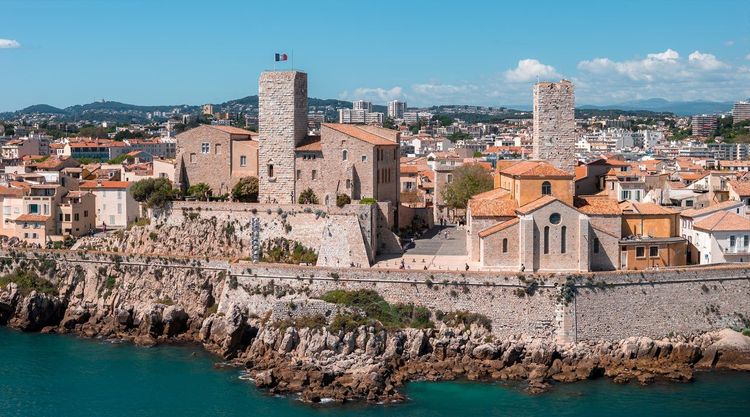
The château Grimaldi has dominated the old town from a rocky promontory occupied since Greek times. Once the residence of the lords of Antibes and later of its bishops, it has housed the Musée Picasso since 1966, where the artist set up his studio during the autumn of 1946 to paint part of the series La Joie de vivre.
Allow about an hour with children over 6: the rooms are not huge, the colourful ceramics and large frescoes easily catch younger visitors' eyes, and the terrace overlooking the sea provides a welcome break before moving on. The museum regularly runs workshops during school holidays, by reservation and with limited places: a quick call to reception before visiting avoids disappointment. Budget-wise, expect around 8 euros per adult, with free entry for minors — a price to confirm with the tourist office as it varies depending on current temporary exhibitions.
The Cathédrale Notre-Dame and the Chapelle Saint-Bernardin

Two minutes' walk away, the cathédrale Notre-Dame-de-l'Immaculée-Conception blends several styles: a Romanesque bell tower, a Baroque façade added in the 18th century, and a fairly plain interior that won't bore children in ten minutes.
A little further on, the 16th-century chapelle Saint-Bernardin rarely takes more than five minutes to visit but is worth a detour for its gilded altarpiece. Neither requires a reservation, making them easy stops to slot in between ice creams.
Lanes, Ramparts, and the Safranier Quarter
The game with children is to follow the ramparts from the cathedral to the market, cutting through narrow lanes that still bear the names of long-vanished trades. The Safranier quarter, one of the oldest cores of the town, stands out with its low, flower-adorned houses and its village-within-a-city atmosphere, much appreciated for a shady rest stop.
For children curious about archaeology, the Musée d'Archéologie (Bastion Saint-André, Avenue Général Maizière, 06600 Antibes, rated 4.1/5 on Google with 551 reviews), housed in the Bastion Saint-André, traces centuries of occupation through amphorae recovered from underwater excavations. The visit takes 30 to 40 minutes, a format well suited to children aged 7 and over, and the bastion itself, set facing the sea, offers a lovely viewpoint before heading towards the port.
You can head straight to the port by walking along the rampart, without going back through the town centre: the route descends gently and is manageable with a pushchair, except for a few steps near the bastion. Bring a water bottle — public fountains are scarce in the lanes. The audio-guided tour passes through the Safranier Quarter and the old town, a handy landmark for this stretch.
Fort Carré and Port Vauban: Must-See Seafront Landmarks
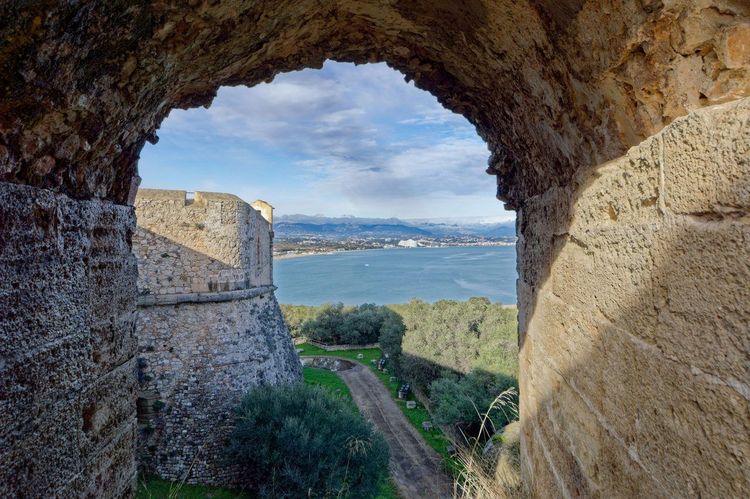
No visit to Antibes is complete without a trip along the seafront, where two landmarks face each other just a few hundred metres apart: a 16th-century fortress and one of the largest leisure marinas in the Mediterranean.
Fort Carré: the Climb and Panoramic Views over the Bay
Built in the mid-16th century and later reinforced by Vauban, Fort Carré can only be visited on a guided tour at set times, which means checking the day's schedule before arriving with young children.
The ascent follows a long open-air ramp with little shade: bring hats and water if you go up in the middle of the day in summer. At the top, the panorama takes in the entire bay of Antibes as far as the Cap, and on a clear day in winter, the snow-capped Alpine peaks. The visit lasts about 45 minutes and is suitable for children from around 6 or 7 who can manage the climb without being carried. With a pushchair, it's better to stay on the esplanade below, which has a flat seaside promenade. Entry is modest — a few euros per adult with free admission for younger children — but opening hours and the weekly closing day change by season: a quick call to the tourist office avoids a wasted trip. A local tip: go on the first morning tour, before the sun bears down on the shadeless climb.
Port Vauban and the Le Nomade Sculpture
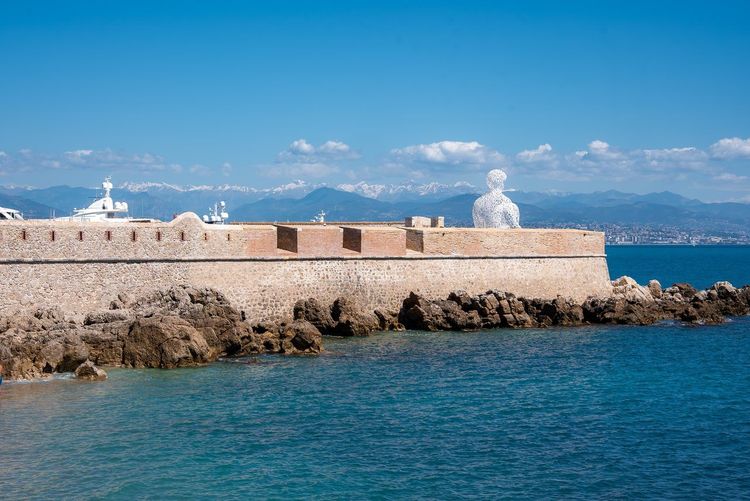
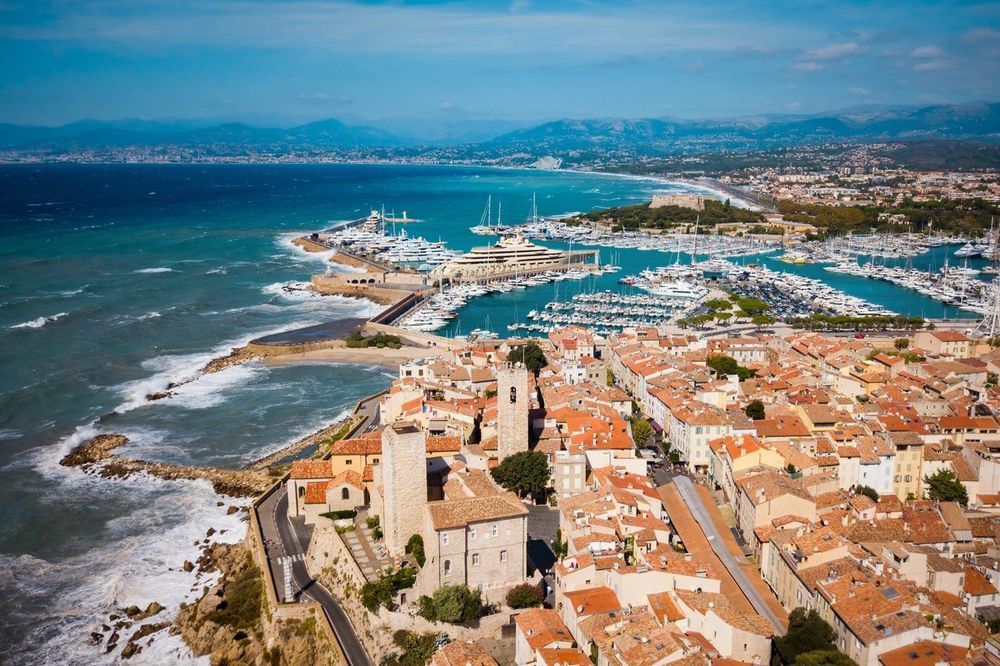
Port Vauban lines up over a thousand moorings with classic sailing boats and superyachts that impress children keen to guess the size of the boats moored at the Quai des Milliardaires.
On the Bastion Saint-Jaume at the entrance to the port, the sculpture Le Nomade by Jaume Plensa — a white silhouette formed from hollowed-out letters — can be admired freely and for free: it has become a must-have photo stop for many passing visitors.
On some summer evenings, the yachts switch on their full floodlights and cast an almost theatrical glow over the quays: an evening stroll after dinner remains one of the simplest and most free things to offer children during a stay in Antibes. The walk between the fort and the port is entirely flat, following the ramparts on the seaward side: allow 20 minutes without stopping, considerably more with children who will want to pause at every boat. The audio-guided tour links Fort Carré to Port Vauban, passing by the Bastion Saint-Jaume along the way.
Aquasplash and Adventure Golf: Antibes's Thrill Parks

For a long time, the question didn't even arise: a full day of the stay was spent at the marine zoo. Since 2025, the programme has been reorganised around the two neighbouring leisure parks that remain open on the same site on avenue Mozart, on the border with Biot.
Marineland: What You Need to Know Before Planning Your Stay
Best to say it clearly, because most online guides have not been updated: Marineland, which billed itself as Europe's first marine zoo, permanently closed on 5 January 2025. The pools are no longer open to the public and the animals have been transferred. If a blog is still praising the dolphin shows or a combined two-day ticket, it is describing a reality that no longer exists. There is no point blocking out a full day and a ticket budget for this: better to redirect it towards Aquasplash (306 Avenue Mozart, 06600 Antibes, rated 3.2/5 on Google with 4,874 reviews) in summer, or towards a trip to Monaco and its oceanographic museum if your children are fascinated by marine life.
Aquasplash, the Water Park with Giant Slides
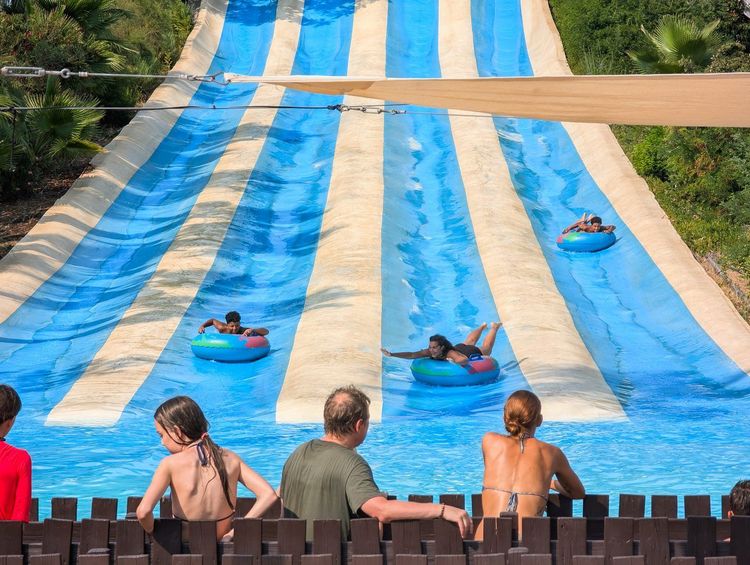
On the same site, Aquasplash opens only in the summer season, generally from June to early September, with around ten slides including some with vertiginous drops. The wave pool and the lagoon pool, which are calmer, are better suited to children under 6, while teenagers head straight for the adrenaline rides.
A dedicated area, designed as a pirate island, is reserved for toddlers with shallow water play features. Bring water shoes: the ground around the pools heats up fast in the middle of a summer day. The exact season opening dates and prices change from year to year, particularly since the site was reorganised: check them on the park's official website before locking in your day.
Adventure Golf and Complementary Activities
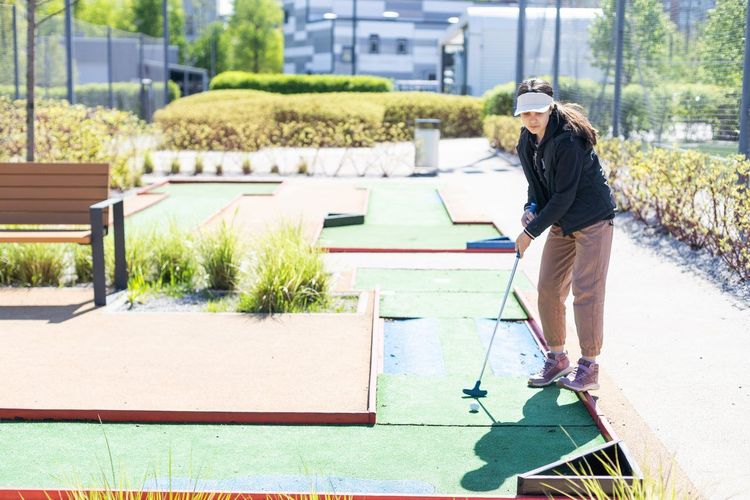
To extend the outing without heading back straight away, Adventure Golf offers a mini-golf course through recreated tropical vegetation — an activity that appeals just as much to 5-year-olds as to parents looking for a less intense break than the slides.
The course takes about an hour to complete and lends itself well to a late afternoon once the heat has dropped. The site's car park, which is paid, fills up quickly in July and August: arriving before 9:30 am avoids a good half-hour wait, and the urban bus network serves the area from the centre of Antibes in season. To summarise by age group: the calm Aquasplash pools are open from age 3, the big slides have a minimum height displayed at the entrance to each attraction, and Adventure Golf really becomes fun from age 5, when children can hold a club properly. Book your tickets online rather than at the booth: you avoid the morning queue, which is usually the longest of the day.
The Best Beaches in Antibes and Juan-les-Pins for Families
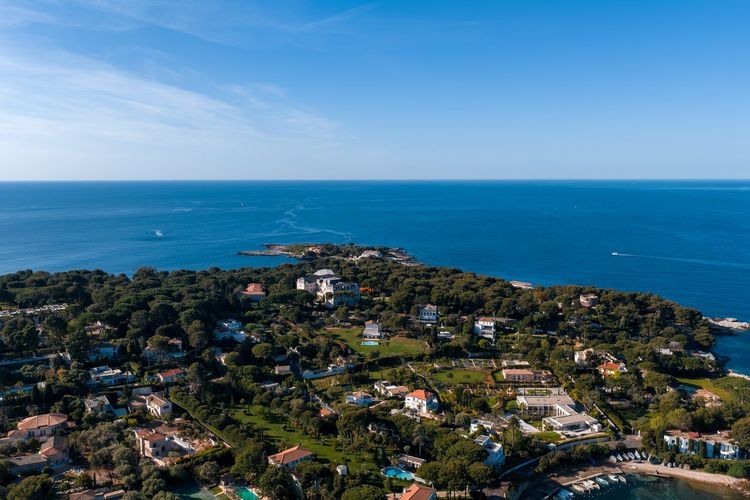
Between the rocky cape and the bay of Juan-les-Pins (Boulevard Charles Guillaumont, 06160 Juan-les-Pins, rated 4.4/5 on Google with 2,245 reviews), Antibes lines up beaches with very different profiles, allowing you to match your choice to the children's ages rather than relying on chance. The Ryo article on the best beaches in Antibes covers each cove in detail; here is the essential information for a family outing.
La Gravette Beach: Fine Sand and Calm Waters
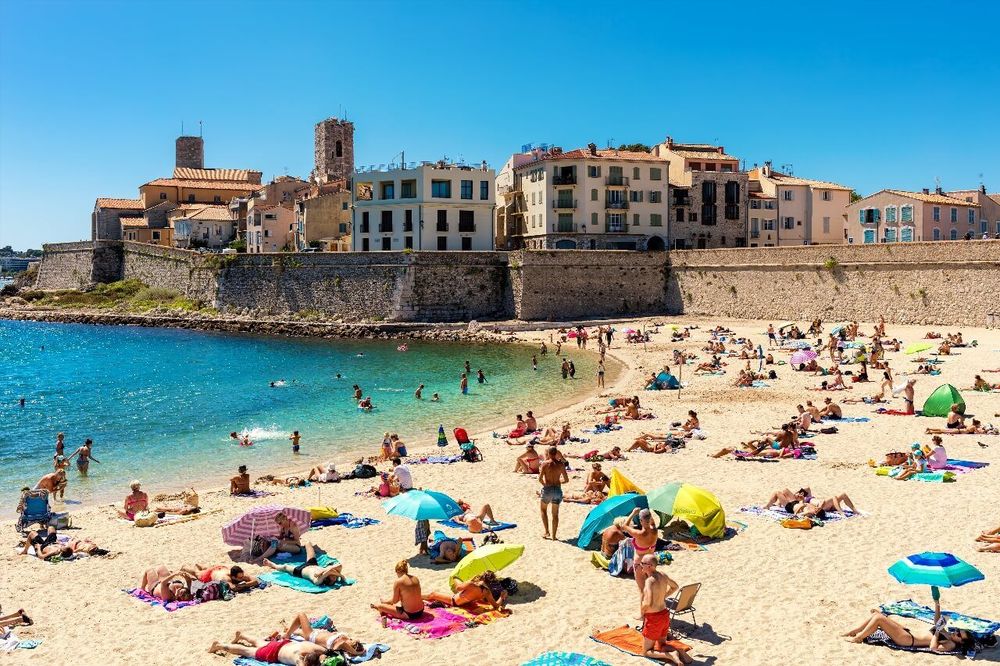
Just steps from port Vauban, la Gravette beach is the only fine-sand beach in the town centre, with a very gently sloping entry into the water that reassures parents of young children.
Supervised in season and equipped with showers and toilets, it is accessible on foot from old Antibes — a real advantage when you don't want to get back in the car after a morning of sightseeing. The space is limited, however, and fills up quickly in July and August: it's best to arrive before 10 o'clock.
The Coves of Cap d'Antibes and the Coastal Path
Wilder in nature, the coves dotted along the Cap d'Antibes coastal path are better suited to children who are used to walking and clambering over rocks. The water is noticeably clearer than on the sandy beaches, but access sometimes requires descending a few steps cut into the rock.
Opt for closed shoes rather than flip-flops, and bring a bag with plenty of water: shade is scarce along a good portion of the route.
Juan-les-Pins: Fine Sand and Watersports
On the other side of the peninsula, Juan-les-Pins offers long stretches of fine sand with a lively atmosphere and a packed range of watersports: paddleboarding, catamaran, inflatable towed rides, and sun lounger rental.
This is the resort with the most sailing schools geared to children from age 7 or 8, with weekly courses in July and August. The evening atmosphere is more festive, with beach bars keeping the energy going until late — something to factor in if you're staying nearby with young children who go to bed early.
A word on practical matters, which are often decisive. Beach supervision generally runs from June to September, with hours posted at the lifeguard stations. Several Antibes beaches have Handiplage access, with water-entry mats and floating chairs available on request — a valuable option if one of your children uses a wheelchair. Parking, on the other hand, remains the summer headache: car parks near la Gravette and Juan-les-Pins are full by 10:30 am on hot days, so cycling or public transport is the smarter choice. And a child who discovers their first jellyfish washed up on the sand will probably remember that moment more vividly than the name of the beach — which is no bad thing. The next morning, the audio-guided tour of Antibes links Gravette Beach to Port Vauban at an easy pace.
Nature Walks, Cycling, and Gardens around Cap d'Antibes
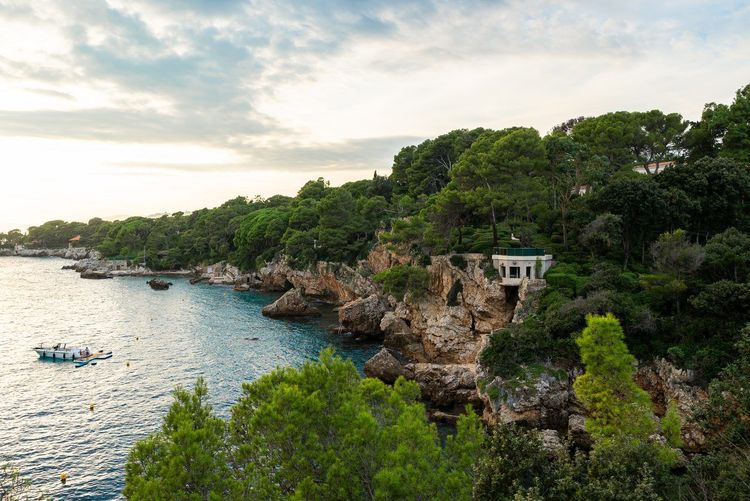
Between museum visits and beach afternoons, Cap d'Antibes offers a true breath of fresh air, provided you choose the right format for your children's ages.
The Cap d'Antibes Coastal Path
The full loop of the coastal path, also known as the chemin de la mer, covers around 5 kilometres and hugs the headland between coves, pine groves, and villas hidden behind high walls. With young children, it is better to stick to a section — for example between la Garoupe beach and the lighthouse — rather than the full route, which takes 2.5 to 3 hours.
The ground is sometimes uneven, with rocky sections and a few steps: wear closed shoes and avoid the pushchair on this particular stretch of the Cap. Several shaded benches are dotted along the Garoupe-side of the route, making it easy to break up the walk without worrying about dehydration. It's best to set off early in the morning or in the late afternoon: the sun beats hard on the white rocks between noon and 4 pm.
Cycling through the Old Town and Parc Exflora
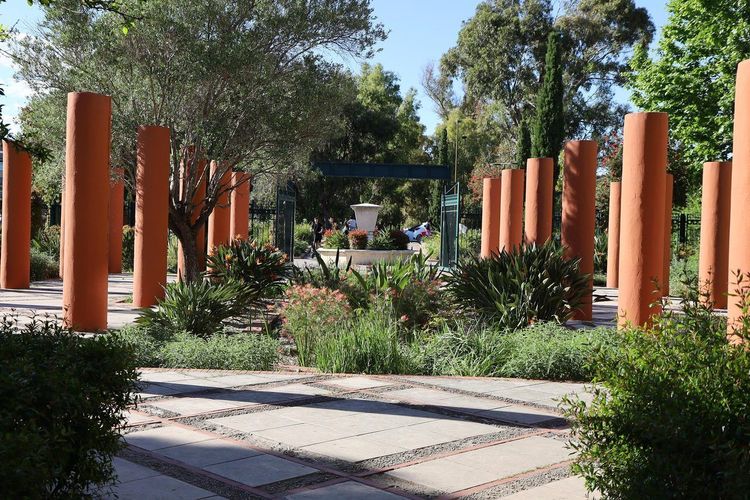
Antibes is generally flat, which makes cycling easy, including with a child trailer. Several hire shops offer electric bikes and child seats by the day — a practical option for covering more ground without wearing out little legs. Expect around 15 euros a day for a standard bike and double that for an electric model with child fittings.
Parc Exflora, laid out on former flower nurseries, offers a shaded green space with sea views — ideal for a picnic break between two stops.
Gardens and Panoramic Viewpoints
Less well known to passing visitors, the botanical garden of Villa Thuret, owned by an agronomic research institute, brings together several thousand plant species and varieties introduced to France since the 19th century, including some of the oldest remarkable trees in the country. Entry is free, but opening is limited to weekdays: check the calendar before visiting on a Sunday.
On the Juan-les-Pins side, the parc de la Pinède (Avenue Guy de Maupassant, 06160 Juan-les-Pins, rated 4.5/5 on Google with 109 reviews) runs along the seafront beneath umbrella pines, with a playground and enough shade for a midday picnic without suffering in the heat.
For panoramas, three stops require minimal effort: the Garoupe plateau and its lighthouse, which overlooks the entire bay and can be reached by car or after a short but steep climb; the Batterie du Graillon on the Cap road, with its plunging view over the rocks; and the rampart walkway on the old-town side at sunset. Enough to round off a nature day without requiring great physical fitness.
In-Town Activities and Rainy-Day Options
A stay in Antibes is not limited to the great outdoors: a few options allow you to keep children entertained when the mistral picks up or the sky clouds over — which does happen on the Côte d'Azur too.
Azur Arena and Indoor Sports Activities
Azur Arena (92 Route de Biot, 06600 Antibes, rated 4.5/5 on Google with 803 reviews), Antibes's multi-sports venue, hosts professional basketball matches and, depending on the time of year, sessions open to the public or sports courses during school holidays.
The programme depends on the competition calendar: check directly with reception, as the information is poorly circulated online.
Art Workshops and Guided Tours
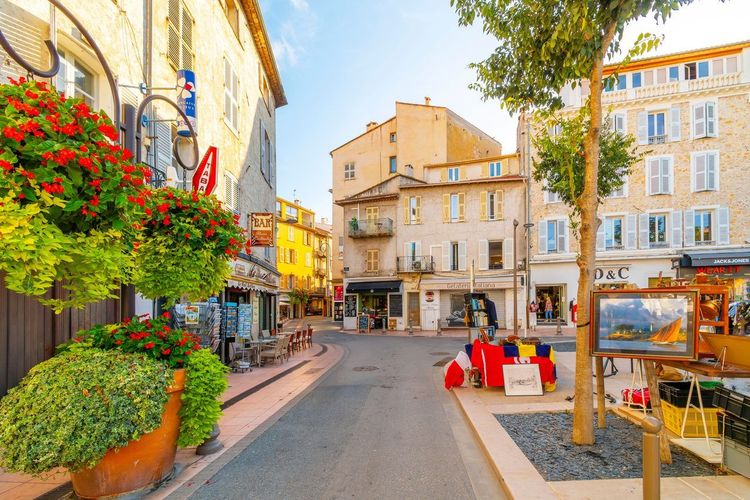
Several galleries and workshops in old Antibes offer introductions to ceramics or painting in short sessions, often on Wednesdays or during school holidays, in the spirit of the studio Picasso frequented in 1946. The tourist office also runs themed guided tours, sometimes in costume for children, which usefully replace a free wander when rain discourages walking through the lanes.
Museums, Indoor Games, and Evening Outings
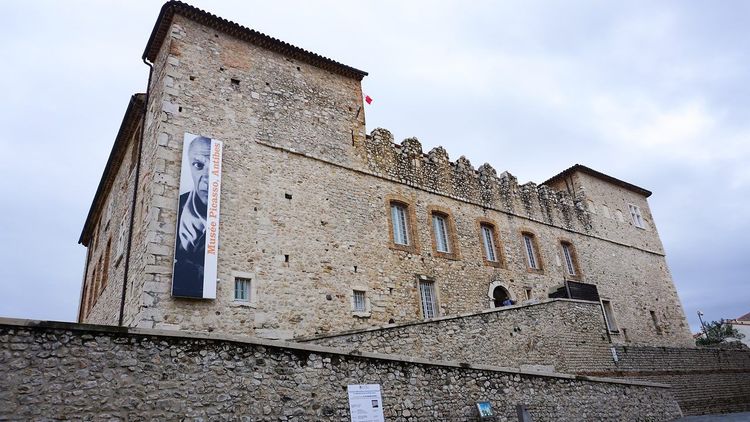
The Musée Picasso and the Musée d'Archéologie remain the go-to options for a rainy afternoon. For truly overcast days, head to Antibes Land, which brings together indoor mini-golf, an arcade and a bowling alley a few minutes from the centre. The cinema in the historic centre shows children's screenings during school holidays, with an air-conditioned auditorium that is welcome during heatwaves.
In the evenings, the Cours Masséna and the pedestrianised streets around the port are lined with restaurants and ice cream shops that stay open late, in an area where it remains easy to stroll with a pushchair after dinner. Several artisan gelato shops serve until 11 pm in summer: a scoop of ice cream is often enough to get a tired group moving for the last few metres back to the hotel. With teenagers, escape rooms near the port work well at the end of the day in a one-hour format. The Juan-les-Pins beach bars, meanwhile, are better suited to an evening out between adults once the children are in bed.
Provençal Market and Gastronomy: the Best Addresses
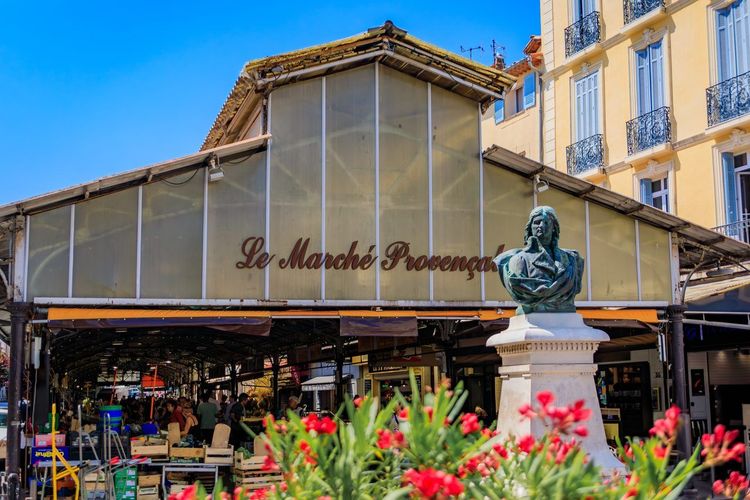
The Cours Masséna provençal market, set up under a metal-roofed hall, opens every morning except Monday out of season, and every day in summer. Children often enjoy identifying seasonal fruit and vegetables — from the first tomatoes of June to the late-summer figs — while parents negotiate a portion of socca or pissaladière to nibble on the go.
In the evening, the same hall transforms into a craft market with stalls selling jewellery, soaps, and ceramics. Other parts of the town host a weekly producers' market, usually on Saturday mornings — a good option for avoiding the tourist crowds of the town centre in high season.
Antibes stays faithful to Niçoise cuisine: chickpea-flour socca, salade niçoise, petits farcis, and courgette flower fritters feature on most menus. For a fuss-free meal, the pizzerias and crêperies in old Antibes offer children's menus at around 10 to 12 euros. Move 200 metres away from the quayside and the bill changes completely, without any loss in quality. Do reserve terrace tables on the Cours Masséna in high season though: they go quickly from 7:30 pm.
Day Trips from Antibes: Nice, Cannes, and the Côte d'Azur
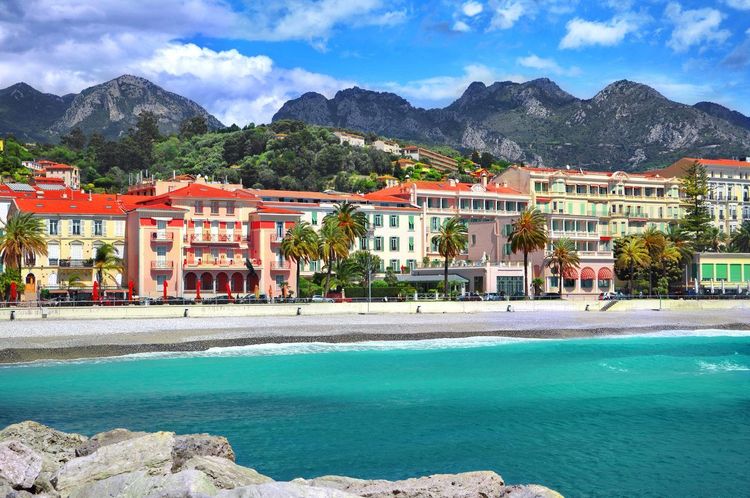
Antibes occupies a central position on the Côte d'Azur, less than 30 minutes from several destinations that complement a stay well, especially if you are spending more than three days in the area.
Nice, Cannes, and the Alpes-Maritimes with Children
Nice, about twenty minutes away by train, offers a Promenade des Anglais ideal for cycling and a free Natural History Museum on rainy days. Cannes, fifteen minutes away, is more appealing for its central beach and the Forville market, which is calmer than Antibes's in high season.
For a longer day, Monaco and its oceanographic museum is one of the most requested outings for children fascinated by sharks and turtles, just under an hour by road. The Alpes-Maritimes also concentrates several hilltop villages, such as Èze or Saint-Paul-de-Vence, within 45 minutes: cool lanes, artists' studios, and sea views from inland. Half a day is enough to visit one without tiring the youngest members of the group. From the port of Cannes, a sea shuttle also reaches the Îles de Lérins in under half an hour: Sainte-Marguerite lends itself well to a day trip, with peaceful beaches and shaded car-free paths.
Paragliding and Canyoning for the More Adventurous
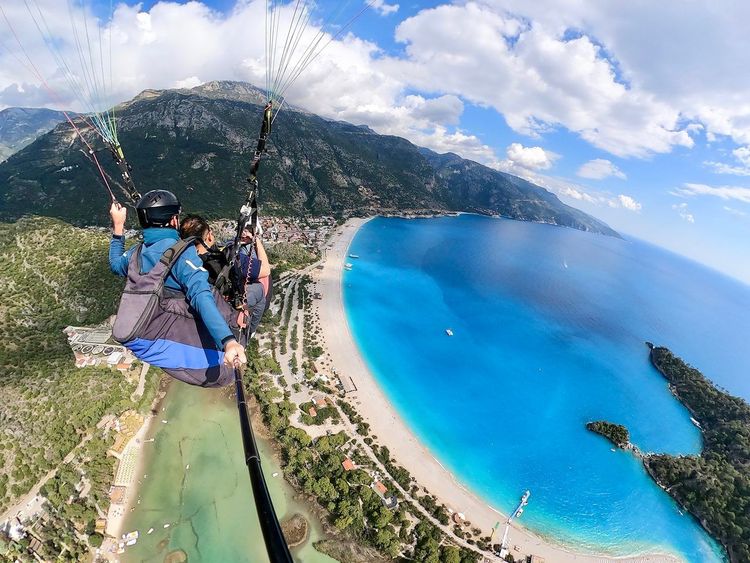
For teenagers seeking thrills, several operators in the hinterland offer a tandem paragliding flight over the bay, accessible from age 6 depending on the provider and the minimum weight required.
Canyoning in the Gorges du Loup, about 40 minutes from Antibes, is available in a discovery version accessible to children from 8 to 10 years old depending on the route, with professional supervision and equipment provided. Always check the minimum age and weight required by each operator before booking, as these thresholds vary significantly between providers.
To organise these outings without losing time on the road, take the train for Nice and Cannes — direct and frequent from Antibes station — and keep the car for the hinterland, which is less well served. One day is enough for Nice or Cannes; allow a full day to combine canyoning and the return journey, booking in advance as slots fill up fast in July and August.
Where to Stay in Antibes with Children: Hotels and Campsites
The choice of accommodation depends mainly on your priority: proximity to old Antibes for sightseeing on foot, or direct beach access to minimise journeys with young children.
Several town-centre hotels offer interconnecting rooms or suites with a sitting area, which are far more comfortable than a standard room for four. Expect roughly 120 to 200 euros per night in low season for this type of room, and double that in July and August.
On the camping side, sites between Antibes and Golfe-Juan offer two- or three-bedroom mobile homes, a swimming pool, and sometimes a supervised children's club in high season. Check the actual distance to the beach before booking: some campsites advertised as close to the sea in fact involve 15 to 20 minutes' walk with beach gear. The most sought-after addresses, particularly those with a pool or a children's club, are often booked from January for the following summer.
Practical Information: Budget, Transport, and Best Time to Visit
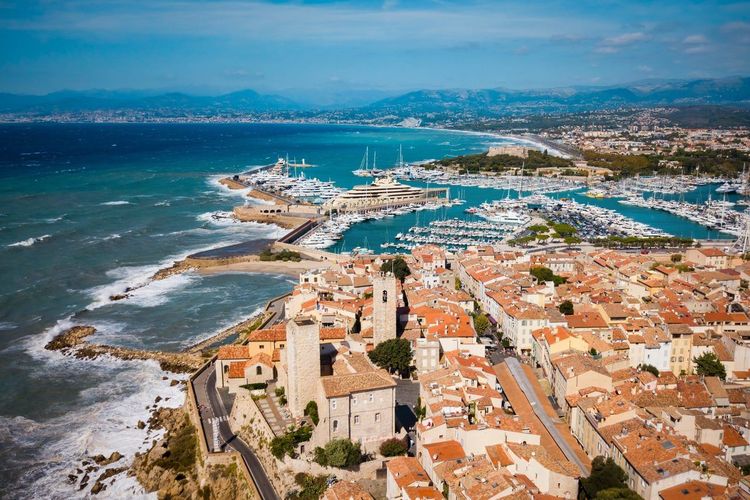
Three questions come up consistently before any stay: when to go, how much to budget, and how to get around once you're there.
For timing, June and September offer the best compromise: the sea is already or still warm enough for swimming, prices remain lower than in July and August, and the beaches are reasonably uncrowded. July and August guarantee dry weather but come with the highest prices and maximum visitor numbers. April, May, and October are an option if you have flexibility on school dates: temperatures already allow you to enjoy walks and terrace dining, even if swimming takes some determination.
On the budget side, a day at Aquasplash for four people comes to a ballpark figure of 110 to 140 euros in tickets alone, excluding meals — to be confirmed against the current year's pricing. A beach and walking day, by comparison, costs almost nothing beyond sun lounger rental and ice creams, which allows you to alternate both formats over a week without blowing the budget. Also remember to ask about discounts for large families at museums and parks: they often exist but are not always applied automatically at the ticket desk.
For getting around, Antibes is largely walkable in the old town and along the seafront, but a car or bike remains useful for reaching Juan-les-Pins, the leisure park area, or the Gorges du Loup. The Envibus network covers the whole town, with direct lines from the centre to Juan-les-Pins and the north of the city — a simple alternative to driving during the busy summer period. Day tickets become more economical from the second journey onward. Parking in the historic centre is difficult in summer: use peripheral car parks rather than circling around looking for a space. Finally, budget specifically for sunscreen and water: between Cap walks and water park days, consumption rises fast when temperatures exceed 30 degrees during the day.
For length of stay, three full days are enough to cover old Antibes, a beach day, and a park or coastal hike day, while a week allows you to add Nice, Cannes, or the hinterland at a relaxed pace.

FAQ
How Many Days Should You Plan to Visit Antibes with Family?
Three full days are enough to cover the essentials: one day for old Antibes and the seafront, one day for the beaches or the Cap d'Antibes, and one day for Aquasplash in summer or an excursion off-season. With a week, you can add Nice, Cannes, or the hinterland without rushing the children's pace.
Is Antibes Worth Visiting with Children?
Yes, absolutely: the town combines a compact heritage that is easy to explore on foot, direct access to the sea, and beaches with varied profiles, from the very fine sand of la Gravette to the coves of the Cap. The closure of the marine zoo in 2025 removed a major attraction, but the offer remains dense for all age groups within a small area.
Is Marineland Still Open in Antibes?
No. The Marineland marine zoo permanently closed its doors on 5 January 2025 and no longer welcomes visitors. On the same site, the Aquasplash water park and Adventure Golf continue to operate in season, with opening dates and prices to check each year before booking.
What Budget Should You Plan for a Day in Antibes with Children?
A beach and walking day costs very little, excluding sun lounger rental. A day at Aquasplash for four people comes to around 110 to 140 euros in tickets, excluding meals. Add 30 to 50 euros for food depending on the number of children and the type of restaurant chosen.
Where to Go on the Côte d'Azur for a Day Trip from Antibes?
Nice and Cannes are reachable in 15 to 20 minutes by train and are perfect for a day out. Monaco and its oceanographic museum require a slightly longer journey but remain a reliable choice for children fascinated by marine life. Hilltop villages such as Saint-Paul-de-Vence or the Îles de Lérins are great additions to a longer stay.
What Is the Best Time to Visit Antibes with Family?
June and September offer the best compromise between pleasant weather, warm enough sea, and reasonable crowds. July and August guarantee dry weather but come with higher prices and more people on the beaches and in queues.
How Do You Get around Antibes with Children?
Old Antibes and the seafront are easy to explore on foot. For Juan-les-Pins, the leisure park area, or excursions into the hinterland, a car or the Envibus bus network are the most practical options, with peripheral car parks to avoid the parking difficulties in the centre in summer.
Visiting Antibes with family ultimately means accepting a change of pace several times a day: a morning in the lanes of old Antibes, an afternoon with your feet in the water at la Gravette or on the Cap coastal path, an evening watching the yachts light up along port Vauban. Few towns of this size on the Côte d'Azur offer such a range without requiring multiple car journeys.
To plan your first day there in concrete terms, the Antibes audio walk remains a great starting point: the Ryo audio guide connects the main sites of old Antibes and the seafront on foot, in an order designed to minimise back-and-forth with a pushchair or children who start to tire by the end of the morning.