© Shutterstock
 Votre guide Ryo
The Best Beaches of Antibes and Juan-les-Pins in 2026
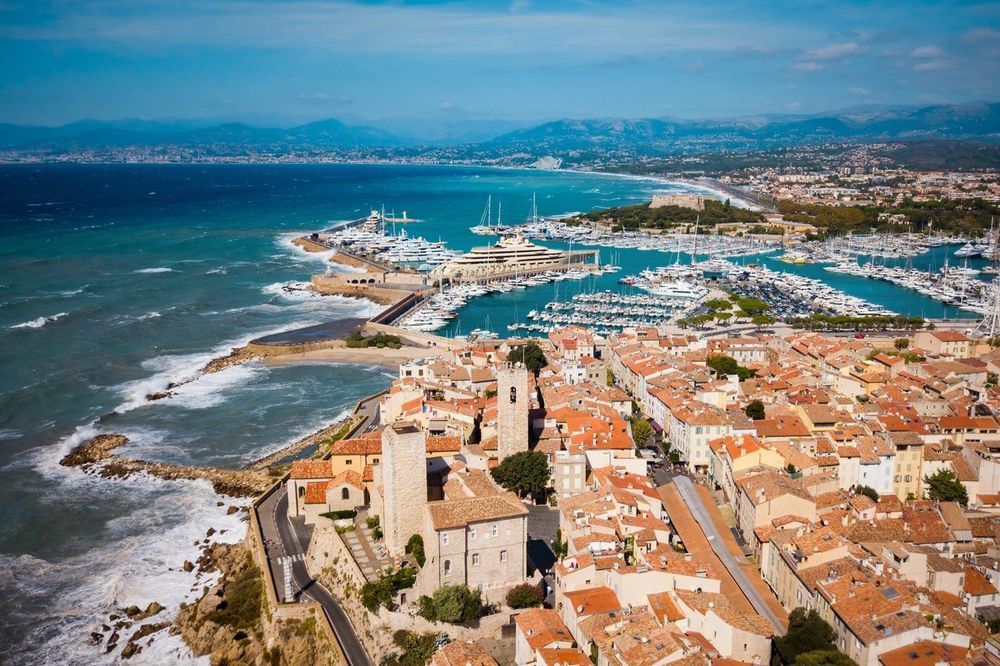
Antibes may be one of the most photographed towns on the Côte d'Azur, yet its beaches remain surprisingly diverse: from the fine golden sand of la Gravette nestled against the ramparts of the Vieil-Antibes, to the pristine pebbles of la Garoupe sheltered by the Cap's pine forest, to the long sandy stretches of Juan-les-Pins that Fitzgerald frequented in the roaring twenties. Within just a few kilometres of coastline, the town brings together radically different atmospheres — urban beach and wild beach, intimate cove and lively family beach, paid beach clubs and completely free swimming. The Ryo audio-guided tour Cap sur la French Riviera follows a good stretch of the coastline across 22 audio tracks and 3 km of walking.
This guide covers the nine main beaches of Antibes and Juan-les-Pins in 2026: for each one, the seabed texture (sand, pebbles, or mixed), access, facilities, and what truly sets it apart from the others. You will also find a sand/pebble comparison to help you choose based on your preferences, along with practical directions for reaching each area from the town centre.
La Gravette: the Free Sandy Beach at the Foot of the Ramparts
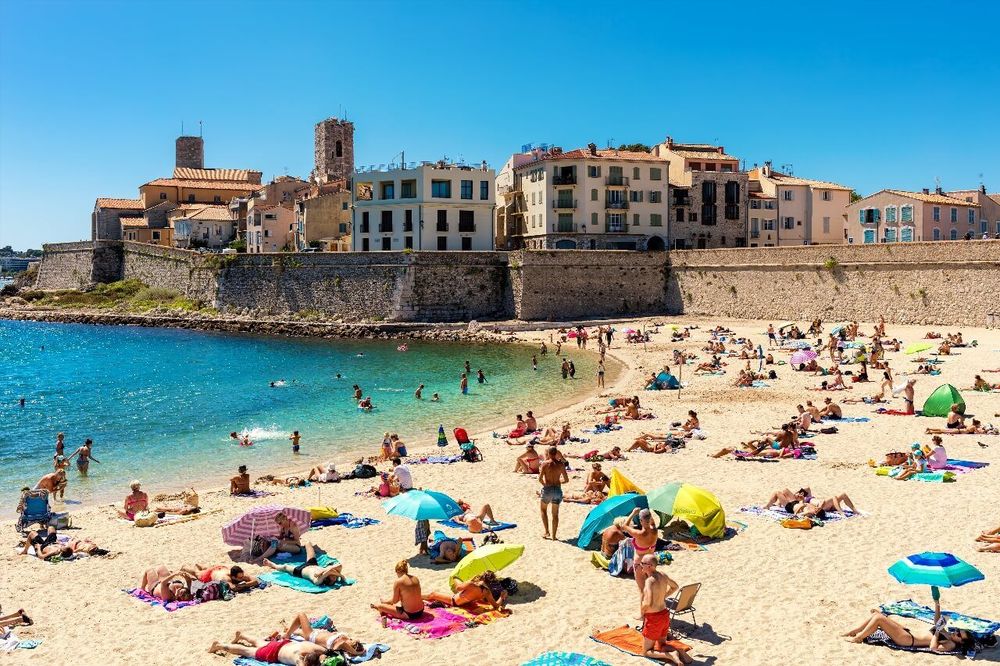
The plage de la Gravette occupies an almost surreal position: wedged between the fortified old town and Port Vauban, it stretches for around 350 metres of golden-brown fine sand, entirely free and reachable on foot from the Marché Provençal in five minutes. This is the quintessential town-centre beach of Antibes — not a resort beach, but a stretch of coastline embedded in the daily life of the locals.
The seabed is sandy for about fifty metres from the shore, with a very gentle entry into the water — ideal for children. The depth increases gradually with no sudden drop. The beach faces due south, guaranteeing sunshine all day, but that also brings its one drawback: in July and August it is packed from 10 a.m. onwards. Arrive before 9 a.m. or after 6 p.m. to enjoy the setting without the crowds.
La Gravette benefits from lifeguard supervision in season (mid-June to mid-September), public toilets, and cold freshwater showers. There are no restaurants directly on the beach, but the terraces of the Vieil-Antibes are a two-minute walk away. The visual backdrop — the bell tower of the Église de l'Immaculée-Conception, the ochre ramparts, the Tour Grimaldi — makes it one of the most photogenic beaches on the entire Riviera, in any category. Our audio walking tour sets off just behind it, through the old town and along Port Vauban.
La Salis: Pine Trees, Alpine Views, and a Sandy Seabed
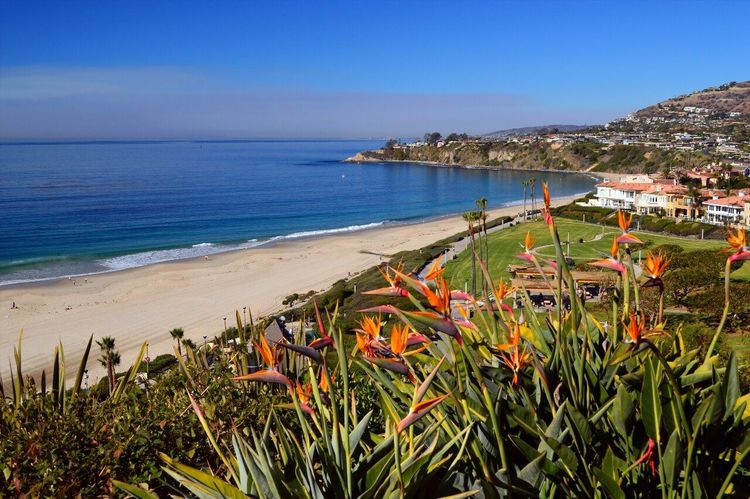
The plage de la Salis (Avenue Jules Grec, 06600 Antibes, rated 4.3/5 on Google from 4,434 reviews) stretches for around 800 metres on the town side of Cap d'Antibes. It is one of the most popular beaches among local families for a simple reason: it combines several qualities without overdoing any of them. The seabed is mixed — sand and small pebbles — but entry into the water remains comfortable. Parking is available (paid, around €2/hour in summer), and the pine forest bordering the back of the beach provides natural shade that other Antibes beaches simply do not have.
Its east-southeast orientation brings remarkable morning sunshine, with a panorama of the snow-capped Alps as a backdrop on clear days. La Salis offers the most spectacular view of the Alpine peaks from the entire Antibes coastline — a striking contrast between the turquoise sea and summits rising above 3,000 metres. Several local photographers make it their favourite spot for sunrise shots.
Part of the beach is equipped with private concessions (sun loungers and parasols for hire, a beach bar-restaurant), while the northern half remains freely accessible. Lifeguard supervision is provided in season. Worth noting: a cycling path runs along the back of the beach, making it easy to reach Cap d'Antibes or the town centre by bike. Outside the peak summer period (July and the first half of August), la Salis remains remarkably quiet for a beach as well-equipped as this one.
Plage de la Salis is often used as a starting point for a walk along the Cap d'Antibes coastal path — allow around 2 hours for the full loop around the Cap, with sweeping views over Antibes, Nice, and the Estérel.
La Garoupe: the Most Beautiful Beach on Cap d'Antibes
If you could only choose one beach in Antibes, la Garoupe deserves a place on your shortlist. Nestled on the eastern face of Cap d'Antibes, it stretches for around 500 metres and combines fine sand and small pebbles in a gently curved bay, sheltered from westerly winds and the mistral. The water here is among the clearest anywhere on the Côte d'Azur in this area — turquoise and emerald green depending on the time of day, with visibility often exceeding ten metres in good weather.
La Garoupe has a history. It was here that Gerald Murphy, friend of Picasso and model for Fitzgerald, helped revive the fashion for summer sea-bathing on the Riviera in the 1920s, a coast until then frequented mainly in winter. A small cultural revolution that turned the summer Côte d'Azur into a desirable destination rather than a curiosity. The Murphys settled nearby at the Villa America, where Fitzgerald was among their regular guests. This summery legacy gives la Garoupe a particular aura that its rivals simply do not have.
Today the beach is shared between several private concessions (including some of the most reputable in Antibes, offering high-end dining and attentive beach service) and free public sections. Sun loungers at the private establishments are expensive in high summer — expect €25 to €40 per day for a lounger depending on the venue — but the free stretches remain fully accessible. The calm water and gradually shelving seabed make it an excellent beach for snorkelling: bring a mask and snorkel to explore the rocks to the east of the beach.
Access is by car (paid parking on Boulevard de la Garoupe, often full from 10 a.m. in July–August), by bike along the coastal path, or on foot from plage de la Salis via the coastal trail (30–40 minutes). There is no direct bus from the centre of Antibes; opt for a bike or car in high season. The Ryo audio guide of Cap d'Antibes passes very close by and provides the historical context of this legendary beach.
The Grande Plage de Juan-les-Pins
Juan-les-Pins is part of the commune of Antibes, whose official name has been "Antibes Juan-les-Pins" since 1963, but it has its own identity — especially when it comes to its beaches. The Grande Plage de Juan-les-Pins sweeps for nearly one kilometre of blonde sand in a wide arc facing the open sea, with the Estérel massif glowing red in the background at sunset.
It is the longest sandy beach in the Antibes area and one of the few on the Côte d'Azur not bordered by a busy road. A pedestrian promenade runs along the back of the beach, villas and concession parasols alternate, and the atmosphere hovers between chic seaside resort and laid-back summer holiday. The water is choppier than at la Garoupe (west-facing exposure), but remains perfectly swimmable most of the time.
More than half the beach is occupied by private concessions in July–August, with prices that are relatively reasonable by Riviera standards. The free public section is concentrated at both ends. The centre of Juan-les-Pins (shops, restaurants, terraces) is less than a five-minute walk away.
A detail that guides often overlook: Juan-les-Pins has several smaller secondary beaches that are less crowded to the north-east, between the Grande Plage and Pointe de la Gallice. Plage de la Gallice (Boulevard du Littoral, 06160 Juan-les-Pins, rated 4.4/5 on Google from 1,293 reviews) in particular — sandy and well-exposed — draws a local crowd keen to avoid the most touristic spots. It is accessible by car from Boulevard du Littoral and benefits from reasonably priced parking.
Plage du Ponteil: Calm Waters and Turquoise Sea Between Juan and Antibes
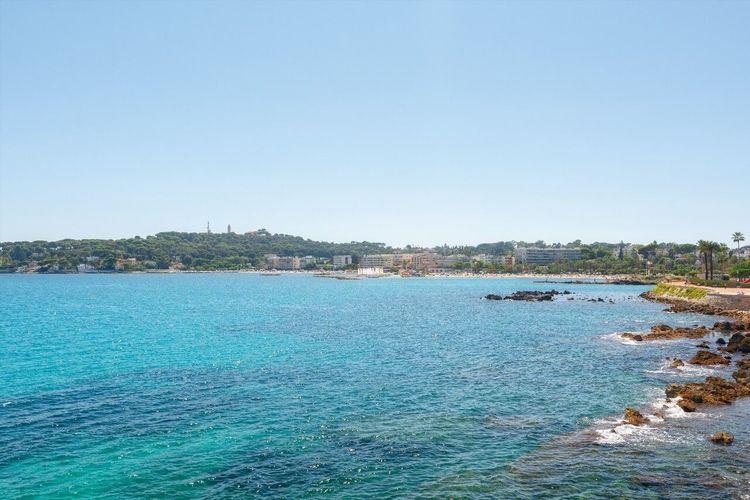
Between Juan-les-Pins and Antibes, plage du Ponteil (Avenue du Ponteil, 06600 Antibes, rated 4.3/5 on Google from 1,822 reviews) is the transitional beach — less well known than its neighbours, quieter, with a wooded setting and often clearer water. It stretches for around 300 metres of sand and flat pebbles in a gentle bay that softens any swell. Entry into the water is pleasant, with a seabed that deepens gradually.
What sets le Ponteil apart is the vegetation: umbrella pines and tamarisks line the top of the beach, creating natural shade that is rare along this stretch of coast. Visitor numbers remain moderate even at the height of the season, as the beach is slightly less accessible by public transport than la Gravette or Juan-les-Pins. There are no large private concessions here — just a few basic services and a neighbourhood beach atmosphere that locals are keen to preserve.
For those looking for a peaceful swim without the August crowds, le Ponteil is probably the best option between Antibes and Juan-les-Pins. Sunsets here are particularly beautiful, with a direct view over the Rade d'Antibes and the Îles de Lérins in the background.
La Baie des Milliardaires: a Secluded Spot on Cap d'Antibes
The Baie des Milliardaires (Chemin du Château, 06160 Cap d'Antibes, rated 4.5/5 on Google from 3,756 reviews) — an unofficial name, sometimes referred to as the south-facing side of la Garoupe — takes some effort to reach. Technically, this cove on the south-western face of Cap d'Antibes is partly private: several luxury properties give directly onto the water, and the villas overlooking the cliff rank among the most expensive real estate in France.
But the shoreline remains legally accessible to the public via the coastal path (sentier du Littoral), which runs along the edge of the private properties. The publicly accessible section is narrow, with large pebbles and flat rocks. The water is remarkably deep and transparent; some amateur divers consider it one of the best snorkelling sites on the Cap. Marine life is richer here than elsewhere: grouper, sea bream, and octopus frequent the rocks.
No facilities, no lifeguards, no nearby parking: this is a beach for hikers and lovers of wild nature. Allow 45 minutes on foot from plage de la Garoupe to reach it via the coastal path. The effort is worthwhile for the atmosphere and the quality of the water.
Plage du Crouton and Plage du Fort Carré
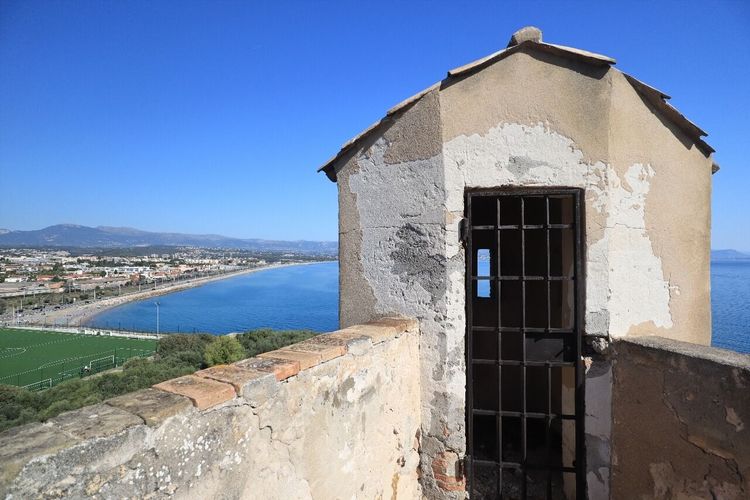
Two discreet beaches to the north of Antibes complete the coastal picture: plage du Crouton and plage du Fort Carré (Avenue du 11 Novembre 1918, 06600 Antibes, rated 4.5/5 on Google from 19 reviews).
Plage du Crouton is a fine sandy beach around 400 metres long, set in the Baie des Anges to the north-west of Antibes. It faces west, making it ideal for late afternoons and sunsets over the Estérel. The seabed is sandy, the water choppier than on the east-facing beaches of Cap d'Antibes (exposed to westerly winds), but the space is generous. It draws a family and local crowd.
The plage du Fort Carré takes its name from the 16th-century fort that towers above it. It is small (150–200 metres), mixed sand and pebbles, but its asset is unique: the silhouette of Fort Carré as a backdrop, the nearby harbour sailboats, and a surprisingly peaceful atmosphere given its proximity to the centre of Antibes. Access is easy from the Fort Carré car park. Lifeguard supervision is provided in season, and the depth increases quickly — not recommended for very young children without supervision.
Both beaches attract mainly regulars: fewer passing tourists than la Gravette or la Garoupe, more local families and visitors from Nice at the weekend. If you want to avoid the August crowds while keeping relatively easy access to the sea, they are well worth the detour.
Plage du Port: the Least Known Beach in the Town Centre
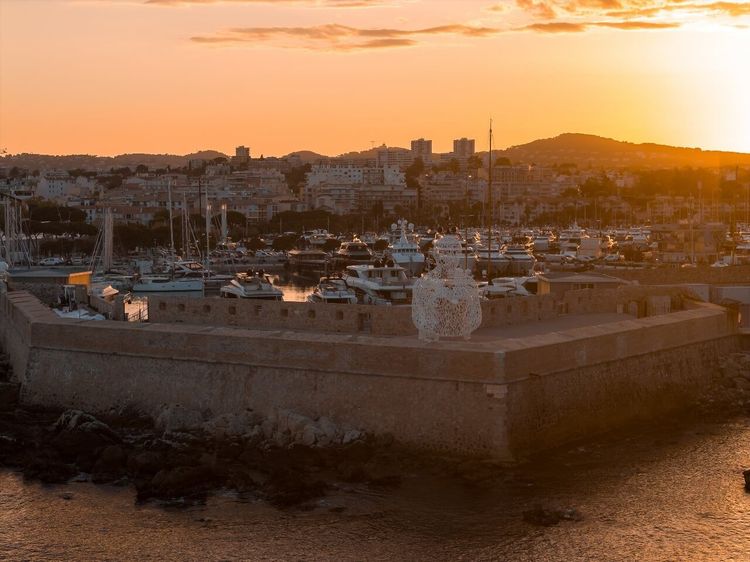
The plage du Port (Port Vauban, 06600 Antibes, rated 4.3/5 on Google from 25 reviews) is without doubt the least frequented beach in the centre of Antibes — and for good reason: it is tucked between the Port Vauban facilities and the breakwater, in a corner that tourists do not stumble upon by chance.
It is a small pebble beach (80–100 metres), with no concession or lifeguard in season. The water is clean but entry over the pebbles is a little tricky without water shoes. Its main draw: the view from the water over the giant superyachts of Port Vauban (one of the largest marinas in the Mediterranean). More of a curiosity than a holiday beach, but for a quick dip away from the crowds it does the job perfectly.
Sand or Pebbles in Antibes? A Practical Guide
This is one of the most frequently asked questions about the beaches of Antibes, and the answer depends on what you are looking for.
Sandy beaches (Gravette, Grande Plage de Juan-les-Pins, Gallice, Crouton, and partly Salis) are more comfortable for toddlers and for anyone who likes to lie down without a mat. Entry into the water is gentle and gradual. Downside: sand gets everywhere, and sandy beaches are generally more crowded.
Pebble beaches (partly Garoupe, Fort Carré, Port, Baie des Milliardaires) offer clearer water — pebbles naturally filter the seabed and reduce turbidity. The immersion feels cooler (no sun-warmed layer of sand at the surface), and crowds are often smaller. Water shoes or good sandals are essential for getting into the water comfortably.
Quick summary:
| Beach | Seabed Type | Free Access | Natural Shade | |---|---|---|---| | La Gravette | Sand | Yes | No | | La Salis | Mixed | Partial | Yes (pine forest) | | La Garoupe | Mixed/pebbles | Partial | No | | Grande Plage Juan | Sand | Partial | No | | Ponteil | Mixed | Yes | Yes | | Fort Carré | Mixed | Yes | No | | Crouton | Sand | Yes | No |
How to Reach the Beaches of Antibes in 2026
The town-centre beaches (Gravette, Fort Carré) are easily walkable from the Vieil-Antibes and the SNCF train station. From Antibes station, allow 10 minutes on foot to reach la Gravette.
For la Salis, la Garoupe, and Cap d'Antibes, the car remains the most practical option in low season, but car parks fill up in July–August. The recommended solution is bike-share or bike rental (Vélo Bleu d'Antibes, also available in Juan-les-Pins): the ride from central Antibes to la Garoupe takes around 20–25 minutes at a relaxed pace along the coast. The Ryo app, available offline, lets you follow the coastal route and discover points of interest along the way.
Envibus buses serve Juan-les-Pins and some coastal beaches, but summer frequencies and stops vary — check timetables before you set off. The 200 line (Nice–Cannes) stops in Antibes, less than 15 minutes' walk from the seafront.
From Nice, 40 minutes by train (TER, frequent departures). From Cannes, 10 minutes. The Côte d'Azur is well covered by the rail network, and a day trip to Antibes from neighbouring towns remains one of the most practical and affordable options.

FAQ
Which is the most beautiful beach in Antibes?
Plage de la Garoupe is generally considered the most beautiful beach in Antibes for the quality of its water, the clarity of the sea, and its preserved natural setting. Plage de la Gravette is often preferred for its exceptional position at the foot of the ramparts of the Vieil-Antibes. The choice depends on your priorities: crystal-clear water and nature (Garoupe) or historical and urban context (Gravette).
Are the beaches in Antibes free?
Yes, all beaches in Antibes have a free-access section. La Gravette, le Ponteil, le Crouton, and the Port beach are entirely free. La Salis and la Garoupe have private concessions (paid sun loungers and parasols) but retain free sections. Only access to concession facilities is paid.
Are there fine sand beaches in Antibes?
Yes. Plage de la Gravette, the Grande Plage de Juan-les-Pins, plage du Crouton, and partly plage de la Salis are sandy. The beaches of Cap d'Antibes (Garoupe, Fort Carré) are mostly pebbly or mixed.
Can you snorkel in Antibes?
Absolutely. Plage de la Garoupe and the Baie des Milliardaires are the two most renowned snorkelling spots in Antibes, with underwater visibility that can exceed 10 metres in good weather. The rocks to the east of la Garoupe are home to varied marine life (grouper, sea bream, octopus). Bring your own equipment; mask and snorkel rentals are available at some concessions at la Garoupe.
When are the beaches of Antibes least crowded?
June (before the 14th) and September are the best periods: the sea is already warm (22–25 °C in September), the beaches are less packed than in July–August, and private concessions are still open. Outside the swimming season (before June, after October), the beaches are almost deserted but some services close.
How do you get between the beaches of Antibes in summer?
Cycling is the most practical option for getting between beaches in summer. The coastline between Antibes and Cap d'Antibes can be covered by bike in 20–25 minutes. Envibus buses serve Juan-les-Pins and some areas, but frequencies vary. By car, expect full car parks from 10 a.m. in July and August.
Exceptional Beaches and a Town to Explore Endlessly
The coastline of Antibes and Juan-les-Pins offers a rare diversity for a medium-sized town: fine sand in the town centre, crystal-clear water on the Cap, wild coves reachable on foot, isolated pebble beaches far from the crowds. Each area has its own character, its regulars, its ideal time of day.
If you want to extend your discovery beyond the beaches, the Ryo audio-guided tour Cap sur la French Riviera takes you through the historic heart of Antibes across 22 audio tracks — from the Marché Provençal to Vauban's ramparts, via the Musée Picasso and the lanes of the Vieil-Antibes. A way to understand why this town has fascinated travellers for two centuries, well beyond its beaches.