© Shutterstock
 Votre guide Ryo
What to See Around Antibes: Old Town, Cap, and Perched Villages in 2026
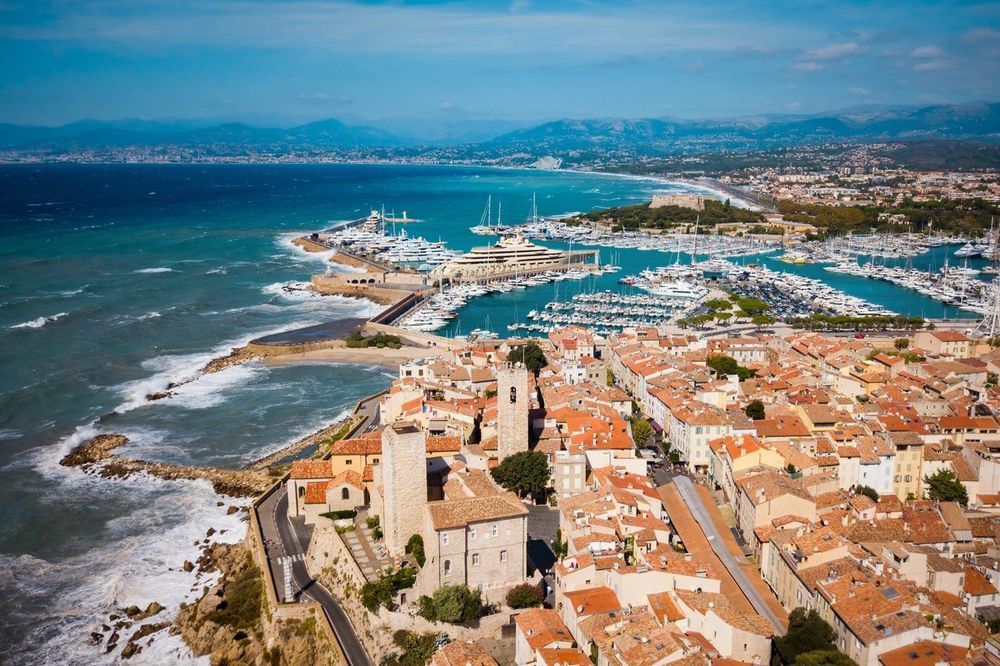
Wondering what to see around Antibes already hints at the answer: on one side, a fortified city where Picasso set up his easel in 1946; on the other, a Cap planted with umbrella pines and coves that are almost deserted outside of August. From the ramparts of Old Antibes, the view shoots straight to the snow-capped Alps on a mistral day, and to the yachts of Port Vauban the next when sea mist erases the horizon. Few towns on the French Riviera offer such contrast in so few square kilometres. The Ryo audio guide of Antibes lets you connect these two faces of the city without getting lost in the alleyways.
The nearby hinterland adds five perched villages to the equation, each with its own signature: Saint-Paul-de-Vence with its artists' studios, Èze suspended 427 metres above the Mediterranean, Gourdon clinging to its cliff, Biot and its glassblowers, Tourrettes-sur-Loup and its violet fields. Add a boat trip to the Lérins Islands, a Provençal market that opens at 6 a.m., and a seaside resort — Juan-les-Pins — where jazz still echoes every July: this guide covers everything, from the 16th-century Fort Carré to the tables serving the best socca in town. The Cap sur la French Riviera audio-guided tour also connects the Provençal market to Port Vauban, for a first, narrated take on the area.
Old Antibes, Best Explored on Foot
Antibes is above all a city to be explored on foot, and Old Antibes is the logical starting point: a quadrilateral of ochre alleyways squeezed between the ramparts and the harbour, where it is impossible to get lost for more than ten minutes.
Old Town, Alleyways, and the Provençal Market
The alleyways of the old town climb gently from the seafront to the Place Nationale, lined with 17th-century facades and blue shutters that gave the city its nickname, "la belle endormie" (the sleeping beauty). In the morning, head to the Provençal market set up on the Cours Masséna beneath a 19th-century iron-and-glass hall: flowers, fish caught at dawn, goat's cheeses from the hills of Grasse, and homemade tapenade fill the stalls until 1 p.m., six days a week.
A little further south, the commune du Safranier forms a village within the village: a few pedestrian streets around a small square where residents have replanted vines and potted orange trees. There are fewer shops here than on the Cours Masséna, but the atmosphere is noticeably more local, especially in the late afternoon when the shutters reopen after the siesta.
Château Grimaldi and the Picasso Museum
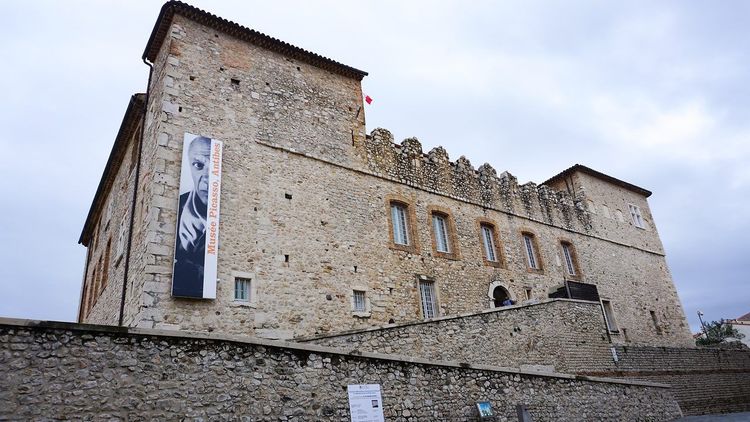
The Château Grimaldi dominates the seafront atop ancient Greek and Roman ramparts. The residence of the lords of Antibes until the 16th century, it has housed the Picasso Museum since 1966 — the first museum in the world dedicated to the artist during his lifetime. Pablo Picasso worked here for six months in 1946, in a studio lent by the city, and donated in return a large part of the works he produced there: Woman with Sea Urchin and Ulysses and the Sirens sit alongside ceramics, for a collection of more than 200 pieces.
Allow an hour for the visit, a little longer if you linger on the terrace overlooking the sea, accessible free of charge from the garden side even without a ticket. The museum closes on Mondays and is fully booked on some summer Saturdays: booking your time slot online avoids the queue at the ticket office.
Notre-Dame Cathedral, Chapelle Saint-Bernardin, and Fort Carré
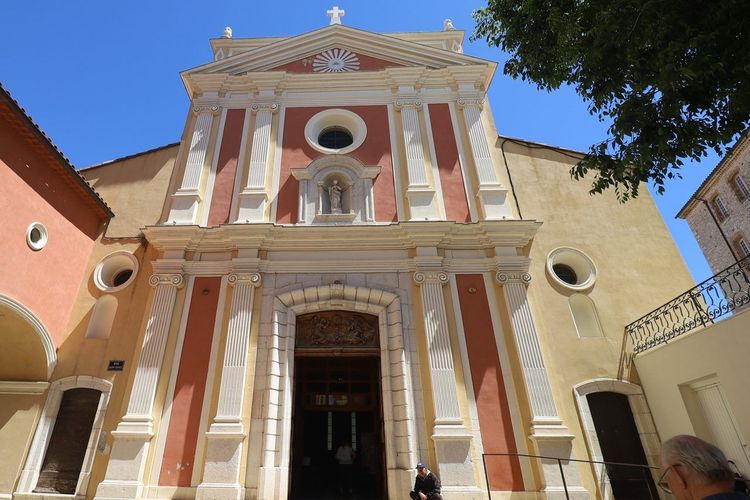
Just steps from the château, the Cathédrale Notre-Dame-de-l'Immaculée-Conception blends styles without apology: a bell tower that was once a Roman watchtower, an 18th-century Baroque facade, and a 16th-century altarpiece listed as a historic monument. Its position, right above the harbour, long made it a landmark for sailors returning to port in rough weather.
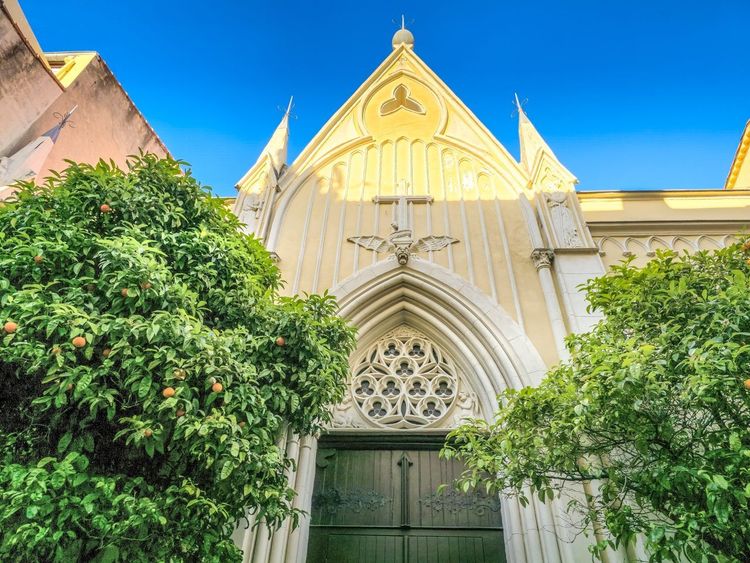
Less conspicuous, the Chapelle Saint-Bernardin, built in the 16th century by the Brotherhood of the White Penitents, is visited mainly for its temporary contemporary art exhibitions. End with Fort Carré, a 16th-century star-shaped fortress that once controlled the entrance to the bay. The climb to the top — about 20 minutes including the obligatory guide's commentary — opens onto one of the finest 360-degree viewpoints in the city, with the Baie des Anges on one side and the Cap on the other. The Cap sur la French Riviera audio-guided tour links these two stops, the Chapelle Saint-Bernardin and Fort Carré, in the same stretch of the walk.
This heritage loop corresponds to the route of the Antibes audio-guided tour, which narrates each of these stops during approximately an hour and a half of walking.
Cap d'Antibes: Between Wild Beaches and the Coastal Path
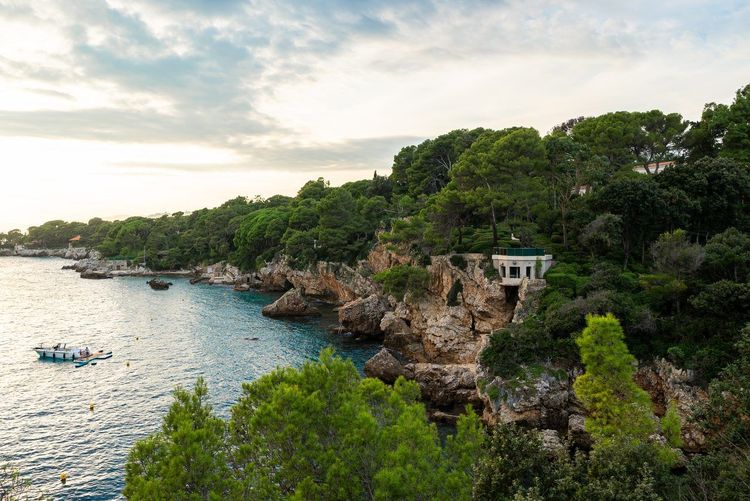
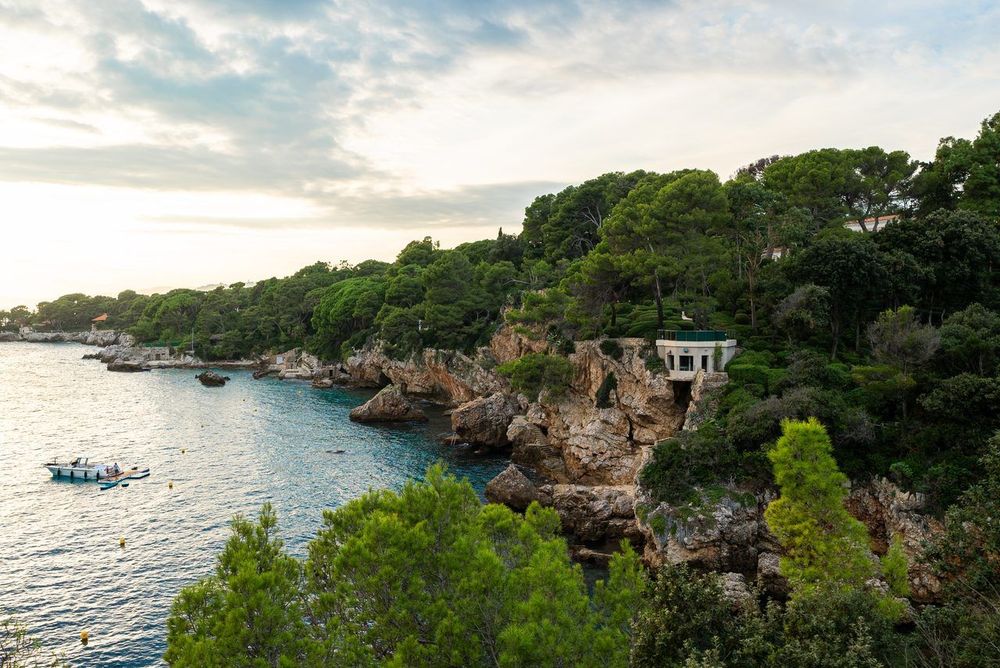
Cap d'Antibes is a wooded peninsula dotted with century-old villas and umbrella pines. People come for the sea, but also to walk: the path that circles it remains one of the most beautiful coastal walks on the French Riviera.
La Garoupe Beach and the Wild Coves of the Cap
La Garoupe beach is the largest stretch of fine sand on the Cap, with nearly 500 metres of shoreline shared between a paid zone and a free public section. The water remains shallow for several metres, which has historically made it one of the best family beaches in the area — provided you arrive before 10 a.m. in July and August.
For a wilder swim, head to the coves of Cap d'Antibes on the western side, accessible only on foot from the coastal path: the Baie des Milliardaires is aptly named, with its turquoise waters framed by red rocks. Bring water shoes — the bottom is stony in places.
The Coastal Path, the Tirepoil Trail, and La Garoupe Lighthouse
The Cap d'Antibes coastal path runs along the shore for about 5 kilometres between la Garoupe beach and the Pointe Bacon. Its most spectacular section, the Tirepoil trail, winds right along the cliffs on the seaward side, with hollows where the swell sometimes crashes just metres from walkers on windy easterly days — it is best to skip this section if the sea is rough.
The path then climbs toward the La Garoupe lighthouse, lit since 1837 and still in operation, one of the most powerful on the French Mediterranean coast. Beside it, the Chapelle Notre-Dame-du-Spélugues houses a mast offered by rescued sailors. Watching the sunset from the lighthouse is one of those rituals that many visitors discover too late in their stay, even though the plateau car park remains accessible by car until nightfall.
Cycling Around the Cap, Villa Eilenroc, and Its Gardens
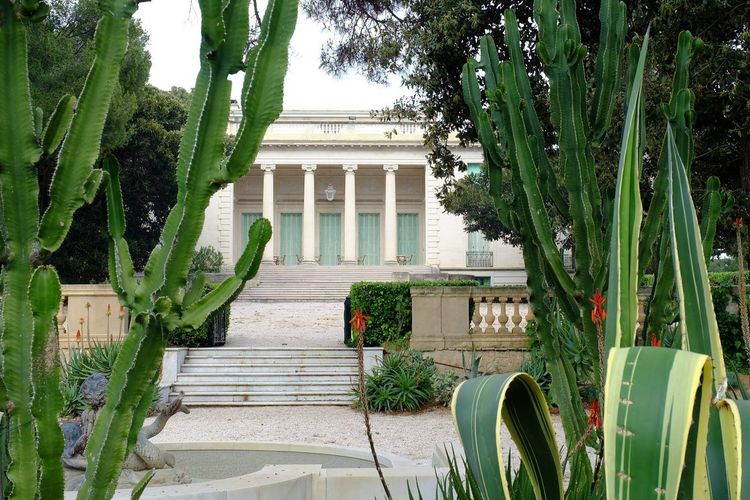
Cycling around the Cap takes about two hours with regular stops, along a quiet road lined with properties impossible to glimpse from the street. Those in a hurry opt for an electric tuk-tuk rented by the hour near the harbour — an option that at least keeps both hands free for photography.
The Villa Eilenroc (Avenue Beaumont, 06160 Antibes, rated 4.1/5 on Google with 303 reviews), built in 1867 for a wealthy Scottish industrialist, opens its botanical gardens to the public several afternoons a week, free of charge. The grounds include a Mediterranean garden, a rose garden, and a century-old olive grove, with the sea as a backdrop from the terrace. Architecture enthusiasts will appreciate the Belle Époque verandas and the small perfumery museum housed in the former caretaker's cottage.
This area corresponds to the route of the Cap sur la French Riviera audio-guided tour, 23 audio tracks over 1h30 that detail every viewpoint along the 3.4 km of path. To continue to nearby beaches, our article on the most beautiful beaches of Antibes also lists the least-crowded coves of the Cap.
Port Vauban: Luxury Yachts and Maritime Atmosphere
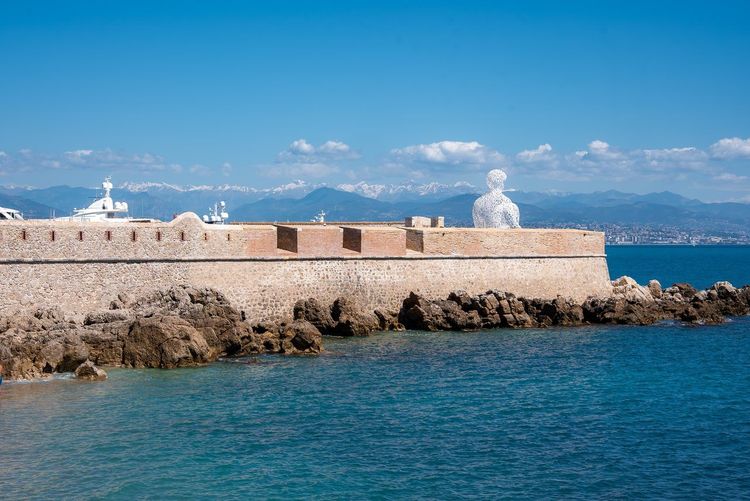
With nearly 1,700 berths, Port Vauban is one of the largest marinas in Europe by surface area, and certainly the most spectacular to observe from the Quai des Milliardaires. The mega-yachts moored here sometimes exceed 100 metres in length, with a helicopter on the upper deck for some of them.
The port of Antibes has existed since Antiquity: the Greeks of Marseille already stopped here under the name Antipolis. Today, a stroll along the quays at the end of the day, when the raking light catches the hulls, costs nothing and is well worth the detour, even without any intention of admiring the yachts up close. The terraces lining the Quai Rambaud offer a comfortable vantage point for watching docking manoeuvres — a small spectacle in its own right at aperitif time.
Juan-les-Pins: The Lively Seaside Resort
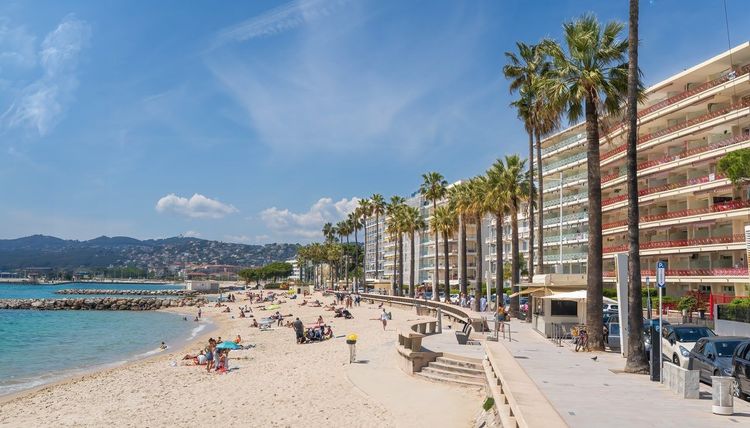
Ten minutes by car or twenty minutes on foot from Old Antibes, Juan-les-Pins shifts to an entirely different register: here the town breathes umbrella pines, colourful beach huts, and a festive atmosphere that dates back to the Roaring Twenties.
Beaches and Water Sports: Paddleboarding, Kayaking, Sailing
The main beach at Juan-les-Pins stretches for nearly a kilometre of fine sand, with a mix of private beaches equipped with sun loungers and free public sections. The water stays calm for most of the year, making it a popular playground for water sports and activities at all levels.
Paddleboarding or kayaking requires no prior experience: several clubs set up on the sand rent equipment by the hour, with beginner lessons included. The more adventurous can try dinghy sailing or wingfoiling, disciplines on the rise along this stretch of coastline sheltered by the Cap.
In high season, parking near the beach is scarce: it is better to park near the train station and walk to the seafront — five minutes from the least-crowded car parks.
Lively Atmosphere: Restaurants and Nightlife by the Sea
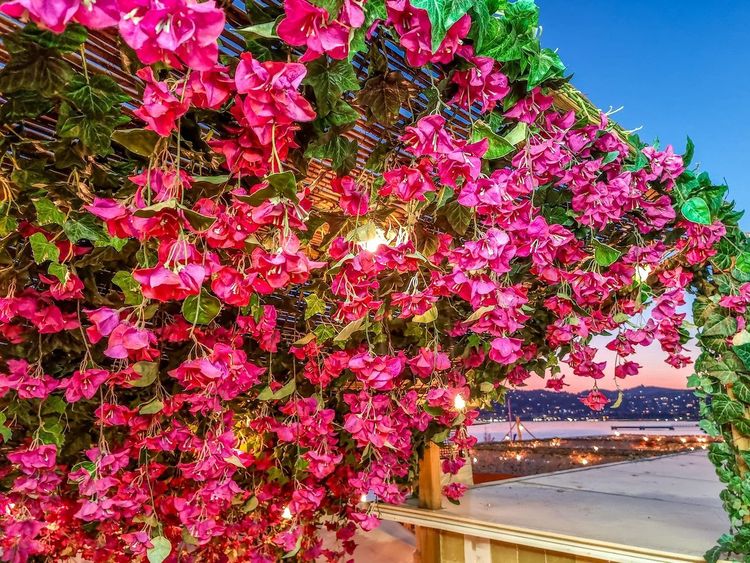
An evening in Juan-les-Pins typically begins with an aperitif with your feet in the sand, before continuing along the promenade that runs beside the beach, where fish restaurants and pizzerias follow one another until well past midnight. The town built its nightlife reputation in the 1920s, when it was already drawing an international crowd to its seaside cabarets.
Every July, the Jazz à Juan festival held in the Pinède Gould recalls that heritage: Miles Davis, Ella Fitzgerald, and Ray Charles have all performed here since its founding in 1960. Outside festival season, the atmosphere remains lively but quieter, with terraces that stay open late without ever reaching the density of August.
A Day Trip to the Lérins Islands
From Port Vauban, ferry shuttles reach the Lérins Islands in about fifteen minutes, with departures as early as 8 a.m. in season. A day on the Lérins Islands allows you to visit both islands back to back, provided you plan the boat schedules carefully.
Sainte-Marguerite, the largest and most visited, is home to Fort Royal, where the enigmatic Man in the Iron Mask was held under Louis XIV. The cell is open to visitors, along with a small maritime museum installed in the former casemates. Walking around the island takes about two hours along shaded paths of eucalyptus and pine, with several coves for a swim between visits.
Saint-Honorat, smaller and quieter, still belongs to a community of Cistercian monks who have cultivated the vine here since the 5th century. You can buy their wine and Lérina liqueur directly on the island and walk around it in 45 minutes along the coastal path that passes seven chapels. Unlike its neighbour, there are no snack bars: bring a picnic before boarding.
Expect to pay around €20 for a round trip to Sainte-Marguerite, slightly more to combine both islands in the same day. Crossings are less frequent off season, between November and March, when only a handful of weekly departures remain.
Saint-Paul-de-Vence: The Artists' Village
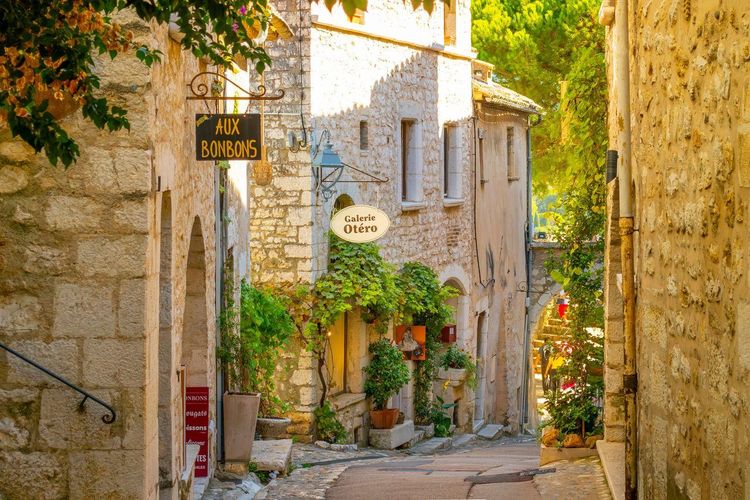
About thirty minutes from Antibes by road, Saint-Paul-de-Vence perched on its rocky spur is well worth the detour, even if its tourist success makes it one of the most visited villages in the hinterland. Its cobbled main street, lined with art galleries and studios, climbs between the 16th-century ramparts to the top of the village.
From the 1920s onward, painters and writers made the village a place of residence: Marc Chagall is buried in the small cemetery, and several figures from French cinema had a home here. The legendary Colombe d'Or inn, whose walls are hung with canvases offered in payment for meals, keeps that memory alive.
Just outside the village, the Fondation Maeght presents one of the most important collections of modern art in Europe, with works by Miró, Giacometti, and Calder scattered throughout a sculpture garden. Allow half a day to combine the village and the foundation, avoiding if possible the middle of the day in summer, when the alleyways turn into a pedestrian corridor.
The best time to stroll is early in the morning, before the coaches arrive, or at the end of the day when golden light illuminates the ramparts. A paid car park sits right at the entrance to the village — there is no point looking for free parking in season.
Èze: The Perched Village Above the Mediterranean
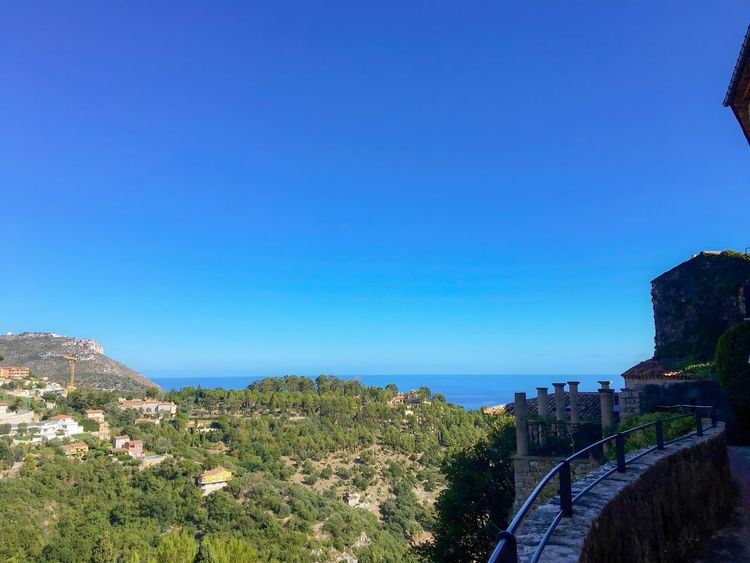
Èze, about 40 minutes by road from Antibes via Nice, peaks at 427 metres altitude directly above the sea — a vertiginous contrast that makes it one of the most photographed perched villages on the French Riviera. The medieval alleyways, too narrow for cars, climb in steps between artisan shops and perfumery workshops.
At the summit, the exotic garden of Èze occupies the site of a former feudal castle destroyed in the 18th century. Its cacti and succulents frame a 360-degree panorama that, on a clear day, stretches as far as Corsica. Nietzsche is said to have begun drafting one of his works while walking the path that links the village to the sea, now waymarked in his name.
The climb from the car park is on foot only, over a fairly steep incline: sturdy closed-toe shoes are recommended rather than sandals, especially in the late afternoon when the cobblestones become slippery after the day's foot traffic. A combined garden and fort ticket gives access to both sites at a reduced price.
Gourdon: The Vertiginous Balcony of the French Riviera
Less well known than its neighbours but just as spectacular, Gourdon clings to a cliff at 760 metres altitude, 45 minutes by road from Antibes up the Loup valley. The village is worth the trip for its viewpoint alone, often described as the finest balcony on the French Riviera: on a clear day, the view takes in Cap d'Antibes, Cannes, and sometimes Corsica simultaneously.
The 12th-century medieval château, remodelled in the 17th century, houses a history museum and terraced gardens designed by the landscape architect of the gardens of Versailles. Unlike Èze or Saint-Paul-de-Vence, Gourdon remains relatively untouched by mass tourism on weekdays, allowing you to enjoy the panorama without competing for the best view.
The Gorges du Loup, just below, are worth a detour for their waterfalls and potholes carved into the rock. A hiking trail links the village to the valley floor in about an hour, for those who want to extend the outing beyond a simple village visit.
Biot and Valbonne: Artisan Villages and Provençal Flavours
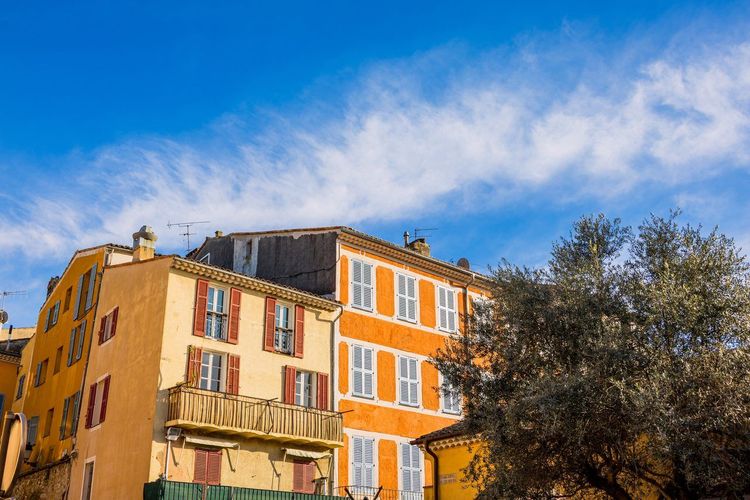
About twenty minutes from Antibes in the nearby hinterland, Biot and Valbonne are often visited in the same afternoon, each with a distinct identity: glassblowing for one, the Provençal village square for the other.
Biot: The Glassblowers' Village
Biot owes its fame to glassmaking, established here since 1956 and known for its distinctive bubble glass, produced by a closely guarded process. The Verrerie de Biot can be visited freely, with glassblowers at work in front of visitors and a shop from which most leave with at least a glass or a carafe.
The perched village itself, with its vaulted alleyways and the Place des Arcades (06560 Valbonne, rated 4.6/5 on Google with 1K reviews) lined with orange trees, retains a Provençal charm still largely untouched by mass tourism. The Musée national Fernand Léger, located at the entrance to the village, displays several hundred of the painter's works in a building adorned with a monumental mosaic visible from the road.
Valbonne and Its Provençal Square
Valbonne stands out for its grid plan, inherited from its founding by monks in the 16th century — a layout rare in the region. Its central square, shaded by century-old plane trees, hosts a Provençal market every Friday morning and a craft market in the evening during summer.
The many café terraces around the square make it a pleasant stop for a lunch break between two villages, far from the bustle of the coast. Valbonne is also part of the Sophia Antipolis technology park, which explains a younger population and a slightly more varied restaurant scene than in purely tourist villages.
To visit both villages without wasting time, it is best to park in Valbonne late in the morning, have lunch on the square, then head to Biot in the late afternoon when the raking light flatters the ochre facades of the perched village. Allow about 15 minutes by road between the two.
Tourrettes-sur-Loup and Two Hidden Gems Not to Miss
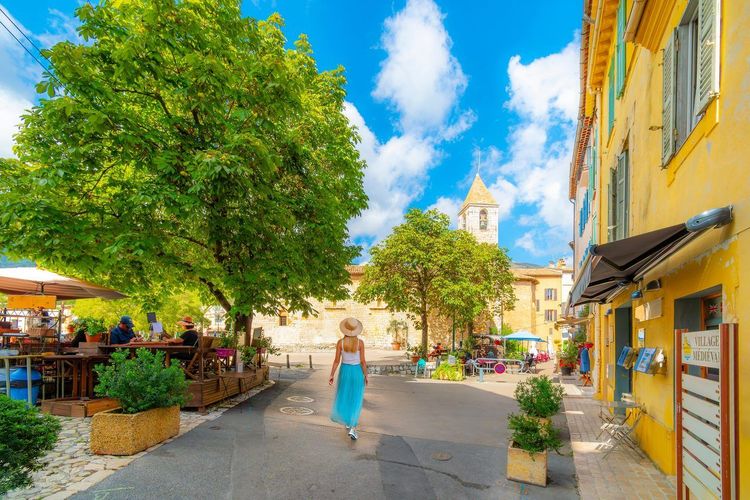
Tourrettes-sur-Loup, nicknamed the violet capital, occupies a rocky promontory 45 minutes from Antibes, above the Loup valley. The flower, cultivated here since the late 19th century for the Grasse perfume industry, is celebrated every year in early March during the Fête des Violettes, with flower-covered floats and tastings throughout the village.
The medieval village, built in a circle around an old château, has a main street lined with artisans' workshops: potters, weavers, and glassblowers still work here year-round, without the crowds found in Saint-Paul-de-Vence or Èze. The view from the ramparts, which drops straight down to the olive groves below, is particularly well suited to a photo stop at the end of the day.
For those who want to push the hinterland exploration a little further, two villages deserve an extra detour. Peillon, about 40 minutes to the east, stacks its stone houses on a rocky peak in an almost monastic silence, with no souvenir shops to break the spell. La Turbie, 35 minutes away, overlooks the Principality of Monaco from the Trophy of Augustus (18 Avenue Albert 1er, 06320 La Turbie, rated 4.5/5 on Google with 1,418 reviews), a 1st-century BC Roman monument celebrating the submission of the Alpine peoples: the sweeping view over Monaco and Cap-Martin from its surroundings alone makes the trip worthwhile.
These last two villages, less well known, are difficult to combine with Tourrettes-sur-Loup in the same day given the distances: it is better to reserve them for a dedicated excursion heading east toward Nice and Monaco, rather than trying to string everything together in a single outing.
Family Activities and Outdoor Adventures Around Antibes
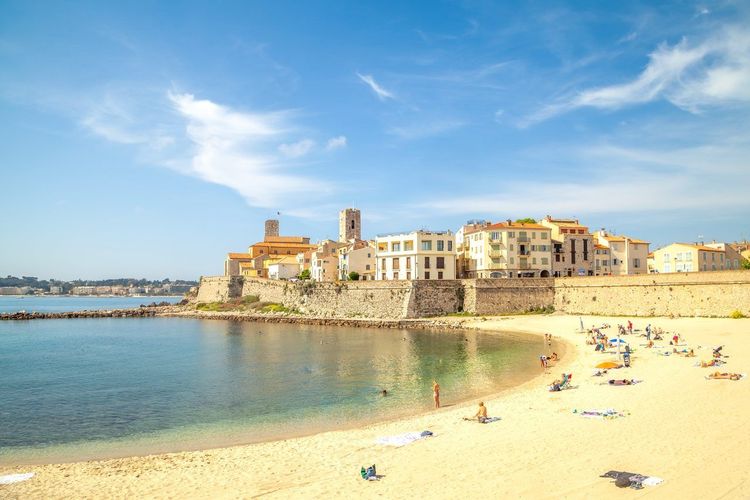
Between the beaches and the perched villages, Antibes and its surroundings also concentrate a great range of activities designed with children in mind, from the water park to a simple bike ride.
Parks and Leisure Activities for Children
Aquasplash (2372 Route de Biot, 06600 Antibes, rated 3.2/5 on Google with 4,874 reviews), a mega water park established in Antibes since 1987, remains a reliable choice on hot days: a dozen slides, a lazy river, and a dedicated area for the youngest visitors fill a good part of the day. Booking tickets online avoids the queue at the entrance in high season.
The Parc Exflora, more low-key, offers a tree-lined green space. Azur Arena Antibes, a multi-sports arena that hosts an international tennis tournament, rounds out the offer for families who enjoy indoor sport. For a more playful afternoon, Adventure Golf, a mini-golf course set in a tropical décor, appeals to children and parents who have no interest in serious competition.
The Parc de la Pinède, in Juan-les-Pins, alternates shaded lawns and play areas directly on the beachfront — handy for switching between swimming and resting in the shade. At the harbour, Le Nomade de Port Vauban, a monumental sculpture in white lettering, has become a popular meeting point for families looking for a souvenir photo.
Family Hiking and Cycling
There is no shortage of variety among the hiking and cycling routes around Antibes: the Cap coastal path suits children aged 6–7 and up, provided regular swimming breaks are planned, while the Voie Verte — a former railway line converted into a cycle path — links Cagnes-sur-Mer to Antibes along a flat, car-free route.
Where to go with the family on the French Riviera depends mainly on the children's ages: younger ones will get more out of sheltered beaches like la Garoupe, while 8–12 year olds will enjoy the walk to the lighthouse or a kayaking session in Juan-les-Pins. For full recovery days, it is better to plan Aquasplash in the morning and a quiet beach in the afternoon rather than trying to combine everything in a single outing. On the Cap paths, keep an eye on children near the rocks on the Tirepoil side: the swell can catch you off guard even when the sea appears calm.
Our article on our guide to the beaches of Antibes details the coves best suited to young children, along with the quietest visiting hours.
Gastronomy, Markets, and Wine Tasting
The local cuisine of Antibes stays true to Provençal classics, with a few specialities of its own. Socca, a chickpea flour pancake baked in a wood-fired oven, is eaten on the go directly at the Provençal market, as is pissaladière — a caramelised onion and anchovy tart — and small stuffed vegetables (petits farcis niçois) prepared with market produce.
The town's food markets are not limited to the Cours Masséna: an organic market is held on certain mornings at the Place Guynemer, while Valbonne and Biot each organise their own weekly market — a chance to compare hinterland produce with that of the coast.
On the wine-tasting front, the region produces rosés and whites under the Côtes de Provence appellation, but it is above all on Saint-Honorat that curiosity is warranted: the Cistercian monks have been crafting vintages for centuries, sold only on the island or online — a monastic wine found nowhere on supermarket shelves.
A few restaurant recommendations worth trying: the tables of Old Antibes around the Place Nationale focus on produce from the nearby market, while harbour addresses naturally favour seafood — grilled fish and bourride leading the way. For a quick lunch before a hike, a bakery in the town centre is a better bet than a restaurant, which is often fully booked without a reservation in high season. The Cap sur la French Riviera audio-guided tour passes right through this stretch, from the Provençal market to the Place Nationale, ahead of any lunch stop.
Shopping, Events, and Festivals
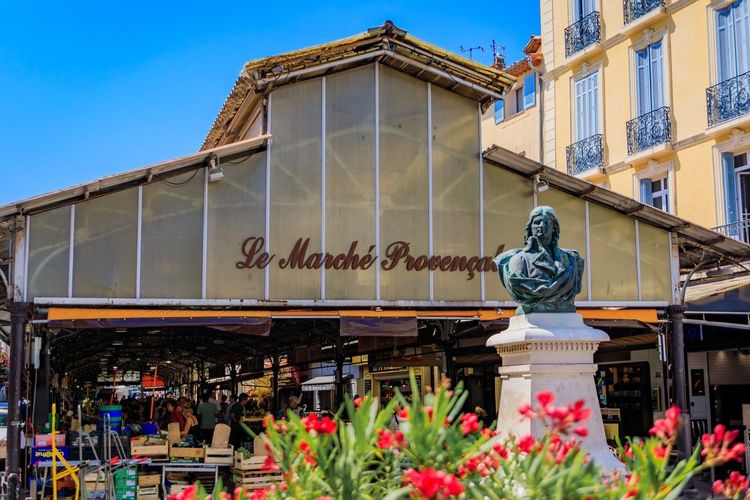
Shopping in Antibes oscillates between Provençal markets and independent boutiques. The Cours Masséna concentrates most of the fresh produce stalls in the morning, replaced in the afternoon on certain weekdays by a flea market where collectors and bargain hunters compete for antique crockery and maritime objects. In the adjacent alleyways, ceramicists' workshops and local designer shops occupy former retail spaces, far from the international chains found mainly on the outskirts.
On the events and festivals front, the Antibes calendar is packed: the Jazz à Juan festival in July remains the most anticipated event, but Antibes also hosts an international comics festival, free concerts at the harbour in summer, and a fireworks display launched from Fort Carré for Bastille Day on 14 July, visible from almost every high point in the city. In winter, the Christmas market set up on the Allées Villars brings the town centre to life until the holidays.
Flea market enthusiasts should also keep an eye on the dates of the large car boot sale organised at the harbour in spring — one of the most popular in the department, with several hundred stalls over a single day.
Planning Your Trip: Distances, Transport, and Where to Stay
Before setting off to explore the perched villages, a few practical pointers will help avoid unpleasant surprises, especially regarding journey times, which are often longer than the map suggests.
Distance Map and Journey Times from Antibes
A quick distance overview helps plan your itinerary: Biot and Valbonne are less than 20 minutes away, Saint-Paul-de-Vence about 30 minutes, Èze around 40 minutes via Nice, Gourdon and Tourrettes-sur-Loup 45 minutes via the Loup valley, and La Turbie 35 minutes toward Monaco. Peillon, more isolated, requires 40 minutes of winding road.
These times apply outside summer traffic: between June and September, add 30 to 50% to journeys that pass through Nice or run along the coast, where traffic builds up from 5 p.m. onwards.
Getting Around: Car, Bike, and Public Transport
A car remains the most flexible option for visiting several perched villages in the same day, as bus connections exist but with limited frequencies at weekends. For Cap d'Antibes and the town centre, however, it is better to leave the car in a car park and travel on foot or by bike: the streets of Old Antibes are largely pedestrianised, and parking on the Cap is scarce in summer.
Organised guided tours departing from Antibes typically cover either the heritage of Old Antibes or a day trip to two or three perched villages — a practical option for those who prefer not to drive on the narrow back roads of the hinterland.
Where to Stay and When to Go to Explore the Area
Where to stay around Antibes depends mainly on the type of trip you are after: Old Antibes suits those who want to do everything on foot, Cap d'Antibes appeals to those seeking peace and nature by the sea, while staying near Biot or Valbonne makes it easier to explore the perched villages without returning to the town centre every evening.
On the question of timing, when to go is a matter of trade-offs: May–June and September offer weather just as pleasant as summer but with far fewer people on the paths and in the perched villages, while July–August guarantees warmer sea water but markets and car parks that fill up by 9 a.m. The Ryo audio guide of Antibes remains available year-round to frame a first visit to the historic centre before heading out to explore the surroundings.

FAQ
What are the most beautiful villages to see around Antibes?
Saint-Paul-de-Vence, Èze, Gourdon, Biot, Valbonne, and Tourrettes-sur-Loup form the core of the must-see perched villages around Antibes, each within 45 minutes by road. For a first visit, Saint-Paul-de-Vence and Èze are the safest bets, while Gourdon appeals to those seeking a less-crowded panorama. Peillon and La Turbie round out the list for visitors with an extra day to spare heading east toward Nice and Monaco.
How much time should you plan to visit Antibes and its surroundings?
Two days are enough to cover Old Antibes, the Cap, and Juan-les-Pins, but three to four days are needed to add the Lérins Islands and at least two perched villages at a relaxed pace. A week allows you to explore everything in this guide without rushing, with beach days between excursions. Those short on time can also stick to a day trip by choosing just one village — Saint-Paul-de-Vence or Èze depending on whether art or panoramas are the priority.
Is Antibes worth visiting for a day trip?
Yes, as long as you prioritize wisely: a morning in Old Antibes with the Picasso Museum, lunch at the Provençal market, then an afternoon at Cap d'Antibes between the beach and the coastal path covers the essentials in a single day. Those coming from Nice or Cannes should leave early to avoid the return traffic in the late afternoon.
Where should families go around Antibes and on the French Riviera?
Aquasplash and the Garoupe beach cover the needs of families with young children, while the Pinède park in Juan-les-Pins and the Voie Verte cycling path suit older children. The perched villages are also family-friendly, provided you plan frequent breaks for the little ones on the cobblestones and stairways.
What is the most beautiful beach around Antibes?
La Garoupe beach gets the most votes, with its fine sand, shallow water, and a direct view of Old Antibes from the sea. The coves along the coastal path on the west side of the Cap offer a wilder alternative for those willing to walk a little to reach them. On the Juan-les-Pins side, the main beach remains the best option for families looking for nearby amenities.
How do you get between Antibes and the perched villages without a car?
Regional bus lines connect Antibes to several perched villages, but with limited frequencies, especially on weekends and outside the tourist season. Organized guided tours departing from Antibes or Nice remain the most reliable option for visiting two or three villages in the same day without worrying about connections or parking. The train, on the other hand, does not serve any of these perched villages, which lie outside the French Riviera rail network.
Antibes has never had to choose between heritage and nature: the city combines both within a territory you can cover almost entirely on foot, before giving way to a hinterland that deserves just as much attention. Between the Picasso Museum, the Cap's coves, the Lérins Islands, and the five perched villages on the horizon, there is more than enough to build a multi-day stay without ever retracing your steps.
The only question left is where to begin. The Antibes audio-guided tour offers a simple starting point for discovering Old Antibes and the Cap at your own pace — commentary in your ear and a map on screen — before hitting the road toward Saint-Paul-de-Vence, Èze, or Gourdon. Once the essentials of Antibes are under your belt, the Azurean hinterland is waiting to be explored, village by village.