© Shutterstock
 Votre guide Ryo
Visiting Bourges in 2 Days: Complete Itinerary, Must-See Highlights of Old Bourges and Top Addresses (2026)
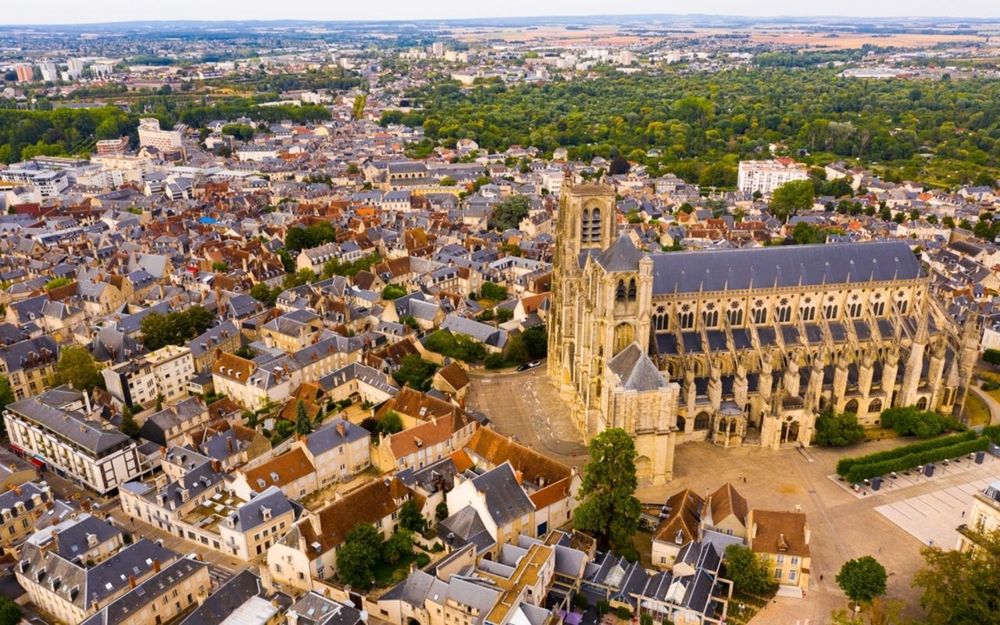
In Bourges, the Saint-Étienne Cathedral appears around a street corner before you even look for it: five sculpted portals, a nave that dominates the entire Berry region, and not a single square metre of scaffolding to spoil the photo. That may be the best summary of the city: intact medieval heritage, a human scale, and an ability to surprise the visitor who expected nothing more than a box to tick on the road between Paris and the Massif central. Visiting Bourges in 2 days allows you to go beyond the postcard, taking the time to follow the Ryo audio guide trail of Bourges, which puts every facade you encounter into context across 22 audio tracks and 1 hour 20 minutes of listening.
Over a weekend, you can move from the Jacques-Cœur Palace — the residence of the wealthiest merchant of his century — to a silent boat trip through classified wetlands right in the heart of the city, and then on to dinner on a half-timbered street whose layout has not changed since the 15th century. Add four municipal museums with free entry, a garden designed to overlook the cathedral from its terraces, and, if the timing is right, the free Nuits Lumière show that dresses up the facades from nightfall. This guide details both days hour by hour, with genuine options for families, rainy days, and the desire to extend towards Sancerre or the Noirlac Abbey. Ryo's audio-guided tour of Bourges retraces this same route, from the Jacques-Cœur Palace to Saint-Étienne Cathedral.
Why Dedicate a Weekend to Bourges
Bourges has never been a second-rate city. Under its Gallic name of Avaricum, it was one of the capitals of the Bituriges, a Gallic people so powerful that Caesar devoted several full pages to them in The Gallic Wars, recounting the fierce siege of 52 BC and the deliberate burning of the city by its own inhabitants rather than surrendering it intact to the Romans. The name changed; the strategic position remained: at the crossroads of several major Roman roads, then capital of the Duchy of Berry, Bourges long rivalled the greatest cities in the kingdom of France.
In the 15th century, the city even earned the nickname of "capital of the kingdom" when Charles VII, driven out of Paris by the English, took refuge there. He was mockingly nicknamed the "little king of Bourges." It was during this period that Jacques Cœur, the king's treasurer and the wealthiest merchant in the Western world, had the palace that still bears his name built: a symbol of commercial power that has survived six centuries virtually intact.
The 19th century brought a second wind, less romantic but equally formative: the military arsenal and armament factories transformed Bourges into a major industrial hub in central France, a legacy still visible today in certain outlying districts and in the local working-class memory. The city has managed to preserve both faces: the medieval heart, protected by a conservation area covering virtually the entire old town, and a more contemporary identity, driven in particular by a surprisingly active contemporary art scene for a city of this size.
It is precisely this contrast that justifies dedicating a proper weekend to it rather than a simple stopover. In a single day, you rush through the essentials: the cathedral, the palace, perhaps a museum. Over 48 hours, the pace changes completely. You have time to get deliberately lost in the lanes of the medieval centre, to sit in a garden and watch the light shift across the stained-glass windows, and to discover that Bourges is also, when night falls, a city that knows how to stage its heritage without overdoing it.
How Long to Plan and When to Go
Two days are enough to cover the essentials of Bourges at a relaxed pace: the cathedral, the Jacques-Cœur Palace, the marshes, one or two museums, and an evening to enjoy the atmosphere of the historic centre after dark. That is the format this guide follows, with a precise hour-by-hour breakdown across both days.
If you only have one day, focus on the triangle formed by the cathedral, the Jacques-Cœur Palace and the medieval centre: it is manageable between 9am and 6pm, even if it means skipping the museums. Conversely, with three days, you can add a full excursion to Sancerre, the Noirlac Abbey, or Apremont-sur-Allier, rather than squeezing it in at the end of the second afternoon as this itinerary suggests when time is tight.
Spring and early autumn remain the most pleasant seasons for walking through the historic centre and enjoying the gardens without the sometimes heavy heat of a Berry summer. Summer does, however, have one major trump card: it is the season of the Nuits Lumière, the light projection show on the facades that takes place at nightfall, free of charge, from spring to early autumn. If this show is one of your priorities, plan your visit between May and September, checking the dates and projection evenings on the tourist office website before you leave, as the schedule varies slightly from year to year.
Another date not to miss in the Bourges calendar: the Printemps de Bourges, a contemporary music festival that takes over the city every year around mid-April. For six days, venues, squares and bars become stages, and the city welcomes tens of thousands of festival-goers. Exciting if you come for the atmosphere, considerably less so if you were hoping for a peaceful visit to the cathedral: accommodation books up months in advance and prices rise across the entire area. Better to choose your camp than to stumble upon it by accident.
Avoid Monday for museum visits if possible: several institutions, including the Musée Estève, are closed that day. Weekends are livelier on the restaurant front, but also busier at the most popular sites such as the Jacques-Cœur Palace, especially between 11am and 2pm. An early start, right when the cathedral opens, remains the best strategy for enjoying the flagship monuments before tour groups arrive.
How to Get to Bourges and Get Around
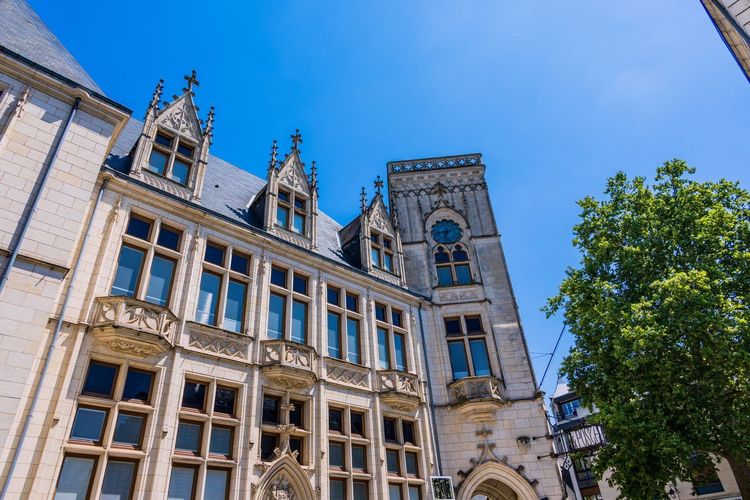
Getting There by Train, Car or Bus
Bourges is about 2 hours 15 minutes from Paris by car via the A71 then the A20, a straightforward direct journey. By train, it is even simpler: Bourges station is connected to Paris-Austerlitz by direct trains in just under 2 hours, and to Orléans or Vierzon with a quick connection for those coming from the south or west. The station is about a fifteen-minute walk from the heart of the historic centre, making the city particularly convenient for a car-free weekend.
For those arriving by bus, several regional and long-distance routes serve Bourges from the major cities of the Centre-Val de Loire, with a central stop near the station. The nearest airport is Tours or Paris, as Bourges has no regular air link.
Getting Around on Foot, by Bike or by Public Transport
Once you arrive, the best news is simple: the historic centre of Bourges can be explored entirely on foot. The distances between the cathedral, the Jacques-Cœur Palace and the main medieval districts are measured in hundreds of metres, not kilometres. Allow 20 to 25 minutes on foot to cross the city centre from one end to the other.
For excursions to the marshes or slightly outlying gardens, cycling is a pleasant option: the city has a network of cycle paths and a few rental points. Public transport (urban buses on the local network) is mainly useful for reaching the station or peripheral districts, but remains secondary for a stay focused on the historic centre. On the parking front, several covered car parks exist on the edge of the city centre, a more comfortable option than searching for a street space during the Nuits Lumière, when the streets fill up in the evening.
If you are wondering whether everything here is really doable on foot, the answer is yes, at almost 100%: most of the places described in this itinerary are within a 15-minute walk of the place Gordaine, which greatly simplifies the organisation of both days.
Day 1: Saint-Étienne Cathedral, the Jacques-Cœur Palace and Old Bourges
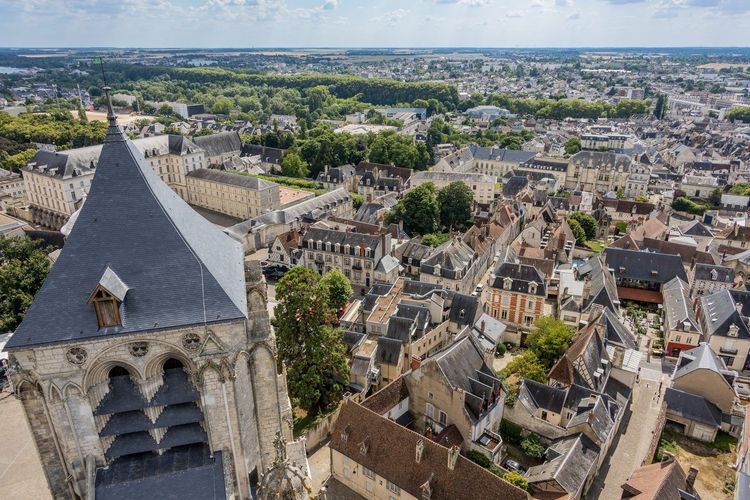
The first day is dedicated to the historic heart of Bourges, with the cathedral and the Jacques-Cœur Palace at the top of the list. To extend the experience while walking, the Ryo audio guide of the historic centre provides commentary facade by facade along this same route, a good option if you would rather look up than look down at a paper guide.
The Saint-Étienne Cathedral, a UNESCO-Listed Gothic Masterpiece
Begin the first morning with what has earned Bourges its international reputation: the Saint-Étienne Cathedral, a UNESCO World Heritage Site since 1992. Built between the end of the 12th century and the middle of the 13th, it stands out for a feature rare in French Gothic architecture: the absence of a transept. The result is a single, uninterrupted nave that gives the building a visual scale quite unique in Europe.
The main facade features five sculpted portals, each narrated with a wealth of detail that would merit an hour of observation in itself: Last Judgement, the life of Saint Stephen, scenes from Genesis. Inside, one of the largest ensembles of 13th-century stained glass preserved in France fills the nave with shifting light depending on the time of visit — yet another reason to arrive first thing in the morning, when the raking light still filters through the east windows.
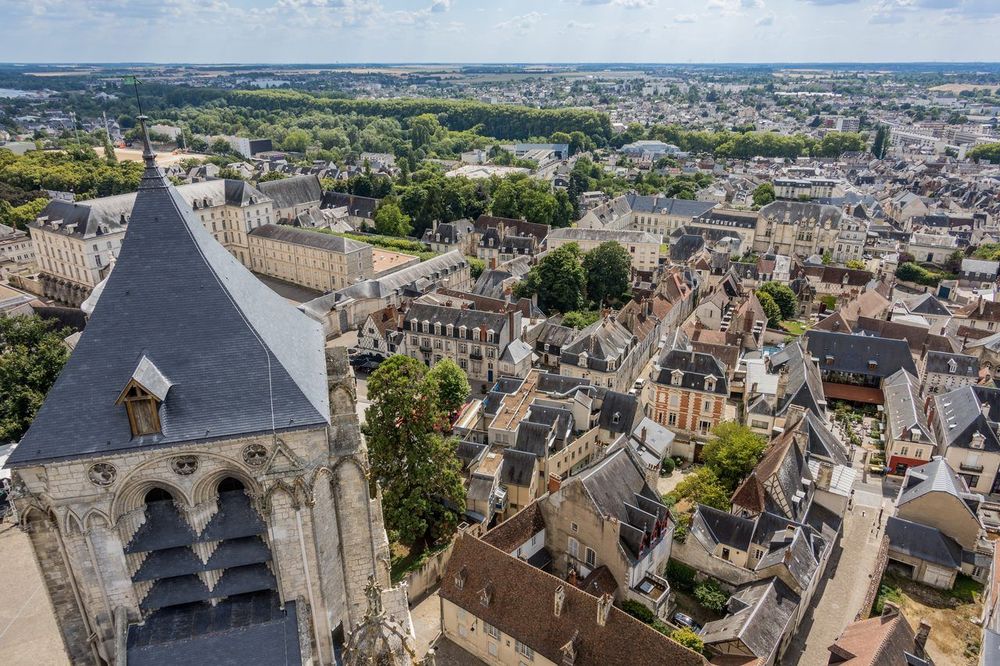
Do not leave without climbing the north tower, accessible separately: the view takes in the entire historic centre and, on a clear day, a good stretch of the Berry. The crypt preserves the remains of the tomb of Duke Jean de Berry and is visited with the same ticket as the tower. Allow a total of an hour and a half on site if you climb the tower and descend to the crypt, somewhat less if you limit yourself to the nave and portals.
In terms of practicalities, entry to the nave is free and open year-round. Only the tower and the crypt, managed by the Centre des monuments nationaux, are paid and follow more restricted opening hours, with last admission well before closing time. In winter, check the last entry time for the tower before you arrive: it falls considerably earlier than in summer, and it is the classic disappointment of the visitor who saves the tower for the end of the day.
The Jacques-Cœur Palace, Worth Seeing Even Just in Passing
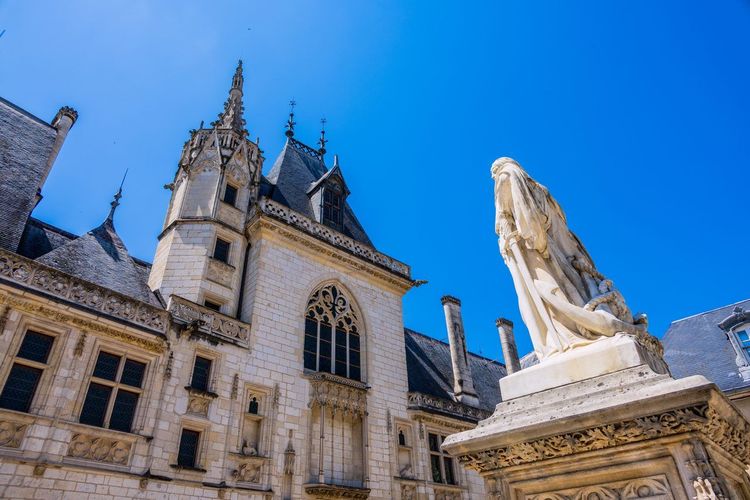
Ten minutes' walk away, the Jacques-Cœur Palace tells another story: that of a commoner merchant who became the wealthiest man of his time, treasurer to Charles VII, before falling from grace and dying in exile. Built between 1443 and 1451, the palace remains one of the finest examples of Gothic civic architecture in France, with a facade carved with fanciful figures — characters peering out from false windows — that betrays its patron's taste for theatrical display.
The interior merits the guided tour, offered several times a day, to understand the very modern layout of the rooms (kitchens, guardroom, private oratory) and the symbols carved throughout, even in the fireplaces. But even without going inside, the street-facing facade and the inner courtyard, visible from the porch, are well worth a stop for anyone simply strolling between longer visits.
Rue Bourbonnoux, Place Gordaine and the Townhouses of the Medieval Centre
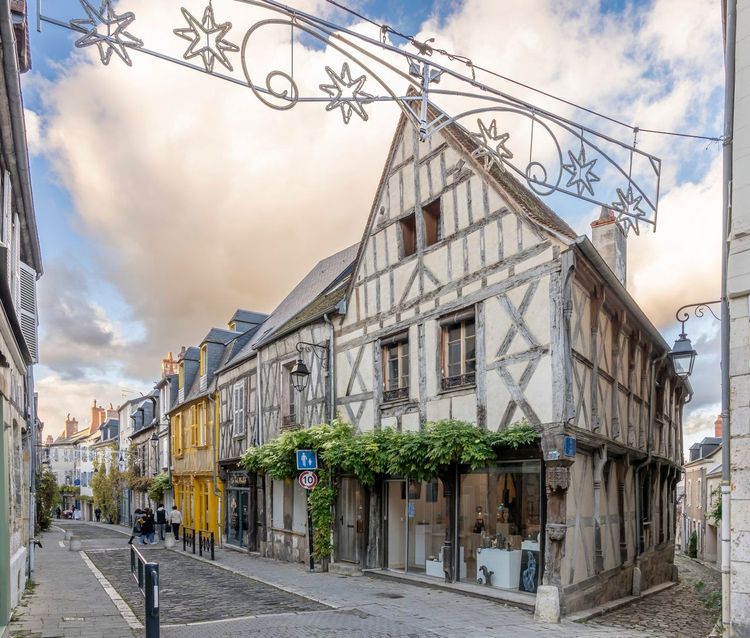
Heading back down into the heart of the medieval centre, turn into rue Bourbonnoux, one of the city's best-preserved streets, lined with half-timbered houses from the 15th and 16th centuries. This is where the greatest concentration of craft workshops can be found (ceramicists, antique dealers, small galleries), making it a street best walked slowly, pausing at window after window.
At number 6, the Hôtel Lallemant is worth a stop, if only for its Renaissance inner courtyard: this early 16th-century townhouse now houses the Museum of Decorative Arts and presents a collection of furniture and tapestries that complements the visit to the Jacques-Cœur Palace well.
Continue to the place Gordaine, the commercial heart of old Bourges since the Middle Ages, before heading to rue Jean Girard (Rue Jean Girard, 18000 Bourges), quieter but just as typical with its characteristic jetted upper storeys.
This is the ideal spot to notice the half-timbered houses that lean slightly towards the street, an optical effect caused by the progressive widening of the upper floors over the centuries.
Halle au Blé Market and Lunch Break
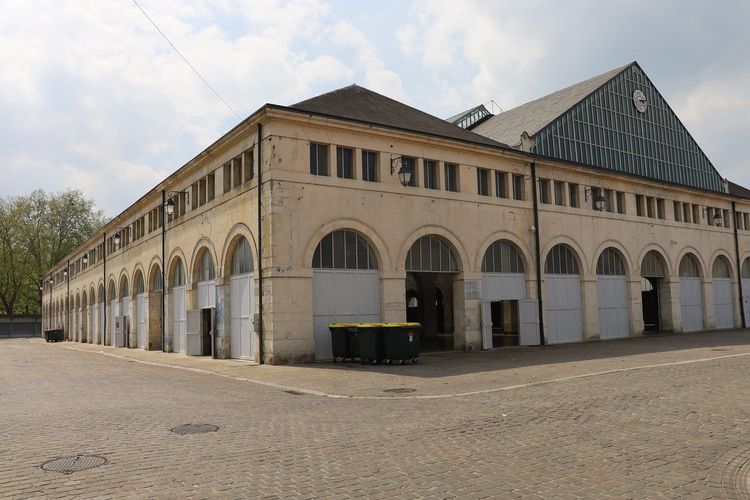
Time your lunch break around the halle au blé (Place de la Nation, 18000 Bourges, rated 4.2/5 on Google from 970 reviews), a 19th-century covered market that has kept its original function: local producers, cheese sellers and a few quality fast-food stalls can still be found there today, perfect for a quick lunch between visits.
If you prefer to sit down, several terraces line the place Gordaine and rue Bourbonnoux, with menus that lean on Berry cuisine: potato pâté, goat's cheese from the Berry. Allow a good hour for this break before resuming the tour of the medieval centre in the afternoon, or heading straight to the Archbishop's Garden. Ryo's audio-guided tour of Bourges links this same stretch to the Archbishop's Garden.
Day 1, Late Afternoon: Gardens, Ramparts and Nuits Lumière
Archbishop's Garden and the Ramparts Walk
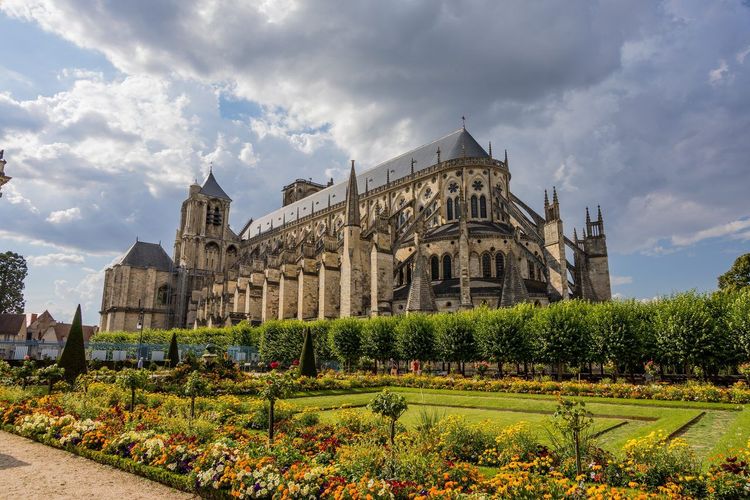
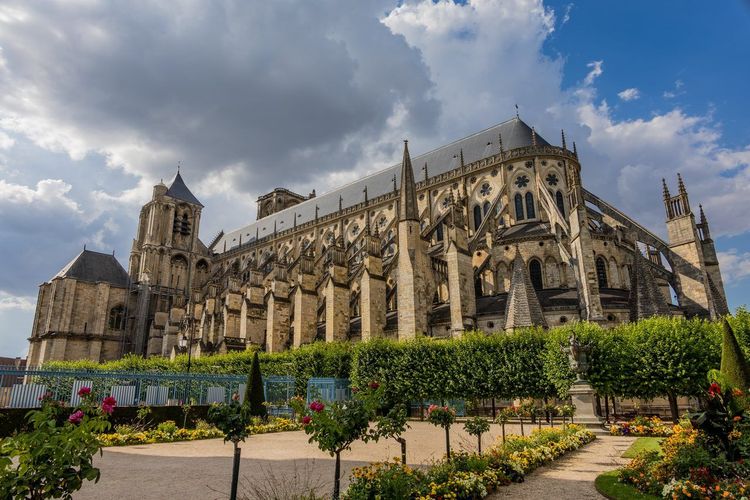
End the afternoon at the Archbishop's Garden, laid out in the 17th century in the French formal style, right behind the cathedral. It is from its stepped terraces that you get the finest overall view of the flying buttresses and east windows — a vantage point that many rushed visitors miss entirely for want of knowing it exists.
The garden connects directly to the ramparts walk, laid out along the old moats and fortifications of the city. It is a pleasant way to complete a circuit of the historic centre at the end of the day, when the heat eases and the light begins to gild the facades.
Along the way, the Jardin Cardinal Joseph Lefebvre (Place Simone Veil, 18000 Bourges, rated 5/5 on Google from 3 reviews) and the Place Simone Veil offer a greener, less crowded pause than the main garden, with a few shaded benches to rest before the evening. It is also a useful landmark if you are looking to reach the cathedral district from the station without going back through the shopping centre.
The Nuits Lumière, the Must-See Evening Show
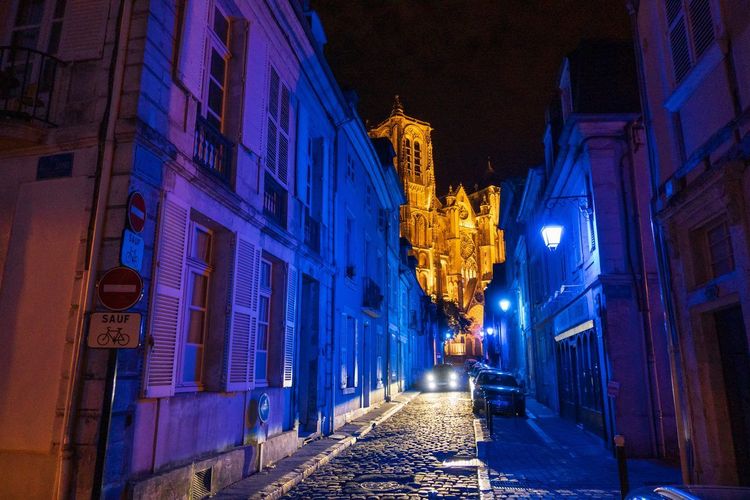
If your visit coincides with the fine season, save some energy for the evening: the Nuits Lumière transform the cathedral, the Hôtel Lallemant and several other buildings in the centre into canvases for free light projections, generally running from nightfall until late evening. The trail has existed since the late 1990s and evolves regularly, which gives a good reason to return even after a first visit.
The advantage for a 2-day stay is that the show requires no reservation: simply follow the blue lanterns set into the ground in the historic centre once night has fallen to move from one projection point to the next, tourist office map in hand. Allow a good hour to take in the main illuminated sites, with the cathedral leading the way.
Before the show, it is also the right moment for a slightly more leisurely dinner: several addresses in the centre offer menus built around Berry produce, with terraces ideally placed to soak up the evening atmosphere before the projections begin. We return to this in more detail in the section on recommended addresses.
Day 2: the Bourges Marshes and Gardens, Nature in the Heart of the City
Walking or Boating in the Bourges Marshes
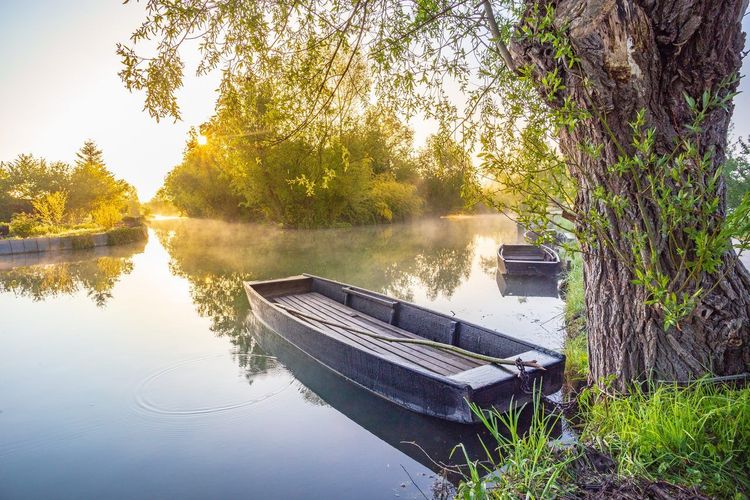
The second day begins in total contrast to the mineral density of the day before: the Bourges marshes, a network of market gardens and canals covering more than 135 hectares right in the heart of the city — a fairly rare case in France of a wetland of this size so close to a historic centre.
Since the Middle Ages, these cultivated plots separated by canals supplied a large proportion of the vegetables consumed in the city. Even today, some gardens are still worked by individuals, giving the place a living rather than museum-like character: you encounter as many walkers as gardeners coming to tend their plot.
The best way to discover the marshes is the boat trip, punted or paddled depending on the operator, which lets you travel along the canals without disturbing anyone. Allow about an hour for a full circuit, preferably booking the day before in peak season. On foot, several marked paths also start from the main car park and offer a shorter stroll, equally transporting.
Several operators offer boat trips from different pontoons, with fares running at around 8 to 12 euros per adult and less for children. Check departure times in the low season: some circuits only run on request between October and March. Morning remains the best time to explore the marshes — the light is softer, the birds more active, and the cool air makes the walk particularly pleasant before the midday heat.
Prés Fichaux Garden, the Green Break
About fifteen minutes' walk from the marshes, the Prés Fichaux Garden (Boulevard de la République, 18000 Bourges, rated 4.4/5 on Google from 2,008 reviews) offers another facet of Bourges greenery: an Art Deco garden designed in the 1920s, with its yews clipped into walls, geometric flowerbeds and a rose garden that has earned it a reputation in spring and early summer.
It is a place popular with local families, with a playground and enough shaded space for a picnic between visits. For horticulture enthusiasts, the garden also preserves some rare species planted at the time of its creation — another reason to slow your pace rather than cut through at speed.
If you are travelling with children, this garden works well alongside the Natural History Museum, just a few minutes' walk away, to turn the late morning into a family interlude before resuming the cultural itinerary in the afternoon.
Day 2, Continued: Museums and Contemporary Art
Musée du Berry and Hôtel Lallemant, Local History
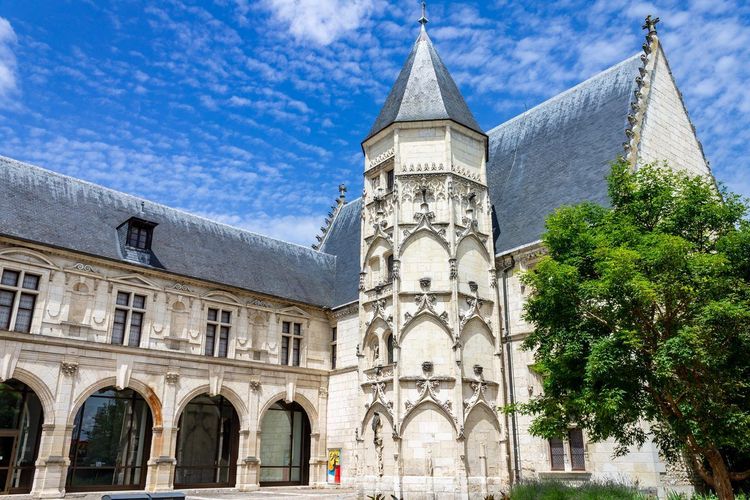
The afternoon of the second day is devoted to the museums, starting with the Musée du Berry, housed in the Hôtel Cujas, another 16th-century townhouse. The collections cover regional archaeology from prehistory to the Gallo-Roman period, with a particularly noteworthy ensemble of Berry sculptures and standing-stone figures, and extend to furniture and folk arts of the Berry.
Good news for the weekend budget: like the other municipal museums in Bourges, entry is free for everyone, permanent collections included. This completely changes the way you organise the afternoon, since there is no need to get your money's worth from a ticket: you can push open a door for twenty minutes, head back out, and return later if the mood takes you.
We already passed by the Hôtel Lallemant the day before, but if time was short, this is the right moment to return: its Renaissance furniture and tapestry collections naturally complement a visit to the Musée du Berry, both museums belonging to the same municipal network, the Maison des musées, which brings the city's institutions together under a shared programme.
Musée Estève, Berry Painting
Ten minutes' walk away, the Musée Estève occupies the former Hôtel des Échevins and presents the work of painter Maurice Estève, born in Culan in the Berry and a major figure of 20th-century French abstract art. The collection, one of the most comprehensive dedicated to the artist, traces his evolution from his figurative beginnings to his best-known colourful compositions.
The building itself, with its listed Renaissance staircase, is worth visiting independently of the works on display. Remember to check opening hours before you go: like several municipal museums in Bourges, it is closed on Mondays and certain public holidays.
Natural History Museum, Ideal for Families
The Natural History Museum, slightly further out near the Prés Fichaux, is probably the most family-friendly stop in this guide. Zoology and mineralogy collections, and above all a space dedicated to the local wildlife of the Berry that speaks to children far more than a collection of abstract painting, however beautiful.
Entry is free here too, as in all the municipal museums, making it an easy addition that will not blow the day's budget. Allow 45 minutes to an hour for the visit, a format that suits a young child's attention span well.
Le Transpalette and the Château d'Eau, the Contemporary Art Scene
To close the day on a more contemporary note, head to Le Transpalette, a contemporary art centre housed in a former industrial warehouse, which hosts often cutting-edge temporary exhibitions run by the Emmetrop arts association. It is one of the reasons why Bourges, despite its modest size, maintains a real reputation in French contemporary art circles.
A few minutes away, the château d'eau, a former industrial water tower converted into an exhibition space, completes this atypical scene. The two venues often work in dialogue, with programming that speaks to each other and shared openings. If you happen to be visiting during a local highlight such as a Bourges Contemporain edition, the chance to encounter artists in residence — and sometimes a local graphic artist exhibiting their work, like Bernard Capo — will make the visit all the more vivid. Ryo's audio-guided tour of Bourges also passes the Hôtel Lallemant and the Hôtel des Échevins.
What to Do in Bourges with Families or on Rainy Days
Bourges lends itself surprisingly well to a family stay, provided you pace the itinerary above carefully: children rarely last a full day of cathedrals and abstract art museums without a more playful break. The Natural History Museum and the Prés Fichaux Garden, already introduced above, make a good duo for splitting the visit into two distinct phases.
The Bourges marshes also work very well with children, particularly the boat trip, which has the double advantage of being calm — and therefore reassuring for younger ones — and short enough not to lose their attention. The Jacques-Cœur Palace, for its part, visits well with children from around 7 to 8 years old, especially if you opt for the guided tour: stories of secret passages and sculpted characters spying on visitors always go down well with younger audiences.
On a rainy day, switch without hesitation to the museum programme: the Musée du Berry, the Musée Estève and the Natural History Museum are all within walking distance of the centre and free, making it possible to move between them without getting too wet or watching the budget between showers. The cathedral itself remains a safe bet in bad weather, its interior remaining impressive whatever the weather outside, the light filtered through the stained glass more than compensating for the absence of direct sunlight.
For more family-friendly activity ideas, our Ryo article on the top 5 things to do in Bourges is a useful complement to this section, with a few additional addresses tried and tested on the ground.
What to Do Around Bourges: 4 Extension Ideas
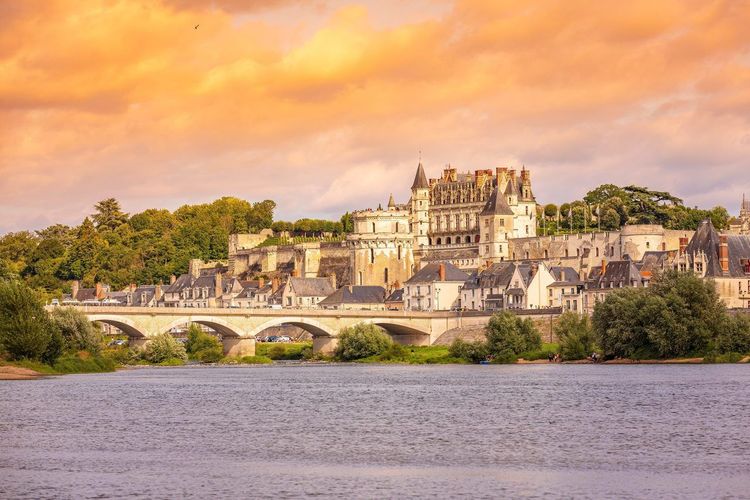
If your stay extends beyond the weekend, or if you simply want to vary the pleasures at the end of the second afternoon, several extensions are worth the detour around Bourges. Some even fit into a broader itinerary: our Loire Valley Châteaux road trip allows you to continue the journey towards the Val de Loire for those heading north after their Berry stopover. All these excursions are feasible as half-day trips from Bourges, provided you set off early.
The Jacques-Cœur Route and Its Berry Châteaux
The Jacques-Cœur Route links around twenty châteaux and heritage sites across the Berry, from La Bussière to Culan via Bourges, along a signposted itinerary bearing the same name as the treasurer whose palace you visited in the city centre. Château de Meillant, Château d'Ainay-le-Vieil, or the fortress of Culan, birthplace of painter Maurice Estève — decidedly ever-present in the region — each itinerary can be tailored to the time available.
For a half-day extension, a single château is more than enough, ideally the one closest to your return route. Allow 30 to 45 minutes' drive from Bourges for most sites on this tourist route.
The Noirlac Abbey and the Virlay Lake
About 45 minutes south of Bourges, the Noirlac Abbey ranks among the best-preserved Cistercian abbeys in France — a monastic complex founded in the 12th century that has remained remarkably complete, from the church to the monks' dormitory. The very austerity of the place — cloister, chapter house, refectory — makes it a striking counterpoint to the richness of the Jacques-Cœur Palace visited the day before.
Right next door, the Virlay Lake offers a more relaxed pause, with a leisure centre and outdoor activities in summer. It is an effective combination for turning a heritage visit into a complete outing: culture in the morning, relaxation by the water in the afternoon.
The Village of Sancerre and Its Vineyard
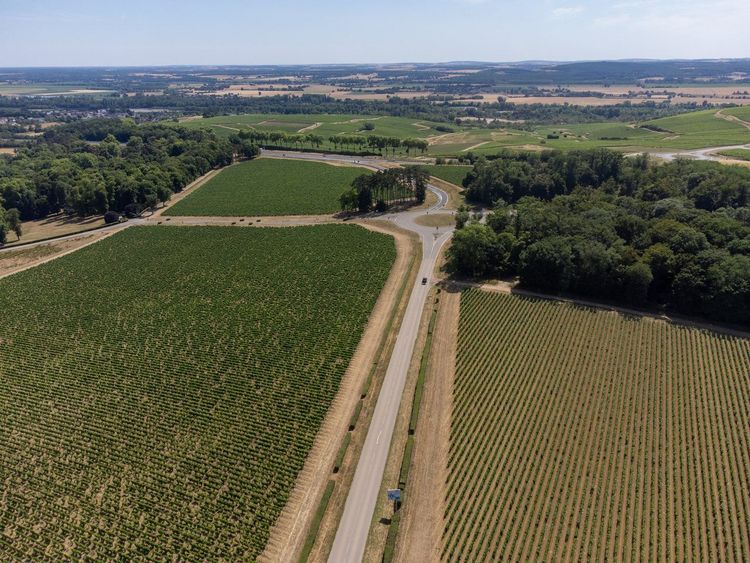
Head north-east this time, just under an hour's drive: the village of Sancerre, perched on its hill above the Loire, offers one of the finest panoramas in the region and lends its name to one of France's most celebrated white wine appellations.
Cobbled lanes, tasting cellars at every turn, and a view that stretches far across the valley on a clear day: it is an ideal extension for rounding off a Bourges weekend on a more rural note, particularly for lovers of dry white wine, the local terroir's signature. Allow half a day, tasting included, to avoid leaving frustrated.
Apremont-sur-Allier and the Donkey and Horse Centre
One last option, further to the south-west: Apremont-sur-Allier, listed among the Most Beautiful Villages of France — a cluster of golden-stone houses and tiled roofs restored in the medieval style at the beginning of the 20th century, on the banks of the Allier.
The village can be explored in about an hour of gentle wandering, with a floral park as a bonus for garden lovers. Nearby, the Donkey and Horse Centre (Route de la Guerche, 18150 Apremont-sur-Allier, rated 4.4/5 on Google from 403 reviews) offers a discovery of the equine world particularly well suited to families: rides, presentations of local breeds, and grounds spacious enough for children to let off steam after a weekend of rather static sightseeing.
Where to Stay in Bourges
For a 2-day stay focused on the historic centre, it is better to lodge intra-muros or just outside: you save precious time in the morning and evening, especially when it comes to enjoying the Nuits Lumière without depending on a car. The district around rue Bourbonnoux and the place Gordaine concentrates most of the guesthouses and small boutique hotels, often in historic buildings.
Budget-wise, options range from simple two-star hotels to more upmarket guesthouses housed in former townhouses. Those seeking character will prefer the latter, which often have an inner courtyard or garden — a real plus in summer. For a better value-for-money option, several chain hotels are located near the station, a 15 to 20-minute walk from the historic centre.
Two reflexes before booking. First, the parking question: few addresses in the medieval centre have a private car park, and the surrounding streets are heavily regulated during the day, so always ask where to leave your car. Second, the calendar: if your visit falls during the Printemps de Bourges in mid-April, book several months in advance — the city fills up even in neighbouring towns.
L'Amantine, a guesthouse set in a characterful residence, is a good example of the upmarket offering: personalised rooms, a carefully prepared breakfast, and a welcome that focuses on tailored advice for organising the two days of visiting. This is the type of address to book several weeks in advance in high season, given its limited capacity.
For a more classic option in the city centre, Hôtel Le Continental (Avenue Henri Laudier, 18000 Bourges, rated 4.1/5 on Google from 434 reviews), a short walk from the station, remains a reliable choice for a practical stay with no surprises. Expect a mid-range rate, appropriate for a two-night stopover rather than an extended stay.
Where to Eat in Bourges
For a quick lunch between visits, L'Artisane offers a sandwich and composed salad menu using local produce. Budget 12 to 15 euros for a full meal, to take away to the Archbishop's Garden if the weather allows.
For a more relaxed dinner, the Brasserie des Beaux-Arts serves revisited classic brasserie fare, with a few nods to Berry gastronomy. The terrace, well positioned to enjoy the atmosphere of the historic centre on summer evenings, fills up quickly on Nuits Lumière nights: booking is advisable.
Another option for dinner without leaving the centre, Sweet and Salted takes a more creative approach, blending local influences with more contemporary touches, in a cosy setting that makes a change from traditional brasseries. The menu changes regularly depending on what is in season — a reliable choice for those wanting to venture slightly off the beaten track.
For a lighter break near the Archbishop's Garden, L'Arche offers a seasonal menu designed for a terrace lunch or afternoon tea, steps from the ramparts walk. It is the ideal address between the cathedral visit and the garden, without having to head back into the shopping centre.
Finally, for a quintessentially Berry experience, La Villa Monin (51 Rue Bourbonnoux, 18000 Bourges, rated 4.4/5 on Google from 730 reviews) tells the story of the Monin syrup house, born in Bourges in the early 20th century and since grown into a brand exported worldwide. Tastings, cocktail workshops and a shop: it is an unexpected way to leave with a liquid souvenir of your stay, and a good card to play on rainy days, when walking loses some of its appeal.
On the specialities front, leave room for the Berry potato pâté, the crottins de Chavignol produced a few kilometres to the north, and the forestines — those praline-filled sweets created in Bourges in the 19th century and still sold in their distinctive round tin. They are the city's most iconic edible souvenir.
Budget for a 2-Day Stay in Bourges
For a 2-day stay in Bourges, budget between 70 and 130 euros per night for a double room depending on the standard chosen — considerably more affordable than in neighbouring major cities. Charming guesthouses tend towards the top of this range, while simpler hotels near the station fall at the lower end.
For meals, allow around 15 euros for a quick lunch, and between 25 and 40 euros for dinner at one of the addresses mentioned above, excluding drinks. Over the whole weekend, the food budget typically comes to around 80 to 120 euros per person at a comfortable pace, without restricting yourself.
The real pleasant surprise comes from the sightseeing. Entry to the cathedral nave is free, and the tower and crypt together cost around ten euros — a comparable rate for the Jacques-Cœur Palace. The municipal museums (Musée du Berry, Hôtel Lallemant, Musée Estève, Natural History Museum) are free, which significantly lightens the bill for a cultural weekend. The tourist office also offers combined packages and a pass for multiple paid sites at a reduced rate: ask about it on arrival as soon as you plan to visit several paid monuments, particularly if you are adding a guided tour.
Overall, a budget of 150 to 250 euros per person on the ground, accommodation, meals and sightseeing included, comfortably covers a relaxed stay, excluding excursions to Sancerre or Noirlac that add fuel or car rental costs. For a family of four, budget closer to 500 to 800 euros in total, opting for family rooms or connecting rooms rather than two separate double rooms.
Bourges on Foot: Practical Tips and Last-Minute Advice
We said it above but it bears repeating as a practical closing note: Bourges is very easy to explore on foot, with virtually all the sites in this itinerary within a 20-minute walk of each other from the historic centre.
For those who prefer a guided visit, the tourist office offers guided tours at fixed times, in French and sometimes in English depending on the season. A tourist train also runs through the city centre during certain periods, a practical option for visitors with reduced mobility or families with very young children who struggle to manage 48 hours of walking.
The Bourges map distributed by the tourist office remains a valuable tool, with clear signposting of the main monuments and a dedicated plan of the medieval centre, more readable than most mapping applications on these narrow, winding lanes.
For a more independent alternative, the Bourges audio-guided tour follows a route designed for walking, with audio commentary triggered automatically as you approach each point of interest — a good way to keep your hands free for photos while taking in the historical context.
One last practical tip: wear comfortable shoes, as the cobblestones of the medieval centre are not always kind to heels or overly rigid soles.



FAQ
How much time do you need to visit Bourges?
Two days are enough to cover the essentials: the Saint-Étienne Cathedral, the Jacques-Cœur Palace, the Bourges marshes, and one or two museums. One day suffices for an overview of the historic centre alone, while three days allow you to add an excursion to Sancerre, the Noirlac Abbey, or the Jacques-Cœur Route.
What is Bourges famous for?
Bourges owes its fame to its past as a Gallic capital under the name of Avaricum, its role as a refuge for King Charles VII in the 15th century, and its exceptional architectural heritage: the Saint-Étienne Cathedral, a UNESCO World Heritage Site, and the palace of the merchant Jacques Cœur, one of the best-preserved of its era in France. The Printemps de Bourges, one of the country's oldest contemporary music festivals, did the rest for its renown.
What are the "Nuits Lumière" in Bourges?
The Nuits Lumière are a free nocturnal trail of light projections cast onto several facades of the historic centre, with the cathedral taking centre stage, at nightfall during the fine season. No reservation is required: simply follow the blue lanterns on the ground once night has fallen.
Is the visit to the Saint-Étienne Cathedral free?
Entry to the cathedral nave is free. However, access to the north tower and the crypt is paid and managed by the Centre des monuments nationaux. Budget around ten euros for both, with free entry for under-18s visiting with family.
Can you visit Bourges on foot?
Yes, without difficulty: most of the sites described in this itinerary are within a 20-minute walk of the historic centre. Only the extensions to Sancerre, Noirlac, or Apremont-sur-Allier require a car or another motorised means of transport.
What are the inhabitants of Bourges called?
The inhabitants of Bourges are called Berruyers and Berruyères, a name derived from the ancient Latin name of the city, Biturigae, and not from the current name of Bourges.
Where can you enjoy nature in Bourges?
Three places stand out: the Bourges marshes for a walk or a boat trip in the heart of the city, the Archbishop's Garden for its view of the cathedral, and the Prés Fichaux Garden for its Art Deco atmosphere and rose garden.
Two days in Bourges are enough to understand why the city continues to surprise those who expected nothing more than a stopover on the road: an almost intact medieval centre, a palace that tells the story of a merchant who became a legend, cultivated marshes right in the heart of the city, and a cultural scene that goes far beyond what you might imagine for a city of this size. Whether you favour the relaxed pace of the itinerary proposed here or prefer to improvise along the cobbled lanes, the essence can be summed up in one sentence: take the time to look up, cathedral or not.
To extend the experience once on the ground, the Ryo audio guide trail of Bourges remains the best way to keep this guide in your pocket without thinking about it, with commentary that triggers automatically at each stop along the way. Enough to turn this weekend into a genuine immersion, rather than a simple checklist to tick off.