© Shutterstock
 Votre guide Ryo
What to Do in Cahors in 2026: 20 Experiences to Explore the City
On the northern bank of the Lot, the old town of Cahors nestles in a meander so tight that the river almost entirely encircles it, forming a peninsula. What to do in Cahors when you have a weekend, a single day or a few hours between two stops on the Camino de Santiago? The question deserves serious consideration: this prefecture of the Lot, with just over 20,000 inhabitants, boasts a UNESCO-listed fortified bridge, an extremely rare domed cathedral in France, a vineyard that was already supplying the Avignon popes, and medieval alleyways that have remained almost untouched. Before setting off to explore the Vieux Cahors, a detour through the Ryo app can help structure your walk: it turns a town centre into an audio-guided tour, a format already deployed across the South-West in Toulouse and Albi, and which gives a good idea of the pace to adopt here.
Pont Valentré, with its three towers and its legend of a diabolical pact, naturally leads the way, but Cahors also holds a 14th-century tower that once belonged to the family of a pope, a spring that in Gallo-Roman times gave the entire city its name (Divona), and a malbec vineyard cultivated since antiquity — the wine once nicknamed the black wine. From the covered market to secret gardens tucked away in the alleyways, a hike up Mont Saint-Cyr and a trip to the most photographed village in France less than thirty minutes away, this guide details twenty experiences for visiting Cahors on foot, on the water or by car, whatever the weather.
1. Pont Valentré
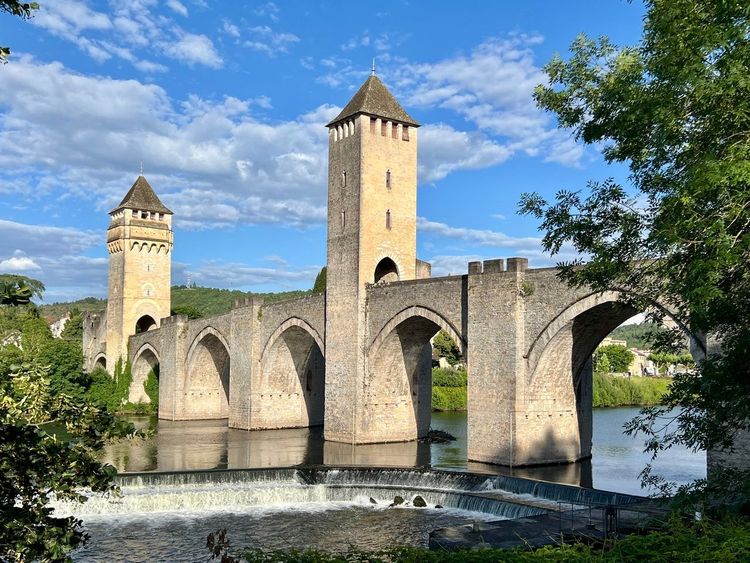
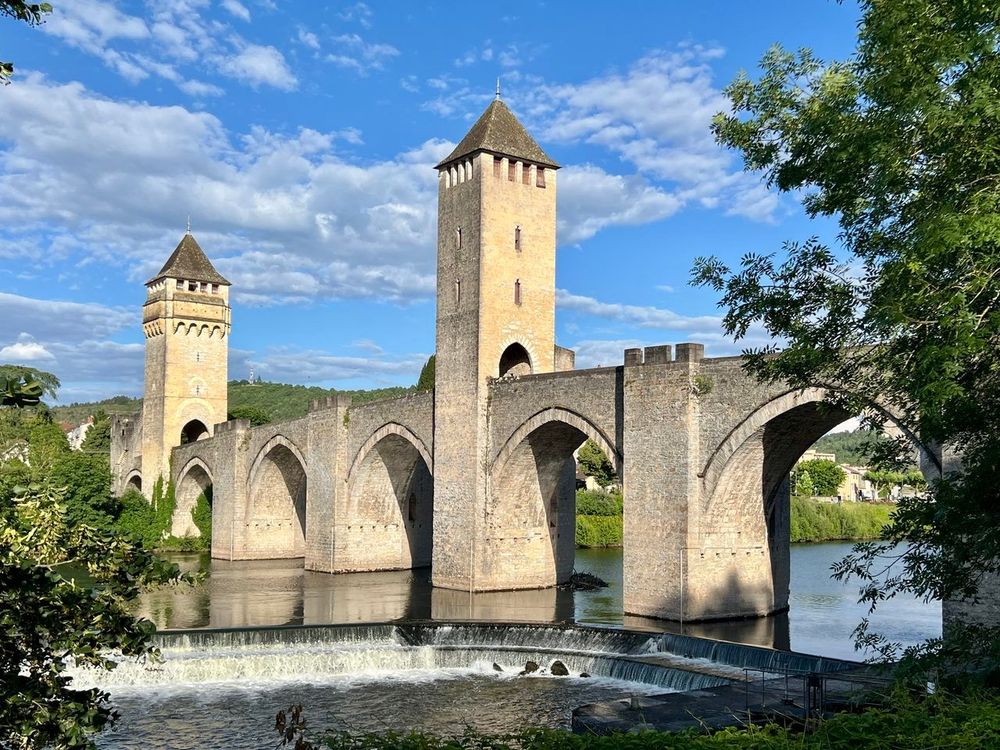
The Pont Valentré (Avenue André Breton, 46000 Cahors, rated 4.7/5 on Google with 5,200 reviews) has been the city's defining postcard image since its construction began on 17 June 1308 and was finally completed in 1378. Its three square towers standing 40 metres tall and its six Gothic arches with a 16.5-metre span cross the Lot at the very point where the river almost entirely encircles the city. Listed as a historic monument as early as 1840 and inscribed on the UNESCO World Heritage List in 1998 as part of the Routes of Santiago de Compostela, the bridge has retained its crenellated parapet and defensive machicolations — features that have rarely survived so intact anywhere else in France.
Local legend has it that the architect, at his wit's end with the delays on the construction site, made a pact with the devil to speed up the work. Once the bridge was finished, he is said to have refused to honour his debt by giving the demon the impossible task of filling a sieve with water. Furious, the devil took revenge by dislodging the cornerstone of the central tower every night, forcing the stonemasons to reposition it every morning. During the major restoration of 1879 carried out by architect Paul Gout, a small stone devil was carved by the artist Calmon at that precise spot, in a cavity that had remained empty: this little devil is still visible today for anyone who looks up towards the upper corner of the middle tower.
Built to repel potential English attacks during the Hundred Years' War, the bridge in reality never had to withstand a siege: its only verified function was as a deterrent. The arrow slits still visible in the towers and the machicolation corbels bear witness to a project conceived as a genuine river fortress. Every 14 July, the bridge serves as the backdrop for the fireworks display launched from the riverbanks, setting its towers ablaze with orange reflections visible from across the town centre. Crossing remains free and unrestricted all year round, day and night, and the structure ranks among the most visited monuments in the department, with over 200,000 crossings recorded annually.
You can cross the bridge on foot in under ten minutes, but the real experience is best had from the left bank, at the level of the quai de Regourd, where you can photograph the whole structure with its towers reflected in the Lot early in the morning. To reach the Vieux Cahors afterwards, allow fifteen minutes on foot along the quai Cavaignac, past the old washhouses and the ochre façades of the Bourg district. If you want to photograph the bridge without any figures in the way, arrive before 9 a.m. or after 7 p.m. in summer, when the raking light sculpts the towers. The bridge also appears on the city's coat of arms, proof of a symbolic status that extends well beyond the borders of the Lot.
2. The Cathedral of Saint-Étienne and Its Cloister
Two stone domes 18 metres in diameter crown the nave of the Cathedral of Saint-Étienne (Place Jean-Jacques Chapou, 46000 Cahors, rated 4.5/5 on Google with 2,120 reviews), an architectural choice extremely rare in medieval France, closer to Byzantine and Périgordian influences than to northern Gothic. Consecrated in 1119, the cathedral retains a sculpted north portal depicting the Ascension of Christ, one of the best-preserved Romanesque ensembles in the Occitanie region. It too is inscribed on the UNESCO World Heritage List as part of the Routes of Santiago de Compostela.
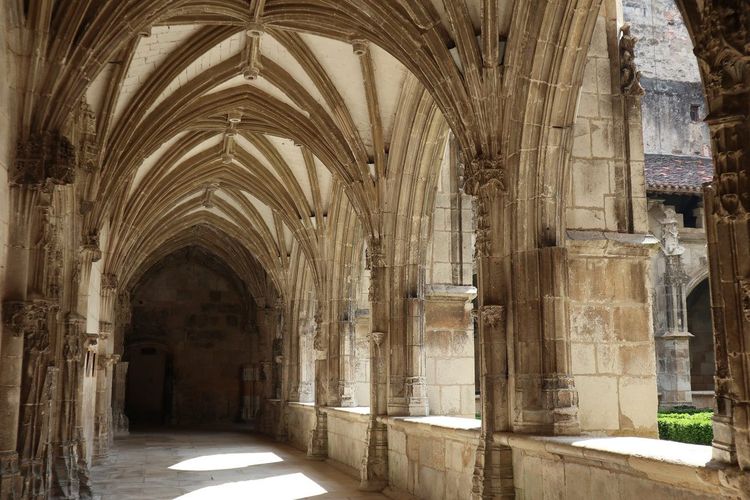
Inside, look up towards the western dome: it bears medieval frescoes depicting the stoning of Saint Stephen, rediscovered and restored after centuries hidden beneath a coat of limewash. The Flamboyant Gothic cloister, attached to the south side of the building and completed at the very beginning of the 16th century, creates a striking contrast with the Romanesque austerity of the sanctuary: its open-work galleries and keystones carved with figures and fantastical animals can be visited free of charge during opening hours.
Allow a good half hour for the nave and cloister, longer if you linger in the side chapels added between the 15th and 17th centuries. Admission to the building is free all year round, making it one of the most rewarding visits in the historic centre when budget is a consideration. Organ concerts held on certain summer Sundays provide an additional opportunity to experience the remarkable acoustics of the domes. On the way out, the small place Chapou, lined with old houses, is an inviting spot to linger at a pavement café before plunging into the maze of medieval alleyways just nearby.
3. The Medieval Streets and Houses of the Vieux Cahors
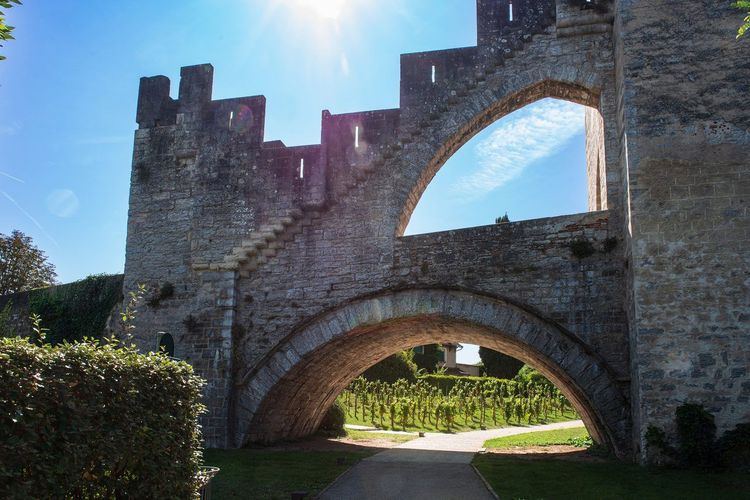
Nowhere else in the Lot will you find such a concentration of Gothic and Renaissance façades within such a compact area: several dozen buildings in the Vieux Cahors are protected as historic monuments, within a conservation zone covering most of the peninsula. The rue Nationale, formerly the rue Droite that ran the full length of the town, is where most of the curiosities are concentrated.
The façades on the rue du Château-du-Roi owe their distinctive look to their successive floors of mullioned windows, which draw closer together as the building rises — an optical device intended to visually enhance the height of the structure when seen from the street. Nearby, a craftsman's window houses a more recent local curiosity: a ball clock (Rue Nationale, 46000 Cahors, rated 4.4/5 on Google with 284 reviews) whose visible mechanism rolls brass balls down ramps to count the minutes — a miniature theatre that unfailingly captivates children.
As you stroll, you will also come across the Maison de Roaldès, also known as the Maison de Henri IV, with its corbelled corner turret and sculpted mullioned windows, as well as former merchants' houses whose ground floors in stone contrast with the brick upper storeys. The district lends itself to aimless wandering: every lane opens onto a courtyard, a vaulted passageway or a nail-studded door. To keep your bearings while exploring, an audio-guided tour helps pick out the details that a hurried eye might miss — a gargoyle, a carved date, a coat of arms worn smooth by time. Stroll preferably in the late afternoon, when the low light rakes the façades and shopkeepers raise their shutters, giving a livelier sense of the district than at the busy midday rush.
4. The Cahors Market: Covered Halls and Open-Air Stalls
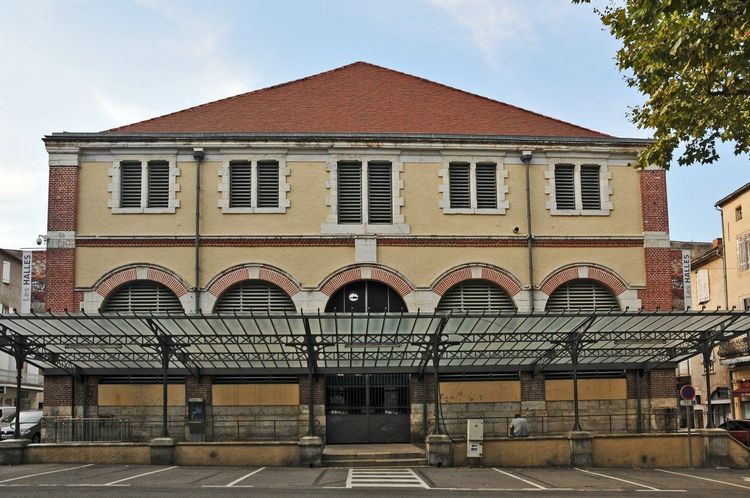
Twice a week, on Wednesday and Saturday mornings, place Jean-Jacques Chapou and the streets of the historic centre fill with stalls that spill over into the neighbouring alleyways. The Halles de Cahors (Place Charles-de-Gaulle, 46000 Cahors, rated 4.3/5 on Google with 1,266 reviews) permanently house around twenty food shops: affineur cheese-makers specialising in rocamadour, poultry sellers focusing on Lot foie gras, and wine merchants presenting vintages from the Cahors appellation.
The Saturday market, the most abundant, extends well beyond the covered halls: Quercy walnut producers, market gardeners from the Quercy blanc, black truffle stalls in the winter season — Lot truffles sometimes changing hands directly on the pavement between December and February. Arrive before 10 a.m. if you want to avoid the crowds and have a real choice among the best produce. Neighbouring restaurants often serve a market menu put together that very morning from the day's arrivals, a simple way to turn a stroll into a memorable meal. Bear in mind that the halls stay open outside market days too: even on weekdays you will find everything you need to put together a picnic before heading up to Mont Saint-Cyr.
5. The Tour Jean XXII
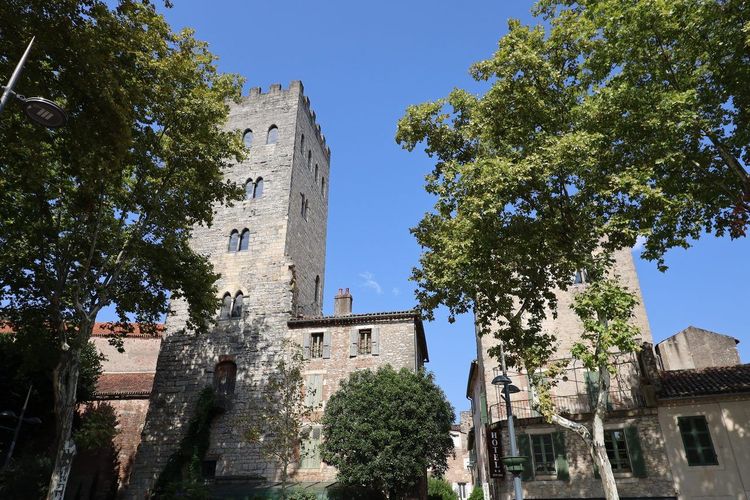
The only surviving remnant of the palace built for the family of Pope John XXII, a native of Cahors, the Tour Jean XXII (Boulevard Gambetta, 46000 Cahors, rated 4.8/5 on Google with 12 reviews) rises to 34 metres, making it one of the tallest surviving medieval civic towers in the Lot.
The rest of the Duèze palace disappeared through the demolitions and rebuilding that accompanied the laying out of boulevard Gambetta in the 19th century, which followed the line of the old town walls. Standing in isolation at the edge of the boulevard, the tower creates an architectural contrast that consistently surprises passing visitors. It cannot be visited inside, but warrants a five-minute stop for its sheer scale and the history it embodies: born in 1244 into a family of Cahors merchants, Jacques Duèze was elected pope in 1316 and reigned from Avignon until his death in 1334.
His papacy left a lasting mark on his home city, since he founded a university there in 1331 that for several centuries attracted law students from across the South-West, before it was merged with the University of Toulouse at the end of the 18th century. Looking up at the openings on the upper floors, you will better understand why a family that had risen from commerce to the summit of Christendom needed such a powerful statement in stone at the heart of the city.
6. The Quays and the Pont Louis-Philippe on the Lot
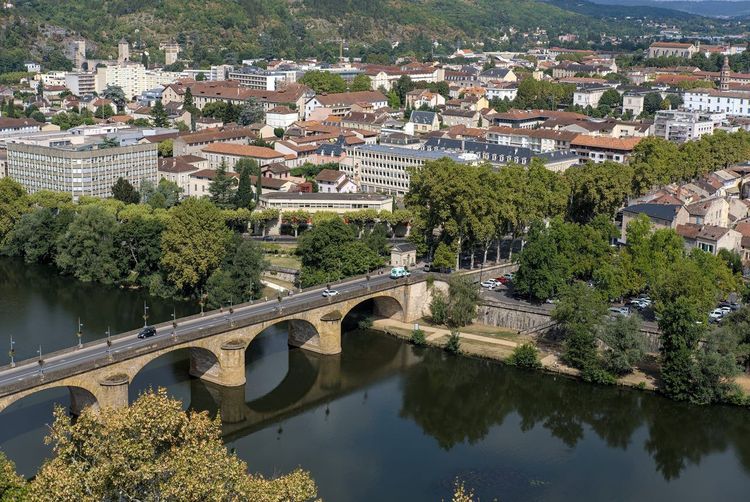
On the opposite side of town from Pont Valentré, to the east, the Pont Louis-Philippe (Quai de Regourd, 46000 Cahors, rated 4.4/5 on Google with 30 reviews) crosses the Lot and offers an entirely different perspective on the meander that wraps around Cahors. Built in the 19th century to ease traffic towards the right bank, it complements the old medieval crossing without ever competing with it aesthetically.
The quays that flank it — notably the quai Cavaignac and the quai Ludo-Rollès — form a plane-tree-shaded promenade that is much enjoyed at the end of the day. This is where early-morning joggers and families out for a walk gather, among the moored boats and the fishermen keeping an eye out for the Lot's wels catfish. You can also hop on a bicycle and follow the developed riverside path all the way to the valley in the direction of Douelle, a flat, easy route ideal for a family outing.
The full circuit of the peninsula along the quays covers around six kilometres with no difficulty, with constantly changing views: limestone cliffs opposite, terraced gardens, locks and old mills. Do it in the late afternoon, when the light falls on the pale stone and the traffic on the boulevard quietens down, and you will gain a full sense of the city's very particular geography.
7. The Fontaine des Chartreux
The Fontaine des Chartreux (Allée des Soupirs, 46000 Cahors, rated 4.1/5 on Google with 102 reviews) is a natural resurgence spring that in Gallo-Roman times gave the entire city its name: Divona, the divine source.
This karstic spring already supplied Cahors in Roman times via an aqueduct of which traces are still turning up in archaeological digs. To this day it continues to provide part of the modern city's drinking water — a continuous use spanning more than two thousand years that has few equivalents in France. Divers who have explored the submerged conduit have brought back quantities of ancient coins, thrown there by the inhabitants of Divona as offerings to the spirit of the spring.
The site, shaded by tall trees at the foot of the cliff, invites a welcome cool break after crossing the Vieux Cahors, particularly during the July and August heat when the spring's flow remains remarkably constant. You are here just a few minutes on foot from Pont Valentré, making this a natural combination: the bridge, the spring, then the walk back up to the centre along the quays.
8. The Hôtel de Roaldès
With its corbelled turret and finely carved Renaissance windows, the Hôtel de Roaldès (Rue Bergougnoux, 46000 Cahors, rated 4/5 on Google with 5 reviews) illustrates the wealth of the merchant families who made their fortunes through river trade and the wine business in the 15th and 16th centuries.
The building owes its nickname of 'Maison de Henri IV' to a local tradition claiming that the future king stayed here, though no historical source has ever properly confirmed the anecdote. No matter: the façade, with its mullioned openings and interior spiral staircase, remains one of the most photographed in the district. It is not systematically open to visitors — its rooms now serving as a venue for occasional events and exhibitions — but the exterior more than justifies the short detour from the cathedral, less than five minutes on foot.
9. The Arc de Diane
The most visible remaining trace of the Gallo-Roman baths of ancient Divona, the Arc de Diane (Quartier de la gare, 46000 Cahors, rated 4.1/5 on Google with 13 reviews) forms a brick-and-stone archway about ten metres high, standing today just steps from the SNCF railway station, in a green space freely accessible to all.
Despite its evocative name, no serious archaeological evidence has ever linked this ruin to a cult dedicated to the goddess Diana: the designation is largely the product of the scholarly fancy of past centuries, when Roman ruins were habitually given mythological names. More recent research suggests it was in fact part of the public baths of the ancient city — a monumental complex whose original footprint far exceeded what remains today.
The site takes only a few minutes to visit and requires no ticket. Follow it up with the amphitheatre ruins, about ten minutes' walk towards the centre: the two ensembles tell the same story of the Roman city that preceded by a thousand years the episcopal town you are exploring today.
10. The Barbacane and the Tour Saint-Jean
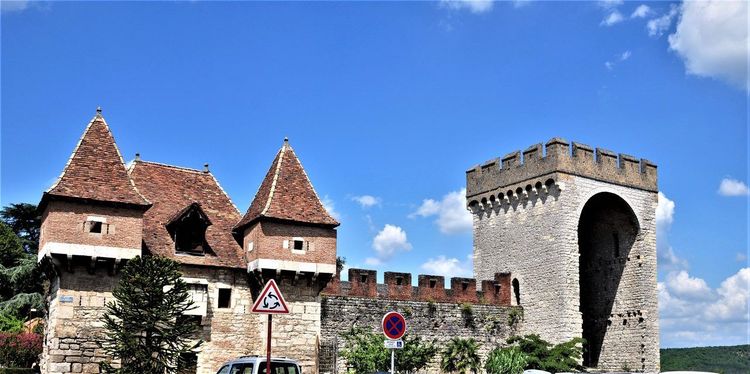
At the northern tip of the peninsula, where the bend of the Lot closes in and the city reconnects with the mainland through a narrow passage, stands the fortified ensemble of the Barbacane and the Tour Saint-Jean (Rue de la Barbacane, 46000 Cahors, rated 4.4/5 on Google with around 70 reviews).
This defensive lock once guarded the only viable land approach to the city, with the rest of the site naturally ringed by the river. The Tour Saint-Jean, often called the Tour des Pendus, completes a system of fortifications built and reinforced between the 14th and 16th centuries as artillery evolved and the ramparts had to keep pace. The ruins lend themselves particularly well to a photograph from the edge of the boulevard, with the limestone hills of the causse closing off the valley in the background.
For visitors with an interest in military history, the spot recalls the most violent episode in the city's past. In May 1580, during the seventh War of Religion, Henri de Navarre — the future Henri IV — seized Cahors, a prosperous Catholic city, after three days and three nights of street fighting conducted barricade by barricade. His men had slipped inside by surprise before opening one of the gates from within. The capture of Cahors dramatically enhanced the military prestige of the future King of France, and the memory of those days remains vivid in local accounts.
From here, make your way back into the Vieux Cahors through the alleyways of the centre: you will be following, without knowing it, the very axis taken by the attackers of 1580, today flanked by peaceful medieval façades.
11. The Maison de l'eau
Housed in a former pumping station on the banks of the Lot, just steps from the Fontaine des Chartreux, this small museographic space devoted to the hydraulic history of Cahors is worth a visit to understand why the city literally owes its name and its very existence to this spring.
The Maison de l'eau (Near the Fontaine des Chartreux, 46000 Cahors, rated 3.9/5 on Google with 109 reviews) presents, in a compact circuit, the history of water supply from the Gallo-Roman aqueduct that carried the spring water into the town centre, through to the collection techniques used from antiquity to the modern installations still in service today. The machinery from the old pumping station, preserved on site, gives a very tangible idea of what it took to supply a provincial town with water in the 19th century.
Allow about half an hour, making it ideal as a complement to a stop at the neighbouring spring. Opening hours are seasonal and often limited to the summer months: check times with the tourist office before heading there, especially outside school holidays.
12. The Roman Amphitheatre Ruins
Beneath the town centre, directly below place Charles-de-Gaulle, lie the foundations of a Gallo-Roman amphitheatre from the era of Divona, the ancient city from which Cahors inherited its location. The structure measured approximately 110 by 90 metres, a scale that would have accommodated several thousand spectators.
The ruins were uncovered during the preventive excavations of 2006 and 2007, carried out ahead of the construction of the town centre's underground car park. Rather than destroying them, the city chose to incorporate them into the structure: since the car park opened in April 2009, part of the ancient masonry has been visible from a viewing platform fitted out on the first underground level, lit up and accompanied by explanatory panels.
The scene is disorienting: you walk down a concrete ramp between two rows of parked cars, and find yourself face to face with the walls of a Roman amphitheatre. The visit takes only a few minutes and costs nothing, but it permanently changes the way you look at the rest of the old town. Above all it is a reminder that Cahors, before becoming the medieval episcopal city you are walking through today, was a thriving Roman settlement connected by river to the rest of Aquitaine.
13. The Cahors Vineyard and Its Wine Cellars
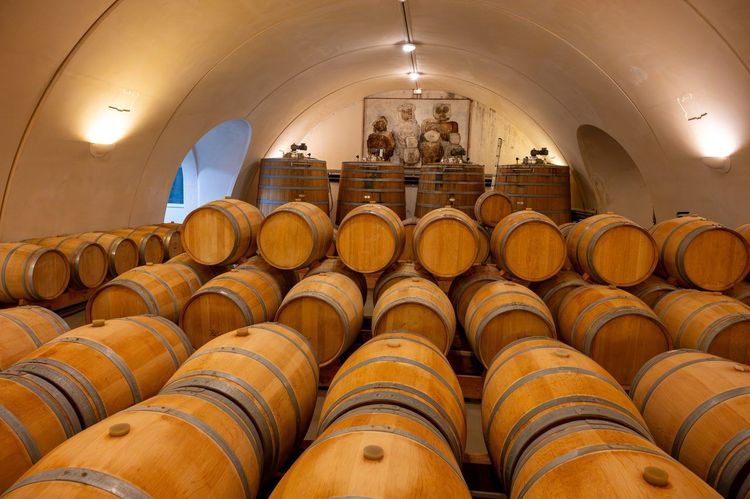
Even before Bordeaux wines came to dominate the English market, Cahors wine — made from the malbec grape (known locally as côt or auxerrois) — was already being exported to England and the papal court at Avignon under the name 'black wine', prized for its deep colour and exceptional ageing potential.
The Cahors appellation vineyard now extends over nearly 4,000 hectares spread along the meanders of the Lot, across the alluvial terraces and the surrounding causse plateaus, with several dozen estates open for visits and tastings. The Maison des Vins du Malbec (Square Bessières, 46000 Cahors, rated 4/5 on Google with 1 review), located right in the town centre, brings the offer together in one place: à la carte tastings, personalised advice based on your preferences, and direct sales from a selection of estates that would be time-consuming to visit individually in a single day.
If you have an extra half day, several estates fifteen to twenty minutes away by road, around Luzech or Puy-l'Évêque, offer cellar tours with explanations of traditional winemaking methods and more recent biodynamic innovations. Book ideally for late morning: the tasting then pairs perfectly with lunch on a terrace overlooking the vines, before heading back in the afternoon. Budget around 8 to 15 euros on average for a guided tasting of three to five wines — a cost easily justified by the quality of the advice on hand — and designate a driver: the valley roads wind considerably.
14. A Canoe Descent or a Cruise on the Lot
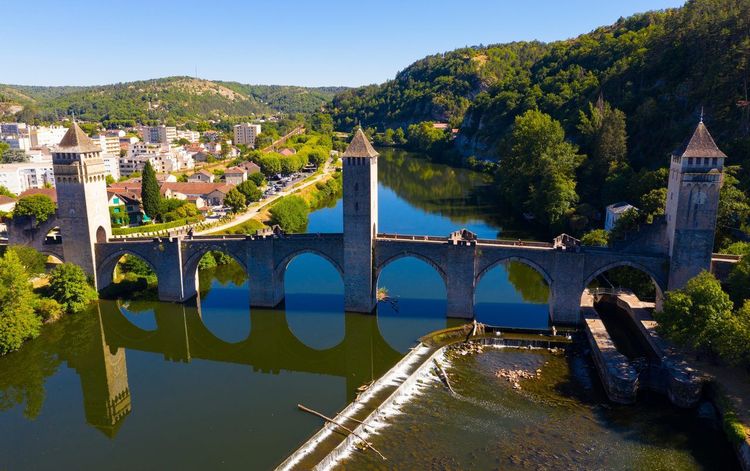
The Lot, a calm and navigable river for much of its course, is particularly well suited to a kayak or canoe trip departing from Cahors — an activity that lets you admire Pont Valentré and the limestone cliffs from an angle that walking never reveals.
Several hire operators on the riverbanks, both in town and in the nearby villages of Douelle and Bouziès, offer craft by the hour or half-day, with a shuttle service that saves you from paddling back upstream. Allow about two hours for a leisurely trip downstream from Cahors, punctuated by passages beneath cliffs several dozen metres high where raptors sometimes nest. Prices generally run from around 15 to 25 euros per person depending on duration and pick-up point.
If you would rather stay dry, guided cruises on passenger boats depart from the quays close to Pont Valentré and offer a trip of about an hour and a half including a lock passage, with commentary on the river history of the city: the Lot was for a long time a major transport route for wine and coal, before the railway took over in the 19th century. Families with young children generally prefer this option, which is more comfortable than wielding a paddle under the July sun. Bring a hat and sunscreen whatever you choose: on the water at midday, the glare surprises even seasoned visitors.
15. The Hike up Mont Saint-Cyr
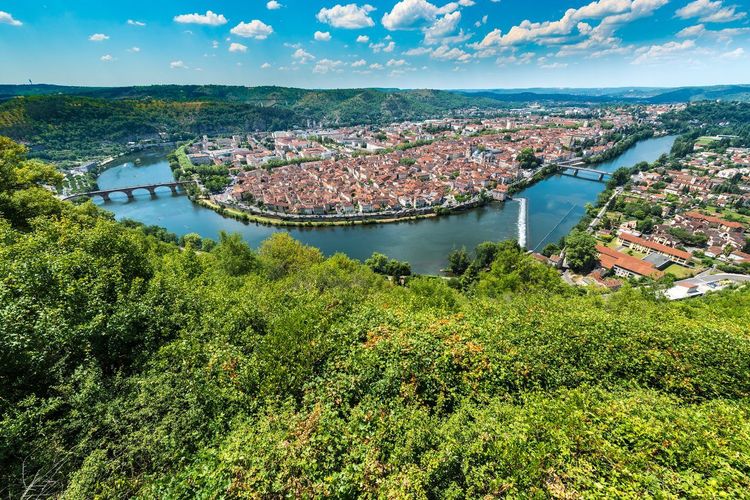
To gain height above the city and grasp in a single glance why Cahors sits entirely within a loop, climb up to Mont Saint-Cyr (Route du Mont Saint-Cyr, 46000 Cahors, rated 4.7/5 on Google with 200 reviews), a promontory that dominates the meander of the Lot at approximately 264 metres above sea level, on the south bank.
From the viewing platform at the summit, the panorama takes in the entire peninsula, Pont Valentré, the cathedral and the tiled rooftops of the Vieux Cahors, with the hills of the causse stretching away to the horizon behind them. The waymarked path that starts from the southern districts climbs about 4 kilometres return, with a moderate ascent of around 150 metres that most walkers can manage in just over an hour. A road also leads to the top by car if you are travelling with young children or if the heat puts you off the effort.
Opt for early morning or late afternoon in summer to avoid the heat, and bring water: the route, largely exposed to the sun on its upper section, crosses the dry grasslands typical of the Lot causse, with a few wild orchids visible in spring for those who know where to look. The sunset from this promontory, when the golden light rakes the rooftops below, is one of the most photographed moments for passing visitors. An orientation table helps identify the surrounding relief, from the causse de Limogne to the first folds of the Quercy blanc.
16. The Musée Henri-Martin
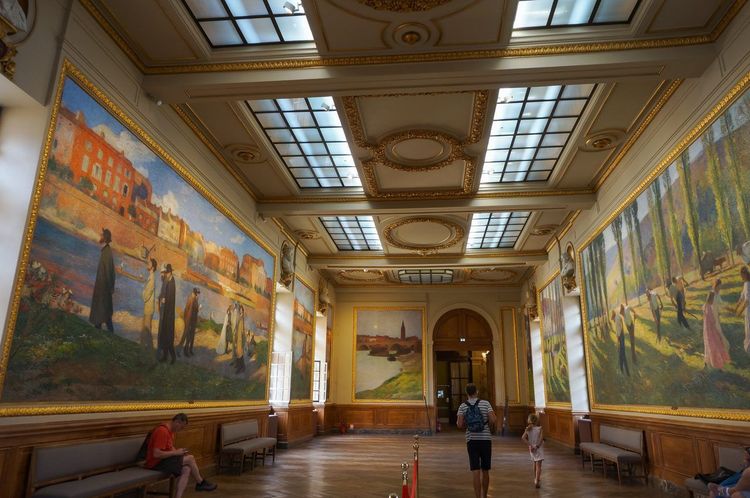
Housed in the former bishop's palace, just steps from the cathedral, the musée Henri-Martin (792 Rue Émile-Zola, 46000 Cahors, rated 4.7/5 on Google with 236 reviews) takes its name from the Post-Impressionist painter Henri Martin, born in Toulouse but deeply attached to the Lot, where he owned a property in Labastide-du-Vert.
The collections combine works by the painter — including canvases depicting the landscapes of the Lot in the very distinctive light of his style — with an archaeological collection tracing the history of Divona from the Gallo-Roman period through to the Middle Ages. A section devoted to Léon Gambetta, the statesman born in Cahors in 1838 and a key figure of the Third Republic, completes the circuit with personal objects and period documents.
The museum reopened in 2022 after several years of extension and renovation works, with a completely rethought display and new temporary exhibition spaces. The visit, spread across several levels, typically takes between one and one and a half hours — a compact format that fits well as a cultural break between two legs of a walk through the Vieux Cahors. It is also the best shelter in the city on a rainy day.
17. A Day Trip to Saint-Cirq-Lapopie
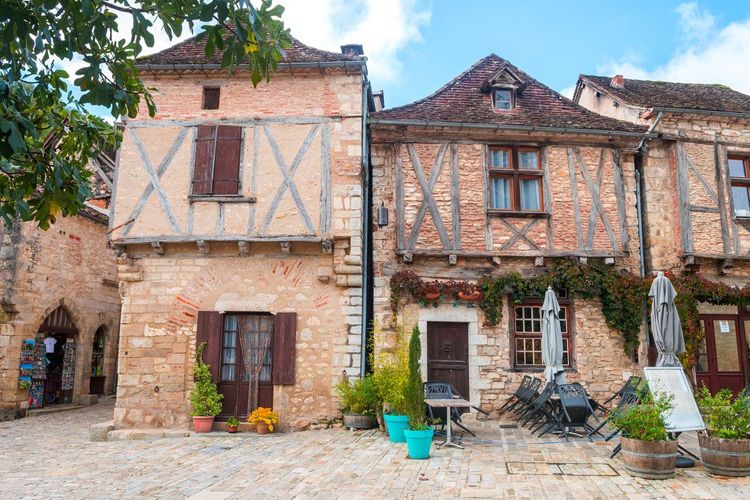
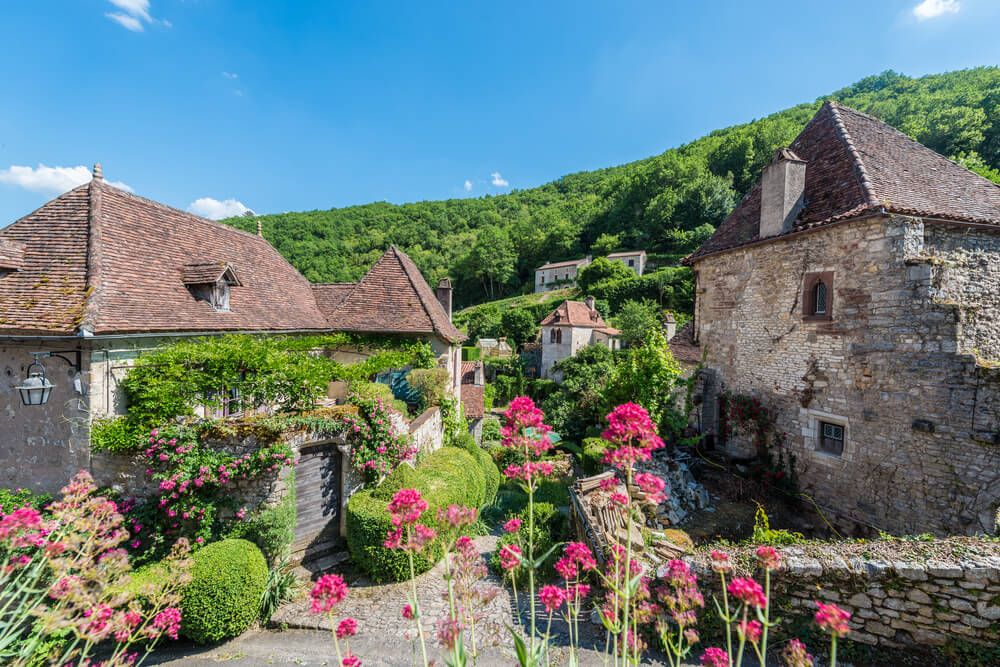
About thirty minutes' drive east of Cahors, perched on a limestone cliff a hundred metres above the Lot, the village of Saint-Cirq-Lapopie (46330 Saint-Cirq-Lapopie, rated 4.7/5 on Google with 8,000 reviews) was voted France's favourite village in 2012 in a television programme, a title that has considerably boosted visitor numbers ever since.
Its cobbled streets, half-timbered houses clinging to the cliff and the ruins of the castle that towers over the village make it one of the most photographed sites in the Lot — and rightly so. The Surrealist writer André Breton owned a house here and wrote that he had 'ceased to desire to be anywhere else', a phrase that has become the emblem of the place. Many craft workshops, particularly jewellers and wood-turners, occupy the ground floors of the medieval houses today, carrying on a long-standing local artisanal tradition.
If you want to avoid the crowds — which are considerable in July and August on the handful of main streets — opt for a visit at the end of the day, when the coaches have left and the evening light sets the pale stone façades aglow. Parking is in paid car parks either below or above the village, with a walk uphill in either case. The towpath cut into the cliff below the village towards Bouziès also offers one of the finest short walks in the department, following the tracks of the haulers who once pulled the gabarres upstream by sheer physical strength.
The combination of Cahors in the morning and Saint-Cirq-Lapopie in the afternoon remains the most recommended itinerary by local residents for those with only one day in the area.
18. Cahors after Dark
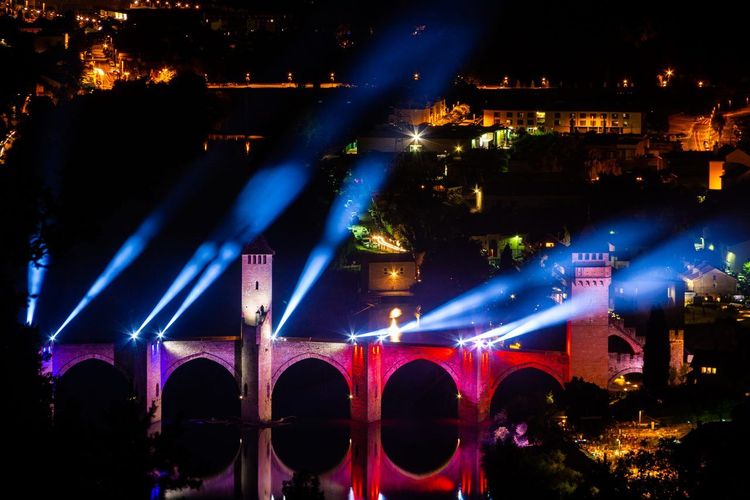
Once the tour buses have gone, Cahors changes face. The terraces of place François-Mitterrand (Place François-Mitterrand, 46000 Cahors, rated 4.5/5 on Google with 19 reviews) and the surrounding streets fill up in the evening, driven by a wine-bar scene where local vintages are of course served by the glass, accompanied by boards of charcuterie and Lot cheeses.
In summer, the Cahors Blues Festival, held in late July since the early 1980s, draws tens of thousands of spectators each year to several stages dotted around the city, with a line-up that has featured a great many of the genre's big names. Outside the festival period, the town centre remains animated by a handful of restaurants that put their own spin on Quercy classics — foie gras, duck confit and truffle in season — in settings ranging from a lively bistro to a more refined table.
You can also enjoy a night-time stroll along the illuminated quays, where the lit-up Pont Valentré presents a very different spectacle from its daytime self — more intimate and far less busy with groups. Allow about an hour to complete the loop from the cathedral, via the riverbanks and boulevard Gambetta, the commercial thoroughfare whose plane trees and terraces turn it into an open-air living room from the first warm evenings of the year.
19. The Secret Gardens Scattered through the Old Town
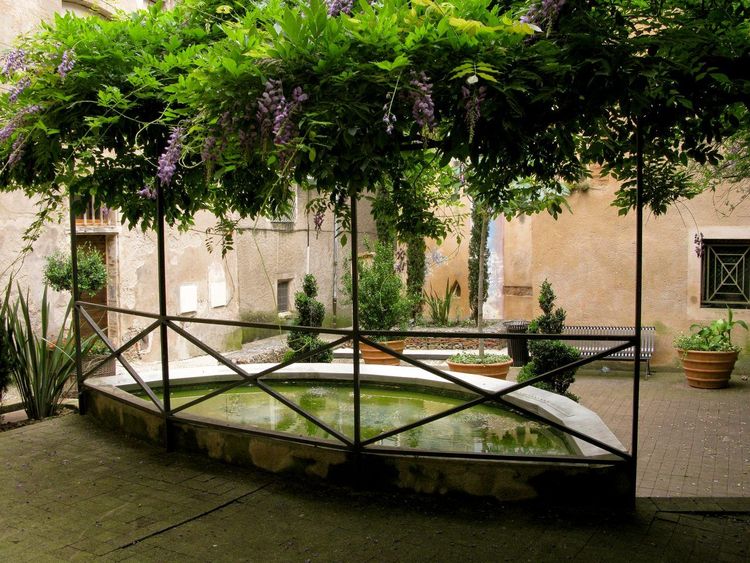
Here is one of the most endearing peculiarities of Cahors, and the one that hurried visitors almost always miss: around thirty secret gardens have been laid out since the early 2000s in the interstices of the old town — inner courtyards, bases of façades, overhanging terraces, forgotten little squares.
Each one tells of a medieval use of plants: the garden of simples for the pharmacopoeia, the garden of intoxication dedicated to the vine, the witches' garden, the troubadour's garden, a school vegetable plot converted into an educational space. A discreet trail marked on the ground in the shape of an acanthus leaf links these spaces into a route you can follow freely, map in hand, in one to two hours depending on detours taken. The ensemble has earned the city national recognition as a remarkable garden and now structures much of the heritage walk.
The full itinerary is free and accessible at any time of day, making it an excellent option when the monuments close between noon and two. Pick up the map at the tourist office at the bottom of the boulevard, or simply follow the acanthus leaves fixed into the paving: they will lead you from the cathedral to the quays through alleyways you would never otherwise have entered. In spring, when wisteria spills over the walls and old rose varieties come into flower, the walk takes on an entirely different dimension.
20. Cahors, a Major Stop on the Camino de Santiago
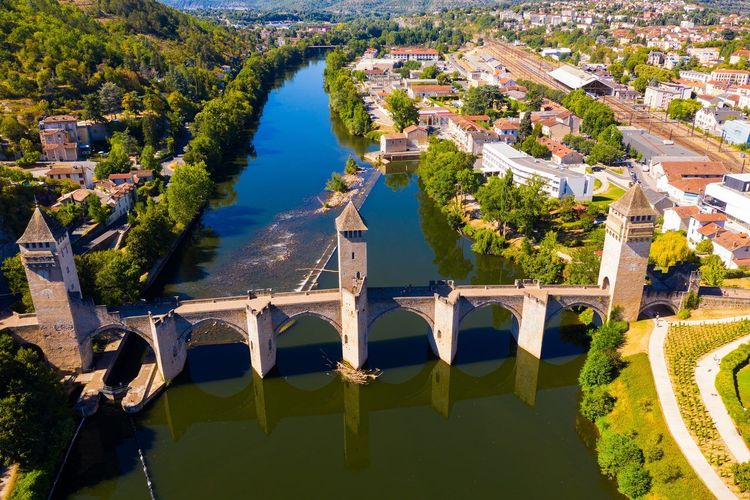
If you spot walkers with heavy packs on Pont Valentré, it is no coincidence: the Via Podiensis — the GR 65 that links Le Puy-en-Velay to the Pyrenees — crosses the city from one end to the other, and it is precisely for this reason that the bridge features on the UNESCO World Heritage List.
Pilgrims generally arrive from the causses de Limogne, cross the Lot to the east of the city, pass through the old town and exit via Pont Valentré before tackling the steep climb of the causse towards Lascabanes. This position as a staging post explains the density of accommodation for walkers in the town centre — from communal gîtes to bed and breakfasts — and the distinctive atmosphere of summer mornings, when the first departures are made as early as 6 a.m. to beat the heat.
Nothing stops you from sampling this experience for half a day: the climb from Pont Valentré up to the croix de Magne along the hillside gives, in under an hour's walking, one of the finest viewpoints over the bend of the Lot, with the old town spread out below. The GR waymarks, painted in white and red, guide you along the route without the need for a map. A simple way to understand why Cahors, for a thousand years, has been a city as much passed through as visited.
FAQ
How much time should you plan to visit Cahors?
A full day is enough to see the highlights of the Vieux Cahors, Pont Valentré and the cathedral. To add a hike up Mont Saint-Cyr, the secret gardens trail, a wine tasting and a trip to Saint-Cirq-Lapopie, allow two full days, or even a complete weekend if you also want to canoe down the Lot.
What to do in Cahors when it rains?
The cathedral of Saint-Étienne, its covered cloister, the musée Henri-Martin and the Maison de l'eau can all be visited entirely under cover. The covered market halls are also perfectly usable in bad weather, as are the tasting cellars of the Maison des Vins du Malbec in the town centre. The amphitheatre ruins, integrated into the underground car park, make an unexpected but effective rainy-day retreat.
What to do in Cahors in the evening?
The wine bars on place François-Mitterrand and the surrounding streets liven up the town centre in the evening, with tastings of local vintages and light bites. In summer, the Cahors Blues Festival in late July and night-time walks along the illuminated quays round off an evening in Cahors.
What are the most beautiful villages around Cahors?
Saint-Cirq-Lapopie, voted France's favourite village in 2012, comes out well ahead, about thirty minutes away by road. Luzech, Puy-l'Évêque and Bélaye, all nestled along the Lot at the heart of the vineyards, usefully complete a multi-day itinerary through the valley.
How to visit Cahors on foot?
The Vieux Cahors can easily be covered on foot in half a day, from Pont Valentré to the cathedral via the Halles, the secret gardens and the Barbacane. A Ryo audio-guided tour, like the ones offered in Albi or Sarlat-la-Canéda, gives a good idea of the format to adopt so as not to miss any of the architectural details scattered through the alleyways.
What to do in Cahors with children?
The ball clock in the Vieux Cahors, canoeing on the Lot and the Maison de l'eau are all excellent family options. The Saturday morning market, with its smells and colours, is also generally a big hit with younger visitors, as is hunting for acanthus leaves along the secret gardens trail.
What is the best time to visit Cahors?
Spring and early autumn offer pleasant temperatures for walking and paddling without enduring the sometimes oppressive heat of July and August in the enclosed valley of the Lot. Summer remains the ideal time, however, to enjoy the blues festival and evening terraces.
At the end of this overview, Cahors proves far richer than its modest size might suggest: a UNESCO-listed fortified bridge, an extremely rare domed cathedral, a Roman amphitheatre beneath a car park, a centuries-old vineyard and a neighbouring village voted France's favourite together form an ensemble rarely found within such a compact area. Whether you have a single day or a full weekend, the town lends itself equally well to a quick tour of the Vieux Cahors or a longer stay combining vineyards and canoeing on the Lot.
If you want to structure your route without spending hours planning, the Ryo app is a practical ally for turning a list of addresses into a genuine guided walk, neighbourhood by neighbourhood. And if your itinerary through the South-West extends beyond the Lot, the audio-guided tours of Toulouse, Montauban and Rodez pick up the baton less than two hours away by road, letting you move from one stone-and-brick city to the next without ever repeating the same visit.