






Créé par Romane, le 17 nov. 2026
Votre guide Ryo
Rodez, France
The Ancient Historic City
Parcours audioguidé pour visiter Rodez en 1 jour
In the heart of the Aveyron region, Rodez blends medieval heritage with contemporary vitality. With its Gothic cathedral, historic streets, and the Soulages Museum, the town offers a balance between history, art, and a refined way of life.
Quand partir à Rodez ?
Jan.
4°
10
Feb.
5°
9
March
8°
10
April
11°
11
May
15°
12
June
19°
10
July
22°
8
Aug.
22°
8
Sept.
19°
9
Oct.
14°
10
Nov.
8°
10
Dec.
5°
10
The climate in Rodez is a degraded oceanic type with a mountain influence, featuring cool winters, generally between 0 and 8°C, sometimes accompanied by frost, and moderately warm summers, most often ranging from 22 to 28°C, with variations linked to altitude; the best times to visit are typically from April to June and then from September to October, when temperatures are pleasant, the landscapes of the Aveyron region are particularly green, and conditions are ideal for enjoying the historic center and surrounding areas in a more peaceful atmosphere.
Départ conseillé
No need to worry about where to begin! Our tours are designed as a loop, so you can jump in wherever you are. The navigation system and audio-guide will automatically adjust to your location. However, if you happen to be nearby, we do have a preferred starting point: in front of Notre-Dame de Rodez Cathedral
Parking à proximité
Parking Foch : place Foch
In Rodez, you can park on the street in the city center, with the first 20 minutes free and a maximum stay of 2 hours 30, or use one of the underground car parks such as Foch, Jacobins, or Foirail, all conveniently located near the cathedral and museums. For longer, free parking, several peripheral lots like Camonil or Burloup are available, some connected by bus. Finally, certain blue zones allow free parking for up to two hours with a parking disc.
Découvrez 18 lieux d'intérêt pour visiter Rodez





What to see in Rodez on your 1h tour?
This 2.5 km loop takes about 1 hour and links 16 sights. Starting at Notre-Dame Cathedral, it crosses the Cité quarter then the Bourg, passing galleries and museums of the old town, before reaching the Foirail garden, its bandstand and the Soulages museum, ending in the Lucadou quarter. With the Ryo app in your ears, eight centuries of Rodez history unfold at your own pace, between pink stone and contemporary art.
Information checked in November 2026 and subject to change.
1 - Notre-Dame de Rodez Cathedral
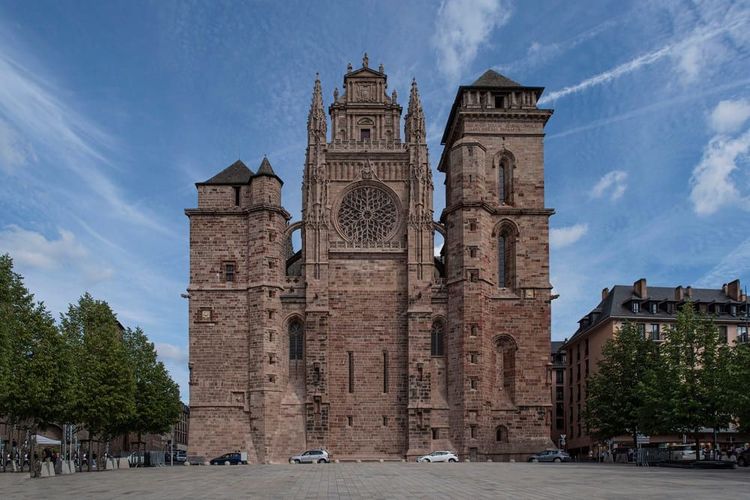
Built of sandstone, Notre-Dame Cathedral has overlooked Rodez for over seven centuries, one of the great Gothic landmarks of southern France. Work began in 1277, after the Romanesque bell tower collapsed, and lasted nearly three centuries, slowed by the Hundred Years' War and later by the Black Death. Its nave reaches 107 metres, while the flamboyant bell tower, finished by Antoine Salvanh between 1513 and 1526, stands taller than Notre-Dame de Paris. Inside, a carved rood screen, an organ and 27 chapels meet contemporary stained glass.
Free entry
2 - Former Episcopal Palace
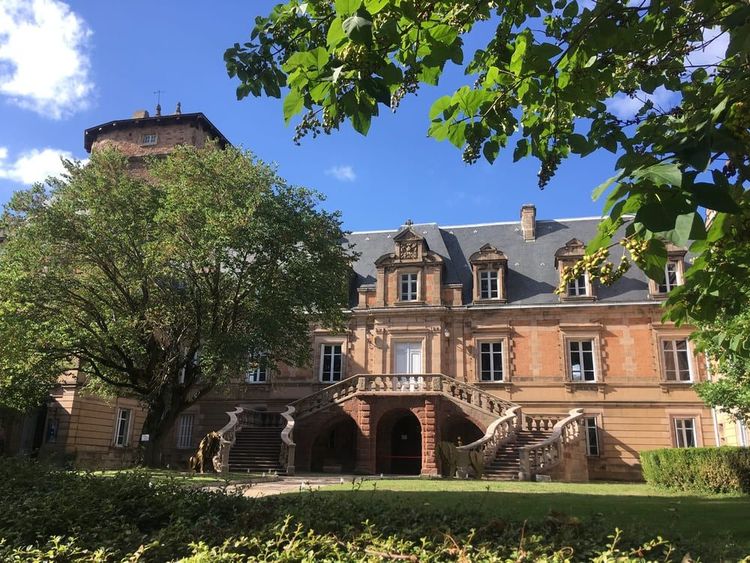
The diocese of Rodez traces back to the 5th century and its first bishop, Saint Amans, settled on the site of the ancient Ruteni city. On this spot stood three successive palaces: the first two vanished, one cleared to enlarge the cathedral, the other wrecked during the Wars of Religion, before Bishop de Lusignan raised this one in 1694, with its horseshoe staircase and French-style gardens. Two notable bishops left their mark here: François d'Estaing, who finished the nearby cathedral, and the Renaissance humanist Georges d'Armagnac.
Free to see from outside
3 - Place de la Cité
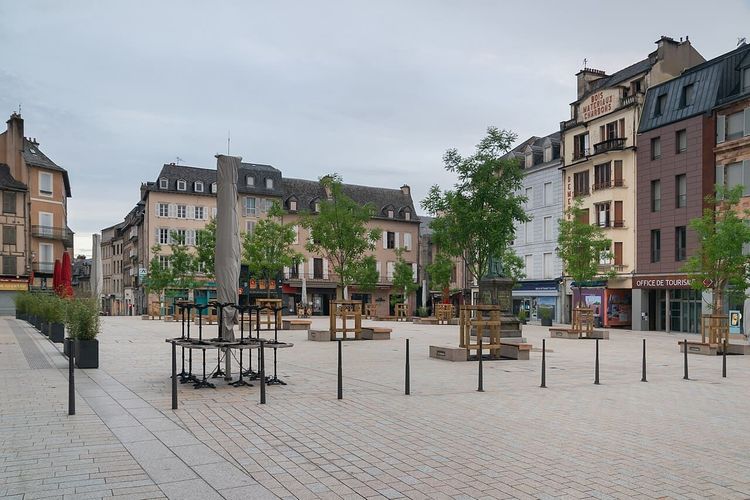
Place de la Cité fell, in the Middle Ages, under the bishop's authority, unlike the neighbouring Bourg, ruled by the counts. Redesigned between 2018 and 2020 with granite paving and built-in benches, it is now watched over by the statue of Archbishop Affre, a native of the Aveyron who became Archbishop of Paris in 1840. He died in June 1848 on the Paris barricades while trying to restore peace, becoming a national figure; the bronze statue, by Jean-Auguste Barre, was unveiled here in 1875.
Free entry
4 - Sainte-Catherine Gallery
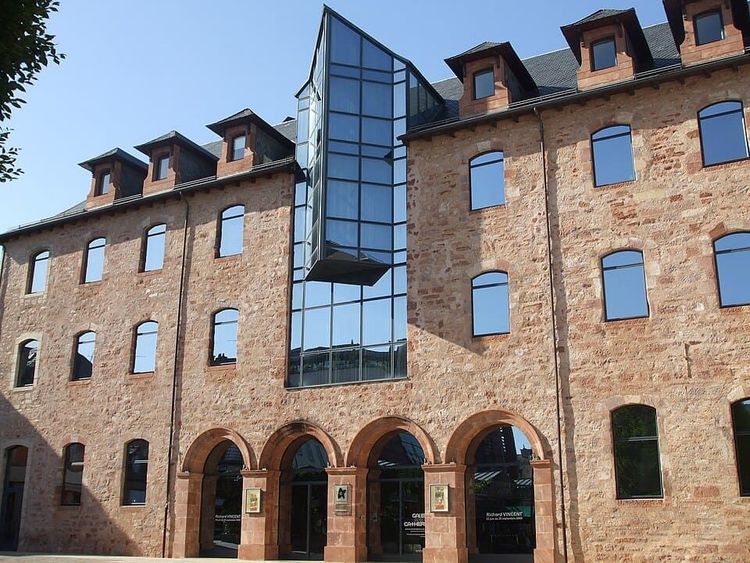
The only surviving wing of a vast Dominican convent founded in the late 13th century on Rodez's Roman forum, the Sainte-Catherine gallery once served as the monks' refectory. Turned into barracks in the 19th century and later a records depot, it became an exhibition space in the 1990s: four vaulted rooms where paintings, sculptures, photographs and installations meet the old stones, alongside the Fenaille and Soulages museums.
5 - Fenaille Museum
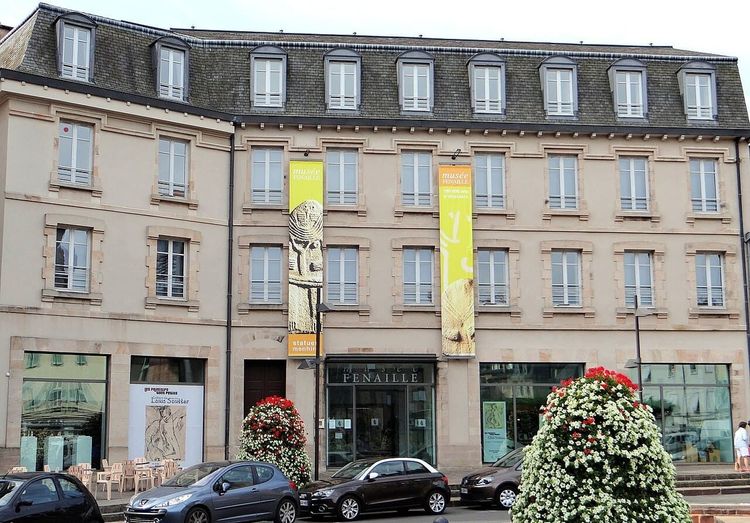
Housed on Place Raynaldy in the Hôtel de Jouéry, blending medieval and Renaissance architecture, the Fenaille museum takes its name from industrialist Maurice Fenaille, who gave the building in 1929 for a museum that opened in 1937. More than 1,100 pieces trace the Rouergue from 300,000 years ago to the Renaissance, among them the celebrated Lady of Saint-Sernin, a statue-menhir some 5,000 years old, Gallo-Roman remains, medieval sculptures and, thanks to Fenaille's friendship with Rodin, several works by the sculptor.
Paid entry (about €12)
6 - Denys-Puech Museum of Fine Arts
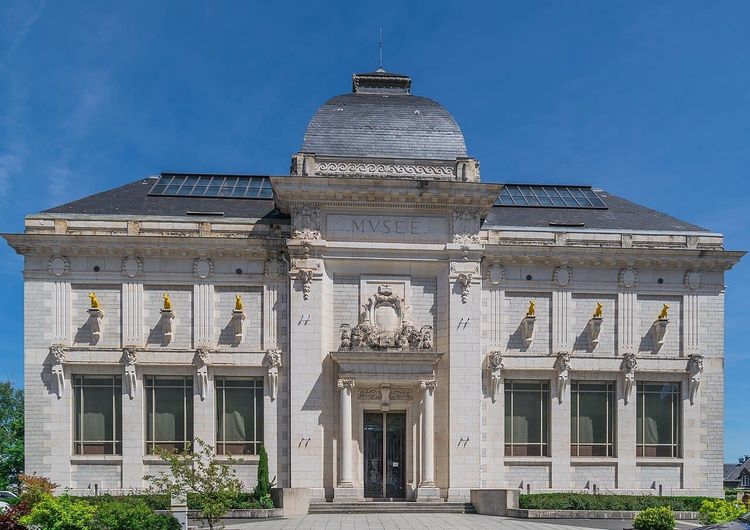
Founded in 1910 by local sculptor Denys Puech, with support from his friends Maurice Bompard and Eugène Viala, this museum occupies a bright building designed by architect André Boyer. It holds the complete studio collection of Puech, official busts and graceful female figures, alongside Bompard's orientalist canvases and Viala's engravings. On the façade, Aurèle's yellow dogs and works by François Morellet open the place to contemporary creation, with free admission.
Free entry
7 - Place du Bourg
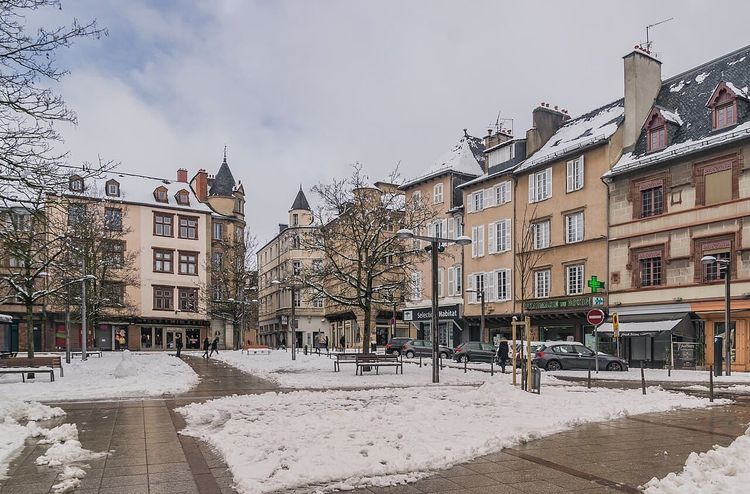
Place du Bourg stood opposed, in the Middle Ages, to the bishops' Cité: here ruled the counts, and trade thrived, a tradition alive today in the Wednesday and Saturday markets. The House of the Annunciation, raised from 1554 by a wealthy merchant, blends Gothic and Renaissance around a 16th-century bas-relief that gives it its name. Nearby stands the House of Armagnac, from the 1520s-1530s, named after the counts' castle that once stood on this spot, one of the city's finest Renaissance civic façades.
Free entry
8 - Royal Chapel of Rodez
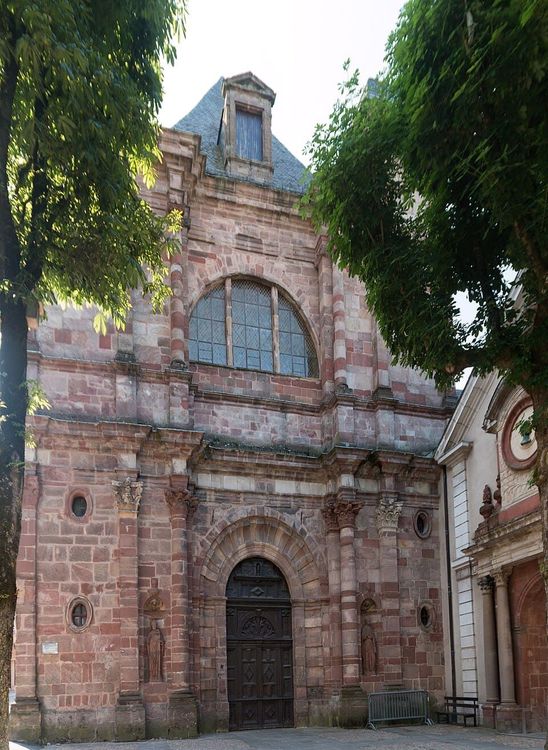
A remnant of the Jesuit college that Cardinal Georges d'Armagnac founded in 1562, counting 800 pupils by the following year, the Royal Chapel was built between 1581 and 1649 on the model of the Gesù in Rome. Its plain classical façade is flanked by two square towers, opening onto a Baroque interior adorned with Corinthian pilasters and a gilded altarpiece. Later a royal college, then Foch High School, it escaped demolition in the 1970s, and its recent restoration revealed two long-hidden frescoes.
9 - Foch Gallery
Right next to the royal chapel, this 17th-century building belonged to the same Jesuit complex before being reused by the neighbouring Foch high school, then threatened with demolition in the following century. Listed as a Historic Monument and saved in the 1970s, it now hosts, on Place Foch, regular exhibitions of paintings, photographs, sculptures and contemporary installations, carrying on the creative spirit that already filled this district.
10 - Gastronomy

No visit to Rodez is complete without aligot, that stretchy potato mash enriched with fresh tomme cheese, once served in the Aubrac's mountain huts. Local tables also feature farçou, a chard-and-sausage fritter, flaune, a tart flavoured with orange blossom, as well as tripoux, dried-cod estofinado, manouls and pascade. Roquefort, laguiole and pérail cheeses round things off, best paired with a glass of Marcillac wine grown just outside the city.
11 - War Memorial
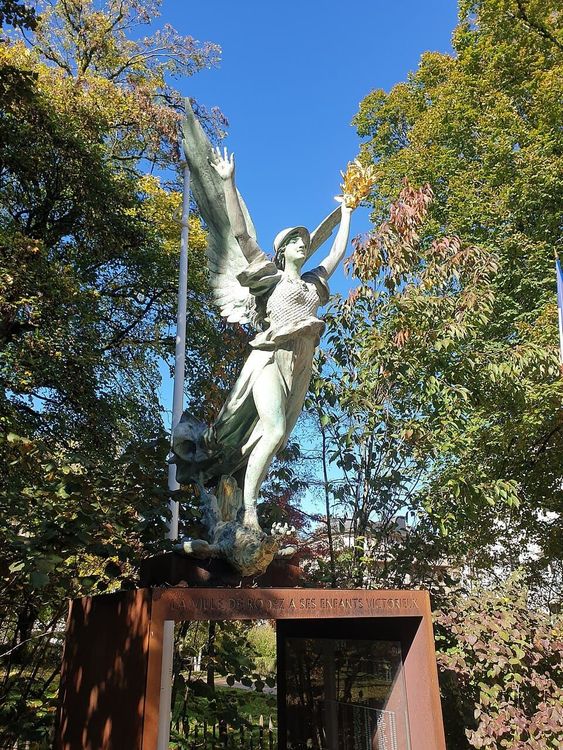
At the entrance to the Foirail garden stands the bronze Victory that Denys Puech sculpted in 1923, in memory of local soldiers killed in the Great War. The inscription on the base, surrounded by the names of the fallen, honours the city's "victorious sons." Commissioned as early as 1919 and debated at the time, the monument owes its restraint to its sculptor, who refused any fee; moved and restored in 2014, it still watches over this corner of the park.
Free entry
12 - Bandstand
An octagonal cast-iron silhouette dating from 1894, the bandstand of the Foirail garden came from architect Besse's design and founder Barthe's casting, his signature still visible on one column. It sheltered the band of the nearby regiment and, in the Belle Époque, drew families and strollers every Sunday. Of nearly 4,000 bandstands that once enlivened French towns, only a few hundred remain; weakened by corrosion, Rodez's own was recently restored to become once again an open stage for everyone.
Free entry
13 - L'Enlèvement
Standing over two metres tall, this stone sculpture titled L'Enlèvement bears the signature of André Deluol, a native of Valence and a fierce champion of direct carving: for him, the raw block already held half the subject. Dated 1937, it shows dynamic, almost dancing figures full of the youthful energy typical of his early style. The work belongs to a period when Deluol was gathering public commissions all across France, from Saint-Gaudens to La Seyne-sur-Mer, embodying the renewal of sculpture between the two wars.
Free entry
14 - Foirail Garden
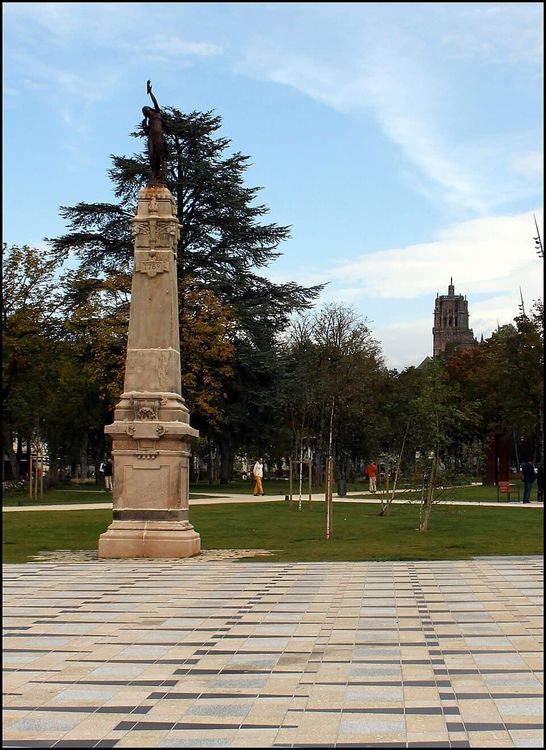
The Foirail garden takes its name from the cattle fairs and markets held here from the 17th century, long an economic engine for the region until the early 20th century. Redesigned over three hectares, a short walk from the cathedral, it is laid out in three moods: a wooded area at the entrance, a playground for children and a shaded grove, with benches, flower-lined paths and picnic spots for visitors to relax.
Free entry
15 - Soulages Museum
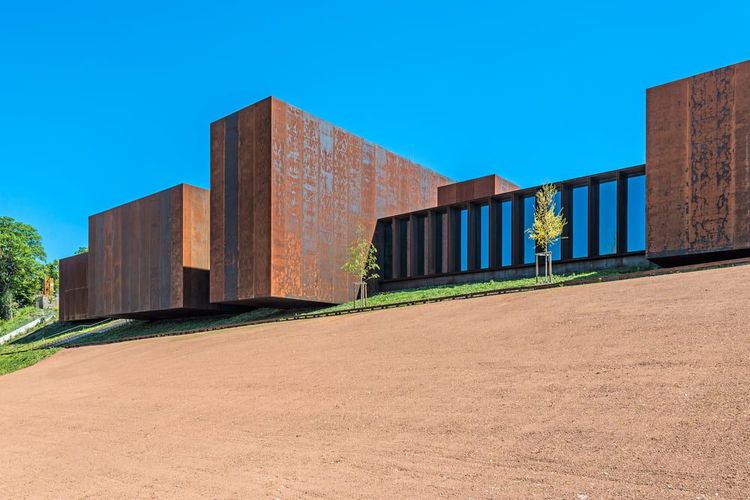
Opened in 2014 in the Foirail garden, the Soulages museum pays tribute to Pierre Soulages, born in Rodez in 1919 and who died in 2022 at 102, known as the master of Outrenoir for painting resolutely in black, letting light emerge from reflections and textures. More than 500 pieces, canvases, prints, bronzes and studies for the Conques stained glass, make this the largest Soulages collection anywhere. Designed by Catalan firm RCR Arquitectes, the corten-steel building merges with the garden.
Paid entry (about €12)
16 - Chapel of the Franciscan Sisters
In the Lucadou district, this chapel named for Saint Thérèse of the Child Jesus was designed by architect André Boyer in a sober neo-Gothic style, with stained glass and frescoes typical of the interwar years. It recalls the Franciscan sisters who settled in Rodez in the 1870s, arriving from Mur-de-Barrez to care for the sick at home, accompany the dying and educate orphans, a devotion especially valued during the great epidemics of the 1890s.
Which neighbourhoods does the tour cross?
On this loop, the route crosses the districts that trace Rodez's history, from medieval religious power to today's great museums.
It starts at Notre-Dame Cathedral, at the heart of the Cité quarter that once answered to the bishop, passes the former Episcopal Palace, then reaches Place de la Cité, fully redesigned between 2018 and 2020 (stops 1 to 3).
The route then enters the old town, among galleries and museums: the Sainte-Catherine Gallery, housed in the surviving wing of a Dominican convent, the Fenaille Museum with its prehistoric statue-menhirs on Place Raynaldy, then the Denys-Puech Museum of Fine Arts. It crosses Place du Bourg, once the domain of the counts of Rodez, rivals of the bishops of the Cité, before passing the Royal Chapel and the Foch Gallery, both heirs to the Jesuit college (stops 4 to 9).
On the way to the Foirail garden, it takes Allée Robert Taussat, where stop 10 is devoted to Aveyron cooking, then enters the park past the war memorial. Here come the bandstand, the L'Enlèvement sculpture and the Soulages Museum, before the loop ends in the Lucadou quarter, at the Chapel of the Franciscan Sisters, not far from the cathedral (stops 10 to 16).
How much does it cost to visit Rodez?
Of the 16 stops on the route, 8 can be visited without a ticket, from the cathedral to the Foirail garden, and the former Episcopal Palace (stop 2) is mostly admired from the street, as access inside may be limited. The Sainte-Catherine and Foch galleries, like the Royal Chapel, set their own visiting conditions, depending on what is on.
The two paid stops are the Fenaille and Soulages museums, bundled in a combined day ticket at €12; the Denys-Puech museum, for its part, remains free and is not covered by that ticket.
Information checked in November 2026 and subject to change.
Where to stop for a bite along the tour?
On Allée Robert Taussat (stop 10), the route pauses on Aveyron's regional cooking, to be tasted afterwards in the town's restaurants or at the Wednesday and Saturday markets on Place du Bourg (stop 7).
Aligot, a festive dish from the Aubrac mountain huts, blends mashed potatoes with fresh tomme cheese stretched into long, creamy ribbons. Farçou, a thick pancake of chard and sausage meat originally made to feed farmhands, and flaune, a delicate tart flavoured with orange blossom and sheep's milk curd, are also worth tasting.
Cheese lovers will find roquefort, laguiole and sheep's pérail on every table, best paired with a glass of Marcillac wine, produced not far from the city.
What to do in Rodez with children?
The Foirail garden makes an easy stop for a family break along the route.
Three settings follow one another: a wooded corner at the entrance, a playground for younger children, then a shady grove for a breather. Picnic areas and plenty of benches invite a proper break before walking on towards the Soulages Museum; the garden's opening hours vary with the season.
What should you know before visiting Rodez?
Before setting off, check the opening hours of several stops, which change with the season or with services.
Notre-Dame Cathedral and the Chapel of the Franciscan Sisters are places of worship: visits must respect services, and their hours vary. The Royal Chapel, which hosts concerts and cultural events, and the Fenaille, Soulages and Denys-Puech museums each keep their own seasonal hours, as does the Foirail garden that the route crosses.
At the end of the year, the tourist office publishes the festive programme, including the Christmas market and light displays: check it before you come.
What to see around Rodez?
Rodez makes a good base for exploring the Aveyron, and two other towns in the region can also be discovered on foot.
Some 38.5 km away, about 45 minutes by car, the village of Conques, listed among France's Most Beautiful Villages, gathers around the Sainte-Foy abbey church, whose stained-glass windows are prepared in studies shown at the Soulages Museum.
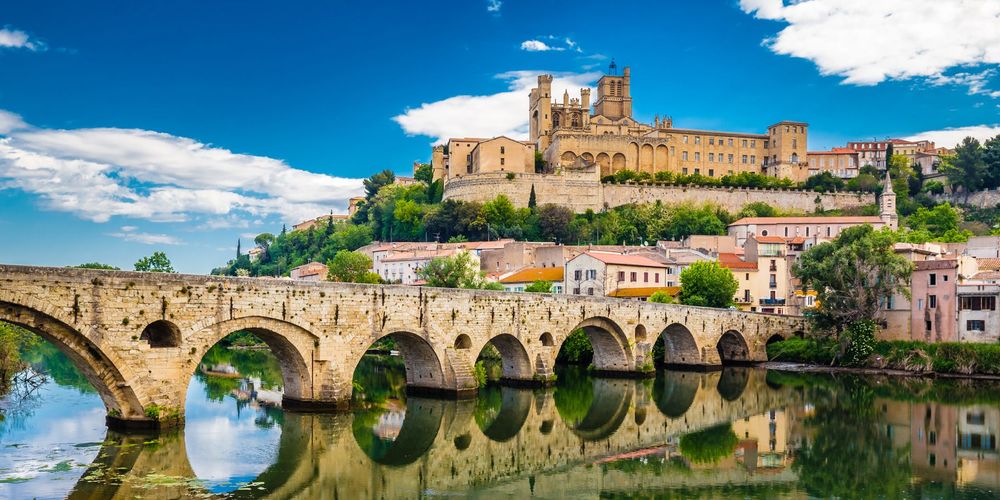
Two neighbouring towns also have their own audio-guided tour: Albi, 58 km away, unveils its red-brick lanes around the Sainte-Cécile fortress-cathedral, while Montauban, 104 km away, shows off its pink brick on its arcaded squares and stone bridge.
Le plein d'inspirations
Explorez le monde en totale liberté, à pied au cœur des villes ou au fil des routes. Nos guides audios transforment chaque destination en une découverte culturelle immersive et unique.
FAQ for visiting Rodez
When is the best time to visit Rodez?
The best time to discover Rodez runs from April to June, then from September to October. During these months, you'll enjoy pleasant temperatures and particularly green Aveyron landscapes. The oceanic climate with a mountain influence offers moderately warm summers, generally between 22 and 28°C, perfect for strolling through the medieval alleys. Winters remain cool, often ranging between 0 and 8°C with occasional frosts. In spring and autumn, tourist crowds are more moderate, allowing you to visit the Gothic cathedral and the Soulages museum in a peaceful atmosphere. These seasons also reveal all the beauty of the city's surroundings.
How many days do you need to visit Rodez?
Two days is an ideal length of time to fully appreciate Rodez. A full day lets you discover the historic heart, walking through the medieval alleys, visiting the majestic Gothic cathedral and exploring the Soulages museum, a true jewel of contemporary art. If you have a second day, you can deepen your visit with the other museums, stroll through the local markets and perhaps venture into the immediate surroundings. For an optimal discovery of the historic centre, the Ryo audioguide accompanies you with a narrated tour that reveals the secrets of this thousand-year-old city. A three-day stay would give you more time to savour the Aveyron art of living and explore the surroundings.
How do you get around Rodez?
Rodez's historic centre is ideally explored on foot, its human scale and cobbled alleys naturally inviting you to wander. Most of the major sites, from the cathedral to the Soulages museum, are just a few minutes' walk from the city centre. For longer journeys or towards the outskirts, the city bus network efficiently serves the various neighbourhoods. If you want to explore the surroundings of Rodez and the Aveyron, the car generally remains the most practical solution, offering you total freedom to discover the villages and landscapes nearby. Rental services are available in town. Taxis and private hire vehicles round out the options for occasional trips.
What are the absolute must-sees in Rodez?
Notre-Dame Cathedral, a Gothic masterpiece with its impressive bell tower, majestically dominates the city and is an absolute must-see. The Soulages museum, dedicated to the famous Aveyron artist, fascinates with its contemporary architecture and its exceptional collections. The medieval alleys of the historic centre transport you through the centuries, revealing half-timbered houses and charming little squares. Don't miss the Fenaille museum and its remarkable statue-menhirs, unique testimonies to the region's prehistory. Place du Bourg and its lively terraces embody the local art of living. For a complete and enriching discovery, the Ryo audioguide offers you a narrated tour that links these emblematic sites while unveiling captivating anecdotes and historical details.
Where can you park in Rodez?
Rodez has several parking options suited to visitors. The underground car parks in the city centre, notably near the cathedral and Place du Bourg, generally offer secure spaces in the immediate vicinity of the tourist sites. Surface parking areas complete the offer, often with progressive rates depending on the duration. For a day visit, opt for the park-and-ride car parks on the outskirts, generally cheaper and sometimes free, with shuttles to the historic centre. On-street parking remains possible but is often limited in duration and subject to a pay-and-display meter. On market days or during special events, arriving early will guarantee you more choice. Always check the local signage to avoid residential zones.
What are the culinary specialities of Rodez?
Rodez gastronomy reflects the richness of the Aveyron terroir. Aligot, that creamy, stretchy mash of potatoes blended with fresh tome cheese, traditionally accompanies the local sausages. Farçous, delicious herb and vegetable patties, is a typical starter not to be missed. Tripous, veal or lamb tripe parcels stuffed and slow-cooked, will delight lovers of authentic dishes. As for cheeses, Roquefort reigns supreme, but also try the local Laguiole. For dessert, the Aveyron fouace, a brioche flavoured with orange blossom, goes wonderfully with coffee. Marcillac wines, produced on the neighbouring hillsides, perfectly complement these traditional dishes. The markets and restaurants of the city centre will let you savour these specialities in a convivial atmosphere.
Is Rodez a good base for visiting the Aveyron?
Rodez is indeed an excellent base for exploring the Aveyron. Its central position in the department places you ideally to fan out towards the region's major sites. Conques and its remarkable abbey are about an hour's drive away, as are the impressive Tarn gorges. The Aubrac plateau and its endless landscapes stretch out to the north, while medieval bastides dot the surroundings. The city offers a good choice of accommodation and restaurants, making it easy to organise your stay. Its modern infrastructure, combined with its historic heritage, creates a pleasant balance between cultural discovery during the day and comfort in the evening. What's more, the main roads converge on Rodez, simplifying your daily journeys.
What is there to visit around Rodez?
The surroundings of Rodez are full of wonders to discover. Conques, a jewel of Romanesque art on the pilgrim routes to Santiago de Compostela, is absolutely worth the detour with its abbey church and its exceptional treasury. The hilltop village of Belcastel, voted one of the most beautiful villages in France, charms with its medieval castle and its stone bridge. Nature lovers will appreciate the Lévézou lakes, a paradise for water activities and hiking. Bozouls impresses with its horseshoe-shaped canyon carved out by the Dourdou. The Château de Calmont d'Olt offers spectacular panoramas over the Lot valley. Further north, the Aubrac reveals its vast wild expanses dotted with traditional burons. These sites, generally accessible in under an hour's drive, considerably enrich your Aveyron stay.
Which museums should you visit in Rodez?
The Soulages museum has become the cultural emblem of the city: its blocks of weathered steel, set beside the public garden, house an exceptional gift from the painter born in Rodez, from his early canvases to the great blacks worked by light, along with the preparatory designs for the stained glass of Conques abbey.
A few minutes away on foot, the Fenaille museum goes much further back in time with its collection of statue-menhirs, human figures carved into sandstone thousands of years ago and displayed in a medieval mansion. The Denys-Puech museum completes the trio with sculpture and temporary exhibitions. All three are easily visited on the same day, as they stand so close to one another.
What is there to see in Notre-Dame cathedral in Rodez?
Built of pink sandstone, the cathedral first surprises visitors with its western front, massive and almost blind: it formed part of the city walls and had to withstand attack as much as welcome the faithful. Walking around the building reveals a completely different face, with the bell tower, a piece of flamboyant stone lacework that dominates the whole plateau and serves as a landmark for miles around.
Inside, the soaring nave leads towards carved stalls, a Renaissance organ case borne by an ornate gallery and several side chapels with colourful altarpieces. Take the time to step back onto the square and look at the old houses around it. The Ryo audio guide offers a dedicated Rodez route that starts at the cathedral and continues into the lanes of the old town.
Vos commentaires, idées et suggestions
Aucun avis pour le moment
