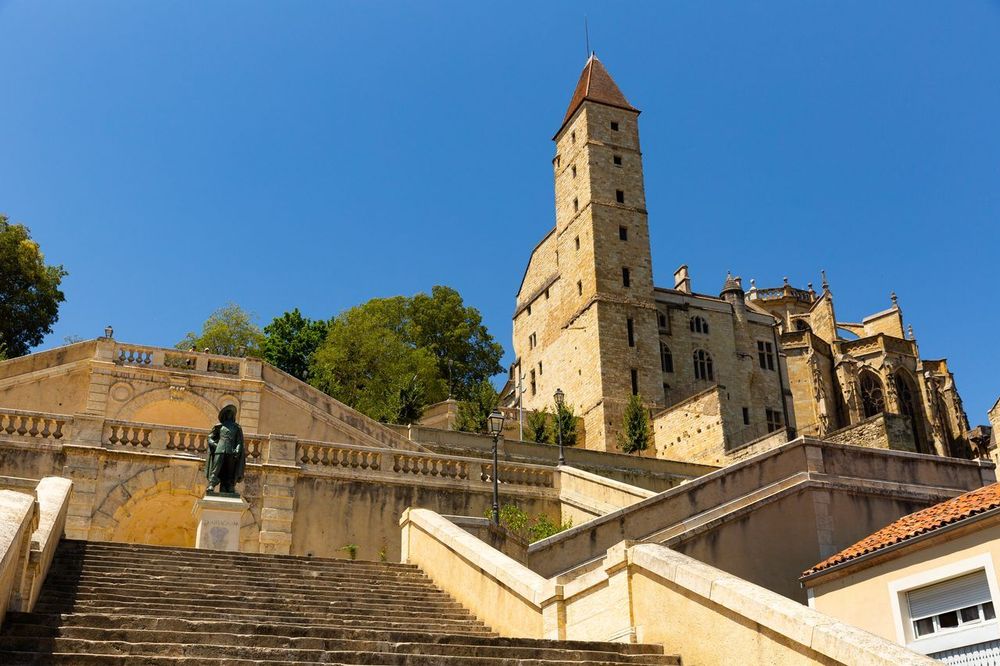
© Shutterstock
 Votre guide Ryo
Things to Do in Condom in 2026: 20 Ideas between Gascony and Armagnac
In Condom, the Baïse flows quietly between golden stone facades and the cellars where Armagnac has been aging for generations. The town, a sub-prefecture of the Gers, has only 6,500 inhabitants, yet it boasts a flamboyant cathedral, a Gothic cloister, a museum dedicated to the local brandy and direct access to three of France's most beautiful villages. What is there to do in Condom when you have a day, a weekend or three days to explore the surrounding area? The question deserves more than a list of monuments: it calls for a real programme, from a gabare boat ride on the river to a tasting at a twelfth-century château-cellar and a detour to a village where bronze cats keep watch over the lanes.
This article draws on verified on-the-ground experiences: the exact height of the cathedral bell tower, the address of the only village in France that fits inside a fortified handkerchief, the name of the dish you must try before leaving, and the precise day when the whole town transforms into a Gascon festival. You will also find everything you need to plan a stay around Condom: listed villages, a Cistercian abbey, a Gallo-Roman villa with intact mosaics, and an events calendar that gives rhythm to the year well beyond the July Feria alone. If you are already planning your next stops in France, the Ryo app offers audio-guided tours in many towns across the country, a practical way to complement this guide once you have finished exploring Gascony.
1. The Cathédrale Saint-Pierre de Condom
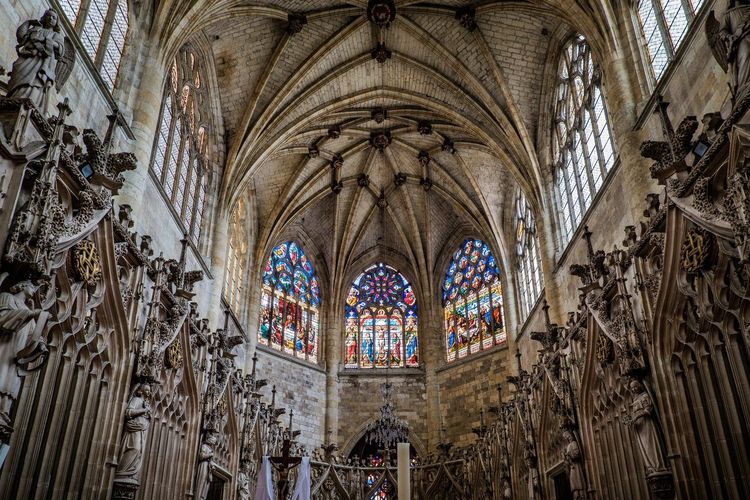
It is impossible to miss the Cathédrale Saint-Pierre de Condom (Place Saint-Pierre, 32100 Condom, rated 4.6/5 on Google from 1,081 reviews) when arriving in town: its golden stone facade has dominated the square of the same name since the early sixteenth century. Construction began in 1507 under Bishop Jean Marre and was completed in barely twenty years, which explains the rare stylistic unity of the building — a late Flamboyant Gothic with almost no later alterations.
Inside, the single nave impresses with its vaulted height and the simplicity of its lines. The Gothic vaults, carried on tall, slender pillars, remain one of the most admired features among architecture enthusiasts: unlike many cathedrals in the South-West, Condom's was built in a single homogeneous campaign, with no lateral chapels added over the centuries. The chancel's stained-glass windows, restored in the nineteenth century, filter shifting light depending on the time of visit. Come in the late afternoon to see the sanctuary bathed in blue and red. The bell tower porch, roughly 44 metres high, can be climbed on certain summer days during guided tours organised by the tourist office — a rare chance to look out over the town's rooftops and glimpse, on a clear day, the Armagnac hills stretching to the horizon.
The western portal, damaged by time and the Wars of Religion, still hints at carved scenes of which only silhouettes remain. It is through this facade that several thousand walkers pass each year along the Via Podiensis, one of the great historic routes to Compostela in France. Many stop here to have their credencial stamped before heading on to Larressingle or Montréal-du-Gers. The locals simply call it « the cathedral », as if there were only one in all of Gascony, and for many visitors it is where every tour of the town begins.
Practical tip: entry is free all year round, but the bell tower climb is ticketed and limited to a few time slots in July and August. Book on the morning at the tourist office, as places go quickly in peak season.
2. The Gothic Cloister and Its Vaults
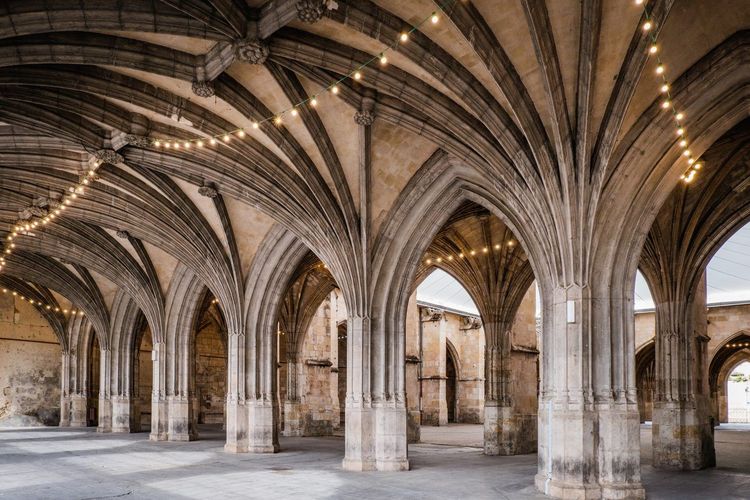
Attached to the southern flank of the cathedral, the cloister of Condom (Place Saint-Pierre, 32100 Condom, rated 4.7/5 on Google from 45 reviews) is reached through a discreet doorway that many hurried visitors miss. Built shortly after the main building, during the sixteenth century, it echoes the same Flamboyant lines but in a more intimate format: four galleries surrounding a central garden planted with trimmed box hedges.
The carved keystones lining the galleries bear the coats of arms of bishops and canons that are now difficult to identify without a guide. You can get up close to the stonework, unlike in other more closely monitored cloisters in the South-West. Allow about fifteen minutes to walk around, longer if you linger over the ancient graffiti carved by passing pilgrims, some of it dated to the seventeenth century.
The space lends itself particularly well to a peaceful pause, away from the bustle of the square: the central garden, sheltered from the wind by the galleries, stays pleasantly cool on hot summer days. Take time to look up at the vault ribs, some of which retain barely perceptible but very real traces of their original polychrome decoration. Access to the cloister is generally included in the same ticket as the guided tour of the episcopal city, offered by the tourist office departing from Place Saint-Pierre. If you are travelling with children, give them the challenge of spotting the carved faces hidden in the column corbels — a good way to hold their attention where architecture alone might leave them unmoved.
3. The Armagnac Museum
Housed in a private mansion in the historic centre, the Armagnac Museum (2 Rue Jules Ferry, 32100 Condom, rated 3.5/5 on Google from 36 reviews) traces three centuries of production of the brandy that has made the town's reputation well beyond the Gers. The collection brings together copper stills, cooperage tools and vintage labels that document the export of Armagnac to England and the Americas as early as the eighteenth century.
The tour also explains the differences between the three terroirs of the appellation — Bas-Armagnac, Ténarèze and Haut-Armagnac — with Condom sitting squarely in the Ténarèze zone, renowned for producing brandies that are both rounded and structured. An entire room is devoted to the making of barrels from local oak, the material that gives Armagnac its amber colour after several years of ageing.
What many visitors remember most is the demonstration of a working column still, activated during special autumn events at harvest time. The smell of warm wood and alcohol gives a fairly accurate sense of what the whole neighbourhood must have smelled like in the nineteenth century, when a dozen distilleries were operating simultaneously in the town. The visit ends, unsurprisingly, with a guided tasting of one or two Armagnacs, included in the entry ticket.
Tip: the museum closes on Mondays outside the summer season. Plan your visit on another day of the week if you are coming in spring or autumn.
4. A Gabare Boat Ride on the Baïse
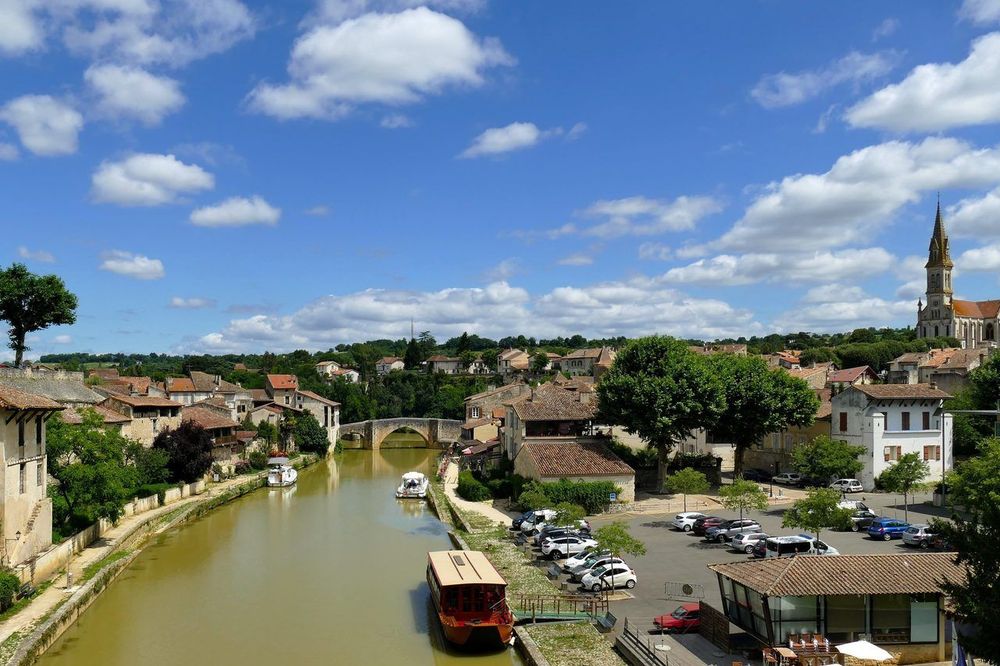
The Baïse, a river canalised in the nineteenth century to allow the transport of Armagnac barrels to Bordeaux, can today be explored by gabare, the traditional flat-bottomed boats of Gascony. Departures are from a landing stage in the heart of Condom, a short walk from the historic centre.
The trip generally lasts between 45 minutes and an hour and a half depending on the option chosen, with or without passing through a lock. The lock passage remains the highlight for children and adults alike: the boat comes to a stop in a stone chamber, the water rises or falls by more than a metre in a few minutes, and the landscape quite literally changes level before your eyes.
In summer, some operators offer sunset outings with a glass of Armagnac or Floc de Gascogne served on board. The low-angled light on the poplars lining the river and on the town's facades has given these rides a reputation that extends well beyond the Gers: many visitors consider them the highlight of their time in Condom, even above the cathedral. Book the evening before in high season if possible, as the sunset slots fill up quickly.
5. The Quays and Gardens along the Baïse
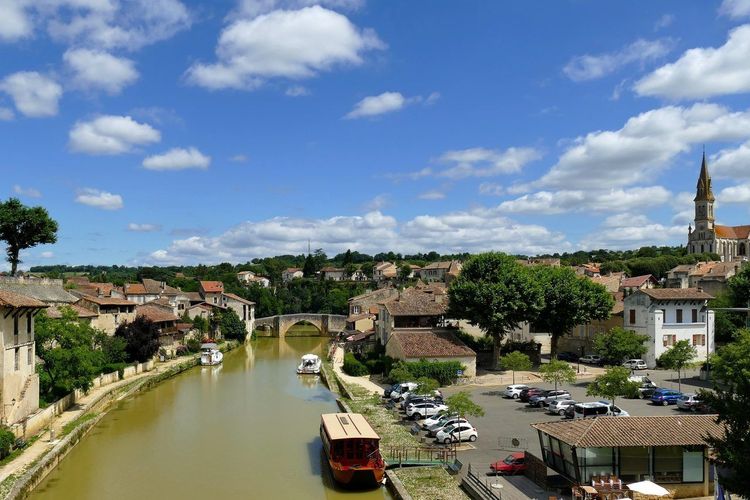
Even without boarding a boat, the quays of the Baïse are well worth a leisurely walk. Former Armagnac warehouses, now converted into homes or small businesses, line the riverbank for several hundred metres, their facades still bearing traces of the old mooring rings.
A public garden laid out along the bank offers a photogenic viewpoint over the bridge and the cathedral bell tower in the background. It is also where locals come to picnic on Sundays, particularly in spring when the plane trees come back into leaf. You will often find fishermen settled there from dawn, as the Baïse is known for its carp and bass.
Walk along the bank as far as the bridge to find the best angle: from there, the cathedral and its buttresses are reflected in the calm water early in the morning, before the wind ripples the surface. The banks are flat and shaded, ideal for a pushchair walk or a quiet read on a bench. At the end of the day, the golden light falling on the former warehouses explains why this stretch of the Baïse attracts so many amateur painters setting up their easels. Allow a good half-hour to walk from the town centre to the gabare landing stage by following the river.
6. The Market and the Halle aux Grains
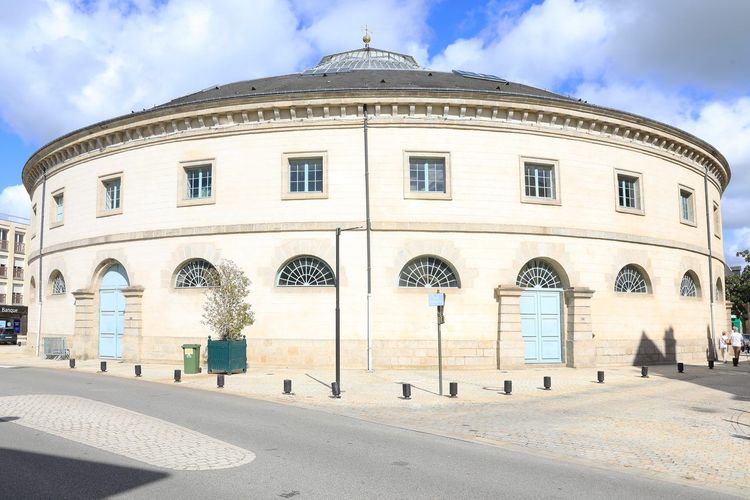
The Halle aux Grains, Condom's central square, hosts the traditional market twice a week — an unmissable stop for anyone wanting to sample local crafts and gastronomy without going to a restaurant.
You will find duck foie gras, Floc de Gascogne, farmhouse goat's cheese and, depending on the season, Gers melons or ceps gathered from the surrounding woods. A few producers also sell pottery and artisan weavings, a local craft often absent from mainstream tourist circuits. Come early in the morning to avoid the crowds and talk directly with the stallholders, most of whom are happy to explain their production methods.
The market traditionally takes place on Wednesday and Friday mornings, with a noticeably larger turnout on Fridays, when producers from neighbouring communes join the permanent stalls. Beyond the fresh produce, it is an ideal vantage point for taking the pulse of daily life in Condom: you will encounter Camino de Santiago pilgrims stocking up on supplies alongside Gers families doing their weekly shopping. Several cafés border the square and serve morning coffee on their terraces, a pleasant stop to plan the rest of the day. Leave with a wedge of Pyrenean tomme or a jar of prunes in Armagnac — two edible souvenirs that travel without breaking.
7. On the Trail of the Real d'Artagnan, in Lupiac
Half an hour's drive from Condom, the small village of Lupiac was the birthplace of Charles de Batz-Castelmore, the real man behind the character popularised by Alexandre Dumas. The Musée des Trois Mousquetaires (Le Bourg, 32290 Lupiac, rated 4.1/5 on Google from 588 reviews), located in the village, traces the military career of this Gascon who became captain of Louis XIV's musketeers.
The Château de Castelmore, a private property visible only from the outside, stands a few kilometres from the village and remains associated with the birth of the future musketeer around 1611. The excursion pairs easily with a visit to Montréal-du-Gers or the Villa de Séviac, in the same direction, for a complete half-day devoted to the Gascony of the musketeers.
The museum, modern and well designed, goes beyond a simple biography: it places d'Artagnan's career in the context of the seventeenth-century wars and carefully disentangles historical fact from the romance inherited from Dumas. Every year, on the second weekend of August, Lupiac celebrates its most famous son during the Journées de d'Artagnan, with costumed parades, fencing demonstrations and a Gascon market — an ideal opportunity to combine the visit with a festive immersion. An equestrian statue of the musketeer stands watch over the village's central square, the perfect starting point for a souvenir photo before heading back to Condom.
8. The Former Episcopal Palace, Now the Town Hall
Just behind the cathedral, the former episcopal palace now houses Condom's town hall. The building, altered several times since the seventeenth century, retains a grand staircase and several rooms adorned with wooden panelling that bear witness to the status once held by the bishopric of Condom, one of the wealthiest in the South-West before the Revolution.
The inner courtyard, freely accessible during the day, offers a close-up view of the cathedral apse — an angle that few visitors think to look for. Opening days for the public remain limited, mainly during the European Heritage Days in September, but the facade and courtyard alone are worth a five-minute detour.
Take the time to walk around the building via the alley running along the apse: it is one of the few points in the town where you can take in, in a single glance, both the mass of the cathedral and the classical arrangement of the former palace. The ensemble is a reminder that Condom was, from the sixteenth century until the Revolution, the seat of a powerful bishopric whose influence extended across the entire Ténarèze. History enthusiasts will enjoy drawing connections with the Armagnac museum and the neighbouring cathedral, which together form the heart of the episcopal city highlighted by the waymarked discovery trail through the streets.
9. Larressingle, the Smallest Fortified Village in France
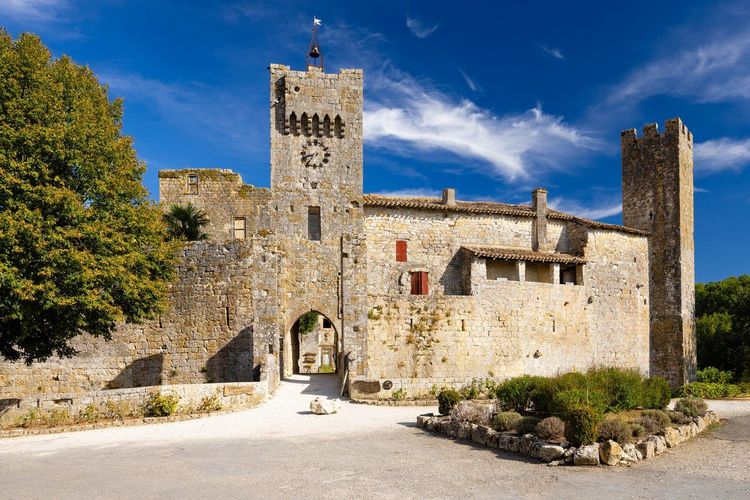
Less than 10 kilometres from Condom, Larressingle (32100 Larressingle, rated 4.5/5 on Google from 1.2K reviews) claims the title of the smallest fortified village in France, with barely more than a hundred inhabitants within its walls. The thirteenth-century ramparts, still almost intact, encircle a keep, a fortified Romanesque church and a handful of stone houses.
The village is one of three Gers communes labelled Plus Beaux Villages de France — alongside Fourcès and La Romieu — that can be reached within minutes from Condom, a rare concentration for such a small area. It is entered via a stone bridge crossing what were once moats, now dry and transformed into a garden. A full circuit of the lanes takes no more than twenty minutes, but the morning light on the golden stones justifies spending longer, especially for photography.
The central keep, the only surviving tower of what was once a defensive circuit, is open to visitors in season and offers a panorama over the surrounding countryside and the vines that produce Armagnac. A small medieval bookbinding workshop, set up in one of the houses, holds demonstrations that recall how Larressingle once belonged to the bishops of Condom, who were responsible for protecting the road to Compostela. You are more likely to encounter rucksack-carrying pilgrims here than coach parties, giving the place a more authentic feel than many listed villages.
Good to know: the village is free to visit; only access to the keep is ticketed, with a reduced rate for families.
10. Fourcès, the Circular Bastide
Fourcès (32250 Fourcès, rated 4.6/5 on Google from 900 reviews) stands out for a rare architectural feature in France: it is a circular bastide, built around a round arcaded square rather than on the grid plan typical of thirteenth-century Gascon bastides.
The Auzoue river wraps around part of the village and is crossed by an old stone bridge that offers one of the most photographed views in the Gers. The half-timbered houses, carefully restored, now house a few art galleries and a tearoom installed in a former merchant's residence.
On the last weekend of April, Fourcès becomes the setting for a flower festival renowned throughout the South-West: local growers fill the circular square with flowerbeds and floral arrangements, and the usually peaceful village welcomes several thousand visitors over two days. Outside this event, Fourcès remains one of the most tranquil villages to visit around Condom, ideal for a shaded terrace lunch after a busier morning of sightseeing.
Take the time to walk the full circuit of the square under the arcades: each house presents a variation of half-timbering, some leaning with the centuries, others straightened during recent restorations. At the centre, a few centuries-old trees turn the square into an open-air salon during the hottest hours. The château at the village entrance is not open to visitors but makes a spectacular foreground for anyone arriving via the bridge over the Auzoue. If you come outside the flower festival, early morning is the best time: the raking light picks out the timber frames and you will have the square almost to yourself.
11. The Abbaye de Flaran
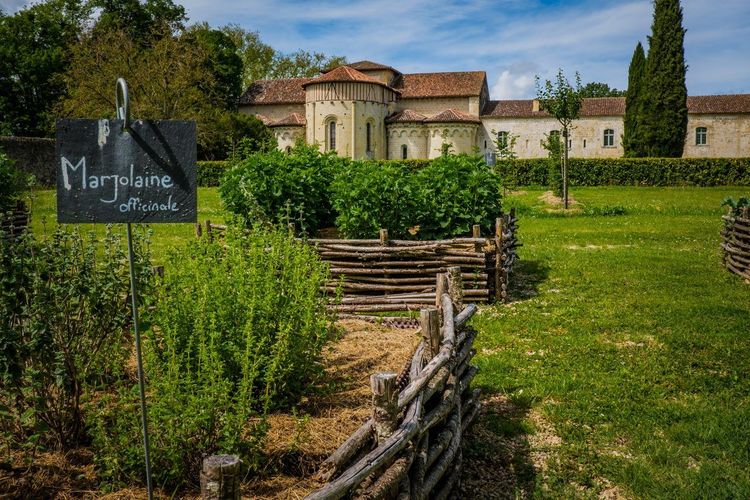
A 15-minute drive from Condom, the Abbaye de Flaran (32310 Valence-sur-Baïse, rated 4.4/5 on Google from 1,340 reviews), founded in 1151 by Cistercian monks, ranks among the best-preserved abbeys in south-western France. The abbey church, stripped back in keeping with Cistercian rule, impresses precisely through its restraint: no superfluous decoration, just architecture of exceptional purity of line.
The cloister, partly rebuilt in the eighteenth century after a fire, surrounds a garden of medicinal plants maintained using methods close to those of the original monks. Owned by the Gers Department for several decades, the abbey now hosts temporary exhibitions and concerts, particularly in summer, in an acoustically outstanding setting.
The chapter house, where the monastic community's meetings were held, retains carved capitals that guides describe in detail during the commented visits offered several times a day in season. The monks' dormitory upstairs now houses a permanent exhibition on Cistercian monastic life, with reconstructions that engage children and adults equally. Allow an hour and a half for a full visit, more if a temporary exhibition catches your interest.
12. La Romieu and Its Stone Cats
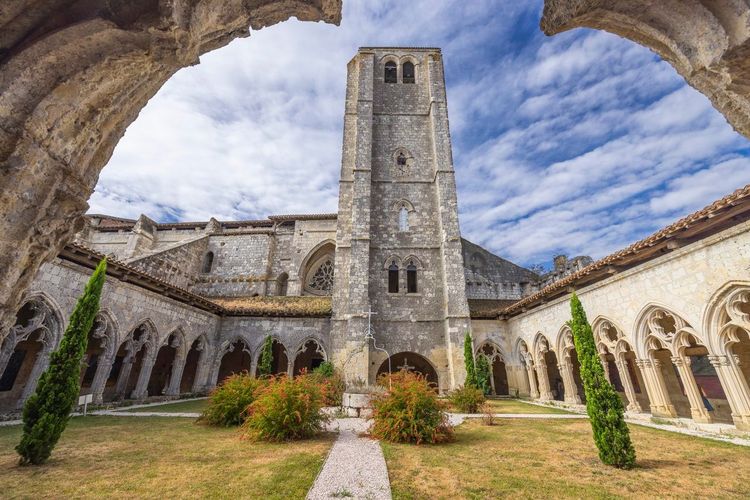
La Romieu, about twenty minutes from Condom, combines religious heritage and local legend in a way that is quite unique in France. The Collégiale Saint-Pierre, inscribed on the UNESCO World Heritage List as part of the Routes of Santiago de Compostela in France, dominates the village with its two asymmetrical towers, a Renaissance cloister and fourteenth-century frescoes still visible in the treasury chapel.
But what makes the village immediately recognisable is the dozens of bronze and resin cat statues scattered through the lanes, on rooftops and even on house facades. Legend has it that an orphan girl named Angéline, in the fourteenth century, saved the village from famine thanks to the cats she raised, whose pelts she sold to help the population survive a terrible winter. Since the 1990s, a local sculptor has sown these feline figures throughout the village, turning a simple legend into a genuine fun trail that children love to follow, trail sheet in hand, available from the tourist office.
The collegiate cloister, with its twisted columns and Renaissance-carved capitals, can be visited in about twenty minutes but remains one of the most photogenic in the department. Around the village, a few Gers restaurants serve traditional cuisine — duck breast and confit foremost — in a setting calm enough to extend the visit into lunch. La Romieu perfectly illustrates the blend unique to the Gers between historical gravity and popular lightness, a balance that explains why so many visitors from Condom make their way here, even if it means adding half a day to their stay - not far away, Ryo's "City of Prunes and Heritage" audio-guided tour is a good way to discover Agen along the way.
13. Château de Cassaigne and Armagnac Tasting
Just 5 kilometres from Condom, the Château de Cassaigne (32100 Cassaigne, rated 4.4/5 on Google from 256 reviews) was for centuries the summer residence of the bishops of Condom before becoming a wine estate specialising in Armagnac production.
The guided tour takes you through the vinification vats, the ageing cellar where barrels sometimes centuries old lie at rest, and above all a thirteenth-century kitchen with a central fireplace — a rare architectural feature that once allowed meat and fish to be smoked directly over the hearth. The tasting that concludes the visit typically offers several vintages of Armagnac, from the youngest to the oldest, providing a concrete way to understand how the brandy evolves in oak casks over the decades.
The estate also organises open days in autumn around the harvest and distillation, where you can watch the still in operation under real conditions rather than as a museum demonstration. Allow an hour for the guided tour, more if you plan to buy a few bottles in the château's shop.
14. The Gallo-Roman Villa de Séviac and Montréal-du-Gers
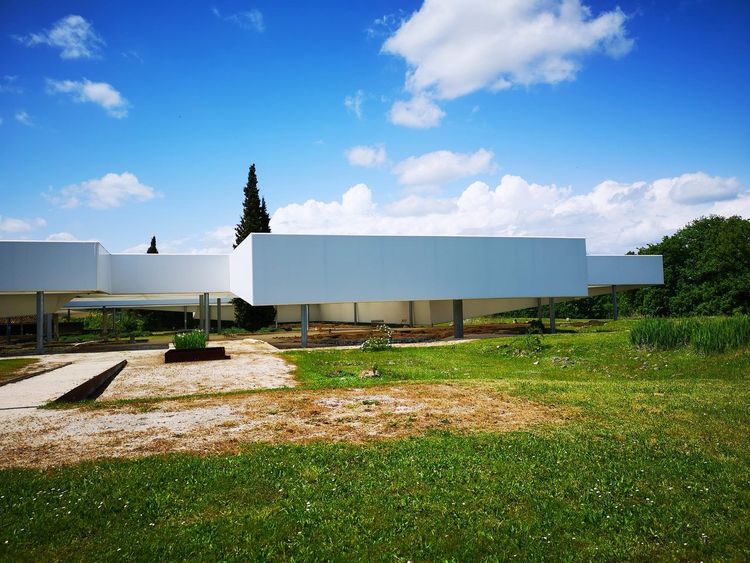
Near Montréal-du-Gers, one of Gascony's oldest bastides founded in 1256, the Villa gallo-romaine de Séviac (32250 Montréal-du-Gers, rated 4.3/5 on Google from 796 reviews) reveals one of the best-preserved mosaic complexes in south-western France.
The site, progressively excavated since the early 1900s, uncovers the remains of a wealthy fourth-century rural residence, with private baths whose geometric mosaic floors remain visible in the open air, protected by lightweight structures. The octagonal layout of certain thermal rooms, unusual for the period, speaks to the level of refinement of Roman Gascony, far removed from the rustic image sometimes attached to it.
Montréal-du-Gers itself merits a stroll: a member of the Plus Beaux Villages de France network, it lines up a typical covered bastide square, half-timbered houses and a fortified church that together form a coherent ensemble, less visited than Larressingle or La Romieu but just as photogenic. A Saturday morning market is held here, more modest than the one in Condom but appreciated by locals for its convivial atmosphere.
15. The Greenway by Bike between Condom and the Gers Countryside
For those who prefer to explore the surroundings at a slower pace, a greenway laid out on a former railway track links Condom to the surrounding countryside over about fifteen kilometres, with no significant gradient.
The route passes through vineyards and orchards, with several picnic stops set up in the shade of oak trees. Bicycle hire, including electric-assist models, is available in Condom town centre during the summer season — a practical solution for those who have not brought their own equipment. Allow half a day for a comfortable round trip, including a break in one of the villages along the way.
This former railway line, converted into a soft-mobility route, forms part of a wider network that allows more energetic cyclists to link Condom to other Gers towns by stringing together sections. The compacted surface suits bikes, pushchairs and roller skates alike, and the absence of motor traffic makes it a reassuring option for families with young children. Bring plenty of water: refuelling points are rare once you leave town, and shade becomes sparse on some exposed stretches in midsummer. On your return, a stop on the Baïse quays or in a town-centre cellar is a pleasant reward for the effort.
16. The Feria and the Fêtes de la Madeleine
In mid-July, Condom changes completely for the Fêtes de la Madeleine, the town's annual Feria. For several days, the streets of the historic centre fill with bandas — the Gascon brass bands that wander from bar to bar playing music — and bodegas set up on the squares.
This programme of events draws an audience far wider than Gers residents alone, with traditional Gascon entertainment and street meals organised by local associations. The atmosphere, festive yet family-friendly during the day, noticeably intensifies after dark. If you are looking for something to do in Condom that goes beyond the usual heritage trail, this week in July remains the best time of year to feel the genuinely Gascon soul of the town, far removed from any frozen postcard image.
Note: accommodation must be booked several months in advance for this period, including in the surrounding villages.
17. Night Market and Ténarèze Gastronomy
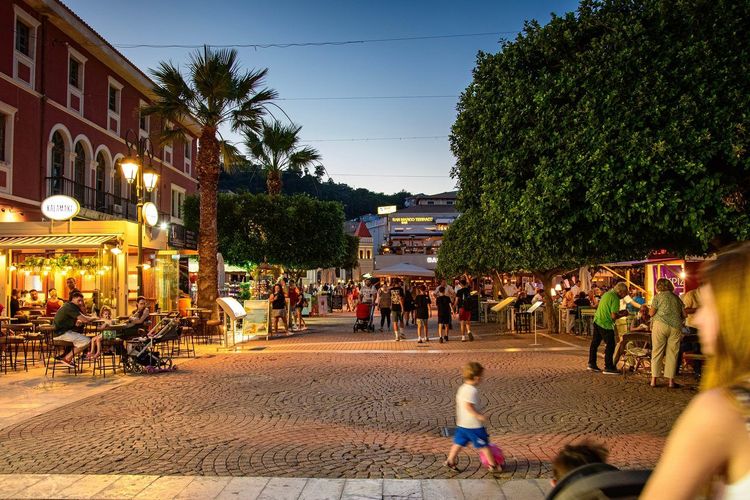
In summer, Condom regularly organises a night market on the quays or the central square, where local producers and Gers food trucks offer outdoor dining, often with live music.
The local gastronomy, rooted in the Ténarèze terroir, revolves around a few signature products: duck breast, confit, pan-fried foie gras and, for dessert, apple croustade drizzled with a splash of Armagnac. Many restaurateurs offer menus that pair these classics with local wines, particularly the côtes-de-gascogne, often overlooked outside the region despite a quality that rivals other South-West appellations.
You will also find, on the night market stalls, Floc de Gascogne served chilled as an aperitif — a blend of grape juice and Armagnac that the Gers consider their signature drink, ahead of wine or beer. A fine way to end a day of sightseeing before heading back on the road or to your accommodation.
The concept is simple and convivial: you buy your plate directly from the producers, settle at the long tables set out for the occasion, and the meal often stretches late into the evening to the rhythm of the invited musical acts. It is one of the best ways to sample, in a single evening, the full range of local production without visiting multiple restaurants. Arrive early to find a seat on busy summer evenings. Exact dates vary from year to year: check with the tourist office on arrival so as not to miss that week's edition.
18. Condom, a Stage on the Camino de Santiago
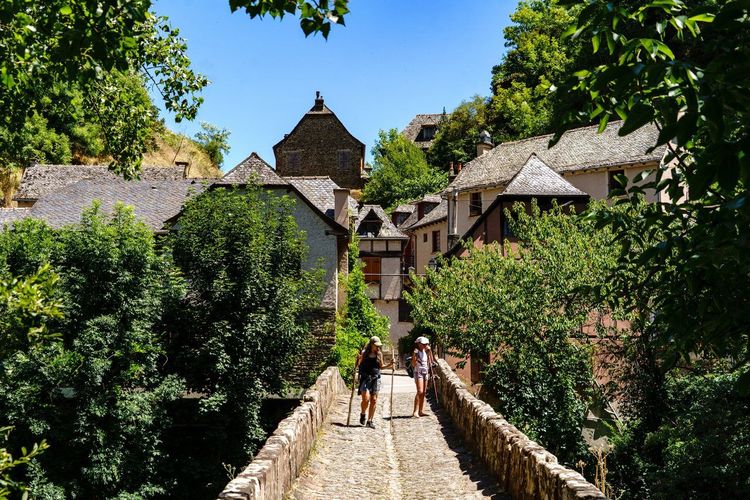
Condom is one of the recognised stages on the Via Podiensis, the Camino de Santiago route that sets out from Le Puy-en-Velay and crosses the Gers before continuing towards the Pyrenees. Each year, several thousand pilgrims pass through the town, recognisable by their scallop shell and walking staff.
The pilgrim hostel and welcome centre, located near the town centre, receive both long-distance walkers and curious visitors keen to exchange a few words about the motivations behind this journey. Even without walking yourself, following the yellow and red waymarks through the historic centre offers a different way to discover the town, linking the cathedral, the cloister and the Baïse quays along the historic route used by pilgrims since the Middle Ages.
From Condom, the next stage traditionally takes walkers towards Montréal-du-Gers and then Éauze, through a landscape of vines and fields that captures in itself the gentle character of the Ténarèze. Even as a day visitor, walking a few hundred metres of the route from the cathedral gives a true sense of what pilgrims experience: the town gives way quickly to sunken lanes and stone crosses. To plan further stages of your journey in France, the Ryo app and its city audio guides allow you to continue this step-by-step discovery in many towns, once Gascony is behind you.
19. Where Does the Name Condom Come From?
The question amuses almost every English-speaking visitor and many French people too: the town's name has obviously no connection with the contraceptive, whose English etymology remains uncertain and has no proven link to this Gers town. Condom derives from the Gaulish « Condatomagus », formed from « condate », meaning confluence, and « magos », meaning a market or field, referring to the confluence of the Baïse and a small local tributary.
This purely coincidental linguistic overlap long embarrassed the local authorities before becoming an acknowledged tourist asset: the town now sells, without any self-consciousness, miniature road signs and T-shirts that play on the name — a way of making light of what could have remained a simple misunderstanding. Many foreign visitors readily admit that this onomastic wink was at least part of their reason for making the detour to Gascony.
This mix-up also drives a good deal of the town's tourist searches: many visitors arrive intrigued by the name and leave won over by the cathedral, the cellars and the surrounding villages. The town hall has ended up leaning fully into the humour in its communications, and the shops stock a wealth of postcards and objects that gently play on the misunderstanding. Beyond the anecdote, the Gaulish etymology is a reminder of the site's antiquity: it was settled long before the medieval period, thanks to its strategic position at a confluence on a trade route linking the Garonne valley to the Pyrenean foothills.
20. Where to Taste Armagnac in Town
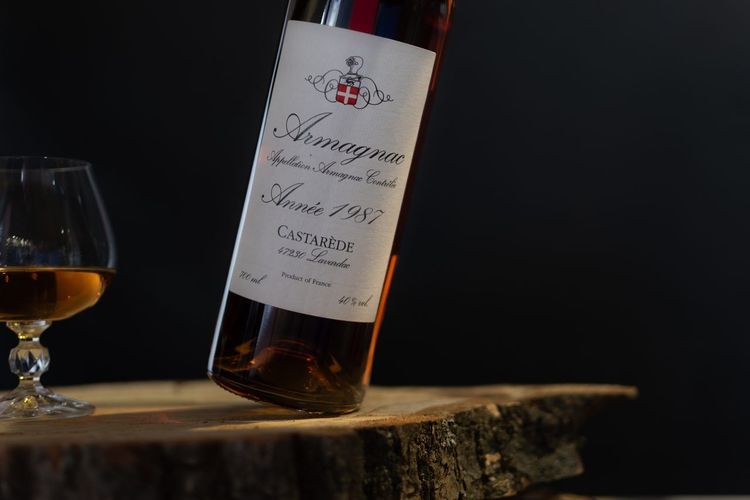
Beyond the museum and the large estates in the surrounding area, several Armagnac cellars and houses located right in the centre of Condom offer tastings without any need to leave town. These historic houses, often run by the same family for several generations, open their vaulted cellars to the public in season.
A classic tasting generally presents three to four different vintages, accompanied by explanations of the grape varieties used — ugni blanc and folle blanche foremost — and the subtleties of ageing in Gers or Limousin oak casks. Some houses also offer food-and-Armagnac pairing workshops, matching the brandy with chocolates or aged cheeses, a more playful approach than the traditional tasting.
If you plan to leave with a few bottles, note that most houses ship directly to your home address — a practical solution to avoid travelling with fragile glass. It is also an opportunity to extend your discovery of Gascony by exploring, once back home, the Ryo audio guides available for other French towns, to rediscover that same pleasure of a self-paced guided visit.
FAQ
What can you do in Condom in one day?
One day is enough for the Cathédrale Saint-Pierre, its cloister, the Armagnac museum and a gabare boat ride on the Baïse. Add a quick visit to Larressingle, less than 10 minutes by car, if you still have an hour to spare at the end of the day.
What can you do in Condom this weekend?
A weekend allows you to combine Condom's town centre with two or three nearby villages: Larressingle and Fourcès on Saturday, La Romieu and the Abbaye de Flaran on Sunday. Check the local calendar before you go, as some villages hold occasional markets or festivals that are well worth the detour.
What are the most beautiful villages around Condom?
Just outside Condom, three villages hold the Plus Beaux Villages de France label: Larressingle, Fourcès and La Romieu. Montréal-du-Gers, also a member of the Plus Beaux Villages de France network, is worth a visit for its bastide and its neighbouring Gallo-Roman villa.
When does the Condom festival take place?
The Fêtes de la Madeleine, the main annual event in Condom, take place every year in mid-July, around 22 July. Other events punctuate the Condom calendar, including open days at Armagnac cellars in autumn and the summer night market.
What can families visit around Condom?
La Romieu and its trail of bronze cats is particularly popular with children, as is the gabare boat ride on the Baïse with its lock passage. Larressingle, with its ramparts to explore freely, rounds off a great family day without requiring long drives.
Where can you taste Armagnac near Condom?
The Armagnac museum in town, several historic houses in the centre and the Château de Cassaigne 5 kilometres away all offer guided tastings. The Château de Cassaigne adds an architectural visit to the tasting experience, including its medieval kitchen with a central fireplace.
How do you get around Condom and the Gers without a car?
Condom's town centre can be explored entirely on foot. For the surrounding villages, however, a car is strongly recommended given the lack of regular public transport, unless you are walking the Camino de Santiago, as some stages can be covered on foot or by bike via the local greenway.
Condom, the Gateway to Gascony
Between a flamboyant cathedral, fortified villages and centuries-old cellars, Condom concentrates within a few kilometres the essence of what makes Gascony's reputation, without ever feeling like a region frozen in time for tourists. The town works just as well for a single busy day as for a long weekend that extends into the neighbouring villages, and every season brings its own rhythm, from the autumn harvest to the July Feria.
Whether you come for the gastronomy, the religious architecture or simply to wander along the Baïse, Condom lends itself to gradual exploration rather than a hastily ticked list. And if the Gers inspires you to continue your travels elsewhere in France, the Ryo app and its city audio guides remain a useful resource for planning the next leg of your itinerary.