© Shutterstock
 Votre guide Ryo
Grenoble with Kids: What to Do as a Family in 2026?
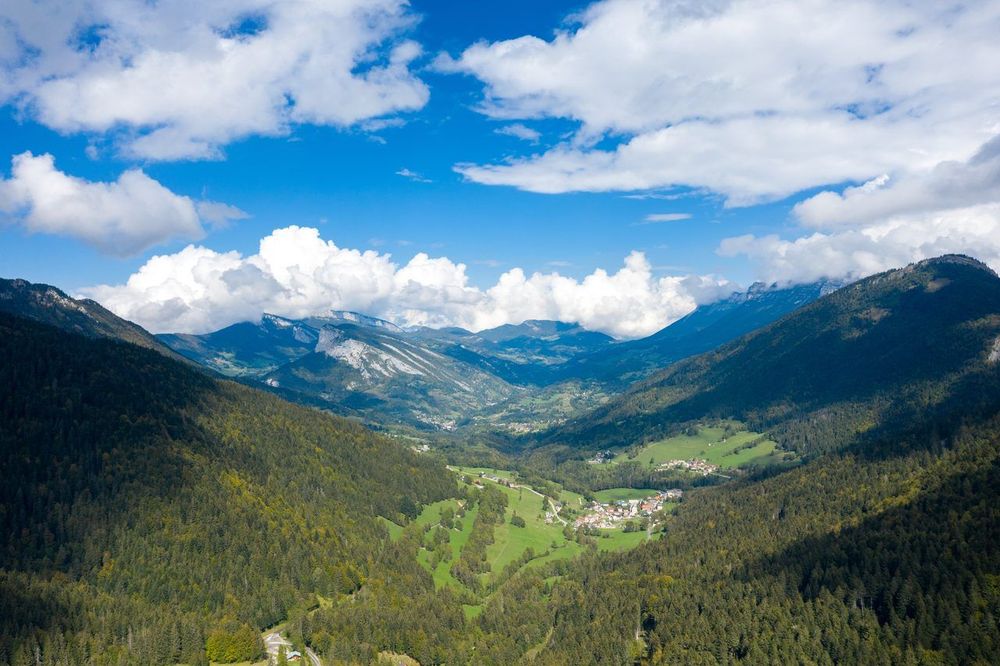
In Grenoble with kids, the question is never what to do but where to start: the city centers a fort perched at 476 meters accessible by France's oldest urban cable car, a museum that makes learning about the history of skiing genuinely fun, and parks large enough to spend an entire morning without noticing the time pass. The Ryo audio guide tour of Grenoble serves as a thread to explore the historic center at your own pace, between snack breaks. Add to that the Chartreuse massif on one side, the Vercors on the other, and valleys packed with waterfalls, thrilling trails, and a suspension bridge above a turquoise lake.
This guide details the must-sees of the city center, the museums that genuinely captivate 4–12-year-olds, the best swimming spots within an hour's drive, and practical solutions for rainy days, as well as where to eat, where to sleep, and how to get around with a stroller. Prices quoted correspond to the 2026 season, and the timings given account for a walking pace slowed down by little legs.
The Must-Sees of Grenoble City Center
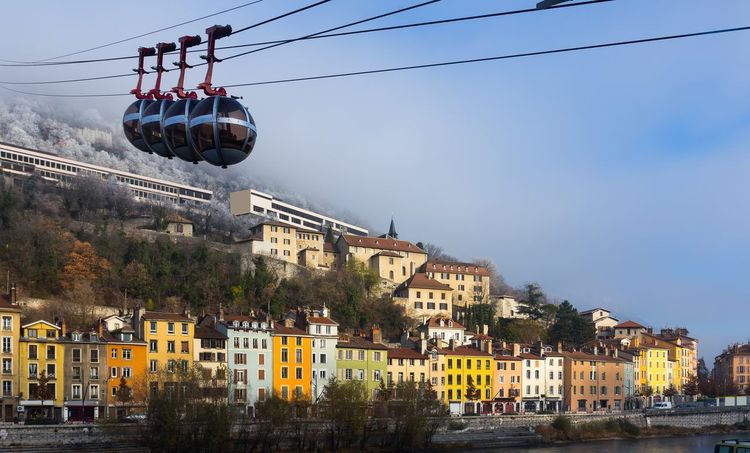
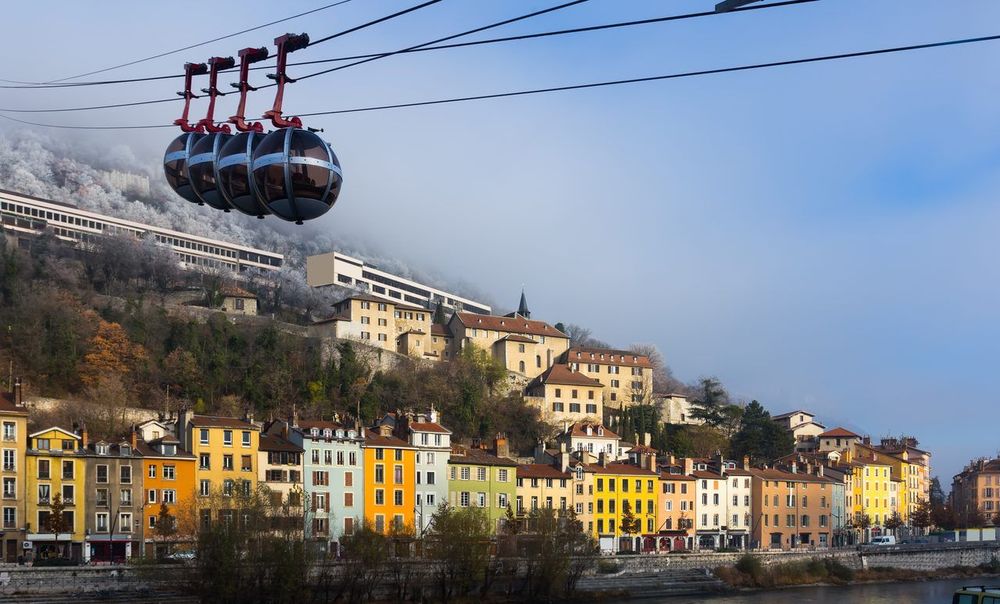
The fort de la Bastille towers over Grenoble at 476 meters above sea level, and it's best reached by gondola rather than on foot: the Bulles de Grenoble, France's first urban cable car inaugurated in September 1934, connect quai Stéphane-Jay to the summit in under 5 minutes. Kids love the suspended ascent above the rooftops, and the view takes in the city, the Isère, and the three massifs that encircle it: Chartreuse, Vercors, and Belledonne. Budget-wise, count on €9.80 for a round-trip adult ticket and €5.10 for ages 5–15 at 2026 rates, or €6.60 and €3.70 for a single trip, and plan 1h30 to 2h on site.
At the top, a vegetable maze laid out for younger visitors and a free mini climbing wall extend the visit by a good half-hour. Two restaurants with panoramic terraces let you stop for lunch at over 400 meters above sea level, an experience that leaves a lasting impression even on those bored by ordinary dining.
The fort itself tells a story that's easy to share along the way: built from 1824 onward to protect Grenoble from an invasion from Italy, never used in combat, it now serves as a full-scale playground with its tunnels, hidden staircases, and viewpoints secured by railings. A free junior guide, available at the entrance, offers a trail with questions to answer at each observation post. One practical tip: book your tickets online and aim to go up before 10:30 a.m. or after 5:00 p.m. in summer — the midday queue can exceed 45 minutes, which is a long time when patience melts in the sun.
With a stroller, note that the lower part of the parc de la Bastille is accessible without the gondola, via a shaded zigzagging path that climbs gently from the Saint-Laurent neighborhood. Allow 30 to 40 minutes going up at a leisurely pace, with several stopping points to catch your breath and look at the tunnels carved into the rock in the 19th century.
On the way back down, head to the old town of Grenoble, whose cobbled streets around place Grenette and place Notre-Dame can be explored without a fixed itinerary. Your group will enjoy spotting the murals that cover dozens of façades, an artistic project renewed each year that turns some city blocks into an open-air gallery. Stop in the jardin de Ville, the oldest green square in the city, where a bandstand and wide shaded lawns let the youngest ones run around while parents sip a coffee on a terrace.
One last detour is worth a look: the cathédrale Notre-Dame de Grenoble and its cloister, free to enter, offer five minutes of welcome coolness in summer, and the covered market at place Sainte-Claire, open every morning except Monday, is a good place to pick up a local snack before heading on.
To give the walk more meaning, several guided tours tailored for younger visitors are offered by the tourist office and local associations, often in the form of a treasure hunt or historical mystery calibrated for ages 6–12. Generally plan 1h30 to 2h and book ahead during high season. If you prefer independence, the Ryo audio guide for Grenoble offers a narrated tour of the historic center that 8–12-year-olds can almost follow on their own, headphones on, while you keep an eye on the route.
Museums and Fun Cultural Sites in Grenoble
Housed in the former Sainte-Marie-d'en-Haut convent, the musée Dauphinois overlooks the city from the slopes of the Bastille and is free to visit year-round, which leaves room to leave early if attention starts to wane after twenty minutes. The permanent exhibition on the history of skiing and winter sports in Isère generally fascinates 7–12-year-olds, from old wooden sleds to competition suits from the 1960s. Each summer, the museum runs activities aimed at young visitors: craft workshops, storytelling tours, and treasure hunts in the terraced gardens — check the seasonal program before you go.
The Muséum de Grenoble (1 Rue Dolomieu, 38000 Grenoble, rated 4.5/5 on Google from 1,577 reviews), one of the oldest natural history museums in France, founded in 1773, bets on interactivity: a suspended whale skeleton, a vivarium with live reptiles, and a tropical greenhouse that fogs up glasses in every season. Allow 2h if curiosity is high, and aim for a Wednesday or weekend to make the most of the themed workshops organized for ages 6–10.
For a full afternoon, head to La Casemate, Grenoble's science center housed in a former military bastion on the banks of the Isère. There's no planetarium here, despite what you sometimes read, but interactive exhibitions renewed several times a year and a ground-floor fablab where visitors handle robots, laser cutters, and 3D printers during supervised workshops, usually from age 7 upward. It's one of the rare places in the city where rain almost becomes a selling point.
The planetarium is found at Cosmocité, in Pont-de-Claix, a quarter of an hour from the center by tram then bus. This science and culture center, opened in 2021, dedicates several galleries to the mysteries of the Earth, the stars, and the Universe: dome sessions accessible from ages 4–5, hands-on exhibits on energy and climate, and scale models that explain the formation of the Alps in three steps. Plan 2h to 3h and book dome sessions online, as seating under the dome is limited.
Other heritage sites can be visited in a short format: the musée de l'Ancien Évêché, free, features an early Christian archaeological crypt that is surprisingly engaging once explained simply, and the Magasin des Horizons sometimes hosts contemporary art exhibitions accessible to younger visitors with free admission. The musée de Grenoble, one of the richest fine arts museums in provincial France, hands out activity booklets at the entrance and schedules workshop visits on Wednesdays, turning a modern art gallery into a detail-spotting challenge. Budget tip: the Pass Musées, available at the tourist office, grants access to several sites over 48 hours and is worthwhile from three visits onward.
Parks, Gardens, and Playgrounds in Grenoble
The jardin des Dauphins, on the hillside just below the fort de la Bastille, winds gently downhill through ponds, artificial waterfalls, and benches shaded by linden trees. It's the ideal spot for a picnic before or after the cable car ride, with several shaded areas and a drinking water fountain.
The parc Paul Mistral (38000 Grenoble, rated 4/5 on Google from 5,252 reviews), the largest green space in the city center at around twenty hectares, lines up playgrounds, wide lawns for kicking a ball, and flat paths perfect for a first go on a balance bike. The Tour Perret, a concrete silhouette left over from the 1925 International Exhibition of White Coal, serves as an unmissable landmark for an improvised treasure hunt. In summer, the municipal Été oh Parcs initiative sets up free afternoon activities: creative workshops, bouncy structures, and street performances, scheduled in rotation with the parc des Champs Élysées on the other bank of the Isère.
The jardin de Ville, already mentioned for its central location, rounds out the offer with a small playground and freely accessible ping-pong tables. More broadly, Grenoble has around thirty playgrounds spread across almost every neighborhood: the one at parc de la Villeneuve, with its wooden structures and shaded sandpit, works well for ages 3–8, while the developed banks of the Isère and the paths of parc Bachelard suit bikes and scooters better. Always keep a water bottle and a hat in summer: Grenoble's lawns offer little shade between noon and 4 p.m., and the city's basin, ringed by three massifs, easily exceeds 35°C in July.
Swimming and Water Activities around Grenoble
Grenoble manages several municipal pools, including the piscine Jean Bron with its leisure pool and slides, and the piscine des Dauphins, more traditional but often less busy on weekdays. Prices remain reasonable, around €4 per young swimmer, and season pass options exist for longer stays. Check club and school lane times before heading out: they significantly reduce available space in the late afternoon.
For a more complete outing, the 7 Laux aquatic center at Prapoutel, about 45 minutes by road, has been fully renovated with a heated outdoor pool, a paddling area for toddlers, and two slides. The high-altitude setting at over 1,350 meters stays pleasantly cool even during heat waves, making it a credible alternative to urban pools on the hottest days.
For wild swimming, lac de Paladru (38850 Paladru, rated 4.3/5 on Google from 934 reviews), three-quarters of an hour by road, has several supervised beaches in July–August with a gentle slope, ideal for children who haven't yet found their footing in the water. Closer by, the plan d'eau de Villard-Bonnot offers a free, shaded alternative for an impromptu afternoon. For a full overview of options, our dedicated article on where to swim near Grenoble lists around ten spots ranked by distance and facilities.
Hikes and Nature Walks around Grenoble
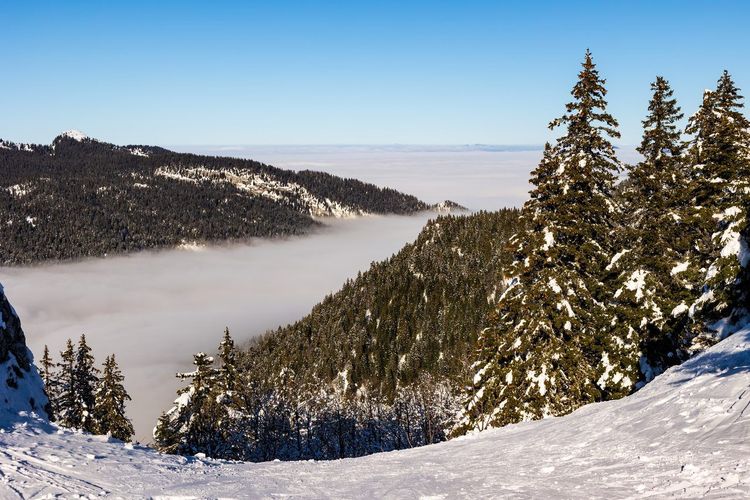
Grenoble has the particular quality of putting the mountains within reach of an all-terrain stroller: in under an hour by road, the Chartreuse to the north and the Vercors to the southwest line up dozens of short walks, from flat strolls to trails dotted with curiosities that make kids forget they're tired. Here are several outings that have proven themselves with 5–10-year-olds.
To the northwest of the city, at the gateway to the Vercors, the Sculptures aux 4 vents trail at Vatilieu turns a 2–3 km loop into an artistic treasure hunt: dozens of wooden and metal works created by local artists dot the forest path and give a good reason to keep moving without complaint. Allow 1h30 including photo stops, with free parking at the trailhead.
A change of scenery to the east, in the Oisans: the cascade de l'Enversin above Allemont is reached by a shaded path of about twenty minutes from the hamlet of l'Enversin d'Oz, manageable from ages 4–5 as long as you hold hands on the last few meters, which are slippery near the water. The falls form a pool cool enough to dip your feet in summer, but too cold and powerful for a proper swim. The detour pairs well with a stop at lac du Verney below, where the walking path circles the water with no elevation gain whatsoever.
More spectacular, the Himalayan footbridge at l'Ebron (Lac de Monteynard, 38350 Treffort, rated 4.8/5 on Google from 1,779 reviews), above lac de Monteynard, is crossed on a plank walkway suspended above turquoise water, with that slight swaying motion that provides all the thrill. From ages 6–7, the crossing leaves a vivid memory; younger children are better carried across, or skip it altogether if heights are a concern. Access is via a hiking loop of around 5 km, with several intermediate viewpoints to catch your breath before the crossing itself. Note that a second footbridge, the one over the Drac, longer and higher, spans the same lake: the two can be combined into a full day's walking suited to already experienced hikers.
In the same area, the train de La Mure, reopened in 2021 after years of works, follows the gorges du Drac along a narrow-gauge line clinging to the cliff face. The round trip from La Mure takes about 2h30 including a stop at the belvedere, requires no effort beyond sitting down, and pairs perfectly with a morning hike or a swim at lac de Monteynard. Book ahead: in July–August, seats sell out several days in advance.
Beyond these headline outings, the Vercors and the Chartreuse offer dozens of easy marked routes, from the plateau around Lans-en-Vercors — flat and perfect for first goes on an all-terrain scooter — to the forests around Saint-Pierre-de-Chartreuse, shadier in summer. Our article on the most beautiful hikes in the Vercors lists a selection sorted by duration and elevation gain, while the guide to visiting the Chartreuse details the villages and viewpoints to combine with a forest walk.
A few habits worth keeping for all these outings: set off early in the morning in summer to avoid heat on exposed trails, always bring more water than you think you'll need, and check the mountain weather forecast, which changes faster than in the city, even in the middle of July.
Thrills: Tree Climbing, Rock Climbing, and Summer Luge
For those looking for a bit more adrenaline, several sites within an hour of Grenoble offer courses designed from ages 4–5, with progressive options depending on age and height.
The tree-climbing park at col de Marcieu at Saint-Bernard-du-Touvet in the Chartreuse offers courses at several color-coded levels, from a baby circuit less than a meter off the ground with a safety net to more challenging zip lines for teenagers. The recommended minimum age ranges from 3 for the baby course, with an accompanying adult, to 8–10 for the highest circuits. Allow a half-day on site including time to get kitted out and snack breaks.
On the same site, an orienteering course through the forest lets participants combine map reading, compass work, and team puzzles — an activity particularly popular with 7–12-year-olds who are more drawn to problem-solving than to heights. Allow 1h to 1h30 depending on the number of checkpoints chosen, and pack snacks: concentration drops quickly on an empty stomach.
Further north, the gorges du Crossey (Saint-Étienne-de-Crossey, 38960 Saint-Étienne-de-Crossey, rated 4.5/5 on Google from 8 reviews) at Saint-Étienne-de-Crossey offer a supervised climbing site with routes specially equipped for beginners, accessible from age 6 with an instructor. The setting, between limestone walls and the river below, adds genuine thrills for an introductory fee generally under €25 per participant.
Still in the Chartreuse, the summer luge at la Ruche à Giter at La Ruchère hurtles down a rail track through the forest, with a speed controlled by a hand brake once the child is old enough to manage it alone, generally around ages 6–7. Below that, a two-seater option with an adult is possible from age 3, and an extra run usually costs less than the first, which avoids negotiations at the bottom of the track.
Finally, if your stay falls in September, the Coupe Icare takes over Saint-Hilaire-du-Touvet, on the plateau des Petites Roches in the Chartreuse: four days of a giant gathering where costumed paragliders and hang gliders launch in waves above the Grésivaudan valley, to wide-eyed wonder. Outside the festival, several schools on the site accept young passengers from ages 8–10 for a supervised tandem introductory flight. Useful to know: the funicular at Saint-Hilaire, one of the steepest in Europe, lets you reach the plateau without a car, and the ascent alone is worth the trip.
Cycling and Outdoor Leisure
The Via Rhôna, the cycling route running along the Rhône from Lake Geneva to the Mediterranean, crosses northern Isère with particularly smooth sections around La Balme-les-Grottes, flat and safe, all the way to the cascade de Glandieu, a lovely natural pause at the midpoint. Allow around fifteen kilometers there and back for a day trip with young cyclists already comfortable in the saddle.
Closer to Grenoble, the via Vercors between Saint-Nizier-du-Moucherotte and Villard-de-Lans alternates between smooth sections and more demanding false flats, with mid-mountain scenery that makes a change from flatland roads. Several rental shops in Villard-de-Lans offer e-bikes, child seats, and trailers for the youngest riders — an option well worth considering if the elevation worries you.
Beyond these two routes, Grenoble and the surrounding area offer plenty of outdoor leisure: gentle canoeing on the Isère in summer, introductory via ferrata routes in the Vercors, or Métrovélo bike rental in the city center to reach parks without a car, on one of the densest cycling networks in France. Our guide to visiting the Vercors details more activity ideas to combine over a weekend.
What to Do in Grenoble with Kids When It Rains
Rain is not uncommon in Grenoble, surrounded by massifs that catch clouds, but it has never stopped anyone from filling a whole day.
Indoor leisure parks, such as Kids Park Grenoble (38240 Meylan, rated 4/5 on Google from 4 reviews), combine bouncy castles, giant slides, and play zones separated by age, usually from 1 to 12 years old, with a café area for parents who prefer to watch from a chair. A half-day pass typically runs between €10 and €14 per child, often cheaper from the second ticket onward.
For burning off excess energy, indoor sports are plentiful: trampoline parks, laser tag arenas, bowling alleys, and bouldering walls have multiplied across the metropolitan area, most with quieter time slots on weekdays and reduced prices before 5 p.m. Bouldering gyms in particular offer low-height introductory areas with thick mats, accessible from ages 5–6 with no personal equipment needed. For ice skating, the Pôle Sud rink opens public sessions on Wednesdays and weekends, with learning aids available for first-timers on skates.
On truly grey days, head to the cinema, the children's shows regularly programmed at the MC2 or the Théâtre municipal, and the libraries in the Grenoble network, several of which have youth spaces with reading rugs, cushions, and free Wednesday afternoon activities. The bibliothèque Kateb-Yacine, inside the Grand'Place shopping center, dedicates an entire floor to young readers with a genuine comics and graphic novel collection.
It's worth recalling that La Casemate and the Muséum, mentioned earlier, remain among the best indoor options in the city, as do Cosmocité and its planetarium, a quarter of an hour from the center.
One last useful habit: many of these activities offer online booking with limited slots during high season and school holidays — better to check availability the evening before than to find the doors shut in the rain.
Where to Eat in Grenoble with Kids
Grenoble has plenty of addresses used to noisy groups, particularly around place Notre-Dame and the banks of the Isère, where spacious terraces have room for strollers without blocking the way. Crêperies, very common in the historic center, are a reliable choice for a quick, affordable meal that even the fussiest eaters will accept.
Several restaurants offer a full children's menu, high chairs, and sometimes a play corner to keep little ones busy before the food arrives. Pizzerias and Savoyard specialty spots — raclette and tartiflette chief among them — work well after a day of skiing or sledding. For an afternoon snack, aim for the halles Sainte-Claire in the morning or one of the chocolatiers in the center: the Grenoble walnut, the first French nut protected by an appellation d'origine since 1938, is used in cakes and chocolate bars that make great souvenirs to take home.
In summer, favor the shaded terraces near the jardin de Ville or parc Paul Mistral, where you can combine a meal with a run on the adjacent playground — an arrangement that heads off many an end-of-meal meltdown. The Capital of the Alps audio-guided tour passes right by the Jardin de Ville, handy for a lunch stop.
Practical Info: When to Visit, Getting Around, and Where to Stay
The best time to visit Grenoble with kids depends mostly on what you're looking for: June and September offer a good compromise, with mild temperatures for hiking and smaller crowds than in July–August. Winter remains appealing if you ski, with Chamrousse, Le Sappey, and Villard-de-Lans less than an hour away, while July–August concentrates most of the free outdoor events, from Été oh Parcs to festivals and night markets.
For getting around, the Grenoble tram network, one of the most extensive in France with five lines, serves most city-center sites and accepts strollers and bikes during off-peak hours. A single ticket runs around €2, but a day pass pays off from the third journey onward, and the youngest children travel free under the TAG network fare structure. For excursions into the Chartreuse or the Vercors, a car is far preferable: regional coaches exist, but with limited frequency outside high season. Before you leave, download the Ryo audio guide for Grenoble on the Ryo app to explore the city center independently on the day of your choice.
For accommodation, the city center and the Île Verte neighborhood offer walking access to the main sites, while lodgings on the outskirts, toward Meylan or Saint-Martin-d'Hères, often provide larger rooms for a similar budget. Apartments with a kitchenette make life easier for stays of more than three nights, a real advantage for managing mealtimes with young children and doing laundry mid-trip. If you're coming by car, check parking before booking: the center is largely pay-to-park, and the park-and-ride lots at the ends of tram lines let you leave your car for the day for the price of a return journey by public transport.
Finally, keep an eye on the local calendar, which is often richer than it looks: MC2 children's shows from the start of the school year, Été oh Parcs events in July–August, a Christmas market and temporary ice rink in December, the Coupe Icare in September on the Chartreuse side, plus the Nuit des Musées and Journées du Patrimoine, which open usually closed sites free of charge. The tourist office, right in the city center, publishes a monthly events calendar and hands out free activity booklets for exploring the city in a different way.

FAQ
How much time should you plan to visit Grenoble as a family?
Two to three days are enough to cover the essentials of the city center: half a day for the fort de la Bastille and the old town, one day for museums and parks, and a last day for a nature excursion into the Vercors or the Chartreuse. If you add swimming at the 7 Laux or a tree-climbing session, plan four to five days instead so you don't feel rushed.
What free activities are there to do in Grenoble with kids?
Several major sites are free year-round: the musée Dauphinois, the musée de l'Ancien Évêché, the jardin de Ville, the jardin des Dauphins, the playgrounds in parc Paul Mistral, and the murals scattered throughout the old town. In summer, the Été oh Parcs events in parc Paul Mistral and parc des Champs Élysées are added free of charge, as are the reading sessions and workshops offered by the Grenoble library network.
What can you do in Grenoble with kids when it rains?
Cosmocité and its planetarium, La Casemate and its fablab, the Muséum and its vivariums, or indoor leisure parks like Kids Park can fill an entire day out of the rain. Municipal libraries, the Pôle Sud ice rink, and city-center cinemas round out the options for a quieter end to the day.
From what age can you go up to the fort de la Bastille as a family?
By cable car, the ascent is possible from birth, strollers included, as the cabin is step-free accessible. On foot, the zigzagging trail from the Saint-Laurent neighborhood is manageable once a child can walk independently for around thirty minutes, generally around ages 4–5, with regular breaks.
Where can you swim with kids near Grenoble?
Municipal pools, the renovated aquatic center at the 7 Laux in Prapoutel, and lac de Paladru with its supervised beaches in summer are the three simplest options. The plan d'eau de Villard-Bonnot offers a free alternative for an impromptu swim without straying too far from the city.
What activities can you do in one day around Grenoble?
A great formula is to combine a short hike, such as the Sculptures aux 4 vents trail at Vatilieu, with a thrilling activity in the afternoon, for example tree climbing at the col de Marcieu or the summer luge at la Ruche à Giter. Both the Vercors and Chartreuse massifs lend themselves well to this kind of combined day, as does the duo of the train de La Mure and the footbridges at Monteynard, further south.
Where can you eat with kids in Grenoble?
The city center, around place Notre-Dame and the banks of the Isère, has most of the restaurants used to large groups, from crêperies and pizzerias to places offering a children's menu. In summer, terraces near the jardin de Ville or parc Paul Mistral let you combine a meal with a run on the nearby playground.
Between the fort de la Bastille and the waterfalls of the Oisans, Grenoble with kids turns out to be a playground at multiple scales: the compact one of the historic center to explore on foot or by tram, and the far larger one of the surrounding massifs where every valley hides an activity sized for a half-day. The city also has the rare advantage of multiplying solutions in any weather, from the Cosmocité planetarium on rainy days to natural swimming spots during scorching summers.
To organize your visit without wasting time on the ground, the Ryo audio guide tour of Grenoble is a great entry point: it covers the essentials of the historic center in around 2h20, a format that handles breaks very well and can be resumed right where you left off. All that remains is to choose between mountain, water, or museum to fill the rest of your stay.
À lire également