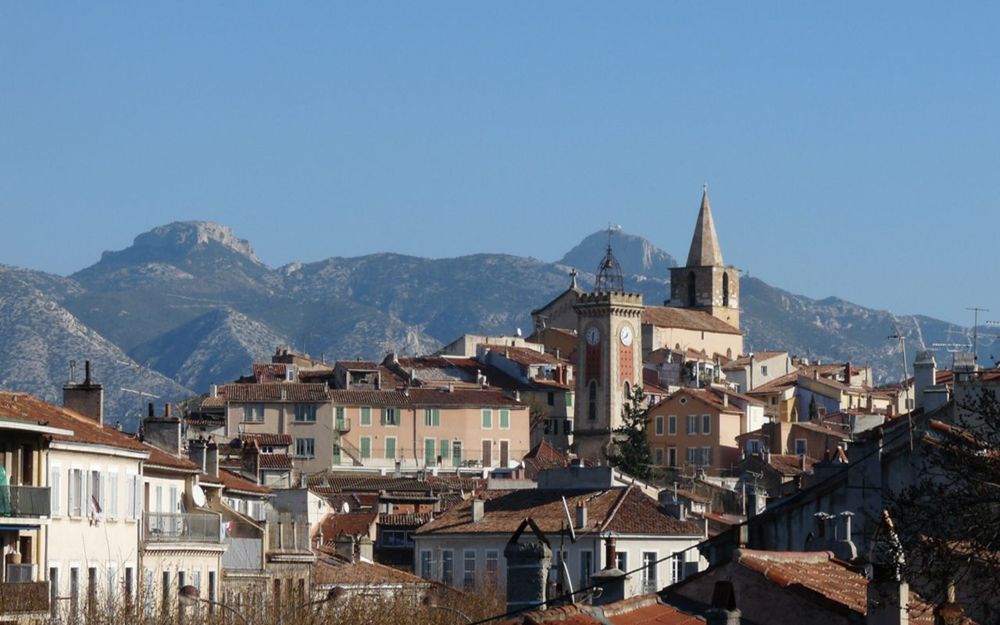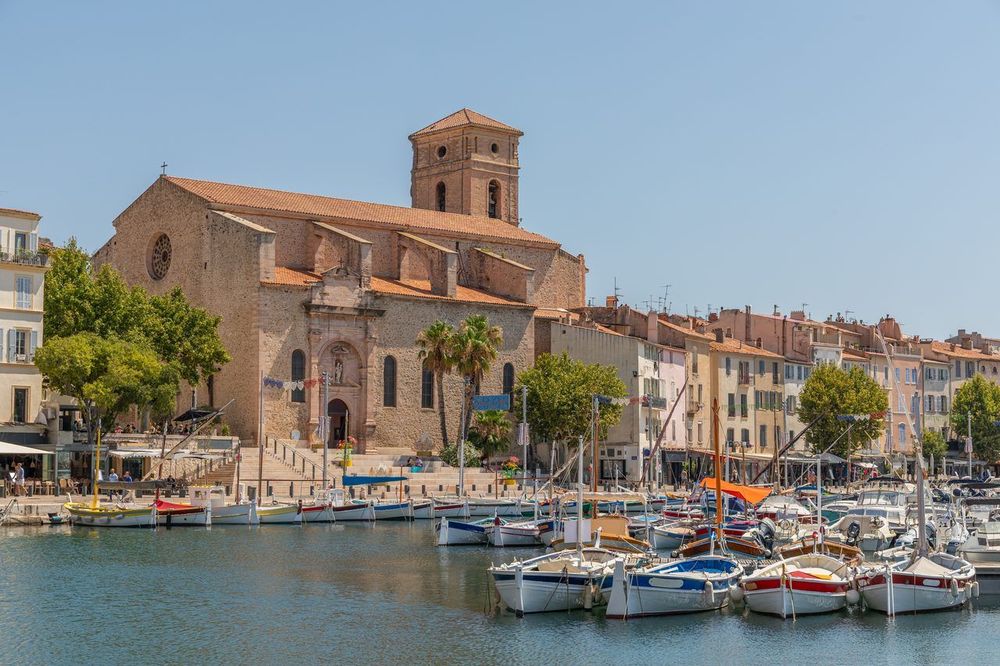
© Shutterstock
 Votre guide Ryo
What to Do in La Ciotat in 2026: 16 Experiences Between Calanques, Cinema and the Old Port
What to do in La Ciotat when you settle in between Marseille and Cassis, not quite sure where to start? The city stretches along the bottom of a crescent-shaped bay, 31 kilometres east of Marseille, between an old port lined with colourful facades, calanques carved into the pudding-stone of the Bec de l'Aigle, and a cinema inaugurated in 1889, recognised as the oldest still in operation in the world. People often come for the beach and leave with the feeling of having visited three cities at once: a Provençal port, a corner of the Calanques National Park, and a former stronghold of shipbuilding.
Allow around fifteen possible stops, spread over two to four days: an exotic garden created in 1923 beneath the Bec de l'Aigle, the only wooded island in the Bouches-du-Rhône a quarter of an hour by shuttle, nine beaches listed by the tourist office, a pebble calanque reached by 87 steps. Sports enthusiasts will find drop-offs for diving, coves for kayaking and cliffs for hiking. Others will enjoy the Eden-Théâtre, the memory of the shipyards and a few shaded gardens. And if your stay takes you through Marseille, the Ryo audio tour of Marseille extends the discovery on the Phocaean City side.
1. The Old Port and Historic Centre of La Ciotat
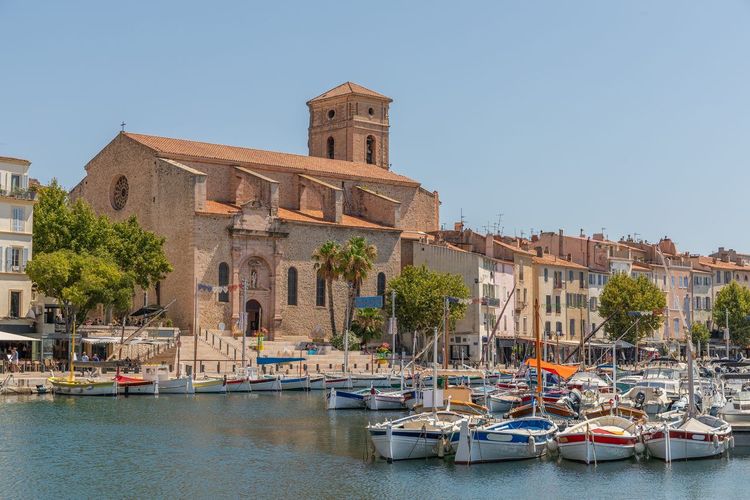
This is almost always where the discovery of the city begins: the old port opens directly onto the old town, which the tourist office presents under the name "Vieux La Ciotat".
The Old Port and Its Lively Quays
The Old Port of La Ciotat remains the beating heart of the city. The facades surrounding it, painted in ochre, pale yellow and pink tones, create a typically Provençal scene, facing the cranes of the former shipyard that serve as a reminder that the city long lived from the sea. In the morning, before the terraces fill up, it is the best time to stroll along the quays and watch the moored boats.
You can sit down at a terrace from opening time to enjoy the calm, then set off on foot towards the calanques: the tourist office indicates it takes about twenty minutes on foot to reach Figuerolles or the Mugel from its offices. If you prefer to stay in town, markets are announced on the city hall website, which is handy for planning your morning.
The Historic Centre and Its Ciotaden Alleyways
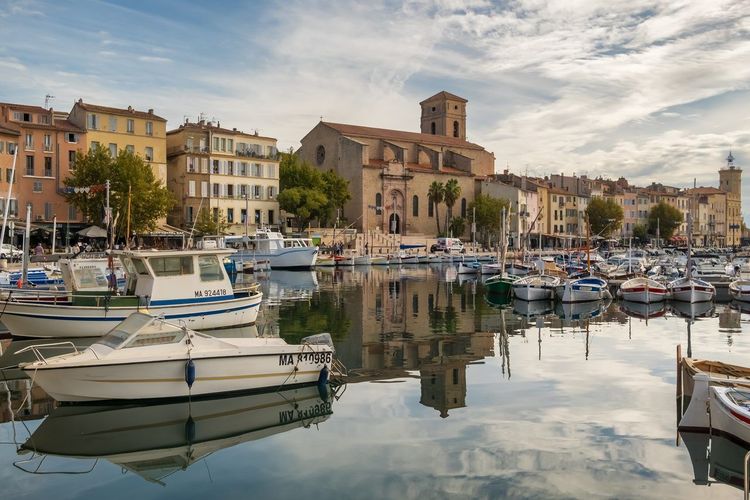
Heading up from the port, the historic centre of La Ciotat unfolds through a network of narrow alleyways and small squares, inherited from the old fishing village. The église Notre-Dame-de-l'Assomption, which the tourist office highlights among the witnesses of this "land of history", marks the heart of this village of La Ciotat. The colourful facades, shutters and small shops give the neighbourhood a Provençal character that stands in contrast to the more modern areas.
Allow an hour to an hour and a half to wander at your own pace, even letting yourself get pleasantly lost in the side streets. La Ciotat does not yet have a Ryo audio tour, but if you enjoy this format, save it for Marseille, half an hour away by road: 24 audios and 3 hours of walking through the historic neighbourhoods of the neighbouring city.
2. The Mugel Park, a Green Retreat by the Sea
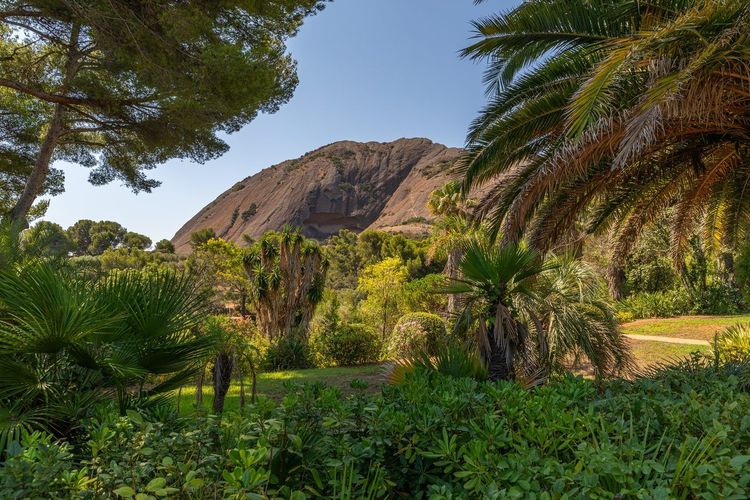
The Mugel park (Avenue des Calanques, 13600 La Ciotat, rated 4.5/5 on Google with 5,978 reviews) was born of a private project: Louis Fouquet created a garden here in 1923 for his residence. The city of La Ciotat bought back half the property in 1952, then the Bouches-du-Rhône department acquired the other part some thirty years later. Renovated in 1999 and 2000, the park now covers approximately 16 hectares.
Its secret lies in the Bec de l'Aigle, which shields it from the winds: this microclimate allows a remarkable variety of vegetation to thrive. You will walk through a bamboo grove, a collection of palm trees, birds of paradise, cacti, aromatic plants and cork oaks. A bastide, occupied by an environmental education centre, overlooks the whole area and offers a superb view over the gulf of La Ciotat and île Verte.
Wear sturdy shoes: the paths leading up to the higher areas are steep in places. Bus 355 serves the area if you do not want to walk from the centre, and the small Mugel calanque, next to the park, allows you to follow up with a swim.
3. The Calanques of La Ciotat: Figuerolles and the Bec de l'Aigle
La Ciotat has its own section of the Calanques National Park, and it can be visited without the long approach walks required by some of the Marseille calanques.
The Figuerolles Calanque
The Figuerolles calanque (Chemin de Figuerolles, 13600 La Ciotat, rated 4.5/5 on Google with 5,519 reviews) can be reached on foot in about twenty minutes from the tourist office, or by bus 353. From the car park, the only direct access is a staircase of 87 steps leading down to a pebble cove, framed by pudding-stone cliffs and dominated by the Bec de l'Aigle. The site has been listed since 14 February 1944 and is part of the Calanques National Park.
It is best to arrive early in the morning in July and August: the cove is small and fills up quickly. Underwater, drop-offs, fissures and cavities make it a well-known spot for divers. A useful tip: discharges from the sewage treatment plant have occasionally polluted the calanque, so check the water quality posted on site before swimming.
The Bec de l'Aigle Calanque and the Notre-Dame-de-la-Garde Chapel
The Bec de l'Aigle owes its name to its rocky silhouette, which from a distance evokes the head of a bird of prey turned towards the sea. This pudding-stone cape, a pinkish rock made of cemented pebbles, serves as a landmark for anyone sailing off La Ciotat and shelters the Mugel park from the prevailing winds.
Higher up, the Notre-Dame-de-la-Garde chapel, far more modest than its famous Marseille namesake, draws hikers for its panoramic view over the bay. Ask at the tourist office about the most suitable trail to climb up: you can then continue along the route des Crêtes, which starts in this area.
4. The Beaches of La Ciotat
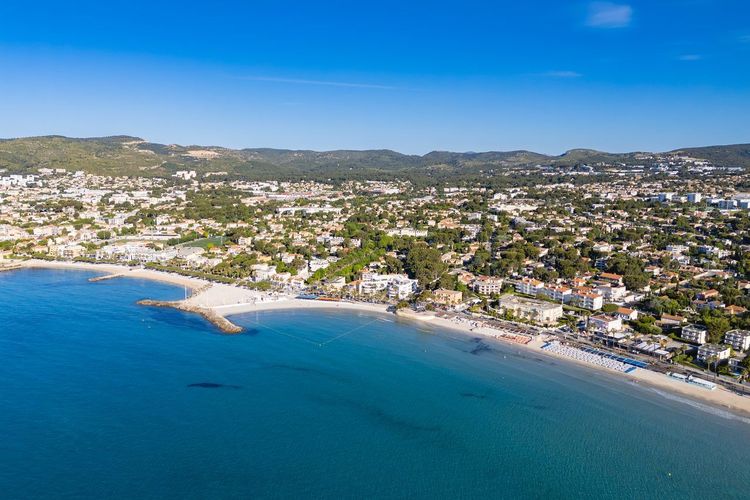
The tourist office lists nine beaches, varied enough for you to find your own without leaving the city.
La Grande Plage is the most iconic, with its fine sand and busy seafront. The plage Lumière (Boulevard Guérin, 13600 La Ciotat, rated 4.2/5 on Google with 8,399 reviews), whose name pays tribute to the famous cinema pioneers, is presented as ideal for children and equipped to welcome people with disabilities.
The plage des Capucins, a mix of sand and gravel, has a playground and restaurants nearby. Plage Cyrnos was awarded the Blue Flag in 2023, with pétanque courts close by. At plage Saint-Jean, you can hire a kayak in season.
If you are looking for peace and quiet, head for plage Fontsainte, which the tourist office describes as the "most secret", along the corniche, or plage Arène Cros, "the least crowded", with its pebbles and posidonia seagrass beds. Plage du Liouquet, a pebble beach, is reached by steps and offers a fine view over the bay. Dog owners even have their own canine-friendly beach, between the Villa des Tours and the Capucins. From several beaches, you can spot "les 3 secs", three rocks that emerge from the sea offshore.
One final tip: on pebble beaches like Liouquet or Arène Cros, water shoes make entering the sea much more comfortable. And if you are travelling with young children, the sandy beaches in the centre remain the easiest to manage, with shops and restaurants just steps away.
5. Île Verte, the Wooded Islet off the City
The île Verte (Embarcadère du Vieux Port, 13600 La Ciotat, rated 4.7/5 on Google with 6 reviews) is the only wooded island in the Bouches-du-Rhône. Covering approximately 12 hectares, it measures roughly 430 metres long by 260 metres wide and is reached in about fifteen minutes by shuttle from the port.
At its summit stand the ruins of Fort Saint-Pierre, destroyed during the bombings of 12 August 1944. Since 19 April 2012, the island has been integrated into the terrestrial core of the Calanques National Park: stay on the marked paths and take your rubbish with you.
Shuttle frequency varies by season, so check timetables and fares before you go, especially outside summer. It is a short excursion, ideal late in the morning before returning to have lunch at the port. Bring water and sturdy shoes: the island remains a natural space, without the facilities of an urban beach, and the crossing offers a fine view of the Bec de l'Aigle from the sea.
6. The Eden-Théâtre, the Oldest Cinema in the World
The Eden-Théâtre (Boulevard Jean Jaurès, 13600 La Ciotat, rated 4.7/5 on Google with 847 reviews), at the corner of Boulevard Jean-Jaurès and Boulevard Georges-Clemenceau, was inaugurated as a theatre on 15 June 1889. On 21 March 1899, it hosted its first paying cinema screening, which earned it recognition by the Guinness World Records as the oldest cinema still in operation in the world.
The connection with the Lumières is a family affair: Antoine Lumière, a photographer based in Lyon, had a château built on his property at the Clos des Plages, inaugurated in 1893. His son Louis shot around ten films there in the summer of 1895, including "Querelle enfantine" and "Baignades en mer". The city also appears in the famous "L'Arrivée d'un train en gare de La Ciotat".
The first cinematograph screenings in the city also date from 1895: a showing at the Palais Lumière on 21 September, then a first screening at the Eden on 14 October, several years before the paying sessions that made its reputation.
Closed in 1995 for safety reasons, the venue reopened on 9 October 2013 after sixteen months of renovation work. If you love film history, book a screening: watching a film where it all began is an experience like no other. Check the programme before your visit.
7. The Musée Ciotaden
The musée Ciotaden (Rue des Poilus, 13600 La Ciotat, rated 4.6/5 on Google with 137 reviews), sometimes spelled musée ciotadien depending on the source, is dedicated to the local history of La Ciotat: its maritime past, its traditions and the major milestones in the life of the city.
You can easily slot it in between the old port and a lunch break. Opening hours vary by season: check with the tourist office before heading there, especially if you are travelling as a family and want to schedule the visit on a rainy day.
8. The Maison de la Construction Navale, Memory of the Shipyards
The Maison de la Construction Navale (Boulevard Bertrand Vaÿsse, 13600 La Ciotat, rated 4.6/5 on Google with 56 reviews) tells an entire chapter of La Ciotat's identity. The shipyards long supported the city's livelihood, until Normed's bankruptcy in 1986 and its final closure in 1989 — a trauma still present in local memory.
The site did not fade away, however. Since 2007 it has been equipped for the maintenance of large luxury yachts, and was renamed La Ciotat Shipyards in 2017. Managed today by a structure combining public and private stakeholders, it employs around 1,500 people as of 2025, and roughly a hundred yachts pass through each year, representing approximately one seventh of the world fleet according to Wikipedia.
You can check the city hall calendar: the Maison de la Construction Navale features during heritage events. And as you walk along the port, the shipyard cranes will give you an idea of the scale of the vessels welcomed there.
9. Parks and Gardens of La Ciotat
Beyond the Mugel, the city has other green spaces in the town centre, more modest but useful for a shady break between two visits.
The Jardin de la Ville
The jardin de la Ville (Boulevard Anatole France, 13600 La Ciotat, rated 4.4/5 on Google with 13 reviews) is a central green space, handy for a few minutes' rest with children between the historic centre and the residential neighbourhoods. You will find some welcome coolness there when the sun beats down on the paving stones.
The Jardins de l'Espérance
Less known to passing visitors, the jardins de l'Espérance are frequented mainly by locals. If you are looking for a quiet spot in peak season, ask the tourist office how to get there and what hours they are open: it is the kind of address that gets passed on among Ciotadens.
10. La Guillaumière Leisure Park

Designed for families, La Guillaumière leisure park (Avenue Fernand Gassion, 13600 La Ciotat, rated 3.8/5 on Google with 170 reviews) offers a relaxation and play area away from the centre. It is the place where your children can let off steam after a morning spent visiting museums and alleyways.
Before heading there, check the available facilities and access conditions: a quick call to the tourist office will save you an unnecessary trip on a very hot day.
11. La Bastide Marin, a Rural Estate at the City's Edge
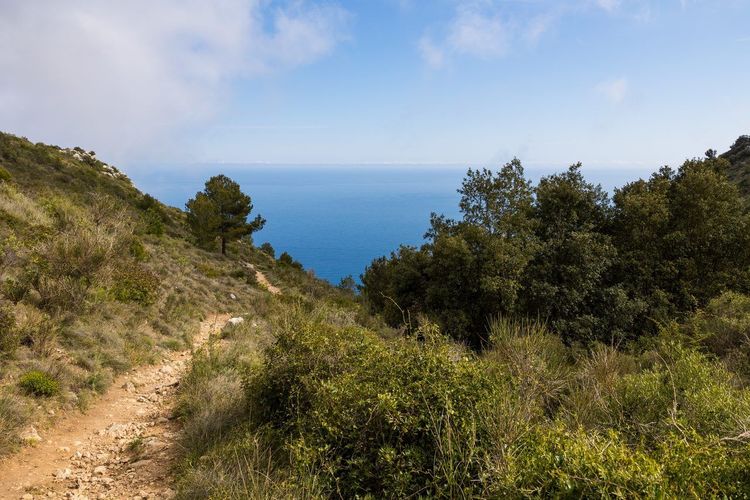
Less well-known than the calanques, Bastide Marin (Route de la Bastide Marin, 13600 La Ciotat, rated 4.4/5 on Google with 136 reviews) is an agricultural and natural estate set in the hills above La Ciotat, where the Provençal countryside reasserts itself just a few minutes from the coastline.
Few visitors think of it, which makes it a good option if you have already ticked off the must-sees and are looking for a quieter moment. Check opening days and any events before heading there, and opt for late afternoon in summer when the heat subsides over the hills.
12. Water Sports and Outdoor Activities in La Ciotat
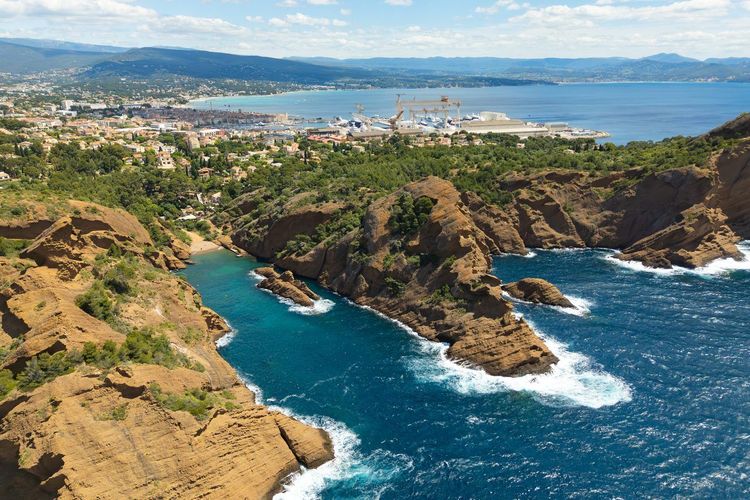
Between calanques and cliffs, La Ciotat attracts outdoor enthusiasts, often with a gentler crowd than at Cassis.
Diving, Snorkelling and Paddleboarding in the Calanques
The seabed at Figuerolles, with its drop-offs, fissures and cavities, attracts divers, and several local operators run introductory dives and explorations within the Calanques National Park. For snorkelling, the posidonia seagrass beds visible from beaches such as Arène Cros are more than enough to fill a morning.
For kayaking or paddleboarding, plage Saint-Jean offers rentals in season. Set out early when the sea is calm, and hug the coves of the bay while keeping a safe distance from swimming areas.
Boat Hire and Sea Trips
Several rental operators based at the port allow you to hire a boat, without a licence for the smallest craft, or to book a skippered trip towards Cassis and the calanques. Book the day before in July and August: morning slots go quickly.
Climbing and Hiking: Trou Souffleur and Grotte Bleue
The pudding-stone cliffs of the massif also attract climbers, and the Trou Souffleur area regularly features among the sites mentioned by climbing enthusiasts in the region. The Grotte Bleue (Route des Crêtes, 13600 La Ciotat, rated 4.8/5 on Google with 26 reviews), another name often mentioned, is associated with swimming in water with a particularly striking colour.
Access to both sites can be tricky: find out about the trails, any potential closures of the massif during fire risk periods and the equipment needed before setting off. For more classic hiking, the route des Crêtes and the path to Figuerolles already offer beautiful viewpoints. For electric bike hire or segway tours, ask the tourist office about current providers.
13. Day Trips Around La Ciotat: Route des Crêtes, Marseille and Provence
La Ciotat's position between Marseille and Cassis makes it a practical base for exploring the area over several days without changing accommodation.
The Route des Crêtes Towards Cassis
The route des Crêtes connects La Ciotat to Cassis along the top of the cliffs. The tourist office highlights spectacular viewpoints along the way, notably over the Soubeyranes cliffs, among the highest sea cliffs in France, with their orange-ochre colour. Near cap Canaille, the cliffs exceed 390 metres. Stop only at designated pull-offs, and check that the road is open: it can be closed in high winds or when there is a fire risk.
Heading to Marseille: Cité Radieuse and the Old Port
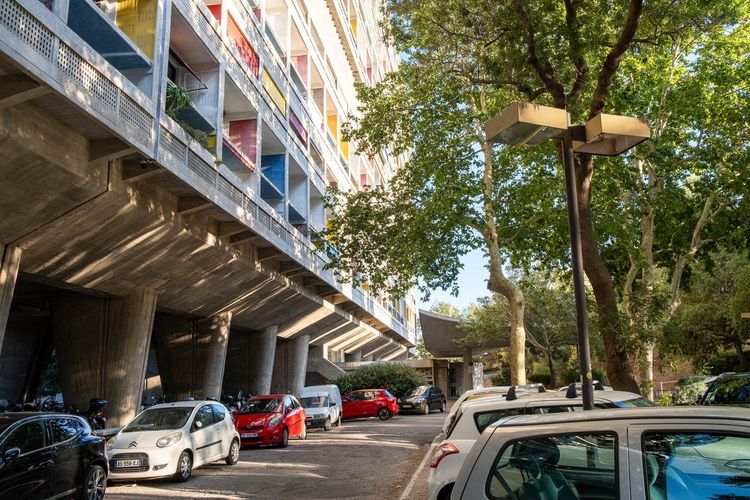
At 31 kilometres via the A50, Marseille is easily visited in a day. Le Corbusier's Cité Radieuse, an iconic building of modern architecture, can be partially explored, including its rooftop terrace.
For the rest of the day, the Ryo audio tour of Marseille takes you across 7.3 km, with 24 audio stops to help you understand the "Phocaean City" around the Old Port, without having to consult a paper guide at every street corner.
Towards the Camargue: Aigues-Mortes and Salon-de-Provence
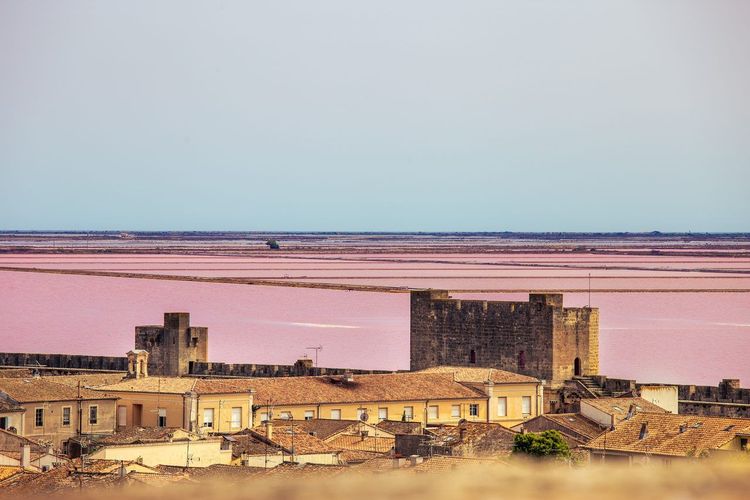
If you have a full day available, Aigues-Mortes, in the Gard, opens the door to the Camargue with its medieval ramparts. The journey from La Ciotat is long: set off early. Along the way, Salon-de-Provence offers a stop at the château de l'Empéri (Montée du Puech, 13300 Salon-de-Provence, rated 4.4/5 on Google with 1,225 reviews), which dominates the old town.
14. When to Go and Events Not to Miss
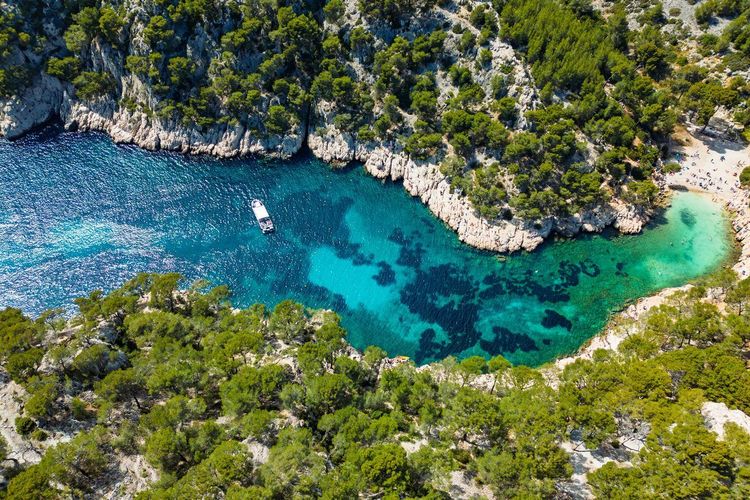
The most pleasant season runs from May to October, with visitor numbers peaking in July and August: beaches fill up early and accommodation books out fast. Spring and early autumn often offer a sea that is still warm enough for swimming, quieter calanques and more comfortable temperatures for walking.
In summer, bear in mind the fire risk: access to the massifs can be restricted on windy days, so check the evening before. For events, the tourist office calendar lists festivals, markets and cultural highlights, and the Eden-Théâtre publishes its own programme. Heritage days are also an opportunity to discover places such as the Maison de la Construction Navale.
Do you have two days? Here is a sequence that works well. On the first day, stroll around the old port and the historic centre in the morning, have lunch on the quays, then head up to the Mugel park in the afternoon before a swim at the neighbouring calanque. End with a screening at the Eden-Théâtre. On the second day, set off early to Figuerolles to enjoy the cove before the crowds arrive, take the shuttle to île Verte late in the morning, then save the end of the afternoon for the route des Crêtes, when the low light sets the Soubeyranes cliffs ablaze.
15. How to Get to La Ciotat
Several options exist depending on your starting point, as the city is well connected to Marseille and the neighbouring Var.
By Train and Bus
La Ciotat has a train station served by TER regional services from Marseille, a practical option for avoiding summer traffic jams. Locally, the bus network reaches the calanques: line 353 for Figuerolles and line 355 for the Mugel, allowing you to reach the natural sites without a car.
By Car and by Plane
By car, La Ciotat is 31 kilometres from Marseille, via the A50 motorway or the RD 559. By plane, Marseille Provence Airport is the most convenient gateway, from where you can reach the city by road or train.
If you are arriving from the east, make a stop in Toulon: its Ryo audio tour covers 4.6 km in 1h50, with 19 audios to discover this city with its strong military tradition before heading on to La Ciotat.
16. Where to Stay, Where to Eat and Practical Information
Accommodation is concentrated mainly around the old port and the seafront, from bed and breakfasts to hotels with bay views. Booking several months in advance is advisable for July and August. If you are coming without a car, choose accommodation close to the centre: you will be able to walk to the port, the Eden and the beaches, and buses 353 and 355 will take you to the calanques.
For dining, the port restaurants focus on seafood, and La Grande Plage lines up restaurants and ice cream parlours along the seafront. For a quieter coffee, head into the alleyways of the historic centre, away from the hustle of the waterfront.
The tourist office is located on Boulevard Anatole France (04 42 08 61 32). You can get the shuttle timetables to île Verte there, as well as information on massif access conditions in summer and the events calendar. Also check the city hall website for market days.


FAQ
How Much Time Should You Plan to Visit La Ciotat?
Two days are enough to cover the old port, the historic centre, the Mugel park and one calanque. Allow three to four days to add water activities, île Verte and a day trip to Cassis or Marseille.
What Is the Best Time to Visit La Ciotat?
May–June and September–October offer the best balance between pleasant weather, a swimmable sea and moderate crowds. July–August remains the top choice for the beach, despite significantly heavier visitor numbers.
How Do You Get to La Ciotat from Marseille?
Regional TER trains connect the two cities, with several departures daily. By car, allow 31 kilometres via the A50 motorway.
What Are the Most Beautiful Beaches in La Ciotat?
La Grande Plage and plage Lumière are the most popular, with the latter being ideal for children. For more peace and quiet, the tourist office recommends Fontsainte and Arène Cros.
Is Île Verte Easily Accessible from the Port?
Yes, a shuttle connects the port to the island in about fifteen minutes. Frequency decreases outside peak season: check the timetable before you go.
What to See in La Ciotat in One Day?
In one day, prioritise the old port, the historic centre, the Mugel park and a nearby calanque such as Figuerolles, then catch a screening at the Eden-Théâtre in the evening.
La Ciotat brings together what other towns along the coast struggle to combine: a lively port, calanques accessible without excessive effort, and a history — both industrial and cinematic — that can be read on every street corner. Whether you come for two days or a week, the essentials are concentrated between the old port, the Eden and the Bec de l'Aigle, with the route des Crêtes as a bonus towards Cassis.
To complete your Provençal stay, the Ryo app guides you through the major neighbouring cities: the Ryo audio tour of Marseille tells the story of the Phocaean City across 24 audios, and the one for Toulon reveals its military history over 1h50 of walking, at your own pace.