© Shutterstock
 Votre guide Ryo
Visiting Metz in 2 Days: The Complete Itinerary for 2026
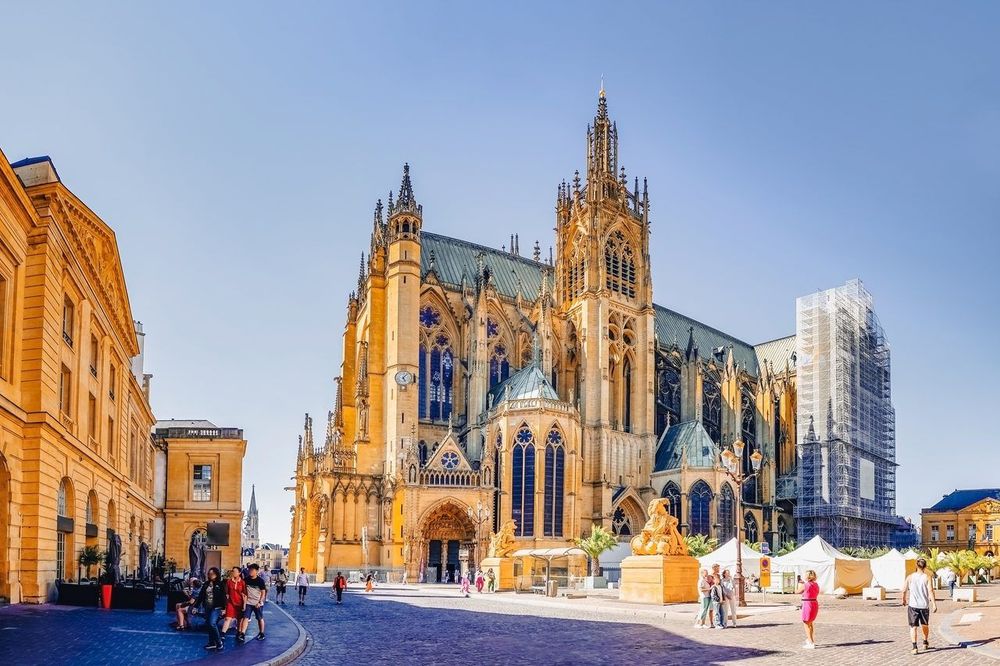
In Metz, evening light filters through the stained glass of cathédrale Saint-Étienne down to the calm waters of the Moselle, and it often takes no more than a quarter of an hour's walk to move from a Gothic masterpiece to a riverside garden. It is this proximity that makes visiting Metz in 2 days entirely possible without rushing: the city concentrates most of its heritage within a tight perimeter, between the old town and the banks of the Seille. This guide follows a day-by-day itinerary, complemented by the Ryo audio-guided tour of Metz to explore each neighbourhood at your own pace.
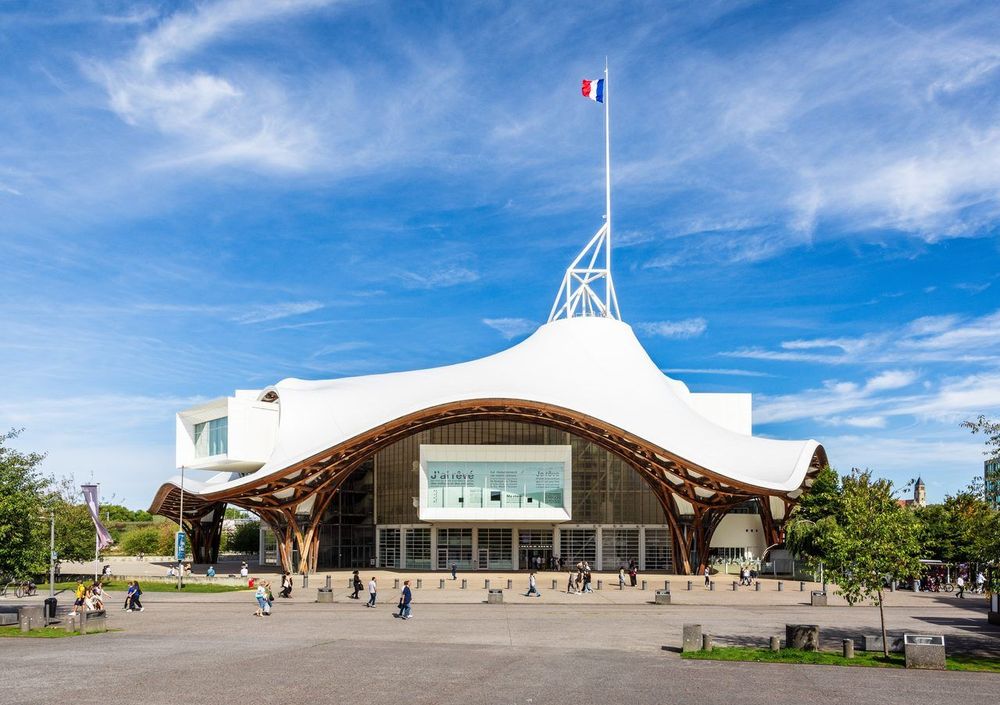
You will discover why Metz's railway station, completed in 1908 in a flamboyant Art Nouveau style, is regularly cited among the most beautiful in France; how Centre Pompidou-Metz transformed a former barracks district with its undulating roof inspired by a Chinese hat; where to buy a genuine pâté lorrain without spending an hour in the queue; and exactly what time the lake takes on its finest colours for a sunset. Enough to put together a packed weekend, blending medieval heritage and a contemporary arts scene, without ever feeling like you're chasing the clock.
Day 1 in Metz: Cathédrale Saint-Étienne, Old Town and Centre Pompidou
Cathédrale Saint-Étienne and the Old Town
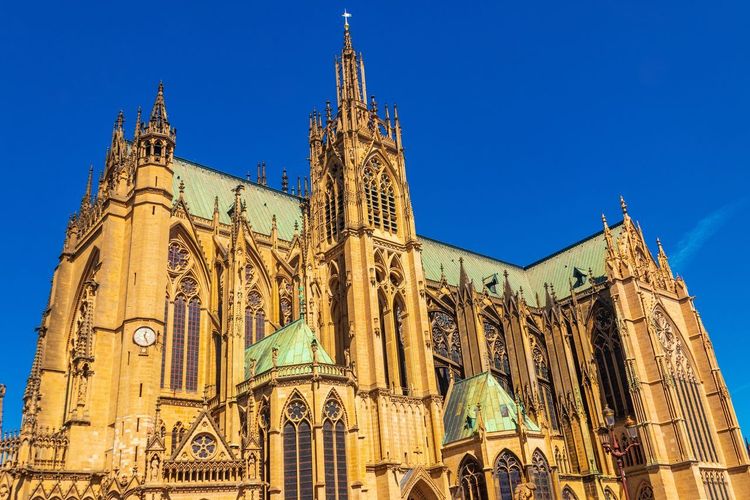
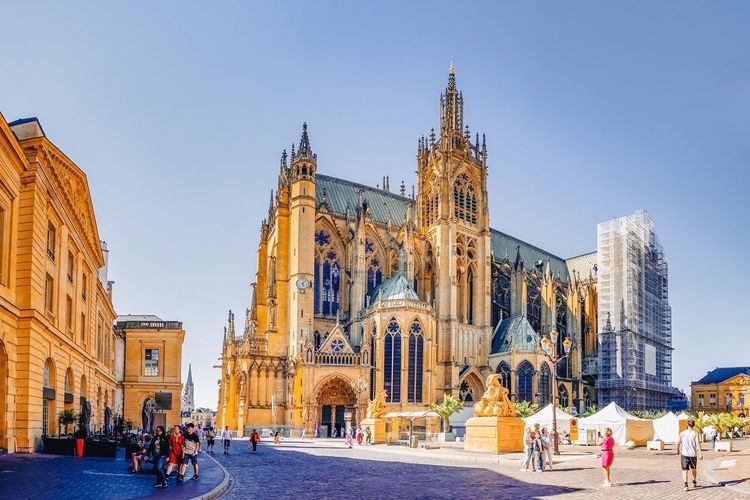
Start the day at cathédrale Saint-Étienne, nicknamed the Lantern of God for its 6,500 m² of stained glass — a record among French Gothic cathedrals. The nave rises to 41.77 metres, ranking it among the three tallest in the country, and the transept rose windows were redesigned in the 20th century by Jacques Villon and, more recently, by Marc Chagall for three windows in the choir. The best time to visit is early morning, between 9am and 10am, when the light pours through the east-facing stained glass and the crowds have not yet filled the nave.
Entry to the cathedral is free, but there is a surcharge to climb the Tour de Mutte if you want a panorama over the old town's slate rooftops. Just behind the apse, place Saint-Louis lines up its 14th-century arcaded houses, remnants of the Lombard merchants' quarter whose members lent money at interest beneath these same vaults seven hundred years ago.
Leaving through the main entrance, head into the old town via rue Taison and rue des Clercs: this is the best way to feel the density of the historic centre, between classical façades and inner courtyards you only notice by looking up. A guided tour of the cathedral and old town, offered by the tourist office, lets you delve deeper into the history of these lanes if you have an hour to spare for storytelling rather than simply wandering.
Temple Neuf, Place de la Comédie and the Opéra-Théâtre
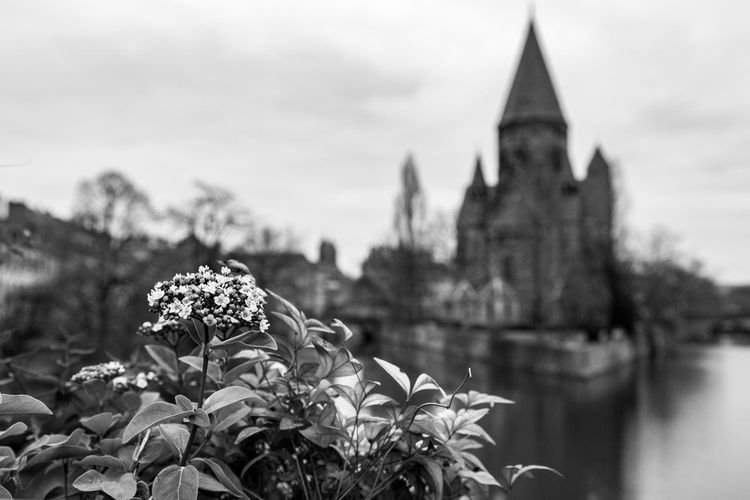
Heading back down toward the water, five minutes' walk from the cathedral, the Temple Neuf occupies a small island on the Moselle. Built in 1904 in a neo-Romanesque style inspired by Speyer Cathedral, this Protestant church is reflected in the river and forms one of the most photographed views in Metz, especially in late morning when the sun lights up its façade.
Nearby, the jardin d'Amour occupies a small tree-lined square on the île du Petit Saulcy: a shady bench is all you need for a break before crossing over to place de la Comédie, one of the oldest theatrical squares in France. It takes its name from the Opéra-Théâtre de Metz Métropole, built between 1738 and 1752, which claims to be the oldest continuously operating theatre in the country.
Plan to have lunch here: the terraces bordering the square enjoy a direct view of the theatre's neoclassical façade, and it makes a natural stopping point before an afternoon devoted to contemporary art. The covered market, five minutes away, remains the safest bet if you want to leave with some mirabelles or a pâté lorrain before catching your train.
Centre Pompidou-Metz and the Musée de la Cour d'Or
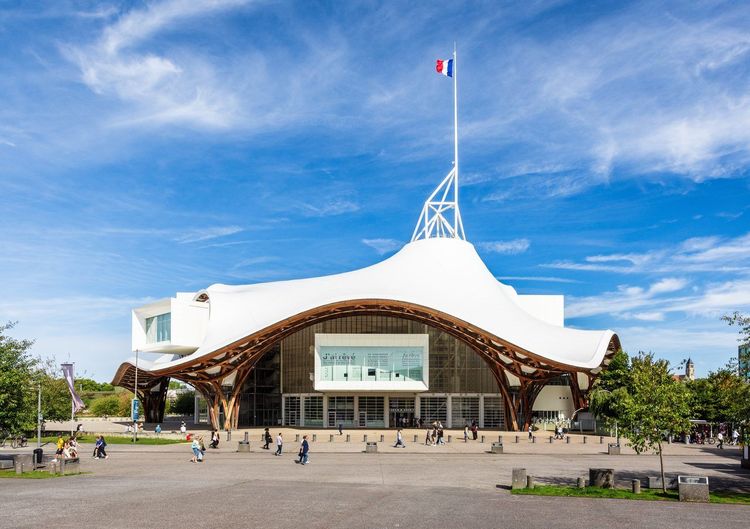
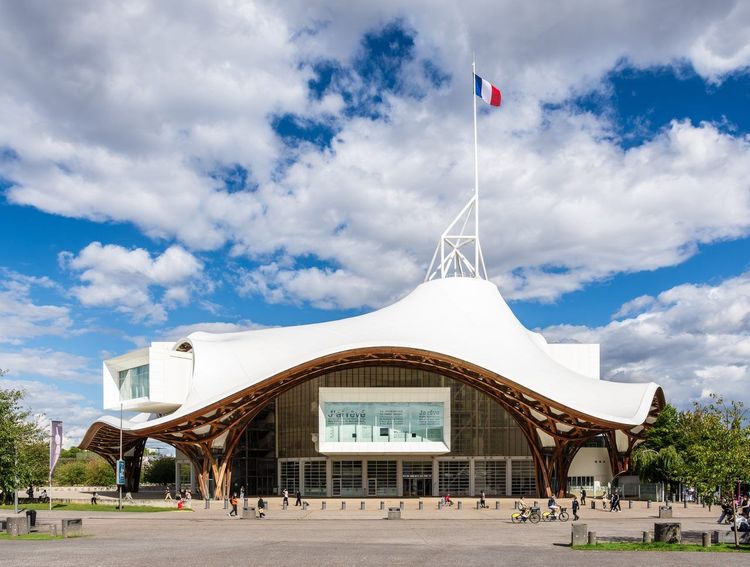
The afternoon shifts to an entirely different century with Centre Pompidou-Metz, fifteen minutes' walk from place de la Comédie. Designed by Shigeru Ban and Jean de Gastines, its timber lattice roof — inspired by a Chinese hat — rises above a former military barracks district that has been the city's cultural hub since 2010. The temporary exhibitions change several times a year and cover modern and contemporary art without ever duplicating the Parisian collection.
Allow two hours to walk through the levels at a leisurely pace, plus a break on the restaurant terrace, which offers one of the best views of the cathedral from outside the historic centre. The box office offers timed entry slots in high season: book online if your visit falls on a Saturday afternoon.
On the way back into the centre, the Musée de la Cour d'Or (2 Rue du Haut Poirier, 57000 Metz, rated 4.7/5 on Google from 2,376 reviews) is worth an hour's detour: its Gallo-Roman collections, including the remains of ancient baths discovered beneath the city, tell a story of Metz that goes back well before the Middle Ages. To put this first day into its broader historical context, the Ryo audio-guided tour of Metz: 3,000 Years of History, a 3h15 tour across 27 stops, links these sites together with the stories that accompany them.
Day 2 in Metz: Fortifications, the Seille Quarter and Green Spaces
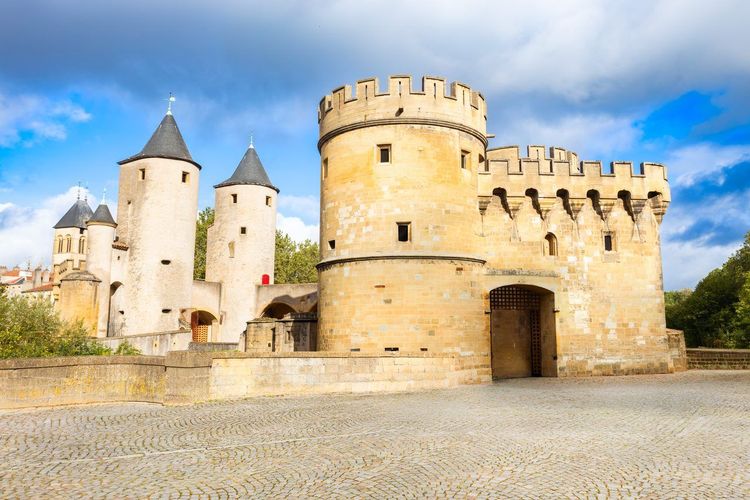
Porte des Allemands and the Fortifications
The second day starts to the east of the historic centre, at the Porte des Allemands, a 13th-century fortified complex that spans the Seille with its two crenellated towers facing the city and its Renaissance forebuilding facing the countryside. It is one of the rare remaining sections of the medieval ramparts still fully visible, and its silhouette reflected in the river makes it a must-see stop, even on a short walk. If you're travelling with a camera, come back at dusk: the towers are lit up and their double reflection in the water creates a sharp contrast with shots taken in broad daylight.
A few hundred metres away, the Arsenal district now houses the Cité musicale-Metz, a concert hall installed in a 19th-century military arsenal converted in the 1980s. In summer, the centre's façades serve as a backdrop for Les Constellations de Metz, the city's digital arts festival: from late June to early September, a trail of projections and video mapping illuminates the cathedral and several monuments after dark, with free admission. If you are in Metz in July or August, keep one evening for this trail rather than wrapping everything up before dinner.
The Lake, the Moselle and the Botanical Garden
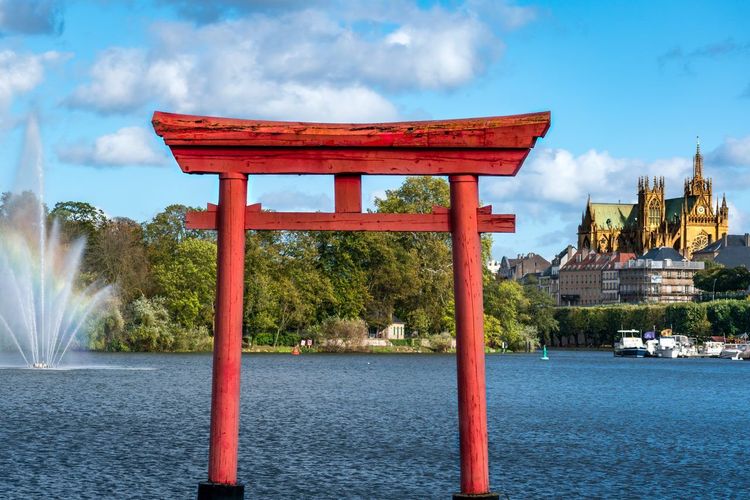
Following the Moselle southward, you reach the plan d'eau de Metz, a large basin laid out for walking and water sports, bordered by lawns where locals picnic from the first warm days of the year. It is also one of the best spots in the city for a sunset, with raking light crossing the water and catching the cathedral in the distance.
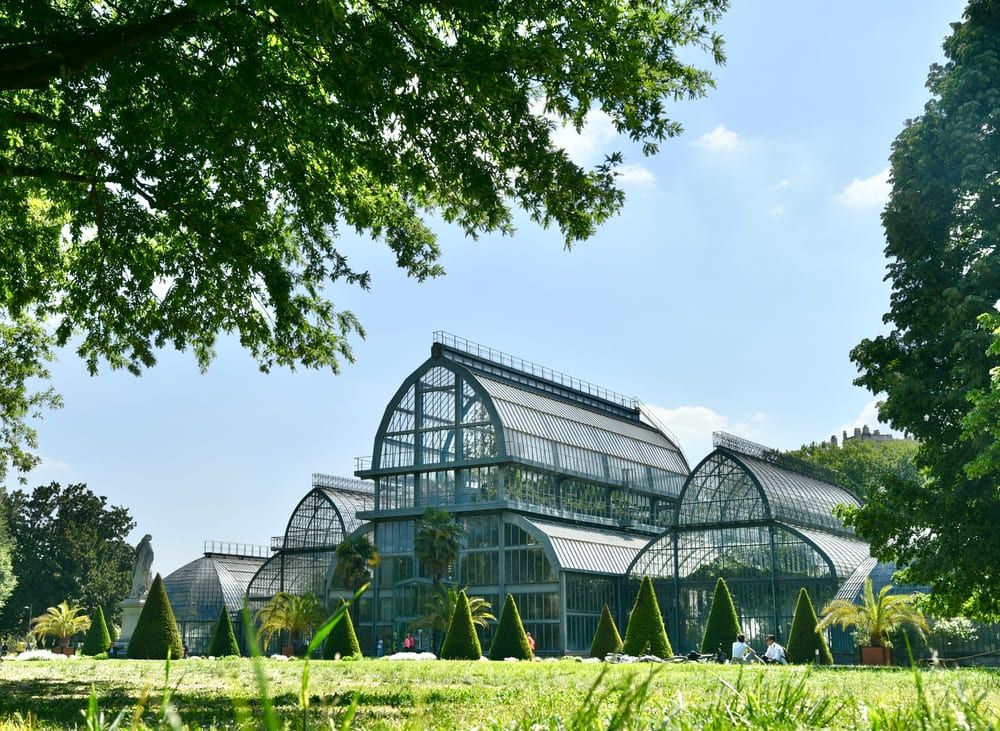
Right next to it, the jardin botanique de Metz stretches across several hectares of tropical greenhouses, herbaceous collections and a rose garden. It connects directly with the jardins Jean-Marie Pelt, a more recent space dedicated to urban ecology, named in tribute to the Metz-born botanist. Both gardens are free all year round, making them a restful break before heading back toward the Seille. Allow a good hour if you want to explore the greenhouses and rose garden without rushing.
The Seille Quarter and Église Sainte-Eucaire
Continuing northeast, the Seille quarter stretches along the river of the same name, between contemporary footbridges and converted former mills. It is a newer part of the city, built around the Robert-Schuman convention centre, deliberately contrasting with the ochre stone of the historic centre. Walking along the Seille, you move from the almost rural calm of the riverbanks to much more modern urban vistas in just a few minutes.
End the day at église Sainte-Eucaire (Rue Sainte-Eucaire, 57000 Metz, rated 4.6/5 on Google from 130 reviews), one of the oldest parishes in Metz, with origins dating back to the 12th century despite flamboyant Gothic alterations in the 15th. Its modest façade, wedged between buildings in the old quarter, contrasts with the grandeur of the cathedral, but is worth a detour for its more intimate atmosphere.
Both days are entirely walkable: allow around six kilometres per day, including the Porte des Allemands and the lake — a manageable pace even with children, provided you take a proper lunch break in the middle.
Visiting Metz in 1 Day: The Essentials if You're Short on Time
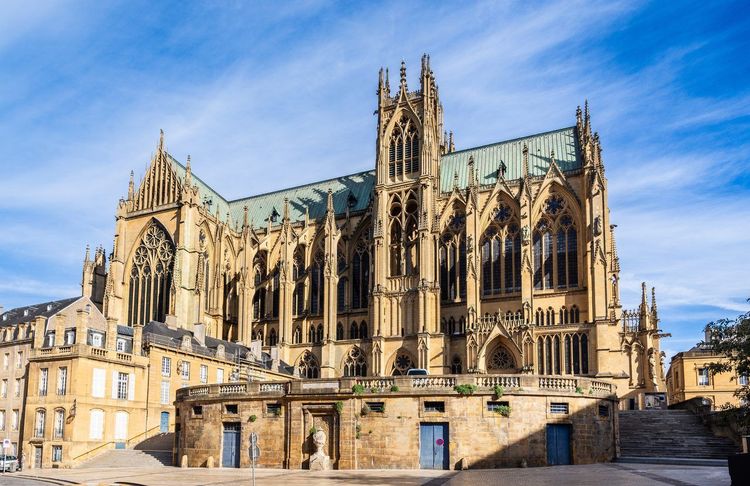
If you only have one day, focus on the historic heart described on day one: cathédrale Saint-Étienne, the old town, Temple Neuf and place de la Comédie cover the highlights of Metz's heritage on a walking route of under two kilometres. Allow half a day for these four stops at a relaxed pace, without hurrying.
For the afternoon, two options diverge depending on your priorities. Lovers of contemporary art should keep two hours for Centre Pompidou-Metz, even at the cost of skipping the Musée de la Cour d'Or. Those who prefer nature can head straight to the lake and botanical garden, fifteen minutes' walk from the centre, for a quiet break before catching the train home.
Visiting Metz on foot remains the best option even on a short day: the city is compact, flat, and most of the sites mentioned here are within twenty minutes' walk of each other. If you prefer a structured format, the InspireMetz tourist office offers guided walking or cycling tours covering the same highlights in a morning, with a guide who puts each monument in its historical context.
Visiting Metz in 3 Days: What Else to Do
With a third day, the most natural option is to leave the city rather than adding more visits within it: Metz has already given up most of its heritage in 48 hours, and the third day lends itself better to an excursion into the surrounding area, which we detail later in this guide.
You can also deliberately slow down: spend a leisurely morning at the botanical garden or the jardins Jean-Marie Pelt without any schedule, browse the covered market with no particular shopping agenda, or revisit part of the old town and linger over details missed the first time around, such as the wrought-iron signs on rue Taison or the inner courtyards visible through certain archways.
If your stay falls at the end of the year, this third day pairs well with a visit to the Christmas market, whose dates and tips we detail further down in this article. In any case, three days allow you to approach Metz with no time pressure whatsoever, which noticeably changes the experience compared to a 48-hour round trip.
Metz for Couples: Romantic Activities and Evenings
What to do in Metz as a couple comes down to a handful of recurring scenes for couples who return: dinner by the water, a night-time stroll through the illuminated old town, and a sunset at the lake that never quite lasts long enough. The city is particularly well suited to a romantic weekend because its main attractions are concentrated within a walkable perimeter, leaving time to slow down rather than tick off sights.
In the late afternoon, head to the lake for the sunset: it is the informal gathering spot for many local couples, with lawns and benches facing due west. Arrive about 45 minutes before the posted sunset time to find a good spot, especially on weekends in summer.
For the evening, two options stand out depending on the season. In summer, during Les Constellations de Metz — from late June to early September — the projection trail transforms several façades in the historic centre into a free show, accessible on foot from anywhere in the old town. The rest of the year, a simple night walk around the cathedral and Temple Neuf, both lit up after dark, is enough to create an atmosphere that differs completely from the daytime visit.
For dinner, favour a table with a view of the water rather than a strictly gastronomic address: several restaurants along the Moselle or on the île du Petit Saulcy make the most of their proximity to the river, with terraces open from the first warm days. Book ahead at weekends, particularly around place de la Comédie where demand rises quickly in the evening.
Finally, if your stay extends over two nights, consider spreading the romantic activities across both evenings rather than concentrating everything into one: a quiet dinner on the first night, then a longer stroll on the second, when you already know the city's layout well enough to improvise without a map.
Where to Stay in Metz
Where to stay in Metz effectively comes down to three areas, all within twenty minutes' walk of the cathedral: the historic centre, the station district and the banks of the Seille. The choice of neighbourhood depends mainly on what you prioritise: immediate proximity to the monuments, quiet evenings once the shops have closed, or quick access to the station for an early departure.
The historic centre, around the cathedral and the old town, remains the most comfortable choice for a two-day stay: everything is walkable, including the return from a late dinner at place de la Comédie. Addresses here tend to be guesthouses or small independent hotels in period buildings, with double rooms starting at around €90–120 per night in low season, rising sharply during the Christmas market.
The station district, in the Nouvelle Ville built after 1871, offers an interesting compromise between heritage and practicality. Chain hotels are more common here, with rates often 20–30% lower than in the historic centre, and avenue Foch, lined with Art Nouveau buildings, allows you to reach the cathedral in twelve minutes on foot. This is the most logical option if you are arriving or leaving by train early in the morning.
The Seille quarter, newer and less touristy, suits those looking for more affordable accommodation without straying too far from the centre. Allow fifteen to twenty minutes' walk to the cathedral, but access to the Seille riverbanks and the calm of the evening more than compensates for this slight distance.
On the budget side, hostels and economy hotels are mostly clustered near the station, with double rooms from €60–70. At the other end, the most upmarket addresses in the city centre offer direct views of the cathedral or Temple Neuf, with rates exceeding €180 per night during peak periods. In between, self-catering apartments and short-stay flats have multiplied in the old town in recent years, a practical option for a two-night stay with a kitchen.
For a romantic stay, prioritise an address in the historic centre or on the île du Petit Saulcy: the proximity of Temple Neuf and the lake allows you to combine a night-time walk with a stroll back on foot, with no need for transport. In high season, particularly during the year-end Christmas market, book at least six to eight weeks in advance: city-centre hotels sell out as early as mid-November in some years.
Where to Eat in Metz: Local Specialities and Good Restaurants
Metz has built a reputation as an ideal destination for a gourmet getaway, at the crossroads of Lorraine influences and the proximity of Germany.
Moselle Specialities to Try
The quiche lorraine is the obligatory starting point, but the real local curiosity lies elsewhere. The tarte flambée, a thin base topped with crème fraîche, onions and lardons then baked in a wood-fired oven, has been widely adopted in Metz despite its Alsatian origins, and several city-centre addresses have made it their speciality. The pâté lorrain, a puff pastry filled with pork and veal marinated in white wine, is found in most bakeries and makes a perfect on-the-go lunch between visits.
On the sweet side, the mirabelle reigns supreme: tart, jam, eau-de-vie or simply the fresh fruit in season between August and September — Lorraine produces around 15,000 tonnes of mirabelles each year, roughly 80% of global production. Don't leave Metz without trying it in some form. Cafés in the centre often offer a homemade mirabelle tart for dessert, a far safer bet than the industrial versions sold in souvenir shops.
Good Addresses by Neighbourhood
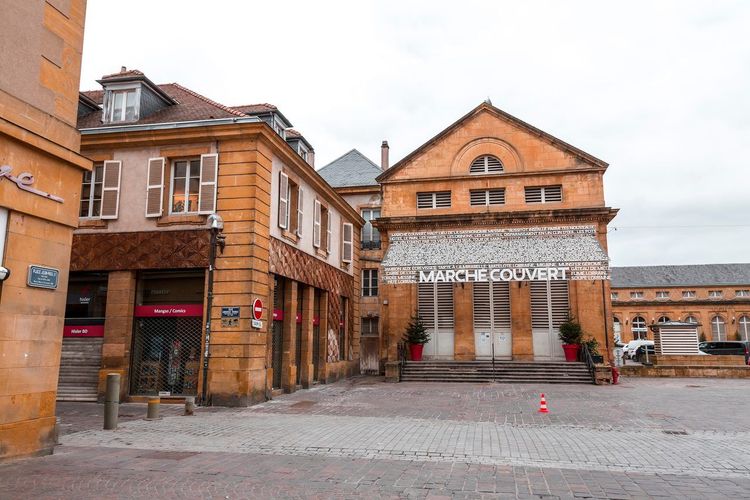
The marché couvert de Metz (Place de la Cathédrale, 57000 Metz, rated 4.4/5 on Google from 4,166 reviews), housed on place de la Cathédrale in a former episcopal palace begun in 1785 and converted into a covered market in 1831, remains the best option for a quick and varied lunch: fruit and vegetable stalls, cheese mongers and delicatessens offer takeaway dishes at prices noticeably lower than those of the surrounding restaurants.
Around place Saint-Louis, traditional brasseries occupy the medieval arcades and serve classic Lorraine cuisine, offering good value for a lunch between sightseeing stops. In the evening, place de la Comédie and the quaysides around it concentrate a more varied range, from contemporary bistros to more gastronomic tables — some with a Michelin star — for a dinner that warrants booking at weekends.
For a more relaxed waterside dinner, several addresses on the île du Petit Saulcy and the quays near Temple Neuf play the terrace-with-a-view card, a particularly fitting option for a romantic evening as mentioned earlier in this guide. For breakfast or a coffee break, the pedestrian streets around the cathedral concentrate most of the decent addresses, usually less expensive than those directly on the cathedral forecourt.
Getting to Metz: by Train, Plane, Road and the Station
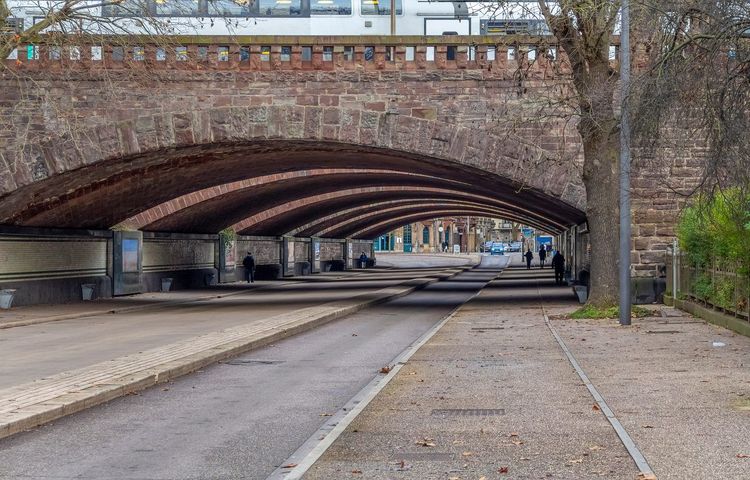
Metz is located in northeastern France, around thirty kilometres from the German border and less than an hour from Luxembourg, making it an easily accessible destination from several neighbouring countries.
By Train, by Plane or by Road
Getting to Metz by train remains, for the vast majority of visitors, the best option. The East European high-speed line connects Paris to Metz in around 1h22, with frequent departures from Gare de l'Est. From Strasbourg, allow around 50 minutes, and from Luxembourg City, under 45 minutes by regional train.
Getting to Metz by plane depends mainly on your point of departure: Metz-Nancy-Lorraine airport, around thirty kilometres south of the city, handles a limited number of domestic and charter flights. For international connections, Luxembourg airport, less than an hour's drive away, offers far more connections and remains the most practical option for visitors coming from further afield.
Getting to Metz by road is done primarily via the A31 motorway, which runs through the city from north to south and links it to Nancy, Luxembourg and, further north, the Netherlands. From Paris, allow around 3h30 via the A4 then the A31, a reasonable journey for a weekend if you plan to continue into the surrounding area covered later in this article. For those on a tight budget, long-distance coaches also serve Metz from several major French and German cities, with longer journey times but often three to four times cheaper than the train.
Metz Railway Station and Avenue Foch
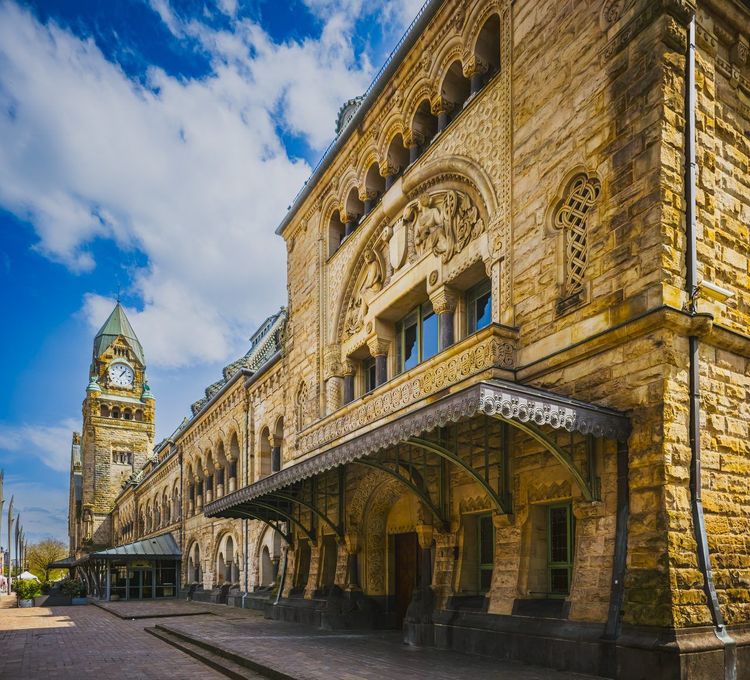
Metz-Ville railway station deserves a paragraph of its own: completed in 1908 by German architect Jürgen Kröger, at a time when Metz was part of the German Empire, it is regularly cited as one of the most beautiful stations in France, if not in Europe. Its Vosges pink sandstone façade, stretching over 300 metres, blends Romanesque and Art Nouveau influences, with a clock tower rising to 40 metres and sculptures depicting imperial figures and agricultural scenes.
Stepping out of the station, avenue Foch immediately extends this architectural interlude: lined with Art Nouveau mansions built by wealthy German industrialists in the early 20th century, it connects the station to the historic centre in about fifteen minutes of pleasant walking, far more interesting than a tram journey for anyone discovering the city for the first time.
If you arrive by train, this walk from the station to the cathedral makes an excellent warm-up for day one, and a good way to grasp Metz's dual architectural identity — medieval heritage at the centre, German imperial imprint toward the station.
Getting Around and Parking in Metz
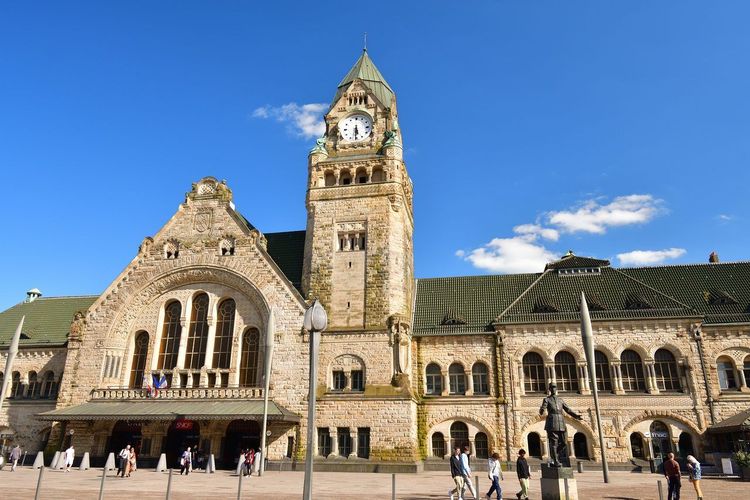
Metz is very largely explored on foot: the distance between the station and the cathedral does not exceed two kilometres, and most of the sites mentioned in this guide are within twenty-five minutes' walk of each other. The Le Met' bus and tram network usefully complements walking for trips to the lake or the Seille quarter if you prefer to rest your legs at the end of the day.
Where to park in Metz, however, poses a genuine question for visitors arriving by car, as the historic centre is largely pedestrianised or subject to restricted traffic. The underground Parking Cathédrale remains the most practical option for exploring the old town and place de la Comédie on foot. For a two-day stay, it is better to use a long-stay car park on the immediate outskirts of the centre — cheaper than parking in the city centre — and then travel on foot or by tram.
The Metz City Pass, sold by the tourist office, bundles access to several museums, a guided tour and discounts at partner shops and restaurants: a good deal if you plan to visit at least two or three paid-entry sites during your stay, but less worthwhile if you are sticking to free-entry monuments such as the cathedral or the gardens.
For a more in-depth experience beyond simple wandering, the Inspire Metz tourist office offers a more comprehensive guided tour of the historic centre, on foot or by bike, with a guide who contextualises each monument. This is a good option for day one if you prefer to understand the city's history before exploring it independently in the afternoon. If you prefer to go at your own pace, without a fixed departure time, the Ryo audio-guided tour of Metz follows the same itinerary independently, with stops calibrated to the distances actually walkable between neighbourhoods.
What to Do Around Metz
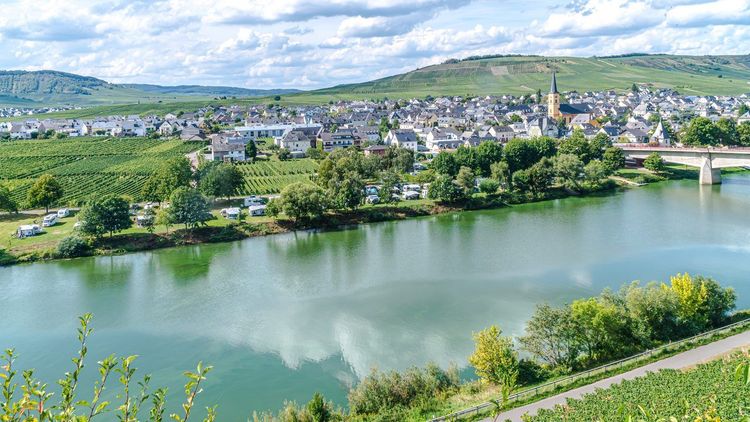
If you extend your stay by a day or are travelling by car, the area around Metz offers two complementary options, blending vineyards and family leisure.
The Moselle Vineyards
About twenty minutes' drive from Metz, the Moselle vineyards form one of France's smallest AOC wine regions, with just over 100 hectares planted, mainly with auxerrois, pinot gris and pinot noir. The appellation is divided into three sectors: the Val de Metz, around Ancy-Dornot and Vaux, just southwest of the city; the hillsides of Sierck-les-Bains to the north; and the pays de Vic-sur-Seille to the east. Several family estates open their cellars for tastings, often without a reservation on weekdays, making it an easy excursion to put together on the spur of the moment late in the morning.
The vineyard remains modest compared to neighbouring Alsace, but that is precisely what makes it interesting: the roads are quiet, the winemakers take time to explain their work, and the rolling Moselle landscape is a radical change from Metz's urban scenery. Allow half a day for two or three tastings at a relaxed pace.
Amnéville: Parks and Relaxation

About twenty kilometres northeast of Metz, Amnéville has built a reputation as a leisure hub on former mining land that has been redeveloped. The zoo d'Amnéville (1 Rue du Tigre, 57360 Amnéville, rated 4.3/5 on Google from 21,572 reviews), one of the most visited in France with over 2,000 animals spread across 18 hectares, is particularly well suited to families looking to alternate urban heritage with a nature outing.
Nearby, Amnéville also hosts a thermal spa and a large water park — two options for a relaxing break after a day of walking in Metz. The whole area can easily be visited in half a day, as a complement to a two-day stay in the city rather than a replacement for it.
To continue exploring the area and find more day-trip ideas, two complementary resources detail respectively the Ryo guide to activities around Metz and the Ryo hiking guide around Metz, useful if you have a third day or access to a car.
Visiting Metz at Christmas: the Christmas Market and Tips
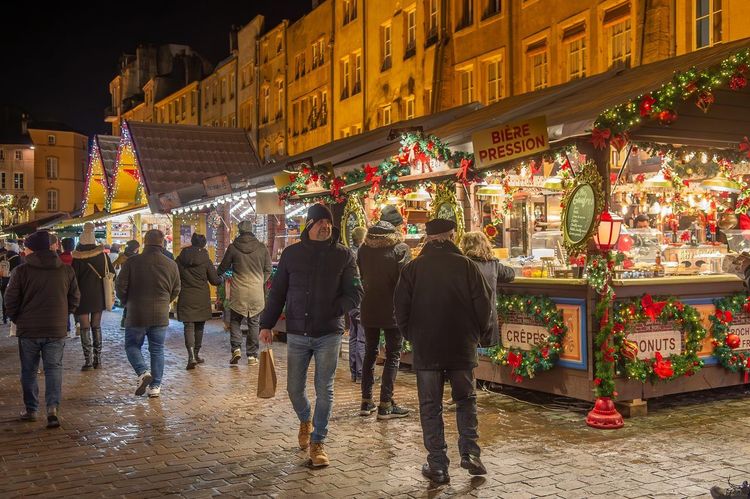
Metz at Christmas is a completely different experience from the rest of the year: for over thirty years the city has hosted one of the most popular Christmas markets in eastern France, spread across several squares in the historic centre from late November to late December 2026.
In practice, the Metz Christmas market unfolds mainly on place Saint-Louis, place d'Armes in front of the cathedral and place de la Comédie, with a dedicated children's village on the latter and an ice rink set up in some years. Allow a good half-day to browse all the chalets without rushing, especially around place Saint-Louis where the crowds swell sharply on weekend afternoons.
The illumination of the cathedral and the historic centre's façades, complemented by the lantern trail installed each winter in a central garden, transforms the old town into a stage set for the duration of the market. To avoid the crowds, visit on a weekday, ideally before 11am or after 8:30pm — two time slots noticeably quieter than weekends.
If you are planning a December stay, book your accommodation at least two months in advance: prices rise sharply and the best addresses in the historic centre sell out as early as mid-November. This stay combines well with the two-day format detailed in this guide, simply replacing the first evening's night walk with a visit to the Christmas market, mulled wine in hand.
Free Activities in Metz
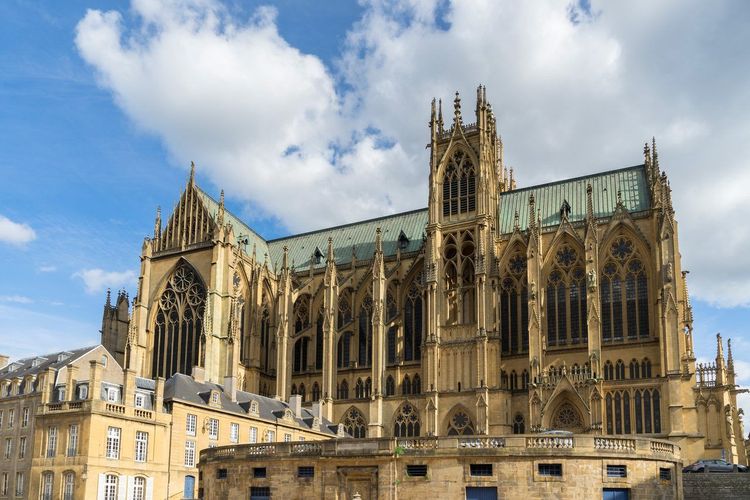
What to do in Metz for free actually covers a large part of the itinerary already described in this guide: entering cathédrale Saint-Étienne, strolling through the old town, crossing Temple Neuf and place de la Comédie, and walking along the lake all cost nothing.
The gardens rank among the best zero-budget options: the botanical garden and the jardins Jean-Marie Pelt are free all year round, with their greenhouses and rose garden, as are the surroundings of the Porte des Allemands, where the view of the fortified towers and their reflection in the Seille requires no ticket. Le Moyen Pont and the pont des Roches also offer a free viewpoint over Temple Neuf and the île du Petit Saulcy, with the best light in the late afternoon. In summer, Les Constellations de Metz are also free and accessible from the street, a great addition to an evening walk through the historic centre. The covered market, with no obligation to buy, also allows you to wander among the stalls and take in the building's architecture.
What to do in Metz today or tomorrow without spending a single euro therefore essentially comes down to this trio of walking, gardens and exterior architecture — more than enough to fill an entire day if your budget is focused on accommodation and food. For more ideas, the Ryo guide to activities in Metz details further options depending on your interests and the season.
Metz: a Green and Cultural City Looking to the Future
Beyond its monuments, Metz has spent the past twenty years building an identity as a sustainable and culturally rich city — a sharp contrast with the more austere image it had before Centre Pompidou-Metz opened in 2010. The city boasts over 500 hectares of green spaces, roughly 45 m² per inhabitant, one of the highest ratios in France: from the lake to the botanical garden and a host of small neighbourhood parks, earning it regular national recognition for urban biodiversity and floral decoration.
This green dimension is matched by a particularly dense cultural programme for a city of its size: alongside Centre Pompidou-Metz stand the Arsenal and its Cité musicale, the Opéra-Théâtre de Metz Métropole and several festivals that punctuate the year, from the Livre à Metz in spring to Les Constellations in summer. A weekend in Metz can thus easily combine an exhibition, a concert and a heritage visit without ever changing neighbourhood.
The history of Metz, spanning nearly 3,000 years since its Gallo-Roman founding as Divodurum, partly explains this density: capital of a powerful bishopric in the Middle Ages, a free city of the Holy Roman Empire, then annexed by Germany between 1871 and 1918 before returning to France, each period has left a visible architectural layer, from the Gallo-Roman amphitheatre to the German imperial station, by way of the Gothic cathedral.
In summer, the city adds a seasonal touch with Metz Plage, generally set up in July along the riverbanks, with sand, deck chairs and free activities for families. It is a good illustration of how Metz continues to invest in its waterfront rather than leaving it as mere backdrop. To understand this continuity between the ancient past and the contemporary city, the short version of the Ryo audio-guided tour: 3,000 Years of History offers an accessible summary if you don't have time for the full version.
FAQ
How much time do you need to visit Metz?
Two days are enough to cover the highlights of Metz's heritage: the cathedral, the old town, Centre Pompidou and the banks of the Moselle. One day allows you to see the historic centre in condensed form, while three days leave time to add an excursion to the surrounding area, toward the Moselle vineyards or Amnéville.
How do you get to Metz from Paris?
The train is the best option, with a direct TGV journey of around 1h22 from Gare de l'Est. By road, allow around 3h30 via the A4 then the A31.
Where can you park easily in Metz?
The underground Parking Cathédrale offers the most direct access to the old town and place de la Comédie. For a two-day stay, a car park on the immediate outskirts of the centre is often cheaper, as the city is then very easily explored on foot.
What can you do in Metz for free?
Cathédrale Saint-Étienne, the old town, Temple Neuf, place de la Comédie, the lake and the botanical gardens all require no entrance ticket. Les Constellations de Metz, held every summer, are also free.
What is the best neighbourhood to stay in Metz?
The historic centre is the most convenient for a two-day stay, with everything accessible on foot. The station district offers lower prices with quick access to the centre via avenue Foch, while the Seille neighbourhood suits a tighter budget.
When should you visit Metz for the Christmas market?
The Christmas market is generally held from late November to late December, spread across place Saint-Louis, place d'Armes and place de la Comédie. Book accommodation at least two months in advance for this period.
Is Metz a good destination for a romantic weekend?
Yes: the compact size of the city makes it easy to combine a stroll through the old town, a sunset at the lake and dinner on a terrace without needing any transport. It is a format that suits a two-day stay particularly well.
Two days in Metz are enough to understand what sets the city apart: a rare concentration of heritage within a very tight perimeter, blending flamboyant Gothic and imperial Art Nouveau architecture, not forgetting the contemporary touch of Centre Pompidou. Whether you follow the day-by-day itinerary, the condensed one-day version, or add a third day toward the Moselle vineyards, the city is almost entirely walkable, which makes for a very different experience compared to more sprawling destinations.
To plan your visit or simply save time on the ground, the Ryo audio-guided tour of Metz covers all the steps mentioned in this guide, with audio commentary timed to your actual movements through the city.
À lire également