Créé par Emilie, le 17 nov. 2026
Votre guide Ryo
Metz, France
3000 years of history
Parcours audioguidé pour visiter Metz en 1 jour
This visit invites you to an immersion in the heart of a garden city, where river waters embrace a monumental heritage of unsuspected richness. Let yourself be carried by the brilliance of its facades sculpted in golden stone, which light up at the slightest ray of sunshine, before discovering a city turned toward the future and creativity. Between the stone lace of its cathedral—a true "God's Lantern"—and the boldness of its contemporary districts, the city of Metz reveals a character that is both solemn and peaceful. An exploration on foot, balancing verdant parks and squares steeped in history, to capture the full harmony of a city that traverses the centuries with imperial grace.
Quand partir à Metz ?
Jan.
5°
11
Feb.
7°
9
March
12°
10
April
16°
9
May
20°
10
June
24°
10
July
26°
9
Aug.
26°
9
Sept.
21°
9
Oct.
15°
10
Nov.
9°
11
Dec.
6°
12
Metz enjoys a semi-continental climate, with warm summers around 25°C and cold, often grey winters, where temperatures hover near 0°C. The ideal period runs from May to September to enjoy the Esplanade gardens and the banks of the Moselle. The month of December is also a must for its Christmas market, one of the most beautiful in France, while summer allows you to admire the "Constellations" light shows on the cathedral, built from the iconic golden Jaumont stone.
Départ conseillé
No need to worry about where to begin! Our tours are designed as a loop, so you can jump in wherever you are. The navigation system and audio-guide will automatically adjust to your location. However, if you happen to be nearby, we do have a preferred starting point: Metz station
Parking à proximité
Charles de Gaulle car park / General de Gaulle square
The downtown area of Metz has established on-street parking zones near shops, offering 1 hour free parking with a maximum parking duration of 2 hours and 30 minutes. If you need to park for a longer period, it's more advantageous to park in a parking lot. If you're planning to spend a weekend in Metz, the public parking lots at Gare Charles de Gaulle Station and Pompidou Centre offer preferential rates from Friday evening to Monday morning. To learn more about parking in Metz, you can also use the mobile app ""Polly,"" which helps you find a parking spot and locate your vehicle if needed. If you want to simplify your life, you can park for free in the Park and Ride (P+R) lots located near public transportation, on the condition that you use a valid public transport ticket.
Découvrez 28 lieux d'intérêt pour visiter Metz








What to see in Metz on your 3h10 tour?
This 8 km loop takes about 3 h 10 and links 27 sights. From the German imperial station it crosses the old military quarter, follows the Moselle to Saulcy Island and the New Temple, then reaches the Opera Theatre. It then dives into old Metz, between legends and a Gothic cathedral, heads east to the Germans' Gate, and returns through the trading heart of town via Saint Louis square. With the Ryo app in your ears, every façade and stone tells twenty centuries of Franco-German history.
Information checked in November 2026 and subject to change.
1 - Metz station
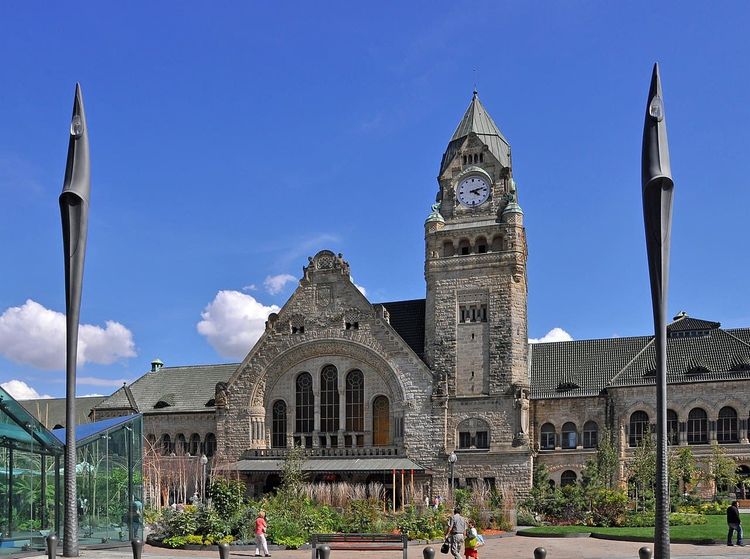
This station looks more like a palace or a cathedral than a railway building, and that was the whole point. Commissioned by German emperor Wilhelm II when Metz belonged to the Reich, it was meant to showcase imperial power right on the French border and move troops swiftly if war broke out. Black basalt and sandstone replace the yellow stone used everywhere else in town. Step inside the departure hall before moving on: its carved vaults feel closer to a church nave than a ticket office.
Free entry
2 - Post Office
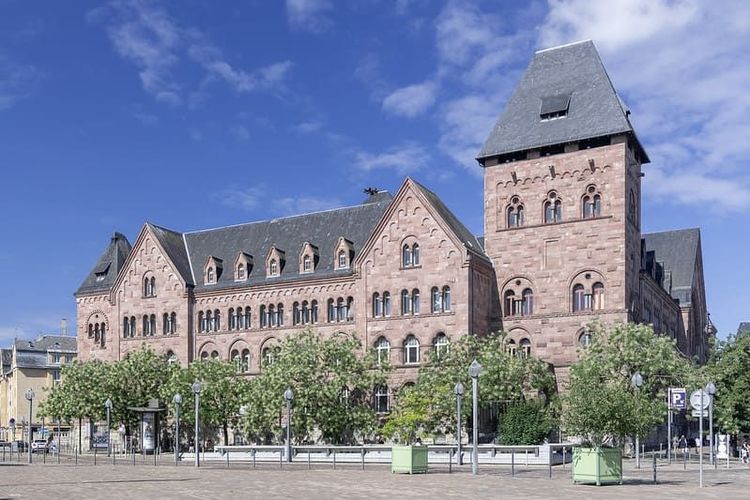
Facing the station stands the Post Office, another giant from the same imperial scheme. Every official building around the station had to share the same neo-Romanesque style, a deliberate show of unity and strength from the new German administration. Built in pink Vosges sandstone rather than the local yellow stone, it also reflected a postal network designed to keep working even in wartime. Now a protected heritage building, it still belongs to the postal service today.
Free to see from outside
3 - Raymond Mondon square
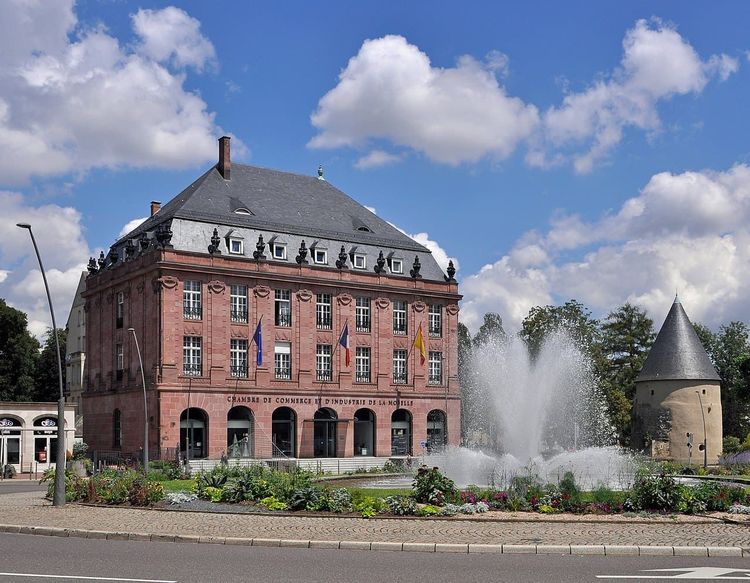
Laid out in the early 20th century to link the old town with the new district, this elegant square once carried the name of a German emperor. His equestrian statue was toppled when Metz returned to France, replaced by one of a controversial poet that was later destroyed as well. A simple fountain took over the centre for a while, before the square was finally named after a former mayor. The grand buildings around it, though, have never moved.
Free entry
4 - Camoufle Tower
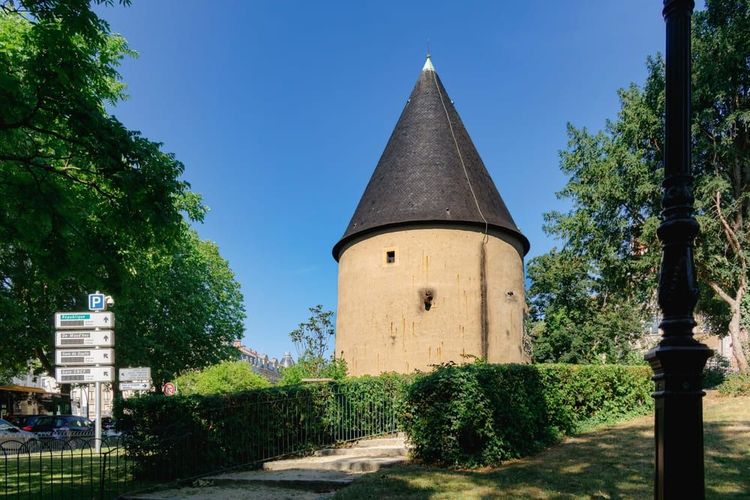
Round and squat, this artillery tower is one of the few surviving pieces of the city's medieval walls. Raised in the 15th century on the site of an older Gallo-Roman tower, it owes its nickname to a gunner so deadly that locals swore he had struck a deal with the devil. Cannonball scars still visible on its stone recall a mid-16th-century siege. The fortifications themselves vanished long ago to make way for a broad avenue, yet this tower was spared.
Free to see from outside
5 - Serpenoise Gate
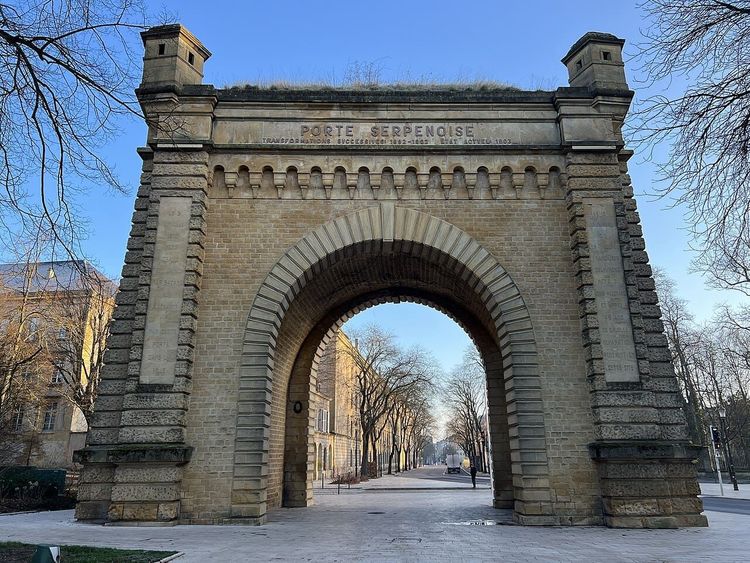
Since antiquity, a gate has marked the southern entrance here, behind walls rebuilt and reinforced over the centuries. The medieval structure was torn down after a difficult siege and rebuilt in the mid-19th century into the gate seen today. Turned into a triumphal arch when the ramparts fell, it carries four reliefs recalling major episodes of the city's military past. Whoever held power at the time, their victorious troops always marched straight under its arch.
Free entry
6 - Governor’s Palace
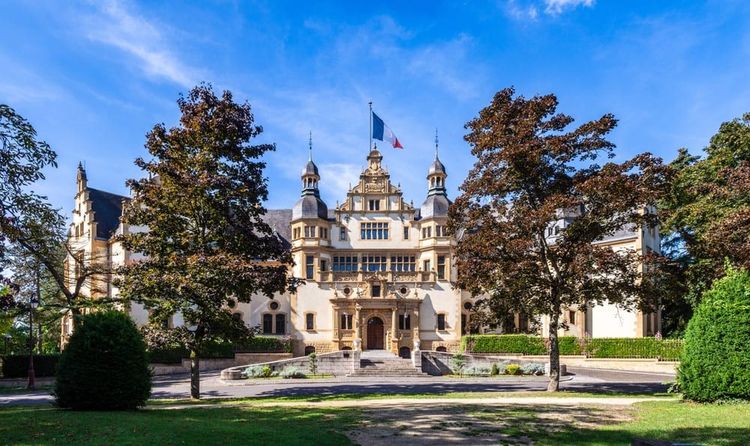
This neo-Renaissance palace looks far more like a princely residence than a military headquarters, yet it housed the general commanding German forces in the region. Its lavish style was no accident: it also served as a private retreat for Emperor Wilhelm II during his visits. Reclaimed by France after the First World War and occupied again during the Second, it eventually returned to its original purpose and still houses the regional military command today.
Free to see from outside
7 - The Arsenal
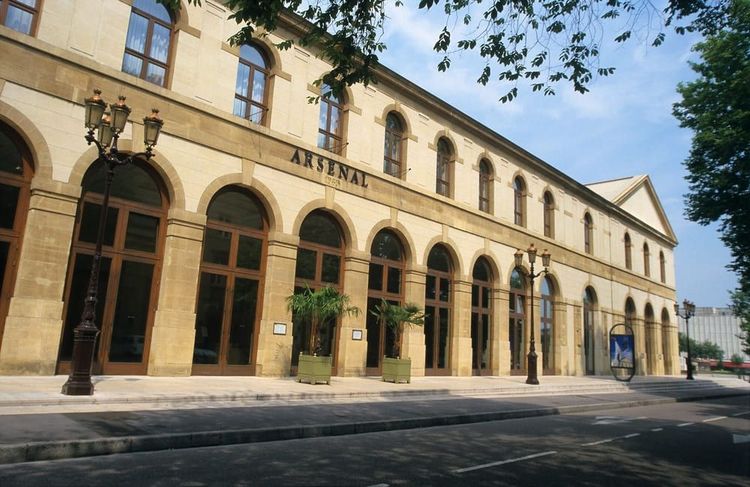
Here stands the former arsenal, raised in the 1860s to store weapons and ammunition as neighbouring Prussia grew stronger. It stayed in military use through every occupation the city endured, before being decommissioned after the battle that freed Metz and later handed over to the municipality. A Spanish architect gave it a new life as a concert hall famous for its acoustics, opened in the late 1980s with every cellist from the local conservatory performing together.
Free to see from outside
8 - Saint Pierre aux Nonnains church
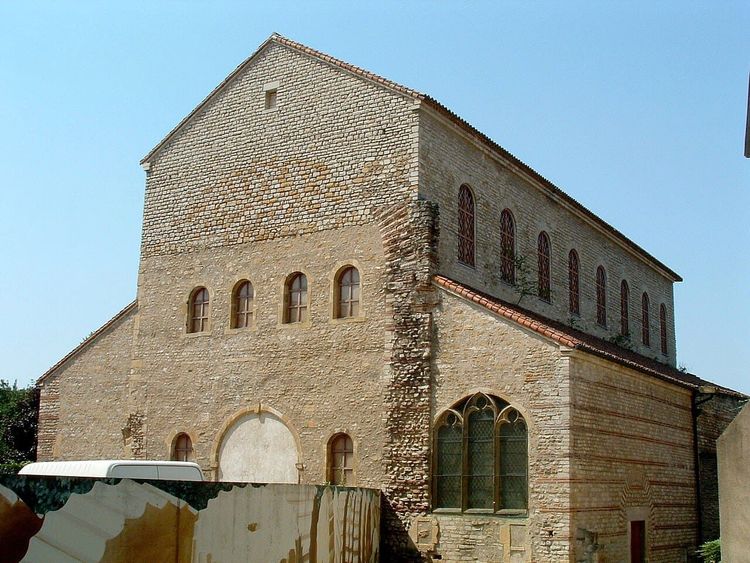
This austere building ranks among the oldest places of worship in Europe, first raised in antiquity as a sports hall within a vast Roman bath complex. Later turned into a convent chapel and enlarged thanks to a German emperor's generosity, it survived a devastating siege before serving for centuries as a military warehouse. Deconsecrated today, it shares a cultural calling with the neighbouring Arsenal and now hosts exhibitions and artistic events.
9 - Quai des Régates harbour
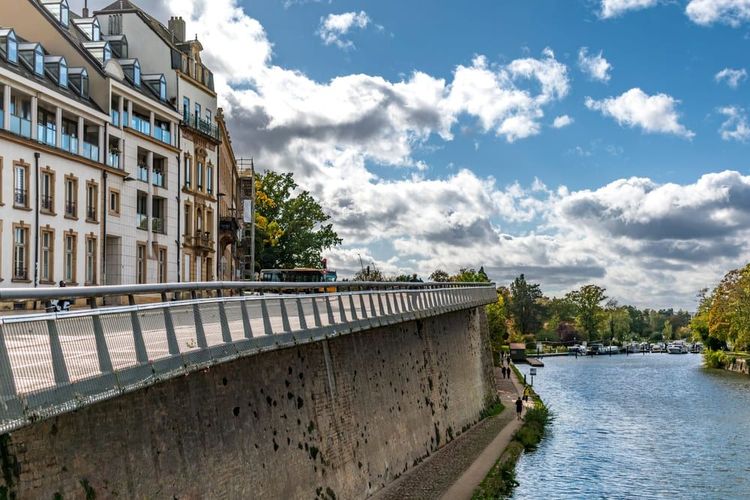
This small marina, recognised for the quality of its surroundings, keeps alive a boating tradition well over a century and a half old. The rowing club that gave it its name is still based here, among moored boats and visitors strolling along the water. Following this quay beside the river offers a quiet break from stone façades, before the route returns to other witnesses of the city's long history.
Free entry
10 - The Waterfront
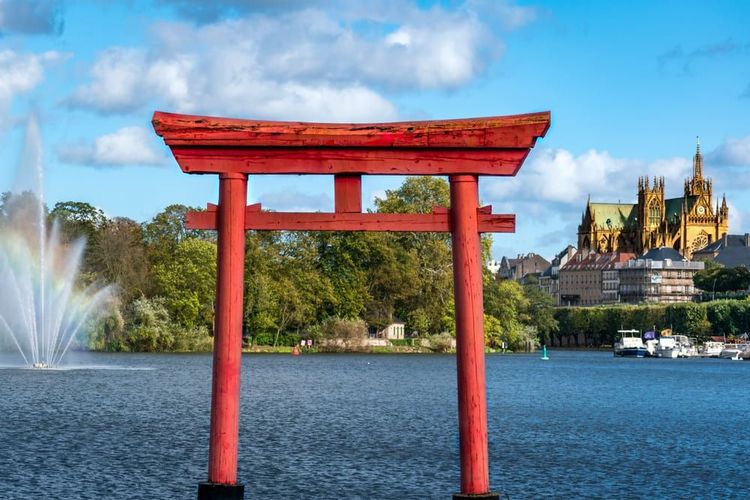
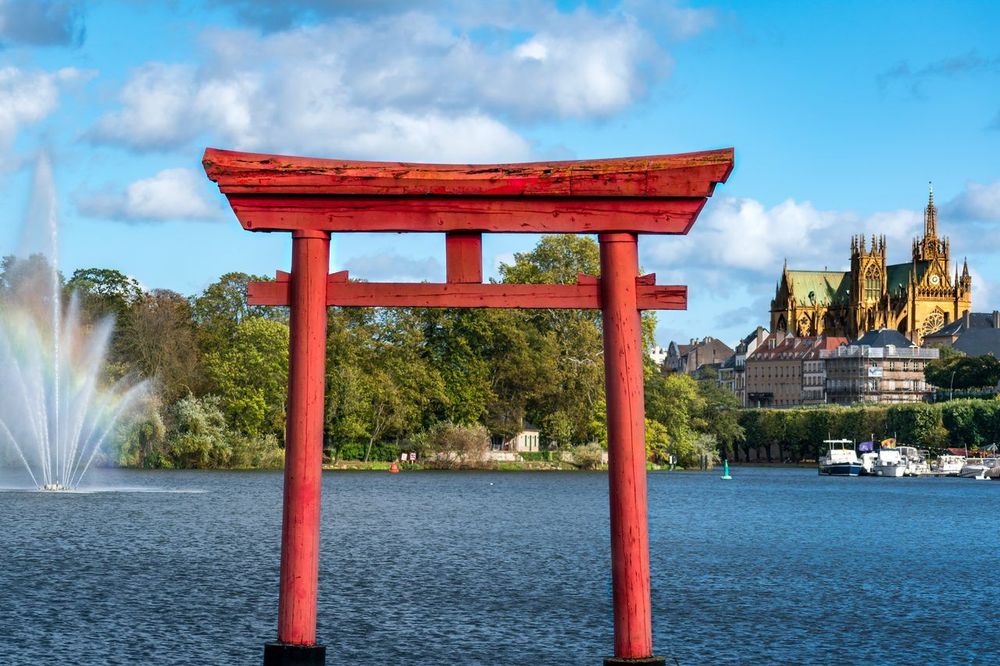
This vast stretch of water, formed by the river and spilling into a neighbouring village, counts among the city's great outdoor playgrounds. Visitors row, paddle a canoe, board a hot-air balloon or a short river cruise, or simply relax at a riverside café in the shade. From its banks, fine views open onto the law courts and, much further off, the cathedral deep in the historic centre.
Free entry
11 - Saulcy Island
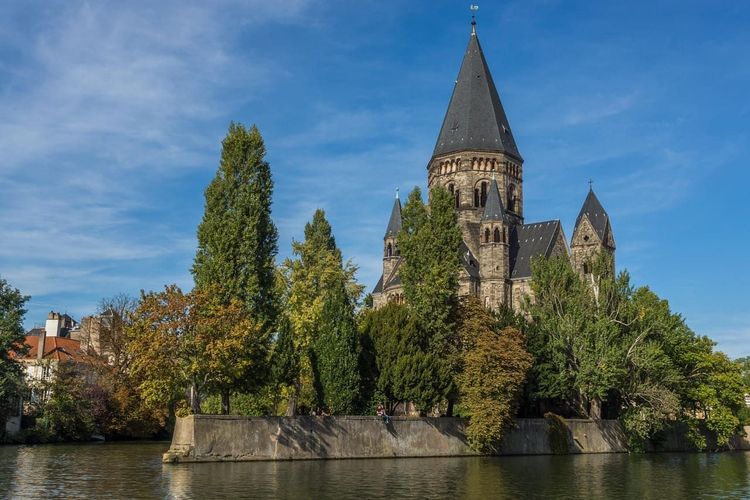
Without always realising it, walkers here are actually crossing an island, ringed by branches of the river. Long tied to the city's military past, it now hosts its oldest university campus, set in green grounds surrounded by water on every side. Few students in France can claim to study in such an unusual setting, between gardens, river and open water.
Free entry
12 - View of the island and the New Temple
This bridge, down to a single arch from its original seven centuries, still frames one of the most photographed views in town. From here, the eye takes in both the neighbouring island and its Protestant temple, its dark silhouette mirrored in calm water. This postcard scene sums up the city's singular character, built across several islands split by two rivers.
Free entry
13 - The New Temple
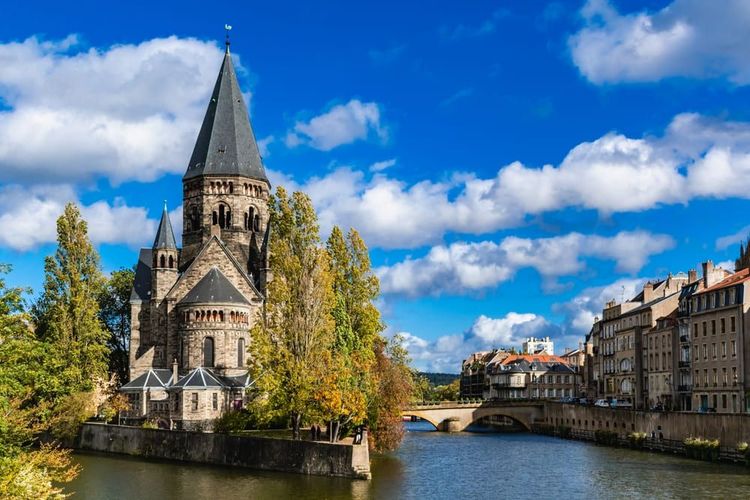
Even more striking up close, this Protestant temple was built under German rule, in the same neo-Romanesque style the emperor favoured to Germanise the city's architecture. Land granted by the municipality on a former garden allowed this sanctuary to rise in the early 20th century, inaugurated before the entire imperial family. Its dark stone stands apart from the usual yellow façades, and its silhouette surprises from every angle.
Free entry
14 - Opera Theatre
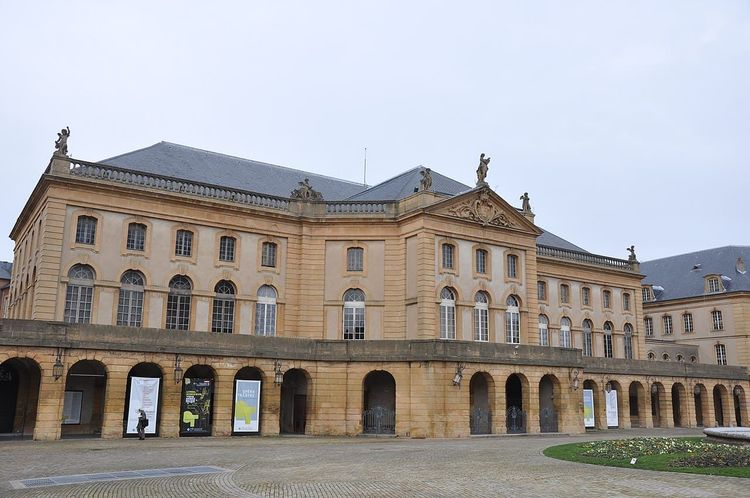
Among the earliest theatres built in France, this one remains among the oldest still active and even keeps its own costume and scenery workshops. The muddy wasteland once used to store firewood became the city's first modern square thanks to a governor passionate about the arts. The statues crowning its roof, added a century after the opening, personify the performing arts.
Free to see from outside
15 - Old Washhouses
A stroll along the quays leads to a bridge overlooking an old mill and a reconstructed wash house, two matching shelters linked by a footbridge. Countless flour and paper mills once harnessed the power of the river's many branches running through town. Here, with hot water and ashes, women once scrubbed laundry by hand, while larger floating wash-houses moored further along the quays.
Free entry
16 - Joan of Arc Square
Laid out in the early 20th century on the site of houses demolished for the occasion, this square owes its current name to a bizarre case of mistaken identity after the real heroine's death. A woman claiming to be her married here, then pushed the deception as far as settling in Orléans, where grateful residents showered her with rewards, before the fraud finally came undone years later.
Free entry
17 - Trinitaires Street
This old street takes its name from a religious order devoted to ransoming Christians held captive during the barbarian invasions. A former convent that belonged to the order now houses two cultural landmarks: a regional contemporary art collection and a venue for concerts and shows. Nationalised during the Revolution and later handed to Protestants before they built their own temple, it has passed through many uses on its way to becoming this cultural hub.
Free entry
18 - Legend of the Graoully
This narrow street's name supposedly comes from a frightened whisper among locals terrorised by a fearsome dragon said to fly over the city after dark. A bishop sent to convert the region, already credited with several miracles, is said to have caught the beast with his stole before drowning it in the river. An effigy of the creature, now a local emblem, was long paraded with great fanfare during an annual procession.
Free entry
19 - Armes Square
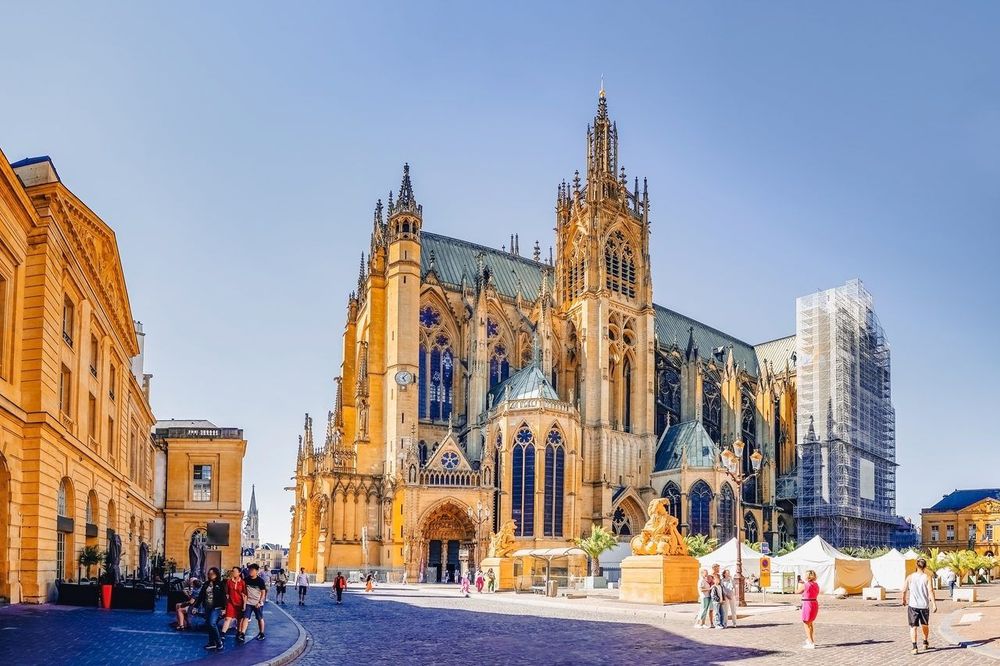
Designed on the orders of Louis XV to gather the city's main powers on a single square, this paved esplanade brings together the town hall, tourist office and former law courts, right at the cathedral's doorstep. Laid out in the late 18th century by a noted architect, it changed name several times under successive regimes before reclaiming its original one. It still serves today as the city centre's main gathering spot.
Free entry
20 - Saint-Etienne Cathedral
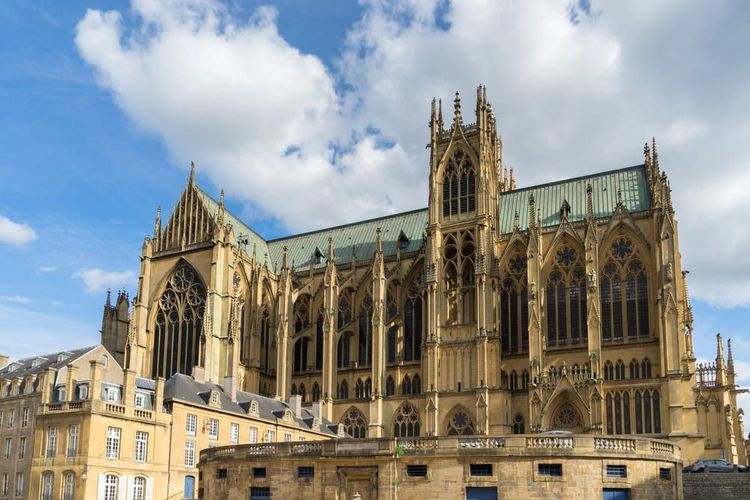
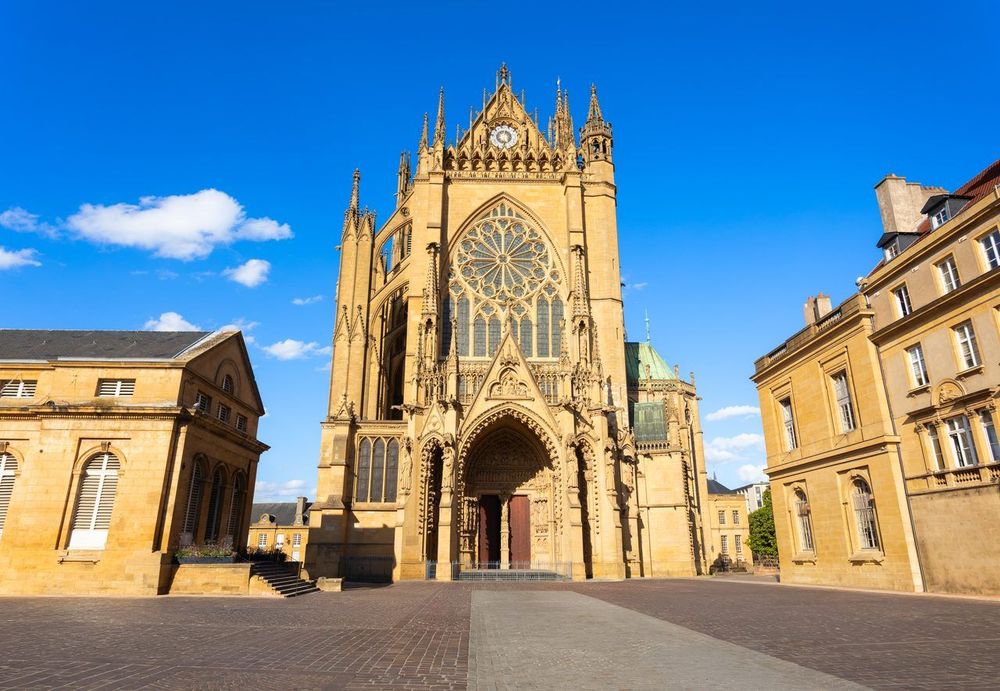
Nicknamed for its vast expanse of coloured glass, this Gothic cathedral took three centuries to build, born from the tricky merger of two separate older buildings. Legend claims the architect tasked with solving that puzzle struck a bargain with the devil to master its most daring vaults, and that the canons later walled his body inside to save his soul. Its nave ranks among France's tallest, and its tower still flies the flag inherited from the city's old free republic.
Free entry
21 - Maison des Têtes
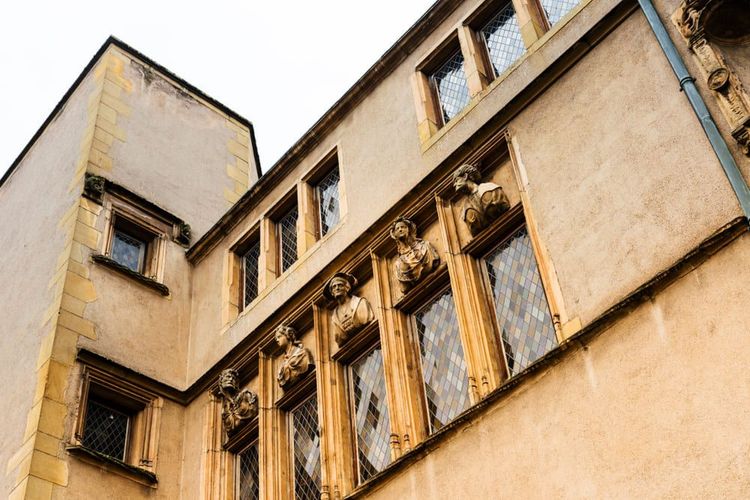
This Renaissance façade, commissioned by a wealthy goldsmith who lived on the same street, owes its name to the five carved busts topping its windows. Nobody really knows who these faces, three men and two women in period dress, were meant to portray. The originals now sit in a local museum, except for one, long exiled in an American collection. What visitors admire today from the small square nearby are only copies.
Free to see from outside
22 - Saint-Eucaire Church
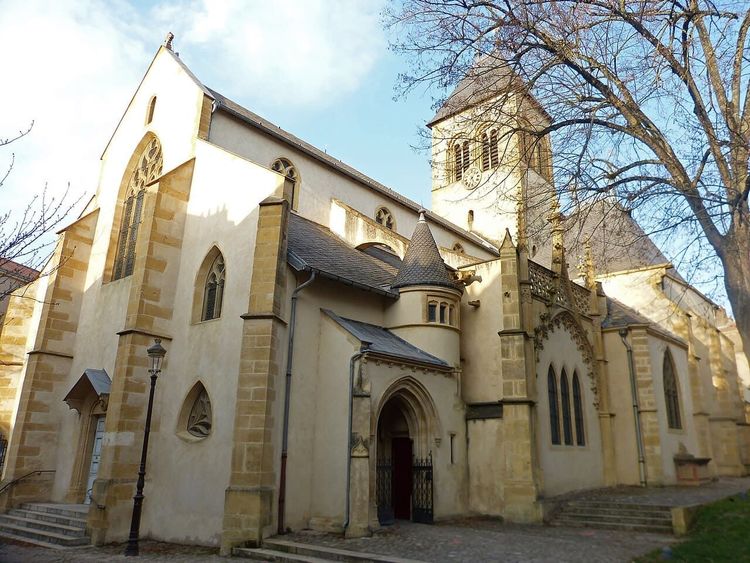
Dedicated to a bishop from a city now in Germany, to which Metz once answered, this small church may date back to late antiquity, originally standing outside the Roman city walls. Its bell tower, the oldest in town, long served as the municipal belfry before the cathedral took over that role. Inside rest the relics of a martyr said to cure sore throats, still honoured each winter with a much-loved blessing of small spiked buns.
Free entry
23 - The Germans' Gate
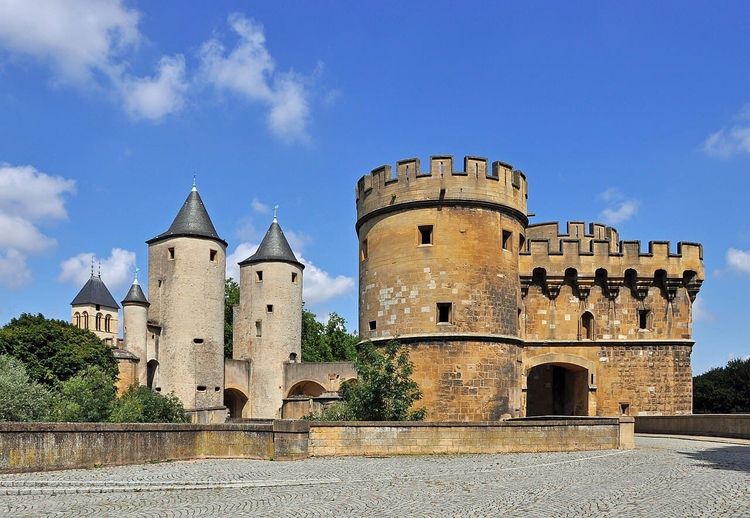
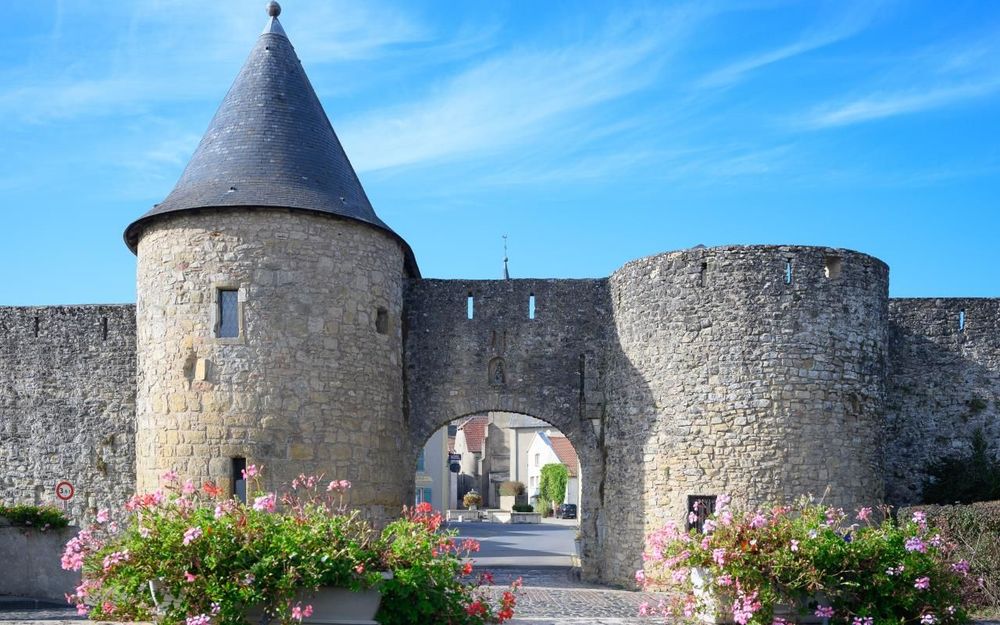
Despite its name, this fortified gate owes nothing to the neighbouring country: it takes its name from a hospice of German knights once nearby, destroyed during a mid-16th-century siege. A self-contained little fortress straddling the river, it ranked among the seven main gates of the medieval walls and symbolised the city's newly won independence. An architect added its neo-Gothic battlements during the German annexation, long before its recent restoration.
Free entry
24 - Saint-Maximin church
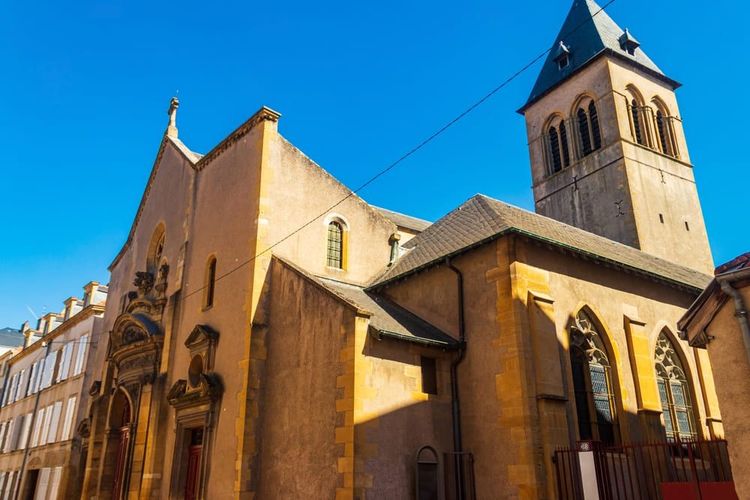
Modest in appearance yet full of charm, this small church reveals its true riches inside: twenty-four windows filled with blue and green stained glass, a late work by a poet and filmmaker later elected to the French Academy, far better known for his films and plays than for glasswork. This luminous meditation on nature and immortality has only one sibling, in a chapel in the south of France. Pale walls and pastel light invite quiet reflection.
Free entry
25 - Saint Louis square
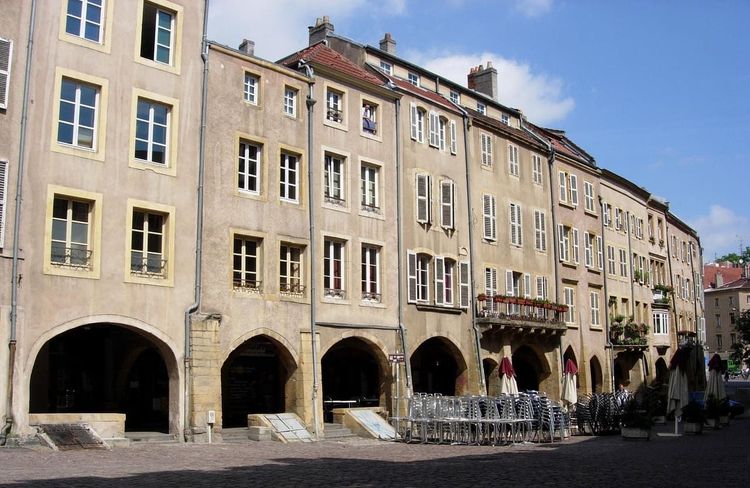
The main streets of the centre all converge on this medieval square, lined with arcades where dozens of moneychangers from Italy once settled to exchange currencies during the great fairs. Surviving façades still bear traces of that trading and banking past. Its current name supposedly comes from a simple mix-up: a statue of a king, donated to the city, was mistaken for that of a saint sharing the same name.
Free entry
26 - Saint Nicolas Hospice
A statue of the Virgin, visible on a Gothic doorway, marks this former hospital, the oldest and most important the city ever had, founded out of charity to help the poorest. Its exact founding date remains uncertain, somewhere between the ninth and eleventh centuries, but its wealth is confirmed by numerous episcopal donations found in the archives. An unusual tax, levied on the finest clothes of the dead, even paid for the upkeep of the city's bridges.
Free to see from outside
27 - The water tower
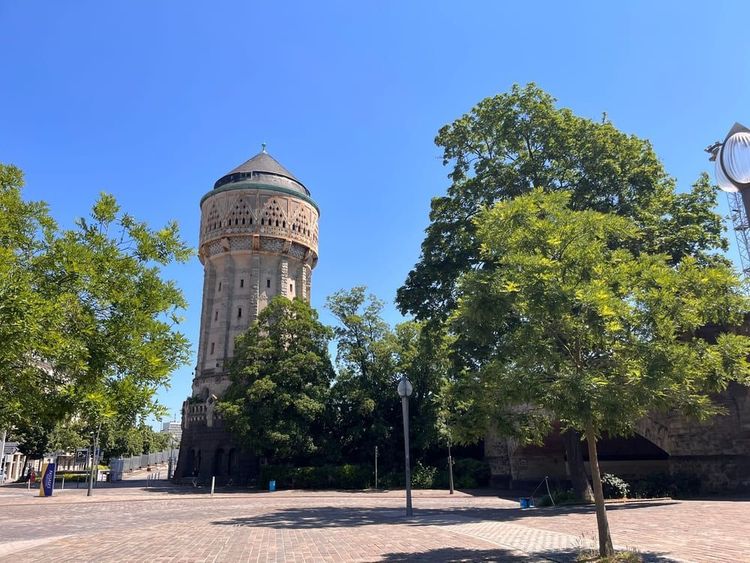
This singular tower, raised at the same time as the nearby station, once supplied water to the steam locomotives heading for the border. Its balustraded balcony and neo-Romanesque style make it almost as refined as the grand monuments nearby, despite its purely technical role. Made redundant once steam power faded, it now awaits a new purpose worthy of its silhouette and its spot at the city's gateway.
Free to see from outside
What to do in Metz in 2 or 3 days?
One day is enough to cover the essentials of old Metz on this walk: an 8 km loop with 27 sights in 3 hours 10, starting from the station. With 2 or 3 days on hand, there is time to go inside the museums and head out of town.
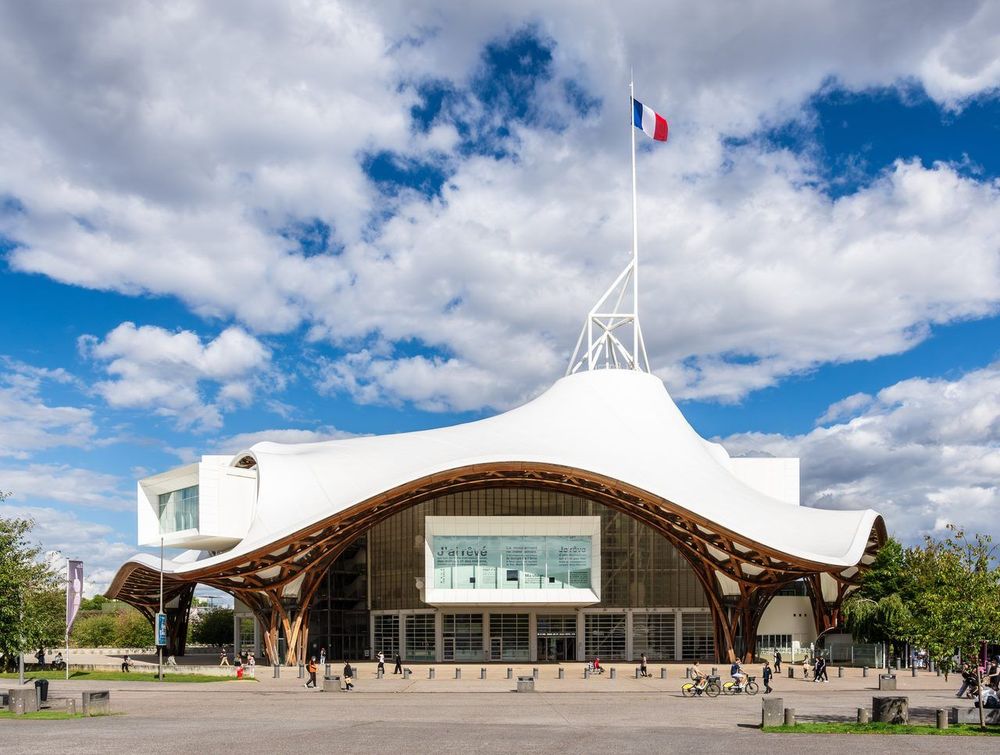
The next day, leave the route for the Centre Pompidou-Metz, whose rippled roof houses modern and contemporary art exhibitions refreshed several times a year, then for the Gallo-Roman collections of the Cour d'Or. The botanical garden and the Jean-Marie Pelt gardens, free all year round, offer a green break. Our guide to visiting Metz in 2 days sets out these visits step by step.
On the third day, spend half a day among the Moselle vineyards or at the Amnéville leisure hub, as suggested in our guide to visiting Metz in 3 days.
Which neighbourhoods does the tour cross?
In one 8 km loop, the walk crosses four faces of Metz, from the German imperial quarter to the medieval old town.
From the station, a monumental building from the German era, it passes the post office, follows what remains of the ramparts with the Camoufle Tower and the Serpenoise Gate, then the Governor's Palace and the Arsenal, up to Saint-Pierre-aux-Nonnains church, built in the 4th century (stops 1 to 8).
It then follows the Moselle, the marina and the waterfront, crosses Saulcy Island and its campus, then reaches the New Temple and the Opera Theatre on the Petit-Saulcy island (stops 9 to 14).
The route then dives into old Metz, between legends and medieval lanes, up to the Gothic cathedral and its classical Place d'Armes (stops 15 to 20).
It finally heads for the Germans' Gate, which spans the Seille, passes under the arcades of Place Saint-Louis and then returns towards the station (stops 21 to 27).
What to see in Metz in 2 hours?
If time is short, focus on the historic core, between legends and the Gothic cathedral: stops 16 to 20 follow one another within a few minutes' walk.
From Joan of Arc Square, continue to Trinitaires Street and its regional contemporary art collection, before looking up at the dragon hanging over the Legend of the Graoully. Armes Square, laid out in the late 18th century by architect Jacques-François Blondel, opens directly onto Saint-Etienne Cathedral and its Chagall stained-glass windows.
How much does it cost to visit Metz?
None of the walk's 27 stops requires a ticket: 18 are freely open, including Saint-Etienne Cathedral and Saint-Maximin church, 8 are admired from the street, like the Arsenal or the Governor's Palace, and Saint-Pierre-aux-Nonnains church only opens for exhibitions or by appointment. Only the cathedral's crypt and treasury require a paid guided tour.
By car, on-street spaces in the city centre give 1 free hour, with a maximum stay of 2 hours 30; for a full weekend, the Gare Charles de Gaulle and Centre Pompidou car parks offer a preferential rate from Friday evening to Monday morning.
Information checked in November 2026 and subject to change.
Where to stop for a bite along the tour?
Towards the end of the walk, Place Saint-Louis (stop 25) is a good spot for a lunch break under its medieval arcades.
Under its 14th-century vaults, several simple places serve Lorraine dishes, and the shade of the arcades keeps the stop pleasant even in high summer. Earlier on the loop, the covered market, set just behind the cathedral in a former 18th-century bishop's palace, is the place to pick up a pâté lorrain or a few mirabelle plums.
What to do in Metz with children?
Metz also makes a great family visit, between child-height heritage and big green spaces.
On the route, the waterfront can be explored in a licence-free electric boat rented by the hour, or by pedal boat on summer weekends. Off the route, the Parc de la Seille adds a water play area open in summer. For younger children or tired legs, the little tourist train leaves from Place d'Armes on a commented circuit of about 45 minutes.
On the museum side, the Centre Pompidou-Metz runs workshops from age 4 on Wednesdays and weekends, lends a free activity booklet, and gives free entry to EU residents under 26. Our guide to visiting Metz with family covers the rest, from the riverside cycle path to the neighbourhood toy libraries.
What should you know before visiting Metz?
A few stops on the route keep their own opening hours, worth checking before you arrive.
The nave of Saint-Etienne Cathedral is freely open from 8 am to 7 pm from April to October, and from 8 am to 6 pm the rest of the year; only a separate, paid guided tour opens the crypt and treasury. Saint-Pierre-aux-Nonnains church, attached to the Arsenal, only opens for temporary exhibitions or by appointment, and the Arsenal's interior itself only opens on concert nights.
As for the weather, a waterproof jacket is worth packing: Metz sees around a hundred rainy days a year on average, with a peak between November and March.
What to see around Metz?
Beyond the ramparts, Metz opens onto villages full of character and two neighbouring audio-guided walks.
18 km away, Gorze sits on the Moselle wine route around its old Benedictine abbey, while 39 km away, the ramparts of Rodemack have earned it the nickname of Lorraine's little Carcassonne. For leisure, the Amnéville hub, 18 km away, brings together thermal baths, a zoo and the Walygator Grand-Est theme park. Our pick of 16 activities around Metz rounds up these getaways and a few more.
Two neighbouring audio-guided walks round out the exploration of the region: 47 km away, Nancy plays the ducal city, between classical vistas and gilded ironwork, and 55 km away, Luxembourg hides its legendary casemates between steep cliffs and the lower town, which earns it the nickname Gibraltar of the North.
What's on in Metz right now?
This time of year, Metz lives to the rhythm of its Christmas market, one of the finest in France, and its many light displays.
- The Christmas market spreads across 6 squares in the city centre, from Place d'Armes to Place de la Comédie, from 20 November to 30 December (closing early on 24 and 25 December).
- The Lantern Trail lights up Square Boufflers with over 2,000 lanterns every evening, until 30 December.
- New for 2026, dancing fountains animate the Lac aux Cygnes with music and light every evening until 3 January.
- A floating sleigh for Santa Claus is lit up on weekends until 18 December, then every evening until the 30th.
- Saint Nicholas visits the Christmas market on 5 and 6 December, handing out sweets to children.
- A special Christmas farmers' market brings together local producers for a single day, on 19 December.
Information checked in November 2026 and subject to change.
Le plein d'inspirations
Explorez le monde en totale liberté, à pied au cœur des villes ou au fil des routes. Nos guides audios transforment chaque destination en une découverte culturelle immersive et unique.










FAQ for visiting Metz
When is the best time to visit Metz?
The ideal time to discover Metz runs from May to September, when the city reveals all its splendour under the sun that makes the Jaumont stone glow. The pleasant temperatures, around 25°C in summer, will let you stroll comfortably through the Esplanade gardens and along the banks of the Moselle. Summer also brings the Constellations night-time show, which majestically lights up the cathedral. However, December remains a magical time, with one of the most beautiful Christmas markets in France transforming the city into a winter wonderland. Winters are generally cold and grey, but the warm atmosphere of the festivities more than makes up for it.
How many days do you need to visit Metz?
Two to three days is the ideal length of time to fully appreciate Metz. In a weekend, you'll have time to discover the must-sees such as Saint-Étienne Cathedral, the Imperial district and the Centre Pompidou-Metz. This length of stay will also let you soak up the city's peaceful atmosphere by strolling through its green parks and along its rivers. If you have an extra day, you'll be able to explore the contemporary districts further and enjoy the museums at your own pace. The Ryo audioguides offer optimised routes that will help you organise your visit efficiently according to the time you have available.
What is there to do in Metz when it rains?
On rainy days, Metz offers many captivating cultural options. The Centre Pompidou-Metz welcomes you with its contemporary art exhibitions in a remarkable building. The Cour d'Or museums retrace the city's thousand-year history through fascinating archaeological and artistic collections. Saint-Étienne Cathedral, with its exceptional stained-glass windows, is a must-see in any weather. You can also take refuge in the shopping arcades of the city centre or discover the covered market, lively and welcoming. The historic cafés of Metz also offer comforting breaks where you can enjoy a quiche lorraine while watching the bustle of the city from their covered terraces.
How do you get around Metz?
Metz is a city perfectly suited to walking, with a compact historic centre where the main tourist sites are accessible on foot. The Le Met' public transport network efficiently serves the whole conurbation with its buses and its Mettis bus rapid transit system, ideal for reaching the Centre Pompidou-Metz or the outlying districts. Bike-sharing is available to explore the riverbanks and parks. As the city centre is largely pedestrianised, walking remains the most pleasant way to discover the medieval streets and historic squares. Distances remain reasonable between the various points of interest, making the visit particularly enjoyable.
Where can you park in Metz?
Parking in Metz is well organised, with several strategically located underground car parks. The République, Théâtre and Saint-Jacques car parks place you in the heart of the historic centre. For a more economical option, opt for the park-and-ride facilities on the outskirts, generally free and connected to the centre by public transport. On-street parking in the centre is often paid and time-limited. At weekends, some car parks offer preferential rates. It's advisable to arrive early in the morning to find a space easily, especially during major events or the Christmas market. The hotels in the centre sometimes have their own car parks or arrangements with public car parks.
What can you do as a family in Metz?
Metz is full of captivating family activities. The Esplanade gardens and the lake offer perfect spaces for picnics and games. The Centre Pompidou-Metz regularly offers creative workshops for children that awaken their artistic curiosity. The cathedral impresses young and old alike with its colourful stained-glass windows and its dizzying height. Walks along the Moselle let you watch the swans and enjoy the playgrounds provided. In summer, the leisure centres in the surrounding area offer swimming and water activities. The Ryo audioguide includes family-friendly commentary that makes discovering Metz's heritage fun and accessible to the youngest visitors.
What are the must-sees to visit in Metz?
Saint-Étienne Cathedral, nicknamed the Lantern of God, majestically dominates the city with its exceptional stained-glass windows. The Imperial district bears witness to the German influence with its unique monumental architecture. The Centre Pompidou-Metz stands out as a beacon of contemporary art in its bold architectural setting. The medieval squares, notably Place Saint-Louis with its arcades, tell the story of the city's mercantile past. The banks of the Moselle and the gardens offer idyllic walks at the heart of this garden city. The Ryo audioguide takes you on a comprehensive route that harmoniously links these Metz jewels while revealing their secrets and historical anecdotes.
Where can you eat in Metz?
Metz cuisine holds some lovely discoveries in store, between Lorraine tradition and modern influences. The covered market is full of local produce and stalls where you can taste the real quiche lorraine. The restaurants of the historic centre, particularly around Place Saint-Jacques, offer authentic regional cuisine in warm settings. For a more contemporary experience, the establishments near the Centre Pompidou-Metz offer creative menus. Traditional bistros serve the Lorraine hotpot and the famous pâtés lorrains accompanied by Moselle wines. In summer, the terraces of the medieval squares create a convivial atmosphere, perfect for savouring the local specialities while enjoying the city's bustle.
What traces of the German period can you see in Metz?
Annexed by the German Empire between 1871 and 1918, Metz inherited a whole district from that era: the Imperial quarter, laid out around the station to assert the power of the new administration. You will find broad avenues, sandstone façades in deliberately varied styles, by turns neo-Romanesque, neo-Gothic or regionalist, and a monumental station whose belfry still towers over the forecourt.
Elsewhere in the city, the Temple Neuf on its island, the central post office and the villas of the neighbouring avenues tell the same story. The Ryo audio guide offers a dedicated Metz route that links these landmarks to the older centuries of the medieval centre, an easy way to take in the city's three thousand years of history in one go.
Which events shape the year in Metz?
The city comes alive as soon as the weather turns with Constellations, a trail of digital art and projections that transforms the façades of the centre after dark, while the banks of the Moselle host summer activities and a temporary beach during the holidays. Concerts, exhibitions and open-air gatherings follow one another in the courtyards and squares.
In winter, Metz wraps itself in a Christmas market spread across several squares in the centre, with a big wheel and illuminations that rank among the highlights of the region. The dates change from one year to the next, so it is worth checking the city's official calendar before settling on your travel dates.
Which activities should you not miss on a first visit to Metz?
Stroll the pedestrian streets from Place d'Armes to Place Saint-Louis, via the Porte des Allemands and the Arsenal. Saint-Étienne Cathedral, nicknamed God's Lantern, holds the French record for stained glass, 6,500 m², some of it by Chagall. A boat trip on the Moselle shows the city from another angle, and the Musée de la Cour d'Or leads you to the Chèvremont granary.
At the table, try tarte au maugin, trout in vin gris or the boulet de Metz. The year is marked by the May fair, Metz-Plage, the Mirabelle festival and the Christmas market.
Find all five activities in our selection of things to do in Metz.
Which villages and sites can you visit around Metz?
Some 39 kilometres away, Rodemack, the 'little Carcassonne of Lorraine', is ringed by nearly 700 metres of ramparts and ranked among the most beautiful villages in France. At 18 kilometres, Gorze keeps its abbey church and abbatial palace, while Sillegny hides a church covered in 16th-century frescoes, nicknamed the Sistine Chapel of Lorraine.
Vic-sur-Seille, birthplace of Georges de La Tour, and Pont-à-Mousson, with its panoramic hill, round off the visits. For leisure, Amnéville brings together spas, a zoo with over 2,000 animals, Walygator and an indoor ski slope.
All sixteen ideas are in our guide to things to do around Metz.
How do I plan 2 or 3 days in Metz, from the cathedral to the Imperial Quarter?
With two days, spend the first in the historic centre (Saint-Étienne Cathedral and its 6,500 m² of stained glass, Place Saint-Louis, the Porte des Allemands, the lake) and the second in the Imperial Quarter plus one museum, either the Cour d'Or or the Centre Pompidou-Metz.
A third day lets you add the parks, then a trip to the Moselle vineyards or Amnéville. The Imperial Quarter, built during the German annexation, brings together the 1908 train station, Avenue Foch, the Arsenal and the church of Saint-Pierre-aux-Nonnains.
Find the day-by-day itinerary in our guide « Visiting Metz in 3 days » and in our two-day plan.
Which outings can you plan with children in Metz and around Amnéville?
At the Centre Pompidou-Metz, free for under-26s resident in the European Union, free activity booklets and workshops from age 4 keep children busy. In old Metz, they enjoy spotting the colours of the cathedral's stained glass or counting the columns on Place Saint-Louis, and the Musée de la Cour d'Or offers an activity booklet for 6 to 12-year-olds.
In the evening, electric boats glide across the Plan d'Eau. Less than twenty minutes away, the Amnéville parks and an aquarium with sharks take over, as does a mini-town where children play doctor or baker.
All the ideas are in our family guide to Metz.
Which museums should you visit in Metz, from the Centre Pompidou to the homes of famous figures?
The Centre Pompidou-Metz, closed on Tuesdays, costs 7, 10 or 14 euros depending on the galleries open and is free for under-26s. The Musée de la Cour d'Or, founded in 1839, traces two thousand years of history across 5,000 m², with Roman baths preserved in its basement, and entry is free all year round.
The city also has Paul Verlaine's birthplace apartment, a free regional contemporary art collection and a former synagogue turned art centre, while nearby you'll find a museum devoted to the 1870 war and Robert Schuman's house.
Prices and opening hours are gathered in our guide to the museums of Metz.
Vos commentaires, idées et suggestions
Aucun avis pour le moment