© Shutterstock
 Votre guide Ryo
Visit Metz in 3 Days: Day-by-Day Itinerary Between the Golden City and the Imperial Quarter
Visiting Metz in 3 days means discovering a city where the stone itself changes color with the hour. Jaumont stone, a pale yellow limestone quarried in the surrounding area since Gallo-Roman times, takes on golden hues at sunset, a phenomenon that earned the city its nickname of the "Golden City." To avoid getting lost between eras, it is best to know first where to look: the historic center concentrates the cathedral and medieval squares, the Imperial Quarter tells the story of a little-known German parenthesis, and the surroundings hide vineyards, Robert Schuman's house and a large leisure hub at Amnéville. The Ryo audio-guided route of Metz lets you connect these three faces of the city at your own pace, without booking a time slot or following a group.
In three days, you will have time to look up at the Chagall stained glass, have lunch on Place Saint-Louis beneath medieval arcades, step inside one of the oldest churches in France, compare two museums that have almost nothing in common, and spend half a day among the Moselle vines or head to Amnéville. This is the program, day by day, that this guide details, along with practical information on getting here, where to stay, eat and get around.
Metz at a Glance: Why the City Surprises in 3 Days
Seen from the train slowing down before the station, Metz looks like a quiet, almost provincial city. All it takes is a walk to the cathedral to realize the mistake: Lorraine changed hands for a long time, and each regime left a visible layer in the stone. You go from Flamboyant Gothic to Wilhelmine architecture simply by changing streets, and it is precisely this contrast that makes the city as rich to visit as it is to describe.
Three days allow you to string everything together without rushing: a cathedral pierced by about 6,500 m² of stained glass, the largest glazed surface of any French cathedral, a contemporary art center where the light never falls the same way two days in a row under its immense undulating roof, a church from the 4th century, and vineyards less than 20 minutes from the city center. You will quickly see that Metz is as much a city to look at as one to explore on foot.
Metz Through the Centuries: Historical Landmarks to Understand the Golden City
Before you start walking, a bit of context helps you read the facades. Metz was called Divodurum in Gallo-Roman times, one of the most important cities in Gaul, before becoming a Merovingian capital and then a free imperial city in the Middle Ages, wealthy and fortified enough to withstand the siege of Charles V in 1552. Jaumont stone, already quarried by the Romans, then became the signature of Metz construction, from the cathedral to the bourgeois houses.
In 1552, the city came under the protection of the Kingdom of France under Henry II, a union confirmed in 1648 by the Treaties of Westphalia. Vauban later strengthened its defenses under Louis XIV, making Metz a strategic fortress on the eastern border. This military vocation explains the legacy of the barracks, ramparts and the former arsenal, now converted into a concert hall.
The most visible shift remains the German annexation from 1871 to 1918, after the Franco-Prussian War. Berlin invested heavily in an entire district around the station, built in a mix of Neo-Romanesque, Neo-Renaissance and Jugendstil quite far removed from classical French urban planning: this is the Imperial Quarter you will walk through on Day 2. The city became French again in 1918, underwent a de facto second annexation during the Second World War, then reinvented itself from the 2000s onward around major cultural venues.
This past also explains the nickname "Yellow City" or "Golden City": Jaumont stone, omnipresent from the historic center to some buildings in the Imperial Quarter, absorbs the low light of morning and evening and takes on an almost honeyed hue. Keep this detail in mind: some of the city's best viewpoints owe everything to this effect of light on a local stone, not to any particular monument.
How Long to Visit Metz: 1, 2 or 3 Days?
If you only have one day, focus on a walking loop through the historic center: the cathedral, Place Saint-Louis, the Porte des Allemands and the lake can be covered in six to seven hours without rushing, meals included.
On a two-day weekend, add the Imperial Quarter and a museum of your choice, Cour d'Or or Centre Pompidou-Metz depending on your tastes. This is the most requested format for visiting Metz in 2 days, and it remains comfortable even with a late-morning start on the first day.
Three days is the format that lets you sacrifice nothing: the first two days stay close to the weekend program, and the third frees up a morning for the parks, followed by an outing to the Moselle vineyards or Amnéville. This is the organization this guide follows, and it is also the one naturally chosen by visitors coming from afar, for whom the journey alone justifies staying longer.
If you are arriving from a neighboring area, from Luxembourg or Nancy, one or two days are more than enough; if Metz is your main destination, the three days below cover the essentials without any downtime.
Day 1: The Golden Historic Center, Cathedral, Place Saint-Louis and Porte des Allemands
Saint-Étienne Cathedral and Place d'Armes
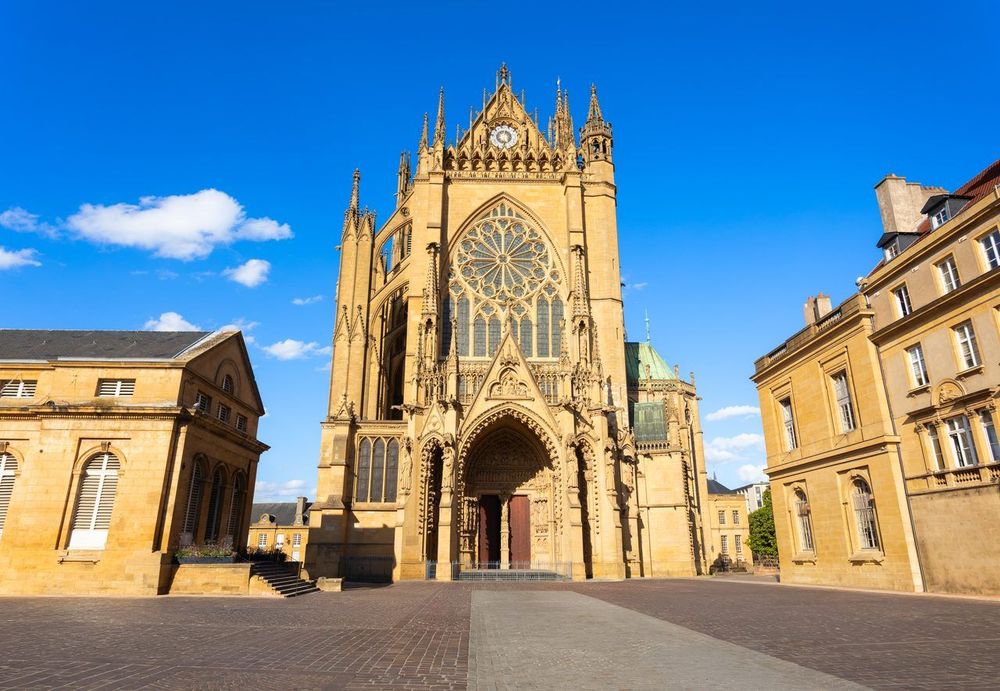
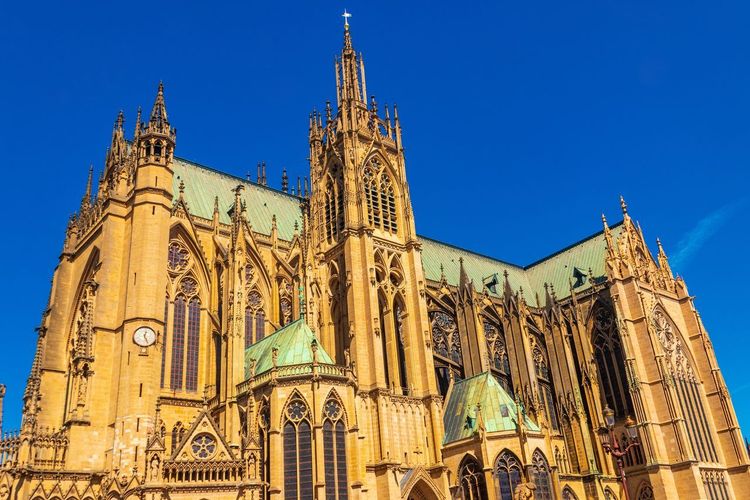
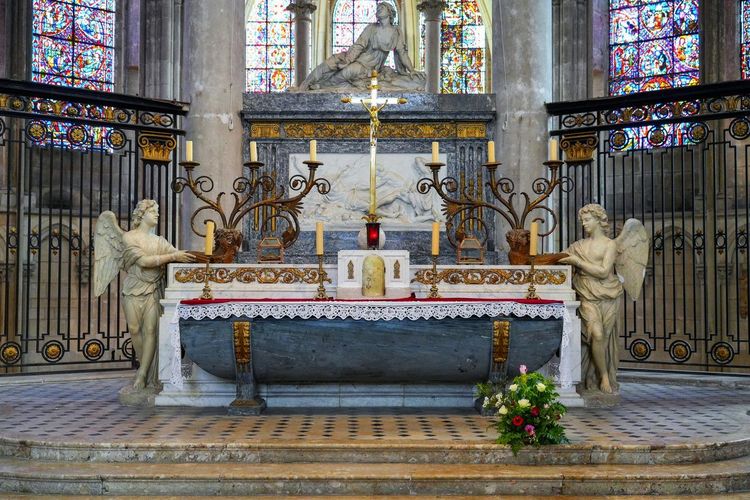
Start with the Saint-Étienne Cathedral, nicknamed "the Good Lord's lantern" for the intensity of its interior light. Its vaults soar to 41.7 meters, the third highest in France after Beauvais and Amiens, and its stained glass covers nearly 6,500 m², from the 13th century to the creations of Marc Chagall installed between 1958 and 1970 in the ambulatory, the transept and the triforium. Allow an hour if you want to compare these contemporary windows with the great medieval rose windows and the Renaissance stained glass by Valentin Bousch.
Entry to the nave is free; only the crypt, the treasury and some tower visits require a fee. If you have good legs, the Mutte tower, which houses the great bell nicknamed "Dame Mutte," opens occasionally for guided tours and offers an unobstructed view over the rooftops of the old town. On leaving, you are right on Place d'Armes, designed in the 18th century by the architect Jacques-François Blondel: the City Hall and the former guardhouse frame it with a thoroughly classical sobriety, which deliberately contrasts with the Gothic flamboyance of the cathedral right next door.
Take advantage of this stop to locate the Tourist Office, set on the square: you will find paper maps useful for the rest of the day, and themed guided tours to complement a self-guided visit. Just behind the cathedral, the Covered Market, housed in the former episcopal palace never occupied by a bishop, deserves a first look before lunch.
Place Saint-Louis and the Porte des Allemands
Heading south, Place Saint-Louis has a completely different atmosphere. Its medieval arcades, built by the merchants and moneychangers who made the city's fortune, form one of the most photographed squares in Lorraine. Settle on a terrace at lunchtime: several simple restaurants serve Lorraine dishes beneath the vaults, and the shade cast by the arcades makes the break pleasant even in the height of summer.
While crossing the Outre-Seille district, make a detour to Saint-Maximin Church: modest from the outside, it hides stained glass designed by Jean Cocteau in the early 1960s, often overlooked by visitors in a hurry. Rue Mazelle and Place des Paraiges, close by, give an idea of the bustling, commercial Metz of days gone by.
Fifteen minutes on foot from Place Saint-Louis, following the Seille, you reach the Porte des Allemands, a fortified structure with two round towers that literally spans the river. Built in the 13th century and enlarged in the 15th, it owes its name to the hospital of the Teutonic Knights, the "German brothers," located nearby, and not to any border. It is today the best-preserved medieval military relic in the city, and probably the most photogenic in late morning, when the sun lights the towers from the east.
Place de la Comédie, Temple Neuf and the Lake at the End of the Day
Then head back up toward the Petit Saulcy island and Place de la Comédie, lined by the Opéra-Théâtre de Metz (Place de la Comédie, 57000 Metz, rated 4.5/5 on Google from 1,172 reviews). Inaugurated in 1752, it is the oldest theater still in operation in France, predating the Opéra Garnier by more than a century. The program mixes opera, dance and theater, and the Italian-style hall is worth seeing from the inside if a performance falls during your stay.
A short walk away, the Temple Neuf closes the view over the water with its highly recognizable Neo-Romanesque silhouette, completed in 1904 for Protestant worship during the German period. Its position at the tip of an island, surrounded by water, makes it a classic photo subject, especially in the evening reflection.
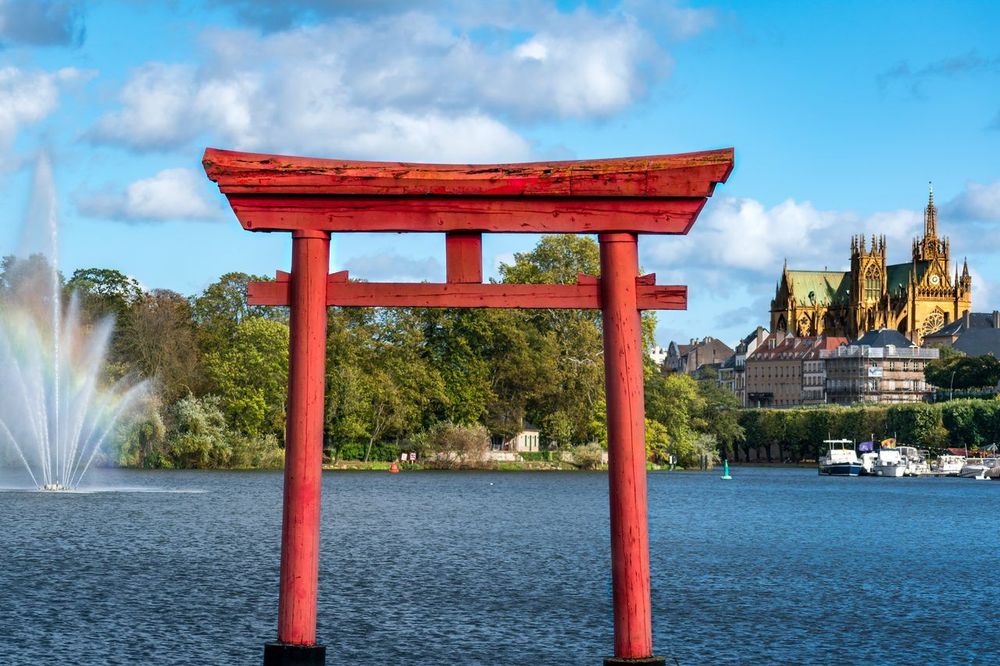
End this first day with a stroll around the lake, a vast basin laid out on the Moselle just west of the center. The banks, dotted with willows and lawns, are the ideal place to catch your breath after a day of walking, and the setting sun makes the Jaumont stone of the quays literally glow. This first day follows almost exactly the route of the Ryo audio-guided tour, which links the cathedral, Place Saint-Louis and the Porte des Allemands in a narrated walking loop: handy if you would rather hear the story of each facade than read it on a sign.
Day 2: The Imperial Quarter and the Great Museums of Metz
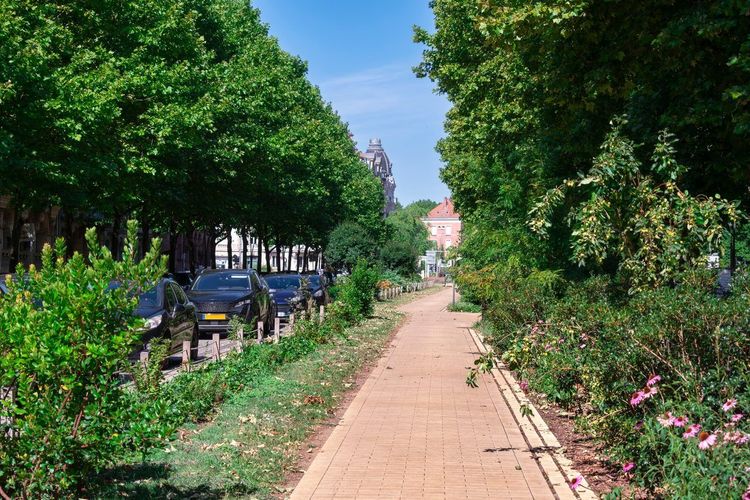
The Imperial Quarter: Station, Avenue Foch and Arsenal
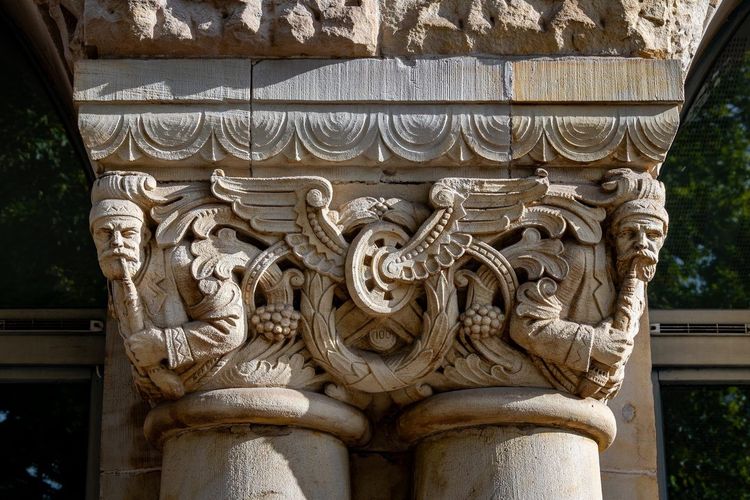
The second day changes register completely. Head for the Imperial Quarter, built at the turn of the 20th century during the German annexation, in a style that blends Neo-Romanesque, Neo-Renaissance and Jugendstil and resembles no other French district of this scale. Everything begins with the Metz station, inaugurated in 1908: its clock tower, carved capitals and former imperial pavilion, intended for the stays of Emperor Wilhelm II, make it one of the finest examples of Wilhelmine railway architecture in Europe. Its size, oversized for the city of the time, is also explained by a military function: moving troops quickly to the border.
A short distance away, the former main post office, in pink sandstone, extends the same massive vocabulary. Heading back toward the center, Avenue Foch (Avenue Foch, 57000 Metz) stands out as the city's most beautiful Belle Époque thoroughfare, lined with villas and bourgeois buildings whose facades are loaded with sculpture and ironwork. You can simply stroll along it, or stop in front of a few details, as each house was designed as a showcase by its architect.
At the end of the Esplanade, the Arsenal completes this architectural parenthesis. A former 19th-century military building, it was converted into a concert hall by the Catalan architect Ricardo Bofill and inaugurated in 1989; its main hall is considered to have one of the best acoustics in Europe. Right next door, do not miss Saint-Pierre-aux-Nonnains, one of the oldest churches in France: its walls reuse those of a 4th-century Roman building, turned into a church in the 7th century. A few meters further on, the small octagonal Templars' Chapel dates from the early 13th century and preserves wall paintings. These two short visits give you the measure of Metz's historical depth in a quarter of an hour.
Musée de la Cour d'Or
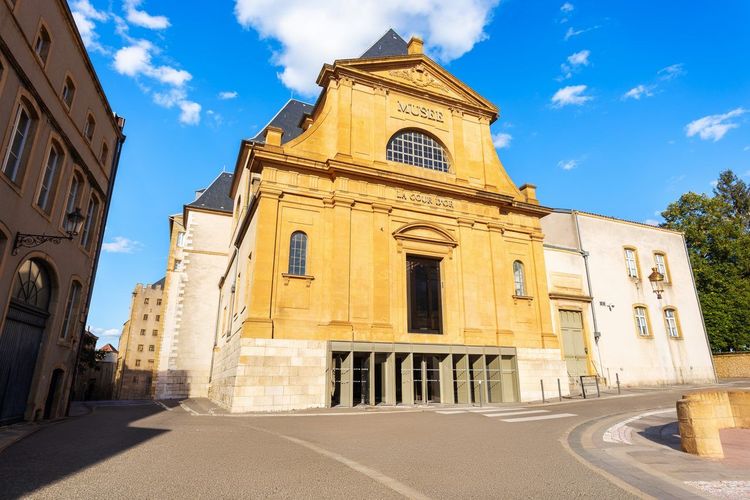
Continue to the Musée de la Cour d'Or, partly built above former Gallo-Roman baths whose remains are visible in situ. The collections cover regional archaeology, from the Gallic period to medieval art, including a remarkable section on daily life in Roman Divodurum, followed by fine arts galleries and a medieval granary with a spectacular timber frame, the Chèvremont granary. It is a dense museum, perfect if you like to understand a city through its foundations rather than its facades. Allow two hours so as not to skim through the basement levels.
Centre Pompidou-Metz
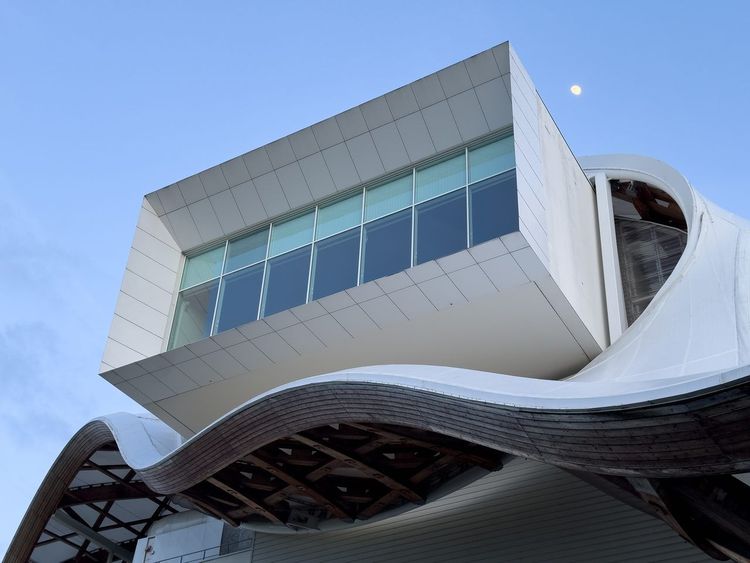
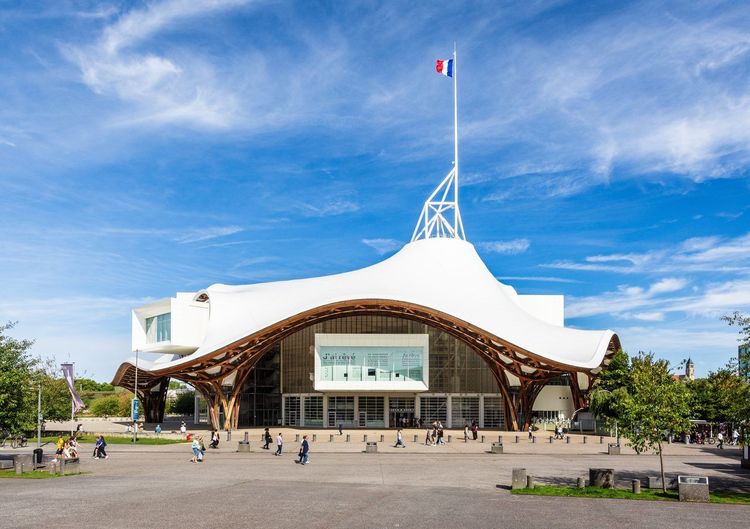
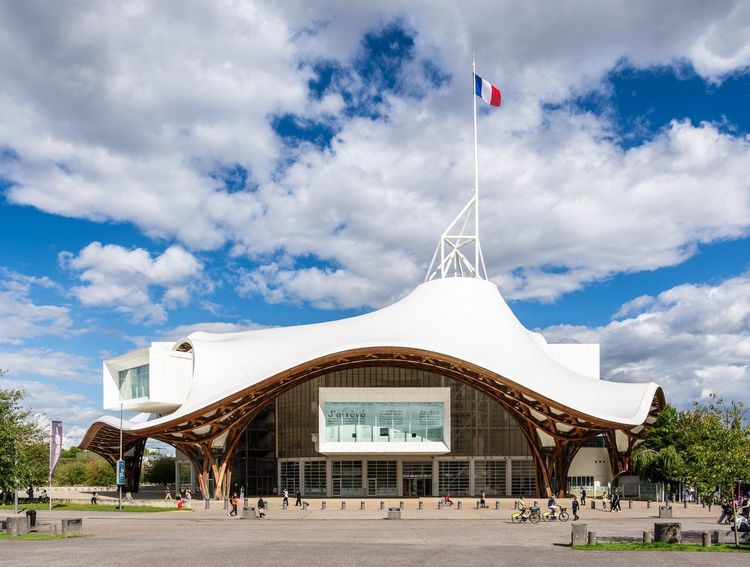
At the other end, the Centre Pompidou-Metz (1 Parvis des Droits-de-l'Homme, 57000 Metz, rated 4.3/5 on Google from 7,885 reviews) represents contemporary Metz. Opened in 2010 behind the station, it owes its silhouette to the architects Shigeru Ban and Jean de Gastines, whose glulam timber roof is inspired by a traditional Chinese hat. The museum has no permanent collection: it hosts temporary exhibitions drawn from the holdings of the Parisian Centre Pompidou, often bolder than what you would expect from a mid-sized city. Go up to the upper gallery: its large picture window frames the cathedral in the distance, one of the best viewpoints over Metz for photographers. Note that the center is closed on Tuesdays.
To extend the visit, the Ryo audio-guided sub-route 3,000 Years of History (27 audio tracks, 3h15, 8.2 km) passes through this very Imperial Quarter before reaching the two museums: a way to link both sides of the city without building the itinerary yourself. If you are hesitating between the two institutions, our selection of Metz museums also compares the lesser-known venues.
Day 3: Parks, Gardens and Day Trips Around Metz
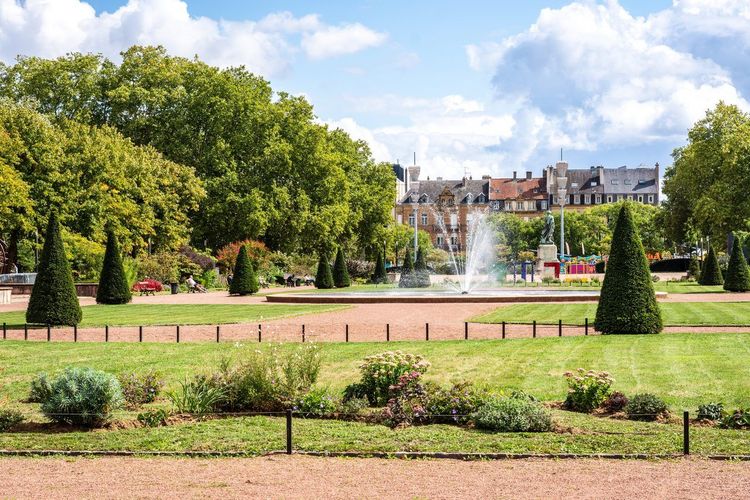
The Parks and Gardens of Metz
Devote your morning of the third day to the city's parks and gardens. The Esplanade, a vast terrace overlooking an arm of the Moselle, offers an open view over Mont Saint-Quentin and features statues, a bandstand and flower beds; it naturally connects the Arsenal to the lake. To the south, the Jardin Botanique in Montigny-lès-Metz, more intimate, lines up tropical greenhouses and remarkable trees in a former bourgeois estate park, a few minutes by bus from the center.
If you prefer walking by the water, the landscaped banks of the Moselle and the Seille offer kilometers of paths away from the crowds. Fans of 20th-century history can also go as far as Fort de Queuleu, a former Nazi internment camp turned memorial site, within a large wooded park. The last third of the Ryo audio-guided route runs along these green spaces, a welcome breather before heading out on an excursion in the surrounding area.
A Getaway to the Moselle Vineyards
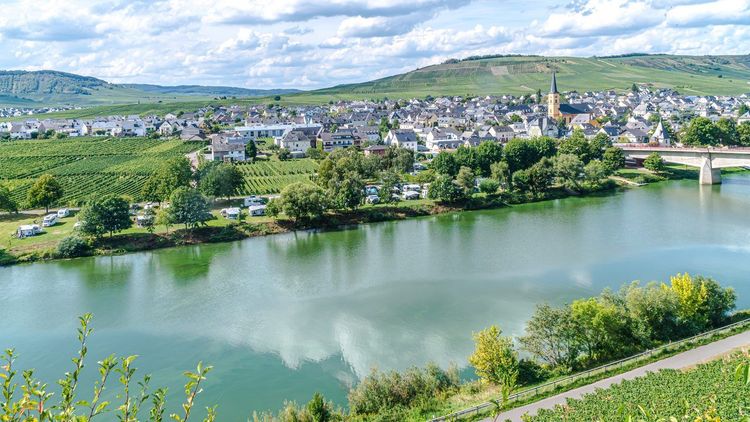
About twenty minutes by road, the Moselle vineyards form a discreet but ancient wine region, nearly vanished in the 20th century and then revived by a few winegrowing families, until the AOC Moselle designation was obtained in 2010. White wines dominate, led by Auxerrois and Pinot Gris, and several family estates offer tastings by reservation.
On the way to the vineyards, stop at Scy-Chazelles, on the slopes of Mont Saint-Quentin: Robert Schuman, one of the founding fathers of Europe, lived here until his death in 1963. His house, now a museum, preserves its original furniture and presents an exhibition on the building of Europe; he is buried just across the way, in the small fortified 12th-century Saint-Quentin church. The panorama over the valley from the hillside is worth the detour even without any particular interest in political history.
Amnéville and Other Towns to Visit Around Metz

For a more family-oriented afternoon, Amnéville (57360 Amnéville) is about 20 minutes from Metz and brings together a well-known thermal center, a large zoo that is home to tigers and red pandas among others, a casino and several leisure facilities. The Walygator amusement park is right next door, in Maizières-lès-Metz: enough to fill an entire half-day without taking the road several times.
If you have a full day rather than a half-day, Nancy and its UNESCO-listed Place Stanislas are about forty minutes by train, Verdun and its battlefields one hour by road, and Luxembourg City less than an hour away: three options that easily turn a 3-day stay into a starting point for the region. For more ideas within an hour's radius, see our article on things to do around Metz.
What to Do in Metz Depending on Your Interests: Families, Art Lovers, Photo Enthusiasts
With Family and Children
With children, favor wide open spaces and interactive museums: the Esplanade and the lake are fine for running and cycling, the Centre Pompidou-Metz regularly offers workshops for young audiences, and a half-day in Amnéville, between the zoo and amusement park, remains the safe bet for visiting families. Our guide to visiting Metz with family details the places suited to the youngest.
Art, Monument and Museum Lovers
If you are coming above all for art and heritage, tighten the program around the cathedral and its Chagall windows, Saint-Maximin and its Cocteau windows, the Musée de la Cour d'Or for archaeology, and the Centre Pompidou-Metz for 20th- and 21st-century art. The Arsenal is also worth a detour if a concert date matches your stay: the hall itself is part of the experience.
Best Viewpoints for Photos
For photographers, three spots clearly stand out: the arcades of Place Saint-Louis in low morning light, the reflection of the Temple Neuf in the water at sunset, and the picture window of the Centre Pompidou-Metz that frames the cathedral. The Jaumont stone facades, for their part, reveal themselves mostly at the end of the day, when the light turns golden. Whatever your profile, the same Ryo audio-guided route adapts to you: you can listen to it in full or pick only the stops that match your mood of the moment.
What to Do in Metz When It Rains or in the Evening
Activities and Museums Sheltered from the Rain
A rainy day in Metz is easy to manage thanks to the density of museums in the center: the Centre Pompidou-Metz, the Musée de la Cour d'Or and the cathedral allow you to string together several hours indoors, and the Arsenal rounds out the offer if there is a concert. The Covered Market, just behind the cathedral, also provides a food-filled shelter for a coffee break between showers. Our Ryo article on activities in Metz when it rains details other options if the downpour lasts all day.
Evening Outings and Atmosphere After 6 pm
In the evening, the cathedral and several facades of the historic center are lit up, making a nighttime stroll pleasant even outside the Christmas market season. In summer, the projections of the Constellations festival turn certain monuments into giant screens. The Outre-Seille district and the surroundings of Place Saint-Louis concentrate most of the terrace bars, while the Opéra-Théâtre and the Arsenal provide an evening cultural offering that is quite rare in a city of this size.
Where to Eat and Drink in Metz: Specialties and Good Addresses
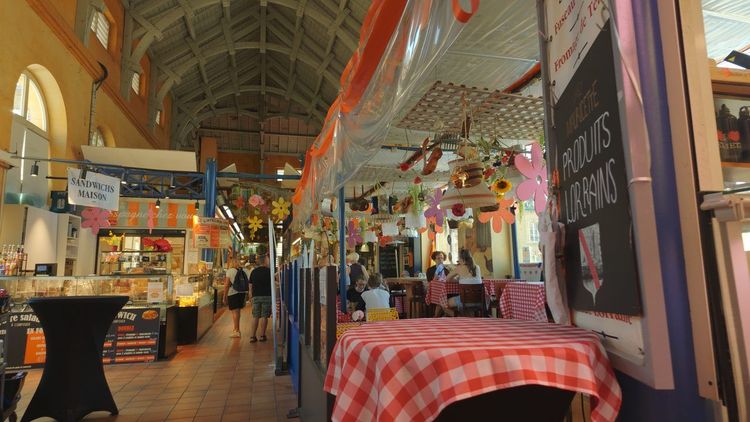
Local Specialties and Food Markets
On the plate, Metz's Lorraine cuisine is recognizable by a few classics: Lorraine potée, a slow-cooked dish of meats and vegetables, quiche Lorraine in its original version, with bacon, eggs and cream but no cheese, and above all the mirabelle plum, served as a tart, jam or eau-de-vie depending on the season. Add to the list the Commercy madeleines, the Boulay macarons and, for your glass, an AOC Moselle white or a locally brewed beer. The Metz Covered Market (Place de la Cathédrale, 57000 Metz, rated 4.4/5 on Google from 4,230 reviews), behind the cathedral, brings together local producers and small tasting stalls from Tuesday to Saturday, a good starting point to sample widely without hopping between many addresses.
Good Addresses by Neighborhood
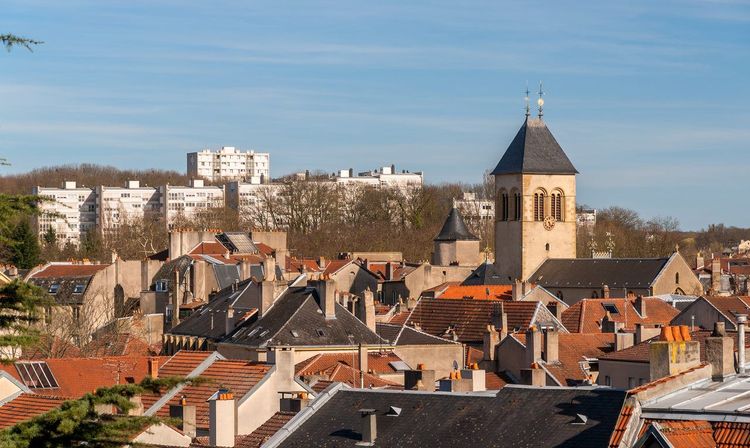
For a sit-down meal, the area around Place Saint-Louis and Rue Taison concentrates bistros and Lorraine restaurants. In the Imperial Quarter, around the station and Avenue Foch, Belle Époque-style brasseries are well suited to a break after a museum morning. Finally, the Outre-Seille remains the liveliest district in the evening, with a younger and more varied offering, from wine bars to tapas counters. On Saturday mornings, the open-air market around the cathedral is a perfect complement to a picnic on the Esplanade.
Where to Stay in Metz: The Best Neighborhoods for a 3-Day Stay
For a first stay, the historic center remains the most comfortable choice: you sleep within walking distance of the cathedral, Place Saint-Louis and the lake, which limits travel during the three days of sightseeing. Prices there are generally higher than elsewhere in the city, especially during the Christmas market period.
The Imperial Quarter, around the station, appeals more to travelers arriving by train: hotels there are often larger, sometimes housed in Belle Époque buildings, and the immediate proximity to the platforms makes an early departure to Paris or Luxembourg easier. The Centre Pompidou-Metz is also five minutes away on foot.
If you are looking for a more local atmosphere and more flexible rates, the Outre-Seille and its surroundings offer more guesthouses and small independent places, ten minutes on foot from the center. Whichever neighborhood you choose, book early if your stay falls in December: the Christmas market seriously complicates room availability.
Metz at Christmas and Events
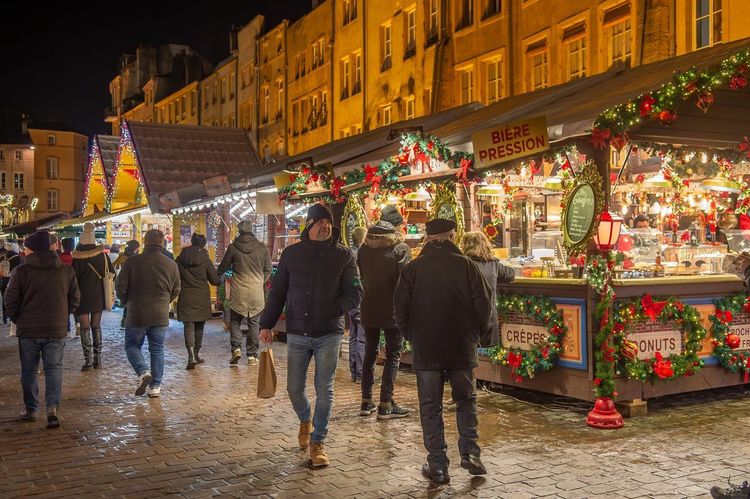
In December, the Metz Christmas market is spread across several squares in the city center. Each site has its own personality: artisan chalets, Lorraine regional products, an ice rink or a Ferris wheel depending on the edition. The atmosphere comes as much from the lights as from the smells of mulled wine and gingerbread that fill the streets as soon as night falls. In early December, Saint Nicholas Day, a major holiday in Lorraine, brings a large parade through the streets of the center, very popular with families. If your stay falls during this period, simply expect more crowds along the Day 1 itineraries.
The rest of the year has its highlights too: the Mirabelle Festival, in late August, celebrates the region's emblematic fruit with parades and food markets, while the Constellations festival, from June to September, offers a trail of artworks and nighttime light projections on the facades of the center. In October, the Nuit Blanche opens venues and streets to contemporary art until the early hours. These dates shift slightly each year, so it is best to check the official calendar before planning your stay around a specific event.
How to Get to Metz: Train, Plane, Road and Carpooling
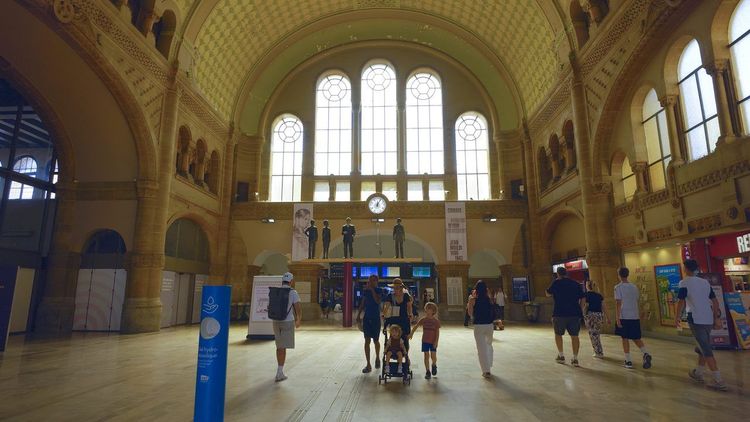
By Train and Plane
By train, Metz is about 1h25 from Paris Gare de l'Est on a direct TGV, a frequent service that makes the city an easy weekend destination from the capital. Regional TER trains also connect to Luxembourg City in under an hour, Nancy in about forty minutes and Strasbourg in around an hour and a half, which makes it easy to combine several stops in the region.
By air, Metz-Nancy-Lorraine airport offers a limited number of flights, mainly to the south of France and a few vacation destinations. Most international travelers go instead through Luxembourg-Findel airport, less than an hour away by road, or through Strasbourg, farther away but better connected to Europe. A Lorraine TGV station, in the middle of the countryside between Metz and Nancy, also serves some province-to-province connections.
By Car, Carpooling or Coach
By car, Metz sits at the crossroads of the A4 (Paris-Strasbourg) and the A31 (Nancy-Luxembourg), two routes that make the city easily accessible from the whole of northeastern France. The historic center, largely pedestrian, requires you to park in one of the underground car parks or in a paid zone rather than looking for a space in the heart of the city.
Carpooling platforms serve the Paris-Nancy-Metz-Luxembourg corridor well, often at a better price than the train for groups. Long-distance coach lines complete the offer for trips from major French cities or neighboring countries.
Getting Around and Practical Information in Metz
Public Transport, Parking and Walkability
The Le Met' network, with its Mettis high-level-of-service bus lines, covers the urban area well, but you will rarely need it if you stay focused on the historic center and the Imperial Quarter: the two are connected by a fifteen- to twenty-minute walk. Bring comfortable shoes rather than a transport pass if your stay is limited to these two areas; the bus becomes useful for the Jardin Botanique or Fort de Queuleu.
For parking, several park-and-ride facilities on the outskirts let you leave your car and reach the center by Mettis in a few minutes, an option that is often simpler than circling downtown during the Christmas market or on weekends.
Weather, When to Visit and Tourist Office
Metz has a fairly pronounced semi-continental climate: hot and sometimes stormy summers, cold winters with a few episodes of snow, and shoulder seasons that are generally pleasant for walking. Spring and early autumn are the most comfortable periods for exploring on foot, while December appeals mostly for the atmosphere of the Christmas market, at the price of colder weather.
The Metz Tourist Office, located on Place d'Armes just opposite the cathedral, offers detailed maps, guided tour bookings and up-to-date information on museum opening hours, which sometimes change depending on the season.



FAQ
How long does it take to visit Metz?
One day is enough for the historic center, two days add the Imperial Quarter and a museum, and three days let you include parks, vineyards or Amnéville without rushing. It is the recommended format for a first complete stay.
Why is Metz nicknamed the "Yellow City" or the "Golden City"?
The nickname comes from Jaumont stone, a pale yellow limestone used since Roman times on most of the facades in the historic center. Under low light, in the morning or evening, this stone takes on very recognizable golden hues.
What is the culinary specialty you absolutely must try in Metz?
The mirabelle plum is the must-try, served as a tart, jam or eau-de-vie depending on the season. Lorraine potée and traditional quiche Lorraine, made with bacon and no cheese, round out a typical Metz meal.
Is it easy to visit Metz on foot?
Yes, the historic center and the Imperial Quarter can largely be covered on foot, with about twenty minutes of walking between the two. The cobbled streets of the old town simply call for comfortable shoes rather than an elaborate transport plan.
Where is the best viewpoint for photographing Metz?
The picture window of the upper gallery at the Centre Pompidou-Metz frames the cathedral, while the reflection of the Temple Neuf in the water at sunset and the arcades of Place Saint-Louis in morning light complete the best spots.
Which towns are worth visiting around Metz?
Nancy, about forty minutes by train, Verdun, one hour by road, and Luxembourg City, less than an hour away, are all easy to reach from Metz. Amnéville, 20 minutes away, is better suited to a half-day family outing.
What can you see in Metz for free?
The nave of Saint-Étienne Cathedral, Place Saint-Louis, the Porte des Allemands, the Imperial Quarter and parks like the Esplanade or the Jardin Botanique can all be enjoyed without an entrance ticket. The museums, the crypt and the cathedral treasury, as well as some guided tours, require paid admission.
Metz ultimately turns out to be a city of two speeds: compact and walkable on paper, but layered with enough history to justify three full days without boredom. Between the golden cathedral, the imperial parenthesis and escapes to the vineyards or Amnéville, each day of this guide shows a different face of the city. To link these stops without a second thought, our Ryo audio guide to Metz remains the simplest solution: a route to follow at your own pace, from the first day to the last.
À lire également