© Shutterstock
 Votre guide Ryo
Museums in Metz: The Complete 2026 Guide, from Centre Pompidou-Metz to the Maisons des Illustres
Metz museums have something few mid-sized cities can claim: a Centre Pompidou outpost, Gallo-Roman baths, and the birthplace of a major poet — all within walking distance. In the Amphithéâtre district, the white silhouette of the Centre Pompidou-Metz faces an old city where the Musée de La Cour d'Or spans two thousand years of history, with free admission. To connect these layers without going round in circles, the Ryo audio-guided tour of Metz unfolds 27 audio stops across 8.2 km through the historic centre.
This guide covers seven museums and art venues to visit in Metz and its surroundings in 2026: a roof inspired by a Chinese hat, a 15th-century grain store turned exhibition hall, the apartment where Paul Verlaine was born, a free regional contemporary art fund, a departmental museum dedicated to the Franco-Prussian War, the house of Robert Schuman, and a former synagogue converted into an art centre. You will also find what is often missing elsewhere: verified prices, closing days (which do not all fall on the same day), free admission details, and visiting times for each venue.
Centre Pompidou-Metz, the Flagship of Contemporary Art in Metz
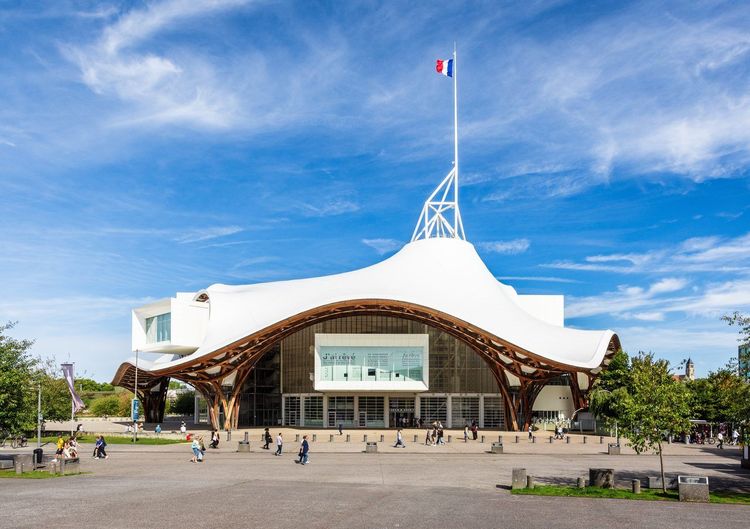
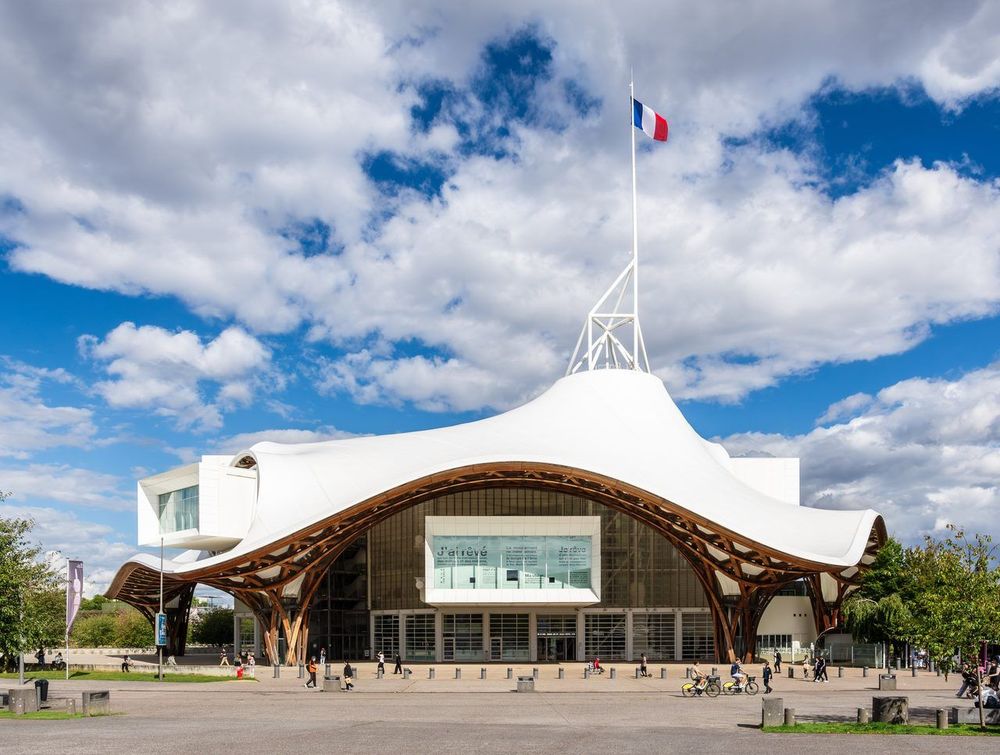
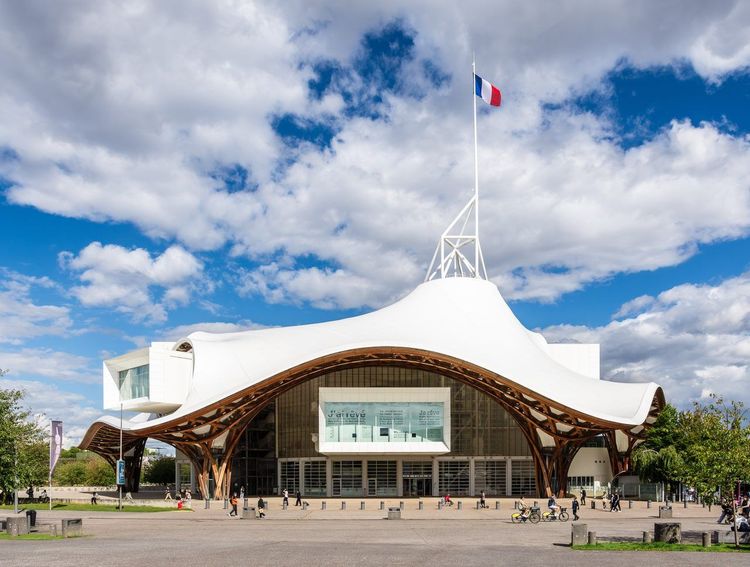
The roof of the Centre Pompidou-Metz (1 Parvis des Droits-de-l'Homme, 57000 Metz, rated 4.3/5 on Google based on 7,820 reviews) is hard to miss: a white hexagonal lattice framework that seems to float above the forecourt, visible as soon as you leave the train station. Japanese architect Shigeru Ban, working alongside Jean de Gastines, drew inspiration from a Chinese straw hat to design this glued laminated timber structure covered with a textile membrane. The gesture sets the tone from the very entrance for a museum that refuses the classic white box of contemporary art institutions.
Opened in 2010, it was the first decentralisation of a major national cultural institution in France. It draws on the reserves of the Paris Centre Pompidou, one of the world's most important collections of modern and contemporary art, with more than 120,000 works. On site, three stacked galleries and a flexible Grande Nef host temporary exhibitions throughout the year. There is no fixed permanent collection here: each visit depends on the current programme, and that is precisely what keeps Metz locals coming back. At the far end of the galleries, large bay windows frame the city like a painting, with the cathédrale Saint-Étienne in the line of sight.
The ticketing system is worth understanding before you arrive. The price depends on the number of exhibition spaces open on the day of your visit: €7, €10 or €14 for a full-price ticket, with a single ticket giving access to all the day's exhibitions as well as the daily guided tours. If you are under 26, admission is free, as it is for students, job seekers, and people with disabilities. Regular visitors can opt for the PASS-M, which gives unlimited access for a year.
If you are visiting with children, the family programme is well worth a dedicated look: art workshops, game trails through the exhibitions, and family visits designed to hold attention without jargon. The entrance forum is accessible without a ticket, with a bookshop-boutique and restaurant.
On the practical side, watch out for the classic trap: the Centre Pompidou-Metz closes on Tuesdays, not Mondays. From April to October, it opens from 10 am to 6 pm Monday to Thursday, and until 7 pm Friday to Sunday. Allow two hours for the essentials, double that if you go through all the galleries. Around the building, the Amphithéâtre district has continued its transformation since 2010: cafés, gardens, and residential buildings have replaced the former railway yards.
On your way out, it is only a ten-minute walk to the historic heart of the city, where the Ryo audio-guided tour of Metz takes over with stories about the city, from the Roman era to the annexation.
Musée de La Cour d'Or, the History of Metz from Antiquity to the Present Day
At the opposite end of the time scale from the Centre Pompidou-Metz, the Musée de La Cour d'Or (2 Rue du Haut Poirier, 57000 Metz, rated 4.7/5 on Google based on 2,411 reviews) covers around two thousand years of local history across 5,000 m² of exhibition space. And it has a strong argument in its favour: admission is free for everyone, all year round. Founded in 1839, it occupies a group of historic buildings, including the former Petits-Carmes convent and the Grenier de Chèvremont, a grain store built in the 15th century.
Visits often begin with archaeology, the museum's strong suit. The museum holds one of the richest Gallo-Roman collections in eastern France: funerary steles, sculptures, mosaics, and above all the remains of Roman baths, preserved in situ in the basement. You literally walk above Antiquity, through rooms built around the foundations uncovered during the museum's expansion work.
The medieval section holds another surprise: medieval painted ceilings, a rare decorative feature that reflects the wealth of Metz townhouses of the period, alongside religious sculptures and architectural elements from vanished buildings. The upper floors dedicated to fine arts then take over, with paintings ranging from the Renaissance to the 19th century. Since August 2025, a biodiversity pavilion of 360 m² also presents restored taxidermy specimens, herbariums, and minerals — an addition that families appreciate.
Practical note: the museum is open every day except Tuesdays, from 10 am to 12:45 pm and then from 2 pm to 6 pm. Note the midday break, which catches visitors arriving at noon by surprise. Allow one and a half to two hours for a full visit. The entrance on Rue du Haut Poirier is two minutes' walk from the cathédrale Saint-Étienne; the train station is about twenty minutes on foot.
The Ryo audio-guided tour, which winds through the historic centre over 3 hours 15 minutes, lets you put into context on the street what you have seen on display: the traces of ancient and medieval Metz take on a whole new dimension when described on the spot.
Maison natale de Verlaine, in the Footsteps of the Metz Poet
On Rue Haute-Pierre, a short walk from the esplanade, a discreet façade houses the Maison natale de Verlaine (2 Rue Haute-Pierre, 57000 Metz, rated 4.1/5 on Google based on 71 reviews): this is where, on 30 March 1844, the man who would become one of the great voices of French poetry was born. The first-floor apartment, bought back in 2011 by the Association des Amis de Verlaine, has been turned into a small museum.
The permanent exhibition, presented in a Second Empire atmosphere, traces the poet's life from his birth in Metz to his death in Paris on 8 January 1896, through period documents, iconography, and contextual material. Temporary exhibitions devoted to the arts, literature, and Verlaine's contemporaries are organised each year. The venue has held the label «Maisons des Illustres» since 2019, and the building has been listed as a historic monument since 1978.
Run by an association, the museum keeps more restricted opening hours than a municipal institution: check opening days before making the trip. Allow 30 to 45 minutes, ideal to slip in between the Place de la République and the old city. To extend the walk, the Ryo audio-guided tour of Metz then takes you on foot through the historic neighbourhoods, with anecdotes you would not have found on a plaque.
49 Nord 6 Est - FRAC Lorraine, Contemporary Art with Free Admission
The 49 Nord 6 Est - FRAC Lorraine (1 bis Rue des Trinitaires, 57000 Metz, rated 4.3/5 on Google based on 245 reviews) occupies a special place in Metz's museum landscape. This regional contemporary art fund does not display a fixed permanent collection: it rotates its works through temporary exhibitions, often focused on women artists, committed practices, and forms rarely seen elsewhere. Its name simply refers to the geographical coordinates of Metz: 49° north latitude and 6° east longitude.
The venue is located on Rue des Trinitaires, on the Sainte-Croix hill, in the Hôtel Saint-Livier, one of the oldest residences in the city. The contrast between the medieval walls and the contemporary installations is part of the experience. The spaces, spread over several levels, lend themselves to a short, focused visit.
Good news for your budget: admission is free. Do pay attention to the opening hours, though, which differ greatly from those of the municipal museums: the FRAC opens Wednesday to Friday from 2 pm to 6 pm, and at weekends from 11 am to 7 pm. It is closed on Mondays and Tuesdays. Allow 45 minutes to an hour — a format that combines well with the Musée de La Cour d'Or, a few minutes' walk away.
Musée de la Guerre de 1870 et de l'Annexion, in Gravelotte
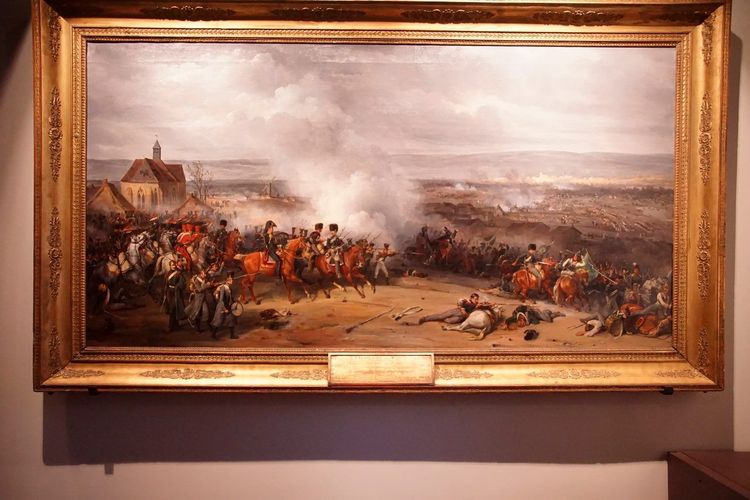
About fifteen kilometres west of Metz, the Musée de la Guerre de 1870 et de l'Annexion (11 Rue de Metz, 57130 Gravelotte, rated 4.7/5 on Google based on 1,085 reviews) stands in Gravelotte, in the heart of the August 1870 battlefields. Managed by the Département de la Moselle, it explains how Metz and the Moselle came under German administration for nearly half a century, from 1871 to 1918.
The permanent exhibition spans 900 m² and presents more than 6,000 objects: uniforms, weapons, works of art, documents, photographs, and testimonies. The scope goes well beyond military history. It directly illuminates what you will see in the city, starting with the imperial district and the gare de Metz, built during the annexation in a Germanic style that is still very much in evidence.
The museum opens from 7 February to 13 December, Tuesday to Sunday, from 10 am to 1 pm and from 2 pm to 6 pm (closed on Mondays). The ticket costs €7 at full price, €5 at reduced rate, and admission is free for children under 12. Allow an hour and a half, not including travel: a car remains the simplest way to get there from Metz.
Maison de Robert Schuman, at the Roots of Europe
In Scy-Chazelles, about five kilometres from the centre of Metz, the Maison de Robert Schuman (8-12 Rue Robert Schuman, 57160 Scy-Chazelles, rated 4.7/5 on Google based on 469 reviews) is above all a place of remembrance dedicated to one of the founding fathers of European integration. The author of the declaration of 9 May 1950, considered the birth certificate of the European Community, lived here until his death in 1963.
The visit has three parts. First, the late 18th-century house, preserved as it was in the early 1960s, with its study and library. Then a modernised museum extension tracing the history of European integration. And finally, the restored gardens, planted with the changing seasons in mind. Directly opposite, the fortified church of Scy-Chazelles holds the tomb of Robert Schuman, whose remains were transferred there in 1966. The site received the European Heritage Label in 2007 and the «Maisons des Illustres» label in 2011.
The same conditions apply as at Gravelotte, since both sites are managed by the Département: open from 7 February to 13 December, Tuesday to Sunday, from 10 am to 1 pm and from 2 pm to 6 pm, tickets at €7 (€5 reduced, free for children under 12). Allow one to one and a half hours on site.
Access from Metz is by car or bus. If you prefer to stay in the centre that day, the short version of the Ryo audio-guided tour offers a compact loop to combine with the intra-muros museums, leaving the excursion to Scy-Chazelles for the following day.
Centre d'Art Contemporain - Synagogue de Delme, a Cultural Day Trip from Metz
About thirty kilometres south-east of Metz, the Centre d'art contemporain - la Synagogue de Delme (33 Rue Raymond Poincaré, 57590 Delme, rated 4.3/5 on Google based on 87 reviews) is not a Metz museum in the strict sense, but a logical extension if you enjoyed the FRAC. Housed in a late 19th-century synagogue with orientalist architecture, the venue produces exhibitions by contemporary artists, often conceived specifically for the space.
The building, converted into an exhibition space, sets the light and volumes of the former place of worship in dialogue with the works on show. Admission is free and open to all, Wednesday to Sunday from 2 pm to 6 pm, with a guided tour on Sundays at 4 pm. Allow about 35 to 40 minutes by road from Metz and plan for the afternoon, keeping the opening hours in mind.
Museums for Every Visitor: Families, Curious Minds, and Art Lovers
Metz museums do not welcome all visitors in the same way, and that is good news if you are planning a family outing. The Centre Pompidou-Metz remains the reference for children, with regular workshops and game trails, and free admission for under-26s keeps costs down. The Musée de La Cour d'Or, also free, often appeals more to younger visitors thanks to its tangible objects: Roman baths, sculptures, and now the taxidermy animals in the biodiversity pavilion.
For more experienced contemporary art enthusiasts, the 49 Nord 6 Est - FRAC Lorraine and the Synagogue de Delme offer more demanding exhibitions, with mediators on hand to shed light on approaches that can seem puzzling at first glance. History buffs will head to Gravelotte and Scy-Chazelles, both free for children under 12. As for the Maison natale de Verlaine, it suits a short, focused visit, easily slotted between two stops on a busy day.
Workshops, family visits, and collective projects change with the seasons, especially during school holidays: check the agenda of each venue before making the trip.
Tickets, Prices, and Tips for Visiting the Museums in Metz
Visiting the museums in Metz does not cost much, and several venues cost nothing at all. Three are free for everyone, all year round: the Musée de La Cour d'Or, the 49 Nord 6 Est - FRAC Lorraine, and the Synagogue de Delme. There is no need to wait for the first Sunday of the month to take advantage of them.
- Centre Pompidou-Metz: €7, €10 or €14 depending on open spaces; free for: under-26s, students, job seekers; closed: Tuesdays.
- Musée de La Cour d'Or: Free; free for: everyone; closed: Tuesdays.
- 49 Nord 6 Est - FRAC Lorraine: Free; free for: everyone; closed: Mondays and Tuesdays.
- Musée de la Guerre de 1870 (Gravelotte): €7 (reduced €5); free for: under-12s; closed: Mondays, and from mid-December to early February.
- Maison de Robert Schuman: €7 (reduced €5); free for: under-12s; closed: Mondays, and from mid-December to early February.
- Synagogue de Delme: Free; free for: everyone; closed: Mondays and Tuesdays.
At the Centre Pompidou-Metz, the PASS-M gives unlimited access for a year, with a Jeune formula for 18-to-25-year-olds, and the Billet Liberté lets you skip the queue for a year from the date of purchase. The museum also offers discounts in partnership with TER and the LE MET' bus network. For the other sites, check with the Metz tourist office about current passes, as these offers change regularly.
Planning Your Visit: Opening Hours, Access, and Best Time to Go
First reflex: do not rely on the "closed on Mondays" rule. In Metz, the two flagship museums, the Centre Pompidou-Metz and the Musée de La Cour d'Or, close on Tuesdays. On Mondays, by contrast, they are open, while the FRAC, Gravelotte, and Scy-Chazelles are closed. Tuesday is therefore the most awkward day for a museum-focused outing. Wednesdays outside school holidays tend to be quieter.
The city centre is easy to explore on foot: the Centre Pompidou-Metz, the Musée de La Cour d'Or, the Maison natale de Verlaine, and the FRAC are all within twenty minutes' walk of each other. The LE MET' bus network serves the place d'Armes, a short walk from the Cour d'Or, and the Graoulib' bike-share scheme has a station near the cathedral. Gravelotte, Scy-Chazelles, and Delme, however, require a trip by car or bus, best planned as a separate half-day.
As for the season, spring and early autumn offer the best balance between crowds and weather for back-to-back walks between venues. Winter works well for the city-centre museums, but bear in mind that the two departmental sites close from mid-December to early February. In practice, two days are enough for the intra-muros museums, three if you add the day trips.
To connect these venues without pulling out your map at every junction, the Ryo audio-guided tour of Metz traces a 3-hour-15-minute itinerary with 27 audio stops through the historic centre. It complements a museum day rather than replacing it.

FAQ
Which museums in Metz are free?
The Musée de La Cour d'Or and the 49 Nord 6 Est - FRAC Lorraine are free for everyone, all year round. The Synagogue de Delme, about thirty kilometres away, is also free. The Centre Pompidou-Metz is free for under-26s, students, and job seekers.
How many museums can you visit in Metz?
The city centre has four major venues (Centre Pompidou-Metz, Cour d'Or, FRAC, Maison natale de Verlaine), plus the sites of Gravelotte, Scy-Chazelles, and Delme in the surrounding area. Two to three days are enough to see most of them without rushing.
What is the must-see museum in Metz?
The Centre Pompidou-Metz remains the benchmark for its architecture and programming, but the Musée de La Cour d'Or rivals it if you are interested in history and Gallo-Roman archaeology. Both can be visited on the same day, except on Tuesdays.
Do you need to book to visit the Centre Pompidou-Metz?
Booking is not mandatory, but the Billet Liberté lets you skip the queue, which is useful during peak season or for heavily attended exhibitions. Children's workshops must be booked in advance.
Which museum is best for visiting Metz with children?
The Centre Pompidou-Metz has the most developed family programme. The Musée de La Cour d'Or, which is free, also appeals to children thanks to its Roman baths and biodiversity pavilion.
How much time should you allow to visit the museums in Metz?
Allow two hours or more for the Centre Pompidou-Metz, one and a half to two hours for the Musée de La Cour d'Or, about an hour for the FRAC, and 30 to 45 minutes for the Maison natale de Verlaine.
Metz, a Museum City Best Explored on Foot
Between Shigeru Ban's roof, the Roman baths of the Cour d'Or, and Verlaine's birth apartment, Metz packs a rare range of museums into a city of this size, with several venues offering free admission. Two days are enough for the centre, one more if you venture out to Gravelotte, Scy-Chazelles, or Delme. Just remember that Tuesday is the day to avoid.
Between two museum visits, let yourself be guided through the streets with the Ryo audio-guided tour of Metz: its stories bring the façades you pass between museums to life, and turn a list of addresses into a real day of discovery.
À lire également