© Shutterstock
 Votre guide Ryo
15 Free Things to Do in Orange in 2026: From the Arc de Triomphe to Saint-Eutrope Hill
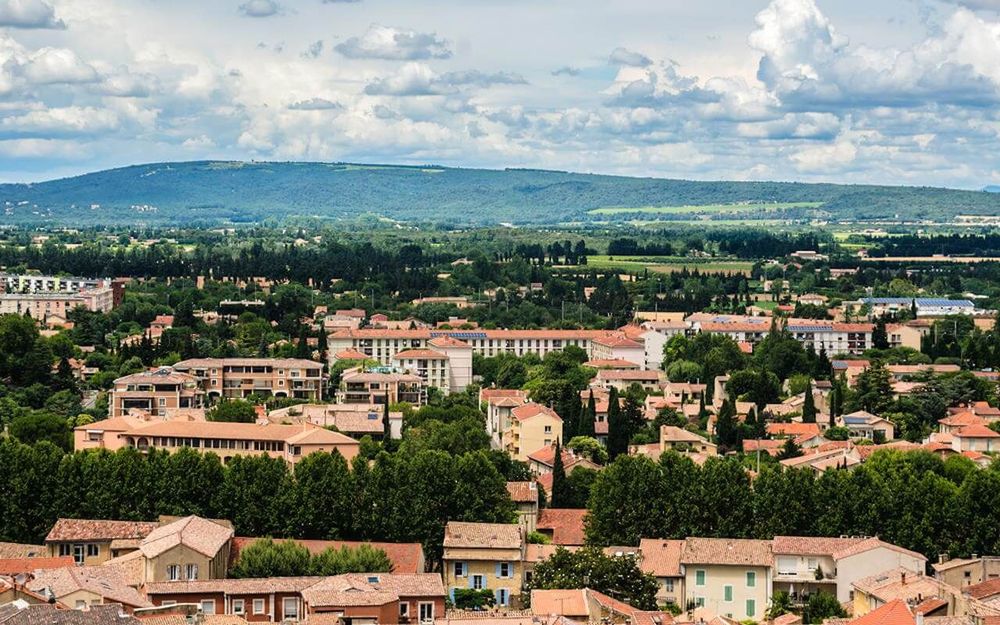
Finding free things to do in Orange often starts with the best-known image: the Roman Arc de Triomphe standing in the middle of a roundabout, visible from the road and accessible at any hour without a ticket. But this Vaucluse town hides a good dozen other places where you can stroll, climb or wander without spending a euro: the immense wall of the Ancient Theatre, a hill crowned by a statue of the Virgin Mary visible for miles around, a Thursday market where you can spend an hour without buying anything, or even trails through Côtes du Rhône vineyards where nobody asks for an admission ticket. To link several of these places without getting lost, the Ryo audio-guided tour of Orange narrates the history of the Roman city stop by stop, on foot and at your own pace.
In the fifteen stops that follow, you will find the Arc de Triomphe and the Romanesque cathedral, of course, but also angles that few articles explore seriously: the Châteaurenard cross and the ruins of the princes' castle at the top of Saint-Eutrope Hill, the AOC Côtes du Rhône vineyards at the town's gates, and a precise calendar to know which day to enjoy the market and where to leave your car for free.
1. The Arc de Triomphe of Orange, a Roman Gem with Free Access
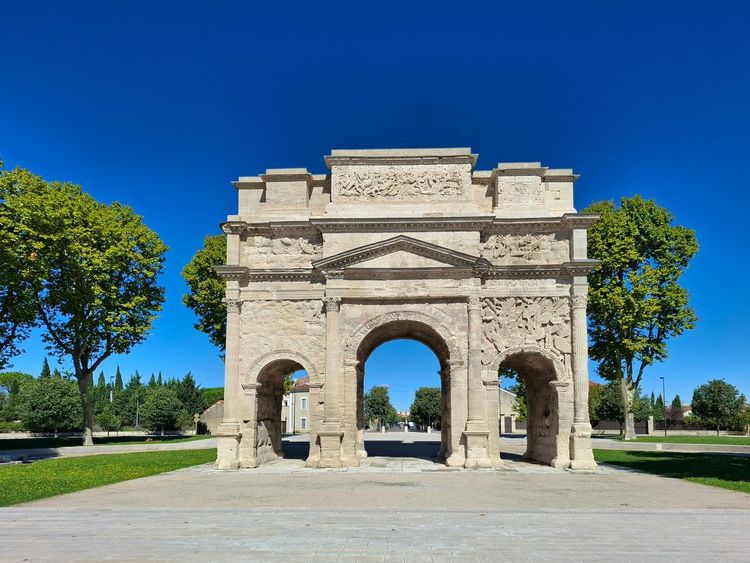
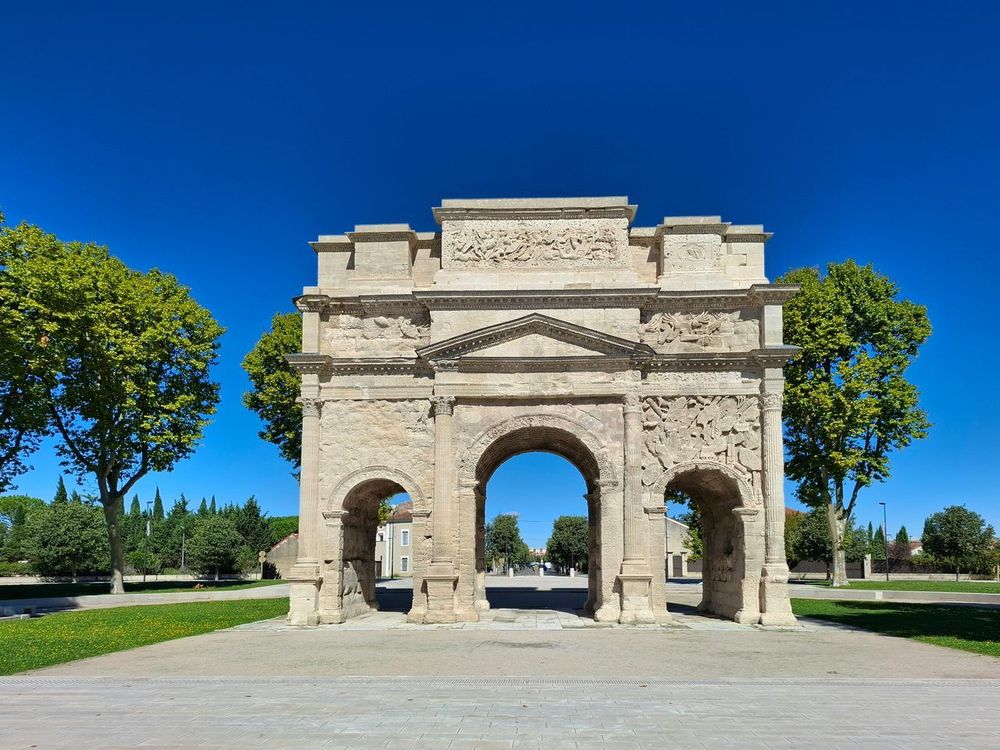
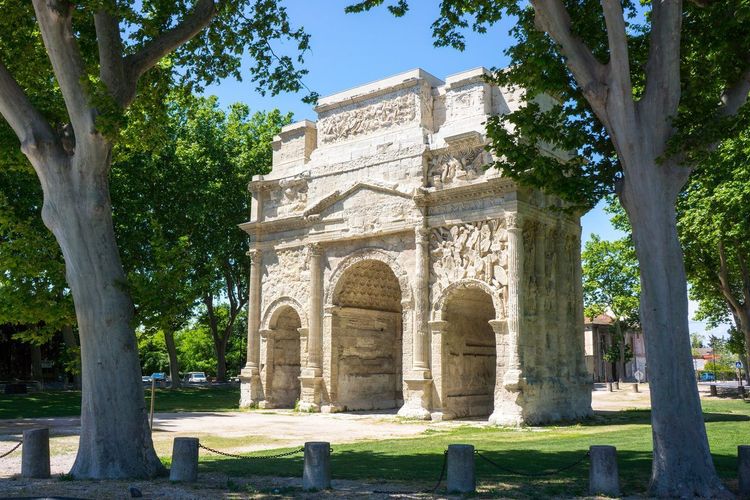
Built around 20-25 AD, then dedicated to Emperor Tiberius around 26-27, the Arc de Triomphe of Orange (Avenue de l'Arc de Triomphe, 84100 Orange, rated 4.6/5 on Google from 4,218 reviews) celebrates Roman victories over the Gallic and Germanic peoples as well as Rome's naval supremacy. Listed as a UNESCO World Heritage Site since 1981 together with the Ancient Theatre, it stands 19.21 metres tall and nearly 20 metres long, and is among the best-preserved Roman arches, with its three vaulted bays and its rare second attic.
What strikes you as you approach is the density of the sculpted frieze: military trophies, ship rams and anchors, chained Gallic prisoners frozen in stone for two thousand years. Look on the shields for the small engraved capricorn: it is the emblem of the Legio II Augusta. The reliefs on the east face, the most legible, can still be deciphered with the naked eye despite centuries of mistral wind. The arch stands on the former Via Agrippa, the Roman route that linked Lyon to Arles and that was later followed by the Nationale 7: it marked the northern entrance to the colony of Arausio.
Access is free at all times, with no opening hours or ticket office. You can walk around it in under ten minutes, but allow about half an hour to observe the reliefs from several angles: the low light of late afternoon brings out the trophies particularly well. A free car park is located right nearby, convenient for this first stop before walking to the town centre.
To go further than a souvenir photo, the Ryo audio-guided tour starts very close to the Arc de Triomphe: its first audio stop covers the monument's military history and details the bas-reliefs that are often missed when walking past too quickly.
2. The Ancient Theatre of Orange Seen from the Outside
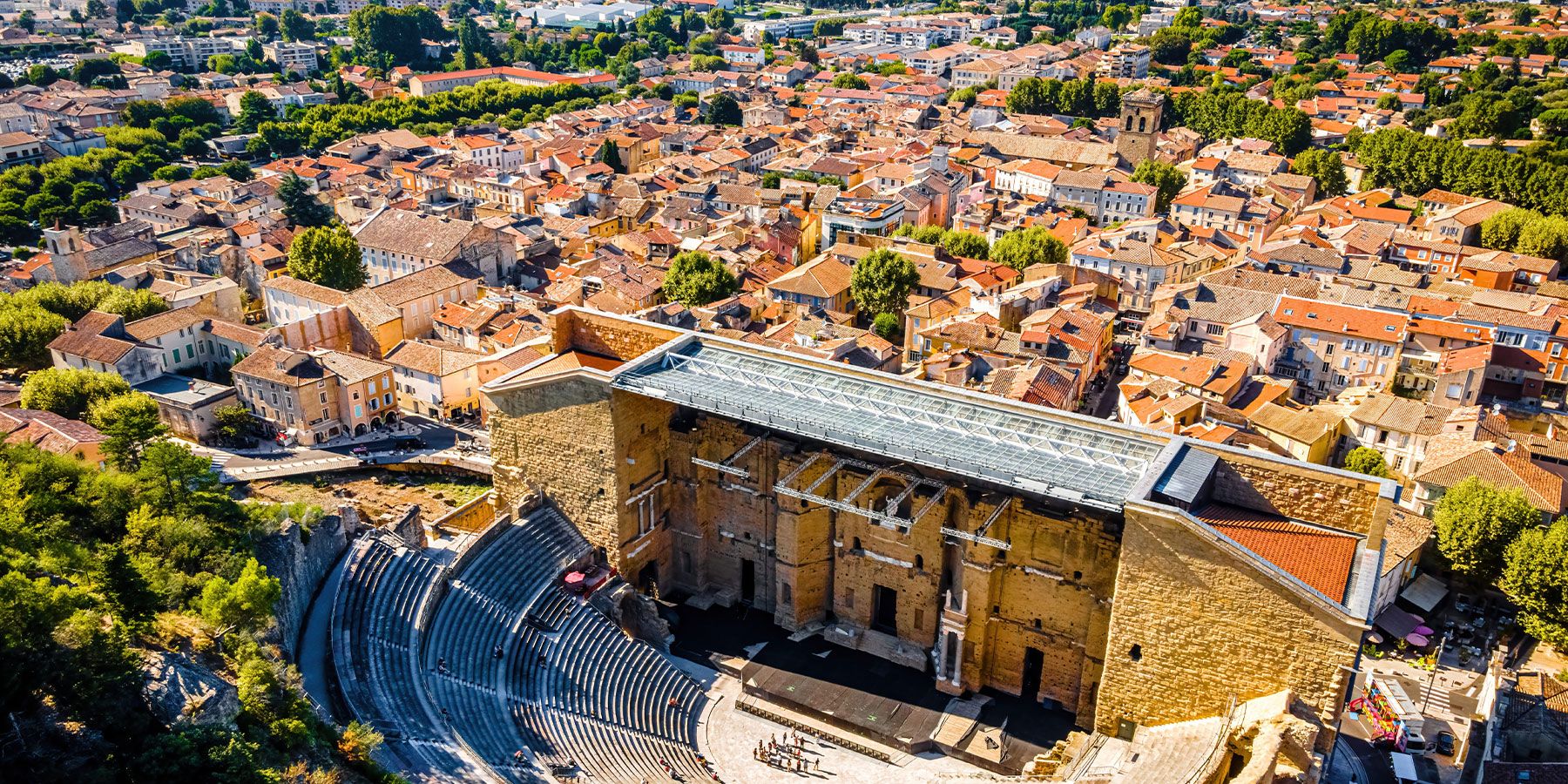
Let's be clear on a point that is often vague online: the interior of the Ancient Theatre (Rue Madeleine Roch, 84100 Orange, rated 4.6/5 on Google from 12,948 reviews) requires a ticket, which also gives access to the Museum of Art and History located opposite. However, its exterior wall, 37 metres high and 103 metres long, can be fully admired without a ticket from the square that borders it. Louis XIV is said to have called it "the finest wall in my kingdom," and you understand why when you look up at the two rows of corbels that once supported the velum, the canvas stretched to protect spectators from the sun.
During the day, the theatre's surroundings are lively with café terraces and school groups; in the evening, the illuminated façade becomes a backdrop in its own right. Some cultural evenings organised by the town even offer outdoor events or screenings, unrelated to the ticketing of the shows held inside. The famous 3.5-metre imperial statue, meanwhile, sits in the niche of the stage wall on the seating side: it can only be seen from the inside.
You will appreciate the wall more by stepping back to the other side of the square: the perspective reveals the scale of the monument better than standing too close. The "city of the princes" sub-route of the Ryo audio guide devotes several stops to the theatre, on a 2.9 km route lasting 1h10 that details its architecture without the need to buy a ticket.
3. Notre-Dame-de-Nazareth Cathedral
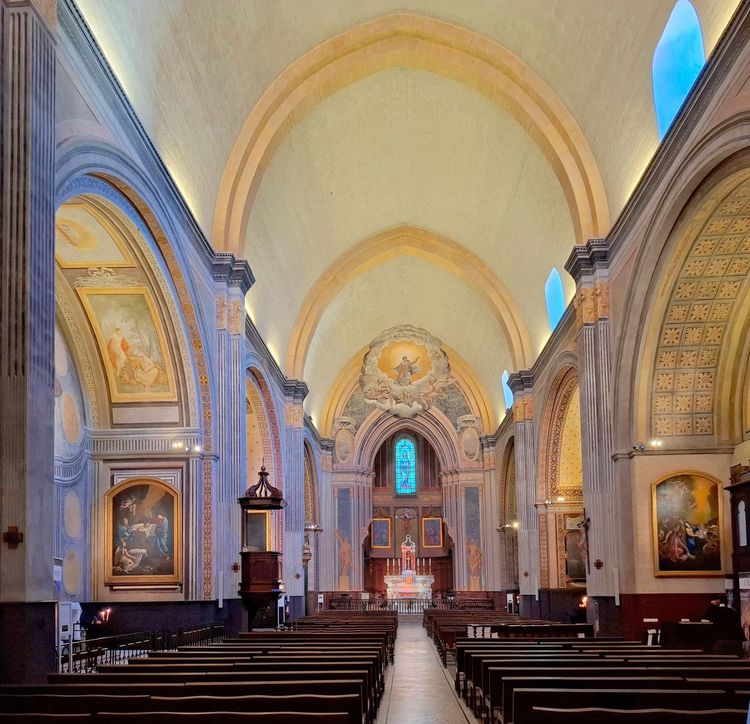
Less photographed than the Arc de Triomphe, Notre-Dame-de-Nazareth Cathedral (Cours Aristide Briand, 84100 Orange, rated 4.5/5 on Google from 205 reviews) is nonetheless worth the detour. Begun in the early 12th century and consecrated in 1208, it was ransacked by the Huguenots on 20 December 1562: altarpieces, statues and altars burned, organ and treasury looted. Its restoration only began in 1584, under Philip William of Orange, hence this façade that blends several eras and tells the tumultuous story of the town on its own.
Linger in front of the south portal: its Romanesque decoration directly borrows antique motifs, as if medieval sculptors had copied the neighbouring Arc de Triomphe. The west portal, meanwhile, displays a much later neoclassical style. The interior, cool even in the heart of summer, offers a welcome break, and entry remains free outside of services.
If you only visit one religious building in Orange, choose a weekday visit in late morning rather than Sunday, when services limit visiting.
4. Saint-Florent Church, a Discreet Heritage Site
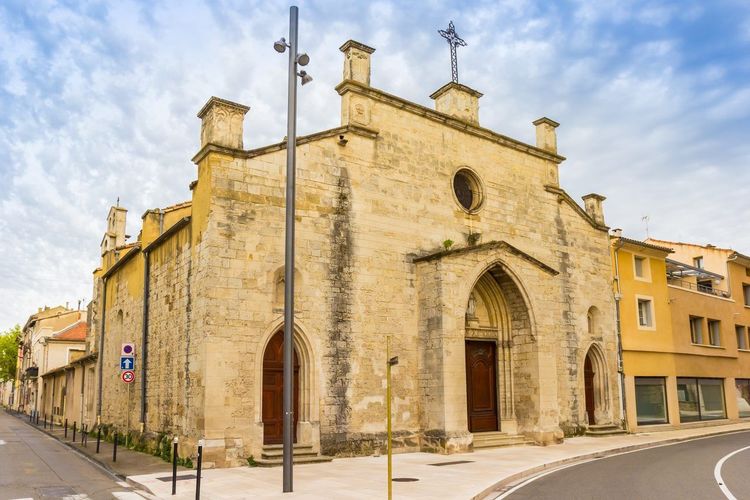
In the old town, Saint-Florent Church (Rue Saint-Florent, 84100 Orange, rated 4.3/5 on Google from 62 reviews) often goes unnoticed by passing visitors, which makes it a pleasant stop for anyone seeking a bit of calm. Its more modest architecture, remodelled over the centuries, contrasts with the Roman monumentality of the rest of the town.
Entry is free during opening hours, generally in the morning and late afternoon outside services. You will mostly meet locals rather than tour groups, which gives the visit a more authentic atmosphere than the best-known sites.
5. Climbing Saint-Eutrope Hill: Park, Garden of the Virgin and Panorama
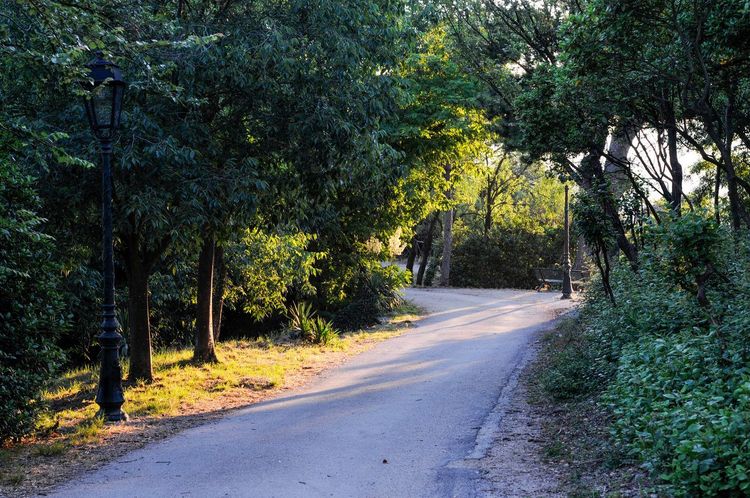
This is undoubtedly the most underrated activity in Orange. Saint-Eutrope Hill, rising about a hundred metres above the plain, brings together several centuries of history in a single place: excavations attest to continuous occupation from prehistoric times to the 17th century. At the summit stood the citadel of the Princes of Orange, besieged in 1672 on the orders of Louis XIV, then at war with William III of Orange, and dismantled in 1673: gunpowder was needed to overcome walls that thick. Sections of ruins remain scattered among the greenery.
The climb follows a shaded path from the historic centre, taking about fifteen minutes from the Ancient Theatre. Allow longer with young children or if you make many photo stops, as the path already offers lovely views over the tiled roofs even before reaching the top.
Once at the summit, the Garden of the Virgin and the golden statue of the Virgin watch over the town, while the orientation table helps you read the landscape: the tiers of the Ancient Theatre seen from above, the Rhône plain and, on a clear day, the silhouettes of the Dentelles de Montmirail and Mont Ventoux. The Châteaurenard cross, more discreet, marks a second viewpoint slightly set back, often deserted even on busy days. A detail few visitors notice: the oak planted here on 29 July 1952 by Queen Juliana of the Netherlands, a reminder of the link between the House of Orange-Nassau and the town that gave it its name.
Bring water in summer, as shade is scarce on the summit plateau, and closed shoes if you plan to explore the remains beyond the paths. The park remains open without a ticket, making it a good choice for a sunrise or sunset.
This climb is part of the Ryo app route: the audio commentary covers the fate of the destroyed citadel, the history of the Princes of Orange, and gives landmarks to locate the Dentelles de Montmirail without having to search a map in the blazing sun.
6. Strolling in Parc Auguste Gasparin
More urban than Saint-Eutrope Hill, Parc Auguste Gasparin (Avenue Charles de Gaulle, 84100 Orange, rated 4/5 on Google from 333 reviews) serves as the green lung of the town centre, with its shaded paths and playgrounds for families. It is where locals come to picnic between errands, away from the bustle of the Cours Aristide Briand.
In season, outdoor wellness and yoga sessions are sometimes offered there by local associations; ask the tourist office for current time slots. The benches in the shade of tall trees also make it a good spot to read or catch your breath after descending the hill.
7. The Orange Market, Immersion in Local Provence
Every Thursday morning, the centre of Orange is transformed: stalls of seasonal fruit and vegetables, goat's cheese, lavender, olives and Provençal fabrics fill the streets around the Cours Aristide Briand and the place Clemenceau. It is one of the busiest markets in northern Vaucluse, and nothing obliges you to buy in order to enjoy it.
The atmosphere changes with the hour: arrive early to mostly meet locals doing their shopping, or later in the morning for livelier activity, including street musicians on some days. Vendors are happy for you to look around and ask questions about their products, even with no immediate intention to buy.
If your visit falls on another day, check with the tourist office for small seasonal markets, and note that several food shops in the centre stay open all week for anyone who simply wants to observe local life.
8. Cycling or Walking Along the Aygues
Less well known than the Roman heritage, the Aygues river (also spelled Eygues) flows north of Orange before joining the Rhône near Caderousse. It offers a pleasant nature route, on foot or by bike, in complete contrast to the stone of the historic centre. The banks, often deserted on weekdays, allow a quiet walk in the shade of poplars.
The route suits both a short one-hour outing and a longer loop for those with a bike; no specific equipment is needed beyond good shoes. For a detailed route and variations depending on your level, our article on hikes around Orange lists several loops accessible from the town centre.
9. The Historic Squares and Lanes of the Town Centre
Between the Arc de Triomphe and the Ancient Theatre, Orange's old centre unfolds a network of squares and lanes worth lingering in with no particular aim. The place des Consuls (Place des Consuls, 84100 Orange, rated 4.2/5 on Google from 279 reviews), the town's former administrative heart, preserves fine old façades, while the place Portail Grignolet recalls by its name one of the city's former gateways.
Further on, la Placetto and the parc des Tours complete this urban route: the former is a small shaded square ideal for a break, the latter a green space where you can catch your breath between two lanes. Each of these places tells a different fragment of the history of the city of the Princes of Orange, from the feudal era to the 19th-century remodelling.
Wandering through this quarter is entirely free: deliberately get lost in the lanes perpendicular to the Cours Aristide Briand, as they often hold a sculpted façade or an unexpected vaulted passage. If you prefer a guiding thread, the Ryo audio-guided tour of the city of the princes links these squares over 2.9 km and 19 audio stops, with a different anecdote at each one.
10. The Anglica Tower and the Remains of the Medieval Ramparts
Less highlighted than the Arc de Triomphe, the Anglica Tower (Rue de la République, 84100 Orange, rated 4.3/5 on Google from 29 reviews) is one of the last visible witnesses of the medieval ramparts that once encircled the town, before they were dismantled to make way for urban expansion.
The tower is viewed from the outside, now integrated into the urban fabric, and makes a good complement after discovering the historic squares: you can concretely gauge the thickness of the defences that protected the city. Combine it with a glance toward Saint-Eutrope Hill, where the citadel stood, to mentally reconstruct the defensive system of medieval Orange.
11. Hikes and Viewpoints at the Gates of Orange
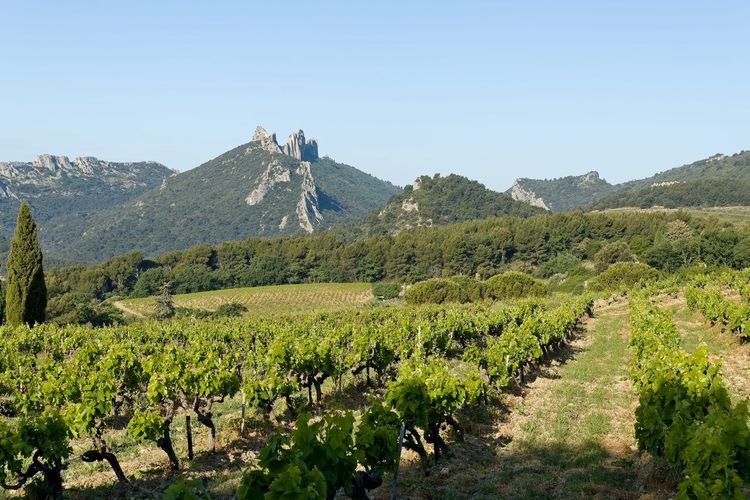
This is the angle most articles about Orange leave aside: the town is surrounded by vineyards of the Côtes du Rhône appellation, and several marked trails let you walk through them without ever encountering a toll or ticket office. The paths heading north-east offer open views of the Dentelles de Montmirail, the jagged limestone ridge that dominates the Vaucluse landscape.
These routes cross a landscape of Provençal mixed farming: tightly planted vines, lone olive trees, a few lavender fields depending on the season. The best time to walk them is early morning in summer, before the heat has crushed the plain, or autumn, when the vines turn red after the harvest. Allow between one and three hours of walking depending on the chosen loop, with no significant elevation gain close to the town.
To find the most accessible viewpoints and starting car parks, our article on what to see around Orange details several complementary routes, for those with a full day to devote to the surrounding countryside.
12. Free Family Activities in Orange
With children, the question of budget often arises faster than elsewhere, and yet Orange offers several options that cost nothing. Parc Auguste Gasparin remains the safe bet with its shaded playgrounds; the banks of the Aygues allow a bike outing without traffic to manage; and the Thursday morning market lends itself well to a playful stroll among the colourful stalls.
The Arc de Triomphe and the historic squares also work very well with young children: distances are short, the terrain is flat apart from the climb to Saint-Eutrope Hill, and there is no ticket or queue. Set them a challenge in front of the arch: find the capricorn on the sculpted shields. Save the hill for children already used to walking, or plan a snack break halfway up.
For a broader list of ideas by age, our article dedicated to family outings in Orange complements these suggestions with options suited to both the youngest and teenagers.
13. When to Visit Orange and How Much Time to Allow
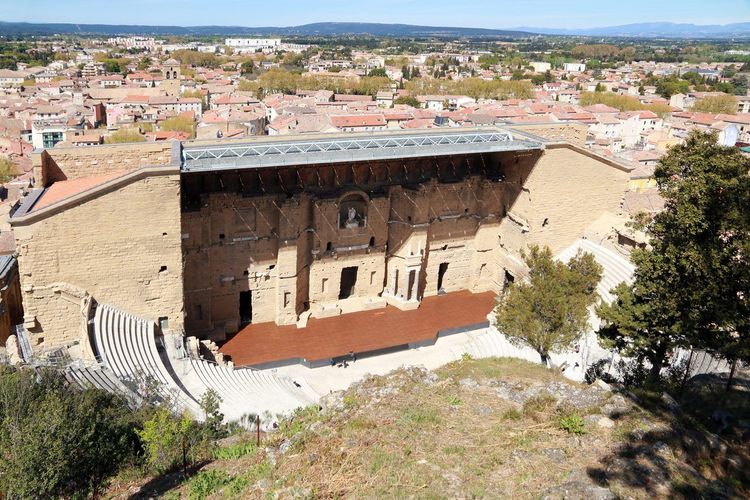
Half a day is enough to take in the Arc de Triomphe, the surroundings of the Ancient Theatre, the cathedral and the historic squares, all grouped within a compact, pedestrian-friendly area. Allow a full day if you add the climb to Saint-Eutrope Hill and a walk along the Aygues.
The Thursday is the day to choose if the market is among your priorities. As for the season, spring and early autumn offer milder temperatures for the hill, while summer is better suited to morning visits followed by a break in the shade of Parc Gasparin. Beware in July: the Chorégies, the opera festival held in the theatre, attract large crowds and push up accommodation prices.
14. Getting Around and Parking in Orange for Free
Orange's historic centre can be explored almost entirely on foot: the Arc de Triomphe, the Ancient Theatre, the cathedral and the historic squares are all within fifteen minutes' walk of each other. There is therefore no reason to take the car again between stops.
Several free car parks are located just outside the centre, notably near the Arc de Triomphe and along certain roads leading to the centre, particularly useful on market mornings when traffic builds up around the Cours Aristide Briand. Park as soon as you arrive and forget the car until the evening.
15. Zero Budget: Practical Tips for Visiting Orange Without Spending
A few simple habits let you complete a full day in Orange without opening your wallet. Fill your water bottle at the drinking water points in the centre, handy in summer to avoid buying bottles at every stop. Parc Gasparin or the lawns of Saint-Eutrope Hill are perfect for a picnic prepared in advance rather than a break at a café terrace.
By grouping the outdoor visits of the Roman heritage, the historic squares and the climb up the hill into a single day, you cover the essentials of the town without going through a single ticket office. And if you prefer a guided version rather than reading signs on your own, the 19 audio stops of the city of the princes accompany this loop from the first stop to the last.

FAQ
Is the Ancient Theatre of Orange free to visit?
No, the interior and the tiered seating require a ticket (which includes the Museum of Art and History). However, the 37-metre exterior wall and the surroundings of the monument can be admired freely at any hour, day or night.
What day is the market in Orange?
The main market takes place every Thursday morning in the town centre, around the Cours Aristide Briand and the place Clemenceau.
How much time should I allow to visit Orange without spending money?
Half a day is enough for the historic centre (Arc de Triomphe, surroundings of the theatre, cathedral, squares). Allow a full day if you add Saint-Eutrope Hill and a walk along the Aygues.
Where can I park for free in Orange?
Several free car parks are located just outside the town centre, notably near the Arc de Triomphe. Since the historic centre is pedestrianised, it is best to park once and then explore everything on foot.
What are the free activities for children in Orange?
Parc Auguste Gasparin and its playgrounds, a bike ride along the Aygues and a stroll through the Thursday morning market are among the best options for families, with no admission fees at all.
Can you visit the Arc de Triomphe of Orange without paying?
Yes, the Arc de Triomphe is an open-air monument with no ticket office or opening hours. It can be admired freely all year round, day or night, from the roundabout that surrounds it.
Orange turns out to be far more generous than you might imagine for anyone looking to visit without spending money: the UNESCO-listed Roman heritage, the panorama from Saint-Eutrope Hill, the Thursday Provençal market and the surrounding vineyard trails already make up one to two full days. The fifteen stops above can be combined freely depending on the time available, from a quick stop at the Arc de Triomphe to a full exploration of the surrounding countryside.
Want to link these places without planning an itinerary? Start the Ryo audio guide of Orange at the foot of the Arc de Triomphe and let yourself be guided, at your own pace, all the way to the top of Saint-Eutrope Hill.