© Shutterstock
 Votre guide Ryo
Visiting Quiberon in 2 Days: 2026 Itinerary Between the Côte Sauvage and the Peninsula
Cross the Penthièvre isthmus and you can feel the air change: on one side the bay, calm and warm, on the other the Atlantic crashing against the rocks without warning. Visiting Quiberon in 2 days means embracing this constant alternation between sheltered shore and rugged coast, between family beach and customs-officers' path swept by the wind. To miss nothing of this contrast, the Ryo audio-guided tour of Quiberon starts near Port Haliguen and traces a walking loop to the pointe du Conguel, with a series of stops commenting on the peninsula's maritime history. In two days, you will have time to walk or cycle along the Côte Sauvage from the pointe du Percho, compare the Grande Plage with the natural arch at Port-Blanc, nibble on a niniche while strolling around Port Maria, and go in search of the menhirs that dot the moorland. This guide also details two options that change everything on the ground: hopping on the little train nicknamed the Tire-Bouchon, or boarding a boat at Port Maria for Belle-Île, Houat or Hoëdic. Enough to build a 48-hour programme that goes beyond the two or three most photographed spots.
Day 1: Port Haliguen and the Pointe du Conguel to Start
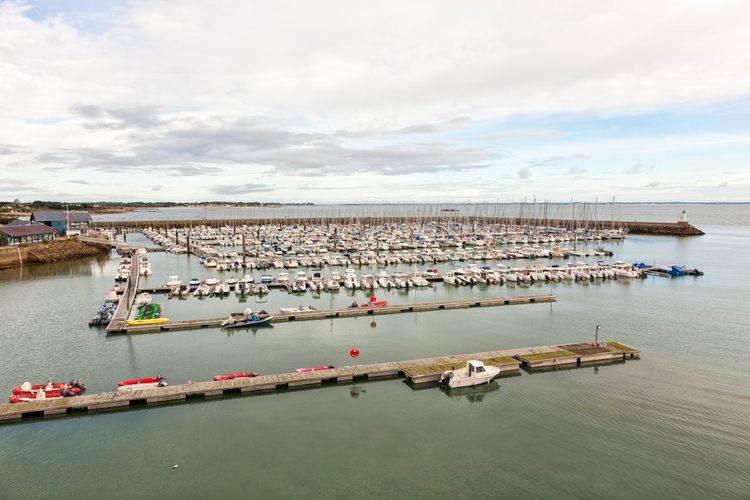
The first morning in Quiberon often begins with a smell of iodine and varnished wood: that of the marina, where the shrouds of several hundred sailboats moored facing the bay clatter in the wind. It is a logical starting point for anyone wanting to understand the seaside resort of Quiberon before venturing onto its wild side.
Port Haliguen is one of the major marinas of southern Brittany, with more than 1,000 moorings split between the outer and inner basins. A few coastal fishing boats share the space with cruising yachts, and it is not unusual to see a fisherman unloading his pots on the quay, between two pleasure boats returning from a regatta.
To enjoy the port without the July–August crowds, come in late morning on a weekday: the terraces around the basin are then occupied mostly by local sailors, and you will have your pick of the best spots to watch boats manoeuvre into the channel.
Quiberon became a seaside resort at the end of the 19th century, after the Auray railway line opened in 1882, when the first hotels sprang up facing the Grande Plage. Before that, the peninsula lived mainly from sardine fishing and canneries: this memory remains visible in the low architecture of the neighbourhoods near the ports and on the stalls where, depending on the season, fresh sardines and oysters from the bay are sold.
Heading south along the coast, about twenty minutes' walk from the port, the pointe du Conguel (Boulevard Chanard, 56170 Quiberon, rated 4.7/5 on Google from 2,377 reviews) forms the south-eastern tip of the peninsula. It is one of the few places where you can take in, in a single glance, the bay of Quiberon on one side and, on a clear day, the silhouettes of Belle-Île, Houat and Hoëdic on the horizon. The site also has a municipal campsite particularly well placed for anyone who wants to sleep with their feet almost in the water.
The peninsula's microclimate often surprises visitors: summers are rarely scorching, tempered by the prevailing winds, while winters remain mild under the ocean's influence. It also explains the presence of a distinctive coastal flora, with heather, marram grass and dune everlasting, visible from the first metres of the coastal path behind the port.
Around the port, several rental shops offer bikes and kayaks by the half-day, a practical option for heading straight on to the Côte Sauvage without going back through the town centre. Expect to pay around 15 to 20 euros for four hours on a regular bike, a little more for an electric model.
This is precisely the area where our Ryo audio-guided tour of Quiberon begins: the walking loop links Port Haliguen to the pointe du Conguel, with anecdotes about sardine fishing and the town's tourism boom that few printed guides tell in such detail. That way you fill the first morning without opening a single map.
If you only have one morning for this area, focus on the sequence of port, coastal promenade, then headland: a route of a few kilometres, mostly flat, that ends with one of the finest viewpoints over the bay before heading off to the Côte Sauvage in the afternoon.
Day 1: The Côte Sauvage on Foot or by Bike
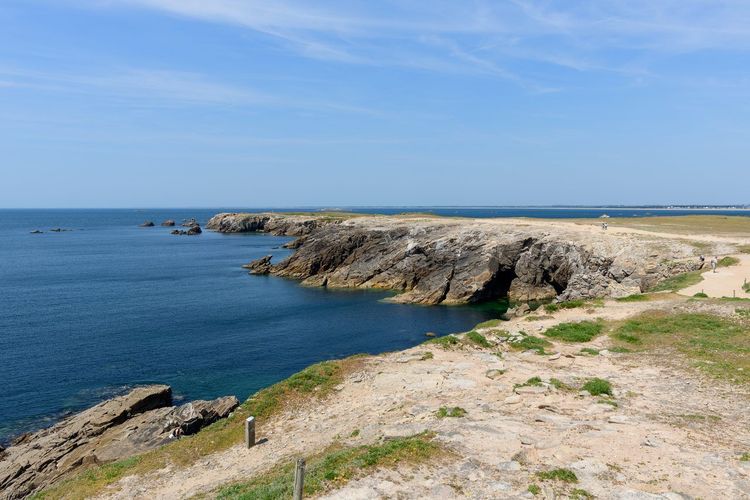
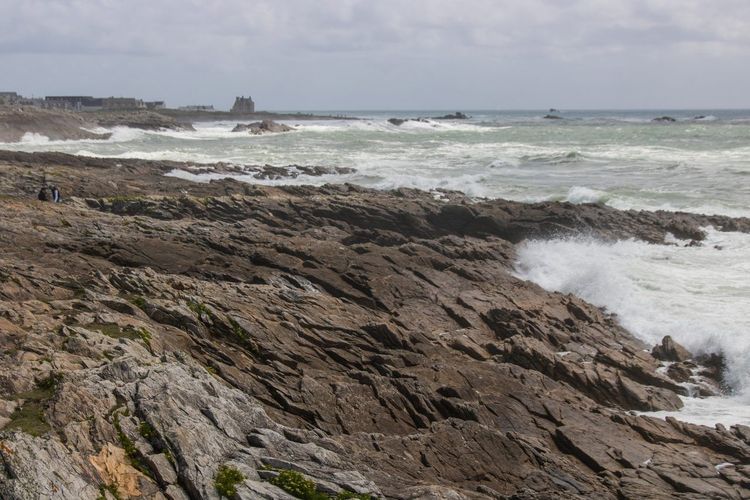
The Côte Sauvage owes its reputation to shipwrecks: for centuries, the reefs of the western shore trapped ships, and the peninsula's inhabitants readily collected whatever the sea cast up on the rocks. Today, the place's reputation rests more on its landscapes than on its dangers, even though the ocean still sets the rules here.
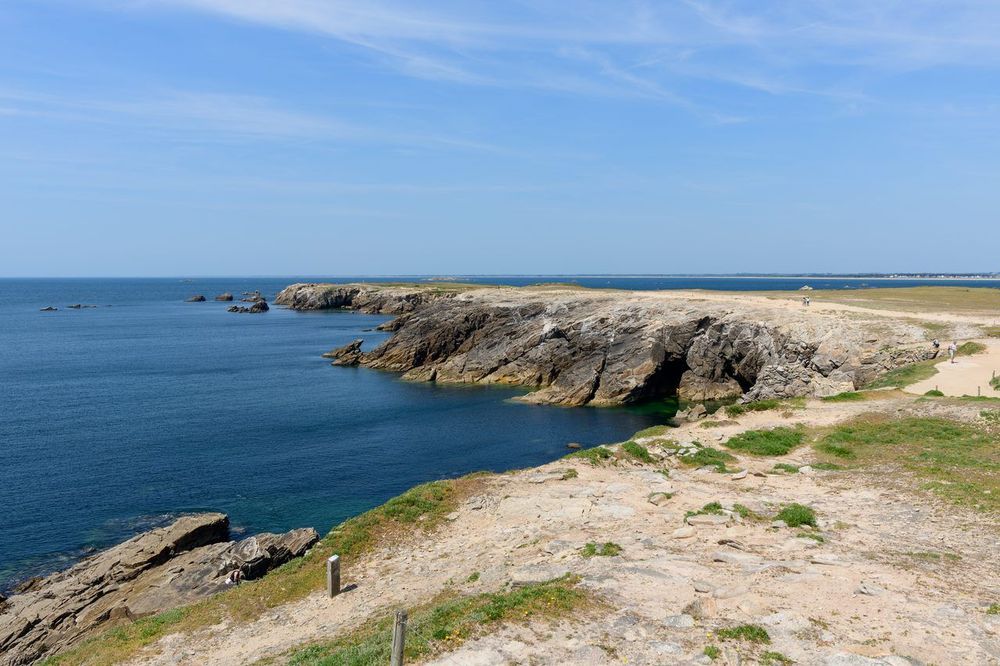
The ribbon of cliffs of the Côte Sauvage of Quiberon stretches for about ten kilometres along the west shore, from Penthièvre and Portivy in the north to the outskirts of Port Maria in the south, at the pointe de Beg-er-Lann. The terrain is unusual for southern Brittany: granite blocks fractured into needles, sea caves visible at low tide, and hollows where the foam rushes in with a dull roar that carries far in a westerly wind.
Swimming is prohibited along almost the entire stretch, as the signs planted along the road remind visitors: violent currents, undertows and breaking waves that strike without warning have caused many drownings. Admire the Côte Sauvage from the higher paths rather than from the wet rocks below.
In the north, in the municipality of Saint-Pierre-Quiberon, the pointe du Percho (Côte Sauvage, 56170 Quiberon, rated 4.8/5 on Google from 699 reviews) is one of the most photographed spots in the area, with its rocky islets detached from the coast and, on a clear day, a view that reaches as far as Belle-Île. At low tide, you can walk to the neighbouring islet, but keep an eye on the time the tide comes back in.
The section of the GR 34 that runs along the Côte Sauvage is among the busiest parts of the customs-officers' path in southern Brittany. Allow about 2.5 to 3 hours to cover the ten or so kilometres between Portivy and Port Maria at a leisurely pace, with several escape routes to the road if the weather turns along the way.
By bike, the coastal road that runs alongside the path takes a little under an hour one way, photo stops included. It is open to cars, and in high season it is better to go in the early morning or at the end of the day, when traffic eases and the low light makes the cliffs glow.
Fans of water sports will find enough to fill a whole afternoon: surfing and bodyboarding at the Penthièvre and Portivy spots when the swell allows, sand yachting on the large hard-sand beaches on the isthmus side, and kitesurfing as soon as the wind picks up. Several schools offer half-day introductory sessions for beginners, supervised according to the day's conditions.
Sunset seen from the heights of the Côte Sauvage remains a highlight: settle in a good half hour before the official time to enjoy the golden light on the granite, and bring a windbreaker even in midsummer.
One stop on the Ryo audio-guided tour falls precisely on this stretch, with commentary devoted to the shipwrecks that forged the legend of the coast: you get the story in your ear at the exact moment you are looking at the reefs responsible.
The Most Beautiful Beaches in Quiberon
Quiberon has the particularity of offering two opposite kinds of beach within just a few kilometres: on one side the Grande Plage, sheltered and family-friendly, on the other the coves of the Côte Sauvage where the swell commands respect.
The Grande Plage of Quiberon unfurls its fine sand in front of the town centre, lifeguarded in season and lined with shops, cafés and beach clubs for children. It is the easiest beach for a family swim, with a gentle slope and water that stays relatively calm thanks to its orientation towards the bay.
Avoid the middle of the afternoon in July–August if you are looking for peace and quiet: the Grande Plage absorbs most of the summer crowds. Early in the morning or at the end of the day, it returns to a much calmer rhythm, ideal for a walk or a swim without too many people.
On the exposed shore, the beach and arch at Port-Blanc offer a radically different setting: a cove tucked between two rocky headlands, guarded by a natural arch sculpted by erosion. The spot attracts photographers at sunrise as much as surfers when the swell arrives from the west. Do not swim here: as everywhere on this shore, the currents are treacherous.
A little further south, the beach at Port Bara (Côte Sauvage, 56170 Quiberon, rated 4.8/5 on Google from 921 reviews) completes this trio of wild coves, with granite blocks framing a more secluded stretch of sand. It lends itself to contemplation and picnics rather than swimming: check the day's conditions with the tourist office before going near the water.
For surfing, the Penthièvre beaches at the entrance to the peninsula are the most generous with waves while still being lifeguarded in summer, whereas the Grande Plage and the bay beaches, around Port Haliguen and Saint-Julien, are better suited to relaxed swimming or first attempts at paddleboarding.
Depending on the day's prevailing wind, locals easily flip their beach plan: easterly wind, head for the Côte Sauvage where the ocean calms down a little; westerly wind, fall back on the sheltered beaches of the bay. A quick look at the marine forecast before setting out avoids a lot of disappointment.
Day 2: Town Centre, Port Maria and Breton Treats
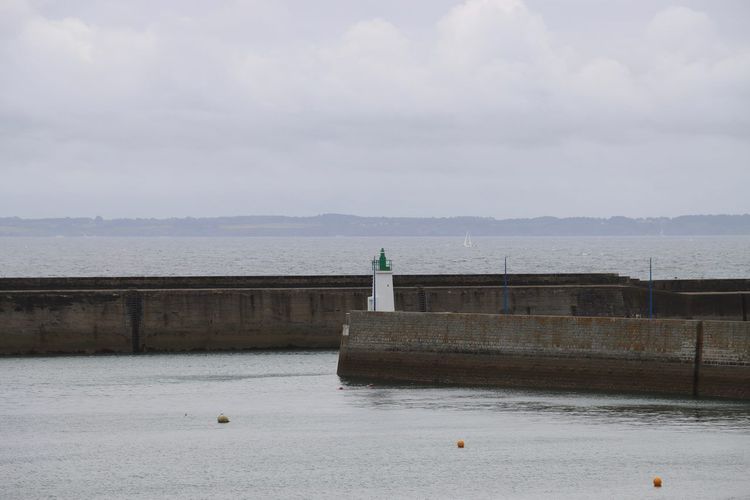
The second day changes pace completely: head for the heart of town, its shopping streets and its historic fishing port, for a more urban morning after a day in the open air.
The town centre of Quiberon is easy to explore on foot from the station or the seafront: the rue de Verdun and the adjoining streets are packed with crêperies, nautical clothing shops and local producers' stalls, in an atmosphere that stays lively well beyond summer, unlike many seaside resorts that close in the off-season.
Port Maria (56170 Quiberon, rated 4.5/5 on Google from 1,392 reviews), just south-west of the centre, lived for a long time from sardine fishing before becoming the main departure point for Belle-Île, Houat and Hoëdic. Fishing boats still land their catch here, and it is not unusual to see langoustines and line-caught sea bass unloaded directly onto the quay, while Compagnie Océane vessels manoeuvre a few metres away.
If you enjoy watching port life, come early in the morning in season, when the fishermen return while the first passengers are already boarding for the islands. Outside that window, Port Maria takes on a more relaxed feel, turned towards the terraces of the fish restaurants lining the quay.
It is impossible to cross Quiberon without passing a shop selling niniches, those long caramel lollipops. The recipe was developed in 1936 by the confectioner Raymond Audebert, who set up his factory on the peninsula in 1946: the Maison d'Armorine has carried on this speciality ever since, and it has become a local symbol almost as recognisable as the Côte Sauvage. Also worth trying is salidou, a salted butter caramel cream that you spread on a crêpe or bring home in a jar in your suitcase.
As for Breton specialities to taste on the spot, the sardine remains king: fresh and grilled on a terrace, as rillettes on a slice of bread, or in a vintage tin from the La Belle-Iloise cannery, born in Quiberon in 1932, to take home. Buckwheat galettes, kouign-amann and oysters from the bay of Quiberon round out a local menu that deserves at least one full meal during your stay.
For the afternoon of the second day, a simple sequence works well: lunch at the port, a digestive stroll along the promenade bordering the Grande Plage, then a return to Port Haliguen through the small residential streets, where Belle Époque villas recall the resort's golden age. You can also rent a bike for the half-day and push on to the villages of Kerné and Kervihan, then return via the Manémeur menhirs before dinner. The loop is short, flat and doable with children, making it a good transition between the bustle of the centre and the calm of the moorland.
This fishing-port atmosphere is told by the Ryo audio guide to Quiberon with a stop devoted to the golden age of the sardine and to the port's conversion to tourism and the connection to the islands: you will never look at the quays of Port Maria in the same way again.
Menhirs and Historic Villages of the Peninsula
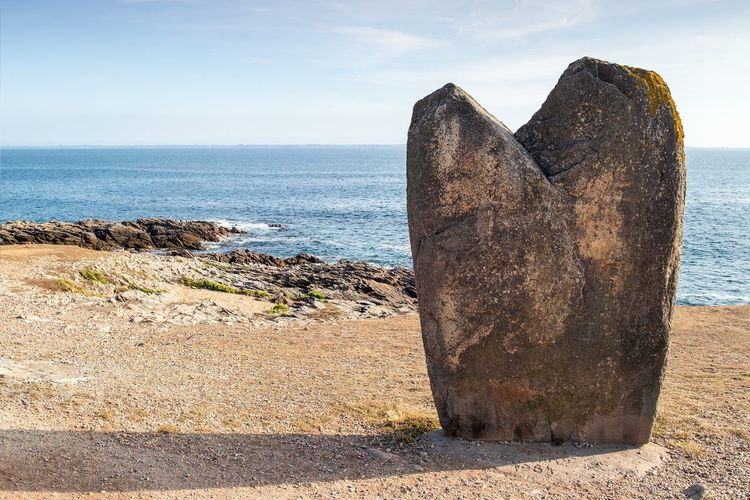
The Quiberon peninsula is not just about its beaches: it also preserves a megalithic and military heritage that tells a story far older than the seaside villas of the waterfront.
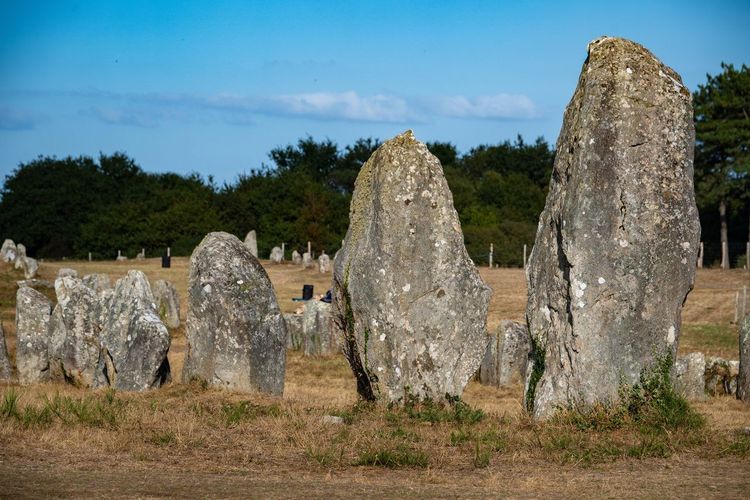
The menhirs of Quiberon, less well known than their cousins in Carnac, stand in small groups on the moorland, such as the Manémeur alignments near Port Haliguen, or those of Kerbourgnec in Saint-Pierre-Quiberon. They are attributed to the Neolithic period, between 4500 and 2000 BCE, though their exact function is not agreed upon by archaeologists: astronomical markers, burial sites or ritual landmarks, the hypotheses remain numerous.
Several historic villages of the peninsula, such as Kerné, Kervihan or Portivy, have kept their layout of low granite houses, huddled close together to withstand winter storms. Strolling through them late in the afternoon, away from the pace of the seafront, gives a more authentic picture of local life before the tourism boom.
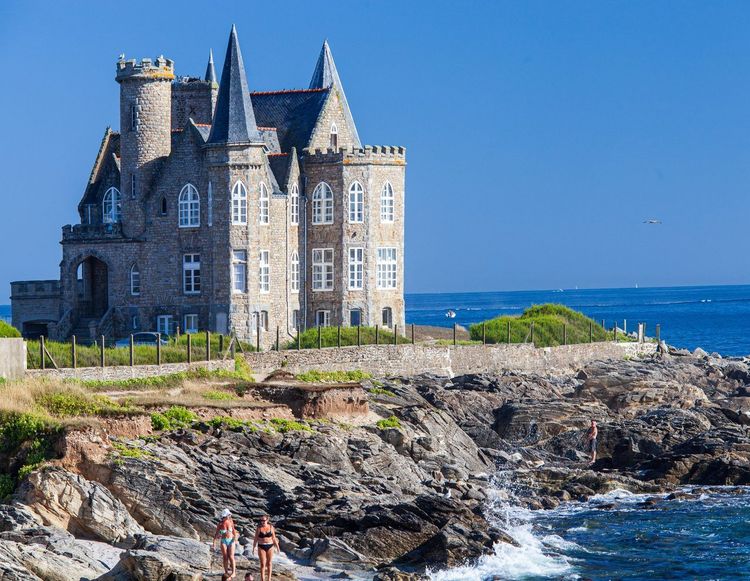
The château de Turpault, perched on the pointe de Beg-er-Lann at the southern end of the Côte Sauvage, surprises with its Anglo-medieval silhouette of turrets and battlements. It was built between 1904 and 1910 for Georges Turpault, a textile industrialist from Cholet who fell for the site. A private property, it cannot be visited, but remains an unmissable landmark from the coastal path and the road to Port Maria.
At the other end of the peninsula, the fort de Penthièvre (D768, 56510 Saint-Pierre-Quiberon, rated 4.5/5 on Google from 981 reviews) and its dune lock the isthmus that connects Quiberon to the mainland. Its construction began in 1747, at the instigation of the duc de Penthièvre, governor of Brittany. In 1795, it fell into the hands of the royalists who landed during the Quiberon expedition, before Hoche's troops retook it. Even darker, 59 members of the Resistance were executed here by the Germans between April and July 1944; a memorial pays tribute to them by the roadside. The fort remains a military site and cannot be visited.
The Ryo audio guide also pauses at these standing stones, between archaeological hypotheses and Breton legends of petrified soldiers or dancers: a lively way to approach a heritage that, without this context, often remains enigmatic for the passing visitor.
The Tire-Bouchon, the Little Train of the Dunes
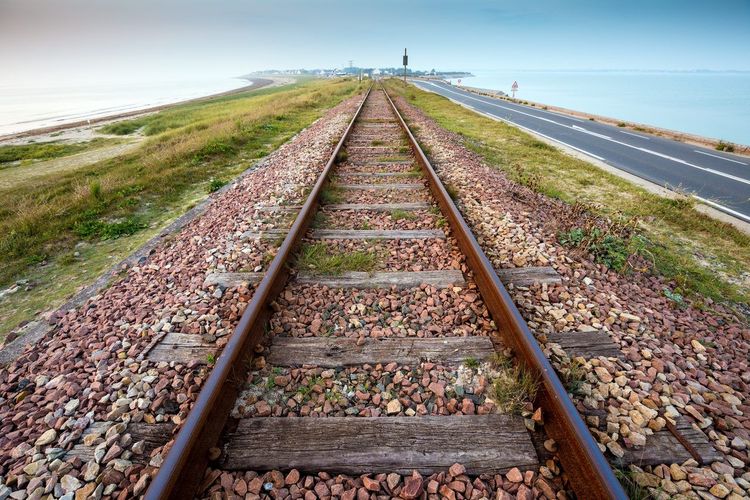
The nickname may raise a smile, but it says everything about the problem it solves: the Tire-Bouchon is the seasonal train linking Auray to Quiberon, winding between dunes and pine groves, and its name ("corkscrew") alludes to the traffic jams it lets you avoid on the peninsula's only road.
The 27 km line was inaugurated on 24 July 1882 and played a decisive role in Quiberon's rise as a seaside resort. Today, the Tire-Bouchon runs in July and August, as well as on certain weekends in late June and early September, with stops at Plouharnel, Penthièvre and Saint-Pierre-Quiberon. Allow about forty minutes for the journey and a ticket costing just a few euros, much cheaper than a day's parking in midsummer.
It is the ideal alternative for visiting Quiberon without a car: you drop your suitcase at your accommodation, and the train takes you back to the peninsula without suffering the queue of cars on the isthmus on changeover Saturdays. It also lets you reach the Penthièvre beaches for a half-day of surfing.
The Ryo tour evokes this historic route and how it brought the first Belle Époque holidaymakers to the tip of the peninsula, before the automobile took over.
Thalassotherapy and Wellness Facing the Ocean
After a day's walk on the Côte Sauvage, many visitors give in to the temptation of a thalasso break, a local institution for over half a century.
Quiberon popularised modern thalassotherapy in France: it was here that the cycling champion Louison Bobet founded his institute in 1964, after having himself benefited from seawater treatments to recover from a serious accident. The boulevard running alongside the site now bears his name.
The seafront establishments offer half-day treatments without requiring an accommodation booking: hydromassage bath, seaweed wrap or simply access to the water area with ocean views. A practical option if you are only spending 2 days on site and want to slip a relaxing interlude between two walks.
Book your slot in advance if possible: the institutes fill up quickly in high season and on long weekends, and à la carte treatments go faster than full-day packages.
The peninsula's air, laden with sea spray, also contributes to the place's wellness reputation: as early as the end of the 19th century, travel guides were already praising the benefits of a stay in Quiberon's fresh air, long before the word thalassotherapy entered everyday language.
If thalasso does not tempt you, other ways to unwind exist on the peninsula without spending a euro: a reading break facing the open sea on the benches of the pointe du Conguel, a barefoot walk at low tide on the Saint-Julien beach, or a picnic on the heights of Port-Blanc at the end of the day. Simply moving from one shore to the other, a few minutes by bike, is often enough to change the atmosphere and the pace.
Setting Sail for Belle-Île, Houat and Hoëdic
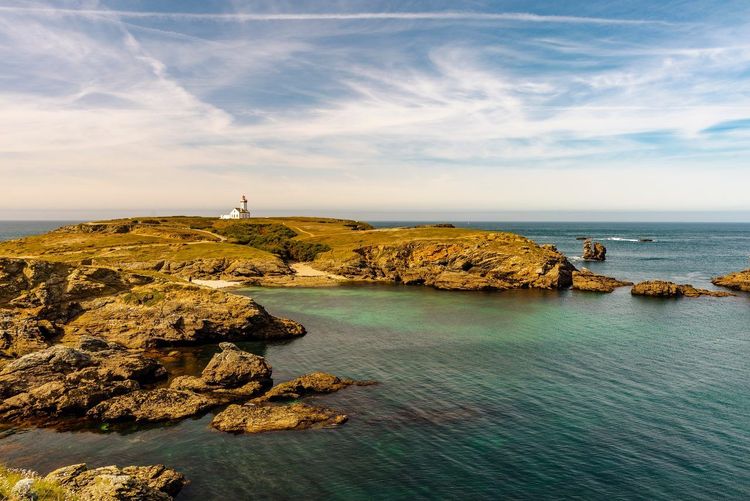
If your 2-day programme leaves a few extra hours, Port Maria opens directly onto three islands, each worth a different kind of getaway.
Belle-Île-en-Mer, the largest and most visited, is reached in about 45 minutes of crossing to Le Palais. The Vauban citadel, the Port-Coton needles and the pointe des Poulains alone justify a day, even without a car on site: electric bikes and buses are easy to find as you step off the boat.
Houat, smaller and more secluded, is reached in about forty minutes. The island can be explored entirely on foot in a few hours, between the large beach of Treac'h er Goured, deserted coves and a single village nestled above the port.
Hoëdic, a little further out, completes this island trio with a timeless atmosphere: about a hundred year-round residents, a 19th-century fort, flowering moorland and beaches you often have to yourself outside the height of summer.
All these crossings leave from Port Maria, operated mainly by Compagnie Océane. Book several days in advance in July–August: morning departures to Belle-Île are regularly full, and you need to plan on parking in the park-and-ride lots at the entrance to town.
For a strict 2-day programme on the peninsula, an island excursion remains optional: it is better to plan it as an extra day rather than force it at the expense of the Côte Sauvage or the beaches, which remain the heart of the Quiberon experience.
If you still want a taste of the islands without sacrificing the peninsula, the most realistic option is to take the first boat of the second day to Houat, closer and smaller than Belle-Île: you walk around it in the morning, have lunch facing the port, and return in early afternoon to spend the end of the day in Port Maria and the town centre. Just remember to check the return times the day before, as they vary by season and day of the week, and to bring water: supply points are rare on the island paths.
Where to Stay, How to Get Around and What Budget to Plan
How to get to Quiberon depends mostly on the season. By car, the peninsula is reached via the D768 from Auray, with a real risk of traffic jams on the Penthièvre isthmus on Saturdays in July–August. By train, the TGV serves Auray from Paris in a little over three hours, then a connecting coach or the Tire-Bouchon reaches Quiberon: an option that lets you visit Quiberon without a car without too much constraint, as long as you time the schedules carefully.
Once there, reaching your accommodation without a car remains easy in the centre and around the ports, as the peninsula is compact and largely flat. For campsites set away towards the Côte Sauvage or the pointe du Conguel, a bike rented on arrival makes getting around much simpler, as local buses are infrequent outside the summer period.
Where to stay in Quiberon: seafront hotels charge prices that climb quickly in high season, often between 120 and 250 euros a night for a double room with a sea view. Establishments in the town centre, a few streets from the beach, remain more affordable while keeping pedestrian access to the Grande Plage and Port Maria.
For a tighter budget, guesthouses and small hotels around Port Haliguen or Saint-Pierre-Quiberon have more reasonable rates, generally between 70 and 110 euros a night. Camping remains the cheapest and most popular option on the peninsula: several sites, including the one at the pointe du Conguel, offer pitches and mobile homes at affordable rates outside July–August, with advance booking essential in high season.
As for the budget for 2 days, expect roughly 150 to 300 euros per person for mid-range accommodation and meals on site, not including transport to get there. Outdoor activities (beaches, coastal hiking, villages, menhirs) cost nothing and offset a thalasso session or an island crossing added to the programme.
Once settled in, there is no need to take the car again to explore: the Ryo audio-guided walk of Quiberon starts from your phone and can be followed on foot from most accommodation in the centre and the port, at your own pace, without depending on the schedule of a guide or a group.
Carnac and La Trinité-sur-Mer: Extending the Escape
If an extra day frees up, two neighbouring towns deserve to be added to your stay on the peninsula.
Carnac, about twenty minutes' drive from Quiberon, is home to one of the largest megalithic complexes in the world: more than 3,000 menhirs aligned over about 4 km, between Le Ménec, Kermario and Kerlescan. From April to September, the main plots are protected and can be discovered on guided tours, while access is freer in winter; the Maison des Mégalithes, facing Le Ménec, serves as a starting point.
La Trinité-sur-Mer, a little further along the coast road, cultivates a different image: that of a marina renowned in the world of offshore racing, from which many famous skippers have set sail. The terraces lining the port, between seafood restaurants and nautical equipment shops, offer a chicer atmosphere than the more down-to-earth feel of Quiberon.
Plan on half a day for each of the two stops if you really want to take your time: a morning among the Carnac alignments (Route des Alignements, 56340 Carnac, rated 4.4/5 on Google from 22,291 reviews), followed by lunch on a terrace in La Trinité-sur-Mer, naturally completes a 2-day stay without distorting the programme centred on the peninsula.
These two stops work just as well on arrival as on departure towards Vannes or Lorient: less than 30 minutes' drive separates each of them from Quiberon, summer traffic jams aside.



FAQ
How many days do you need to visit Quiberon?
Two days are enough to cover the essentials: the Côte Sauvage, the main beaches, the town centre and Port Maria, plus an option for heritage sites or thalassotherapy. To add a trip to Belle-Île or an extension to Carnac without rushing, plan on 3 days instead.
How do you get to Quiberon without a car?
The train stops at Auray, then a connecting coach or, in summer, the Tire-Bouchon train reaches Quiberon in about 40 minutes. Once there, the peninsula is easy to explore on foot or by bike, as distances between the main sites remain short.
What is the most beautiful beach in Quiberon?
It depends on what you are looking for: the Grande Plage for a relaxed family swim, the beach and arch at Port-Blanc for the most spectacular setting (no swimming), and Port Bara for the wildest atmosphere.
Where should you stay in Quiberon for a weekend?
The town centre and the Port Haliguen area have most of the hotel options, with prices rising sharply in July and August. Camping remains the cheapest option, especially near the pointe du Conguel, as long as you book early.
Can you go to Belle-Île-en-Mer from Quiberon?
Yes, the crossing from Port Maria takes about 45 minutes with Compagnie Océane. It is the most frequent connection from the peninsula to the islands, with several departures a day in season, but booking ahead is still recommended in summer.
What is the best time to visit Quiberon?
May–June and September offer the best balance between mild weather and manageable crowds, with gentler accommodation prices than in high summer. July–August guarantee a lively atmosphere but heavy crowds on the Grande Plage and the access roads.
What budget should you plan for 2 days in Quiberon?
Plan on 150 to 300 euros per person for accommodation and meals on a mid-range basis, not including transport to the peninsula. Since outdoor activities are free, a tight budget is possible by choosing camping and picnics facing the ocean.
Conclusion
Two days in Quiberon are enough to understand why the peninsula draws so many people well beyond the summer season: few places in southern Brittany offer such a contrast between a sheltered bay ideal for swimming and a Côte Sauvage that commands respect with every tide. Between Port Haliguen, the pointe du Conguel, the forgotten menhirs of the moorland and a niniche enjoyed at the port, the programme never lacks rhythm, even in such a short format.
To connect all these places without wasting time finding your way, the Ryo audio-guided tour of Quiberon remains the simplest solution: a guided walking loop to follow between beach breaks, which puts the maritime and megalithic history of the peninsula into context. You will leave with more than just a collection of photos of the Côte Sauvage.