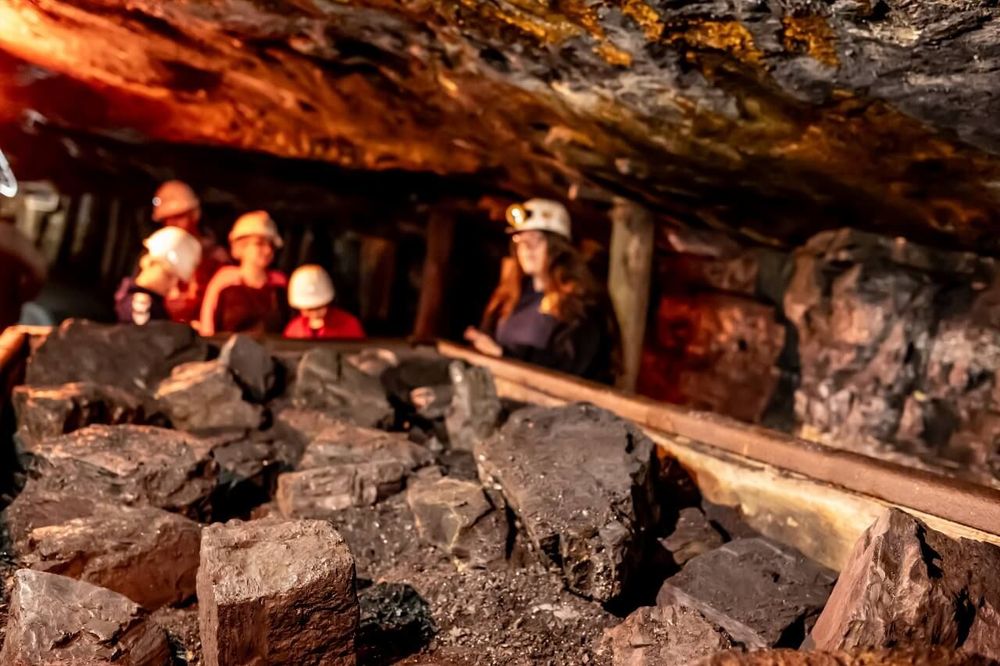
© Shutterstock
 Votre guide Ryo
Saint-Étienne for Free: 15 Free Activities in 2026
Saint-Étienne still carries a reputation as a stern city, inherited from its mines and factories. Yet when it comes to free activities, Saint-Étienne more than holds its own against far more celebrated destinations: it is home to one of the most influential design museums in Europe, and remains the only French city designated a UNESCO Creative City of Design since 2010. Add one of the continent's most comprehensive mining park-museums and well-maintained urban parks spanning dozens of hectares, all accessible for a few euros or nothing at all. There is no shortage of great finds in this city — they are simply less publicised than elsewhere. To explore the city at your own pace and understand what makes it unique, the Ryo audio guide for Saint-Étienne takes you across 3.6 km in 19 audio stops, from industrial roots to 21st-century creative ambitions.
A park-museum built on former mine shafts, two national museums with free admission on the first Sunday of the month, a district of design studios in permanent reinvention, 19th-century covered passades, and the Parc naturel régional du Pilat just thirty kilometres away: here are fifteen ways to discover Saint-Étienne without spending a penny.
The Parc-Musée de la Mine de Couriot
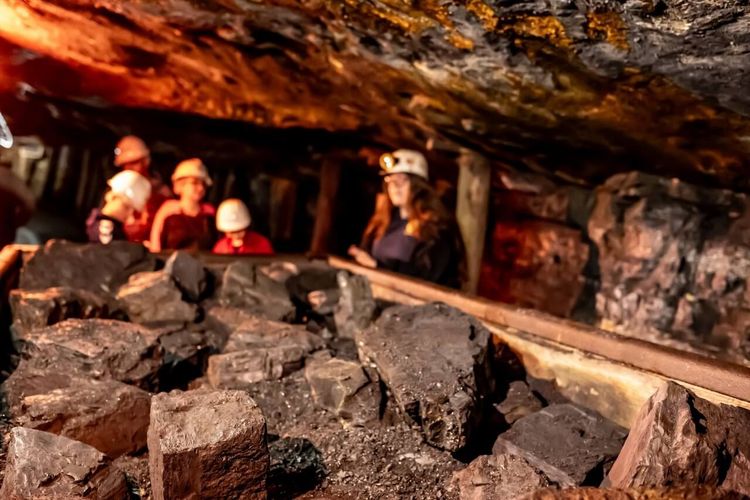
No site captures Saint-Étienne better than the Parc-Musée de la Mine de Couriot (3 Boulevard Franchet d'Esperey, 42000 Saint-Étienne, rated 4.6/5 on Google from 2,930 reviews). Built on the site of a former mine shaft closed in 1973, it is one of the most comprehensive industrial museums in France, and the only major French city to have preserved the entire surface site in near-original condition. The 35-metre metal headframe still dominates the Couriot-Tarentaize district and remains the city's most recognisable silhouette.
The outdoor park is free to visit year-round. You walk past the machine room, the lamp room where miners collected their lamps before descending, the hanging room where work clothes were left to dry suspended from the ceiling after each shift, and the equipment maintenance workshops. The metal structures, mine carts, cable drums, and technical buildings have a rare authenticity: the site has not been over-restored, and this restraint reinforces the atmosphere of a place that has not quite forgotten what it once was.
The reconstruction of an underground gallery is the highlight of the indoor route. Mannequins positioned in various working poses illustrate the real conditions of extraction: standing in large-section galleries, kneeling or lying flat in narrow seams where the coal vein was sometimes only forty centimetres wide. The confined atmosphere, reduced lighting, and recorded sounds create an immersion serious enough for visitors with no connection to the mining world to understand what a working day in those conditions actually meant.
Free admission on the first Sunday of every month. On other days, full price €8, and admission is free for children under 12. Closed on Mondays. Allow 1h30 to 2h for a full visit, longer on event days or with children. The museum café, set in a former workshop, serves light refreshments at reasonable prices.
A tip: come in the morning, as visitor numbers are noticeably lower than in the early afternoon during school holidays. And stay for the late-afternoon light on the metal structures — it completely changes the atmosphere of the park.
The Musée d'Art et d'Industrie
Founded in 1833, the Musée d'Art et d'Industrie (2 Place Louis Comte, 42000 Saint-Étienne, rated 4.5/5 on Google from 1,049 reviews) (MAI) predates the city's great industrial era and yet is inseparable from it. Its distinctive approach is to openly embrace the link between artistic creation and industrial production, organising its collections around the three industries that built the city's reputation.
The arms collection is one of the most comprehensive in Europe. From 16th-century arquebus rifles and flintlock pistols to 19th-century service revolvers, it traces five centuries of Saint-Étienne gunsmithing: Saint-Étienne was for a long time the principal supplier to the French army, and the pieces on display have a mechanical precision that design enthusiasts will appreciate as much as military history buffs. The silk ribbon collection reveals a little-known industry: at its peak, Saint-Étienne produced more than half of the silk ribbons exported by France. The Jacquard looms on display, some still in working order, give a sense of the technical sophistication of this textile. The third collection, dedicated to cycles, traces the history of the velocipede from its earliest forms to early 20th-century racing bicycles — some of the prototypes on display competed in the first editions of the Tour de France.
Free admission on the first Sunday of every month. Full price €5. Open Wednesday to Monday. Allow 1h30 for a thorough visit.
The MAMC+: Contemporary Art Without a Ticket
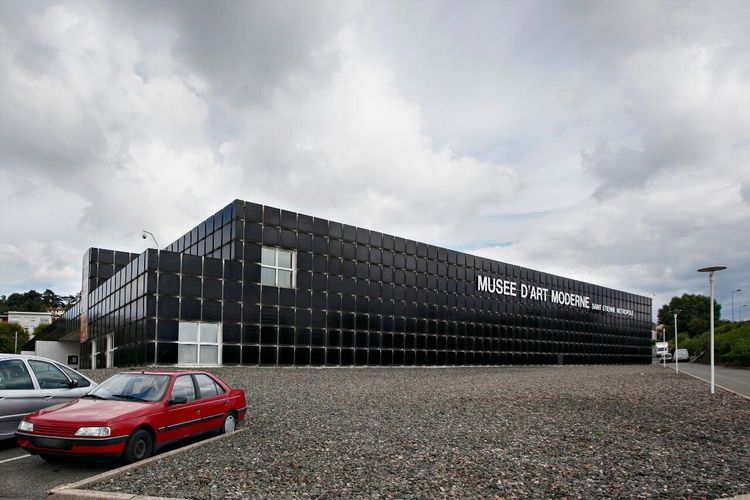
The MAMC+ (Musée d'Art Moderne et Contemporain) is often a surprise for first-time visitors. Located in Saint-Priest-en-Jarez, a commune adjoining Saint-Étienne, it ranks among the largest contemporary art museums in France in terms of its holdings: 18,000 works in total, of which 500 to 600 are on permanent rotation.
The collections span 20th-century art without geographical bias: abstract painting, sculpture, photography, video, and installation sit alongside works by Magritte, Warhol, Hartung, and Dubuffet. Temporary exhibitions, renewed several times a year, explore movements or themes with high-quality scenography. The building itself, designed by architect Didier Guichard, is worth attention: the relationship with natural light in the galleries was designed to highlight each work according to the time of day and the season.
The MAMC+ is accessible from Saint-Étienne in 15 minutes by car or by bus (STAS network, stop 'MAMC'). Free parking on site. Free admission on the first Sunday of the month; full price €8. Closed on Tuesdays.
A simple strategy for making the most of free museum admission in Saint-Étienne: plan your visit on the first Sunday of the month. You can visit the MAI in the morning and the MAMC+ in the afternoon, as both open their doors on that day.
The Manufacture Plaine Achille District
This is Saint-Étienne's most unexpected district and the place to understand its transformation in depth. The Manufacture Plaine Achille is a former national arms factory — some buildings date from the early 19th century — that has been converted since the 2000s into a hub dedicated to design, contemporary creation, and arts education.
The Cité du Design (3 Rue Javelin Pagnon, 42000 Saint-Étienne, rated 4/5 on Google from 435 reviews) is the district's anchor point. Inaugurated in 2009, it occupies the former manufacturing workshops and houses both the École Supérieure d'Art et de Design (ESAD) and an exhibition centre whose La Platine, a large hall of 7,000 m², is regularly open to the public for installations, performances, or open days. The exterior facades and inner courtyard are treated as permanent exhibition spaces: artistic interventions change their appearance with the seasons.
Walking through the district is an activity in its own right. The 19th-century industrial buildings have retained their original proportions alongside contemporary architectural interventions: added glazed roofs, exposed metal structures, walkways between buildings. The rails of former service tracks are still visible in the floors of the inner courtyards. Murals cover some gable walls, commissioned during the urban art festivals that regularly take over the district.
The Saint-Étienne International Design Biennale transforms the district every two years. The next edition, the 14th, is expected in spring 2027: street installations, exhibitions in industrial spaces, and neighbourhood events, a significant portion of which remains open to all. For visitors whose stay can coincide with this event, the Manufacture district will be in an exceptional configuration. La Platine and the Cité du Design also feature among the stops on Ryo's Walking Through a Past That Shaped the Future audio tour, which threads through this same district.
Allow 1h30 to 2h to explore the district without rushing. Come on a weekday to encounter ESAD students working in the glass-fronted studios.
The Place de l'Hôtel de Ville and the Architectural Heritage
The centre of Saint-Étienne is best explored on foot from the place de l'Hôtel de Ville. The town hall itself, built between 1895 and 1902, blends neo-classical style with Renaissance touches in an ensemble that stands in contrast to the image of a strictly functional working-class city. The caryatids on the first-floor windows, the sculpted frieze beneath the cornice, and the central bell tower are worth a few minutes of attention.
From the square, the rue de la République and the boulevard Jules Janin concentrate a significant share of late 19th- and early 20th-century architectural heritage. The former townhouses of wealthy merchants, Art Deco shopfronts, and ornate cast-iron gates reveal a city architecturally richer than one might expect. The cathédrale Saint-Charles-Borromée (1 Rue des Martyrs de Vingré, 42000 Saint-Étienne, rated 4.5/5 on Google from 330 reviews), a few streets away, is an example of flamboyant neo-Gothic whose 70-metre nave asserts itself within the urban fabric. Entry is free.
To place these sites in the context of their industrial history and successive transformations, the Ryo audio guide Sur les traces d'un passé qui invente l'avenir offers 14 audio commentaries over 4.5 km, from mining origins to the contemporary reinventions that today define Saint-Étienne's singular identity. An ideal complement to a free stroll through the city centre streets.
The Place du Peuple and Saint-Étienne's Passades
Saint-Étienne has an architectural feature almost exclusive to France: the passades. These 19th-century covered alleyways, cut through the thickness of buildings to connect two parallel streets, are the direct legacy of merchants and craftsmen who needed to move between their street-facing shops and their back storehouses. Around twenty still remain in the city centre.
Some passades still house local shops on either side. Others have been transformed into informal spaces for artistic expression: murals painted on the walls, installations left by visiting artists, a few shopfronts converted into small galleries. The Passade de la Grand'Rue, the Passade de la Bourse, and the Passade Croix de Mission are the three most accessible for a first circuit. Their entrances are discreet, sometimes marked by a simple street-level sign; a map of the passades is available at the Tourist Office.
The place du Peuple has been the beating heart of old Saint-Étienne since the 18th century. Surrounded by café terraces, food shops, and delicatessens, it hosts a neighbourhood market every morning. The atmosphere here is more working-class and less polished than the neighbouring place de l'Hôtel de Ville — which is precisely what makes it unmissable.
An hour wandering between the place du Peuple and the adjacent passades gives you a reading of Saint-Étienne that no museum can provide: that of a city built quickly, in step with industrialisation, with an architecture that reflects the priority given to production rather than to display.
Saint-Étienne's Urban Parks
Saint-Étienne has several green spaces, each quite different from the others, each worth a visit depending on what you are looking for.
The Parc de l'Europe
The Parc de l'Europe is the main green lung of the city centre, with its 25 hectares of lawns, tree-lined paths, and ponds. A green corridor links the park to several residential districts, making it a soft mobility route used daily by local residents. Pétanque courts, playgrounds, and picnic areas are spread throughout the site.
The park is particularly pleasant in the late afternoon when Saint-Étienne families gather there after school. The ponds attract ducks and the occasional heron, and the varied vegetation makes a walk interesting even outside the peak greenery season. For a picnic, it is the most pleasant spot in the city.
The Parc de Montaud
Less well known to visitors, the Parc de Montaud (Route de Montaud, 42000 Saint-Étienne, rated 4.5/5 on Google from 400 reviews) occupies a hill to the north of the city and offers open views over Saint-Étienne's districts and the first ridges of the Pilat. It is a semi-natural space with waymarked paths rather than a landscaped garden. Well suited to walkers who prefer woodland trails to manicured lawns.
The Jardin des Plantes
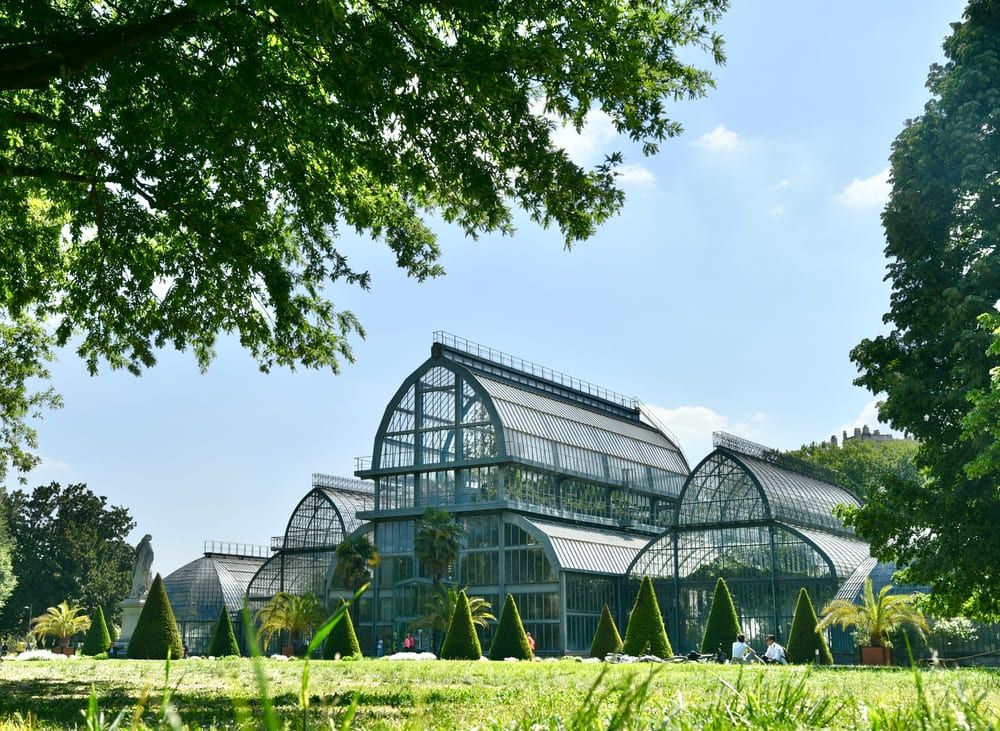
Right in the city centre, the Jardin des Plantes is one of the oldest botanical spaces in the region, founded in the 19th century. Its modest size does not prevent carefully tended collections: classified medicinal plants, a conservatory orchard of old local varieties, and tropical greenhouses open to the public. Admission is free; the visit takes twenty to thirty minutes. Ideal between two museum visits.
Saint-Étienne's Markets
Saint-Étienne's markets are one of the most direct ways to connect with everyday life in the city. Several open-air markets animate different districts on different days of the week, and you can browse them without spending a thing.
The place du Peuple market is held every morning from Tuesday to Saturday. It is the most central market, with a strong presence of producers from the Loire valley and the Pilat valleys: aged goat's cheeses, mountain fruits in season, and locally grown vegetables. The market opens from 7am and begins to wind down around 12:30pm.
The Terrasse market, the largest in size, stretches every Saturday morning over several hundred metres. Clothing, bric-a-brac, food, and everyday goods make up a general market in the image of a working-class city. It is not a tourist market — it is a large-scale neighbourhood market, and that is precisely what makes it worth visiting.
The Marché des Armes (Place Marengo, 42000 Saint-Étienne, rated 4.3/5 on Google from 128 reviews), held at Place Marengo on Wednesday and Friday mornings, draws a loyal clientele for its selection of sustainable producers. Smaller and more specialist, it allows for direct conversation with market gardeners unaccustomed to tourists.
For all these markets: arrive before 10am to find the stalls at their best.
Libraries and Free Culture
The Saint-Étienne library network comprises seven facilities spread across different districts of the city. Access without registration is available to all visitors: you can walk in, read on site, consult digital resources, or attend scheduled activities without needing a library card.
The Tarentaize-Beaubrun library (2 Avenue de la Libération, 42000 Saint-Étienne, rated 4.4/5 on Google from 167 reviews) is the largest in the network. It regularly programmes temporary exhibitions open to all, children's reading sessions, digital workshops, and lectures accessible to everyone. The events calendar is published monthly on the Saint-Étienne Métropole website.
Beyond the libraries, the city's cultural institutions offer occasional free access. Le Fil (contemporary music venue) and the Comédie de Saint-Étienne host open days, public rehearsals, and off-site events throughout their artistic season. The Nuit des Musées in May and the Journées Européennes du Patrimoine in September open normally paid collections for a weekend.
Saint-Étienne's Panoramic Viewpoints
Saint-Étienne is a city of relief, built in a basin surrounded by hills. Several natural vantage points are accessible on foot from the centre with no special equipment.
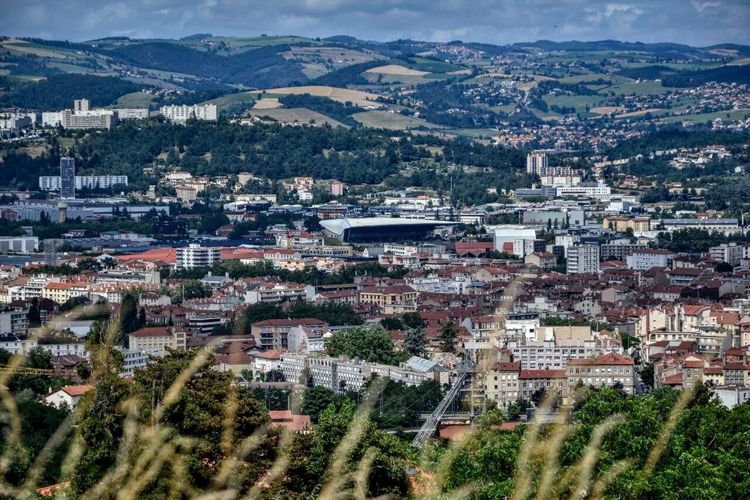
In the Métare district, to the south of the city, the Croix de Mission and its surroundings offer an open view across a large part of the urban area. Industrial structures in the foreground, terraced residential districts in the middle distance, and the first foothills of the Pilat in the background compose a panorama that says much about Saint-Étienne's singular geography.
The Crêt de Roche (Chemin du Crêt de Roche, 42270 Saint-Priest-en-Jarez, rated 5/5 on Google from 4 reviews), perched on the heights of the Villebœuf district, is accessible in twenty-five minutes on foot via a waymarked woodland path. The 360-degree panorama over Saint-Étienne and the Pilat ridges is worth the effort. Walkable year-round with no special equipment outside snowy periods.
For views from the northern heights, the Montreynaud district reveals an unexpected Saint-Étienne: the large housing estates of the 1970s, the tower blocks, and the wooded hills framing them compose an urban image without equal in the region. This is not a postcard viewpoint — it is an honest look at a city that has passed through every transformation of the 20th century without trying to erase them.
Hiking in the Parc du Pilat
Just 30 kilometres south-east of Saint-Étienne, the Parc naturel régional du Pilat offers a natural counterpoint to all urban activities. With 65,000 hectares of conifer forests, upland moorland, and panoramic ridges, this massif provides exceptional hiking terrain, entirely free of charge.
The drive from Saint-Étienne takes 35 to 40 minutes depending on your starting point. Interurban coach lines from the Transports de la Loire network serve several villages in the massif from Saint-Étienne train station, including Le Bessat and Saint-Genest-Malifaux.
The most accessible summit for a first visit is the Crêt de la Perdrix, the massif's highest point at 1,432 metres above sea level. The starting point is Le Bessat, a village reachable by car in 40 minutes from central Saint-Étienne. The round-trip hike to the summit covers 8 km with 350 metres of positive elevation gain, a 3-hour outing suited to intermediate-level walkers.
In clear weather, the panorama from the Crêt de la Perdrix is one of the widest in the Massif Central. The Alps stretch to the east; Mont-Blanc can be made out at nearly 200 km in optimal conditions. Below, the Forez plain and Saint-Étienne form a striking contrast with the mineral world of the ridges.
For a shorter outing, the Col de la Croix de Chaubouret (1,130 m) is a 25-minute drive from Saint-Étienne and offers several loops of 5 to 10 km from the car park. An ideal starting point for families with children aged 5–6 and above, or for hikers who do not wish to tackle a long climb.
The Grangent dam, about twenty kilometres north-west of Saint-Étienne, is worth a detour for lovers of gorge landscapes. The Loire carves a canyon through the granite here, with a medieval castle perched on an artificial island created when the dam was filled in the 1950s. The belvedere overlooking the gorge is freely accessible from the Saint-Victor-sur-Loire car park.
The combination of Saint-Étienne and the Pilat is one of the city's strongest assets: few conurbations of 400,000 inhabitants can offer, within the same day, an internationally renowned design museum and a high-altitude hike with views of the Alps.
Discovering Saint-Étienne with Ryo
To explore Saint-Étienne in a structured way without depending on a paid guide or the schedules of group tours, the Ryo app offers two distinct audio-guided routes tailored to different interests.
The Ryo audio walking tour of Saint-Étienne covers the 20 major points of interest in the city centre over 3.6 km in 1h30 of walking. Historic squares, industrial architecture, districts in transition: the audio commentary contextualises each site with a narrative that goes beyond tourist anecdote. The route triggers automatically as you approach each point of interest, with no need to interact with your phone while walking.
The Ryo audio guide Sur les traces d'un passé qui invente l'avenir offers a different approach: 14 audio stops over 4.5 km, focused on industrial history and contemporary reinventions. It is the ideal complement to a day that takes you from the Parc-Musée de la Mine to the Manufacture Plaine Achille district: the Ryo commentaries connect these places within a coherent reading of what Saint-Étienne once was and what it is building today.
Both routes work at your own pace: pause in a park, retrace your steps, skip a stop as the mood takes you. The visit stays structured without ever feeling constrained.
FAQ
Are there truly free museums in Saint-Étienne?
Several museums offer completely free admission on the first Sunday of every month: the Parc-Musée de la Mine de Couriot, the Musée d'Art et d'Industrie, and the MAMC+. The municipal library network is open to all year-round with no prior registration. Some exhibition spaces at the Cité du Design and the Manufacture Plaine Achille district are also freely accessible outside the Biennale. Children under 12 enjoy permanent free admission at the Parc-Musée de la Mine.
What can you do for free in Saint-Étienne on a Sunday?
The first Sunday of the month sees the MAI, the MAMC+, and the Parc-Musée de la Mine all open simultaneously with no ticket required — a full cultural day at no cost. On other Sundays, the Parc de l'Europe and the Parc de Montaud are freely accessible. A stroll through the passades requires no timetable. The Crêt de Roche, reachable on foot from the Villebœuf district, offers a panoramic view after a 25-minute walk. Saint-Étienne's markets are held mainly on weekdays and Saturday mornings.
How do you get to the Parc du Pilat from Saint-Étienne without a car?
Interurban coach lines from the Transports de la Loire network serve several villages in the Pilat from Saint-Étienne train station: Le Bessat, Saint-Genest-Malifaux, and Bourg-Argental are accessible by public transport, with limited frequency outside summer. For the Crêt de la Perdrix, an early-morning coach departure from the station is possible on weekends in season. Without a car, Saint-Victor-sur-Loire (Grangent dam) is the easiest option to reach, with occasional shuttle services running on certain spring weekends.
What is a passade in Saint-Étienne and where can you find them?
A passade is a covered alleyway cut through the thickness of 19th-century buildings to connect two parallel streets. An almost exclusive feature of Saint-Étienne, these pedestrian passages were originally used by merchants and craftsmen to access their back workshops. Today, some house small shops; others have become informal spaces for artistic expression. The Passade de la Grand'Rue, the Passade de la Bourse, and the Passade Croix de Mission are the three most accessible. A map of the passades is available at the Saint-Étienne Tourist Office.
Does the Design Biennale offer free events?
The Saint-Étienne International Design Biennale mixes paid admission with moments open to all. Installations in the public spaces of the Manufacture Plaine Achille district, neighbourhood events, and open studio days are generally freely accessible. The main exhibition at the Cité du Design remains ticketed. The next edition, the 14th, is expected in spring 2027: the full programme will be published on the official Biennale website closer to the event.
Are there free activities for families in Saint-Étienne?
Several options are particularly suited to families. The Parc de l'Europe has playgrounds and a pleasant picnic area. The Parc-Musée de la Mine captivates children with its outdoor industrial installations, and admission is permanently free for children under 12. Libraries offer children's workshops on simple registration. For families with children aged 5 and up, the short loops around the Col de la Croix de Chaubouret in the Pilat make for a memorable outing at nothing more than the cost of transport.
Conclusion
Saint-Étienne proves that a city can be generous without that generosity being accidental. National-level museums that open their doors one Sunday a month, carefully maintained parks, a creative district in permanent ferment, covered passades unique in France, and a natural park thirty kilometres away: the city has built a cultural and natural offering accessible to every budget.
To connect these places within a coherent reading of the city, the Ryo audio guide for Saint-Étienne accompanies your visit across 19 commented stops, covering the industrial history, architecture, and contemporary transformations of a city that has invented everything — and continues to innovate.