© Shutterstock
 Votre guide Ryo
Visiting Saint-Nazaire Solo in 2026: Industrial History and the Open Sea
Visiting Saint-Nazaire solo means letting go of the usual tourist landmarks: no picturesque old town to admire in silence, but a rebuilt skyline of raw concrete facing the Loire estuary. The city was 85% destroyed during the Second World War, and it is precisely this reconstruction that makes it so legible and so easy to explore alone, with no need for a human guide to navigate its grid-plan streets. The Ryo audio guide tour of Saint-Nazaire follows this historical thread, headphones on, at whatever time you choose and without waiting for anyone.
A solo stay here comes down to a few vivid images: a Cold War submarine moored a stone's throw from the city center, a shipyard that builds the world's largest cruise ships in the open air, a beach where Jacques Tati filmed Les Vacances de Monsieur Hulot, and the second-largest marsh in France just twenty kilometers away. Balancing industrial heritage and the open sea, Saint-Nazaire ticks the boxes for a well-conceived solo destination.
Understanding the History of Saint-Nazaire, a City Rebuilt in Concrete and Steel
Saint-Nazaire in brief: around 70,000 inhabitants, a port that took off in the mid-19th century to ease the load on Nantes, and a skyline where almost nothing is more than 80 years old. The port grew quickly, driven by the shipyards and the great transatlantic crossings to America.
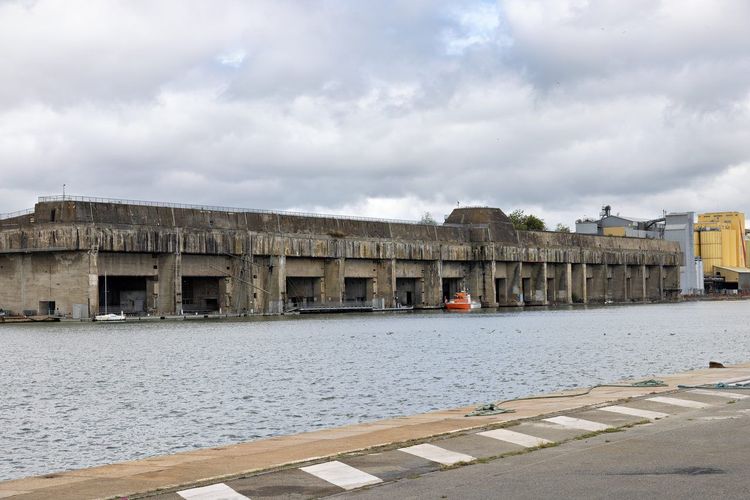
The city paid a heavy price during the Second World War. Occupied by the German navy, which built a giant submarine base there, it became a strategic target and was roughly 85% razed. The "Saint-Nazaire pocket," held by entrenched German troops, did not surrender until 11 May 1945, three days after the official end of the war in Europe — one of the very last pockets of resistance on the continent.
The reconstruction, led in part by architect Noël Le Maresquier, adopted a grid plan and functionalist concrete architecture, quite different from the half-timbered facades one might picture elsewhere in Loire-Atlantique. The result for solo travelers: wide streets, open sightlines over the estuary, and a city center you can read at a glance, with no maze to get lost in. You save your energy for the sights rather than for finding your bearings.
One neighborhood did escape total destruction: le Petit Maroc, a cluster of fishermen's houses tucked between the port and the lock, retains an older scale that contrasts sharply with the rest of the city. Saint-Nazaire recently earned the Ville d'art et d'histoire label, recognizing its often-overlooked 20th-century heritage, from prewar remnants to the radically new urban planning of the 1950s. Moving from one neighborhood to the other lets you understand in an hour what other cities take entire guided tours to explain.
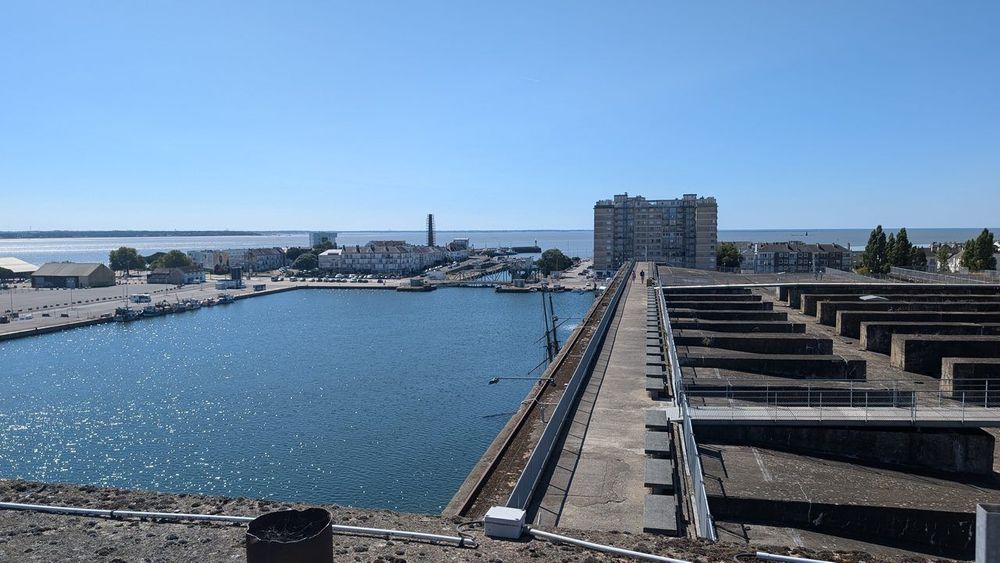
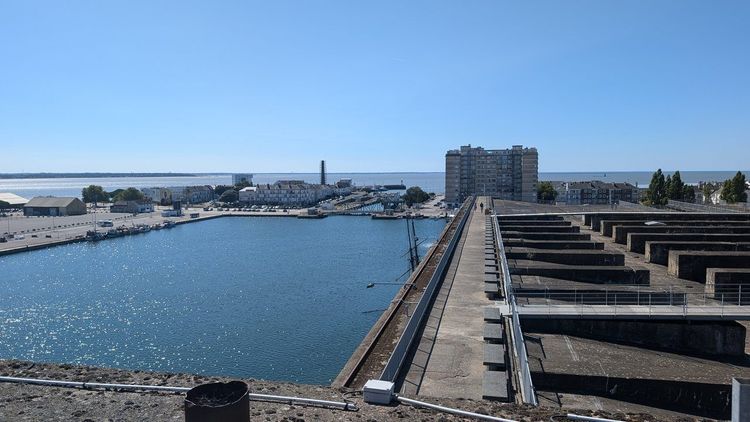
For a first overview, climb up to the rooftop terrace of the submarine base, freely accessible: the city unfolds below, industrial port on one side, rebuilt residential neighborhoods on the other.
Exploring the Submarine Base: Escal'Atlantic and the Espadon Submarine
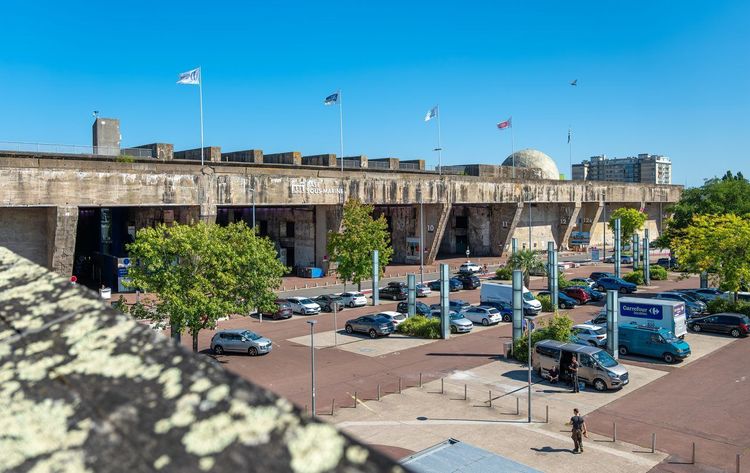
The Saint-Nazaire submarine base remains one of the best-preserved military structures in Europe: roughly 300 meters long by 130 wide, 14 pens, and a reinforced concrete roof nearly 8 meters thick, built by the German occupiers between 1941 and 1943 to shelter up to twenty submarines. It held up so well that no bomb managed to pierce its roof during the war, even as the city around it crumbled.
Today, one of the pens houses Escal'Atlantic, an interactive museum dedicated to the golden age of transatlantic ocean liners built in Saint-Nazaire, from the legendary Normandie to the France. Cabins, a promenade deck, and even a ballroom have been reconstructed, with enough interactivity to keep a solo visit engaging throughout.
A few meters away, the Espadon submarine (Boulevard de la Légion d'Honneur, 44600 Saint-Nazaire, rated 4.6/5 on Google from 5,257 reviews) can be visited from the hull to the control room. This French Navy submarine, in service until 1985, was the first French submersible to navigate under the Arctic ice cap, in 1964. Squeezing through its narrow passageways, past torpedoes and crew bunks, gives a very concrete sense of what life on board was like.
A few hundred meters away, on avenue de Saint-Hubert, the Saint-Nazaire ecomuseum traces the history of the port and its shipyards since the 19th century. It makes a good starting point before heading out to see the Chantiers de l'Atlantique in person, a little further along the quays; check its opening days, which are more limited off-season.
Traveling solo actually simplifies the logistics of these three visits: combined tickets are available, no group schedule to coordinate, and the freedom to linger twenty extra minutes in front of a model that catches your eye. Allow half a day for all three sites if you don't want to rush, and aim to arrive mid-morning on a weekday, before the school groups arrive.
Our Ryo audio guide tour of Saint-Nazaire takes you right inside this former submarine base and recounts, step by step across 23 audio tracks and 2h30 of walking, the history of Escal'Atlantic and the Espadon submarine before leading you back out toward the port.
Strolling Around the Port and the Chantiers de l'Atlantique
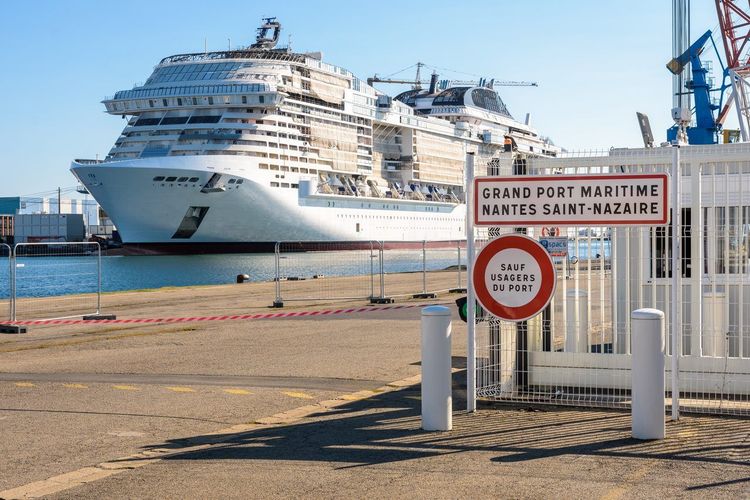
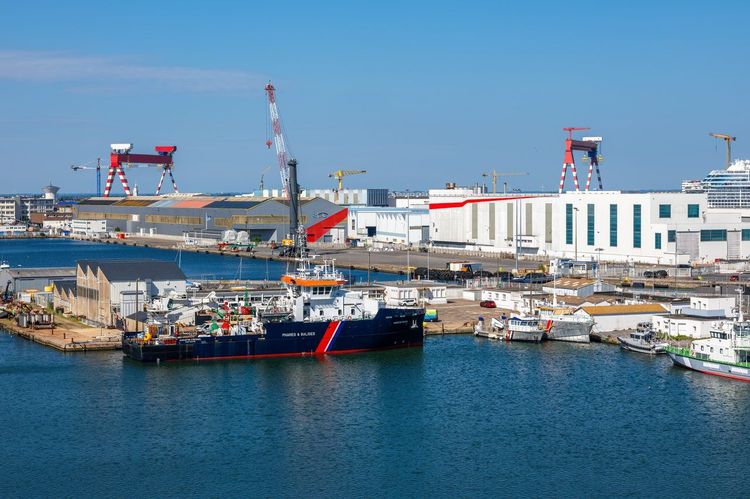
No visit to Saint-Nazaire is complete without walking along its port basin: this is where the city's industrial identity has played out for more than a century. The Chantiers de l'Atlantique (Boulevard des Apprentis, 44600 Saint-Nazaire, rated 4.3/5 on Google from 63 reviews) occupy an impressive stretch of the estuary waterfront and today build some of the world's largest cruise ships, including several Oasis-class vessels. The shipyard cannot be visited without a specific reservation, but the quays offer a head-on view of ships under construction, sometimes more than 70 meters tall.
Nearby, the Airbus Saint-Nazaire facility manufactures fuselage sections, notably for the A320 and A350, which are then transported by the Beluga cargo aircraft to final assembly lines. The two factories coexist on the same estuary, giving the port walk a feel of a full-scale demonstration of French engineering — aeronautical on one side, naval on the other.
As you head back toward the center, keep your eyes open: Saint-Nazaire has cultivated a fairly rich street art scene for several years now, visible especially around le Petit Maroc and the port area. Some works cover entire gable walls of postwar apartment buildings, a striking contrast with the raw concrete surroundings. This mural hunt works very well solo, phone in hand.
The Saint-Nazaire–Saint-Brevin bridge, which spans the estuary for nearly 3.4 kilometers, is best admired from dry land: crossing it on foot is not possible, but the quays and beaches offer great angles for a souvenir photo. In the evening, the quays around the basin stay calm and well lit, a reassuring detail if you extend your walk after sunset.
If you'd rather listen to anecdotes than read them on information panels, the short version of the Ryo audio guide tour follows the basin and the shipyards, with the story of the ocean liners launched here, from the France in 1960 to today's giants.
Saint-Nazaire at Your Own Pace: Beach and Coastal Path
Taking time to gaze at the ocean is one of the simple pleasures of solo travel, and Saint-Nazaire offers plenty of that. Villès-Martin beach, the closest to the city center, is perfect for a quick break between visits, with a direct view over the estuary and the passing cargo ships.
Further west, Saint-Marc-sur-Mer beach has a different claim to fame: this is where Jacques Tati filmed Les Vacances de Monsieur Hulot in 1951, released in 1953, and a statue of the character still keeps watch over the sand. The beach has a retro charm that feels far removed from the industrial atmosphere of the port, yet is only a few kilometers away.
Between the two, the coastal path (the old customs officers' trail) follows the shoreline for several kilometers, with regular viewpoints over the estuary and passing container ships. No walking companion is needed: the route is marked and frequented year-round, making it a reassuring option even late in the day. For a more compact loop before heading out, the short version of the Ryo audio guide tour of Saint-Nazaire condenses the highlights of the center and the port, leaving you free to head to the coast with no time constraints.
If you're looking for more peace and quiet, the small Porcé beach (44600 Saint-Nazaire, rated 4.4/5 on Google from 217 reviews), nestled between two rocky headlands, draws fewer visitors than the other two.
The wind often blows stronger here than inland: a windbreaker is useful even in summer, especially toward the end of the day on the coastal path.
A Nature Escape into the Parc naturel régional de Brière
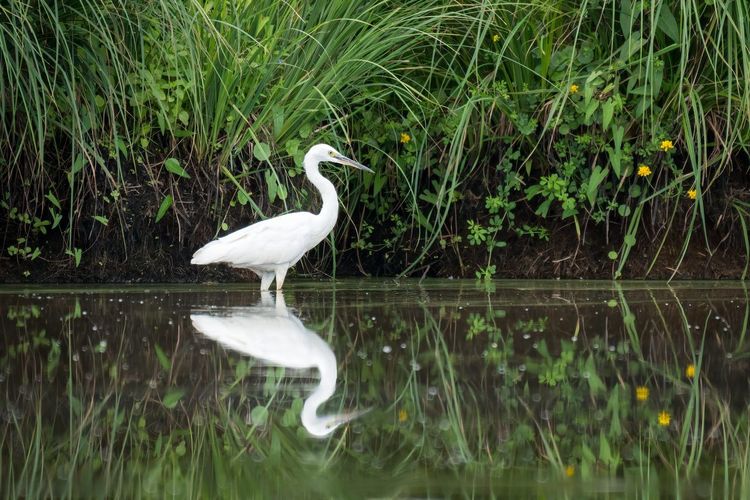
About twenty kilometers north of Saint-Nazaire lies the Grande Brière, the second-largest marsh in France after the Camargue. The Parc naturel régional de Brière, created in 1970, protects a landscape of canals and reed beds dotted with thatched-roof villages.
The village of Kerhinet (44410 Saint-Lyphard, rated 4.6/5 on Google from 890 reviews), with its restored thatched cottages, gives a good sense of traditional Brière architecture. You can easily wander through it on foot in about an hour, no reservation needed, between the gardens and the narrow lanes.
To venture further into the marsh, chaland (traditional flat-bottomed boat) trips offered from several landing stages let you glide through the canals, guided by a boatman who knows every corner. An hour is enough to grasp the immensity of these reed beds, where the horizon stays flat as far as the eye can see and herons and harriers replace the cranes of the port.
From Saint-Nazaire, allow about 30 minutes by car, or a good hour by bike. It makes for an ideal solo half-day excursion once the urban itinerary is done, ideally in the morning when the marsh is at its most tranquil.
Getting Around Saint-Nazaire with Sustainable Transport
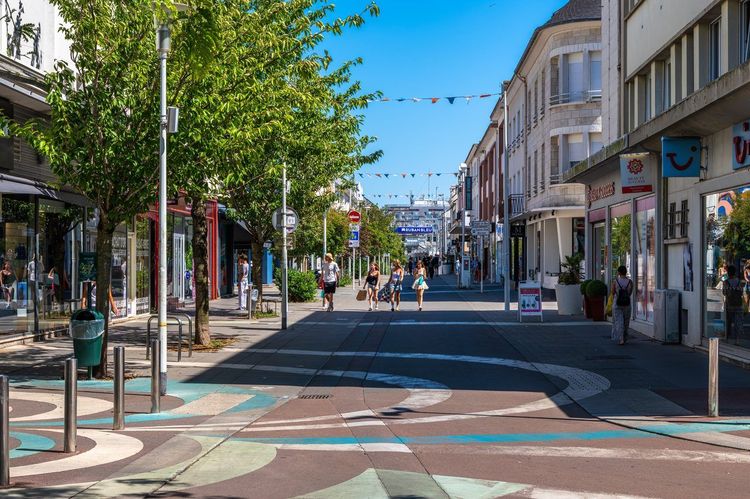
Saint-Nazaire lends itself well to car-free exploration. The rebuilt center, with its wide streets and grid layout, is easy to walk from end to end in under half an hour.
The STRAN bus network covers the whole urban area, useful for reaching the western beaches like Saint-Marc-sur-Mer. Cycling routes also connect the city center to the waterfront, for those who prefer to pedal at their own pace.
Renting a bike, for a day or several days, remains the most flexible option if you want to link beaches, the coastal path, and the Brière without depending on bus timetables. Traveling solo here requires neither a car nor complex planning — just a downloaded bus map and a good pair of shoes.
Traveling Solo in Saint-Nazaire: Safety, Budget, and Meeting People
Saint-Nazaire is in no way an unwelcoming city for solo travelers. The rebuilt city center, with its wide, well-lit avenues, remains generally calm in the evening, including around the port and the submarine base. As anywhere, it's best to avoid isolated industrial areas after dark and to stick to the commercial streets in the center when heading back.
On the budget front, Saint-Nazaire is generally more affordable than nearby seaside resorts like La Baule, especially in summer, and the combined tickets for the port sites (Escal'Atlantic, Espadon, ecomuseum) help keep visit costs down.
For meeting people without forcing it, several approaches work well: sitting at the counter rather than an isolated table at the Halles, joining a guided tour run by the tourist office, or simply striking up a conversation on the coastal path, which is frequented by many local walkers. In between encounters, the Ryo audio guide lets you move at your own pace with the historical context in your ears, without depending on a group to understand what you're looking at.
Dining alone at a restaurant is nothing out of the ordinary here: small single-person tables are common in the brasseries of the city center.
One last practical tip: Saint-Nazaire train station, connected to Nantes in 35 to 50 minutes depending on the service, makes arriving without a car straightforward, with the city center and the submarine base reachable on foot in about fifteen minutes.
Where to Stay in Saint-Nazaire as a Solo Traveler
For a solo stay, the choice of neighborhood matters as much as the choice of accommodation. The city center, around avenue de la République and the market halls, has the highest concentration of hotels and puts everything within walking distance: the station, the port, the submarine base, and bus stops.
The Petit Maroc neighborhood, a former fishing village right next to the submarine base, appeals for its more intimate setting and views over the estuary. A few accommodations there offer reasonable rates, with the added bonus of sleeping steps from the water.
Budget hotels in the center remain the simplest option for solo travelers: single rooms, a location that avoids long walks at night. Booking on weekdays often yields better rates. If you're arriving late by train from Nantes, check that your property offers self check-in or has reception open in the evening.
Where to Eat: Good Addresses and Restaurant Map
The Halles de Saint-Nazaire, right in the center, remain the best starting point for eating solo without any fuss: fishmongers' stalls, counters, and small tables where no one thinks twice about seeing you arrive alone.
Around the port, several spots focus on local catch — logical in a city that lives off the estuary: oysters, grilled fish, and the nearby Guérande salt as seasoning. City-center brasseries generally offer an affordable lunch deal, ideal for fitting in a meal between two visits.
For a more relaxed dinner, the small tables of le Petit Maroc offer a calmer atmosphere than the center, with views over the moored boats. The tourist office keeps an up-to-date selection of recommended addresses, handy for spotting establishments open in the evening off-season.
Events and Guided Tours Not to Miss
If the idea of a guided tour doesn't put you off, the "A Tour of Saint-Nazaire in 90 Minutes" tour offered by the tourist office traces the history of the reconstruction and the port. Dates vary by season — more frequent in summer — and can be booked online or at the reception desk.
On the events front, the Les Escales festival brings the port to life every year for three days at the end of July, with stages set up on the île du Petit Maroc, facing the estuary. It's one of the rare moments when the city, otherwise fairly quiet, fills with people well into the night.
Outside festival time, the calendar is still punctuated by temporary exhibitions in the submarine base and themed tours — a good option for alternating free exploration with more structured moments. Check the agenda before you go: some tours sell out several days in advance during high season.

FAQ
How many days should I plan to visit Saint-Nazaire solo?
Two full days are enough for the essentials: the submarine base and the port on the first day, the beach, the coastal path, and a trip into the Brière on the second. With a third day, you can slow down even more and add a guided tour or a longer bike ride.
Is Saint-Nazaire a safe destination for solo travel?
Yes: the rebuilt city center is well lit and busy in the evenings, as in most mid-sized French cities. As elsewhere, it's best to avoid isolated port areas at night and stick to the commercial streets when heading back.
How do I get around Saint-Nazaire without a car?
The center is walkable, the STRAN bus network serves the beaches and outlying neighborhoods, and a bike lets you push out to the coastal path or toward the Brière. The train station, connected to Nantes in under an hour, completes the car-free picture.
What is the best neighborhood to stay in Saint-Nazaire as a solo traveler?
The city center, around the market halls, is the most practical choice: everything is within walking distance, including the station and the submarine base. Le Petit Maroc appeals for its more intimate atmosphere, right by the water.
What is the best time of year to visit Saint-Nazaire?
Spring and early autumn offer a good balance between pleasant weather and moderate crowds. Summer is livelier, especially during the Les Escales festival at the end of July, but also more expensive for accommodation.
What should I see in one day in Saint-Nazaire?
The submarine base with Escal'Atlantic and the Espadon submarine takes up a good part of the morning, followed by a walk around the port and the Chantiers de l'Atlantique in the afternoon, before ending on the coastal path at sunset.
Visiting Saint-Nazaire solo turns out to be less of a compromise than a genuine advantage: a legible city, an industrial heritage that tells its story well without crowds, and enough nature nearby to alternate between concrete and fresh air as the mood strikes. Whether you stay two days or push on into the Brière, the Ryo audio guide for Saint-Nazaire remains the simplest way to follow the thread of this history at every step, over 6 km and at your own pace.