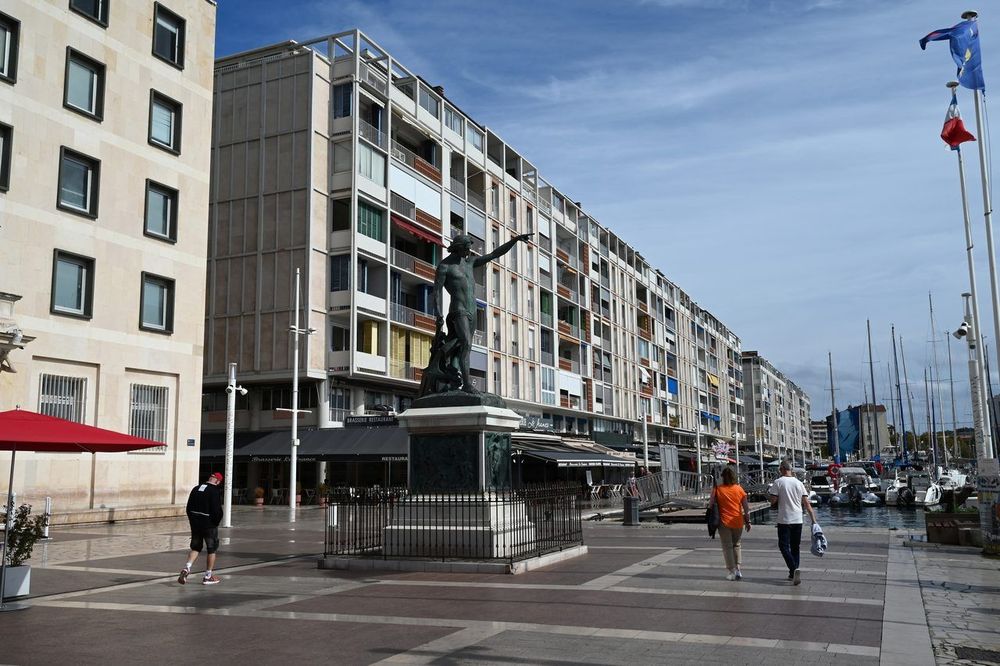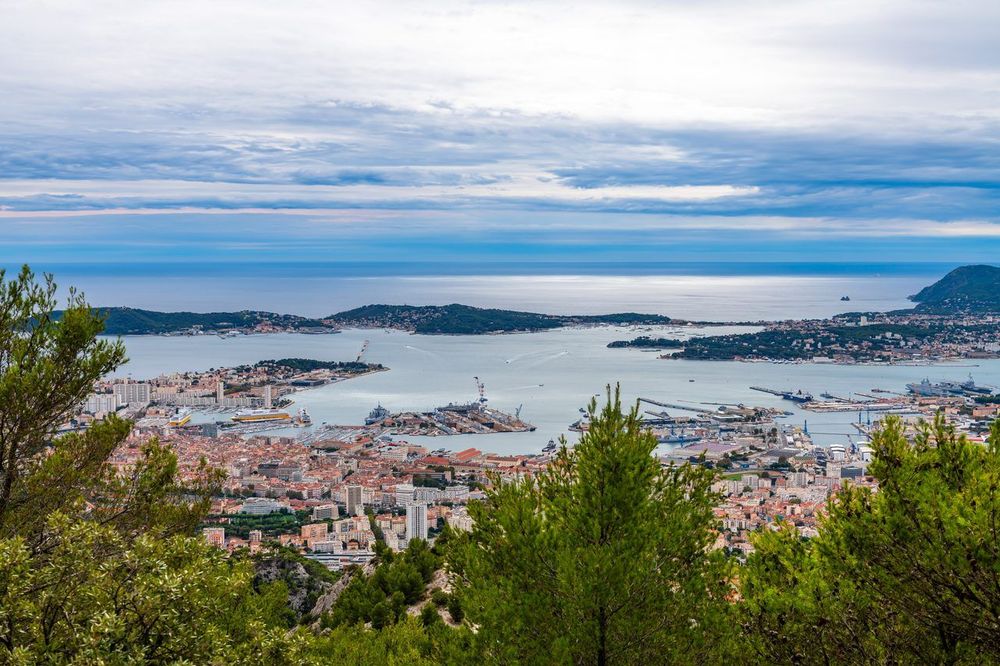
© Shutterstock
 Votre guide Ryo
Toulon Neighborhoods: the Complete Guide to Choosing Well in 2026
From one of Europe's finest harbors to the slopes of Mont Faron, Toulon stretches across nearly ten kilometers of coastline, and each neighborhood tells a different story. Looking into Toulon's neighborhoods, you quickly realize one thing: the city has never been uniform. A former military arsenal coexists with secluded coves, working-class housing estates sit alongside sea-view villas, and the historic center has been reinventing itself stone by stone for the past fifteen years. Getting your bearings in Toulon's neighborhoods therefore requires a minimum of method, whether you are looking for somewhere to stay, a place to stroll on an afternoon, or simply trying to understand the mixed reputation of certain areas. The Ryo audio-guided tour of Toulon passes through several of these neighborhoods in 1h50, a great way to feel the transitions before exploring further.
In this guide, you will discover why le Mourillon retains a village feel despite its beaches drawing half the city in summer, how the city center has changed since the renovation of place de la Liberté, and what really sets Sainte-Musse apart from La Beaucaire when safety comes up. You will also learn where the cours Lafayette market still beats to a Provençal rhythm, which areas are seeing prices rise fastest, and how to get between neighborhoods without losing an entire morning — a useful complement to the Ryo audio-guided tour, which links several of these spots on foot.
Le Mourillon, the Seaside Neighborhood That Toulonnais Dream About
No one in Toulon mentions le Mourillon without a slightly fond smile. This former fishing neighborhood has retained, despite urbanization, an almost village-like scale: small colorful houses, alleyways running perpendicular to the sea, a Sunday morning market where you meet as many families as local retirees. Long considered out of the way, it has become since the 2000s one of the most sought-after areas in the city and now ranks among the best neighborhoods in Toulon for a first stay, boosted by an asset few French city centers can claim: eight beaches strung together over nearly two kilometers.
The plage du Mourillon (also known as plage du Lido or the beaches of Toulon depending on the stretch) alternates fine sand with rocky areas, with municipal facilities (showers, anti-jellyfish nets in season) that make it one of the best-kept urban beaches on the broader Côte d'Azur. Attendance peaks sharply from June to September, but Toulonnais continue to come year-round for running or cycling along the corniche.
Come evening, another side of the neighborhood appears. The corniche comes alive with terraces and beach huts serving grilled fish and Provençal rosé with your feet almost in the water. If you are unsure where to go, our selection of the best beach huts in Toulon lists the tables that stand the test of a season, far from the tourist traps along the waterfront.
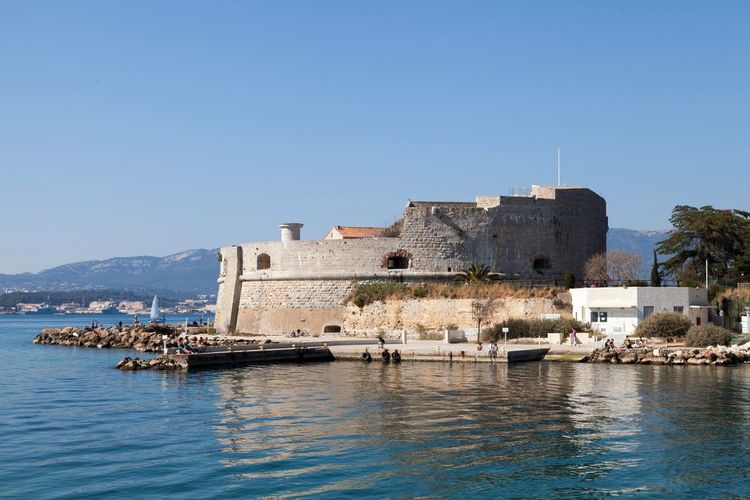
At the far end of the neighborhood, toward the tip of the inner harbor, stands the Tour Royale (Boulevard Cunéo, 83000 Toulon, rated 4.4/5 on Google with 1,183 reviews), a 16th-century fortress that once guarded the entrance to the military port. It can be visited on certain weekends, and the panorama over the entire harbor from the top is not to be missed.
On the real estate side, le Mourillon is one of the priciest areas within Toulon proper, just behind Cap Brun. You will find mostly apartments in small residential blocks from the 1960s–1980s, with a marked price gap between streets close to the beach and those, more affordable, located toward avenue de la République.
The Historic City Center, between Renovation and Neighborhood Life
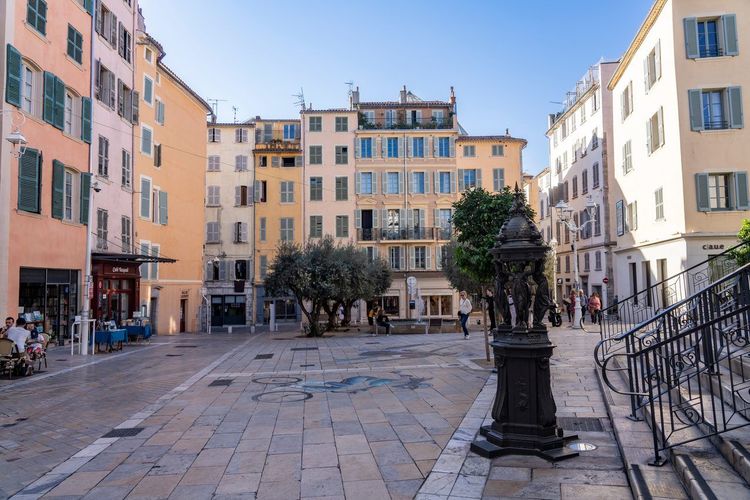
The heart of Toulon long suffered from an image of a neglected shopping street, a direct consequence of the 1944 bombings and a hasty reconstruction that lacked coherence. Since the early 2010s, the municipality has launched an urban renewal plan that has transformed the area: facade renovations, progressive pedestrianization, and the reopening of independent shops.
The place de la Liberté, with its 19th-century fountain and row of Haussmann-style buildings, symbolizes this turnaround. Ten years ago, people hurried across it. Today, its terraces fill up at the first sign of good weather, and it serves as a natural starting point for exploring old Toulon on foot.
Heading down toward the port, the alleyways of old Toulon (the Vieille Ville) retain a medieval layout inherited from the old fishing village and classic Provençal urbanism. Here you will find the cathédrale Sainte-Marie-Majeure, whose origins date back to the 11th century, as well as several fountains dotting the neighborhood squares.
If you want to feel the pulse of the neighborhood, go on a market morning: cours Lafayette has hosted for generations one of the liveliest Provençal markets in the Var, with fishmongers, greengrocers, and flower stalls lining up under the plane trees. It is also one of the best starting points for tasting local cuisine, from chichi-frégi to cade, two specialties we cover in detail in our top 10 culinary specialties of Toulon.
The center remains contrasted, however: certain streets around porte d'Italie still concentrate vacant commercial spaces and rundown housing, while others, just steps away, are showing sharply rising prices since the renovation. One neighborhood, two coexisting realities — which makes it a district best explored street by street rather than as a whole, and the Ryo audio-guided tour, which passes through place de la Liberté, helps make sense of it.
Cap Brun, the Residential Postcard Facing the Open Sea
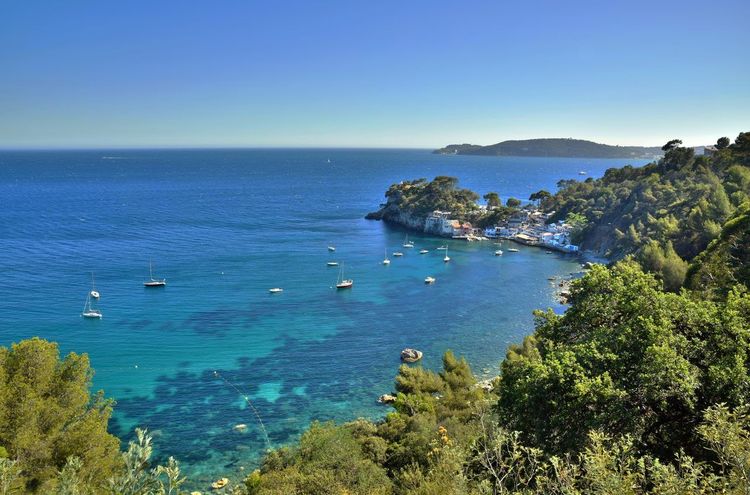
If one neighborhood were to illustrate affluent Toulon, it would be this one. Cap Brun occupies the eastern tip of the city, between cliffs and calanques, with an almost exclusively residential housing stock: 1930s villas with blue shutters, more recent residences with swimming pools, terraced gardens cascading down to the sea.
The corniche du Cap Brun (Corniche Bonaparte, 83000 Toulon, rated 4.3/5 on Google with 8 reviews) (also known as corniche Bonaparte) follows the coastline for several kilometers and offers one of the finest views over the harbor and the Îles d'Hyères on a clear day. The coastal path running alongside it lets you reach small beaches and calanques on foot, far less crowded than those of le Mourillon.
In terms of prices, Cap Brun unsurprisingly leads Toulon's rankings, with a gap that can be double or more compared to neighborhoods like Saint-Jean du Var. It is one of the best neighborhoods in Toulon for those seeking residential tranquility — a residents' enclave rather than a tourist hotspot: few shops, little evening activity, but a quietness that comes at a price. If you are not staying there, simply set aside a late-afternoon stroll when the light grazes the sea.
Saint-Jean du Var and Pont du Las, Authentic Working-Class Spirit
Halfway between the center and the heights, Saint-Jean du Var and Pont du Las form a cluster of working-class neighborhoods where community life remains deeply rooted: family bakeries, counter cafés, street markets that have existed for decades.
The Pont du Las market, renovated in recent years, has established itself as a less touristy alternative to cours Lafayette, with often lower prices and an almost exclusively local clientele. It is a good place to observe everyday Toulon, far from the seaside postcards.
These neighborhoods are well served by the Mistral bus network, whose regular lines connect them to the city center and make getting around easier for residents without a car. Real estate prices here remain among the most accessible within Toulon proper, which explains the growing interest from young families and first-time buyers.
If you are looking for accommodation for an extended stay rather than a weekend, these two neighborhoods offer a good compromise between a contained budget and proximity to the center, provided you accept a less picturesque atmosphere than le Mourillon.
La Serinette and Sainte-Musse, the Neighborhoods Reinventing Themselves
La Serinette and Sainte-Musse belong to the generation of large housing estates built in the 1960s–1970s to accommodate the rapid population growth of Toulon, driven in particular by the arsenal and the French Navy. Long perceived as mere peripheral residential neighborhoods, they are gradually changing their face.
These neighborhoods long suffered from a rundown image, associated with unemployment and occasional tensions. Over the past decade, an urban renewal program (ANRU) has demolished several aging tower blocks, opened new public spaces, and rehabilitated part of the housing stock. Sainte-Musse in particular has gained new sports facilities and improved bus connections.
The on-the-ground reality remains nuanced: community life is vibrant, rents are among the lowest in the city, but certain areas still concentrate social difficulties that urban renewal alone cannot resolve in just a few years. If you are thinking of living there, it is better to visit at different times of day rather than relying on a single impression.
West Toulon: La Beaucaire, La Rode, and Le Jonquet
Among Toulon's neighborhoods, the western part groups together several areas born of 20th-century urban expansion, mixing residential zones, detached houses, and large housing estates: La Beaucaire, La Rode, and Le Jonquet.
This is also the area most often mentioned when people speak of a "rough neighborhood" in Toulon in online searches. The reality deserves a more nuanced reading: these neighborhoods do indeed concentrate a higher share of the delinquency recorded in city statistics, particularly around certain drug dealing spots identified by the national police. That does not mean life there is one of constant insecurity, but rather that daily life is more contrasted than elsewhere, with areas to avoid at night and others that are perfectly calm during the day.
La Beaucaire benefits from a large park and recently built sports facilities, while La Rode makes the most of its proximity to the road networks toward Marseille — a real asset for those who work outside Toulon. Le Jonquet, smaller, remains mainly residential with modest detached housing.
Real estate prices here are among the lowest in the metropolitan area, which logically attracts buy-to-let investors and first-time buyers on a tight budget. If that is your case, research street by street rather than neighborhood by neighborhood: differences in tranquility can be significant within just a few hundred meters.
Le Faron and the Heights, a Breathtaking View over the Harbor
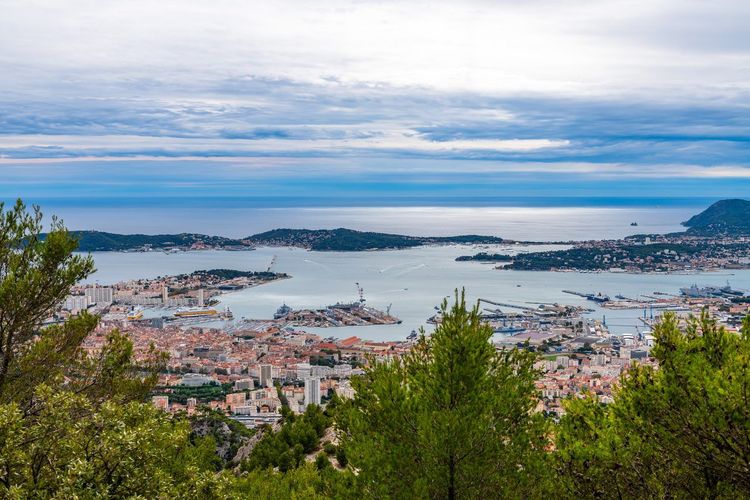
To the north of the city, Mont Faron towers over Toulon at 584 meters and forms a neighborhood apart, with residences clinging to the slopes and a vast protected natural area. It can be reached via a winding road or by the Faron cable car (Route du Faron, 83200 Toulon, rated 4.4/5 on Google with 4,654 reviews), whose cabins offer one of the finest views of the city in just a few minutes.
At the summit, the Provence Landing memorial and a small zoo attract both Toulonnais families and passing visitors. To plan your ascent, our dedicated article on what to do on Mont Faron details opening times and the best slots to avoid summer crowds. Living on the slopes of Le Faron means accepting narrow roads and an almost essential car, in exchange for a level of quiet and a view that are rare in an urban setting.
Where to Stay in Toulon According to Your Travel Profile
Not all visits are alike, and identifying the right neighborhoods in Toulon depends above all on what you are looking for: some neighborhoods are better suited to the beach, others to culture or budget. If you are travelling as a couple or a family and the beach matters above all else, le Mourillon remains the most obvious choice: beaches within walking distance, a varied restaurant scene, and a convivial atmosphere that appeals to children and adults alike.
For a short cultural break, opt for the historic city center: you will be within walking distance of the cathedral, the Musée national de la Marine, and the cours Lafayette market, with a wider choice of accommodations that are often cheaper than in le Mourillon. Business travelers, especially those with ties to the naval base, generally find more availability and reasonable rates around Saint-Jean du Var or Pont du Las, a few minutes by bus from the center.
If your stay revolves mainly around outdoor activities, know that Toulon offers far more than its urban beaches. Our selection of the top 5 things to do in Toulon covers everything from coastal hiking to boat trips toward the Îles d'Hyères, two options that naturally influence your choice of neighborhood to base yourself in. Whatever your travel profile, the Ryo audio guide helps you connect Toulon's main neighborhoods from the moment you arrive.
Neighborhoods to Avoid in Toulon: What You Really Need to Know
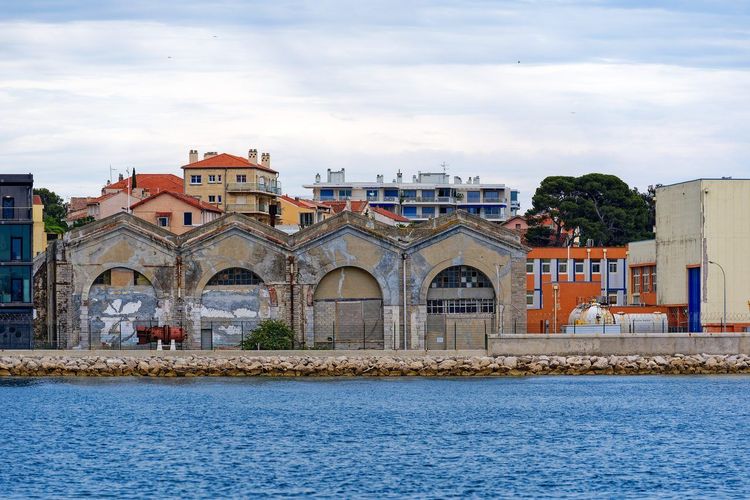
The question comes up often as soon as people start looking into Toulon's neighborhoods, and the answer deserves to be precise rather than dismissive. Public safety statistics point mainly to Sainte-Musse, La Serinette, and certain parts of La Beaucaire as the neighborhoods concentrating the most drug trafficking and related offenses — a situation the Var prefecture regularly acknowledges in its annual reports.
That does not mean these neighborhoods should be avoided in all circumstances. The vast majority of residents lead ordinary lives there, and the most sensitive incidents remain concentrated at specific spots, known to both residents and law enforcement. For a passing visitor who does not linger there at night, the actual risk remains comparable to that of any medium-sized French city.
If you are looking to rent or buy, the most useful precaution is to visit the neighborhood at several different times of day, consult reviews from independent local agencies, and ask residents directly rather than relying solely on an online reputation that may be several years out of date.
Map of Toulon's Neighborhoods: How to Find Your Way Around
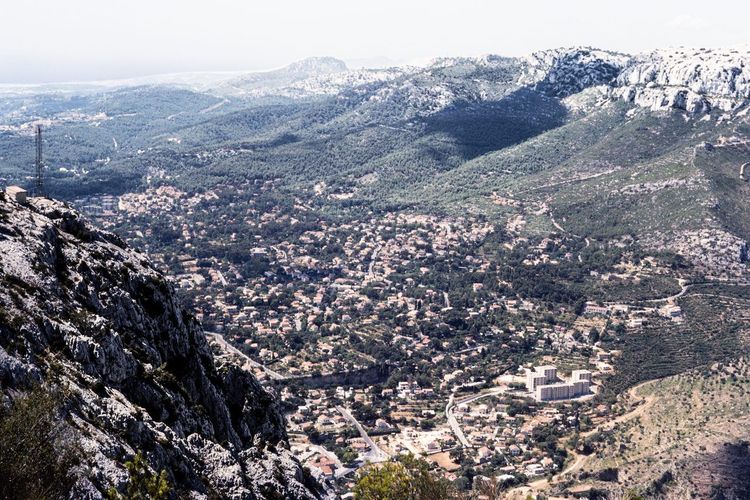
Unlike Paris or Marseille, Toulon does not have official arrondissements, but its neighborhoods are divided into broad sectors that everyone uses on a daily basis: the city center and the Vieille Ville to the south, le Mourillon and Cap Brun to the east along the coastline, Saint-Jean du Var and Pont du Las to the north of the center, La Serinette and Sainte-Musse further north still, and finally La Beaucaire, La Rode, and Le Jonquet to the west.
This fan-shaped layout, centered on the harbor, explains why straight-line distances are often misleading: two neighboring areas on a map may be separated by a hill and twenty minutes by bus. Before choosing an area, it is therefore better to check your actual travel time to your points of interest rather than simply looking at geographic proximity.
Getting Around between Toulon's Neighborhoods
The Mistral bus network covers most of the city with around fifty lines linking the center to the northern neighborhoods and coastal areas alike. To cross the harbor without taking a car, the maritime shuttles remain an underused option for visitors: they connect the city center to La Seyne-sur-Mer or Les Sablettes in around fifteen minutes, with a view over the harbor that no bus can match.
On foot, allow around 25 minutes between place de la Liberté and le Mourillon, a pleasant walk outside the hottest hours of the day. For more outlying neighborhoods like Cap Brun or La Beaucaire, plan on taking the bus or the car — parking is generally simpler than in the center. If you want to take in several neighborhoods in a single morning, the Ryo audio-guided tour of Toulon offers an itinerary designed to link the key points of the historic center without having to check a map at every turn.


FAQ
What is the most upscale neighborhood in Toulon?
Cap Brun generally tops the list, closely followed by certain streets in le Mourillon near the beach. These are the areas with the highest price per square meter in the city.
Which neighborhood should you avoid in Toulon?
No neighborhood is absolutely off-limits, but public safety statistics regularly flag Sainte-Musse, La Serinette, and certain parts of La Beaucaire for more visible drug trafficking than elsewhere. Common-sense caution, especially at night, applies mainly to these areas.
Where should you stay in Toulon for a first visit?
The historic city center and le Mourillon remain the simplest choices: easy walking distance to the main sights, a wide range of accommodations, and good transport connections. For a first visit, these are two of Toulon's most practical neighborhoods.
Is Toulon a pleasant city to live in?
Yes, generally, provided you choose the right neighborhood. The climate, the sea right on your doorstep, and a cost of living lower than Nice or Marseille make it a well-liked city, despite a sometimes outdated reputation tied to certain areas.
What is the liveliest neighborhood in Toulon?
Le Mourillon in summer, for its nightlife and beachside restaurants, and the city center year-round, especially around cours Lafayette on market days.
How is the city of Toulon divided administratively?
Toulon does not have arrondissements in the Parisian sense. Its neighborhoods form a division into broad historical and administrative sectors, without strict official boundaries, which explains the variations depending on the source.
Is La Serinette a good neighborhood to live in?
La Serinette has benefited from notable urban renewal in recent years, with new amenities and some of the lowest rents in the city. Some areas remain more sensitive than others, however, which is why it is worth visiting before committing.
Ultimately, Toulon's neighborhoods paint a picture of a city moving at several speeds, where the sea, the hills, and military history intersect without ever quite resembling one another from one area to the next. Whether you are looking for the tranquility of Cap Brun, the village atmosphere of le Mourillon, or the neighborhood life of Pont du Las, it is better to choose based on your lifestyle rather than a reputation picked up online.
To get a real sense of this diversity before making up your mind, nothing beats a walk on the ground. The Ryo audio-guided tour of Toulon is a simple way to start, linking several neighborhoods of the historic center on foot while learning their history street by street.